8.6 C
New York
Home Blog Page 10

OSINT by Paint: submarine struck by Ukrainian underwater drone identified as B-271 Kolpino

0

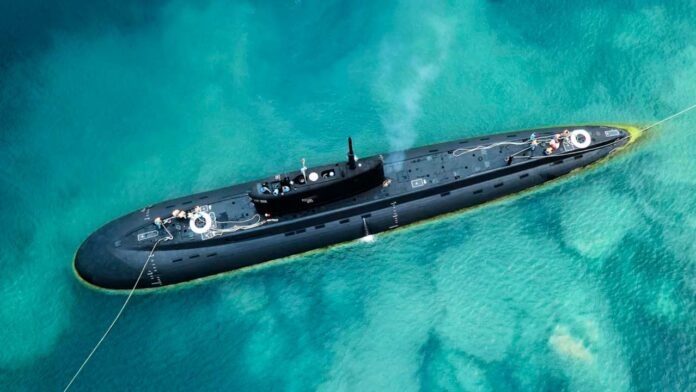
The Project 636.3 Varshavyanka (Kilo-class) submarine hit by a Ukrainian underwater drone has been identified as B-271 Kolpino. The assessment was published by Duke BG on X.

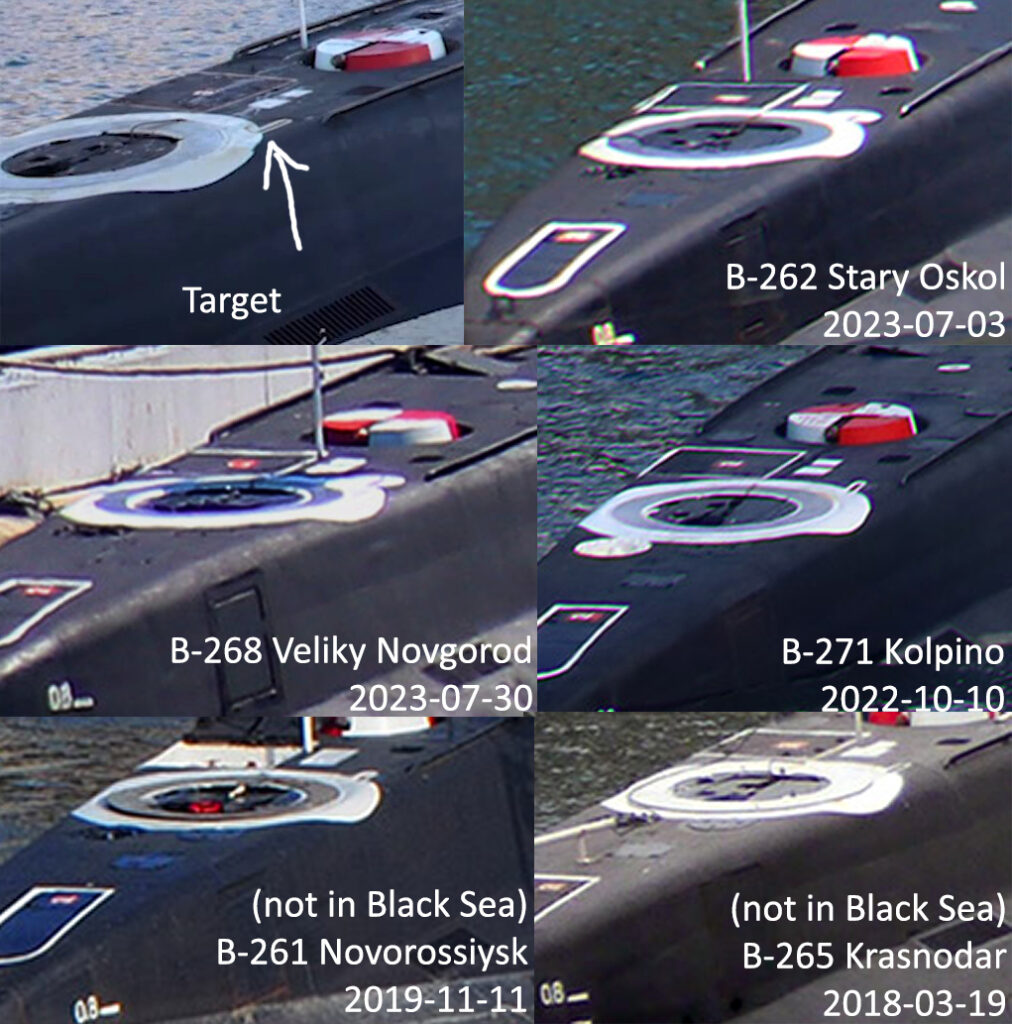
He compared the submarine shown in a video released by the Russian propaganda TV channel Zvezda on December 16 with other publicly available images of vessels of the same class, focusing on the paint scheme on the upper section of the outer hull.

The comparison shows that different submarines have distinct paint patterns, with the exception of the Kolpino and Krasnodar submarines.

However, the Krasnodar is outside the Black Sea and therefore could not have been hit.

B-271 Kolpino is a Russian diesel-electric submarine of Project 636.3 Varshavyanka, assigned to the Russian Navy’s 4th Independent Submarine Brigade, a unit of the Black Sea Fleet. It is the sixth vessel of the project and is named after the Russian city of Kolpino.
The submarine was laid down on October 30, 2014, at the Admiralty Shipyards in St. Petersburg.

It was launched on May 31, 2016; sea trials began on August 19, 2016, and on November 24 of the same year it was commissioned into the Russian Navy.

In 2017, the Kolpino submarine carried out combat missions in the Mediterranean Sea, launching Kalibr cruise missile strikes on targets in Syria. Since 2022, the submarine has been involved in combat operations against Ukraine, including missile launches.

At the start of Russia’s full-scale invasion of Ukraine, the Black Sea Fleet had six Project 636.3 Varshavyanka submarines. Not all were deployed in the Black Sea due to operations in the Mediterranean. In particular, the Krasnodar and Novorossiysk submarines are currently based in the Baltic Sea.

In September 2023, Ukraine’s armed forces struck a shipyard in Crimea with missiles, severely damaging the Rostov-on-Don submarine while it was undergoing repairs. The Kolpino, Veliky Novgorod and Stary Oskol submarines, along with the older Project 877B Halibut submarine Alrosa, are known to be based in Novorossiysk Bay.

Source: militarnyi
Two new LNG carriers for QatarEnergy named Sharq and Shra’ouh

0

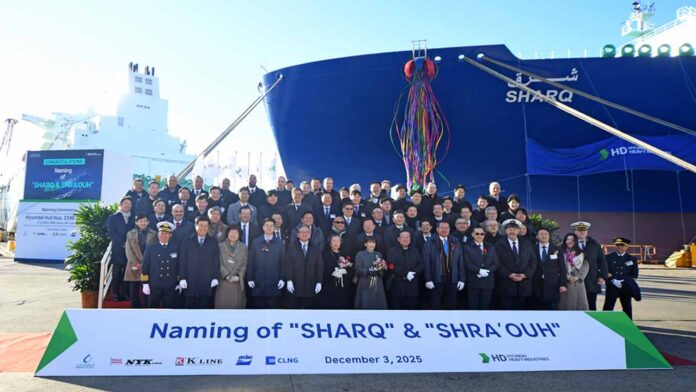
On December 3, a joint venture company comprising NYK, Kawasaki Kisen Kaisha, Ltd., MISC Berhad, and China LNG Shipping (Holdings) Limited held a naming ceremony for two new liquefied natural gas (LNG) carriers for QatarEnergy, the state-owned energy company of Qatar. The ceremony was held at HD Hyundai Heavy Industries Co., Ltd. (HHI) in Ulsan, South Korea. One vessel was named “Sharq” after an area east of Doha, Qatar’s capital, while the other was dubbed “Shra’ouh” after a Qatari island. The naming ceremony was attended by Takaya Soga, president & CEO of NYK, among others.

These two vessels will be the seventh and eighth of 12 new LNG carriers ordered by the joint venture company for QatarEnergy, the world’s largest LNG providers. Sharq is scheduled to begin transporting LNG worldwide in December. Shra’ouh is scheduled to commence service in January 2026. The NYK Group will provide ship-management services for Shra’ouh.

These vessels are powered by two X-DF 2.1 iCER engines, highly fuel-efficient dual-fuel engines capable of using fuel oil and boil-off gas as fuel. Additionally, the vessel is equipped with an air lubrication system* and a reliquefaction device that re-liquefies surplus boil-off gas and returns it to the cargo tanks. These innovations promote efficient navigation and help reduce greenhouse gas (GHG) emissions, thereby minimizing environmental impact.

Vessel Particulars

  • Cargo Capacity: approx. 174,000 m³
  • Length: approx. 299.00 meters
  • Beam: 46.40 meters
  • Main Engine: X-DF2.1 iCER (dual-fuel slow-speed diesel engine)
  • Shipyard: Ulsan Shipyard, HD Hyundai Heavy Industries Co., Ltd.

Equinor contests penalty notice from Økokrim

0

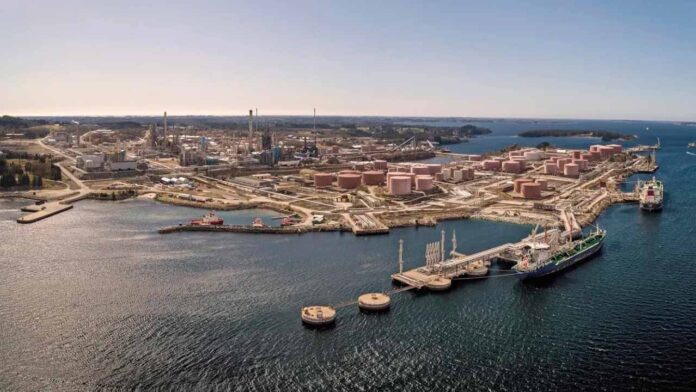
The case concerns historical matters related to emissions and discharges that the company itself has uncovered, investigated, and improved.

The investigation has concluded, and Equinor Mongstad has received a fine from Økokrim of NOK 220 million and a confiscation claim of NOK 500 million.

“We take the matters mentioned very seriously. The company itself uncovered and reported the emissions and discharges to the authorities. Equinor has conducted thorough and transparent investigations and implemented a number of measures to correct relevant deviations. We disagree that the company has failed to fulfill its duty of proper maintenance of the plant over several decades and that the company has saved cost through inadequate maintenance. Økokrim has not specified what the punishable negligence consists of. The company therefore does not accept the penalty notice and will clarify the case in court,” says Siv Helen Rygh Torstensen, executive vice president, Legal & Compliance.

The law firm Hjort AS represents Equinor.

Port of Long Beach launches hydrogen Fuel Grant Program

0

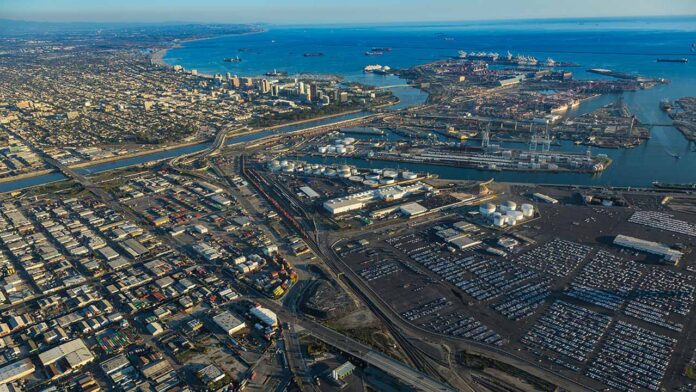
The Port of Long Beach is launching a Hydrogen Fuel Grant Program to support early adopters of hydrogen fuel cell drayage trucks and encouraging others to transition from using diesel trucks at the nation’s largest seaport complex.

If all the funds are used, the program will result in at least 3.7 million zero-emissions miles for drayage services.

Funding for the initiative is drawn from the Clean Truck Fund Rate program, which was founded in 2022 to pay for incentives for zero-emissions trucks and the infrastructure needed to charge and fuel them.

To date, the Port has committed $27.5 million to battery-electric truck projects or programs, including charging depots, truck vouchers and technology demonstration projects. These investments have resulted in approximately 540 additional battery electric trucks at the San Pedro Bay ports complex that would have otherwise been diesel-fueled trucks. The Port has also committed $1.45 million so far to fuel cell truck programs or projects. About 100 hydrogen fuel cell trucks are registered to work at the Port.

“One of the keys to the Port of Long Beach’s success in reducing emissions is technology neutrality,” said Port of Long Beach CEO Mario Cordero. “There’s no one-size-fits-all solution for all of our drayage partners due to the diversity of operations and duty cycles. It’s important to help ensure multiple equipment options are viable as we advance our decarbonization goals.”

“Fuel cell truck operators have experienced a sharp increase in fueling costs in recent years,” said Long Beach Harbor Commission President Frank Colonna. “The Hydrogen Fuel Grant Program will help bridge the gap for operators who want to utilize the longer driving range and faster fueling of this technology while its market matures.”

Eligible participants will be reimbursed monthly for fuel usage, after Port staff confirm those fuel-cell trucks visited Long Beach terminals. The program will be evaluated every six months to assess current conditions, fueling options and the availability of related subsidies.

MPC Container Ships ASA orders six container ship newbuildings

0

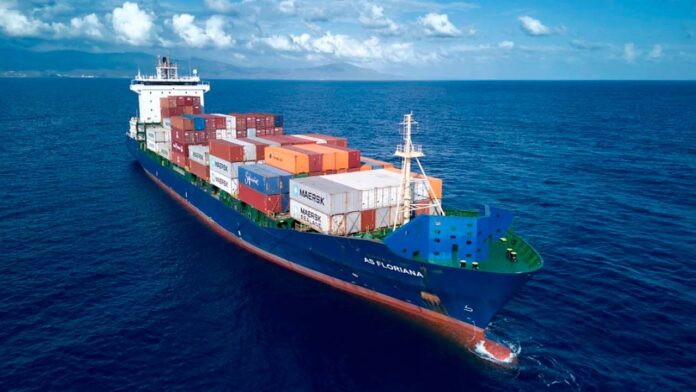
MPCC has entered into contracts with Taizhou Sanfu Ship Engineering in China for the construction of six 3,700 TEU container vessels scheduled for first delivery in second half of 2028.

The vessels are based on the newest design, which optimizes speed and fuel consumption for regional and feeder trades, while keeping enough flexibility to shift between trade lanes as markets evolve. The vessels are prepared for alternative fuels and advanced emissions-reduction technologies, providing a design that can adapt to tightening environmental rules over the lifetime of the ships.

With a total investment of USD 292.5 million, the initial charter period is expected to generate approximately USD 479 million in revenue and around USD 288 million in EBITDA. The project will be financed through a balanced mix of equity and debt, ensuring financial flexibility and maintaining a prudent capital structure.

MPCC and Uthalden establish joint venture
MPCC is pleased to announce a newly established 50/50 joint venture with Uthalden AS (“Uthalden”). The JV will own two 4,500 TEU newbuildings that are currently wholly owned by MPCC and will be on charter to a top 5 liner company.

The establishment of this joint venture will free up committed capital and optimize the company’s investment capacity, while partnering with an experienced shipping investor. It is expected that the joint venture will finance the majority of the purchase price of the vessels through moderate leverage.
In addition to the aforementioned measures, MPCC has upsized its existing undrawn RCF to USD 130 million with maturity in 2030 as well as reduced the applicable margin.

The optimized facility will strengthen MPCC‘s balance sheet flexibility and provide additional capital to support potential future acquisitions.

The overall balance sheet remains conservatively structured with low leverage, while more than 50% of the assets remain debt free.

In line with its fleet modernization, MPCC has agreed to sell AS Clementina, a vessel approaching the 20-year class renewal in 2026, at an attractive price of USD 24 million. Handover is expected to take place after expiry of the current charter, towards the end of Q2 26. The implied NAV is 34 NOK per share.

“2025 has proven to be a transformational year for MPCC”, said Constantin Baack, CEO of MPCC. “With yet another newbuilding order against a long-term charter with a top-tier counterpart, we have in total 17 state-of-the-art newbuildings on order with deliveries from 2026 and onwards. These measures strengthen our strategic partnerships, enhance earnings visibility, and reinforce our commitment to long-term value creation. As a result, our contracted backlog now exceeds USD 2 billion, providing exceptional visibility and positioning MPCC for sustainable growth and resilience in the years ahead. I am also pleased that we have further advanced on additional portfolio and financing initiatives, including teaming up with Uthalden, a trusted partner we have successfully worked with in the past.”

Deltamarin receives ABS AiP for versatile FPSO hull design

0

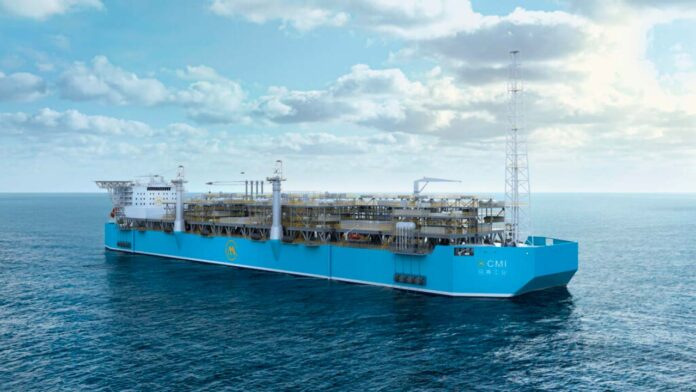
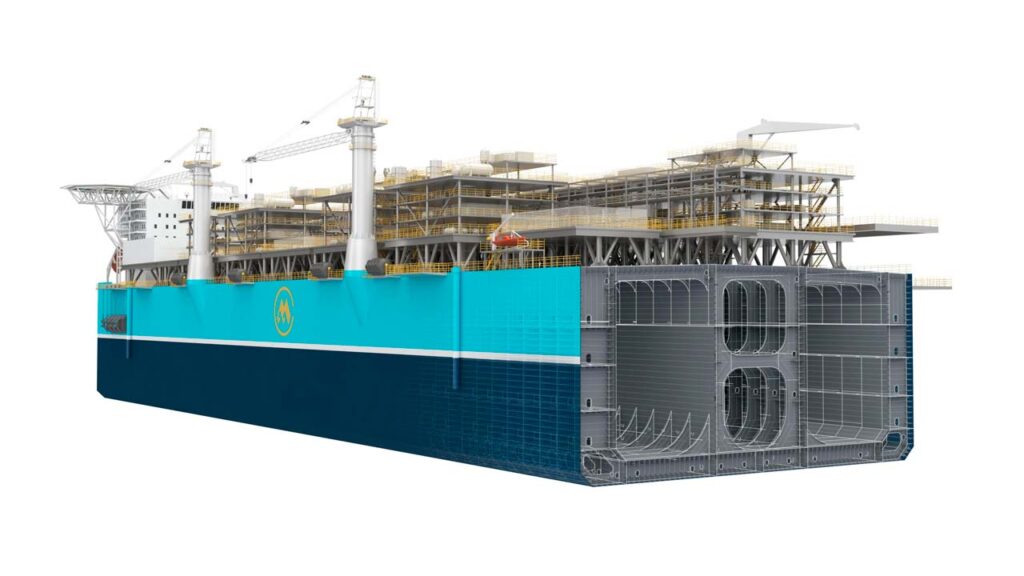
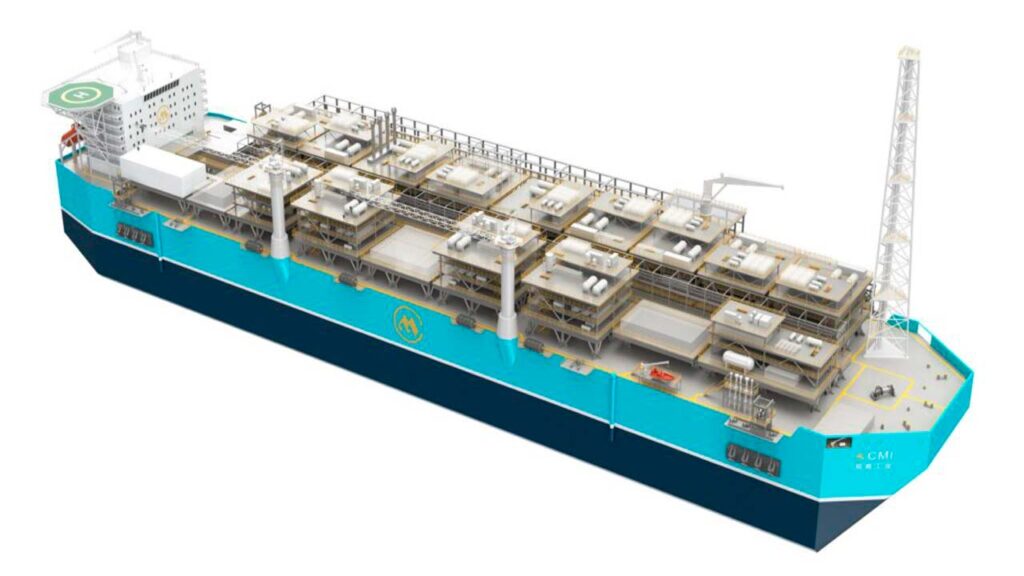
Deltamarin and China Merchants Heavy Industry (CMHI) have received Approval in Principle (AiP) from the classification society ABS for a new versatile Floating Production Storage and Offloading (FPSO) hull design. The AiP certificate was awarded on December 3, 2025, at Marintec China in Shanghai.

Using Deltamarin’s in-house tools, the main dimensions of the FPSO hull were optimized for minimum weight with only a few key inputs and constraints. Two additional hull variants (1.0 and 2.0 MMBBL) were also developed using our parametric hull model in a fraction of the time traditionally required for resizing of the FPSO hull.

The structural design of the FPSO hull is benchmarked against rule loads, enabling the concept to be utilized in different locations around the globe. Depending on the site conditions, the structural design can be further optimized for reduced steel weight, directly translating into lower CAPEX.

Together with CMHI, standardized design solutions have already been developed to ensure fast and efficient project execution during the EPC phase.

“The target of this project was to create a versatile FPSO hull with simple, robust marine systems and fatigue-friendly structural details,” said Toni Salminen, project manager at Deltamarin. “Our approach allows for tailor-made FPSO designs in a short timeframe, optimized for different locations and operational conditions worldwide.”

Damen delivers new tugs to the Fairplay Towage Group and Louis Meyer

0

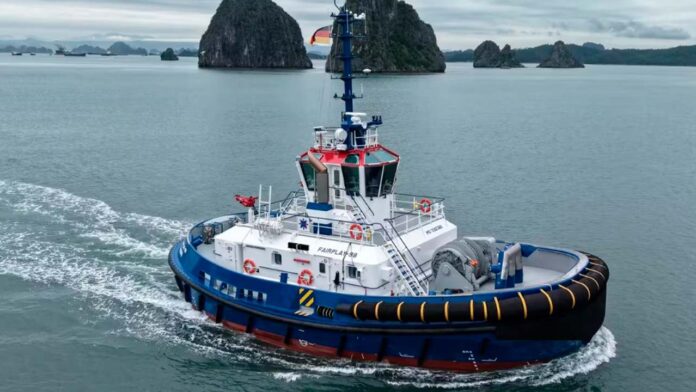
On 21 November, Damen Shipyards Group delivered three new tugs, consisting of an RSD Tug 2513 named Fairplay-98, and two ASD Tugs 2312 named Fairplay-86 and Fairplay-87.

The RSD Tugs 2513 and one ASD Tug 2312 have been delivered direct to the Fairplay Towage Group, while the other ASD Tug 2312 was delivered to Neue Schleppdampfschiffsreederei Louis Meyer GmbH & Co. KG. This vessel has also joined the Fairplay Towage fleet on a long-term bareboat charter. The vessels form part of the company’s fleet renewal programme, incorporating increased efficiency for the future.

The tugs arrived in the Port of Hamburg aboard the HLV UHL Finesse, having been transported from Damen’s yards in China and Vietnam. Damen employs this method of transport to provide a reliable, dependable delivery solution that ensures that vessels are in pristine condition upon arrival.

Over the past few years, Damen has delivered a number of vessels to both companies. On each occasion, Damen’s clients have selected to incorporate a range of options to boost the sustainable performance of their vessels. In the case of these latest deliveries, for example, this includes the Damen Marine NOX Reduction System.

This modular selective catalytic reduction (SCR) system combines a silencer and emissions reduction technology in a single, compact unit. Its application lowers noise to 45 dB(A) and reduces NOX emissions by 80%, ensuring compliance with IMO Tier III regulations.

Additionally, Damen has installed LNG and winterisation packages, as well as incorporating FiFi-1 firefighting capabilities to the tugs. This modular approach enables Damen to quickly deliver its proven designs, while incorporating the possibility to tailor vessels to its clients’ requirements.

Following the delivery, Damen will continue to support the Fairplay Towage Group with the vessels from Damen Services Germany. At this Hamburg-based Service Hub, Damen provides warranty and lifecycle support to clients in Germany, Poland and the Baltics including maintenance, emergency response, spare parts and training.

Damen Sales Manager for Germany, Joschka Böddeling said, “As a result of our stock building programme, we had begun building prior to the signing of contract. Contracts were signed at the end of March 2025, and three of these brand-new, powerful and versatile vessels were delivered within nine months. I am confident that the tugs will fulfil Fairplay’s requirements, contributing to the increased efficiency the company is seeking as it sets its sights towards the future.”

Construction underway on fleet of 42-metre DP2 fast crew boats for Caspian Sea energy operator

0

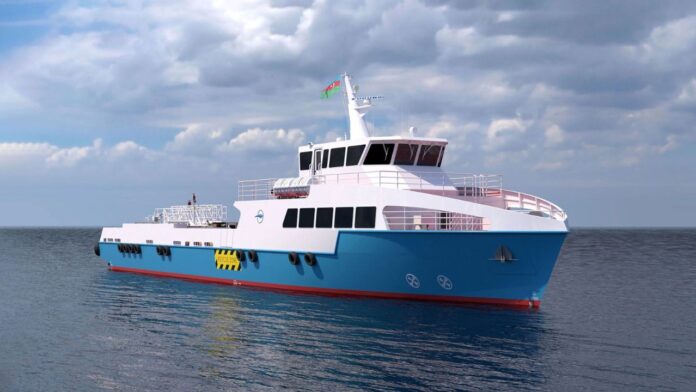
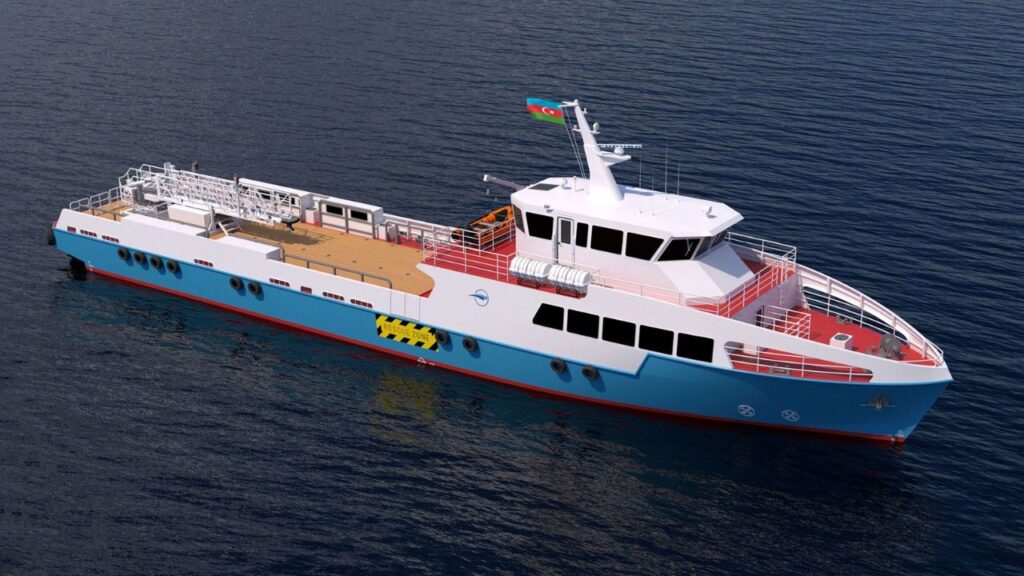
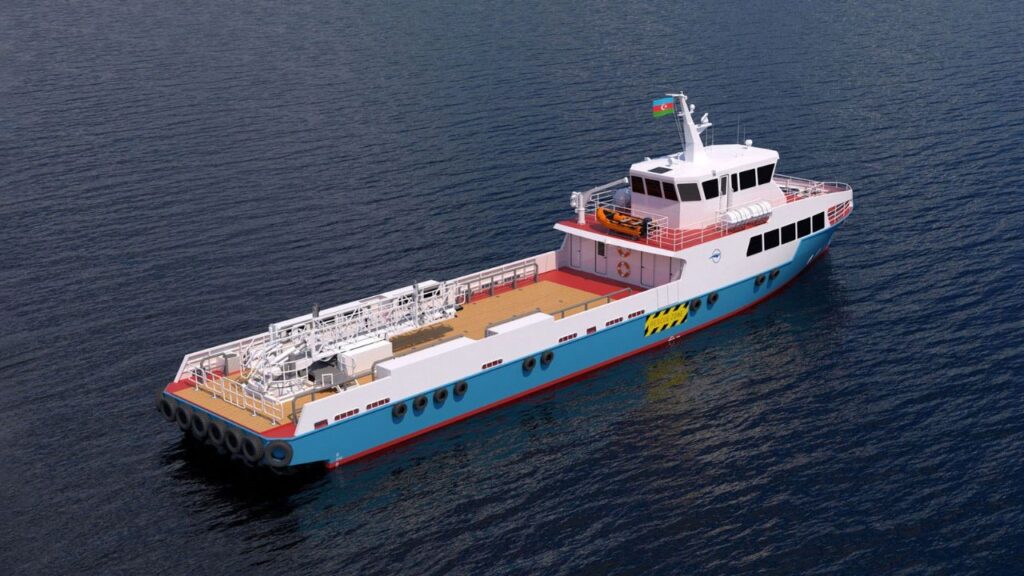
Incat Crowther has been commissioned by Baku Shipyard to design three new bespoke steel crew boats for an offshore energy services operator in Azerbaijan.

Capable of speeds of up to 22 knots, the new vessels are designed specifically for fast deployment across multiple offshore sites in the Caspian Sea. Each vessel is tailored to pre-existing offshore infrastructure to allow for the efficient and safe transfer of crew.

Incat Crowther designed the propulsion system specifically for robustness, high-displacement capability and low fuel burn by utilising a drivetrain of four newly developed MAN D3872 workboat engines paired with Hamilton HT810 waterjets. The vessels are designed to accommodate a Walk2Work gangway which allows the fleet to dock and begin transferring crew to offshore energy infrastructure in less than one minute.

The next-generation fleet features a range of design improvements the current fleet of crew boats including quad propulsion engines, dynamic positioning control and a revised hull form to allow for easier access to docking infrastructure.

Capable of transporting up to 50 service personnel in safety and comfort, the multi-functional vessels also boast a large 120m2 aft deck that can transport up to 20 tonnes of deck cargo. The vessels’ air-conditioned passenger cabin includes a large luggage area, two bathrooms and a medical room. Eight crew are accommodated in comfort on the lower deck, which also features a crew mess and galley. The vessels’ large wheelhouse provides the captain a 360-degree operational view, while a rescue boat is also housed on the vessels’ upper deck.

Incat Crowther Technical Manager, Dan Mace said: “Our team of naval architects worked closely with the customer on the design of this new fleet of vessels to ensure it builds on the capability and performance of crew boats already in operation. As part of this process, our team listened to the requirements while drawing upon our extensive experience of designing vessels for the Caspian Sea region to ensure these new vessels are tailored to local conditions and infrastructure.”

Sea trials for the first vessel in the new fleet are expected in 2026.

BYD Energy Storage and Corvus Energy sign MoU to accelerate marine battery innovation

0

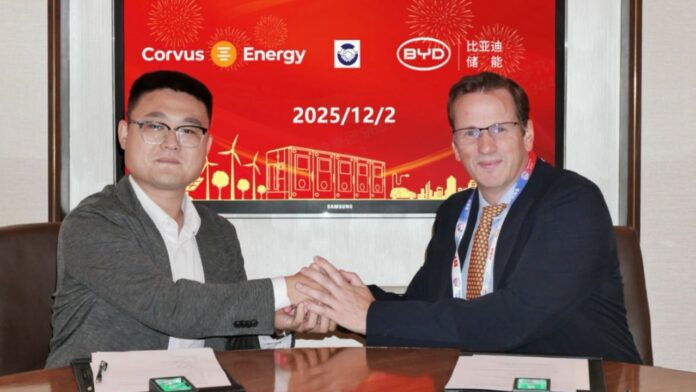
BYD Energy Storage and Corvus Energy have announced the signing of a Memorandum of Understanding (MoU) to establish a strategic collaboration aimed at advancing next-generation battery solutions for the maritime sector.

The MoU strengthens the cooperative relationship between the two companies by combining BYD Energy Storage’s scale and technological leadership in LFP batteries with Corvus Energy’s unparalleled expertise in marine ESS applications. Together, BYD Energy Storage and Corvus will work to accelerate product development, enhance global market reach, and deliver innovative, safe, and high-efficiency energy storage solutions for the global shipping industry.

This MoU represents a significant step forward in our ambition to remain the market leader in high-quality marine battery systems,” said Ole Jacob Irgens, Head of EMEA and Asia at Corvus Energy. “By combining Corvus’ deep maritime understanding and extensive experience in marine battery installations with BYD Energy Storage’s scalability, innovation in LFP technology, and strong global supply chain, we are well positioned to bring new products to market faster and meet the evolving needs of the shipping industry.

As part of the agreement, BYD Energy Storage and Corvus Energy will aim to coordinate global market activities to accelerate the adoption of marine energy storage systems and support the shipping industry’s transition toward cleaner, more sustainable operations.

Corvus Energy will serve as the ESS System Partner and Route-to-Market Partner, leveraging its proven expertise in system integration and its strong customer relationships worldwide.

Kinetics invests in and partners with Amogy

0

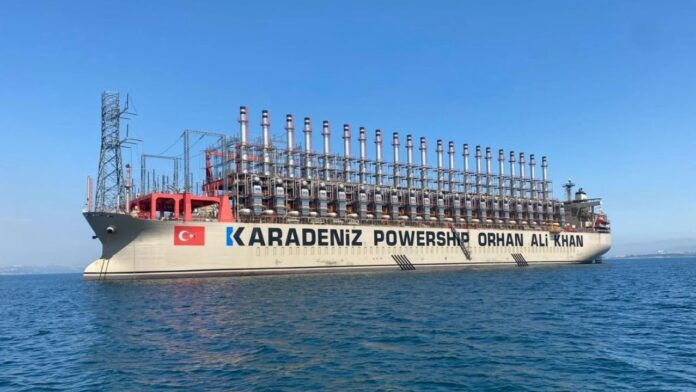
The collaboration will accelerate the development and deployment of ammonia-based clean power technologies for next-generation zero-emission Powerships – floating power plants – designed to support floating AI data centers and other emerging digital infrastructure.

Under the partnership, Amogy and Kinetics, a Karpowership initiative, will explore opportunities to jointly evaluate and pilot Amogy’s ammonia-to-power solutions to decarbonize Karpowership’s fleet of Powerships™. The parties will also explore commercial-scale opportunities to deploy Amogy’s technology in delivering clean, reliable floating power to AI data centers and other emerging applications.

Amogy’s proprietary ammonia-to-power technology leverages advanced catalyst materials to efficiently crack ammonia into hydrogen on-site. The hydrogen is then fed into a fuel cell or an engine, generating high-performance power with zero carbon emissions. The system’s modular design makes it adaptable and scalable, ideally suited for distributed power generation and maritime applications that demand both reliability and efficiency.

“We are proud to welcome Kinetics as both a strategic partner and investor in Amogy,” said Seonghoon Woo, CEO of Amogy. “This collaboration underscores the growing global momentum behind ammonia as a practical and scalable source of clean energy. By pairing Amogy’s ammonia-to-power solutions with Kinetics’ expertise in floating power infrastructure, we can provide fast, flexible, and zero-carbon power to meet the needs of the world’s fastest-growing markets and most energy-demanding applications.”

“We are pleased to partner with Amogy in our journey to build the clean energy systems of the future,” said Mehmet Katmer, General Manager of Kinetics. “At Kinetics, our mission is to accelerate the shift toward cleaner and more flexible energy systems, and ammonia-to-power technology is a key enabler for the next generation of floating power solutions. By combining Amogy’s innovation with our expertise in deploying large-scale floating infrastructure, we are advancing toward zero-emission floating power for communities and data ecosystems worldwide.”

The partnership and investment build on Kinetics’ expanding portfolio of low-carbon and renewable energy initiatives, including recent ventures in floating data centers and LNG-to-power assets.

Together, Amogy and Kinetics plan to pioneer ammonia-based power systems for floating power infrastructure and beyond, delivering clean, flexible, and scalable energy solutions that serve both traditional grid demand and emerging digital ecosystems.