5.8 C
New York
Home Blog Page 892

GNS launches new VFI web service and makes it free

0

GNS, the maritime technology company, has launched VFI Plus, a powerful new extension to its Voyager FLEET INSIGHT (VFI) web service and, at the same time, announced that it will be making the service available free of charge during the COVID-19 pandemic to support shipping companies with remote-working or office-based teams with increased demands for fast access to up to date information.

VFI Plus is the most advanced web tool GNS has ever put in the hands of its customers; enabling vessels to be remotely managed and monitored from shore in ways never before possible over the internet on a single platform.

One of the challenges for remote-working teams is not having access to data quickly enough. In addition, the COVID-19 virus is creating unique set of operational challenges that demand better access to information about vessel locations and their maritime environment.

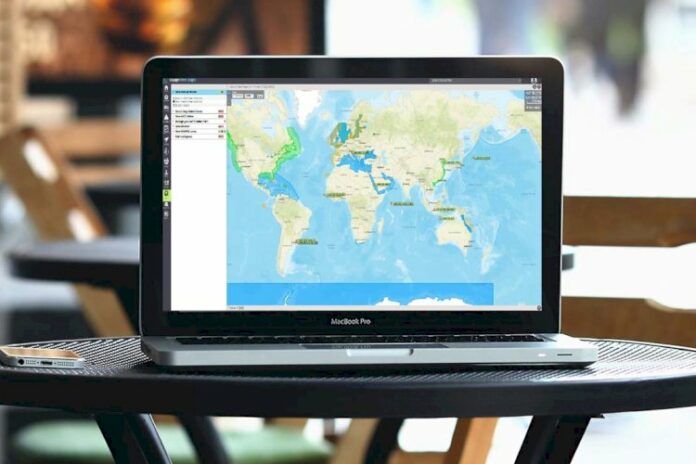
Designed to put more information in the hands of shore-based ship management and improve operational oversight and vessel safety, GNS’s new VFI Plus service features the ability to view live vessel positions on C-MAP charts, overlay current and forecast weather conditions, display MARPOL zones and view all nearby vessels within a user-defined distance. As a result of GNS’s collaboration with maritime security experts Risk Intelligence, VFI Plus also introduces the ability for users to view the latest maritime security issues globally, together with the option to also access premium detailed seaborne and port-related risk information.

Kent Lee, CEO, GNS Ltd, said:

“We want to help those who are involved in managing shipping activities during this unprecedented period to do their jobs as effectively as possible. with the ability to view both up-to-date vessel positions overlaid on charts, maritime weather, maritime security and MARPOL. VFI Plus is the ideal service to help customers during these challenging times that will enable better operational oversight, enhanced collaboration between vessel and shore that lead to more informed decision-making. In addition, the opportunity to also access official AVCS charts online, elevates the system further and makes this the most comprehensive set of vessel management features ever offered in a single web-based system.”

For shipping companies that demand the highest levels of operational safety and risk management, the ability to view exactly the same chart information as the vessels in their fleet are using for primary navigation is increasingly important. VFI Plus is also one of the first web services to offer access to the ADMIRALTY Vector Chart Service (AVCS) Online service as a premium service.  This enables users to display vessel positions alongside other information, including weather and MARPOL zones, on the UK Hydrographic Office’s official AVCS ENCs and view the ADMIRALTY Information Overlay.

For personnel managing vessels in remote locations, dealing with shipping incidents or investigating alleged regulatory violations, VFI Plus’s unique ‘go back in time’ facility provides an invaluable new resource. The feature leverages GNS’s huge maritime data assets to enables users to view vessel positions for specific dates and times as far back as 2015 and verify vessel’s historic positions, routes and activities in the context of other nearby craft, MARPOL areas and other key features of the maritime environment such as fish farms and submarine cables.

VFI Plus is available free of charge during the COVID-19 crisis to all shipping companies irrespective of whether they purchase navigational products from GNS or not. 

Translink certified compliant with latest DNV GL cybersecurity rules

0

The technology group Wärtsilä has been awarded a DNV GL type-approval certificate and cyber security certification by the International Electrotechnical Commission (IEC) for its Translink solution, part of the company’s connected ECDIS concept.

The cyber security verification has been issued according to the updated DNV GL rules and the internationally recognised standard for cyber security for bridge and navigation systems, IEC61162-460.Translink is a system that comprises the hardware, router, and software components. Together, they ensure that data can be encrypted as it is transmitted across the network using the latest protocols of cyber security. The certificates validate that the Translink Gateway has the key components in place to ensure secure operations. They also denote Wärtsilä’s commitment to developing cyber secure products in support of critical infrastructure and operations.

Wärtsilä achieved the certification after in-depth analysis by DNV GL, an independent third party, verifying that the system follows best practices on cyber security. The product is type approved and ready to be applied for vessels with the DNV GL Cyber Secure Class Notation, while the IEC reference aligns it with the industry prerequisites, as well as any regulatory requirements.

Jarle Coll Blomhoff, Group leader Cyber Safety & Security, DNV GL, says:

“Digitalisation offers more efficient and better ways of operating and designing vessel equipment, such as integrated voyage planning including the remote update of ECDIS charts. With a 3rd party cyber verification, vessel owners can take advantage of such new technologies with assurance that it follows best practice cyber security design. Wärtsilä Voyage has achieved the first Cyber Secure Type Approval using the updated February 2020 Type approval programme.”

Anton Karelskiy, Solution Manager, Wärtsilä Voyage, says:

“Great work has been done to ensure that Wärtsilä Translink not only complies, but sets the standard for ship-to-shore data exchange through secure channels. The full compliancy with IEC61162-460 and DNV GL Cyber Secure rules takes Wärtsilä Translink to an unprecedented level of security, quality and trust.”

Following more than ten years of experience in connecting ECDIS with implementation and certification of four generations of cyber security solutions, Translink provides a cyber secure gateway for Wärtsilä Navigation systems to the outside world, including for connecting ports (see recent Wärtsilä Navi-Port launch) or revolutionising voyage planning with the new Wärtsilä Navi-Planner.

Rolls-Royce’s innovative propulsion system for new multi-purpose vessels

0

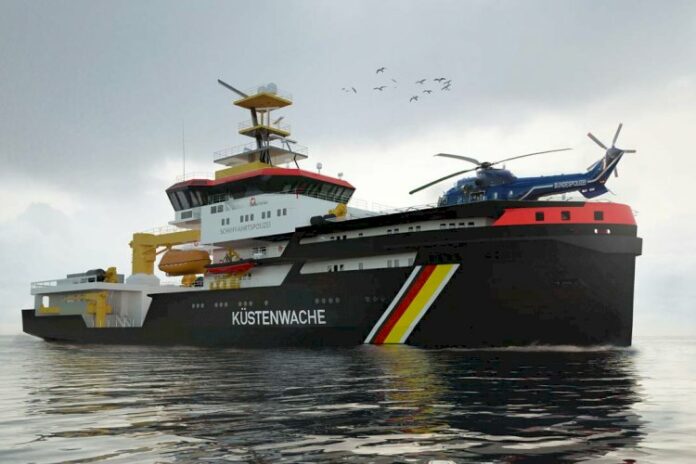
Rolls-Royce is supplying the gas-shielded propulsion system for two new multi-purpose vessels to keep them operational even under difficult conditions.

In future, the 95-m special ships will be called out on the North and Baltic Seas to deal with accidents, fires or unable-to-maneuver vessels. They are being built for the German Federal Waterway and Shipping Administration by Abeking & Rasmussen, the ship and yacht yard based in Lemwerder, Lower Saxony. The vessels are replacing their predecessors, the Scharhörn and Mellum, after 46 and 36 years of service respectively. The ship technology division of the Federal Waterways Engineering and Research Institute was commissioned with planning, design and tendering and now with construction management.

The two ships are powered by gas-electric propulsion systems based on four medium-speed Bergen B36:45L6AG units from Rolls-Royce, each delivering 3,600 kW. Rolls-Royce is not only engine and generator supplier, but provider of a special solution in the form of the gas protection specially developed to allow the engines to remain operational even if, for example, the ambient air has been contaminated with explosive gases following a gas tanker accident.

Rolls-Royce project manager Christian Prinz explained:

“Obviously the engines are there to burn gas, but if gas gets into the combustion chamber in an uncontrolled way via the intake air, the engine will become unmanageable.”

With the system Rolls-Royce has developed, the engine power output is adjusted in relation to the amount of gas in the intake air. In short, the more gas there is in the intake air of the engine, the less gas fuel is fed to the engine via the gas control valves. If the gas volume is too high, special quick-acting flaps shut off the intake of gas and air and the engine comes to a stop.

Knut Müller, Vice President Marine at Rolls-Royce, said:

“With these ships, we’ve combined the decades of experience we have under our belt in the field of medium-speed gas engines from Rolls-Royce with our highly specialized gas protection expertise to create an effective solution for our customer.”

Indeed, Rolls-Royce is the only manufacturer worldwide able to supply such powerful engines with gas protection and the relevant certification. They have already proven their worth in sea rescue cruisers, pollution control vessels and most recently in the Nordic, the North Sea emergency tug. Rolls-Royce has been supplying medium-speed gas engines for over 20 years.

Carsten S. Wibel, head of Abeking & Rasmussen Special Vessels GmbH, said:

“Rolls-Royce was the only manufacturer worldwide able to utilize its long-standing experience in this specialized field and develop gas protection for straightforward gas engines, all in line with our schedule requirements and backed up by the relevant feasibility study.”

The two predecessor vessels – the Scharhörn and the Mellum – were likewise powered with MTU-brand engines from Rolls-Royce. Jörg Fischer-Felsberg, Director of Sales and Service for MTU products in Germany, said:

“The customer was impressed not only by MTU propulsion, but by the quality of the service we provided, and that swayed his decision in our favor.”

In the event of an emergency, the new ships, capable of speeds over 15 knots, will be at the accident scene in no more than  two hours. Equipped with emergency towing capabilities with 145 tons bollard pull, chemical tanks, an explosion-proof safety and container cargo hold, as well as oil collection equipment such as skimmers, oil-holding tanks and a separation room, they are able to accomplish the most challenging missions. Not only the engines, but the entire ship is gas-protected. If it enters a dangerous zone in which there are flammable or health-endangering substances in the air, the crew must switch the ship to gas-protection mode, meaning that windows and doors must be sealed gas-tight. This creates a citadel into which clean air is pumped. The resulting overpressure ensures that no more toxic  air can enter.

That gas engines are being used in this project is owing to a German government directive that requires a massive reduction in CO2 emissions from governmental vessels. Enak Ferlemann, Parliamentary State Secretary to the Federal Minister of Transport and Digital Infrastructure, said:

“With the new LNG-powered ships that also carry the Blue Angel environmental certificate, we’re simultaneously ensuring top safety and top environmental standards in high-tech shipbuilding.”

ABS to class a series of Silver Eagle self elevating drilling units

0

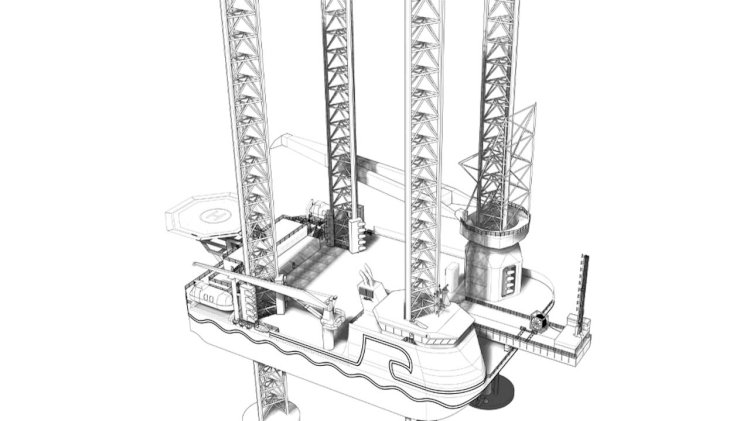
ABS is to provide classification for a series of highly innovative Self-Elevating Drilling Units (SEDU) for Silver Eagle Global. 

Silver Eagle says the self-propelled design is capable of working at greater water depths and in harsh environments. Also that the series will have the industry’s largest deck area and deck load capacity, a cantilever with modular design and a high-speed jacking system.

Matthew Tremblay, Senior Vice President, Global Offshore, said:

“These unique units offer the flexibility to adapt to the mission and payload. The large deck and cantilever are innovative design features, while self-propulsion and the four legs allows the vessel to get on the job site independently. These unique design features of the Silver Eagle units will bring a new level of versatility for the offshore industry.”

The initial contract calls for two vessels with an option for an additional two vessels.  It is anticipated that a series of similarly designed SEDU’s will follow after the initial builds.  Silver Eagle has contracted with PetroVietnam Marine Shipyard to build the units.

Ronald Sanders, Silver Eagle Executive Chairman said:

“It is a great privilege to announce the start of a new era for the offshore oil and gas industry, with the highly efficient design of the Silver Eagle SEDU 430WC-4.  We believe this design will provide a cost-effective solution for the offshore energy industry in all cycles of commodity prices. It gives me a great sense of pride to see this vessel contribute to the evolutionary and revolutionary worldwide offshore oil and gas service industry. Along with our partners, we will continue to be the world leader in SEDU technologies. We are extremely pleased to be working with ABS to class the vessels and PetroVietnam Marine Shipyard (PVMS) to build the Silver Eagle SEDU’s.”

ABS is the offshore industry’s provider of choice for classification services. Today, more than three-quarters of the world’s offshore drilling rigs and nearly half its floating production units are supported by ABS.

Photo: ABS

KM launches a new LARS solution for HUGIN®

0

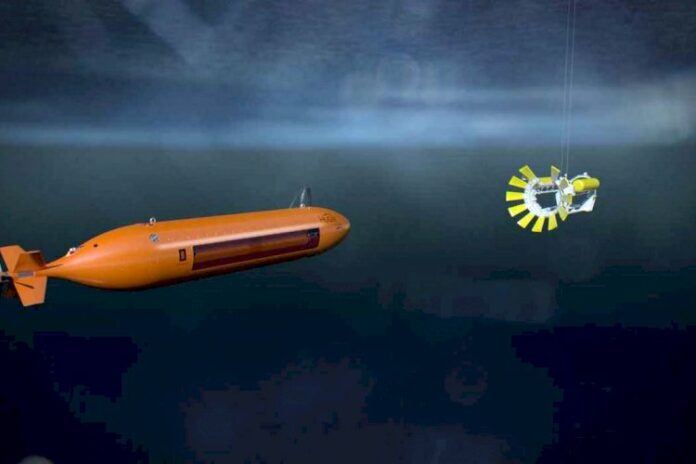
The innovative Launch and Recovery System (LARS) for HUGIN launched today is developed in close collaboration between two Kongsberg Maritime divisions Sensors & Robotics and Deck Machinery & Motion Control (DMMC). It will increase efficiency, improve safety and reduce risk of damage to AUVs.

Lisa Edvardsen Haugan, EVP DMMC, says:

“The new LARS solution benefits from the uniquely integrated combination of advanced in-house technologies, reinforced with years of accumulated expertise. This project is a great example of how we benefit from working together in the new Kongsberg Maritime.”

The new LARS operates from midships, with the release and capture of HUGIN marine robots occurring beneath the sea surface.

Launching and recovering AUVs under water, away from the splash zone, lessens the possibility of damage, while midships deployment averts any likelihood of AUVs being run over by the launch vessel. Another benefit is that launch and recovery done under the surface can be carried out in much higher sea states.

There are also tangible crew benefits. Operating the new LARS from midships will free up valuable aft deck space, and safety will be considerably enhanced as no personnel will be required to do manual work over the stern in potentially challenging conditions.

This project derives from months of collaboration between the Marine Robotics team in Horten and the Subsea team in Sunnmøre, Norway.

Johnny Aarseth, VP Subsea & Special Purpose, DMMC, says:

“Even before last year’s merger of Kongsberg Maritime and the former Rolls-Royce Commercial Marine, this was an opportunity we had our eyes on.”

He is part of a team with vast experience with LARS-systems used in the offshore industry, and had observed a need for a more robust solution for handling of AUV’s.

Johnny says:

“Together we were able to develop a solution that allows for operation under almost any weather conditions, and provides for safer operation with less risk of damage to the AUV and harm to personnel, as there is no need for manual handling.” 

The new design has potential to win market shares in several areas.

Bjørn Gjelstad, Marine Robotics R&D manager, Kongsberg Maritime, says:

“There is quite a limitless scope for this new LARS design. It can of course be installed on newbuilds commissioned by naval forces, where it would aid the deployment of marine robots. It can also be installed into an AUV hangar on a platform supply vessel, or even retrofitted in a containerised solution.”

Duisport submits building application for the trimodal container terminal

0

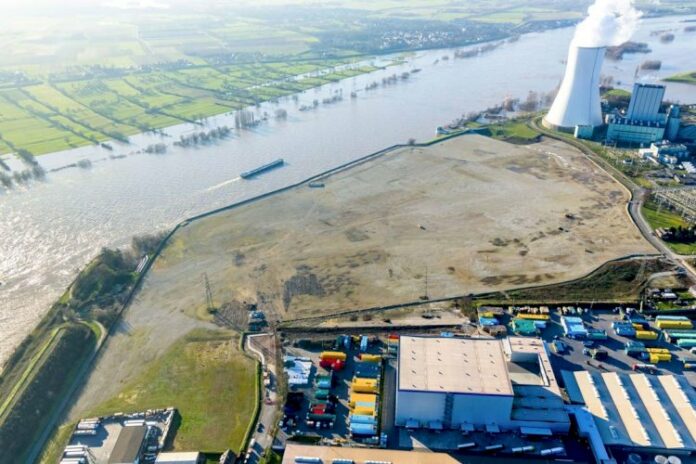
As part of the continued development of logport VI, duisport has now compiled the approval-related information for the construction of the container terminal and the internal access road for logport VI.

The trimodal container terminal (road/water/rail) forms an integral part of the new logistics concepts that were developed by duisport for this location together with its customers and partners. The primary goal of all participants is to reduce truck traffic and offer permanent alternatives particularly for ship and rail cargo.

DIG, the joint infrastructure company of the city of Duisburg and duisport, will be engaged to complete the site development process for the second building section of the Walsum link road. In addition, DIG will also look after the construction of the first building section on behalf of the city. In this way, the city of Duisburg and duisport establish a joint basis for quickly connecting logport VI to the transportation system.

The complicated repair of the rail connection between Oberhausen-West and the improvement of the water infrastructure for the new terminal in Walsum form an important component of the infrastructure strategy for logport VI. This means that both the bridges and the railroad crossings will be adapted to the new requirements. As the main shareholder of the Duisburger Infrastrukturgesellschaft (DIG), the city of Duisburg will also formally award the planning contract for the second building section. As part of the preparation process, duisport already rendered many preliminary planning services to ensure the construction of the link road until the planned completion date in 2024. To this end, DIG has agreed to also look after the construction of the first building section for the link road.

Erich Staake, Chief Executive Officer of Duisburger Hafen AG, notes:

“This solidarity between the city of Duisburg and duisport for logport VI is a milestone for the infrastructure development of the logport VI premises. We are certain that these solutions, which were developed jointly with the city, will lead to a real reduction in truck traffic. And it will bring us a big step closer to our goal of creating a lot more workplaces than the 300 employees who used to work in the paper factory on this attractive site.”

The new concept also allows Duisburger Hafen AG to provide its customers with a state-of-the-art, powerful infrastructure, with the main focus on the alternative water and rail transportation channels. As a shareholder of the duisport Group, the city of Duisburg welcomes this development, also with regard to the reduction in truck traffic.

Lord Mayor Sören Link about the positive effect of the building measures that are being initiated says:

“The reactivation of the railway bed, the optimized dock facilities and the start of the bypass road, which has been discussed for years, is an important and positive signal for the cooperative approach taken by duisport and Duisburg for the creation of new workplaces. This will significantly reduce the challenges faced by our citizens!”

A trimodal logistics site of the logport family, which also includes a container terminal, is in the process of being developed on the almost 43 hectare site that also features a 500 meter long dock wall. After logport I in Duisburg-Rheinhausen, Walsum is the second-largest project undertaken by Duisburger Hafen AG in the last 20 years. Industrial sites operated by ThyssenKrupp and the Hövelmann beverage group, as well as a Steag power plant, are located in the immediate vicinity.

CJ Logistics selected OPUS Logistics to manage their global operations

0

CyberLogitec, the leading provider of maritime, port/terminal and logistics operations technologies, has announced that CJ Logistics, Korea’s leading global logistics company, has signed the contract to globally deploy OPUS Logistics throughout their overseas subsidiaries and network.

The deployment will enable CJ Logistics to deliver a truly integrated and automated operating platform with improved communications and efficiency, increasing overall visibility and productivity.

Mr JinWook Lee, CJ Logistics global forwarding department director, said:

“In order to grow as a  leading global logistics company, integrated operations and agile business processes are essential. To achieve this, we are increasing our digital footprint by adopting OPUS Logistics as the heart of the operation. With a single automated system, it will reduce manual work, human errors and eliminate the possibility of discrepancies which can result in loss of revenue. It will also be giving us greater visibility of the entire operation and processes, important for generating better business collaboration.”

CJ Logistics was formed when CJ Korea Express, Korea’s largest logistics firm merged with CJ GLS in April 2013. Recognizing that technology competitiveness equals logistics competitiveness, CJ Logistics leads the global logistics industry through continuous research and development. The company has subsequently been recognized as one of the forerunners of technology innovation in the Korean logistics industry and has become one of the top 5 integrated logistics service providers, with worldwide operations in 155 cities in 40 countries.

CyberLogitec Global managing director, Tevin Choi said:

“OPUS Logistics provides digitalization and automation capabilities to help maximize the efficiency of the logistics forwarding operations. We are confident that the flexibility and scalability of the solution will help CJ Logistics fulfil their goal as a global industry leader, to improve their operational productivity and hence generating increased business profitability.”

OPUS Logistics is a highly-flexible, technologically-advanced platform that helps improve the efficiency of global freight forwarders throughout their entire supply chain.  By automating complicated or repetitive business processes and expediting the sharing of information between users in the supply chain, OPUS Logistics increases efficiency, streamlines communication and provides critical visibility to improve profitability.

Viewport3 accelerates launch of remote 3D scanning service

0

Aberdeen-based 3D scanning specialists, Viewport3, are set to roll out a new remote data capture service for the energy sector, giving them the capability to collect and process 3D data from offshore via remote working arrangements.

While this service has been in development, the firm have seen a spike in demand recently, as the drive to reduce the number of personnel working offshore continues apace combined with travel restrictions in response to the Covid-19 outbreak.

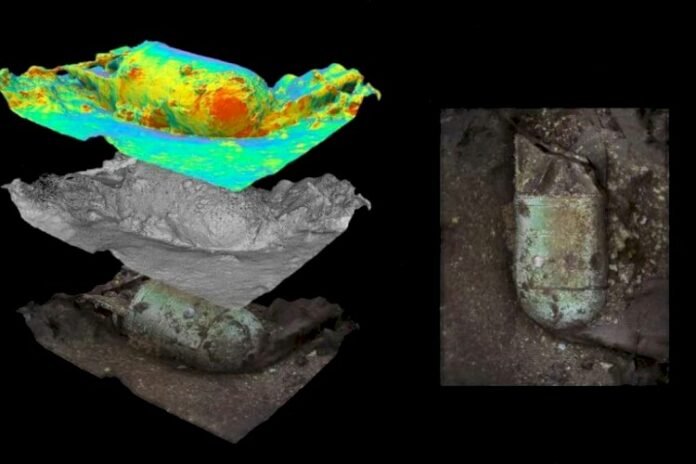
The technique involves providing divers and ROV personnel with instructions for the task along with remote support, allowing them to collect the data and submit to Viewport3 for processing and analysis. The firm has previously worked on a number of these remote projects around the world, particularly on occasions where travel restrictions and logistical challenges have prevented them being on site for the scanning.

Over the course of the development phase, Viewport3 have significantly refined the service in order to ensure customers are capable of retrieving the correct data. For example, it became apparent that written instructions alone weren’t sufficient, so the firm created site-specific video and graphical workflows that demonstrate the method to collect all the required information.

Co-director of Viewport3, Richard Drennan, explains further:

“Each project we embark on is the result of a 2-way conversation with our customers – they need answers to a specific question, which we can provide by scanning the relevant object, and processing the data into a 3D model and typically also a detailed but simple dimensional report. This remote service is no different. While it isn’t appropriate in every single set of circumstances, or for all accuracy requirements, there are many instances where we determine that the best camera for an urgent 3D scanning task, is the one you have available to you at the time. 

Remote capture adds value across the board. We are in the unique position of being able to use cameras that are currently fitted to the ROV, or which divers have otherwise readily available, meaning we can get to work very quickly. The volume and quality of the information we can retrieve remotely can save our customers multiple offshore campaign days and streamline future inspection tasks.”

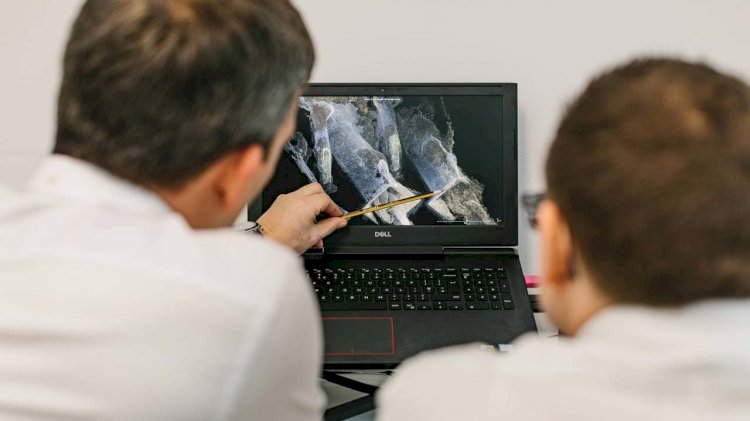
As the only firm in the UK 3D scanning sector which offers a legacy video data processing and reverse engineering service, Viewport3 can process and interrogate data acquired from any source, in addition to their own. They have developed work-flows that can effectively process this legacy data, clean it and create 3D models to make it more accessible, inclusive and understandable. 

Co-director, Chris Harvey adds:

“Oilfield and marine operators are in possession of a valuable untapped resource in their back-catalogue of legacy digital video and stills. Once we have digitally processed these, our customers can review the information in 3D, and make business critical decisions about asset integrity, without the need for an offshore campaign. This is advantageous at the best of times, but particularly so during this period of uncertainly and restriction of movement. 

There have been instances where we’ve answered every one of the client’s questions, based on video taken years ago. We work hard to ensure that complex data-sets and analysis results are simple to understand and aid inclusive project discussions at all levels. All of our project outputs are customer-defined and issued in a manner that answers the questions clearly and promotes increased understanding of technical challenges.”

VIDEO: LNG as the first step towards deep-sea shipping GHG reduction

0

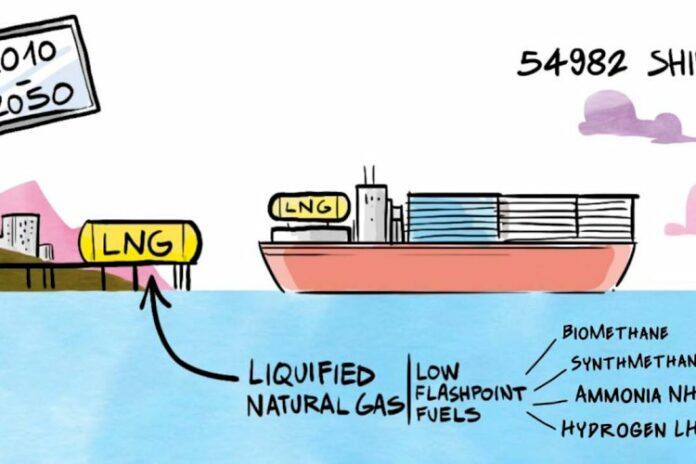
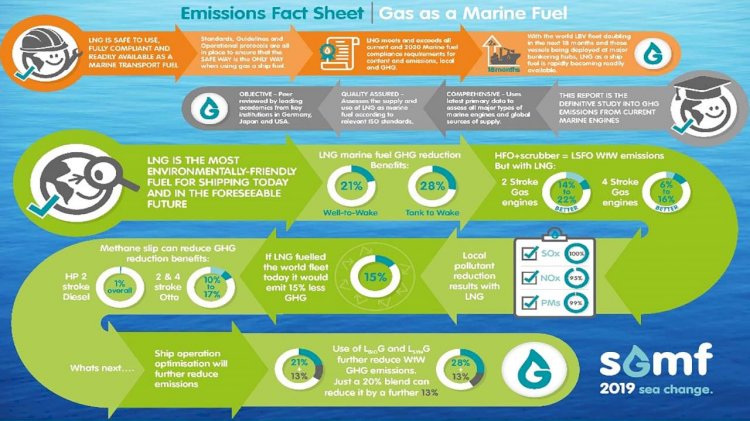
The Society for Gas as a Marine Fuel (SGMF) has released a video explaining why Liquified Natural Gas (LNG) is currently the only viable solution available that can cut emissions from deep-sea shipping as newer, cleaner options are developed. 

The video describes how LNG can provide a clear pathway to fuels that will enable the industry to meet the International Maritime Organization’s target to reduce greenhouse gas (GHG) emissions by at least 50% by 2050.
 
The disruption being caused by the COVID19 pandemic highlights the crucial role of shipping in enabling global trade, with governments working to safeguard supply chains for essential goods. Given this fundamental role in trade, reducing emissions from shipping is critical. Shipping currently represents around 3% of total global emissions. That contribution could change significantly as other sectors switch to renewables if the shipping fuel mix remains unchanged.

 
Mark Bell, General Manager for SGMF said:

We produced this video as there is still a lot of debate around the use of LNG and its role in achieving the 2050 targets, and eventual zero-carbon emissions in shipping.  We are not here to tell anyone what to do but we are here to lay out the facts regarding the use of LNG.  Be quite clear that the fuel choice is only part of the solution but without its widespread use or the delay of that use, 2050 targets will not be met.  Net zero carbon fuels are not yet available for shipping and could be some way off, LNG is a both a pathway to those fuels whilst also providing benefits now”.
 
With a changeover to LNG today we can reduce GHG emissions by up to 21% compared with current oil-based marine fuels over the entire lifecycle from well to wake. We want to help the industry understand that it is more attainable then people may believe to have a significant and immediate impact on emissions.”

Companies collaborate to explore hydrogen as a green energy source

0

Emerging low-carbon alternatives can help to power Singapore’s energy future. To capture the opportunities offered by low-carbon alternatives, five Singapore and two Japanese companies enter into a Memorandum of Understanding (MoU) to study how hydrogen as a low-carbon alternative can contribute to a clean and sustainable energy future for Singapore.

Under the MOU, PSA Corporation Limited (PSA), Jurong Port Pte Ltd (Jurong Port), City Gas Pte Ltd, Sembcorp Industries Ltd, Singapore LNG Corporation Pte Ltd, Chiyoda Corporation (Chiyoda) and Mitsubishi Corporation (Mitsubishi) will develop ways to utilise hydrogen as a green energy source. This involves the research and development of technologies related to the importation, transportation and storage of hydrogen.

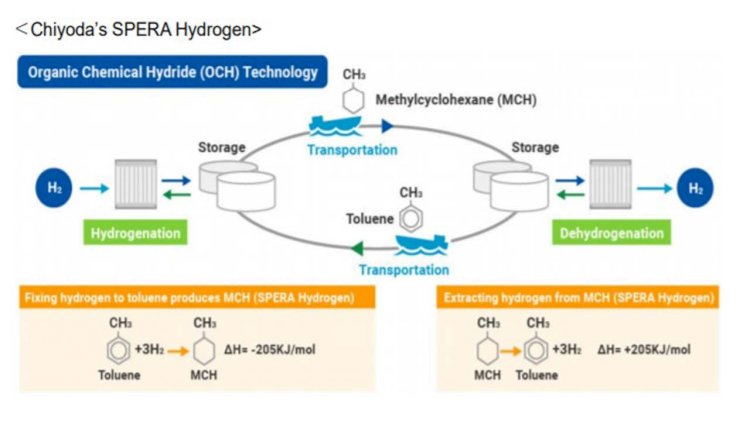
Working closely with Chiyoda, a key technology and supply chain solution partner, the companies will identify and demonstrate use cases using Chiyoda’s SPERA Hydrogen, Liquid Organic Hydrogen Carrier (LOHC) technology to allow hydrogen to be safely transported in chemical tankers at normal atmospheric temperature and pressure. Mitsubishi will support this development as the main shareholder of Chiyoda.

The five Singapore companies will work closely with Chiyoda and Mitsubishi to evaluate the technical and commercial feasibility of hydrogen usage, to develop a business case for hydrogen import and utilisation in Singapore.

Mr Ong Kim Pong, Regional CEO Southeast Asia, PSA International, said:

“We are delighted to be underlining PSA’s commitment to green initiatives with the signing of this MOU. Lowering carbon emissions to reduce the impact of climate change is a vital pillar of our business, and the direct impact of reducing our carbon footprint through this project is exciting. Powering our horizontal transport with hydrogen is just the beginning, and we will see its application expanding in the future, playing a part in our Smart Grid systems with EMA, and augmenting business adjacencies in our future Tuas Ecosystem.”

Mr Ooi Boon Hoe, Chief Executive Officer, Jurong Port, said:

“Jurong Port is working with Chiyoda as we believe that the port is well placed to accelerate the development of hydrogen as a viable fuel option for power generation in Singapore’s transition to a low-emissions future.”

Mr Kenny Tan, Chief Executive Officer, City Gas, said:

“As the producer and retailer of piped town gas for more than 860,000 homes and businesses, City Gas believes in harnessing green energy and technology to support eco-conscious manufacturing and operations. We look forward to study and develop the viability of using green hydrogen in the town gas manufacturing process to further lower carbon emissions.”

Mr Neil McGregor, Group President & CEO, Sembcorp Industries said:

“Sembcorp has long held a strong commitment to sustainability and has made it central to our business strategy and operations. Sembcorp’s experience in the region as a provider of renewable energy and sustainability solutions, coupled with our deep technology integration know-how will greatly support the development of the hydrogen economy in Singapore. We look forward to this exciting partnership and developing more significant contributions to reducing Singapore’s carbon footprint.”

Mr Tan Soo Koong, CEO, SLNG, said:

“This MOU marks an important first step towards making another sustainable energy option, namely hydrogen, available for Singapore. SLNG is pleased to be a part of this pioneering and very exciting collaboration, through seeking synergistic ways of using our terminal infrastructure. We are in the midst of a global energy transition, and SLNG is committed to doing what we can to facilitate and catalyse this process.”

Prompted by the very real challenge of climate change, the Singapore Government is engaging various stakeholders to co-create solutions for Singapore’s Energy Story. The National Research Foundation (NRF) Singapore will also work with the Maritime and Port Authority of Singapore (MPA) to tackle the maritime decarbonisation challenge through research and technology development.

Professor Low Teck Seng, Chief Executive Officer, NRF said:

“Singapore needs to stay ahead in the research and development of alternative energy sources in our transition towards a low-carbon and low-emission economy. We are encouraged that companies are coming together, leveraging each other’s expertise, to study how hydrogen can be used as an emissions-free alternative to existing carbon sources. These companies will work alongside our researchers to look at how technologies in this area – such as catalysis and membrane technologies – can be further developed for the production and distribution of hydrogen. This effort will be supported by public sector agencies, to accelerate the potential use of hydrogen as a low-carbon solution that will reduce Singapore’s carbon footprint.”