6.3 C
New York
Home Blog Page 891

Wärtsilä designes the world’s largest krill trawler

0

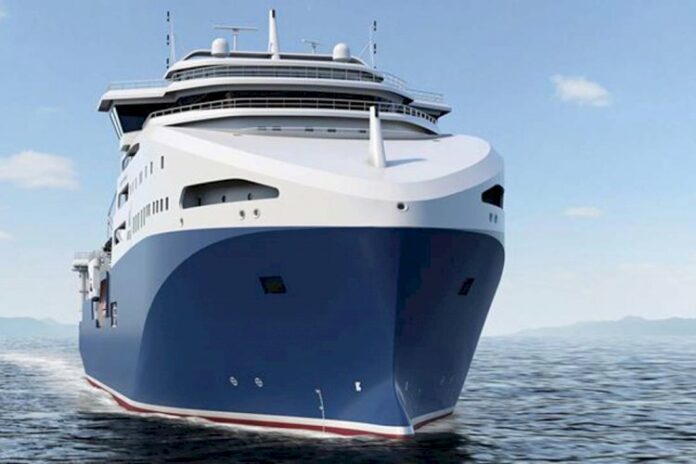
The technology group Wärtsilä has been contracted to provide the ship design for a new, state-of-the-art krill fishing vessel, which when delivered will be the largest and most efficient of its kind in the world.

The ship design order was placed by Shanghai Chonghe Marine Industry (CMI) in March.The approximately 140 metres long vessel will operate in the krill fishing grounds of Antarctica, and will be at sea for extended periods of time. It will be fitted with the latest fishing equipment, with onboard processing capabilities for high quality krill products. The Wärtsilä design will incorporate both high operational efficiency and minimal environmental impact.

Harvesting from the ocean needs to be carried out in a sustainable manner, especially in the pristine waters of the Antarctic. By enabling a bigger and more efficient vessel, the Wärtsilä design allows the operator’s quota to be reached with a greatly reduced carbon footprint since less fuel is burned, which correspondingly reduces emission levels.

This is the second krill trawler to be designed by Wärtsilä for CMI, and is considerably larger than the first, the ‘Shen Lan’, which is nearing completion. In addition to the ship design, Wärtsilä has also delivered the engines for the 115 metres long ‘Shen Lan’.

Tomaz Nabergoj, Director, Ship Design, Wärtsilä Marine, says:

“Learning by listening to the customer is central to Wärtsilä’s ship design approach, and we have worked in close cooperation with CMI to establish the precise requirements for successful krill fishing. As a result, together we have developed the outline for this new vessel, which will be ten metres longer than any other krill trawler in operation today. It will also be designed for optimal operational efficiency and environmental compliance, as well as enabling the very latest in fishing and processing methods.”

Laurent Wang, CEO of CMI, says:

“We are excited to announce our plans for the world’s biggest and most advanced krill trawler. Wärtsilä was a natural choice for us, following the excellent collaboration in designing the ‘Shen Lan’. Wärtsilä has proven to be a capable and reliable partner for us, and we are happy to strengthen our cooperation with them.”

The initial design will be completed during the second quarter of this year, and the scheduled delivery of the completed vessel is expected to be in 2023.
VIKING takes flight with second offshore PPE deal in two years

0

Following a competitive tender process, leading safety product manufacturer and service provider VIKING Life-Saving Equipment has won a three-year contract to supply personal protective equipment (PPE) to Serica Energy, one of the UK’s leading oil & gas companies.

The deal with the United Kingdom-based oil and gas company is the second of its kind for VIKING in consecutive years.

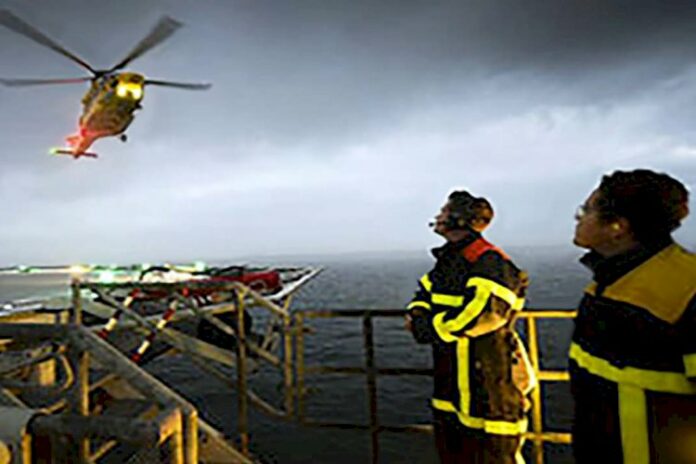
VIKING will work with Babcock Offshore to deliver aviation suits for Serica crew in the British sector of the North Sea. The contract marks VIKING’s second major success in the offshore aviation segment in as many years, following on from last year’s agreement with CNOOC Petroleum Europe Limited, which also involved Babcock as aviation provider.

Benny Carlsen, VIKING senior vice president of global sales and marketing, sees these supply and service agreements as a sign of things to come. He says:

“Supplying offshore aircrews is an increasingly important focus for us, and we are quickly proving ourselves in this fiercely competitive market.”

Carlsen believes there is a direct link between VIKING’s ongoing efforts to enhance its products and services and its impact in this specialised sector. Its latest aviation suit is one kilogram lighter than its predecessor, for example, and is fitted with a radio-frequency identification device (RFID) equipped to track its condition and detect any possible weak spots.

The use of RFIDs also cuts paper consumption significantly, improving operational efficiency while also benefiting the environment in a way that aligns closely with VIKING’s corporate social responsibility policy, says Heather McManus, VIKING global sales manager for aviation.

She adds:

“Serica Energy is strongly committed to minimising its environmental impact, a commitment demonstrated in the fact that these suits feature reusable Velcro® straps instead of plastic packaging. Those working at sea are perhaps more conscious than anyone of the impact our throwaway culture has on the oceans. Cutting out single-use plastics isn’t just the right thing to do; it’s what our customers want to see.”

Magseis Fairfield announces award of deepwater OBN program

0

Work is scheduled to commence in the third quarter of 2020 and will take approximately 60 days. The survey will be carried out in water depths of 2,000 to 2,600 meters.

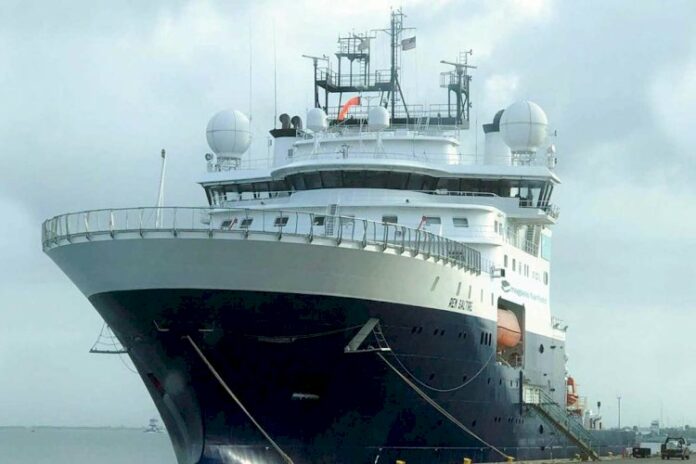
The award further adds to the backlog for Magseis Fairfield’s existing and experienced ZXPLR® crew, led by the REM Saltire node handling vessel. The new award increases the crew’s backlog into the fourth quarter 2020, following the two deepwater OBN programs announced in December 2019.

Carel Hooijkaas, Magseis Fairfield CEO, says:

“This award demonstrates our leading position in the deepwater OBN market and strengthens our 2020 backlog. The work is for a repeat customer who completed a survey in the US Gulf of Mexico earlier in 2020, and we very much look forward to working for them in Mexico later his year.”

This is the first deepwater OBN survey in Mexico following the 2013 Energy Reform, and Magseis Fairfield is excited to leverage its extensive deepwater OBN experience gained in the US sector of the Gulf.

GTMaritime’s solution counters a cyber security weakness of ships

0

A new solution from GTMaritime counters a major cyber security weakness of ships at sea today by deploying critical software and security patches to protect shipboard systems before threats emerge.

GTDeploy provides a software deployment platform to deliver security updates to ships wherever they are in the world ‘in the background’ without requiring intervention by IT staff or distracting crew.

Hackers actively exploit the lack of urgency given by organisations to updating software, even though software patch management can be as vital to cyber-risk management as overtly defensive measures such as email filtering, network segregation and unified threat management. GTDeploy has been designed to make patch management integral to the maritime IT environment.

GTDeploy supports automatic updating – as seen on smartphones – for pushing out software fixes as soon as a newer version becomes available. It can add, refresh or uninstall security updates, patches or entire applications and gives fleet IT managers the flexibility to prioritise updates based on urgency and chose when and/or where they take place.

GTMaritime Head of Operations, Jamie Jones, says:

“Software updates get pushed down the list of priorities for a variety of reasons. Sometimes there are simply more immediate problems that need dealing with but often this is to do with pressure on budgets: the cost of sending someone out to a vessel may be hard to justify. GTDeploy removes that pressure.”

Whether updates are better performed when a vessel is under way or postponed until reaching port, GTDeploy allows applications to be managed through an intuitive drag-and-drop dashboard interface. Its use saves ship operators time and money by reducing the logistical burden of either manually updating every PC remotely or sending IT personnel or local agents to visit ships in person.

GTDeploy is airtime agnostic, which means it will function regardless of the type and capability of satellite communications set up on a ship. This is particularly relevant for mixed or managed fleets, where ships have different hardware and varying configurations. If an application needs additional library files, for example, these are fetched automatically and included in the transmission package.

GTDeploy helps vessel owners cope with the proliferation of software onboard as the industry embraces digitalisation and transitions to data-centric operating practices. Jones says:

“As the number of onboard systems multiply and complexity grows, so does the urgency and resources needed to maintain them.”

GTDeploy paves the way for a more pro-active approach to managing onboard software, he adds. With cyber-security due to come under the scope of Safety Management System of the ISM Code from next January, vessel operators must demonstrate that robust and systematic processes are in place to address vulnerabilities and reduce exposure to malicious code.

GTDeploy is built on FastNet, a data connectivity platform developed by GTMaritime to manage ship/shore data flow intelligently as shipping companies embrace and transition to a more digital way of working. It comprises a package of services for encrypting, compressing and prioritising data communications to make best use of the satellite link and available bandwidth.

Royal Canadian Navy orders four new tugs

0

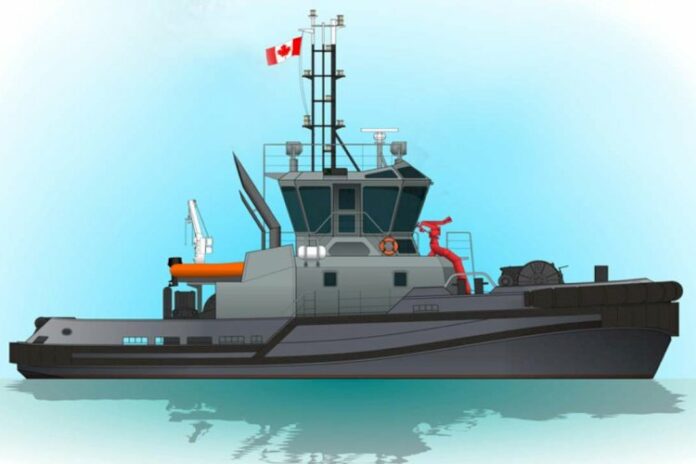
The Royal Canadian Navy has placed an order with the shipyard Ocean Industries Inc. in Quebec for new ship handling tugs equipped with rudderpropellers from SCHOTTEL.

Two tugs are to be delivered to the major Canadian naval base in Esquimalt, British Columbia, and two more to the base in Halifax, Nova Scotia.

Each of the four ASD tugs will feature two SCHOTTEL Rudderpropellers type SRP 430 FP (1,860 kW each) with fixed pitch propellers measuring 2.40 m in diameter. The azimuth thrusters will be driven by diesel engines. This configuration will achieve an expected bollard pull of 60 tonnes and a free running speed of approximately 12 knots. Known as the Naval Large Tug (NLT) project, the new IMO Tier III vessels are based on the Robert Allan Ltd. RAmparts 2400 design.

The principal characteristics of the SRP derive from the combination of propulsion and azimuth steering. There is consequently no need for a rudder, and the engine power is optimally converted into thrust. The 360° rotation of the rudderpropeller means that the full input power is available for manoeuvring.

These new tugs will provide towing, firefighting and other critical support services to both the Atlantic and Pacific Maritime Forces. Each tug will have an LOA of 24.4 metres, a moulded beam of 11.25 metres and a draught of 5.40 metres along with space for a crew of six. The vessels will also have a secondary firefighting capability.

ONGC achieves first gas from project offshore India

0

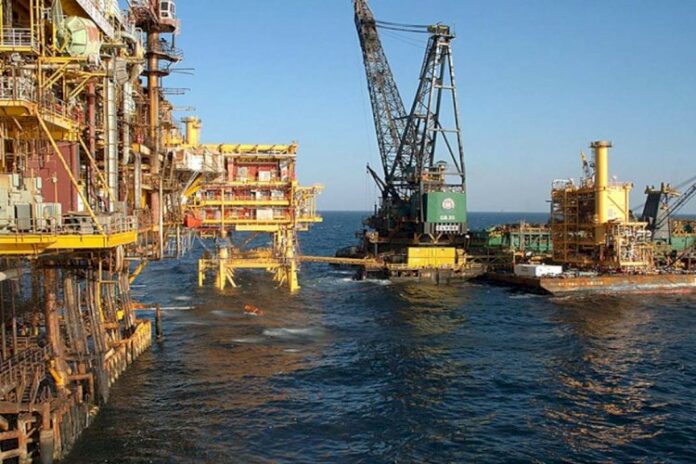
McDermott International, Inc. has announced that early first gas has been achieved on India’s Oil and Natural Gas Corporation’s (ONGC) 98/2 Block in the Krishna Godavari Basin, offshore India.

Awarded in October 2018, the largest subsea project in India brings together leading subsea equipment and services to provide ONGC with end-to-end project delivery. The integrated subsea package includes the supply of all subsea production systems (SPS), including 26 deepwater trees, and the installation of subsea umbilicals, risers and flowlines (SURF) at a water depth of between zero to 4,265 feet (1,300 meters). Early first gas involved the tie-back of a single well to the existing Vashishta facility. At 4,265 feet (1,300 meters), the first well that has been opened for early first gas is the deepest water depth opened by ONGC.

Ian Prescott, McDermott’s Senior Vice President for Asia Pacific, said:

“McDermott is a leader in the subsea space and we have worked incredibly hard to fast-track the production to early first gas. To deliver this accelerated schedule is an exceptional achievement and testament to the benefits of the collaborative commercial model put forward to ONGC. Production from a deepwater well in less than 14 months is an outstanding achievement for the deepwater exploration and production industry.

In line with the ‘Made in India’ approach for the 98/2 project, a substantial amount of engineering and project management has been led from McDermott’s operations in Chennai. This local approach is a new initiative in the deepwater subsea space for McDermott. We look forward to continuing our work in the Bay of Bengal as we help ONGC meet India’s growing energy demands.”

Launch of DIMECC S4V programme paves the way for safer fairway navigation

0

The new DIMECC Sea for Value programme (S4V) provides blueprints for digitalisation, service innovation and information flows in maritime transport. Its longer-term mission is in preparing for advanced autonomous operations and navigation.

DIMECC S4V is a transformative programme that aims for wide societal influence by providing concrete research-based recommendations on regulation, business, data usage and sharing, as well as standardisation for maritime transportation. The programme will be implemented across several projects. The first project focuses on developing and experimenting with future fairway services including remote pilotage.

Sanna Sonninen, pilotage director at Finnpilot Pilotage, says:

“We see that utilising modern technology can enable new pilotage services. The aim is to demonstrate and experiment important milestones on the journey towardsa smart and autonomous maritime transport system. We are happy to have DIMECC programmes implementing technologies that are on the One Sea roadmap.” 

Meyer Turku R&D Director Kari Sillanpää adds:

“Safer and more efficient solutions are crucial in the cruise business. Participating in DIMECC S4V puts us at the forefront of development, and we will be working with other partners to ensure the smooth deployment of new technologies.”

DIMECC Sea for Value is a co-creation venture bringing together industry, research and government organisations. The first project, named ‘Fairway’, is funded by Business Finland and its industrial partners. Forthcoming projects under the programme will address maritime digitalisation to support One Sea’s aim of a safer, more efficient and sustainable maritime transport and logistics chain. The programme follows the structure and model of DIMECC’s previous ventures such as LIFEX, where industrial change has been implemented through a series of projects.

Seppo Tikkanen, programme manager for S4V, says:

“DIMECC Sea for Value is an open programme, and we welcome new partners for future projects.”

Orbital set ambition on installing first floating tidal farm at EMEC

0

This will pave the way for Orbital to deliver their first floating tidal turbine farm.

Orbital are currently in the process of manufacturing their first commercial O2 turbine; at 2 MW and with a swept area of over 600 m2 the O2 will be the world’s most powerful tidal turbine and will be capable of meeting the annual electricity demand of over 1,700 UK homes.

Orbital were successful in raising £7 million in crowdfunding to deliver the first O2 turbine along with being awarded £3.4 million by the Scottish Government through the Saltire Tidal Energy Challenge Fund. The O2 project is also being supported with European funding via the Horizon 2020 FloTEC project and Interreg NWE ITEG project.

The first O2 turbine is currently expected to be grid connected at EMEC by the end of 2020 with a view to being fully operational in early 2021.

Securing a second berth at EMEC provides a route for the company to deliver a 4 MW floating farm at EMEC’s Fall of Warness tidal energy test site, off Orkney’s northern island of Eday. Estimated installation for the second turbine is 2022.

The Orbital O2 will comprise of a 72 m long floating superstructure, supporting two 1 MW turbines at either side for a nameplate power output of 2MW, at a tidal current speed of 2.5 m/s. With rotor diameters of 20 m, it will have a 600 sq metre rotor area, the largest ever on a single tidal generating platform to date.

Power exported from the turbines, via EMEC’s subsea cable and onshore substation, will feed the national grid on Orkney. During the previous testing campaign of the company’s SR2000 turbine in 2018, up to 25% of the Orkney electricity demand was met by the single prototype at times.

Andrew Scott, CEO at Orbital Marine Power said:

“We are delighted to have secured this second berth; it’s a vital step towards delivery of our first tidal array. The current O2 build is progressing in line with expectations, thanks to a fantastic supply chain we have working with us, and this second berth provides us the opportunity to set the vision for how we are going to further the commercialisation of our industry leading technology and accelerate the deployment of tidal energy at scale globally.”

Neil Kermode, Managing Director at EMEC said:

“This is fantastic news for the tidal energy industry which has been going from strength to strength over the last three years as more gigawatt hours have been fed into the grid than ever before. The first floating tidal energy farm marks another step forward for the sector which is demonstrating that it will be a vital part of the world’s drive towards net zero.”

MSC unveils new flexible cargo service to meet demand from Asia

0

It includes container yard storage in six transshipment hubs across Asia, the Middle East, Europe and the Americas, ensuring that goods can be shipped close to their destinations as soon as possible and providing easier cargo flow for customers.

MSC notes that:

  • China has shown signs of recovery with factories restarting production
  • The new SOT programme will help avoid high storage costs at ports of discharge​

As part of its ongoing response to the impact of COVID-19, MSC Mediterranean Shipping Company, a global leader in container shipping and logistics, has developed a Suspension of Transit (SOT) container shipping programme to prepare for a recovery in demand for freight services once the impact of the pandemic eases.

The programme builds on MSC’s ongoing efforts to ensure business continuity and the maintenance of vital container carriage services, such as the movement of food, fresh produce, medical equipment and other essential goods. The new SOT initiative is focused in particular on a resumption of demand of a wide variety of goods from Asia.

While positive signs of recovery have begun to emerge in Asia and factories have restarted production, major ports of destination may still not be ready to discharge containers. MSC’s new SOT programme aims to fulfil the resuming demand for raw materials and finished products from Asia by providing yard storage at major strategic points around the world: Bremerhaven in Germany, Busan in South Korea, King Abdullah Port in Saudi Arabia, Lome in Togo, Rodman PSA Panama International Terminal in Panama, and Tekirdag Asyaport in Turkey.

The programme is aimed at all shippers for containers from Asia and all types of cargo, except reefer (refrigerated cargo), dangerous goods and project cargo (such as large, out-of-gauge pieces of heavy equipment that do not normally fit into containers).

The MSC SOT programme provides potential cost savings for customers faced with high warehousing storage costs at destination, demurrage, per-diem and other charges. It will also free up space at origin factories and warehouses and avoid excess inventory at site, bringing cargo closer to destination markets and alleviating the risk of congestion or closure at ports of discharge.

The lead time will be reduced once operations resume at destination ports, and the programme will also add storage for beneficial cargo owners (BCOs) and non-vessel owning common carriers (NVOCCs), who would otherwise reach their full capacity.

Deutsche Bucht offshore wind farm achieves full project completion

0

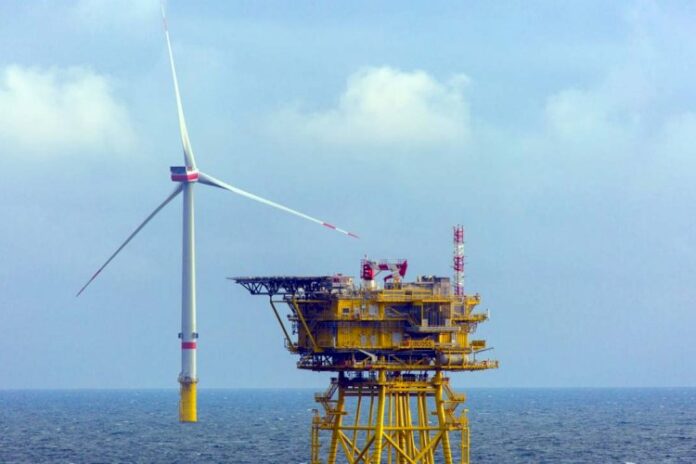
Northland Power Inc. has confirmed that its 252 megawatt (MW) Deutsche Bucht offshore wind project achieved full completion on March 31, 2020.

All 31 monopile foundation turbines have been generating power since the end of September 2019 and to date, have generated over €130 million of pre-completion revenues. Final completion marks the official end of construction and the start of the operational phase of the project, and also signifies that the terms required to satisfy the project lenders for term conversion have been achieved.

Mike Crawley, Northland’s President and Chief Executive Officer, said:

“Achieving this milestone is the culmination of the efforts and dedication put forth by our project team to see the project through to completion. The successful completion of our third offshore wind farm solidifies Northland’s position as a global player in offshore wind development and underscores our ability to deliver large‐scale sustainable energy infrastructure projects that create long‐term value for shareholders.”

Deutsche Bucht is 100% owned by Northland and is expected to produce an annual output of approximately 1.0 billion kilowatt hours of climate-friendly electricity. This is enough to serve the power needs of approximately 300,000 German households while saving nearly 700,000 tonnes of CO2 emissions per year.