8.8 C
New York
Home Blog Page 883

Robo-turtles in fish farms reduce fish stress

0

Animal-robot studies can inform us about animal behaviour and inspire advances in agriculture, environmental monitoring and animal health and welfare.

Currently, experimental results on how fish are affected by the presence of underwater robots are largely limited to laboratory environments with few individuals and a focus on model species. Laboratory studies provide valuable insight, but their results are not necessarily generalizable to larger scales such as marine aquaculture.

A sea cage can hold up to 200000 farmed salmon. If the cage sustains damage, such as a hole in the nets, the fish could swim out through the opening and make their escape in short order.

Clearly, the aquaculture industry wants to avoid this scenario. Not only do escapes lead to large losses for the industry, but no one wants farm-raised salmon to mix and interbreed with wild populations.

Keeping an eye on what is going on inside the cages is critical for being able to respond and repair any damage promptly.

Intensive commercial aquaculture brings with it substantial concerns regarding fish welfare. Increased stress levels of compact fish schools may cause aggressive and competitive behaviours. In addition to concerns of animal suffering, stress also makes fish receptive to diseases and parasites and may lower productivity. 

Human divers and underwater vehicles controlled by operators on land are commonly used to check the conditions in sea cages. Both types of intruders can disrupt and stress the fish. These methods also limit the frequency of inspections.
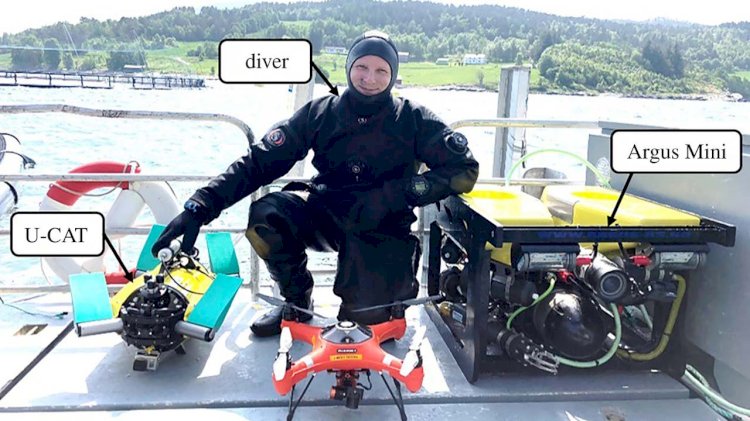
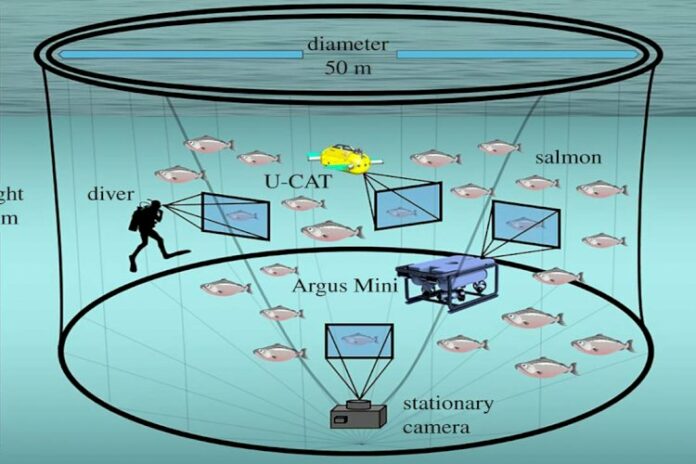
Robotics and biology researchers have been trying to find out which monitoring methods disturb fish least. Researchers observed aquaculture salmon’s reaction to the flipper-propelled robot U-CAT in a sea cage with 188 000 individuals. A significant difference in fish behaviour was found using U-CAT when compared to a thruster-driven underwater robot, Argus Mini and a human diver. Specifically, salmon were more likely to swim closer to U-CAT at a lower tailbeat frequency. 

Fish reactions were not significantly different when considering motor noise or when U-CAT’s colour was changed from yellow to silver. No difference was observed in the distance or tailbeat frequency as a response to thruster or flipper motion, when actuated and passively floating robots were compared. These results offer insight into how large aggregations of aquaculture salmon respond to underwater robots. 

The tests that have a robotic turtle swimming around the cage to film the equipment and fish have proven to do the inspection job better and more gently.

The experiments show that the fish are only negligibly scared or stressed by the robotic turtle. They swim calmly and fairly close to the turtle, whereas they keep away from the intruders in experiments with divers and thruster-driven underwater robots.

Maarja Kruusmaa, a professor at the Norwegian University of Science and Technology’s (NTNU) Department of Engineering Cybernetics and at Tallinn University of Technology, says:

“The overall purpose of the experiments wasn’t just to test the turtle robot, but also to investigate what characteristics robots being used in the aquaculture industry should have. We’ve found that the most crucial characteristics of the surveillance robot are its size and speed, whereas colour and motor noise hardly matter at all.”

The turtle robot’s small size and slow movements are the characteristics that make it less disturbing to the fish. The fact that it resembles an organism that lives in the ocean is less important. Kruusmaa says:

“The conclusion turned out to be the opposite of our expectations. The fact that the robot looks like a marine animal doesn’t seem to play any role at all. And that’s actually good news – it means we don’t have to build the robots to be fish- or turtle-like. That will make it cheaper to develop and use robots in this new field of application to monitor marine organisms.”

Kruusmaa and Jo Arve Alfredsen, an associate professor in the Department of Engineering Cybernetics at NTNU, published an article about their findings in Royal Society Open Science about their findings.
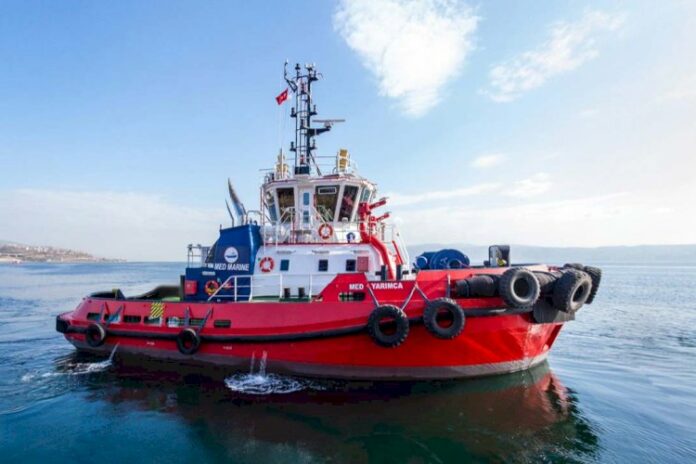
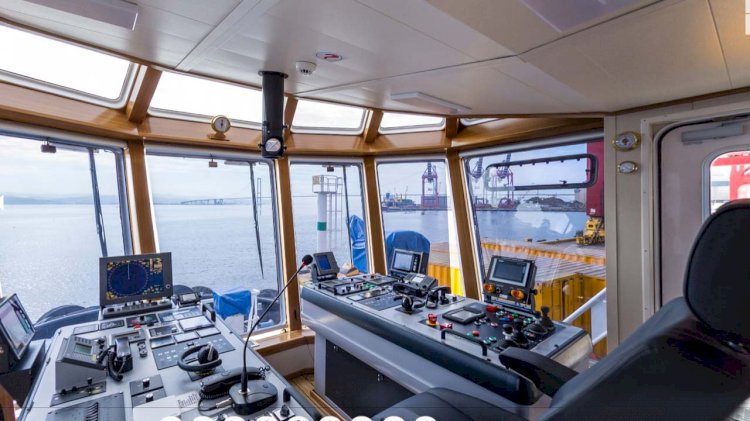
Med Marine’s tug started its operations in mexican Port Of Manzanillo

0

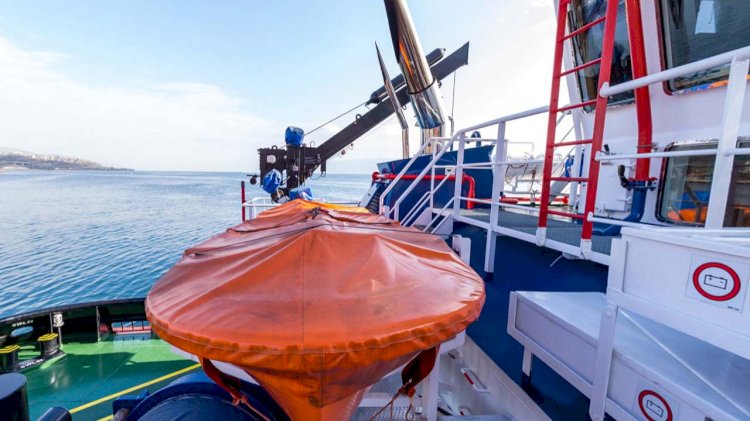
After Med Marine and Mexico’s Snekke S.A. signing a contract for MED-A2575 class tugboat at the end of 2019, the vessel was successfully delivered to its Mexican operator in the first quarter of 2020 and has started its operations in Mexican Port of Manzanillo.

Renamed as RPM MANZANILLO (prev. MED YARIMCA) after the port she is operating at, she was previously operating in Med Marine’s national fleet in addition to her five identical sisters.

The vessel is MED-A2575 series tug (RAmparts 2500W), an ASD design by Canadian designer Robert Allan Ltd. MED-A2575 is a very economical, compact but pretty robust design that is widely accepted by the operators all over the world.

Med Marine has built many units of MED-A2575 with different bollard pulls and the company offers the series with 60, 70 and 75 tonnes bollard pull options.

Med Marine successfully delivered 3 tugs to South America in 2019.

RPM MANZANILLO’s general specifications include:   

  • LENGTH O.A.                25,30 m
  • BEAM                           12,00 m
  • DEPTH                         4,60 m
  • BOLLARD PULL           70 tons
  • SPEED                         13,5 knots (max.)
  • MAIN ENGINE               2 x CAT 3516 C 2100 bkw@1600 rpm
  • PROPELLER                 Schottel SRP460 CP
  • ACCOMMODATION        6 people

Valmet to supply automation systems for two luxury expedition vessels

0

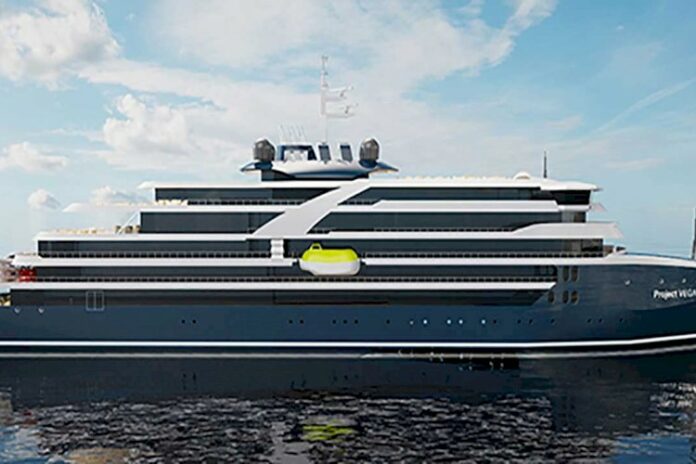
Valmet will supply automation and information systems for two luxury expedition vessels built by Helsinki Shipyard Oy in Finland.

The vessels will be delivered to Russia’s largest river cruise company Vodohod Ltd., and they will operate both in the Arctic and Antarctic waters as well as in the tropical waters during the spring and autumn seasons.

The order was included in the fourth quarter of 2019. The value of the order is not disclosed. The automation solutions will be delivered to the vessels in August 2021 and handed over to the customer in November 2021.

The 113-meter-long and 20.2-meter-wide vessels will have an ice class of PC5 and a passenger capacity of 157 persons. Their draught is 5.7 meters, and cruising speed is 14 knots.

Unto Ryynänen, Head of Electrical Design Department, Helsinki Shipyard Oy, says:

“To ensure safe operation of the vessels, we have selected Valmet’s automation. We have a long and trustworthy relationship with Valmet.”

Heikki Tanner, Sales Manager, Process Industry Sales, Automation, Valmet, says:

“The Valmet DNA marine automation system is reliable and tailor-made for harsh conditions in extreme environments.”

Subsea 7 announced the award of contracts by Chevron

0

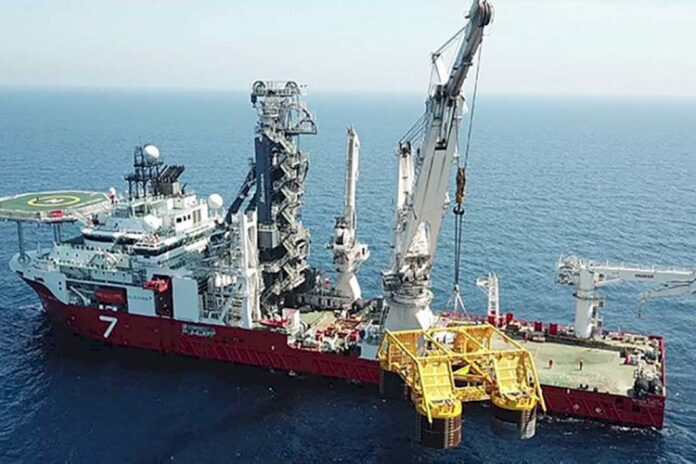
Subsea 7 announced the award of contracts by Chevron U.S.A Inc. for subsea installation services related to the Anchor field, located in the Green Canyon area of the Gulf of Mexico. The Anchor field is approximately 140 miles off the coast of Louisiana.  

Subsea 7’s scope of work includes project management, engineering, procurement, construction and installation of the SURF components including, but not limited to, the production flowlines, risers, umbilicals, flying leads, jumpers, and associated appurtenances. 

Project management and engineering will commence immediately at Subsea 7’s offices in Houston, Texas. Fabrication of the flowlines and risers will take place at Subsea 7’s spool-base in Ingleside, Texas, with offshore operations anticipated to occur in 2022 and 2023. 

Craig Broussard, Vice President for Subsea 7 US, said:

“We are honored to be selected by Chevron for the SURF installation scope on the Anchor project. We look forward to building on the collaborative relationship with Chevron to deliver a best-in-class project. The combination of the SURF scope for Subsea 7 and the ongoing subsea equipment delivery by OneSubsea, will allow the Subsea Integration Alliance to work in partnership with Chevron to unlock the value of an integrated approach to project optimisation.” 


US unveils a new programme for hydrokinetic turbine design

0

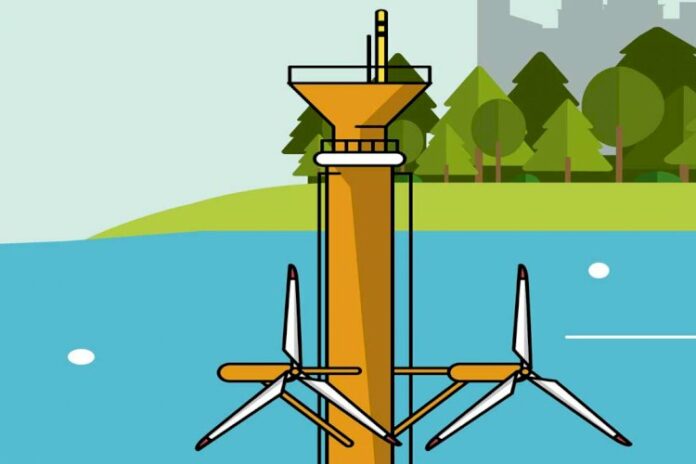
The U.S. Department of Energy has announced up to $38 million in funding for a new Advanced Research Projects Agency-Energy (ARPA-E) program, Submarine Hydrokinetic And Riverine Kilo-megawatt Systems (SHARKS). The program seeks to design economically attractive Hydrokinetic Turbines (HKT) for tidal and riverine currents.

Under Secretary of Energy Mark W. Menezes, said:

“America’s tidal and riverine currents remain a valuable resource for the generation of clean and reliable electricity. Developing efficient, economically attractive hydrokinetic turbine technologies will enable the United States to utilize those resources and continue to diversify our energy generation infrastructure and increase grid resiliency.”

ARPA-E Director Lane Genatowski, said:

“The SHARKS program builds upon the foundation of previous ARPA-E programs focused on utilizing our nation’s natural resources to explore new ways to generate renewable power. We view this program as a great opportunity to further diversify America’s energy needs, and provide new and efficient energy generation sources for the nation’s grid.”

Tidal and riverine energy resources are renewable, have the advantage of being highly reliable and predictable, and are often co-located with demand centers, while HKT devices can be designed with low visual profiles and minimal environmental impact. These energy-producing devices are also uniquely suited for micro-grid applications, supplying energy to remote communities and other “blue economy” and utility-scale applications. 

The SHARKS program will develop HKT system designs while encouraging the application of Control Co-Design (CCD), Co-Design (CD) and Designing-for-OpEx (DFO) methodologies. These approaches require a wide range of disciplines to work concurrently during the concept design stage, as opposed to sequentially, and teams will require expertise from various scientific and engineering fields to optimize simultaneously. SHARKS will fund the development of new HKT designs that represent this challenge; including the development of new solutions for hydrodynamics, mechanical structures, materials, hydro-structural interactions, electrical energy conversion systems, control systems, numerical simulations and experimental validations. SHARKS projects will work towards a reduction in Levelized Cost of Energy (LCOE) of up to 61.5% compared to current state-of-the-art HKT systems.

For more information on ARPA-E’s SHARKS program, click here. To apply for funding, visit ARPA-E eXCHANGE here.


Coastal pollution reduces genetic diversity of corals, reef resilience

0

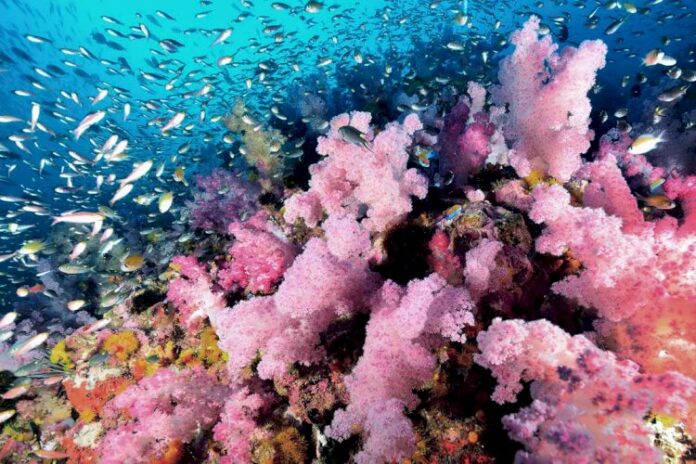
A new study published in the journal PeerJ by researchers at the University of Hawaii found that human-induced environmental stressors have a large effect on the genetic composition of coral reef populations in Hawaii.

The National Science Foundation-funded scientists confirmed that there is an ongoing loss of sensitive genotypes in nearshore coral populations due to stressors from poor land-use practices and coastal pollution. This reduced genetic diversity compromises reef resilience.

This research provides valuable information to coral reef managers in Hawaii and around the world who are developing approaches and implementation plans to enhance coral reef resilience and recovery through reef restoration and stressor reduction.

The study identified that genetic relationships between nearshore corals in Maunalua Bay, Oahu, and those from sites on West Mau were closer than relationships to corals from the same islands, but farther offshore.

This pattern can be described as isolation by environment in contrast to isolation by distance. This is an adaptive response by the corals to watershed discharges that contain sediment and pollutants from land.

Robert Richmond, director of the Kewalo Marine Laboratory and co-author of the study, said:

“While the results were not surprising, they demonstrate the need to control local sources of stress while addressing the root causes of global climate change. The findings show the need to track biodiversity at multiple levels.”

While the loss of coral colonies and species is easy to see with the naked eye, molecular tools are needed to uncover the effects of stressors on the genetic diversity within coral reef populations.

Kaho Tisthammer, lead researcher on the paper, stated:

“This study shows the value of applying molecular tools to ecological studies supporting coral reef management.”

The work was a collaborative effort among researchers at the university’s Kewalo Marine Laboratory, Pacific Biosciences Research Center, and the Hawaii Institute of Marine Biology.

Dan Thornhill, a program director in NSF’s Division of Ocean Sciences, says:

“This work highlights the importance of limiting pollution, sediment, and agricultural runoff to nearshore coral reefs. Protecting biodiversity is essential, as that diversity is needed in helping corals and other marine life adapt to changing oceans. Selecting for resilience to pollution may eliminate coral genotypes that resist disease, tolerate higher temperatures, and continue to grow in more acidic and oxygen-depleted waters.”

ITM Power and Ørsted unveil wind turbine electrolyser concept

0

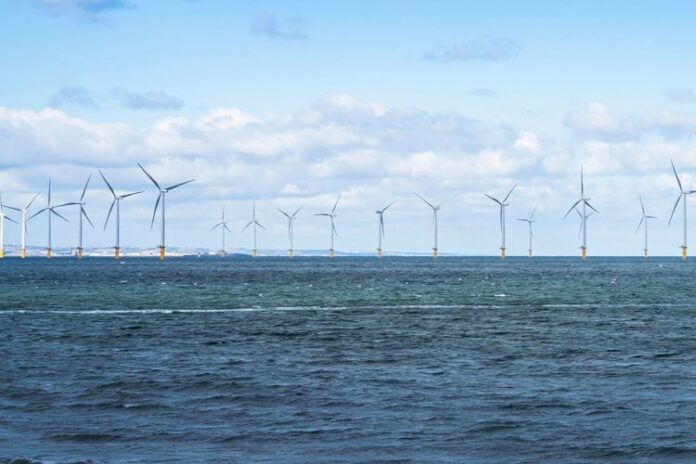
ITM Power, the energy storage and clean fuel company, has shared details of a short project sponsored by the Department for Business, Energy & Industrial Strategy (BEIS), in late 2019, entitled ‘Hydrogen supply competition’, ITM Power and Ørsted proposed the following:  an electrolyser placed at the wind turbine e.g. in the tower or very near it, directly electrically connected to the DC link in the wind turbine, with appropriate power flow control and water supplied to it. This may represent a better design concept for bulk hydrogen production as opposed to, for instance, remotely located electrolysers at a terminal or platform, away from the wind turbine generator, due to reduced costs and energy losses.

In this scenario, where an electrolyser is placed offshore at the wind turbine, e.g. in the tower or in close vicinity to the wind turbine, energy in the form of hydrogen will be transported to shore by an underwater or underground pipe network. This presents an opportunity to reduce overall costs, as hydrogen pipes cost less per km than power cables. The efficiency of such a system shows potential to define new standards by removing the need for AC rectification.

The concept proposed is:

  • A marine environment capable electrolyser
  • ‘Type IV’ wind turbine generators and their ‘DC link’ have the potential to power the electrolyser directly
  • This enables fewer power conversion steps and thereby reduces both energy losses and electrolyser footprint
  • Readily abundant cooling capacity via the sea water
  • Energy in the form of Hydrogen gas supplied to shore by pipe rather than via electricity
  • Connecting one electrolyser with one turbine wind generator
  • Other avoided costs of this concept include permitting, a single process unit deployment

Overall, the concept explores opportunities to minimise the cost of hydrogen production through a combination of improved efficiency and reduced CAPEX. Such a system has not been demonstrated in practice and several challenges will need to be overcome for this vision to be realised. However, the possible cost reductions presented by this concept makes it viable for consideration on future offshore hydrogen installations. Demonstrating the concept would require R&D effort, as well as economic evaluation.

Therefore, areas for future development include:

  • Development of an electrolyser module specification suitable for offshore operation
  • Pre-build, pre-testing of electrolysers and DC link module at onshore locations
  • Prototype design, build, deployment, and testing onshore
  • Design exercise for a multi MW-scale solution
  • Offshore deployment planning and demonstration
  • Operations design including assessment of OPEX costs
  • Techno-economic assessment and business case development

To pave the way for a sustainable future with hydrogen and related P2X technologies as the key enablers, the energy system must undergo significant changes at a considerable pace. To achieve fully developed optimal solutions for these required changes will require investment to provide the necessary building blocks.

Dutch authorities: death on Saipem vessel occurred due to natural causes

0

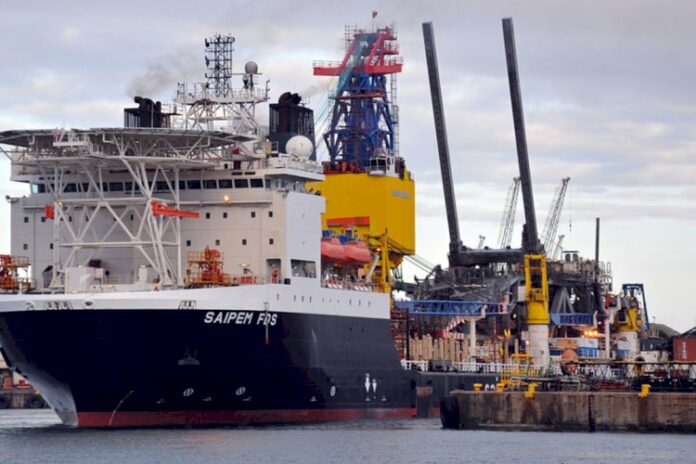
Saipem informs that the death which has occurred on board the Saipem FDS ship, currently located in the port district of Waalhaven in Rotterdam, happened due to natural causes, as confirmed by the investigations of the Dutch authorities.

The colleague, who had no symptoms attributable to Covid-19, died unexpectedly during the night.

The company expresses its condolences and sincerest sympathy with the family.

Saipem had already taken steps to apply the strictest protocols to verify the existence of Covid-19 cases on board the vehicle itself. Only one crew member was disembarked and transferred to isolation after he was confirmed positive.

VIDEO: Introduction to the Project Pempa’q Tidal Energy Project

0

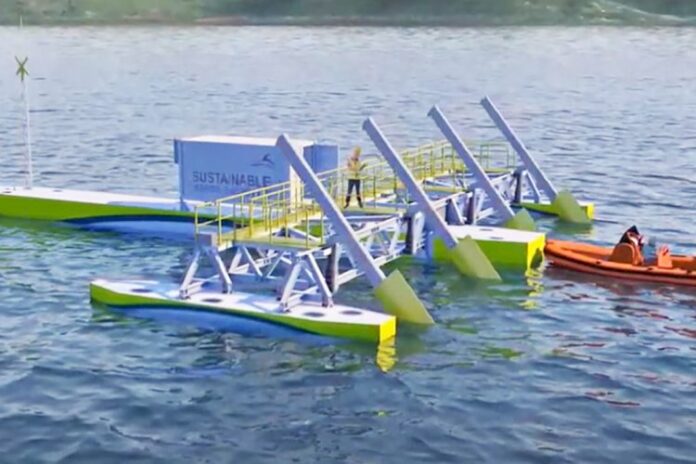
PLAT-I designed for easy, low cost assembly in remote locations. Installation takes less than half a day once mooring have been installed.

Technicans can access the platform in all states of tide using small vessels. Small, localy available vessels can install and recover the platform when required.

Once moved to Nova Scotia (Canada) PLAT-I was reassambled in under four weeks. Installed in Grand Passage using a small self propelled barge and two lobster boats.

Servicing and swap out of critical components at site proven, even in winter conditions. Cameras used for environmental monitoring; no adverse impact to marine animals recorded to date.

Amasing energy resource with 14m rise and fall of the tide twice a day. Grid connection and underwater power export cables already in place. 

Pioneering initiative in Portugal to monitor underwater noise

0

WavEC Offshore Renewables is pleased to announce the jUMP project, a joint action for underwater noise monitoring in Portuguese waters, with funding from National Fundo Azul.

The project is coordinated by WavEC and brings together ten Portuguese partners altogether: ISPA – Instituto Universitário, FCUL – Faculdade de Ciências da Universidade de Lisboa, LNEC – Laboratório Nacional de Engenharia Civil, APA – Administração do Porto de Aveiro, S.A., MBM – Museu da Baleia da Madeira, IN2SEA – Inovação no Mar, Lda, Fórum Oceano – Associação da Economia do Mar, Oceans-on, and QUERCUS.

The jUMP project started in January 2020 and will last for two years, with a total investment of 167 thousand euros, of which 149 thousand are supported by the Fundo Azul funding mechanism. The project aims to collect and promote information regarding noise pollution. Therefore several activities will be developed, such as the collection of acoustic data, the calibration of sound propagation models and activities of sharing and debate with stakeholders and the general public.

Erica Cruz, Project Manager and Researcher in Marine Bioacoustics at WavEC informs that this project represents the first national initiative entirely dedicated to underwater noise:

“We aim that the jUMP project also acts as a support tool in the implementation of the Marine Strategy Framework Directive in Portugal”.

The Marine Strategy Framework Directive (MSFD) (Directive 2008/56/EC) establishes a framework for community action in the field of marine environmental policy in order to achieve a Good Environmental Status (GES) in the marine waters of the Member States. To assess the GES, the MSFD sets out eleven descriptors that qualify the Good Environmental Status of European Union’s marine waters. Descriptor 11 refers to ways of introducing energy into the marine environment, including underwater noise.

The jUMP project aims, therefore, to implement actions to promote the discussion in the field of underwater noise and its impact on the marine environment and to develop tools to support the application of the Marine Strategy Framework Directive.

To achieve the specific objectives, the jUMP project is organized into six working fields:

• Activity 1: Project management and coordination;
• Activity 2: Information inventory;
• Activity 3: Monitoring of underwater noise: snapshots (point measurements at selected locations in continental waters);
• Activity 4: Development of a modelling tool;
• Activity 5: Monitoring of underwater noise in Portugal: definition of challenges and perspectives;
• Activity 6: Awareness, dissemination and communication activities.