8.8 C
New York
Home Blog Page 882

Kongsberg to deliver ASW sonars for Finnish Navy vessels

0

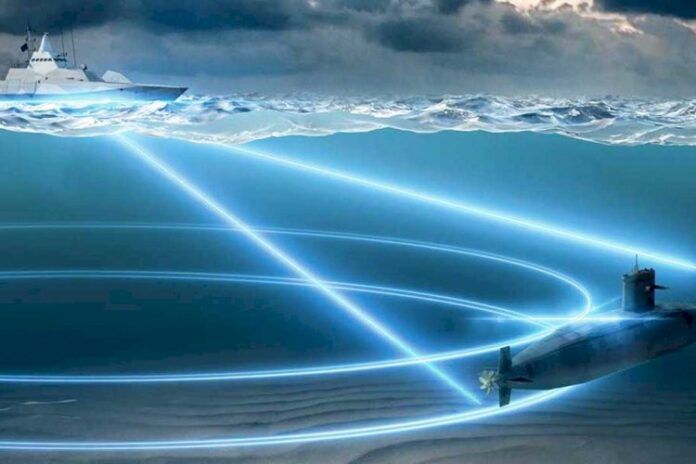
Kongsberg Maritime AS, Sensor & Robotics is celebrating the signing of a contract with Saab that will see KONGSBERG delivering its market-leading Anti-Submarine Warfare (ASW) and diver detection sonars for the Pohjanmaa-class corvettes currently being developed by the Finnish Navy under its Squadron 2020 project.

Under the terms of the contract, which equates to approximately 100MNOK, KONGSBERG will equip the vessels with its SS2030 and SD9500 sonars, both of which boast acoustic properties which make them ideally suited for deployment in shallow-water environments.

The SS2030, principally devised for ASW operations and capable of detecting torpedoes or other small objects in the water column, is an active hull-mounted sonar which utilises sophisticated tracking algorithms. Its electronically-stabilised transmitting and receiving beams can be tilted to adjust to challenging sound speed profiles, with its integrated Sound Propagation Model determining the optimal tilt settings and enhancing the Probability of Detection (PoD) ratio. The SS2030 sonars will be delivered to the Finnish Navy complete with hoist-able hull units and ice protection to ensure safe and efficient operation in the often harsh conditions of the Baltic Sea.

The SD9500, meanwhile, is a light and compact over-the-side dipping sonar with outstanding horizontal and vertical positioning capabilities for diver detection, ASW duties and volumetric survey assignments in shallow, reverberation-limited waters.

Thomas H Dahle, Director of Sales at KONGSBERG, says:

“We are very pleased to have been selected for another sonar program for the Finnish Navy and to further strengthen our position as a principal supplier of shallow-water ASW, diver detection and mine-hunting equipment. The armed forces, as with all defence industries, have to rely upon the most advanced technology available in order to fulfil their responsibilities effectively, and this new naval contract is another resounding testimony to the deep level of trust the KONGSBERG brand has accumulated over our many successful years of trading.”

CADMATIC: Data-driven shipbuilding unlocks next-level efficiency

0

What is data-driven shipbuilding?

Data quality, consistency, and interconnectivity, as well as the maximized automation of data handling throughout the entire ship design and shipbuilding process are key factors in unlocking greater efficiency, increasing productivity and boosting profitability.

In data-driven shipbuilding, digital data streams are consistent, reliable, and reusable across disciplines, project phases and ship series. Data drives and connects the entire shipbuilding process while manual data handling is minimized or eliminated to safeguard data integrity and optimize the shipbuilding process.

The quest is not only to optimize operations, reduce errors dramatically, and to get it right the first time, but to enable shipbuilders to manage changes more efficiently when errors or other factors necessitate changes. If changes are required at any stage of the shipbuilding process, the advanced digitalization and interconnectivity of data means that upstream and downstream changes can be efficiently implemented while the consistency of data is retained.

3D CAD model at the core of data-driven shipbuilding

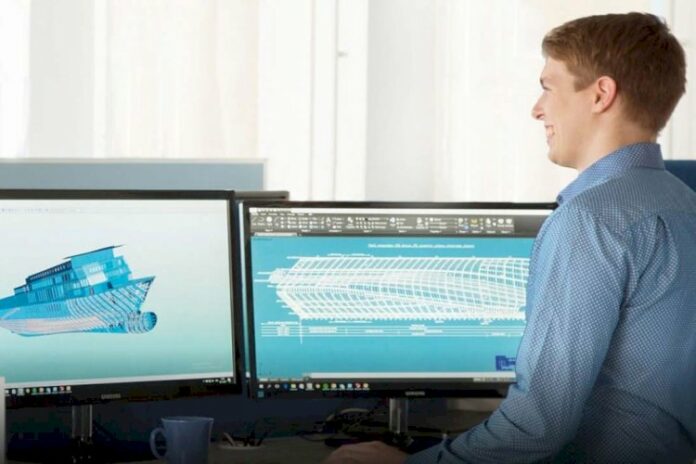
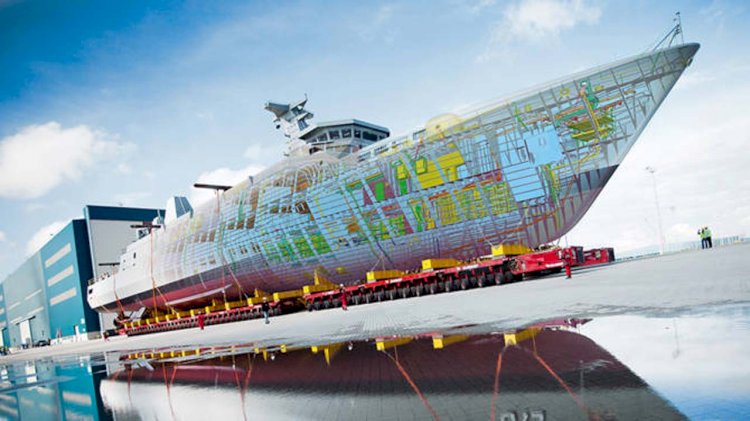
The core of all a ship’s data is created in and resides in the CAD 3D model. A myriad of calculation and analyses programs and other systems can run on top of the CAD core, incrementally adding to and creating the digital model of the vessel.

Data integrity ensures that the ship 3D model can be used to support and drive scheduling, planning, production, prefabrication, and building for optimal results.
Embedded knowledge in 3D CAD tools

In addition to tools for 3D modeling and design, design applications have a significant amount of embedded engineering practices and standards. Harnessing the knowledge of specialists in each discipline, CAD serves as a universal knowledge hub, applying the best solutions for each part of the model and ensuring consistency of design and compliance with regulations.

Designers can benefit from customized settings, specifications, predefined modules and previously created modules and sister ship projects. The personal experience of designers is less critical in such cases and can be supported by the software.

Decades of experience and highly specialized training is no longer required to produce accurate construction information. This allows engineers and designers to focus on creating new projects and sustainable designs, while the software takes care of calculations and the accuracy of data.

Digital model and digital twin

Traditionally, CAD revolves around first modelling a vessel in a digital environment, and then building accordingly. It is a way of evaluating design options and considering different possibilities without having to do it with physical objects.

Processes and systems can be modeled, 3D layouts checked for assembly and building stages and costs evaluated before the work at the construction site begins. In this process, information flows from the digital model to the physical object in one direction.

A digital twin emphasizes a bi-directional approach. The information flows not only from the digital asset to the physical world, but also loops back, where information from the yard and production merges with the digital model. This approach resulted in information management applications inside or around CAD tools, such as CADMATIC eShare.  

A digital twin does not exist in isolation. It requires a software platform in addition to hardware storage facilities. The eShare platform allows digital twins to be created incrementally. It can store and merge 3D models in various CAD formats and effectively integrate data from other systems, such as PDM/PLM/ERP/MES and more. It provides users access to all this data using the latest advanced visualization technology and by extracting the required data on demand.
Integrating systems throughout shipbuilding life cycle

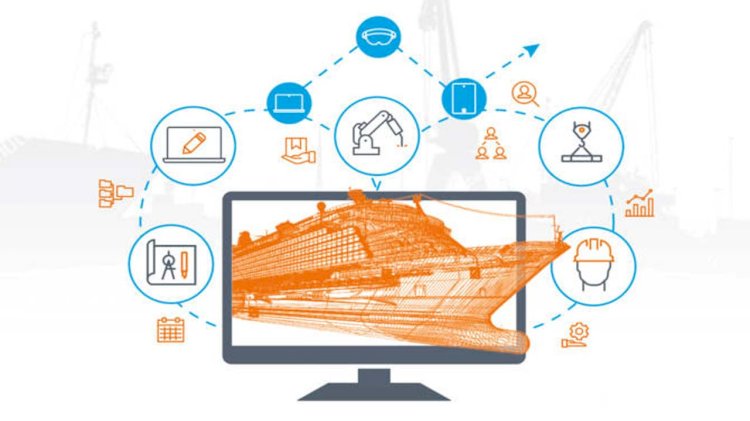
A key part of data-driven shipbuilding is the integration of systems used during the shipbuilding life cycle. Traditionally, much of the data produced in ship design and shipbuilding is siloed, which has inherent inefficiencies.

The integration of CAD, CAM, ERP, MES, PDM, and PLM can deliver digital twins that have true value. This is particularly so for consolidated shipbuilding groups that have vertically integrated operations from design and prefabrication to production.

Integration can be achieved in different ways. CADMATIC believes in a flexible approach. The company has a web API for traditional fixed integrations, but also connect and access data of different systems via the eShare platform. 

Triton Knoll installs first offshore substation

0

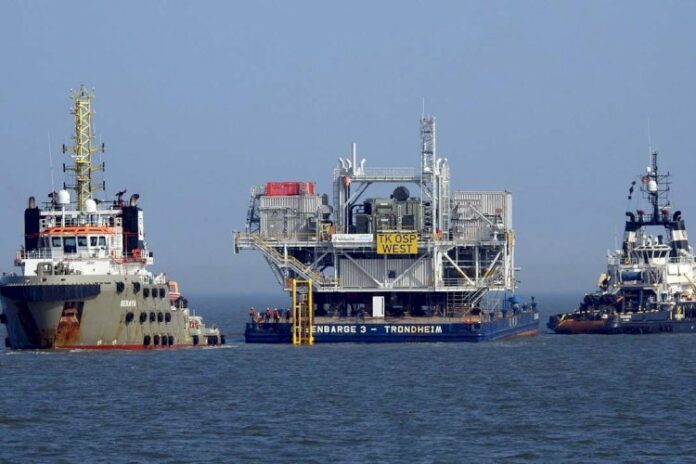
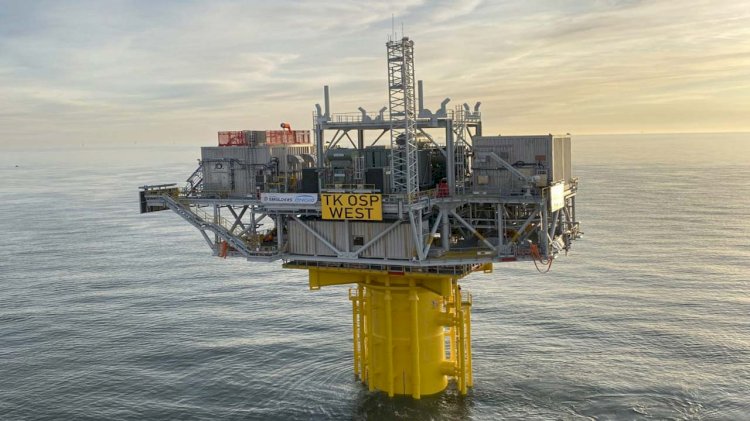
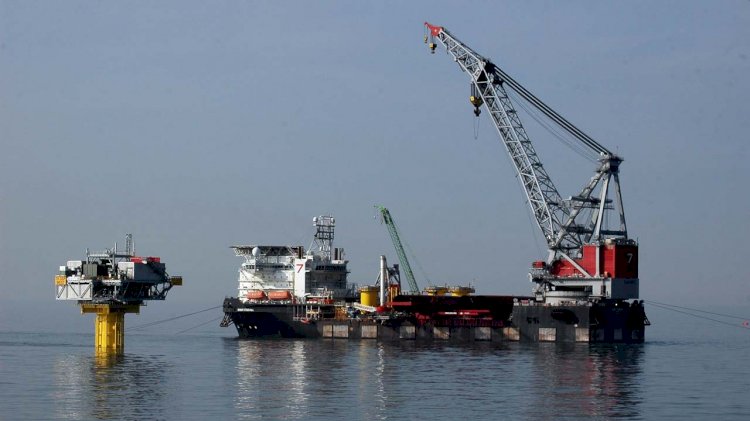
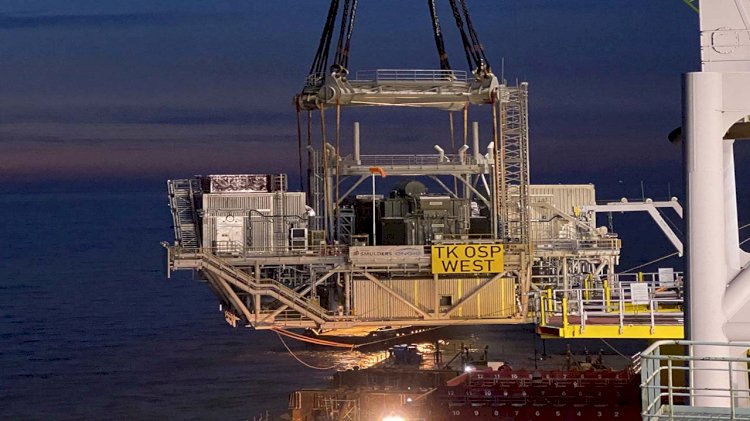
Triton Knoll has marked another significant milestone in the delivery of critical new UK energy infrastructure, with the safe installation of the first of two offshore substation platforms (OSPs).

At 1400 tonnes each, these platforms will operate at the heart of the offshore wind farm which, when fully operational will be capable of generating enough electricity to match the needs of over 800,000 UK homes.

The OSPs are designed by Triton Knoll’s contractor Siemens Energy Limited. They are part of a state-of-the-art electrical system that will connect both the onshore and offshore assets into the national grid distribution network.

Installation of OSP West was achieved in the early hours of Sunday morning (12 April), and installed by Subsea 7’s heavy lift vessel, Seaway Strashnov. The structures are fabricated by Smulders, in partnership with Fabricom, with two specialist monopile foundations, transition pieces and cable decks manufactured and installed from Smulders’ Wallsend facility near Newcastle.

Julian Garnsey, project director for Triton Knoll and innogy, said:

“In the current climate, the delivery of this milestone is a notable achievement. Our thanks go to everyone who contributed to the safe installation of this platform, which is testament to the commitment of the teams involved, all of whom are operating under tight control measures in line with the current UK Government guidance.

At Triton Knoll we remain committed to delivering electricity infrastructure equal to the typical needs of over 2 million UK residents(1) and within the timescales expected by the UK’s energy supply.”

The two OSPs, East and West, will each receive electricity generated by the wind farm’s powerful 90 x MHI Vestas v164-9.5 MW turbines, before converting it for transfer to the landfall connection via two huge export cables due to be installed this summer.

Key infrastructure for both OSPs has been constructed in Manchester, Newcastle and Scotland, as the state-of-the-art project continues to deliver on its commitment to invest in the UK supply chain.

Scottish manufacturer JGC, subcontracted to Manchester-based Siemens Energy Ltd, has completed the manufacture of several offshore container modules which will house critical electrical equipment for the project’s offshore substations. The modules are purpose-built to cope with the rigours of the offshore environment and have now been successfully fitted onto the decks of each of the project’s two offshore substations.

Both offshore substation platforms have also been fitted with davit crane units designed and built by Granada Materials Handling, continuing the long-term involvement of the Manchester-based manufacturer with innogy’s offshore wind farms.

Aker Solutions and Cognite secure digital offshore wind energy technology grant

0

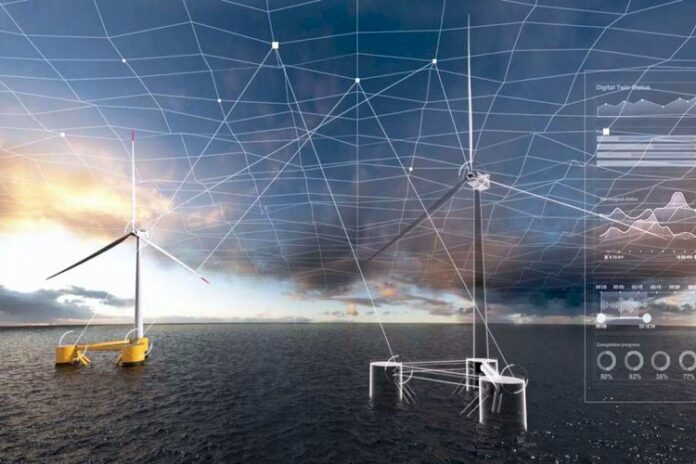
The project is focused on next generation solutions in wind through digitalization and aims to develop a holistic digital solution that will enable monitoring the condition of an offshore floating wind farm and its impact on the environment via live data streaming.

Aker Solutions, partnering with Cognite, was selected for the grant award as part of the California Energy Commission’s Electric Program Investment Charge (EPIC). The program provides grants for companies applying research and projects designed to help develop next-generation wind energy technologies. The projects must include objectives that increase the competitiveness, performance, and reliability of wind generation while reducing costs and effects on the environment and wildlife.

Luis Araujo, chief executive officer of Aker Solutions, said:

“This program aligns with Aker Solutions’ ambition to develop the offshore wind market in California providing affordable renewable electricity to the state, with the lowest possible environmental footprint and in peaceful coexistence with other ocean users and the local community. We are grateful to the CEC for trusting us with this important task and we look forward to starting this meaningful work.”

A digital twin model of physical offshore wind assets will be developed to assess conditions and integrity management. This real-time information will allow access and analysis of data to help reduce operating expenses and maintenance costs by improving production efficiencies. Making this data available to a wide range of users will allow for additional understanding of environmental and wildlife impacts to help reduce mitigation.

Dr. John Markus Lervik, chief executive officer and co-founder of Cognite, said:

“We look forward to employing Cognite Data Fusion to this project to help revolutionize the wind market in California through data liberation and contextualization. We believe applying new digital technologies is key to accelerating the green transition and increasing adoption of sustainable solutions in offshore wind by making them more cost-effective and efficient.”

In April 2018, the Redwood Coast Energy Authority selected a consortium which includes Aker Solutions, Principle Power and EDPR Offshore to enter into a public-private partnership to pursue the development of the proposed Redwood Coast Offshore Wind Project. The 100-150 megawatt floating offshore wind farm is planned to be located more than 30 kilometers off the coast of Humboldt Bay, and is expected online in the mid 2020’s. The team intends to use this project as a case study for the new initiative due to its relevance.

CEC Vice Chair Janea Scott said:

“Through its EPIC program, the Energy Commission strategically invests in clean energy research and technologies aimed at helping California achieve its 100% clean energy standard. We are pleased to award EPIC funding to support this critical research project, which will develop data tools for floating offshore wind platforms that increase cost-competitiveness and reduce wildlife impacts.”

Netherlands becomes the first european customer for Sea Wasp

0

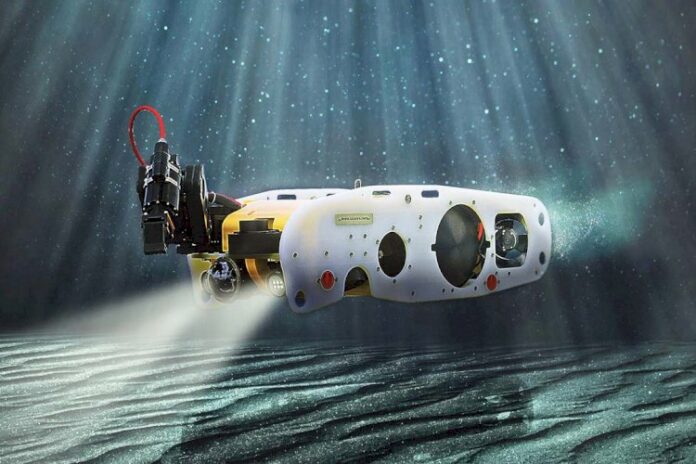
Saab Seaeye has received an order from the Defence Material Organisation (DMO), within the Ministry of Defence of the Netherlands for deliveries of the Sea Wasp underwater vehicle system.

The Sea Wasp systems to be delivered will be used by the Dutch Navy.

With a base weight of only 75 kg, Sea Wasp is a small and flexible ROV which can be used for a wide range of underwater operations, both within the commercial and military sectors. Sea Wasp can, for example, be used for sea mine detection and other reconnaissance operations.

Kate Palmér, Program Manager at Saab Seaeye, says:

“We are delighted to deliver our Sea Wasp vehicle to the first European customer, a giant milestone for the product. It is also the first order we have received directly from DMO, which has strengthened the relationship with the customer and may facilitate future contracts and orders.”

The order also covers some development, including the integration of the customer-specified Blueview sonar in the vehicle and HMI.

ENGIE sees great promise for AWEC offshore floating applications

0

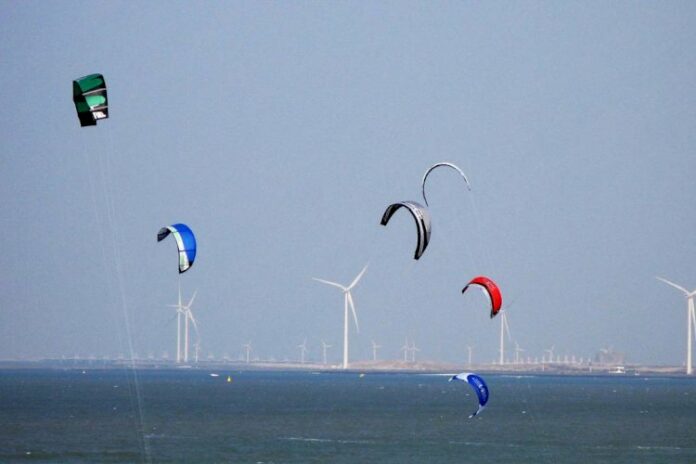
Kite turbines known as Airborne Wind Energy Converters (AWEC) can be flown up to altitudes of 600 m to catch stronger, always shifting winds.

This makes AWEC an exciting new option that could offer an alternative to height-limited traditional Horizontal Axis Wind Turbines (HAWT) and the visual impact of often-contested mega-sized wind parks. Collaborating with leading Airborn Wind energy technology developers, while the tech is still in its infancy with the biggest kite aiming to generate 600 kW, ENGIE sees great promise for AWEC onshore, but particularly for offshore floating applications. 

As Olivier Van Oost, Expert and Project Manager Wind & Hydro at ENGIE Laborelec, explains:

“Traditional offshore turbines don’t like the tilting of buoys — but kites simply don’t care about that.”

Another advantage he adds:

“Production requires 90% less material than HAWTs. What kite power tech needs now, is performance upscale and long-term reliability.” 

ENGIE is among the top global companies developing the new generation of wind energy solutions, including following and collaborating with leading Airborn Wind Energy technology developers. 

A number of startups have chosen to focus on Airborne Wind Energy Converters (AWEC) and already show encouraging results. Right now, the Airborne Wind Energy market has the wind in its sails, with the sector counting a myriad of heavy contenders worldwide.

MAKANI,  funded by Google Alphabet from 2013 till 2020 and by Shell since 2019: Founded by two kiteboarding aficionados, the company aims at tapping into wind power from the sea with one of the most ambitious kites to date, at a scale of 600 kW. It has been operating a pre-commercial pilot site in Hawaii since 2018 and is currently testing its M600 model offshore on a floating spar buoy in Norway. Ultimately, the Californian company hopes to upscale its platform’s capacity to 1 to 3MW. 

Netherlands-based AMPYX POWER has been exploring the potential of harvesting wind from already higher grounds, launching kites from high altitude. Since 2015, it has been building an upscaled 200 kW model (AP3) and developing Launching and Landing (an L&L) system before moving on to 2 to 3MW products.

SKYSAILS The Hamburg-based company successfully operated 160m² soft kites offshore for boat propulsion back in 2008 and 20m² soft kites for power generation in 2011. SkySails has developed a containerized 100 kW, 40m² model (“SkyPower100”), recently installed and being tested in northern Germany, and has a commercial launch of 200 kW units scheduled for 2020 in Mauritius.

ABB to power South Asia’s first LNG hybrid tug

0

ABB’s electric propulsion, power, energy storage, control and automation technology will be at the heart of the first tug in South Asia capable of switching between low emission liquefied natural gas (LNG) engines and zero-emission battery power.

The tug, which will operate in Singapore harbor, has been ordered by Sembcorp Marine subsidiary Jurong Marine Services for delivery from the Sembcorp Marine shipyard by the end of 2020.

LNG as a fuel virtually eliminates sulphur oxide emissions, while the Maritime Port Authority of Singapore (MPA) is also incentivizing its use to support the International Maritime Organization’s aims to halve ship CO2 emissions by 2050.

The project represents the first delivery of ABB’s award-winning power and distribution system Onboard DC Grid™ for a tug application. Leveraging Onboard DC Grid™, the vessel will be able to deploy 904 kWh of battery power for zero-emission operation, as well as for peak shaving – improving utilization of electricity use on board.

Juha Koskela, Managing Director, ABB Marine & Ports, says:

“This is a breakthrough in the tug market for the ABB’s energy storage technologies and a strong validation of Onboard DC Grid™ as the ultimate solution for power management efficiency for hybrid propulsion. Future-proofing for a different energy mix makes particular sense for tugs and other port service vessels, as the most likely candidates to face imminent environmental restriction. This is also a great example of a local team meeting a regional priority by realizing ABB’s ‘Electric. Digital. Connected.’ vision.”

Gas fueled engines face a particular challenge when it comes to handling the fast-changing load capabilities demanded by tugs. Leveraging the Onboard DC Grid™ system, the tug’s engines will be able to run at variable speeds for optimized LNG fuel economy at each load level.

Additionally, through integration with an energy storage source, the batteries will be able to provide power to the tug’s propulsion system almost instantaneously. Leveraging the capabilities of Onboard DC Grid™, the LNG engines will not have the need to be tied to a fixed speed against dynamic loads, and would be able to provide energy at variable revolutions per minute (RPM), further enhancing efficiency, responsiveness and sustainability of tug operations. ABB’s scope of supply also includes the DC drives for the PTI/PTO variable speed shaft generator, which integrates with the energy storage battery.

Samsung Heavy receives order for two LNG-fueled VLCC newbuilds

0

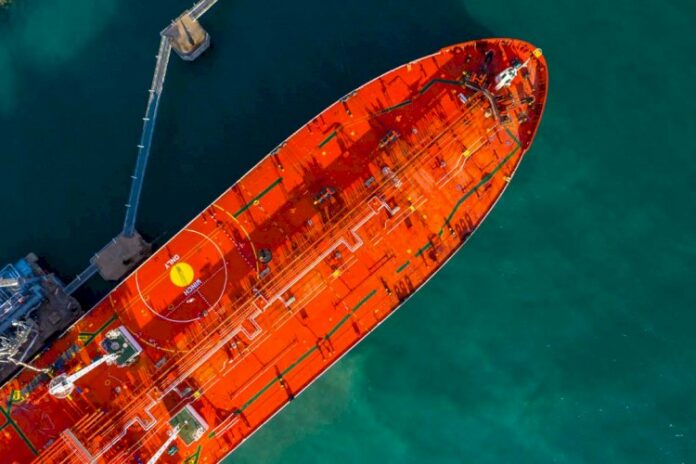
On April 14, Samsung Heavy Industries disclosed in its regulatory filing that it had clinched a deal worth a total of USD 209.2 million (KRW 253.6 billion) with a Bermudan ship owner to bulid two LNG-fueled VLCCs, which will be delivered by April 2022.

Equipped with S-Fugas, an LNG fueling system independently developed by SHI, these vessels will comply with IMO 2020 which took effect early this year and reduce the emission of SOx by 99%, NOx by 85% and carbon dioxide by 25% compared to diesel fuel.

Other cutting-edge technologies of SHI, such as Energy Saving Devices (ESDs), which enhance fuel efficiency by improving rotational energy efficiency of propellers while operating, and SVESSEL, a smart ship solution, will be applied to the ships as well.

To preemptively respond to rising demand for cleaner ships in the wake of IMO 2020, SHI has developed a competitive edge in LNG-fueled vessels, adopting LNG fuel tanks and engines in different forms and materials as ME-GI and X-DF since 2012.

An official of Samsung Heavy said:

“We see increasing demand for LNG-fueled VLCCs on top of that for S-max and A-max tankers powered by LNG. SHI aims to take more opportunities to come as we have predominated the market with the advancement of technologies.”

Princess Cruises extends pause of global operations through June 30

0

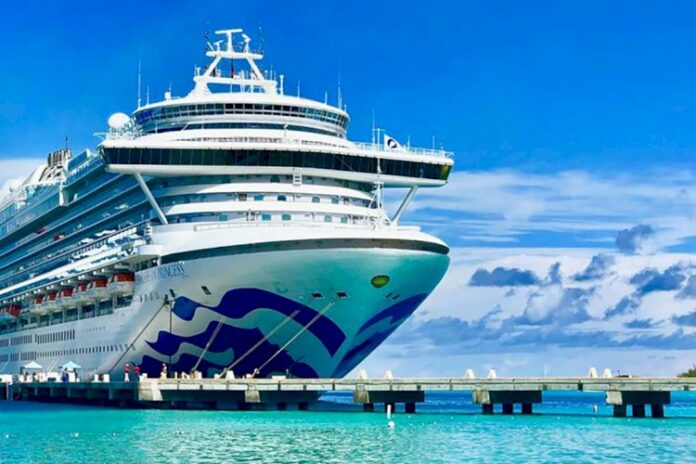
In continued response to the impact of the COVID-19 global outbreak and the recent order from the United States Centers for Disease Control (CDC), Princess Cruises is canceling all voyages through June 30, 2020. The cruise line had previously announced a voluntary pause for two months (60 days), impacting voyages departing March 12 to May 10, 2020.

In addition, Princess Cruises can confirm modifications to the Alaska season, which includes the cancellation of all Princess Alaska Gulf cruise and cruisetours. The five wilderness lodges, trains and buses operated by Princess in Alaska will not open this summer. We will continue round-trip sailings from Seattle to Alaska on Emerald Princess and Ruby Princess.

Jan Swartz, president of Princess Cruises, said:

“This global outbreak continues to challenge our world in unimaginable ways. We recognize how disappointing this is to our long-term business partners and thousands of employees, many of whom have been with us in Alaska for decades. We hope everyone impacted by these cancellations – especially our guests, travel advisor partners, teammates, and the communities we visit – understand our decision to do our part to protect the safety, health and well-being of our guests and team. We look forward to the brighter days and smooth seas ahead for all of us.”

Each ship will have a unique return to service date, based on the previously published cruise itineraries, with some modifications, departing after July 1. Details about the canceled voyages can be found here.

Princess Cruises is offering two cancellation options. Guests currently booked on these canceled voyages, who have paid in full, will receive a Future Cruise Credit (FCC) equivalent to 100% of the cruise fare paid and, as an added incentive, an additional 25% FCC. Guests must use their credits on a cruise that sails on or before May 1, 2022. No action is required for guests to receive this offer and they will be notified by e-mail once the credits have been issued.

Alternatively, guests can receive a full refund for all monies paid in full on their booking through this online form. Requests must be received by May 31, 2020, or they will receive the Future Cruise Credit option. Guests who have not yet paid in full will receive a refund of all monies paid.

Princess will protect travel advisor commissions on bookings for cancelled cruises that were paid in full, in recognition of the critical role travel advisors play in the cruise line’s business and success.

Princess asks guests to please delay in calling the Reservation Call Center due to high call volumes. Guests and their travel advisors will be sent communications on how to manage cancellations, rebook another voyage, or request a refund.

Total acquired a stake in the pioneering floating wind project Erebus

0

A key factor in lowering global CO2 emissions will be to electrify the economy, and renewable energies will be instrumental to this end. Becoming the responsible energy major means taking this reality into account by investing heavily in solar, onshore wind and, now, offshore wind. These fast-growing energy sources present a number of advantages: they are abundant, clean, efficient and increasingly competitive.

Total recently continued its growth in renewable energies with two substantial investments in offshore and onshore wind power.

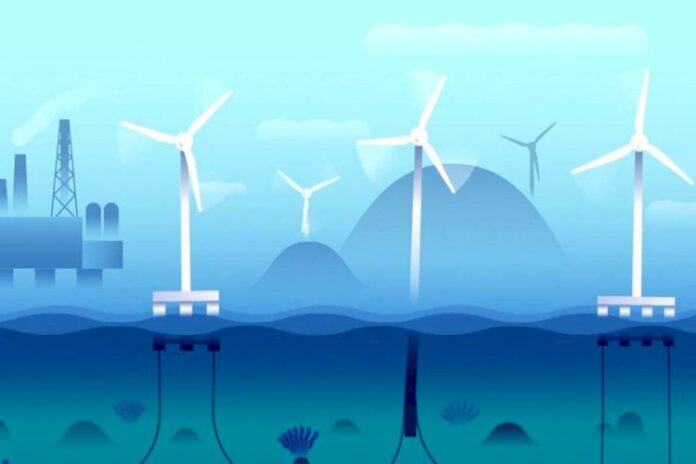
The Group has signed an agreement with the developer Simply Blue Energy to acquire a stake in the pioneering floating wind project Erebus, located in the Celtic Sea in Wales. The project will have a 96-megawatt capacity and will be installed in an area with water depth of 70 meters.

With this project, Total is a pioneer on two fronts: it is one of the first movers in this technology in the United Kingdom, the world’s largest offshore wind market, and it is tapping the potential of a completely wind-turbine-free zone.

Floating wind power is set for strong growth in the years to come. This emerging technology has great potential, opening access to sites further offshore, which have less of an impact on the landscape, and harnessing very strong wind resources. Total will bring its expertise in offshore operations to ensure future success in this field.

In France, the Group, through its Total Quadran affiliate, has acquired 100% of Global Wind Power (GWP) France, a company with a portfolio of over 1,000 megawatts of onshore wind projects, including 250 megawatts scheduled to come on stream by 2025.

With these investments, the Group is demonstrating its commitment to expanding in all types of renewable energy while contributing to France’s energy transition goals.