9.8 C
New York
Home Blog Page 884

WSM launches campaigns on board to raise cyber security awareness

0

Looking at Industrial Revolution 4.0 where electronic systems including unmanned vehicles, augmented reality, the Internet of Things (IoT), sensor technology, geo-spatial technology and artificial intelligence, the biggest threat to this advancement is cyber security.

Cyber security training for crew is a mandatory and high focus area to mitigate human error that may lead to cyber security breach. Wilhelmsen Ship Management (WSM) has established and enforced a cyber security policy, onboard cyber security awareness training, training videos and frequent periodic updates on cyber security measures. 

This training program comprises of the following elements:

  • Raising the awareness of cyber security
  • Kinds of threat that could breech cyber security and how it works
  • Password policies to build a strong password
  • What to avoid and look out for
  • Preventive measure – best practices
  • The training is applicable to existing and new crew before on-boarding. Once on board they are presented with a list of do’s and don’ts as reminder of their training. 

Besides training, Wilhelmsen Ship Management also launches campaigns on board to raise cyber security awareness with a core message that highlights cyber security is everyone’s responsibility. To reinforce the message, on-shore vessel IT specialists going on board for vessel visits will reiterate this manifesto to the crew. 
Owners are as aware as ship managers that any breech of cyber security can lead to potential damage in the delivery line. In tandem with the reliance of automation and digitization onboard, WSM sees growing risks and implications of cyber security breech. 

Company believes that working closely with ship owners is the way to enforce and build strong cyber protection. Forward leaning owners are more willing to invest in providing additional IT infrastructure onboard for risk management. 

A robust cyber security framework can be easily compromised by end user vulnerability. Hence it is important to cultivate a culture on board and on shore focusing on protecting it. 

To have the right culture in place, company plans to create the right motivation for the seafarers and staff to learn. At sea, WSM lowered the threshold and language used in training materials so that seafarers can identify and relate to the importance of cyber security. WSM also carries out IT Penetration Tests and Security Assessments on board. 

On shore, constant communication and security measures are enforced to drill in the importance of creating a safe digital environment. 

The added bonus is that with all these learnings, seafarers and staff have made this applicable at home and at play for protecting their own cyber presence outside the workplace. 

IMO has included maritime cyber risk management into its list of Information Security Management Code. The adoption of the regulation and cyber risks must be appropriately addressed in safety management systems no later than the first annual verification of the company’s Document of Compliance after 1 January 2021.
 
This is a huge leap for shipping as cyber security enforcement must happen within companies to protect ourselves from jeopardy. 
 
WSM continues to be the leader in making a digital shift, building a safe cyber security net through education and infrastructure will be constant priorities with technology advancements.
SCHOTTEL EcoPeller deployed in modernization project for first time

0

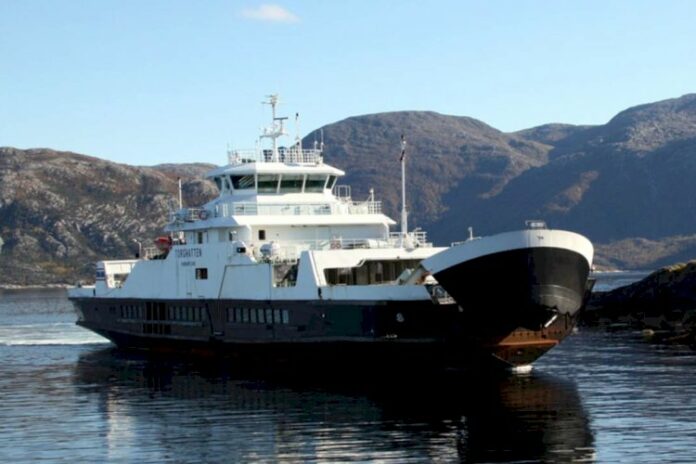
Two four-bladed SCHOTTEL EcoPellers type SRE 340 L CP with an input power of 750 kW each will be featured in a double-ended ferry from the Norwegian ferry operator Torghatten Trafikkselskap.

Gunnar Heringbotn, Technical Manager at Torghatten Trafikkselskap:

“We have already equipped several of our ferries with SCHOTTEL propellers. For the electrification of the ‘Torghatten’, we have opted for the SRE, as it optimally meets our requirements and supports us on our way to an eco-friendly future. Thanks to the tailor-made modernization concept, downtimes can be kept as short as possible.”

Since it is possible to integrate the SCHOTTEL solution into the existing steel structure of the former propulsion system, no hull changes or major steel work will be necessary. Beyond this, the work can be carried out by a local shipyard – thus reducing installation efforts and shortening downtime tremendously.

The EcoPellers will be driven by electric motors. In operating mode, the required power will be supplied by battery packs installed on board. These will be recharged from the land grid during the stays on the quay.

To be environmentally compliant, the propulsion system of the Norwegian ferry will be equipped with the patented and DNV-GL type-approved SCHOTTEL LEACON sealing system. Through the use of separate seals on the seawater side and on the gearbox side, the sealing system ensures that, in case of leakage, seawater entering the system or gear oil escaping from the system are collected in an intermediate chamber. This prevents water from entering the gearbox and, of even greater importance, oil from escaping into the seawater.

Covering the range from 500 to 5,000 kW, SCHOTTEL EcoPellers ensure high efficiency and improve course keeping stability many times over. The ecologically clean propulsion system has been primarily developed for open seas and coastal operating conditions. By combining proven SCHOTTEL quality with latest technologies, the azimuth thruster contributes to the ship’s low fuel consumption, resulting in low operating costs and low emissions.

Unique Group enters into representation agreement with dry dock pioneers Tugdock

0

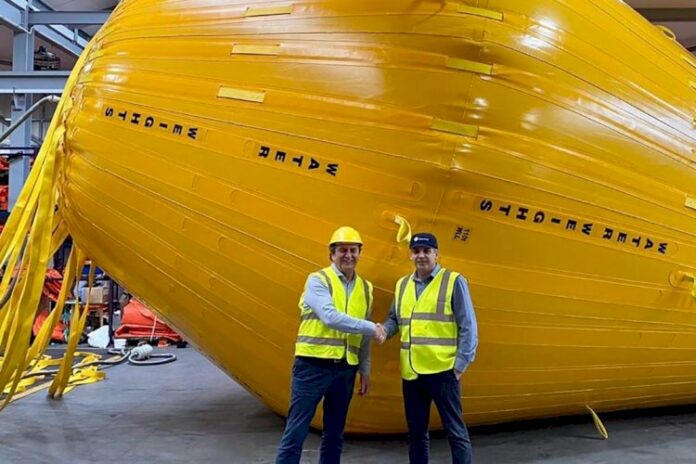
Leading integrated subsea and offshore solutions provider, Unique Group, has entered a new partnership with floating dry dock innovators, Tugdock, by providing their Seaflex brand buoyancy bags for the Tugdock systems and also representing the product internationally through the company’s wide network.

Designers and manufacturers of a brand-new, patented modular floating dry dock concept, Tugdock comes in sizes ranging from 12m x 12m to 100m x 100m with a total lift capacity up to 15,000 tonnes, and is able to lift vessels and other floating structures clear of the water at a fraction of the cost of standard dry docks. Easily transportable in standard shipping containers, it is quickly and cost-effectively taken to the vessel(s) where the components are assembled in customized dimensions to best suit the size and shape of the vessel or the floating structure to be lifted. The Tugdock system will revolutionise the maintenance of fleets located far from the nearest shipyard, or the construction of floating offshore structures.

Each Tugdock system uses individually controlled Seaflex buoyancy bags contained within an open steel frame structure, in a concept developed over two years by Tugdock and a team of Unique Group experts, led by Graham Brading, Group Director of the Buoyancy & Ballast Division.

Coinciding with Tugdock’s official launch this month, this innovative system is being offered for rental or purchase via Unique Group’s own network of bases across four continents: United States of America, Canada, Netherlands, United Arab Emirates, KSA, Qatar, South Africa, Singapore, India and Nigeria.

Graham Brading said:

“Since each Tugdock sold will see a significant amount of Seaflex bags being manufactured in our own factory, it makes perfect sense for us to assist Tugdock in maximising their sales and we are delighted to have the opportunity to do so. With Unique Group’s increasing focus on the renewable energy sector, we envisage significant potential for an upscaled version of the product to assist with the construction and launch of floating wind turbines, which can be up to 15,000 tonnes displacement.”

Tugdock‘s Shane Carr added:

“Having worked closely and successfully with Graham and his team during the research, development and trial process, we have also gained an understanding of Unique Group’s global presence. We are very happy to have appointed them to represent us in the parts of the world where they have an unrivalled presence, and to be able to benefit from that international reach.”

Allseas wins removal contract for multiple North Sea installations

0

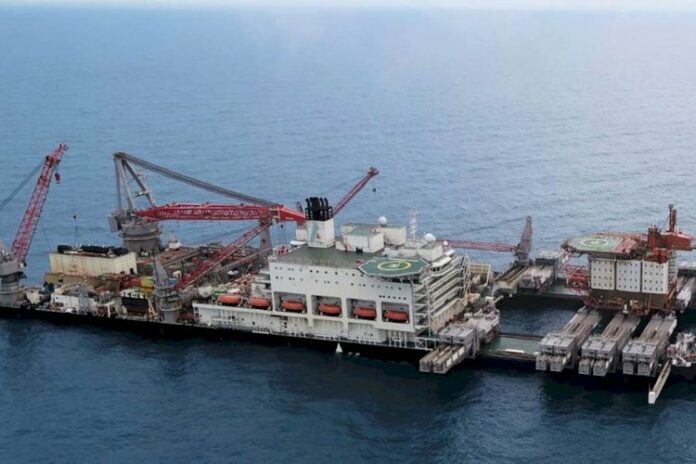
Allseas has been awarded a contract by Aker BP for the removal and disposal of multiple topsides and jackets from the Valhall area in the Norwegian North Sea.

The contract is the latest award triggered by Aker BP under the terms of the frame agreement signed with Allseas in 2017 to provide transport, installation and removal services for the Valhall oil field.

Work comprises removal and disposal of the Drilling Platform (DP) 5,950 t topsides and 4,350 t jacket, and Production and Compression Platform (PCP) 10,900 t topsides and 9,500 t jacket from the Valhall complex, plus the 1,100 t Hod topsides and 3,500 t jacket from the connected Hod field, 13 km to the south.

Allseas’ heavy lift vessel Pioneering Spirit will execute the work between 2021 and 2026. Water depth at the field is approximately 70 m. Platform preparations are scheduled to commence later this year, continuing into the 2021 lift season.

In addition, Aker BP have invoked the option for the removal and disposal of the Valhall Quarters Platform (QP) jacket and the 2/4-G jacket on the Ekofisk field, 24 km north of the Valhall complex. This option was associated with the 2017 award for the removal and disposal of the QP topsides, removed by Pioneering Spirit in June 2019.

The QP topsides was the first of the three original structures (QP, DP, PCP) at Valhall to be removed as part of the modernisation of the Valhall field centre by Aker BP. Hod is remotely operated from Valhall and was the first unmanned platform in the Norwegian sector of the North Sea when production started in August 1990.

SVP Projects in Aker BP, Knut Sandvik, says:

“Aker BPs ambition is to revitalize the Valhall area and to produce another billion barrels from the area. A safe and efficient removal of the original structures will be an important milestone on this journey. The remaining installations at the Valhall field centre and the Flank platforms will continue to produce for many years to come.”

Kraken announces partnership agreement with Greensea Systems

0

Kraken Robotics Inc. has announced that it has entered into a Partnership Agreement with Greensea Systems, Inc., creator of OPENSEA, an open architecture robotic platform.

This partnership will expand upon the collaborative efforts already undertaken between the two companies to rapidly advance the capabilities of marine robotics. Under the agreement, Greensea will support development, integration, and testing work with Kraken across several of Kraken’s technology platforms.

The companies have worked together over the last twelve months to utilize the OPENSEA Platform and provide a robust, modular, and extensible software architecture for Kraken’s autonomous underwater vehicles and towed systems.

This Partnership Agreement simplifies contracting between the companies and allows for on-going collaboration for software and hardware technologies. Greensea will support Kraken in maturing on-going programs and accelerating new commercial offerings, including supporting Kraken’s R&D programs under the scope of the OceanVision project.

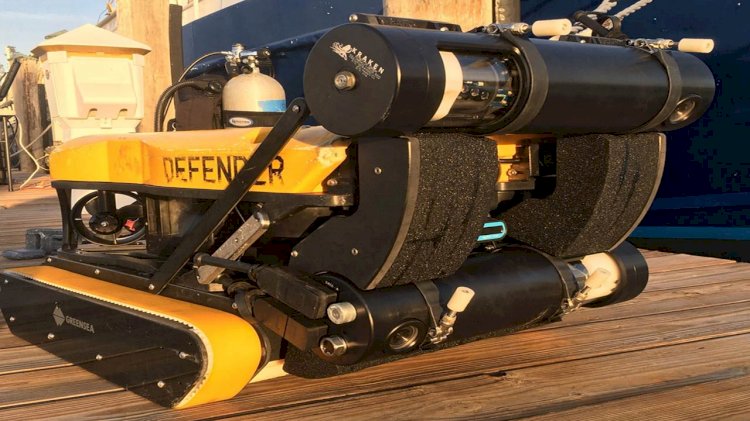
The companies also intend to work together specifically in the areas of seabed residency and hull inspection and have already demonstrated successful efforts by integrating Kraken sensors into the Greensea OPENSEA Platform and Greensea hardware products, including the newly developed Greensea Hull Crawler system. The first phase of this work was completed in February 2020, with the integration of Kraken’s SeaVision® 3D RGB Underwater Laser Scanner into a prototype of the Greensea Crawler (see photo below). The system was fielded in Florida and demonstrated inspections of a real-world vessel.

Photo: Kraken Robotics Inc.

Karl Kenny, Kraken’s President & CEO stated:

“We originally began working with Greensea in 2018, when we were looking to expand the capabilities of our ThunderFish® AUV platform. Throughout that project, I was very pleased to observe how well our teams worked together, the synergies between culture and capability, and to see the full capabilities of the Greensea software architecture in action. Since then, we have expanded our work together to include the KATFISH system, and integration of our SeaVision laser scanner. This partnership agreement will allow Kraken to engage Greensea in a larger capacity and enables a framework for ongoing collaboration and cooperation.”

Ben Kinnaman, CEO of Greensea, stated:

“The partnership we have signed is very significant. It is a relationship formed between the most disruptive, agile, and aggressive technology developers in the industry. Greensea’s powerful open architecture software platform combined with Kraken’s sensor technology, vehicles, and services will create the next generation of robotics for the subsea industry. The value this partnership creates will drive business for both of our companies.”

PETRONAS makes oil discovery in the US Gulf of Mexico

0

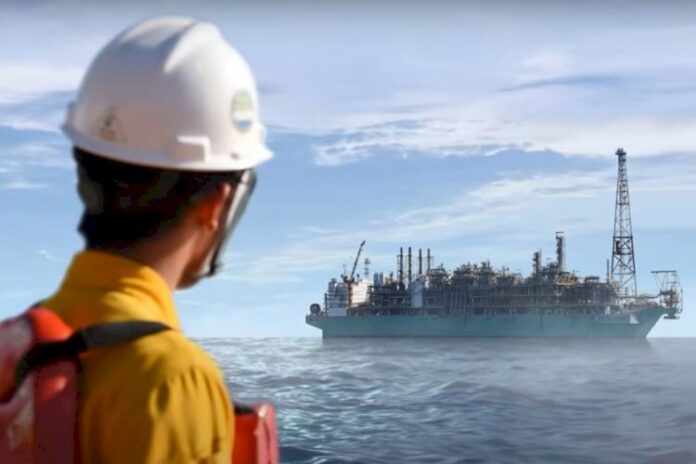
PETRONAS’ subsidiary, Progress Resources USA Ltd. (PRUL) together with its partners today, announced an oil discovery in the Monument exploration well, offshore United States (US) Gulf of Mexico.
 
The discovery marks a significant milestone for PETRONAS in strengthening and developing PETRONAS’ ventures in the Americas, as it diversifies and expands its oil and gas business portfolio in the US and offshore US Gulf of Mexico.
 
The ultra-deepwater Monument exploration well was drilled to a total depth of 10,164 metres and encountered approximately 60 metres of net oil-bearing sands in the Lower Wilcox of Paleogene sandstone. With the discovery, further appraisal works are required to determine the full potential of the oil accumulation.
 
PETRONAS Executive Vice President & Chief Executive Officer of Upstream, Adif Zulkifli said:

“The discovery in the US Gulf of Mexico is an encouraging development for PETRONAS as we continue to pursue opportunities beyond Malaysia. It is in line with PETRONAS’ three-pronged growth strategy to expand our core oil and gas business by growing our resource base. This is the company’s first entry and discovery into oil and gas operations in the US Gulf of Mexico. We will continue to explore opportunities in the Americas region and strengthen the sustainability of our global portfolio.”

The Monument exploration well is located in the central US Gulf of Mexico. It is operated by Equinor Gulf of Mexico LLC with a 50% working interest while PRUL holds 30% and Repsol E&P USA Inc. holds the remaining 20%.The Monument exploration well is located in the central US Gulf of Mexico. It is operated by Equinor Gulf of Mexico LLC with a 50% working interest while PRUL holds 30% and Repsol E&P USA Inc. holds the remaining 20%.

Oceaneering secures seabed clearing contract for Scottish wind farm

0

Oceaneering International Services Ltd (OISL), a subsidiary of Oceaneering International, Inc. (Oceaneering), has been awarded a contract from Moray Offshore Windfarm (East) Limited (MOWEL) to complete seabed route and debris clearance for the Moray East Wind Farm project in the Moray Firth, Scotland.

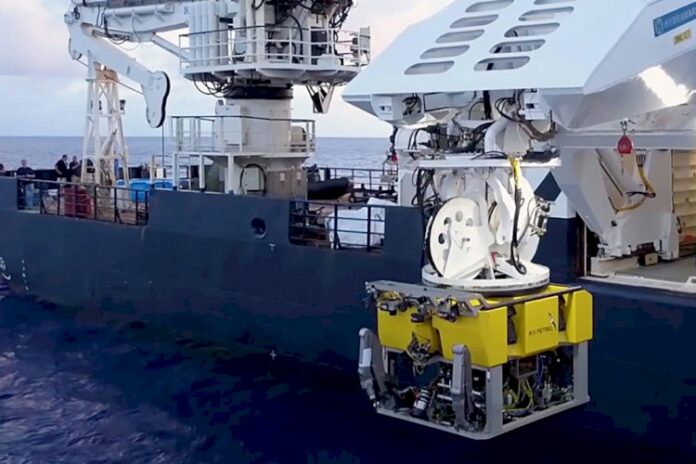
OISL will provide a full suite of services for the project, including vessel, route preparation tools, remotely operated vehicle (ROV), survey, and personnel to complete seabed route and debris clearance operations for the wind farm’s export cable routes.

The project, which will be completed early in the second quarter of this year, is the latest to be secured by OISL for Moray East, with the company’s ROV and tooling divisions already having had success supporting scopes for the development.

The work scope, managed and undertaken by OISL’s Aberdeen-based team, will involve deployment of the company’s industry-leading Route Preparation Plough, RP15 – part of Oceaneering’s extensively field-proven route and boulder clearance system.

The RP15 plough, which will be used for boulder clearance prior to cable installation, has been deployed on multiple North Sea wind farm projects including Race Bank, Westermost Rough, Hornsea1 and East Anglia1 export routes and Beatrice for array routes, with over 3000 km of routes successfully cleared to date.

Marcel Sunier, Project Director of Moray East, said:

“Oceaneering has a proven track record of providing boulder clearance services. We look forward to working with Oceaneering further on this project.”

Allan Ralston, Oceaneering’s Director of Renewable and Subsea Projects, said:

“We are very proud to have been awarded this work from MOWEL for the Moray East development, thereby increasing our presence on this project and adding to the local content aspirations of the developer. Our tried, tested, and proven Route Preparation Plough has an established record of successfully supporting several U.K. wind farm projects to date and will provide our client with the most robust and cost-effective technical solution for route preparation in advance of export cable installation.”

The Moray East Offshore Wind Farm construction project is 22 km off the Caithness coast. It is the second of three wind farms in the area and will consist of 100 wind turbines, providing an overall generating capacity of 950 megawatts – enough to power 950,000 homes. Three, 86 km export cables from offshore to shore will transfer electricity from the wind farm.

Freshwater runoff from rivers brings more carbon, nutrients to Arctic Ocean

0

A new study by National Science Foundation-funded researchers at the Woods Hole Oceanographic Institution and their colleagues found that freshwater runoff from rivers and continental shelf sediments is bringing significant quantities of carbon and trace elements, which form essential building blocks for ocean life, into parts of the Arctic Ocean via the Transpolar Drift. This major surface current moves water from Siberia across the North Pole to the North Atlantic Ocean.

Oceanographers conducting research in the Arctic Ocean as part of the international GEOTRACES program found much higher concentrations of trace elements in surface waters near the North Pole than in regions on either side of the current. The results are published in the Journal of Geophysical Research-Oceans.

WHOI marine chemist Matthew Charette, lead author of the study, says:

“Many important trace elements that enter the ocean from rivers and shelf sediments are quickly removed from the water column. But in the Arctic, they are bound with abundant organic matter from rivers, which allows the mixture to be transported into the central Arctic, more than 1,000 kilometers [621 miles] from their source.”

Trace elements, such as iron, form essential building blocks for ocean life. As the Arctic warms and larger swaths of its ocean become ice-free for longer periods of time, marine algae are becoming more productive. A greater abundance of trace elements coming from rivers and shelf sediments can lead to increases in nutrients reaching the central Arctic Ocean, further fueling algae production.

Charette says:

“It’s difficult to say exactly what changes this might bring. But we do know that the structure of marine ecosystems is set by nutrient availability.”

Nutrients fuel the growth of phytoplankton, microscopic algae that form the base of the marine food web. More phytoplankton bring more zooplankton — small fish and crustaceans, which can then be eaten by animals like seals and whales.

Hedy Edmonds, a program director in NSF’s Directorate for Geosciences, which funded the research through its Division of Ocean Sciences and Office of Polar Programs, says:

“The Arctic Ocean has been, and continues to be, one of the most rapidly changing areas on the planet. It’s imperative that we and our international partners continue to document these changes to better understand our future.”

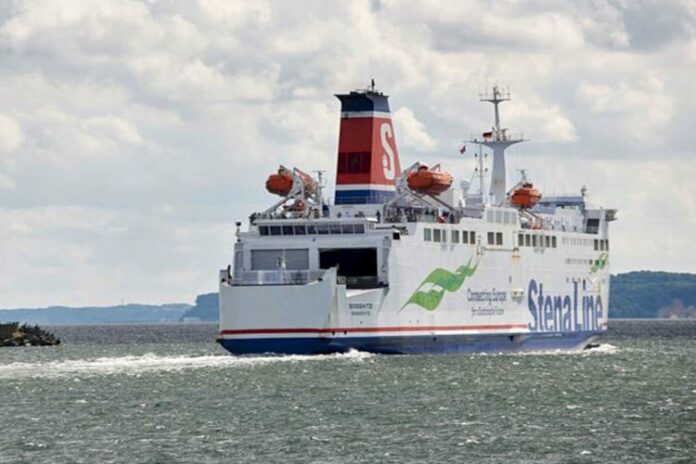
Stena Line plans to close the Trelleborg-Sassnitz route

0

On Saturday 14 March Stena Line suspended the operation of the ferry route between Trelleborg in Sweden and Sassnitz in Germany until further notice. On Wednesday, 8 April, the Company announced plans for the permanent closure of the route, including check-in areas and bordershop in Sassnitz. 

In recent years, approximately 300,000 annual passengers travelled via Sassnitz-Trelleborg, while freight volumes and train traffic on the route have declined. Due to the spread of the COVID-19 pandemic and following travel restrictions in Europe Stena Line has experienced a large decline in travel bookings and freight volumes. It is estimated that passenger figures will not recover until well into 2021. As a result of the significant reduction in revenue, the Company is forced to take tough decisions in order to cut costs and secure its vital supply lines of essential goods across Europe. 

Stena Line has initiated discussions with the worker´s council (Betriebsrat) in Germany. 

Stena Line is currently operating two ferry routes between Sweden and Germany, which are primarily carrying freight, and with a reduced passenger capacity. Trelleborg- Rostock with the two vessel Mecklenburg-Vorpommern and Skåne operates 40 departures per week. Gothenburg-Kiel with the two vessels Stena Scandinavica and Stena Germanica operates 12 departures per week. 

Island Victory chartered by Ocean Installer

0

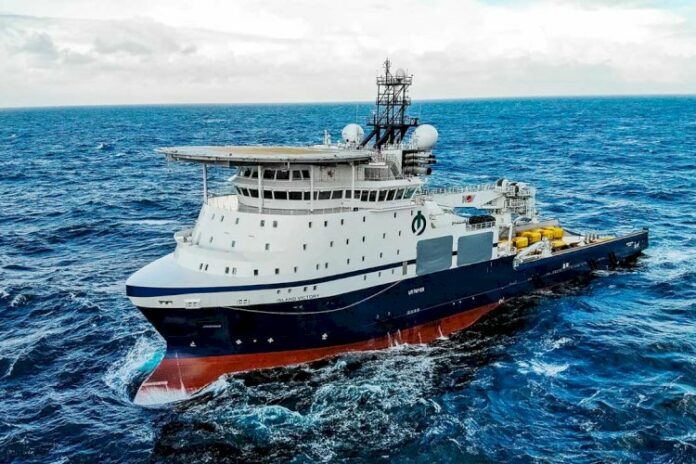
Island Offshore’s vessel Island Victory has secured more work in the Barents Sea this spring. Early April the vessel commenced a 60-90 days contract for Ocean Installer at Johan Castberg and Askeladd. Equinor is the end customer for both fields. 

Tommy Walaunet, Managing Director of Island Offshore Management AS, says:

“The vessel and its crew have already completed some heavy jobs in the Barents Sea this winter. Island Victory has carried out several pre-lays of anchor systems – jobs where she substituted three vessels alone, proving unparalleled capacity and significant savings both for the customer and for the environment. It also reduces operational risk. We are very pleased to be awarded these jobs by Ocean Installer, and hope that this can be the beginning of a long lasting collaboration between our companies.” 

At Askeladd Island Victory will get the chance to demonstrate her flexibility and capacity also within subsea work. Scope of work includes installation of subsea manifolds and performing extensive survey and subsea activity, using the vessel’s two work ROVs as well as the 250 tonnes offshore crane. 

At Johan Castberg Island Victory will install a complete mooring system, including 15 suction anchors and 11.450 metres of Ø170mm chain. The chain itself has a weight of about 590kg per metre in air.