7.1 C
New York
Home Blog Page 878

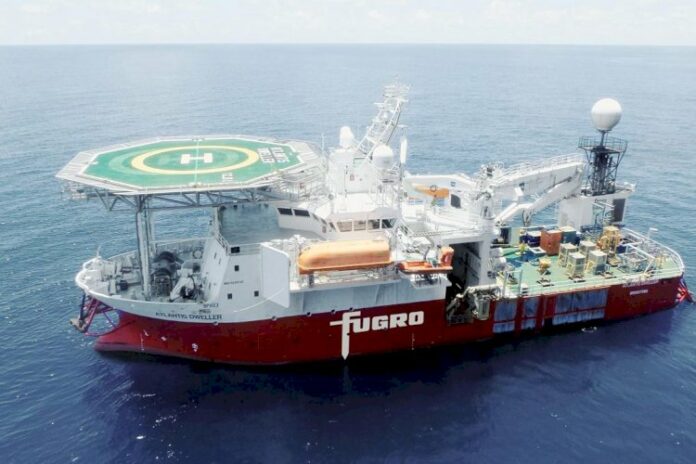
Fugro secures remote operations contract on Well-Safe Guardian rig

0

Fugro will deliver their integrated marine-based solution onboard the Well-Safe Guardian rig, Well-Safe Solutions’ bespoke semi-submersible unit for executing subsea well decommissioning work.

The contract award gives Fugro responsibility for supplying and supporting remotely operated vehicle (ROV) services, rig positioning and remote operations. Expert support will come from Fugro’s remote operations centre in Aberdeen, Scotland: remote access via the onshore team will reduce the number of Fugro personnel required onboard the Well-Safe Guardian asset to improve efficiency and maximise safety.

Kevin Chambers, Fugro’s ROV Service Line Director, said:

“I am delighted to announce this contract award with Well-Safe Solutions. Our teams’ skills and experience in plug and abandonment and the decommissioning of offshore wells perfectly complement the expertise of Well-Safe Solutions. We will also add value through our extensive knowledge of marine asset integrity.”

Phil Milton, Well-Safe Solutions’ Chief Executive Officer, said:

“Following an extensive tender process, we are pleased to award this contract to Fugro for ROV, rig positioning and remote operations. The capabilities of their offering will enable Well-Safe Solutions to maximise overall operational efficiency and delivery for our clients at a cost-effective rate, while maintaining close commercial alignment.”

New way to secure steel coils during container transport-along

0

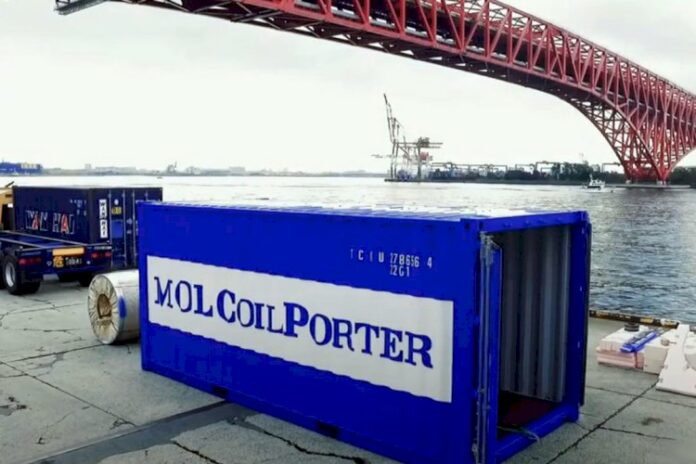
The MOL COILPORTER® is the new cradle used to lash steel coils, an essential material for automobile manufacturing and other industries, to ensure safer containerized transport.

Mitsui O.S.K. Kinkai, Ltd., which offers transport service for steel materials, Utoc Corporation, and MOL Logistics Co., Ltd. shared customers’ requests with the development team, and to creative approaches to address every detail during the development of the MOL COILPORTER®.

The MOL COILPORTER® trademark has been registered in major countries. And it is already patented in Japan, with several other patents pending.

The MOL Group is striving to expand its NVOCC business under the group’s unified brand MOL Worldwide Logistics (MWL). MOL Logistics engages in sales under MWL in Japan. To meet customer demand, starting in Japan, MOL Logistics will commence service using the MOL COILPORTER® as a differentiated product in May 2020 as part of its door-to-door NVOCC service.

In addition, the MOL COILPORTER® has acquired the approval of Ocean Network Express Pte. Ltd. for comprehensive transportation services, based on trial shipments with ONE.

MOL will offer new value in containerized steel coil transport through MOL COILPORTER® and continually develops logistics products that offer stress-free services to customers.

LR to class new Multi-Role Ships for Federal German Government

0

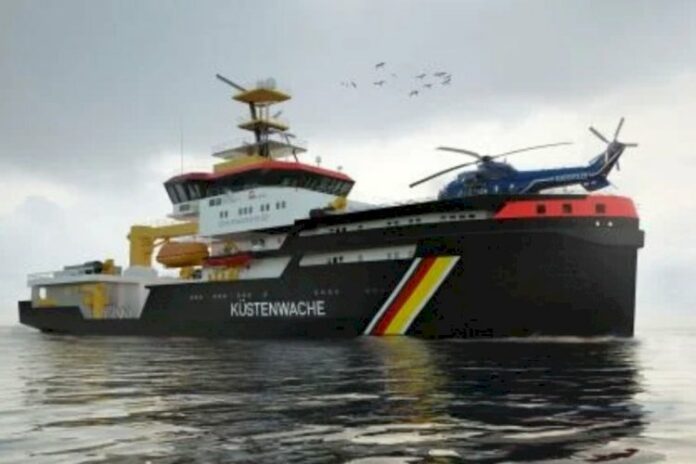
The German Federal Waterways and Shipping Administration awarded this complex project to ABEKING & RASMUSSEN Schiffs- und Yachtwerft SE. The shipbuilders, in agreement with Bundesanstalt für Wasserbau BAW, appointed LR as the classification society for two new 95 metre Multi-Role Ships. 

These next generation vessels will be capable of performing a number of tasks, such as emergency towing, fire-fighting, buoy tendering as well as oil recovery and chemical recovery operations. One of the many innovations is the ship’s propulsion concept with LNG as a single fuel.

LR Hamburg office provides dedicated technical support relating to the complex regulatory framework for these multi-functional ships. Early design screening of the LNG fuel gas system layout together with many more independent verifications of the initial design concept were performed prior to the final award of the classification contract to LR.

Due to the ship’s variety of special duties the system design and on-board integration is complex. For chemical recovery operations the ships are designed for a gas safe operation using a citadel concept to protect the crew from hazardous substances. The combination of an LNG as single fuel propulsion concept with the special operational duties listed above makes these ships novel with unique features.

Markus Büsig, LR’s M&O President for North Europe, said:

“LR welcomes the opportunity to support Abeking & Rasmussen and their client with these two next-generation vessels. This is a significant achievement for the LR team as these ships will push the boundaries of flexibility and innovation.”

The design and engineering phase is underway and construction scheduled to begin in 2021 with the ships due to be delivered in 2023.

Waves Group supports Irish Sea Сontractors in subsea habitat hydrodynamic tests

0

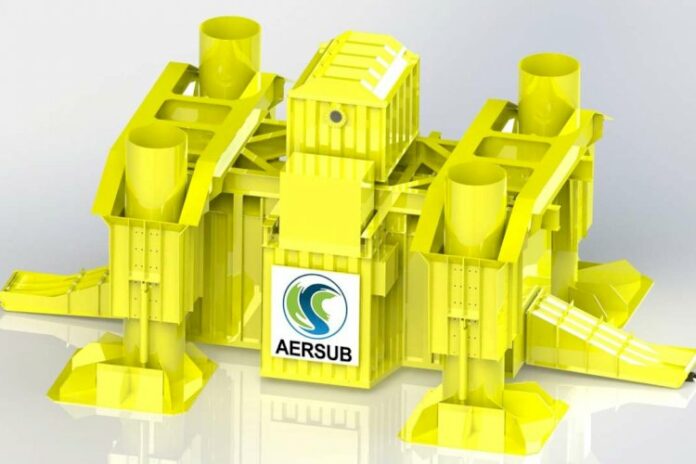
Waves Group has been appointed by Irish Sea Contractors (ISC) to provide expert engineering analyses in the pre-development, installation and simulation for their Subsea power cable repair habitat design, known as Aersub.

The main aims of the analyses were to define the operational envelope for deployment and its in-situ position on the sea-bed. In particular, our team defined the load and operational seastates for deployment from a typical support vessel and determined the operating conditions the body can endure on the seabed, together with recommended ballasting requirements to ensure stability.

The design, by ISC has now been developed further, manufactured and launched as the cable repair habitat called Aersub, that ISC predicts could reduce the cost of repairing offshore wind power cable by 50%. Aersub is specifically designed to enable the repair of faulty power cables in-situ subsea on the seabed and provides an alternative to more common lift-to-repair solutions. It has already been deployed successfully on a demonstration cable repair at Rosslare Europort.

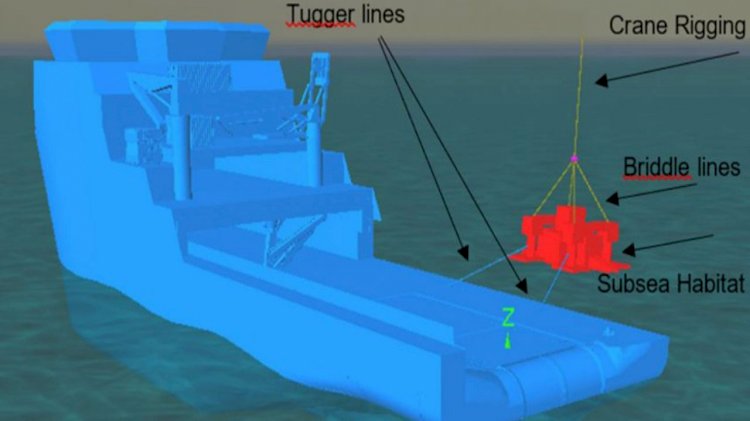
Waves Group’s engineering team modelled and analysed the design using state-of the-art software, capable of dealing with complex time-domain dynamic analyses and utilising industry guidelines. Our engineers modelled the vessel (offshore crane vessel) and the subsea habitat response to the applied environmental conditions considering the dimensional and hydrodynamic properties of the subsea habitat and the vessel in order to predict the on-bottom stability and the deployment performance of the Aersub.

The on-bottom environmental loads were used as an input for a geotechnical assessment of the mudmats and the required ballast to maintain the habitat on the seabed after deployment and during abandonment following a storm event. The on-bottom stability analysis showed that the ballast requirements for the habitat were highly dependent on the installation water depth – as the waterdepth increased, the effect of waves on the habitat reduced until it was only governed by the current loads.

Our deployment analyses indicated the most likely range of significant wave height and period range that deployment and abandonment could be achieved in safely. The study used standard vessel properties and crane properties (pictured below) and advised the most beneficial orientation of the vessel to limit the critical motions of the habitat.

The analyses can be applied to any marine operation and environment to allow designers to predict loads and performance and ultimately increase safety confidence and reduce costs in design and manufacture.

BMT launches the next generation hull-form

0

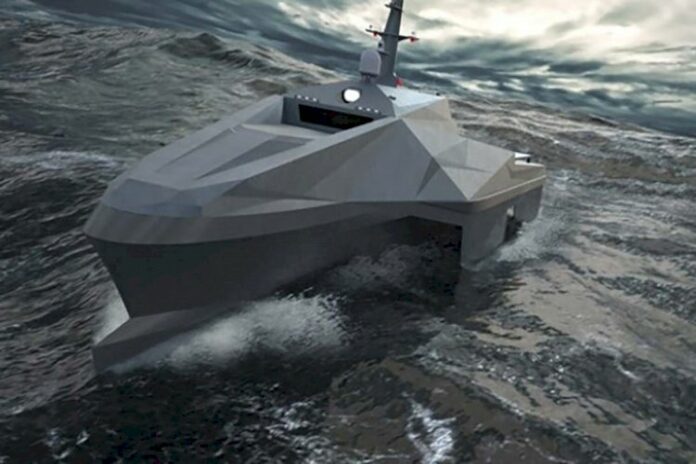
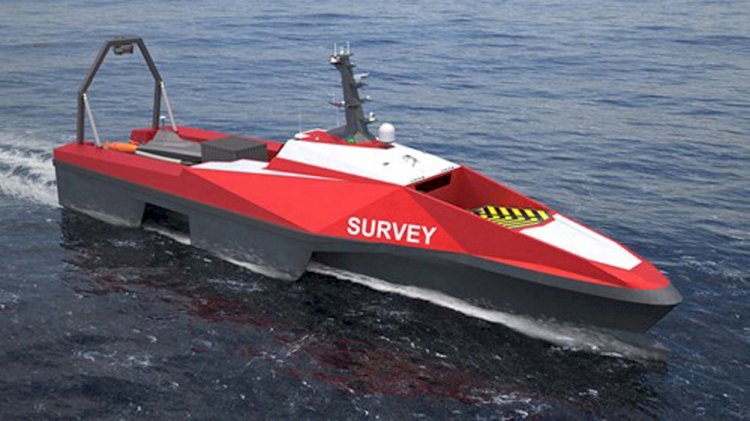
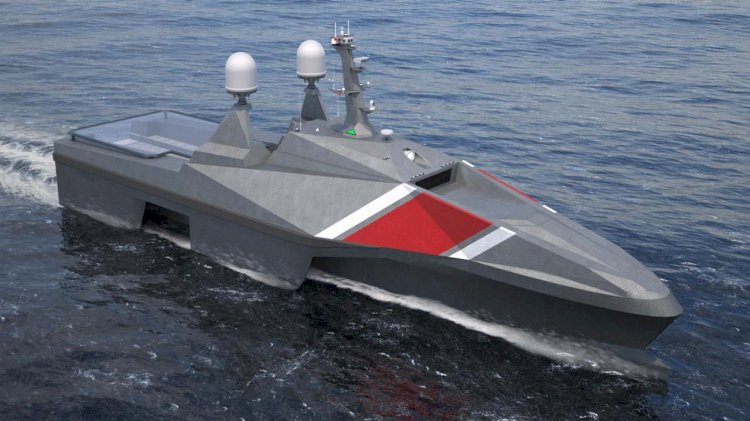
Leading the way in multi-hull applications, BMT has released details of its next generation ‘Pentamaran’ platform for autonomous applications.

Offering a myriad of applications for defence and commercial innovators, these innovative vessels may be custom configured for military, patrol, intelligence surveillance and reconnaissance (ISR), anti-submarine warfare (ASW) and hydrographic survey work.

The design is the latest from the BMT’s team of expert naval architects and engineers who have been at the forefront of innovative hull design for 34 years. The Pentamaran has been designed to reduce drag as much as possible and tests have proven it offers significant improvements compared to conventional hull forms such as mono-hulls, catamarans and trimaran.

The vessel features a very slender central hull and two smaller hulls or ‘sponsons’ on either side. The sponsons are set one behind the other and when the vessel is operating on flat water, the forward sponsons are not submerged, as they provide roll stability effect in waves only. Compared to a trimaran there is less volume permanently immersed and therefore less resistance through the water.

Martin Bissuel, Business Sector Lead for Specialised Ship Design at BMT comments:

“Our team have carried out extensive work on this. The data gathered through extensive towing tank testing is very compelling. For applications where fuel economy matters, the Pentamaran hull form is more efficient than conventional full forms, which means that using the same engines and the same amount of fuel, it will go further than any other, making it an ideal candidate for autonomous applications. Looking at it from a distance it may resemble a trimaran but that’s where the similarities end.

The arrangement and careful positioning of the four sponsons makes all the difference. The forward sponsons stay above the water, and only come into action when the vessel rolls, so not only the drag is reduced, but the sea keeping characteristics are improved. Compared to a trimaran hull form, lateral accelerations are lower, reducing g-loadings on the structure as well as the antennae and sensors on deck. The wide deck offers a large working area for multi-role capabilities. It can accommodate payloads or interface with other systems such as unmanned air vehicles.” 

A key consideration, when a vessel is operating autonomously for long periods of time, is the reliability of the propulsion setup which is essential to sustained operational readiness. BMT’s engineers have therefore integrated multiple independent power sources to increase reliability as well as survivability.

Framo introduced tailor-made TransRec oil skimmer solutions

0

Framo has introduced a new cost-effective and customizable oil skimmer offering based on its well-proven TransRec platform. The new solution allows customers to specify a range of options to tailor their systems to fit their operational requirements.

The system, proven in more than 250 installations, contains essential equipment and features required for an effective oil recovery operation in most operational conditions – including a portable electric remote-control panel that allows operators to be positioned for the best view of the operation. On top of this operators can add options including control and sensor packages designed to offer greater optimisation of oil recovery and prolonging the operational windows of equipment in harsh conditions.

Area Sales Manager in Framo, Jørgen Brandt Theodorsen, said:

“Our customers now have the possibility to tailor the TransRec system to their specifications. This offers customers the best tailored and optimized solution for a high-capacity offshore skimmer system in the world at a low entrance level.”

With a diverse range of skimmers, the Framo TransRec system is designed to handle any oil spill, whether it occurs in the process of oil production or as the result of a vessel-related incident. It has proved its capabilities as an oil recovery system for the open sea and as an emergency offloading system.

Theodorsen says:

  • “Regardless of the offshore environment or the characteristics of the oil, the recovery and transfer system provide the capabilities you need to recover more oil when time is not on your side.”

TransRec is the result of 40 years of research and development and is the longest-established oil skimmer system on the market, proved in countless oil spill response operations across the world. 

Strategically located Omani port joins SEA-LNG

0

SOHAR joins SEA-LNG to promote its investment in LNG bunkering facilities and the use of liquefied natural gas (LNG) as a marine fuel. 

SEA-LNG is the leading multi-sector industry coalition, created to accelerate the widespread adoption of LNG. MARSA LNG, a venture comprised of TOTAL S.A. and OQ, is developing a state of the art LNG liquefaction plant and bunkering facility in SOHAR Port.

Highlighting the importance of the upcoming project, Mark Geilenkirchen, CEO of SOHAR Port said:

“This major LNG Bunkering project will generate in-country value and job opportunities, and will support industry diversification efforts by promoting shipping activities in Oman. The establishment of this facility will make SOHAR one of the key LNG bunkering facilities on the main shipping trade routes, alongside other strategic ports, many of whom are already SEA-LNG Members, such as the Port of Singapore.  MARSA LNG will supply LNG sourced locally in the Sultanate.”

The project will see the provision of LNG to the shipping lines calling at SOHAR Port.  The switch from traditional marine fuel oils to LNG has accelerated following the implementation of new sulphur emission limits by the International Maritime Organization (IMO) in January 2020 and the IMO greenhouse gas emission targets set for 2030 and 2050.

Peter Keller, Chairman of SEA-LNG said:

“We are excited to welcome SOHAR to the SEA-LNG coalition.  SOHAR is our first Member from the Sultanate of Oman and will provide an attractive global offering once the marine bunkering project is completed.  From our perspective, this is an opportune time to develop LNG capabilities in Oman given the expansive growth of marine activity within the region.  We welcome SOHAR to our cause of furthering the use of LNG as an important, environmentally superior maritime fuel.”

Due to its unique location outside the Strait of Hormuz and mid-way between Europe and Asia, SOHAR is ideally positioned to become a major LNG bunkering hub in the Middle East. In addition, SOHAR Port and Freezone feature deep-water drafts capable of handling the largest vessels in the world. The liquefaction plant and bunkering project will be able to offer attractive business conditions, further enhanced by access to a dedicated logistics chain as well as large domestic gas reserves.

Peter Keller continues:

“As well as providing a means to comply with recently enforced sulphur limitations, LNG provides a clear pathway for the shipping industry to decarbonise through the introduction of biomethane and synthetic methane. Now is the time to move forward with LNG as an important maritime fuel.  Inaction is not a plan and we cannot afford to wait decades for solutions that may never be realised. Investing in LNG capable vessels now provides the shipping industry with a pathway to a low carbon future as well as significant and immediate environmental and health benefits.”

3D-printed spare parts revolutionize maritime supply chain

0

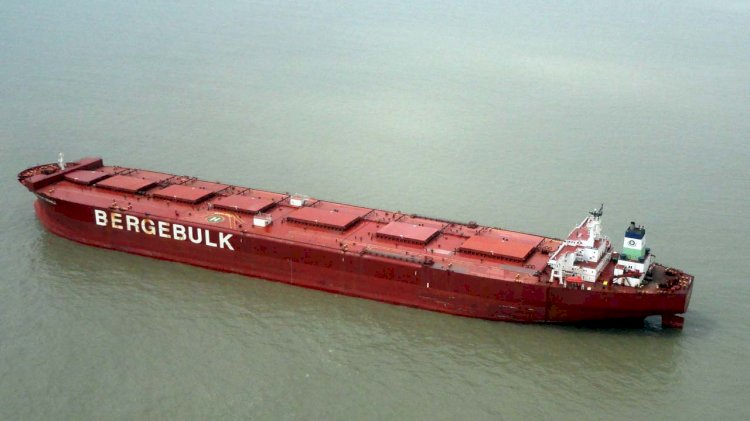
In early February 2020 the bulk carrier Berge Mafadi was one of the world’s first ships to receive a commercial delivery of 3D-printed spare parts, including scupper plugs.

Her owner, Berge Bulk, participates in a pioneering project that aims to establish a supply chain for 3D-printed items and answer several key questions relating to the feasibility of additive manufacturing (AM) as an alternative to traditional forms of procurement, similar to the aerospace industry, where AM has played a significant role for some time. Hakon Ellekjaer, Head of Venture ¬ 3D Printing at Wilhelmsen Ships Service, which procured the spare parts for Berge Bulk, sees great potential in the technology:

“The savings in terms of reduced cost, time and environmental footprint make 3D printing of maritime spare parts a tremendous opportunity for our customers.”

Recognizing the disruptive potential of 3D printing technology, the Maritime and Port Authority of Singapore (MPA), the National Additive Manufacturing Innovation Cluster (NAMIC) and the Singapore Shipping Association (SSA), various industry partners and the University of Singapore launched a joint industry programme (JIP) in early 2019 to develop a concept for a future supply chain of AM spare parts. DNV GL was asked to lead the first phase of the project, which included a study into the feasibility of establishing a local additive manufacturing infrastructure able to supply a set of one hundred commonly ordered marine spare parts on demand.

Among the industry partners of the Singapore JIP is Wilhelmsen Ships Management. The Norway-based company owns a stake in its cooperation partner Ivaldi, a company specializing in on-demand 3D printing of spare parts for heavy industries. Ivaldi’s part replacement-as-a-service business model and 3D printing expertise were a perfect fit for Wilhelmsen’s global supply chain, and the two companies decided to make 3D-printed parts more widely available to the shipping community. The Singapore JIP provided an ideal platform to advance this concept.
In December 2019 the Marine Products division of Wilhelmsen launched an exclusive Early Adopter Programme (EAP) with six Wilhelmsen customers – Berge Bulk, Carnival Maritime, Thome Ship Management, OSM Maritime Group, Executive Ship Management and Wilhelmsen Ships Service – to begin utilizing on-demand additive manufacturing. Wilhelmsen and Berge Bulk had beta-tested the EAP concept for a year before the programme was rolled out. The role of DNV GL in this pilot project is to assure the parts-as-a-service ecosystem offered by Wilhelmsen and Ivaldi.

Among the aspects that make additive manufacturing very attractive to the shipping industry is the ability to reproduce complex shapes out of many different materials using a variety of technical approaches, and to do so on demand. The key prerequisite, apart from the 3D printing equipment itself, is the availability of an electronic file for the desired part. But to be able to print parts fast, AM companies must have instant access to an entire library of printing files for common spare parts. Over the coming years more than 50,000 unique spare parts are expected to be digitized so they can be produced on demand, avoiding time-consuming and costly storage, shipping, customs and receiving processes.

Simon Ratcliffe, Team Lead, Additive Manufacturing X-Team at DNV GL, describes what this entails:

“If you want to provide a distributed supply chain of spare parts on demand, you need a digital inventory. Developing such a library of 3D files takes effort. Then, to get the exact results you want at a different location that uses other equipment or material, you will need to redo some of your development work. This means that you end up with several files for the same part, which expands the size of the digital inventory significantly.”

Wilhelmsen, Ivaldi and DNV GL are testing a new universal part-tracking system to support quality control, part evolution and traceability. All relevant data and requirements related to the manufacture, design and performance requirements of each part are documented, and each part is assigned a unique identifying code. Ratcliffe says:

“We are building a registry of information for traceability and proof of fitness for purpose. And we will scale that as needed”

Wilhelmsen’s Hakon Ellekjaer comments on the benefits of this digital inventory:

“Assurance is a vital part of our 3D printing service, both towards end users and OEMs. In order to ensure trust, every part, no matter how small, must be produced in a traceable and quality-controlled manner. With DNV GL’s help, every part we produce can be traced from the digital file through to part delivery. When we get feedback from the field, this enables us to go back all the way to the design and make whatever improvements are necessary. Wilhelmsen are therefore very proud to have teamed up with DNV GL to build a new service especially aimed at the assurance of digital inventories – accelerating the adoption of 3D printing in the maritime industry.”
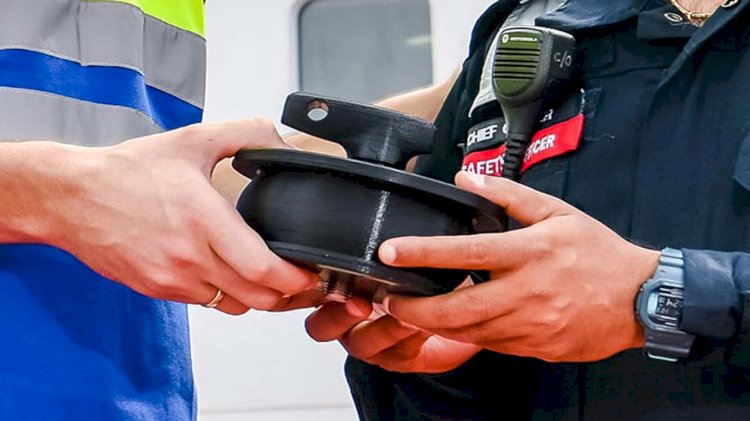
The first list of 3D-printed parts available through Wilhelmsen’s subscription service may look unspectacular at first. But being able to procure these parts on demand at key ports – and at some point in the future at any major port in the world – makes a big difference for shipping companies, a fact highlighted by the growing number of companies asking to be included in the early adopter programme. Scupper plugs, which are used to close drainage holes to prevent oil or contaminant spills, are a good example to illustrate the many benefits of the new AM supply chain, as Sim Teck Siang, Procurement Manager at Berge Bulk, explains:

“Scupper plugs are expensive, and there are no universal dimensions, which means that when there is a broken element, a new scupper plug needs to be brought. With additive manufacturing, the company is able to procure scupper plugs faster, cheaper and locally. If any part breaks, Berge Bulk can replace that one part instead of the whole unit. It is exciting to be part of Wilhelmsen’s Early Adopter Programme as on-demand additive manufacturing will revolutionize the spare parts industry. We are excited about the possibilities this will bring. Not only benefiting the supply chain but also the ability to modify and improve parts with input from end users’ experience.”

Captain Tarun K Gupta, Master of Berge Mafadi, explains:

“It is very exciting for us at Berge Mafadi to try out new technology and the possibilities it will bring. Spare parts are currently a pain point, and we have trouble with for instance scupper plugs as they are easily stolen for their brass components. They are expensive, and we are constantly needing to replace them. By replacing them with plastic, we are eliminating any possibility of theft, and best of all, we get them on-demand within a short period of time. We are looking forward to experiencing the expanding offering from Wilhelmsen Ships Service.”

More complex parts and components will doubtlessly follow eventually. Even in those cases where the price of a 3D-printed spare part is higher than that of an original part because of higher material costs, the overall costs are likely to be lower, and the added benefits of rapid availability and eco-friendliness remain. From the manufacturer’s perspective, sending a file for an appropriate fee rather than shipping a finished part eliminates the disproportionate time and effort of retooling a manufacturing line just to make a single spare part.

The Wilhelmsen programme, while still in its trial phase, is definitely demonstrating the benefits of the concept and has attracted plenty of interest from shipping companies. Wilhelmsen’s Hakon Ellekjaer is confident:

“We believe on-demand manufacturing technologies are going to completely reshape the maritime supply chain.”

It is the responsibility of DNV GL to build trust in AM by providing assurance and certification, know-how and advisory services to help the individual players in the ecosystem collaborate with a constant eye on quality. Simon Ratcliffe points out:

“We believe that the safe and controlled use of AM will contribute to our purpose of safeguarding life, property and the environment. It will do so in small ways, such as reducing the carbon footprint of the spare parts supply chain, or beating counterfeit products on the grey market. AM will be much safer if end users are able to get the right, reliable parts easily. That’s why we believe in AM and want it to be adopted by our core industries.”

Source: DNV GL

VIKAND and Inmarsat to bring a COVID-19 video information hotline

0

VIKAND SOLUTIONS, LLC, a global, maritime medical operations and healthcare solutions provider, and INMARSAT, the world leader in global, mobile satellite communications, have announced that VIKAND will bring a COVID-19 information hotline to Inmarsat’s global shipping and energy clients.

This service will ensure that Inmarsat clients have 24/7 access to call VIKAND’s expert staff for information to help navigate COVID-19 related, medical questions. By facilitating access to timely information for a vessel, client uncertainty will be reduced, their decisions will be more informed, and actions can be taken faster by clients to help mitigate and resolve risks. The hotline video call functionality is powered by proprietary AI Edge collaboration technology from FrontM who like VIKAND are a Certified Application Provider (CAP) to Inmarsat.

Peter Hult, CEO of VIKAND, said:

“By urgently providing this video information hotline along with Inmarsat and FrontM we will offer vessel owners and Captains all over the world easy access to information to help give relevant medical information around COVID-19 at this difficult time.  Over the longer term, our shared vision for the partnership with Inmarsat is to ensure a healthier environment onboard ships, early intervention when seafarers are not well and a rapid support system in the event of an emergency, utilizing the communication strength of Inmarsat.”

Marco Cristoforo Camporeale, Head of Digital Solutions, Inmarsat Maritime, said:

“We are delighted that VIKAND and FrontM will join Inmarsat in delivering this timely, relevant and requested information service to our Fleet Xpress clients. This is fully in line with our wider partnership vision to help resolve medical concerns quicker and allowing companies to respond earlier in case of medical emergencies. As part of our new suite of Maritime Digital Solutions, our Dedicated Bandwidth Services are available across either our Fleet Xpress or FleetBroadband networks and are designed specifically for applications such as VIKAND that need direct access to the vessel and  cannot be constrained or interrupted by crew or operational traffic.”

Guillermo Acilu, founder & CTO of FrontM, said:

“We are extremely honored to be collaborating with Inmarsat and Vikand to assist in the provision of this urgently needed Covid-19 hotline service. In these unprecedented times, it has never been more important to provide shipping firms and their seafaring workforces with access to the satellite, communication and healthcare support needed to provide the level of care and attention seafarers need to overcome the current crisis whilst remaining healthy at sea.”

New Pilot boat for the Port of Berbera delivered by Safehaven Marine

0

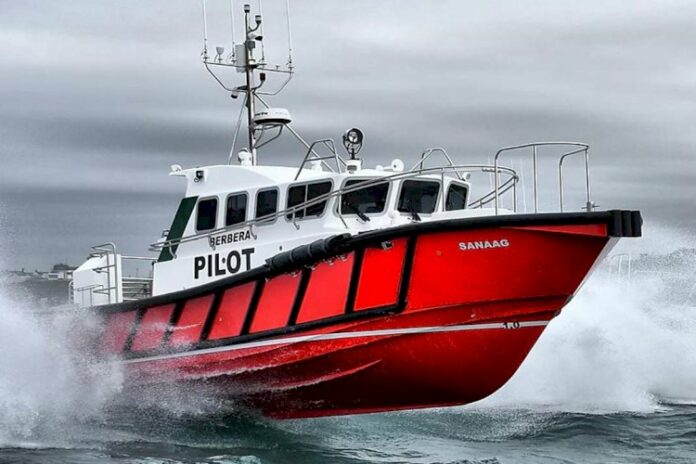
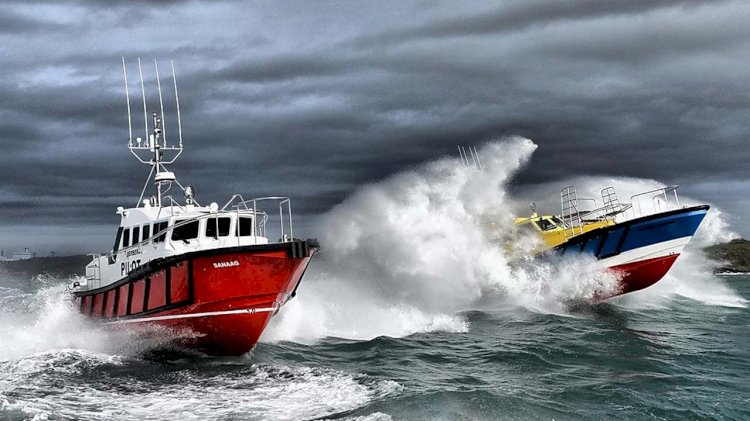
‘Sanaag’ is one of Safehaven’s Interceptor 38 pilot vessels, at 11.9m LOA, a very capable design which proves economical to operate, yet capable of dealing with very rough seas and challenging boarding conditions when required.

She has been built for DP World Berbera to be given to the Somaliland Ports Authority.  The build and sea trials were managed fully by P&O Maritime Logistics. This is the fourth pilot boat that Safehaven Marine have supplied to the DP World, all of which were delivered on time and have operated very successfully and reliably over the years, this no doubt was a significant factor when the group required another new pilot vessel, and with Sanaag being the 43rd pilot vessel Safehaven Marine have supplied, they were secure in the knowledge that they were working with a builder with a vast range of experience in this specialized sector. 

‘Sanaag’ is powered by Caterpillar C7 350hp engines and ZF V drive gearboxes through conventional sterngear providing her with a 18-20kts operational speed, she has a 5 person capacity for 4 pilots and helmsman in her main cabin, all on CAB suspension seating with her helm position being centrally positioned to allow excellent control and visibility to the coxswain during both port and st/bd boarding’s.

The Interceptor design features a central cabin configuration allowing a useful aft deck area and a clear wide pilot boarding area forward. Below decks the design also features a spacious f/wd cabin which can accommodate additional passengers when required. The hull is heavily fendered all round with a combination of main gunwale, diagonals and a lower run as well as also employing Safehaven’s own special sacrificial boarding fender providing additional protection at the shoulders. A bow pusher also allows her to assist in docking of small ships in Port if called upon. High and low level pilot boarding railings as well as a Hadrian safety rail ensure safety on deck. MOB recovery is via Safehaven’s well proven transom lift, of easy manual operation it can quickly be deployed to safely recover a casualty from the water. 

An aft deck external steering position facilitates the safe maneuvering of the boat in any recovery situation. Fitted with a full array of navigation equipment with Radar, GPS plotter, sounder, AIS and Sailor VHF radios, as well as a full CCTV system covering all areas of the boat. The main cabin is fitted out to a high standard and is fully climate controlled with twin 18,000 btu air conditioning units for redundancy ensuring a comfortable environment for her crew and pilots during transits.