7.3 C
New York
Home Blog Page 877

Wärtsilä to develop luxury cruise vessel design for cruise expeditions

0

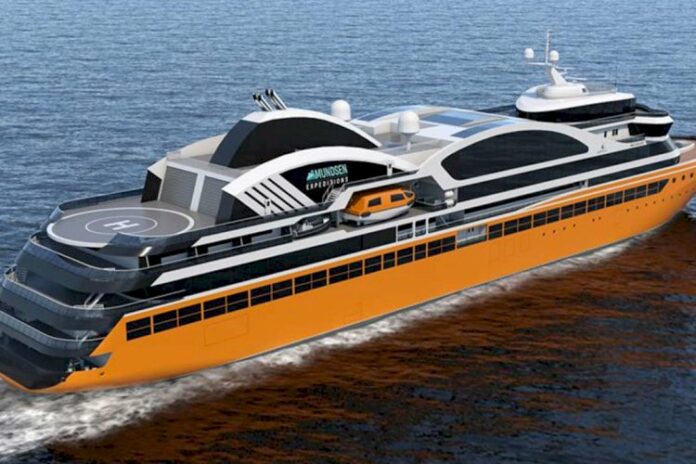
The technology group Wärtsilä’s in-house ship design capabilities have been recognised with an order to develop a customised design for up to six new luxury expedition cruise vessels capable of carrying 200 passengers.

The ships will be owned and operated by Amundsen Expeditions and are targeted primarily at the growing Chinese market. The design order with Wärtsilä was signed in the third quarter of 2019.

Markku Miinala, General Manager, Ship Design Sales, Wärtsilä Marine, says:

“The ships are designed to operate efficiently in both tropical and polar waters. Because of the harsh environment and often remote location of the cruise destinations, special attention has been given to ensuring the ships’ operational reliability.”

The Wärtsilä team has worked in close cooperation with Amundsen Expeditions to develop a concept that meets the owner’s precise specifications and requirements. The vessels are designed to be fitted with a complete package of Wärtsilä solutions, including Wärtsilä 32 engines, selective catalytic reduction (SCR) systems for the abatement of nitrogen oxide (NOx) emissions, electric propulsion, the Wärtsilä Nacos Platinum bridge system for navigation and communication, as well as Wärtsilä automation solutions. The eventual supply package is likely to be supported by a 10-year maintenance agreement, which will ensure the safety, reliability, and efficiency of the vessels, while providing cost assurances for budgeting purposes.

Maikel Arts, General Manager, Cruise Business, Wärtsilä Marine, says:

“The design emphasises Wärtsilä’s strength as a complete solutions provider. Our one-stop-shop capability, which allows the ship design to be combined with a complete package of onboard solutions, enables a truly integrated design. This results in the various onboard systems working seamlessly in harmony to provide the optimal level of reliability and efficiency, while keeping cost and time considerations under control.”

Captain Rajko Zupan of Amundsen Expeditions, who has been actively involved in the ship’s design since the inception of the project, says:

“We have great respect for Wärtsilä’s experience and broad portfolio of high quality solutions. This is important to us as these cruise ships are highly complex and require advanced design expertise. The cruise ships will feature all outside guest cabins, presidential suites, winter gardens and the latest environmental equipment. We appreciate Wärtsilä’s ongoing support in this project.”

Wärtsilä is a leading supplier to the cruise industry. With a network of dedicated experts available worldwide, the company can support its cruise customers wherever they operate. In addition to its portfolio of efficient and reliable solutions, Wärtsilä also offers the latest in ship design, cyber-security, enhanced sustainability performance, and future-proof operations.
QP signs agreement to reserve LNG ship construction capacity in China

0

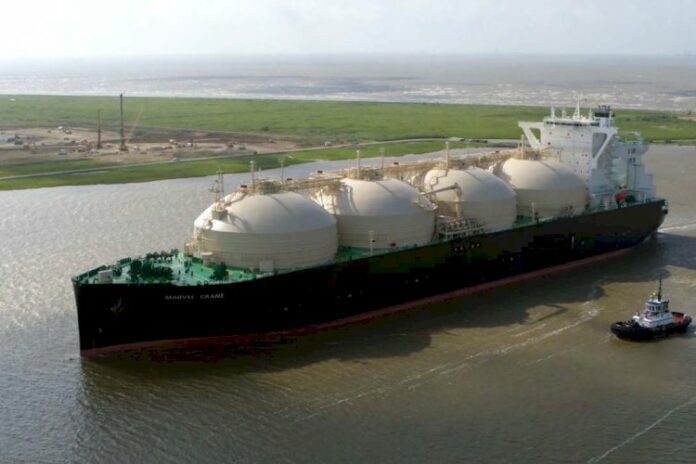
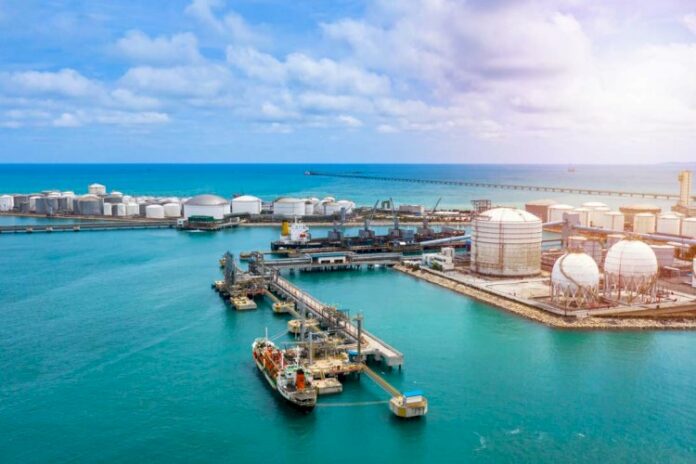
Qatar Petroleum announced today that it has entered into an agreement to reserve LNG ship construction capacity in China to be utilized for Qatar Petroleum’s future LNG carrier fleet requirements, including those of its ongoing North Field expansion projects.

The agreement was entered into between Qatar Petroleum and Hudong-Zhonghua Shipbuilding Group Co., Ltd. (Hudong), a wholly owned subsidiary of China State Shipbuilding Corporation Limited (CSSC). Pursuant to the agreement, a significant portion of Hudong’s LNG ship construction capacity will be reserved for Qatar Petroleum through the year 2027.

The agreement was signed by His Excellency Mr. Saad Sherida Al-Kaabi, the Minister of State for Energy Affairs, the President and CEO of Qatar Petroleum, and Mr. Lei Fanpei, the Chairman of CSSC, in a virtual ceremony held today in the presence of Sheikh Khalid Bin Khalifa Al Thani, CEO of Qatargas, and Mr. Chen Jianliang, Chairman of Hudong, as well as senior executives from Qatar Petroleum, Qatargas, CSSC and Hudong.

Speaking at the signing ceremony, His Excellency Mr. Saad Sherida Al-Kaabi said:

“Today, we have taken yet another concrete step to reinforce Qatar’s commitment to its global reputation as a safe and reliable LNG producer at all times and under all circumstances. By entering into this agreement to reserve a major portion of Hudong’s LNG ship construction capacity through the year 2027, we are confident that we are on the right track to ensuring that our future LNG fleet requirements will be met in due time to support our increasing LNG production capacity.” 

His Excellency Minister Al-Kaabi added:

“The value of this landmark agreement has the potential to be well in excess of 11 billion Qatari Riyals, depending on our requirements and the extent of China’s LNG shipbuilding capacity expansion. To this end, Qatar Petroleum is pleased and proud to support the expansion of the LNG ship construction capacity in China and looks forward to further growth in the near future.”

“I would like to take this opportunity to thank Hudong’s team for all the hard work to bring this contract to fruition during these challenging times. I would also like to thank the leadership of our esteemed partner, CSSC, for their great support to this effort in line with our mutual desire to further strengthen the excellent relations between China and Qatar, especially during the unusual circumstances the world is currently facing. I am also very grateful to the Qatar Petroleum and Qatargas teams, whose dedicated efforts were instrumental in realizing this agreement.”

Also speaking at the virtual signing ceremony, Mr. Lei Fanpei, the Chairman of CSSC said:

“The 174,000 cubic meter LNG carrier for Qatar Petroleum is the latest generation of LNG carrier design customized by CSSC for Qatar. The carrier has the world’s leading performance for efficiency, reliability and environmental conservation, demonstrating CSSC Group’s great efforts and commitment to the success of Qatar Petroleum’s projects. The agreement signed today will be an important milestone for the cooperation of CSSC Group and Qatar Petroleum, and will make new contributions to consolidating the economic cooperation and traditional friendship between Qatar and China.”

The North Field expansion projects will increase Qatar’s LNG production capacity from 77 million tons per annum to 126 million tons per annum. Qatar Petroleum’s LNG carrier fleet program is the largest of its kind in the history of the LNG industry and will play a pivotal role in meeting the shipping requirements of Qatar Petroleum’s local and international LNG projects, as well as replacing some of Qatar’s existing LNG fleet.

Subsea 7 awarded contract offshore Netherlands

0

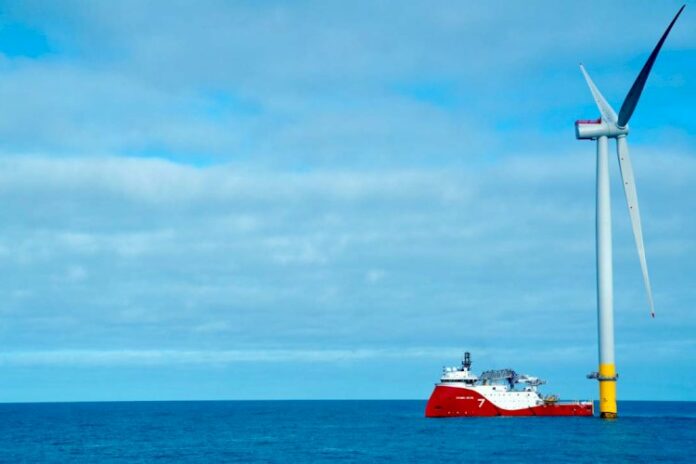
The contracted work scope includes the transport and installation of approximately 140 wind turbine monopile foundations and 315km of 66kV inner array grid cables in water depths between 18 and 27 metres.

Offshore installation is scheduled for execution in 2021 and 2022 using Seaway 7’s heavy lift, cable lay and support vessels. The contract is subject to a final investment decision by Vattenfall and Subsea 7 will include the contract in backlog once that decision has been made. 

The HKZ 1-4 offshore wind farms are being developed by Vattenfall as the first subsidy-free wind farms in the Netherlands, and when completed, will have an installed capacity of approximately 1.5 GW, which will meet the electricity needs of approximately 2-3 million Dutch households. 

Steph McNeill, EVP Subsea 7 Renewables, said:

“We look forward to working collaboratively with Vattenfall as a trusted partner to install the foundations and inner array cables for the Hollandse Kust Zuid 1-4 wind farms and help to deliver the first subsidy-free offshore wind project in the Netherlands.” 

Catrin Jung, Head of Offshore Wind, Vattenfall, said:

“We look forward to working with Subsea7 on this exciting project. The Netherlands is an important market for us and we are very happy to contribute to making the Dutch energy system more sustainable and support our customers, large and small, on their way to fossil free living.”

Accelerated production start-up from the Ærfugl field

0

Kjetel Digre, SVP Operations & Asset Development in Aker BP, says:

“The acceleration of production from Ærfugl Phase 2 means increased value creation for the Ærfugl joint venture, the supplier industry and the Norwegian society in the form of increased revenues. Thus I’m very pleased to mark this milestone. However the good news are offset by the fact that we are facing a global crisis that none of us have experienced before. Investments and explorations activities offshore Norway are put on hold. Tens of thousands of employees in our industry are currently at risk.”

As a respond to the dramatic change in the market situation, Aker BP has stopped all non-sanctioned projects, including the Hod redevelopment project in the Valhall area which was just about to be sanctioned prior to the dramatic turmoil.

Digre adds:

“It is clear that the industry’s proposal for temporary adjustments in Norway’s tax regime to improve the industry’s cash flow in the short run – without reducing the total tax payments in the long run – will result in increased activity and new investment opportunities offshore Norway within the next 12 – 24 months.”

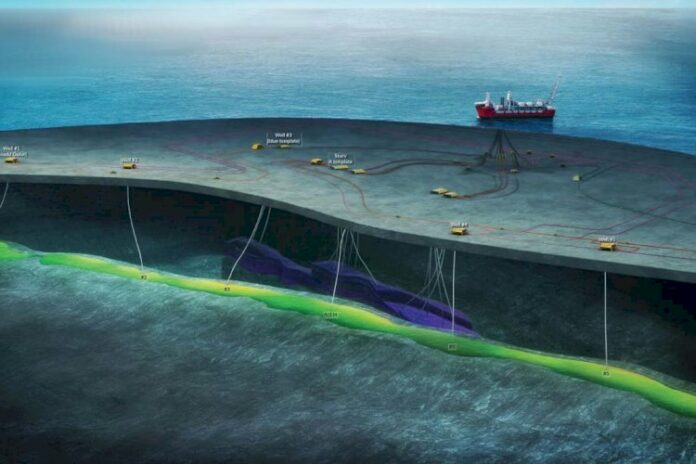
The Ærfugl field produces via Skarv FPSO approximately 210 km west of Sandnessjøen. It is one of the most profitable development projects on the Norwegian shelf with a break-even price of around USD 15 per barrel (converted from gas).

Ine Dolve, VP Operations & Asset Development in the Skarv area, says:

“The Ærfugl field development is adding five years lifetime extension to the Skarv FPSO and is an important part of the area development and value creation in the area, though the profitability will be dramatically reduced in the current oil price environment.”

The Plan for Development and Operation (PDO) for both phases was approved by the Ministry of Petroleum and Energy in April 2018. Phase 1, which develops the southern part of the Ærfugl field, consists of three new wells and will start-up in late 2020.

Phase 2 consists of an additional three wells in the northern part of the field. The original plan for start-up was 2023. Due to proceeded work to increase gas capacity on Skarv FPSO, the Ærfugl project team optimized the phase 2 scope and identified existing infrastructure to host the first “phase 2 well”.

In early November 2019 operator Aker BP and partners Equinor, Wintershall DEA and PGNiG approved the final investment decision (DG3) for Ærfugl Phase 2, which led to today’s announcement. The remaining two “phase 2 wells” will come on stream in 2021.

Reorganizing the value chain through strategic partnerships and alliances is an important part of Aker BP’s strategy.

Tom Storvik, Project Manager for the Ærfugl Field Development, says:

“The Subsea alliance between Aker BP, Subsea 7 and Aker Solutions has demonstrated substantial improvements and increased value creation over several years. Now we see excellent deliveries from the alliances for the Ærfugl development. In addition the collaboration with Baker Hughes to enable the existing xmas threes to be reused at Ærfugl phase 2 has been key to enable the accelerated phase 2 start-up.”

Storvik adds:

“The performance by the semi-sub alliance with Odfjell and Halliburton using the Deepsea Stavanger on Ærfugl, and the Modification alliance with Aker Solutions in collaboration with Kongsberg Maritime, has been very good as well. The early production start-up of from the first Phase 2 well shows how the alliances enable us to increase the value creation and to deliver in line with our ambitious improvement agenda.”

McDermott and Chiyoda introduce feed gas into Cameron LNG’s final Train

0

McDermott International, Inc. and its joint venture partner, Chiyoda International Corporation, a U.S.-based wholly-owned subsidiary of Chiyoda Corporation, Japan, have announced that Train 3 of the Cameron project, located in Hackberry, Louisiana, has reached the final commissioning stage.

This includes the introduction of feed gas into Train 3 of the liquefaction export facility, the precursor for the production of liquefied natural gas (LNG). This significant project accomplishment brings the project one step closer to full project completion with startup of Train 3, the final train for the project.

Mark Coscio, McDermott’s Senior Vice President for North, Central and South America, said:

“Congratulations to everyone on the Cameron LNG project team for their continued commitment to project delivery and high-quality standards as we work toward completion of Train 3. Their hard work and strong safety performance have propelled us to the final train of the project and we look forward to keeping this momentum through completion.”

McDermott and Chiyoda have delivered engineering, procurement, construction and commissioning for the project since it began. The project includes three liquefaction trains with a projected export capacity of more than 12 million tonnes per annum of LNG, or approximately 1.7 billion cubic feet per day.

Cameron LNG is jointly owned by affiliates of Sempra LNG, Total, Mitsui & Co., Ltd. and Japan LNG Investment, LLC., a company jointly owned by Mitsubishi Corporation and Nippon Yusen Kabushiki Kaisha (NYK).

Cameron LNG Train 3 is on track to reach initial LNG production in the second quarter of 2020.

LOC Digital launches 3D Digital Inspection offering

0

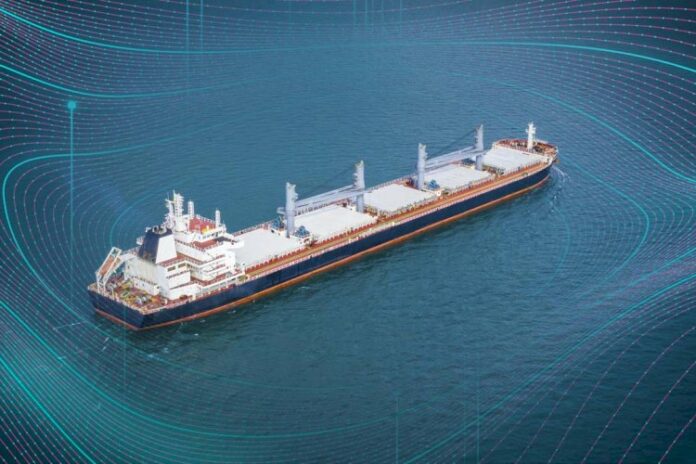
Survey data results are collated and reproduced in 3D imagery, by using high resolution visual, thermal, LIDAR and SONAR imaging, to create a virtual walkthrough of vessels and both offshore and onshore structures.

The imaging will reveal areas that previously, in-person inspections were not able to reveal, which will allow companies or individuals to make better informed decisions when it comes to risk assessment, asset management and purchase or investment decisions on an asset.

In line with the continued ramp up of 3D asset monitoring services, this bespoke offering from LOC is expected to have a significant impact on the global inspection industry. In generating highly accurate 3D models of vessel or structures for further detailed analysis by industry professionals, this offers a faster, more efficient and cost-effective solution for surveying assets than has previously been possible.

Via this platform, survey data collected from vessels, ports, onshore and offshore turbines as well as other assets across the offshore energy sector, can be analysed by LOC in-house marine and engineering consultants to produce a detailed inspection report. The 3D model will allow people to annotate areas of concern, generate reports suitable for the asset owner or insurer, compare the condition of the asset to a previous point in time and integrate data from inspection surveys into existing client asset management software.

David Braendler, LOC Digital Director, commented:

“We firmly believe that our new 3D inspection offering has the potential to revolutionise the asset inspection industry. Our ability to rapidly generate highly accurate 3D asset models, using the latest imaging technologies available, will enable the industry to make much more informed decisions on onshore or offshore assets than ever before. This will significantly de-risk decision making for the maritime, renewables and construction sectors.”

Jonathan Britain, LOC Digital Director, commented:

“Whilst the use of diver or remote operated vehicle inspections has become more prominent in recent years, these provide only a partial picture of what is going on with a structure. Whereas our new virtual walkthrough offering will provide an all-encompassing assessment of an asset, which will enable owners, operators and insurers to make highly informed investment decisions, thus mitigating one of the largest risk factors they face. This is the next phase in the digitalisation of the inspection industry, and we look forward to rolling the platform out as quickly as possible.”

Vulcan Inc. and NOAA to explore and map the deep ocean

0

Both NOAA and Vulcan share a mission to advance the public’s understanding of the value and importance of the global ocean. Through a new memorandum of understanding, NOAA and Vulcan intend to deepen their current work together through additional collaborative opportunities.

Tim Gallaudet, Ph.D., retired Navy Rear Admiral, assistant secretary of commerce for oceans and atmosphere and deputy NOAA administrator, said:

“The future of ocean science and exploration is partnerships. NOAA is forging new collaborations, such as the one with Vulcan, to accelerate our mission to map, explore, and characterize the ocean, which will help NOAA support the conservation, management, and balanced use of America’s ocean and understand its key role in regulating our weather and climate.”

The agreement with Vulcan is another example of NOAA’s increased effort to create partnerships that help NOAA advance ocean science, fully map the nation’s Exclusive Economic Zone and strengthen the American Blue Economy, which includes sustainable seafood production, tourism and recreation, ocean exploration, marine transportation, and coastal resilience. 

Bill Hilf, CEO of Vulcan Inc., said:

“Lack of knowledge and not being able to monitor progress toward better ocean health is a fundamental shortcoming when trying to build a successful strategy. We see this knowledge gap as a call to action. Together with partners such as NOAA, we will help provide foundational data to inform the restoration and protection of our oceans.” 

Seattle-based Vulcan Inc. manages a broad portfolio of projects and investments all over the world. The company serves as an incubator for new technologies and global philanthropic efforts. Its work focuses on solving some of the world’s biggest challenges facing oceans, climate, conservation, and communities.  

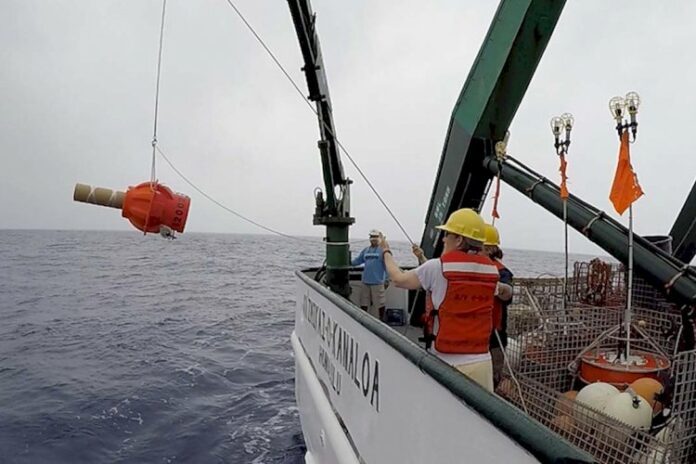
This is the second major collaboration between NOAA and Vulcan and its philanthropic work funded by The Paul G. Allen Family Foundation. The groundbreaking public-private collaboration began in 2017 to deploy a large array of new deep ocean floats, expanding observations in a key area of the western South Atlantic off Brazil. As of February of this year, that array of Deep Argo floats has been deployed and 27 floats are reporting back ocean temperature and salinity data from the surface to the seafloor. These data will be publicly available and used to better understand how changes in the bottom half of the ocean may influence long-term weather, climate, and sea-level rise.

The NOAA MOU with Vulcan comes on the heels of other partnerships with ocean exploration and technology organizations, including Caladan Oceanic, OceanX, Ocean Infinity, and Viking Cruises.

CWind adds four new vessels to its fleet

0

CWind, the offshore support services provider and part of the Global Marine Group, has continued with its fleet development and expansion plans by signing a long-term agreement with Dalby Offshore.

The agreement, which will see CWind immediately add four new vessels to its fleet with the option of an additional two vessels later in the year, is evidence of the company’s commitment to supporting its clients in maintaining their offshore assets, which at this current time is more important than ever to the infrastructure and power networks.

Supported throughout negotiations by vessel procurement advisor Colebrook Offshore, CWind have already chartered some of the new vessels following a quick turnaround by marine engineering company Alicat Workboats.

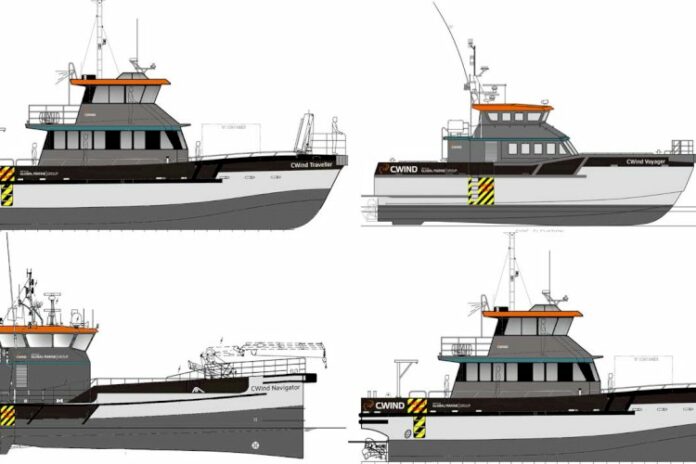
The new vessels have been renamed and registered to CWind’s East of England hub in Grimsby, where they will operate in support of several different offshore wind farms. The new vessels range from 20m to 26.5m in length, with one of them able to carry 24 passengers and two carrying 12 passengers each. The remaining 12-passenger vessel, CWind Voyager, will be upgraded to accommodate 24 passengers following completion of her current charter.

CWind Navigator is one of the highest spec 2610 vessels on the market following her conversion for the European offshore wind market. CWind Traveller is a high-powered and extremely capable vessel with the same capabilities of many larger vessels due to her increased engine power. CWind Renegade, a 23m vessel, is in the process of being transferred to Bureau Veritas class for her upcoming 18-month charter for a major European developer.

CWind Managing Director, Nat Allison, said:

“We’re delighted to have reached this long-term agreement with Dalby Offshore. The expansion and development of our fleet is key to both our own success and the operational integrity of our clients’ assets, which is more important now than ever before to the UK’s power networks. Despite the challenges we are currently facing in our daily lives and business operations, we are committed to supporting our clients in the growth of renewable energy solutions.”

Also commenting on the agreement, Stuart McNiven, Managing Director at Dalby Offshore, said:

“We are very pleased with this agreement, particularly in light of the difficult period we are all facing in the marine industry and the larger business community. These vessels are of a high quality and will certainly add a new dimension to CWind’s fleet.”

Last foundations for Dutch offshore wind farm installed successfully

0

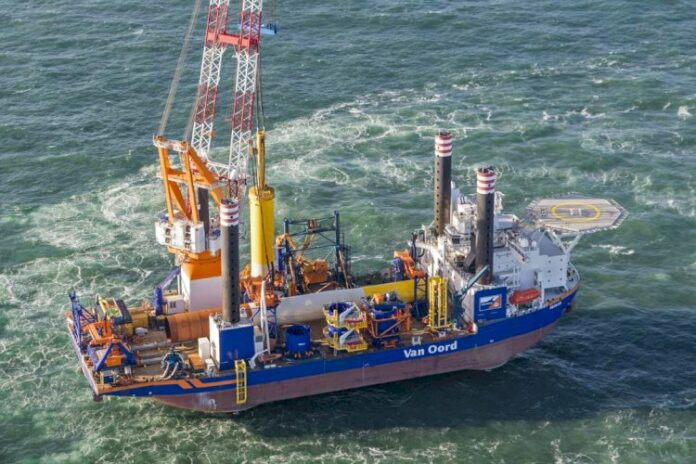
For the last 6 months, the Aeolus has been deployed for the transport and installation of the foundations.

Van Oord’s cable-laying vessel Nexus has also installed 4 out of the 12 cable strings. The project will shortly start with the installation of the 9.5 megawatts (MW) wind turbines supplied by MHI Vestas. As the Balance of Plant contractor, Van Oord is responsible for the design, engineering, procurement, construction and installation of the foundations and inter array cables.

The Borssele III & IV project reached a milestone with the installation of the 77 foundations. The work was executed within planning in 6 months. Despite the extra precautions in connection with coronavirus, we were able to continue the project, taking necessary measures and complying with governmental guidelines. We are proud of the Blauwwind project team and their partners, including Van Oord, for their contribution to the rapid construction of the wind farm.

The Borssele III & IV wind farm is being built 22 kilometres off the coast of the Province of Zeeland and will be one of the largest offshore Dutch wind farms. The Borssele III & IV wind farm will have a total installed capacity of 731.5 MW, providing sufficient power for approximately 825,000 Dutch households. The wind farm is part of the offshore wind roadmap drawn up by the Dutch government. The roadmap details the areas designated in the North Sea where offshore wind farms can be built.

At the end of December 2016, the Blauwwind consortium won the tender to build the Borssele III & IV offshore wind farm. Blauwwind consists of Partners Group (45%), Shell (20%), DGE (15%), Eneco Group (10%) and Van Oord (10%). The consortium has signed Power Purchase Agreements with Shell and Eneco Group, which stipulate that they will both purchase 50% of the energy generated by the wind farms for a period of 15 years.

Maqta Gateway expands its digital logistics marketplace “MARGO”

0

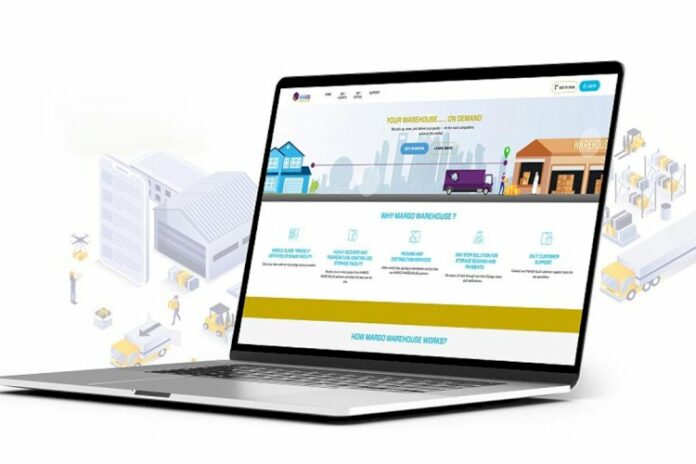
Maqta Gateway, the digital arm of Abu Dhabi Ports, has expanded its digital logistics solution, Margo, with the addition of a new commercial offering for warehouse storage.

The new offering presents customers with the opportunity to book standard warehouses or specialised temperature controlled-storage facilities to safely store their perishable goods including food Items and medical supplies for short and medium periods of time, through simplified paper-free booking processing and remotely-managed reservations. This new service leverages the simplicity, convenience and cost effectiveness of the existing Margo platform.

Among the current warehouse offering, customers can book Grade A warehouse facilities, one of the highest industry standards achievable within warehouse management and storage, which also are conveniently located in the heart of the Khalifa Industrial Zone Abu Dhabi (KIZAD) and easily accessible fromAbu Dhabi and Dubai.

Dr. Noura Al Dhaheri, CEO of Maqta Gateway and Head of Digitalisation Cluster at Abu Dhabi Ports, said:

“We are pleased to bolster the capabilities of our highly-acclaimed Margo platform, through providing innovative solutions for customers in search of a short and medium-term storage for their goods., through a streamlined digital service that is user friendly, efficient and cost effective.

In recognition of the collective efforts to combat the COVID-19 and considering that storage of food and medical supplies are of highest priority in these pressing times, I am pleased to announce that we will be waiving Margo Warehouse’s processing fees in the interim period for such facilities following its launch.”

Unveiled in November, 2019 during Maqta Gateway’s 5th Digital Trade Community Forum, Margo, is a digital marketplace for logistics services including cargo clearance and delivery solutions, enabling consumers importing personal goods from anywhere around the world through Khalifa Port or Abu Dhabi International Airport to clear and have their goods delivered directly to their homes anywhere in the UAE.