7.1 C
New York
Home Blog Page 879

LR and UMAS publish techno-economic assessment of zero-carbon fuels

0

Research supported by the Methanol Institute investigates economic viability, technology readiness and stakeholder engagement of options to drive decarbonisation.

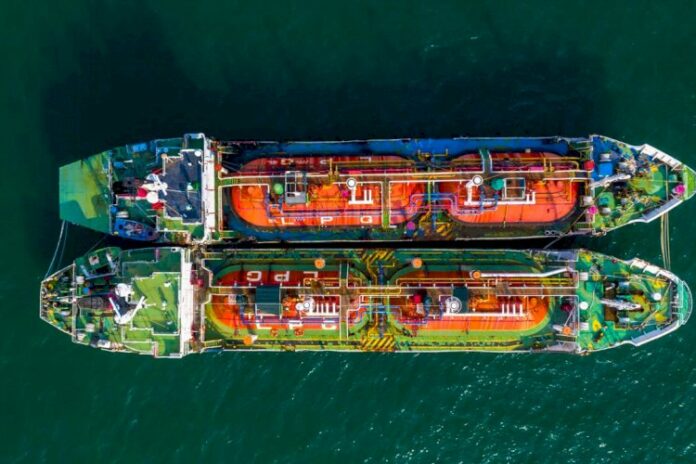
LR and the University Maritime Advisory Services (UMAS) have published their latest assessment of the current and future fuels available to shipping to help define the optimum solutions as the maritime industry seeks to reduce greenhouse gas emissions.

Building on ground breaking research already undertaken by LR and UMAS into Zero-Emission Vessels (ZEVs) and potential transition pathways to decarbonisation, the report examines the three primary pillars of the adoption of zero-carbon fuels when compared with traditional fossil-based fuels; their readiness from an investment, technology and community perspective.

The study illustrates that regardless of which zero-carbon fuels emerge as favoured options from an economic perspective, from an onboard technology perspective, ZEVs are likely to be technologically possible in the next few years. However, for owners and operators to be confident around future investments, the industry will require confidence in the wider community around the fuel supply chain, both in terms of the availability in the quantities required and the land-based infrastructure for production, supply and distribution.

The assessment of technology readiness for the various zero-carbon solutions also provides an insight into the current barriers to market uptake, with screening and assessment undertaken on a fuel-agnostic basis, intended to help the industry identify opportunities for new approaches. The scope includes onboard procedures for bunkering, on-board storage, processing, conversion and propulsion.

Assessment of investment readiness includes a complete examination of energy source price scenarios, ship-specific case studies, total cost of operation, fuel related voyage costs, impact on cargo carrying capacity and a sensitivity analysis. The third element considers lifecycle emissions and the evolution of the energy landscape in other sectors to provide the context of the wider energy and industrial sectors.

Katharine Palmer, Lloyd’s Register Global Sustainability Manager, said:

“This paper is the next chapter of our low carbon series, following ‘Zero-Emission Vessels: Transition Pathways’ published in January 2019. Our work with the Methanol Institute and UMAS is designed to help industry stakeholders to understand the dynamics and interactions between technology, investment and community readiness within the wider range of ship types, sizes and operational profiles. It reinforces that decarbonising of the shipping sector requires substantial and collaborative effort by maritime and energy stakeholders and beyond.”

Chris Chatterton, Chief Operating Officer, The Methanol Institute, said:

“In recognising the scale of the decarbonisation challenge for shipping, there is a need for unbiased, high quality research that presents the alternatives side by side, so that owners can work with all relevant stakeholders to investigate the right solution for their fleets. We’re pleased that this report recognises the role that Methanol has to play in shipping’s transition to a low carbon economy and ultimately as a net zero carbon fuel.”

Carlo Raucci, Principal Consultant, UMAS said:

“This paper highlights the importance of using a holistic approach when assessing the fuel choice for the decarbonisation of the shipping industry and brings together two essential elements: the evolution of fuels production and the implications of their use onboard ships. The answers to the strategically important question ‘what will be the future fuel for shipping?’ will require further research and analysis, in that regard, this paper provides an important contribution in answering that question.”
Scientists uncover ‘hidden’ water of the Arctic ocean

0

Created in the northern part of the Barents Sea, as cooler and fresher water from the Arctic moves south and becomes trapped within the warmer and saltier water from the Atlantic, these eddies – circular movements of water that have broken off from an ocean current – measure roughly 30 kilometres across.

Despite their size, the eddies are invisible to satellites and had gone unnoticed until oceanographers from the Scottish Association for Marine Science (SAMS), in Oban, picked up some unusual readings during a trial mission of an underwater glider.

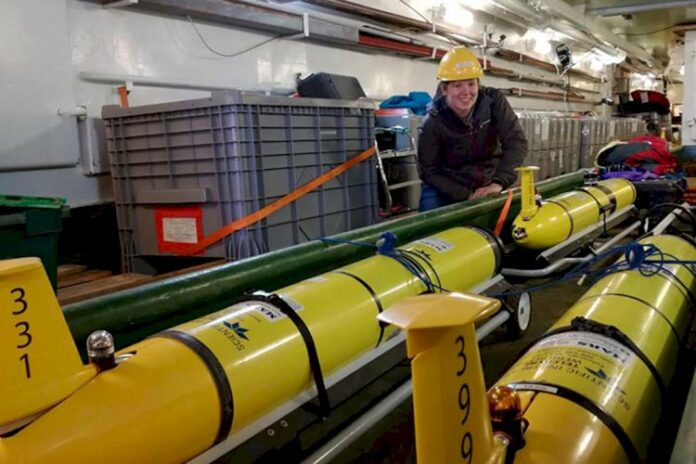
The autonomous glider moves across the ocean to depths of 200 metres collecting data, including heat and salinity, every kilometre. This allowed the SAMS team to measure one of these eddies in detail.

While this particular eddy’s surface temperature was similar to the surrounding water, masking it from satellites, its lower salt content made it stand out in the glider readings.

Dr Marie Porter, a SAMS oceanographer and lead author on a report about the discovery, published in Geophysical Research Letters, said her findings had implications for understanding the distribution of nutrients that fuel the entire Arctic ecosystem.

She said:

“We get a pretty good idea about what’s happening on the very surface of our ocean through satellites but eddies like this one have been hidden from view because they have warmed at the surface since leaving the Arctic. This temperature masking means we have previously underestimated how much water moves within these patches in the Arctic Seas. It begs the question: how many more of these hidden eddies are occurring in the ocean today?”

The water column of the Barents Sea has a seemingly simple structure where water from the Atlantic dominates in the south but in the north it is overlain by fresher, less dense water from the Arctic. This Arctic water is largely devoid of the nutrients required to fuel the growth of phytoplankton, which is key to maintaining life in the ocean. In contrast the Atlantic Water is one of the key pathways of nutrient rich water into the Arctic.

Dr Porter added:

“How these eddies affect this exchange is something we need to investigate if we are to truly understand the ocean ecosystem there.”

Arctic oceanographer Prof Finlo Cottier of SAMS, a co-author on the paper, said:

“SAMS has been working with ocean gliders for over a decade and we know that they are the ideal tool for measuring the detailed properties of the ocean. This work gives us precise measurements of important structures in the Arctic that we couldn’t previously obtain.”

The discovery was made during a two-week trial of the glider ‘Zephyr’ in July 2017, ahead of a longer mission as part of the Arctic PRIZE project, funded by the Natural Environment Research Council’s Changing Arctic Ocean programme.

Gasunie will join as a new partner on PosHYdon green hydrogen project

0

Neptune Energy today announced leading energy infrastructure company, Gasunie, will join as a new partner on the PosHYdon pilot, the world’s first offshore green hydrogen project.

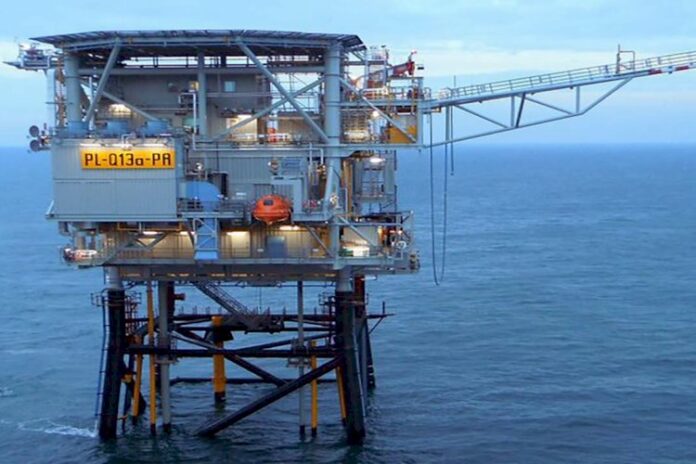
PosHYdon integrates three energy systems in the Dutch North Sea: offshore wind, offshore gas and offshore hydrogen and will involve the installation of hydrogen-producing plant on the Neptune-operated Q13a platform.

Gasunie, which manages and maintains infrastructure for large-scale transport and storage of gases in the Netherlands and northern Germany, is the latest to join the PosHYdon consortium following NOGAT B.V. and Noordgastransport B.V., both owners of large gas transport pipelines in the North Sea.

Lex de Groot, Managing Director of Neptune Energy in the Netherlands, said:

“We are very pleased to welcome Gasunie as a partner. Gasunie is already working hard to accelerate the energy transition, including several hydrogen pilots on land, and have the necessary knowledge and experience with electrolysis in-house.

Now these two worlds onshore and offshore are literally connected in terms of infrastructure. The pipelines and infrastructure at sea of ​​NOGAT and Noordgastransport are already suitable for hydrogen and that is good news as offshore production will continue to be crucial to meet Dutch energy demand.

The Netherlands is in a special position as, in addition to an extensive gas infrastructure network, we can harvest large amounts of wind energy in the North Sea, quantities that are also important internationally. The wind energy can be used to generate hydrogen, then transport onshore along with natural gas via the existing large pipelines of NOGAT and Noordgastransport for customers in industry, the transport sector and for Dutch homes. PosHYdon is key to accelerating this.”

Han Fennema, CEO of N.V. Nederlandse Gasunie, added:

“The Netherlands is in a strong position to lead the transition to a hydrogen economy. We have the North Sea for the production of wind and gas, the ports as logistics hubs, the industrial clusters that want to switch to green molecules and excellent infrastructure for transport and storage.

This comes together nicely in the Netherlands. If we want to achieve our climate ambitions, we must have a large-scale hydrogen infrastructure in good time. This pilot project can be an important step in the right direction.”

The PosHYdon pilot is an initiative of Nexstep, the Dutch association for decommissioning and reuse, and TNO, the Netherlands organisation for applied scientific research, in close collaboration with the industry.

Electricity generated by offshore wind turbines will be used to power the hydrogen plant on the Q13a platform, converting seawater into demineralized water, then into hydrogen via electrolysis. The aim of the pilot is to gain experience of integrating working energy systems at sea and the production of hydrogen in an offshore environment.

The Q13a is the first fully electrified platform in the Dutch North Sea, located approximately 13 kilometres off the coast of Scheveningen (The Hague).

SABELLA signs agreement with the Welsh tidal stream energy project

0

The deal comes following months of discussion with French firms SABELLA and HydroQuest as well as Spanish developer Magallanes. All three companies aim to deploy their devices on a commercial scale at the Crown Estate-designated zone off the coast of Anglesey, north Wales.

Morlais is run by social enterprise, Menter Môn and has the potential to become one of the largest tidal stream energy sites in the world. The first stage of the project, aims to secure consent for the development of the zone. The second stage will put the necessary infrastructure in place so that developers, including the three new partners can implement their devices at the site.

SABELLA is a tidal technology designer and developer based in Brittany, northern France. Its D10-1000 turbine was the first device of its kind to be connected to the French grid. With its 1-MW technology successfully demonstrated during sea trials since 2015, SABELLA is currently targeting marine applications for remote grids with its range of modular products.

Jean-Christophe ALLO, Commercial Director of SABELLA said:

“We have been following Menter Môn’s work on the Morlais project since 2016 and are delighted now to be part of this ambitious project as a developer. We look forward to collaborating with colleagues at Morlais and other stakeholders for the future success of marine energy in Wales. Anglesey’s waters have a great deal of tidal resource and Morlais will enable us to commercially deploy a pilot tidal array, a crucial step toward the development of the tidal industry.”

HydroQuest, also based in France has been developing hydro technology since 2001. The Grenoble-based firm develops turbine technology for rivers and the sea and aims to deploy its flagship 1 MW tidal turbine OceanQuest in the Morlais zone.

The Magallanes project launched in 2009, in Galicia, Spain and has developed a technology capable of harnessing energy from the tidal currents which is cost effective and easy to maintain. Following the successful  tests of its first commercial scale tidal platform carried on at the European Marine Energy Centre (EMEC) in the Orkney Islands, Magallanes is now aiming for larger scale deployment at Morlais.

Gerallt Llewelyn Jones, a Director with Morlais added:

“These agreements with three new developers over recent weeks shows that there is incredible confidence in our project and we are delighted to be working with SABELLA, HydroQuest and Magallanes. They are well-respected developers and will bring with them significant expertise when we move to the second phase of Morlais subject to securing relevant consent. It is an exciting time to be part of the marine energy sector with an ever-increasing focus on climate change and looking at alternative means of generating electricity – at Morlais we are keen to play a key role.”

Morlais is part funded by the European Regional Development Fund through the Welsh Government. The project has the potential to scale up over time to generate up to 240 MW of electricity, enough for an estimated 180,000 typical households.
 

Wärtsilä сontracted to install Route Exchange on 50 Ships

0

Wärtsilä Voyage won a contract to update the ECDIS on-board 50 tankers.

Torsten Büssow, Director, Wärtsilä Voyage, said:

“We believe that standardised information sharing is an important key to improve safety and efficiency in the shipping industry. STM makes sharing secure, interoperable and customer controlled.”

More than 400 ships already has the capability to share routes through their ECDIS. With focus on increasing tanker safety, the STM BALT SAFE project is signing up 50 tankers that frequently sail in the Baltic Sea, with Wärtsilä winning the contract. Cajsa Jersler Fransson, STM BALT SAFE Ship Testbed Manager, says “Wärtsilä Voyage has the know-how, the installed base and the dedication to a more connected future. With installations happening this year, we will be able to analyze data from the interaction between ships and between ships and shore.”

Steffen Fäldt, Managing Diretor of Wärtsilä Voyage Sweden, said:

“Being a technology leader, Wärtsilä Voyage truly appreciate working with innovative customers and projects that help the industry evolve”.

The STM BALT SAFE project is piloting new operational services based on the Sea Traffic Management concept STM. For example the Saab-based VTS in Estonia, the Navielektro-based VTS in Finland and the new VTS-system in Sweden will be able receive and send route plans to vessels, enabling services like route cross-check and risk situation alert.

Information is transferred via AIS between ships. Between ships and shore, the data is shared through the Maritime Digital Infrastructure previously contracted to the non-profit industry consortium Navelink.

New Energy Port on the sea side of the North Sea Canal

0

A partnership covenant for the new facility was signed today by the Ministry of Infrastructure and Water Management, the Province of North Holland, the Municipality of Velsen, Tata Steel, IJmuiden Seaport and Port of Amsterdam. 

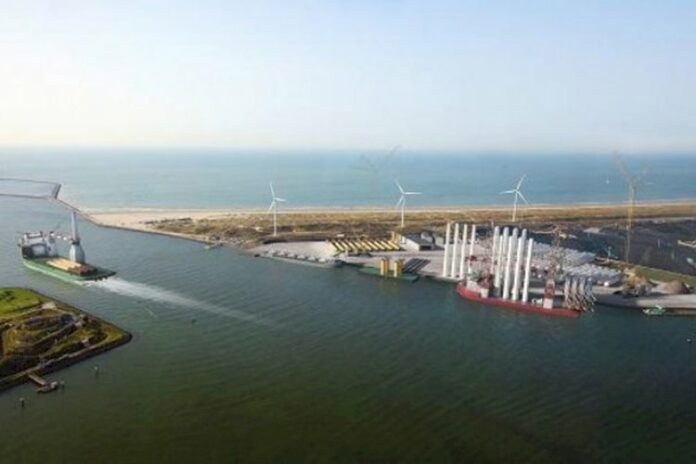
The development of this new port is crucial for realising wind farms in the North Sea. Many more wind farms will be constructed in the coming years in the North Sea, and the Energy Port forms an essential operational base for their construction and operational maintenance. The new Energy Port will, for example, provide support for building the wind farms Hollandse Kust West and IJmuiden Ver off the Dutch coast. The Energy Port also has an important role in realising the more intensive use of space and reinforcement of the regional port infrastructure, as planned.  

The Energy Port is located on the sea side of the North Sea Canal, right before the IJmuiden lock complex. The new industrial estate offers great possibilities for meeting the needs of the energy transition, and advancing important regional and national climate change goals.    

By making an industrial estate of five hectares available, Tata Steel has shown its support for this future-looking initiative that’s so important for the region. What’s more, Tata Steel is allowing land access to the Energy Port through its site in Velsen North. This will enable the movement of personnel and access for emergency services.    

Minster of Infrastructure and Water Management, Cora van Nieuwenhuizen:

‘The large-scale construction and operational maintenance of sustainable wind turbine farms in the North Sea demand a much greater port capacity. Our collaborative development of the Averijhaven into a modern energy port means that offshore businesses will have all the space they need in the future.’ 

The Energy Port will have an area of over 15 hectares. Both the existing acreage of the Averijhaven as well as the adjacent Tata Steel site of 5 hectares will be used to create a public port area for offshore wind. In the port area a quay will be installed of 580 metres – 200 metres as heavy duty facility with 12.5 metre water depth, and 380 metres standard facility with 10 metre water depth. The location of this port means that it will play an important role in the efficient installation and operational maintenance of wind farms, and save on costs. 

Right now, the Energy Port is a Dutch government-owned dredge sludge depot. In order to transform this depot into a port area, the Dutch Directorate-General for Public Works and Water Management will have to clear it out first. In tandem with this necessary work, a study of the effects of constructing the Energy Port on the environment will be carried out by means of an Environmental Impact Assessment (EIA). A fundamental requirement is that the facility must fit within existing environmental guidelines.   

Commercial operation of the Energy Port will be run by Port of Amsterdam and IJmuiden Seaport on behalf of the other covenant partners. This commercial operation is in line with the strategic goals envisioned by both port authorities in terms of playing an active role in the national energy transition. 

University of Essex joins forces with SEA-KIT in new USV collaboration

0

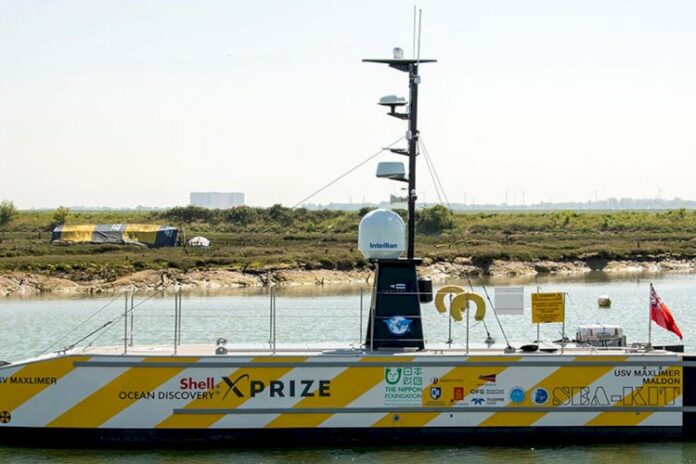
SEA-KIT International, a leading provider of hi-tech solutions for the maritime and research industries, is joining forces with Essex academics to create a secure and intelligent communication system for the control of unmanned surface vessels (USV).

Essex-based SEA-KIT has won funding as part of a Knowledge Transfer Partnership (KTP) by the UK Government’s innovation agency, Innovate UK. The funding will help SEA-KIT to commercialise its USV offer by building bespoke vessels for its clients in the offshore energy sector, who conduct surveys for offshore wind and oil and gas infrastructure.

Innovate UK and Essex are meeting the challenges posed by COVID-19 by continuing their business support activities for both current and prospective partners at this unsettled time. This new project aims to boost the local economy and create new jobs over the coming year.

Essex is passionate about helping businesses, boasting more than 100 expert academics, across multiple disciplines, who are engaging with ambitious businesses throughout the East of England, London and beyond through Knowledge Transfer Partnerships and other business-focused research-led projects.

Robert Walker, head of Business Engagement at Essex, said:

“The SEA-KIT and Essex collaboration, valued at more than £200,000, will create a stable framework for SEA-KIT to scale up their business operation. I am incredibly excited by the potential commercial impact for SEA-KIT from this partnership, in addition to the broader benefits across both our teaching and research. This project adds to our growing portfolio of research collaborations involving drones and autonomous vehicles.”

The intelligent communication system developed through this KTP will support SEA-KIT’s ambition to reduce the need for large, fuel-hungry vessels. As a result, SEA-KIT forecasts a potential reduction in carbon emissions of up to 95% in its operations.

Peter Walker, Director of Technology at Sea-Kit International Ltd, said:

“The team here at SEA-KIT is intent on coupling our proven USV designs with robust communications systems that function even in the harshest offshore conditions. Everyone working in the offshore energy sector is in pursuit of greater efficiencies.

We want to disrupt the current market offering with innovations that enable the control of USVs for over-the-horizon missions and reliable retrieval of sensor data from equipment onboard, whilst also reducing cost and carbon footprint. This partnership with the University of Essex taps into their vast network science and AI knowledge base and we are looking forward to working with the team there.”

The SEA-KIT collaboration with Essex will seek to commercialise the technology that was developed as part of the winning entry of the Shell Ocean Discovery XPRIZE competition. This global competition recognises advances in ocean technologies for rapid, unmanned and high-resolution ocean exploration and discovery.

As part of the KTP, Essex will connect SEA-KIT with two leading academics, Dr Leila Musavian, a telecommunications expert and Deputy Pro-Vice-Chancellor (Research) at Essex; and Dr Nikolaos Thomas an expert in machine learning for communications, from the School of Computer Science and Electronic Engineering, who together will lead on the technology implementation.

Dr Nikolaos Thomos is Deputy Director of Research at Essex, said:

“Network Science and Machine Learning are leading research areas for academics across the School of Computer Science and Electronic Engineering. Traditionally these research areas have been studied separately but due to recent advances in communications standards such as 5G, synergies between these fields are now necessary.”

IDB published a new report on ocean energy potential in Barbados

0

The Inter-American Development Bank (IDB) has published a report on the potential of Ocean Energy in Barbados. 

The report is very comprehensive yet user-friendly, Includes: A Review of Clean Technology Options, Available Resources, and Location Guidance for Potential Areas of Interest for Commercial Development. 

The report, published as a technical note, is presented to provide information on operating principles and development status of several selected Ocean Renewables for deployment in Barbados. 

  • Fixed Offshore Wind is well established as a commercial technology, and the offshore wind resource in Barbados is assessed as ‘good’, but the only potentially suitable deployment locations in Barbados are all within 3km from shore where visual impact will be significant and where other technical considerations pose challenges. Therefore the practical potential for this technology in Barbados is found to be limited.
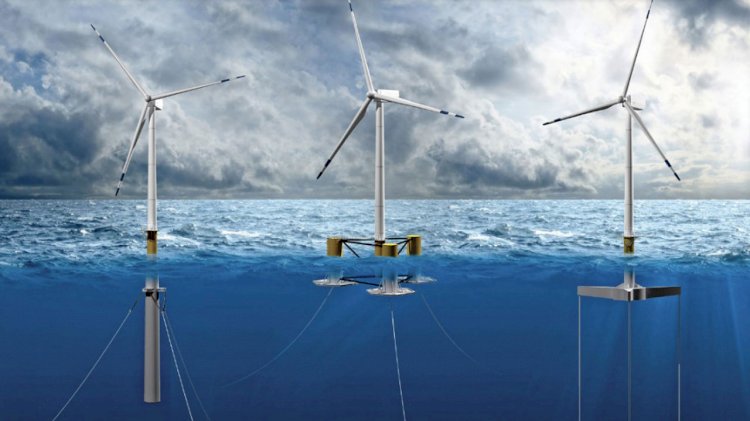
  • Floating Offshore Wind is a rapidly maturing technology with global market potential. The rate of deployment of the technology is forecast to increase rapidly and the sector is expected to reach commercial readiness within five years.  The theoretical resource potential for conventional floating wind (in 60-200m water depth) in Barbados is estimated at 189MW, with over 8GW of potential for deep floating wind (in depths of 200-1000m).  A number of very large areas potentially suitable for deployment of the technology have been identified. These areas are distributed to the south, west and off the north coast of the island with each area being of sufficient size to host a project of substantial scale.

  • Sea Water Air Conditioning (SWAC) is identified as a promising but highly site-specific technology. The technology may be commercially viable at some locations at present however it is generally expected to reach general commercial readiness at a broader range of sites within five years.  Barbados is a promising location for SWAC projects given the high cost of energy and substantial, year-round cooling requirement.  There is a slight mismatch between areas with best access to deep water and areas likely to have most cooling demand and further work is required to identify suitable projects and assess overall feasibility.
  • Ocean Thermal Energy Conversion (OTEC) is identified as a highly promising technology but is broadly anticipated to require more than five years to reach commercial readiness.  The thermal difference between surface and deep waters in Barbados territorial waters is found to be suitable for OTEC plant. Numerous and extensive areas of interest for potential future project locations have been identified. The theoretical resource potential for OTEC is conservatively assessed as 160MW. 
  • Wave Energy is expected to take between five and ten years to reach commercial readiness. Barbados is considered to have a ‘moderate’ to ‘good’ wave resource and a number of potentially suitable development sites have been identified off the east coast. 
  • Tidal  energy  may  be  commercial  within  five  years,  however  no  potential  development  sites  for  this  technology has  been  or  are  expected  to  be  identified  in  Barbados. 
  • Ocean  Current  is  much  further  from  commercialisation than tidal (up to 10 years) and again no sites have been identified. Overall,  this  report  aims  to  engender  a  much  improved  understanding  of  the  potential  for  marine  renewable energy deployment in Barbados by matching resource potential with technical and commercial readiness.  This is consistent with and will support the target of the Government of Barbados to fully decarbonise by 2030 as stated in its National Energy Policy 2019-2030 

IMO: Customs and ports urged to maintain flow of critical goods

0

Customs administrations and port state authorities must continue to facilitate the cross-border movement of vital medical supplies and equipment, critical agricultural products, and other goods, to help minimize the overall impact of the COVID-19 pandemic on economies and societies.

Trade by sea must continue to flow to maintain the continued provision of essential goods, including vital medical supplies, during the unprecedented global situation arising from the COVID-19 pandemic. This was the message of a joint statement from the heads of the International Maritime Organization (IMO) and the World Customs Organization (WCO), issued on Friday (17 April). 

IMO Secretary-General Kitack Lim and WCO Secretary General Dr. Kunio Mikuriya strongly urged customs administrations and port state authorities, together with all other concerned agencies, to establish a coordinated and proactive approach to maintaining the integrity of the global supply chain so that the flow of vital goods by sea is not unnecessarily disrupted.  

The joint statement notes that ports are being closed and ships denied entry, as travel is curtailed and borders closed to slow the spread of the disease and mitigate its impacts. Such restrictions, it says, may interrupt much-needed aid and technical support, and have negative social and economic effects on the countries concerned.  

It is critical that customs administrations and port state authorities continue to facilitate the cross-border movement of vital medical supplies and equipment, critical agricultural products, and other goods, to help minimize the overall impact of the COVID-19 pandemic on economies and societies, the joint statement said. 

 The two organizations emphasized the utmost importance of communication, coordination and cooperation at both national and local levels, between ships, port facilities, customs administrations and other competent authorities. Customs and port administrations are urged to work together to resolve disruptions to the global supply chain, to support the health and well-being of all people. 

The joint statement also referred to recommendations and guidance already issued by the two Organizations. In particular, IMO has distributed a series of recommendations for governments and relevant national authorities, proposed by a broad cross-section of global industry associations representing the maritime transportation sector, including a specific call for governments to designate professional seafarers and marine personnel, regardless of their nationality, as ‘key workers’ providing an essential service.

The joint statement comes as the demand for and the movement of relief goods (such as supplies, medicines and medical equipment) across borders is increasing dramatically.  

VIDEO: System 002 is a fully operational Ocean Cleanup System

0

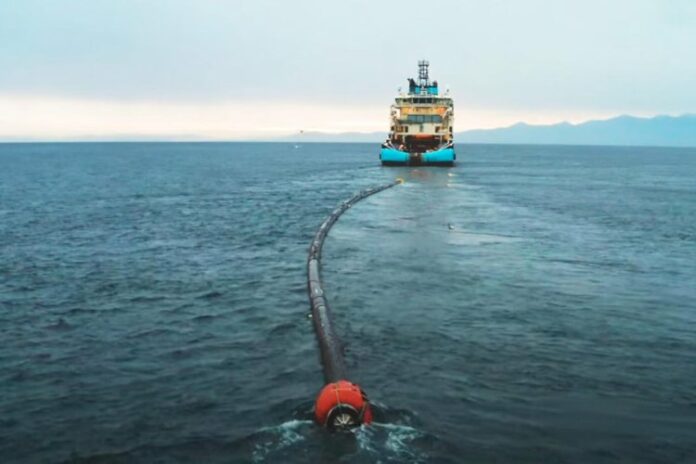
Trash accumulates in five ocean garbage patches, the largest one being the Great Pacific Garbage Patch, located between Hawaii and California. If left to circulate, the plastic will impact our ecosystems, health, and economies. Solving it requires a combination of closing the source, and cleaning up what has already accumulated in the ocean.

The ocean is big. Cleaning up the Great Pacific Garbage Patch using conventional methods – vessels and nets – would take thousands of years and tens of billions of dollars to complete. Our passive systems are estimated to remove 50% of the Great Pacific Garbage patch in just five years, and at a fraction of the cost.