6.8 C
New York
Home Blog Page 876

Allocation of the capacity of Klaipeda LNG terminal begins

0

The Company allocates the capacity in accordance with the Regulations for the Use of the Liquefied Natural Gas Terminal agreed, approved and publicly announced by the State Energy Regulatory Council and the Director General of the Company. 

During the LNG terminal capacity allocation, LNG regasification capacity and LNG reloading capacity will be allocated in advance.

Arūnas Molis, Director of Klaipėda LNG, emphasises:

“For the second year in a row, we have recorded extremely high performance results of the LNG terminal and a growing competition for terminal capacity in Klaipėda. With this in mind, we have slightly updated our capacity allocation principles this year, for example by setting clear monthly capacity allocation priorities. We are making changes in order to ensure that all terminal users receive the greatest possible benefit from our services and as many LNG carriers as possible sail to Klaipėda.”

During the current gas year, 42 LNG carriers were accepted at the LNG terminal, and other 28 LNG carriers are expected by the end of the gas year. During this period, 2 million cubic meters of gas was delivered, 81.28 percent of gas was delivered from Equinor, a gas reliquefaction plant in Norway. As practice shows, LNG terminal users highly value the possibility to order terminal capacity according to needs throughout the year, not only during the annual capacity allocation procedure. For example, 5 TWh of the terminal capacity was booked last year during the annual LNG terminal capacity allocation procedure. However, currently four times more capacity of the LNG terminal in Klaipėda has been booked for the current gas year, that is, as much as 22 TWh.

A. Molis says:

“The demand for LNG terminal services is growing due to the still low LNG prices in the global market, as well as the assessment of companies due to the opportunities opening up with Balticonnector in the region. Taking into account the intensity of the activities of the LNG terminal, we urge customers to book more capacity during the annual procedure, as this will ensure the supply of LNG according to the needs of companies in advance.”
 

Lean Digital project: New knowledge on digitalization of Norwegian industry

0

Trying to avoid the pitfalls of technology pushes, industrial managers are currently asking: how can we digitalize strategically? In other words: how can we make the technology fit the company’s strategic and operational priorities? In practice, this means integrating the digital technology with a management philosophy based on lean principles.

Lean management remains the fundamental approach to operational excellence within Norwegian industry. The next wave of industrial improvement is widely considered to be driven by the application of digital technologies. Digitalization does not have to replace lean management. Industrial companies should rather try to understand how the two approaches can be utilized synergistically.

This theme plays a central role in the research project Lean Digital. The project aims to create new knowledge on digitalization of Norwegian industry based on lean principles as a management approach. This includes the concepts of both digital manufacturing technologies and lean management.

Industrial pioneers and digital transformation

Apart from the research project, SINTEF Manufacturing and SINTEF Digital collaborated on a study about how digital technology is being used in Norwegian industrial companies. The background for this work is the Fourth industrial revolution, in which equipment, objects and users are connected to each other through advanced information and communication technologies that link industrial value chains. This leads to new demands within digitalization when it comes to building competence, as well as adaptability and innovation.

In this study, experiences with digitalization from 33 Norwegian industrial companies have been collected. The CEO/factory manager, technology director/R&D manager, production manager, operators and union representatives have been interviewed, in order to get a broad picture of what is happening within digitalization at the factory level.
The purpose of this study was to highlight and learn from how pioneering Norwegian industrial companies can increase value creation and productivity using digital technology. Based on these results, recommendations are given on what companies should consider in order to strengthen their competitiveness in a market where digital tools are often a prerequisite for success.
The study shows that Norwegian industry is working continuously on its own digitalization. The following main results have been identified:

  1. Norwegian industry is ready for the digital frontier
  2. Wide assessment is the basis for implemented changes
  3. The Fourth industrial revolution and green shift require increased digital expertise
  4. Organizational development is also needed when companies are to be digitized
  5. Data sharing opens for new business opportunities
  6. Integrated digital strategies are necessary

The study on industrial pioneers and the research project Lean Digital complement each other:

  1. The study identifies opportunities on how to improve in order to succeed with digital transformation
  2. The research project contributes with new knowledge which can be used during the implementation of these improvements in Norwegian industry

How does this work in practice? Here are some examples.

Knowledge on organizational development when implementing digital technology

One of the main results of the study is that Norwegian industry needs more knowledge on organizational development when implementing new digital technology.

Several leaders in our study observe that technology project managers strive to relate to the projects as organizational development projects. They believe this is an underrated area, which is important to understand and grasp as opportunity for improvement.

Digitalization is about more than just robotizing and automating production processes. Technologies such as machine learning, and not least artificial intelligence, will make their entry and transform both the way we work and add value. As work tasks move into technology, new work tasks for employees are being created.

In practice, this means that we must think differently about organizations. Roles and distribution of functions between employees are changing. How the individual works and who are working together on the various tasks will also change. Therefore it becomes important that the company analyses its work processes and finds the best possible distribution of work both in and across departments.

Becoming an expert in digitalization

This is one of the main objectives for Lean Digital. More specifically, exploring the evolving relationship between the shop-floor organization with experts within digitalization. Within the field of lean management, extensive involvement of operators is a prerequisite, as it empowers the shop-floor vis-à-vis specialist functions. Thus, we want to figure out how collaboration between the shop floor and the specialist functions is set to evolve in light of digitalization.

Digitalization will transform and change work practices, with more advanced technology requiring more knowledge to operate. Another issue that will be explored is how shop-floor workers and managers may be trained in order to master digital technologies, so that they retain participation in continuous improvement activities which is one of the main principles in lean.

During the project, SINTEF Manufacturing is responsible for the implementation and test demonstrators in industrial settings. In practice, this includes the integration of new knowledge at the industrial partners. Afterwards, an evaluation will be performed and the results will be used when formulating guidelines for further digitalization.

Silo.AI and Hurricane Unwinder collaborate in building weather forecasts

0

Silo.AI and Hurricane Unwinder collaborate in building weather forecasts of extreme tropical cyclones. Rapid intensity changes and intense storms are increasing due to climate change, resulting in one fifth of the world’s population being exposed and at an annual cost of 30 billion euros.

The computer vision algorithm that Silo.AI helped develop is able to forecast hurricane intensity at world-class accuracy, currently up to 24 hours with the goal of predicting up to 96 hours in advance. The solution built by Hurricane Unwinder and Silo.AI won the ESA’s Earth observation award Copernicus Masters in 2018. 

Climate change is making intense storms more common and rapid intensity changes currently often come as a surprise. Hence inadequate warnings and preparations often lead to excessive damages. Hurricane Unwinder spun off from research at Finnish Meteorological Institute last year with the goal of replacing traditional numerical weather forecasts with a computer vision solution. In partnership with Silo.AI, they built an award-winning computer vision solution that predicts tropical cyclones in the coastal areas of the Atlantic, the Pacific and the Indian Ocean. The solution leverages high resolution satellite images and other parameters such as sea water temperature and weather forecasts.

Svante Henriksson, CEO of Hurricane Unwinder, says:

“Traditional numerical weather forecasts are not able to forecast the intensity of the storm at the same level of detail as satellite images do. There is no existing computer-vision-based product to predict intensity changes, although scientific research supports the approach. With the help of Silo.AI, we’ve been able to create the world’s first forecasting solution with world-class accuracy.”

Knowing the intensity of tropical cyclones is very important for both physical and financial preparation. A one-point change on the five-point Saffir-Simpson scale describing tropical cyclone intensity means a five-to-six-fold change in average damages. Tropical cyclones currently cause average annual damages of 30 billion euros with the disastrous 2017 Atlantic hurricane season alone having caused over 200 billion in damages.

Peter Sarlin, CEO of Silo.AI, comments:

“Hurricane Unwinder is a good example of a company with a strong basis in science and a clear vision for a field where they have over 15 years of experience. With 10 years of high-resolution satellite images of tropical storms, we were able to create a computer vision based AI solution for predicting these extreme conditions. We’re proud to be part of such a high-impact project that has the potential to help governments and cities of some of the world’s most populous areas.”

Installation of two HVAC power cable systems in South East Asia

0

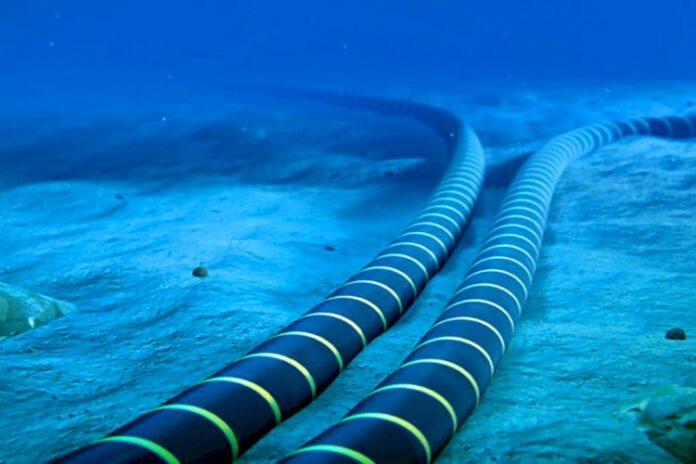
Longitude Engineering (Longitude), an LOC Group company, has announced it has been appointed to support LS Cables & Systems for the installation of two HVAC power cable systems in South East Asia. Longitude is the Engineering & Design Consulting arm of LOC Group, the premier international marine and engineering consulting firm.

Under the agreement, Longitude provided installation analysis, as well as design and engineer operation and mobilisation procedures to support the installation of the interconnector cables. Due to the close proximity of the cables, time constraints and vessel limitations, the Company helped develop innovative methodologies to enable the success of the project, including the use of shore landing structures, to allow for cable spacing and alignment, and second end landing to suit the project constraints.

The interconnector now connects two major power grids, using submarine cables. The project was initiated to solve the problem of power failures in sections of the existing submarine cables network, with the new cables installed better able to handle power loads.

This project, amongst others, is demonstrative of Longitude and LOC Group’s proven record in successfully transferring knowledge and skills from one region to another, to the benefit of its clients. In this instance, from Europe to South East Asia, supporting the Asia Renewable and Power Infrastructure Market in Taiwan, Japan, Korea, Vietnam, Indonesia and Australia. The project was executed by the Group’s Singapore office, with support from LOC’s European offices.

Riccardo Felici, Longitude Engineering, commented:

“Longitude, along with the wider LOC Group, was pleased to support on this landmark infrastructure project. We successfully transferred our experience and knowledge gained in the European market to benefit the burgeoning renewables market in South East Asia.

By utilising our 24/7 service delivery, from LOC’s worldwide presence, we were able to deliver the project on schedule and in record time. Alongside this project, we have also been involved in an extensive list of other work as the offshore renewable industry in Asia develops and gains momentum. These projects ranged from engineering design to transport engineering and training support.”

Kwang Seok Kim, Project Director at LS Cables & Systems, commented:

“We were very pleased with the speed Longitude were able to process our requests on a real time basis. The Group’s knowledge and capabilities were impressive, and we were provided with continuous support by their team. The high level of assistance we received was instrumental in helping us deliver the project on schedule.”

Maersk Drilling proposes to reduce the offshore crew pool

0

The COVID-19 pandemic and the lower oil price environment are impacting offshore drilling activity. Some tenders and projects are being delayed or cancelled which adversely affects commercial prospects.

In light of the current commercial outlook, Maersk Drilling intends to stack a number of the company’s North Sea rigs. As a consequence, Maersk Drilling proposes to reduce the offshore crew pool and has now taken steps to initiate consultations with trade unions and employee representatives about redundancies in the company’s offshore crew pool in Denmark, Norway and the UK.

CEO Jørn Madsen says:

“Though it’s standard practice in our industry to adjust our workforce to activity levels, it never feels right to say goodbye to good colleagues, especially when so many have walked the extra mile to keep operations running in these very difficult circumstances. However, it’s our responsibility to safeguard our business and we are now taking steps to maintain competitiveness in the challenging market environment.”

Maersk Drilling expects that the consultations will lead to a total of 250-300 redundancies in the North Sea crew pool. The individual consultation processes will follow varying timelines in compliance with local regulations in Denmark, Norway and the UK.

Strategic alliance to develop AI-enabled digital products for the maritime Industry

0

Spire Global, a global data service provider and leader in AIS data solutions and weather forecasting, and VesselBot, a leading AI and Big Data technology company with deep shipping domain expertise, has announced a new partnership to co-develop AI-enabled digital products for the maritime industry.

These collaborative digital products will provide market stakeholders with digital solutions enabling them to make data-driven commercial decisions.

The companies join forces to create innovative technology products that combine Spire’s AIS tracking data, weather data, and other services with VesselBot’s domain knowledge and technology expertise. The new products will allow professionals to save money by optimizing ship and port operations. Each organization brings a wealth of data expertise and aims to resolve key maritime challenges faced in the 21st century. The maritime industry is seeing high-growth from adopting new emerging technologies which makes the timing of this partnership ideal as they will deliver intelligent tools based on real-time data.

Constantine Komodromos, VesselBot’s CEO, said:

“We are delighted to have this opportunity to collaborate with Spire Maritime. We look forward to this collaboration and aim to work together, not just technically but also culturally, to reach our common goal to create unique, innovative digital solutions that will solve actual problems, and that shall enable Operational efficiencies to the constantly changing maritime market.”

John Lusk, GM of Global Data Services, Spire Global, said:

“We look forward to developing this relationship with VesselBot, who is building ground-breaking solutions for the dry-bulk market. With new regulations and an increasing need to reduce costs, the maritime industry is ripe for digital disruption. We are excited to provide VesselBot with this integral data with the most efficient technology available so they remain solely focused on solving key maritime challenges.” 

Oriel Windfarm completes geotechnical campaign

0

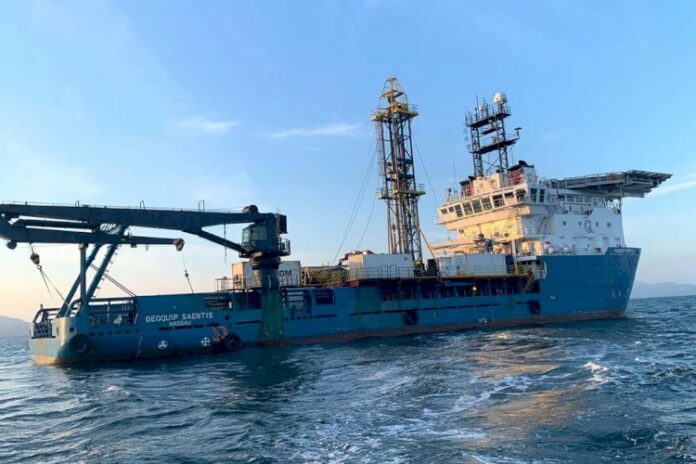
It was performed by Geoquip AS, an experienced offshore contractor headquartered in Switzerland.

This work complements last year’s geophysical survey campaign completed during August 2019 by Irish company Alpha Marine. The data collected during these surveys is essential as it not only contributes to the foundation design but also to the future wind farm layout.

Peter Caluwaerts, Parkwind’s Project Director, said:

“Lead developer Parkwind and its partner ESB continue to invest in these crucial surveys to be in a position to deliver on the timing for offshore wind put forward by the Irish government in its Climate Action Plan and leading up to the RESS auction scheduled for 2021.”

The outbreak of the COVID-19 crisis in the midst of the geotechnical campaign led to the implementation of strict additional safety measures on board to ensure operations were executed in a safe manner. This included the requirement for the drilling ship to stay offshore for the duration of the campaign.

Garrett Connell, Project Manager, added:

“We would like to thank the fishing communities in both Northern Ireland and the Republic of Ireland for their constructive attitude and collaboration throughout the duration of these activities. Their support has helped us complete this crucial project step enabling us to continue the project design phase and we are fully committed to continue our collaboration and build on this positive engagement as we move the project forward.”


Six Hull Vanes ordered by Damen Shipyards for patrol vessels

0

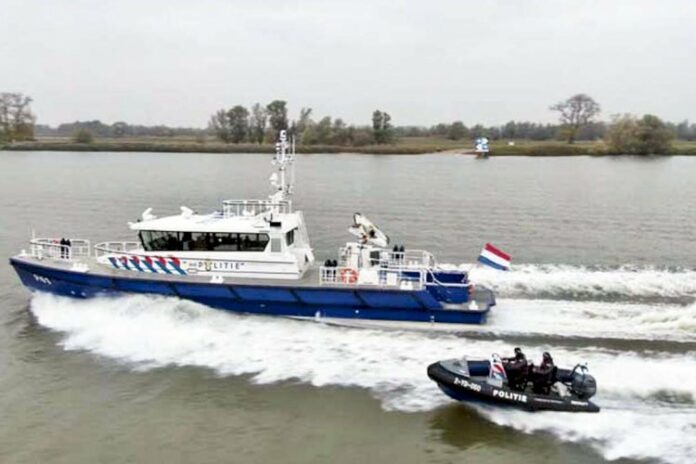
Following a European public tender, Damen Shipyards recently built and successfully delivered a 20m Stan Patrol 2005 and a 25m Stan Patrol 2506 to the Dutch National Police.

In the bid package, Damen Shipyards introduced a number of solutions to reduce emissions, such as a light-weight composite superstructure and an exhaust gas after treatment system. To reduce the fuel consumption at patrol speed (20 km/h) and to reduce the wavemaking of the vessels, Damen included a Hull Vane® on both designs.

While the 20m patrol vessels will be used predominantly on inland waters, the 25m will venture out in coastal waters frequently, and will therefore also benefit from the reduced ship motions in waves offered by the Hull Vane®.

With the performance proven on the first two vessels in the series, Damen Shipyards has now placed an order for four more Hull Vanes, to complete the series of six vessels for the Dutch National Police. These vessels will be delivered during 2020 and 2021.

Bruno Bouckaert, Sales Director of Hull Vane BV, commented:

“We are very pleased to count Damen Shipyards among our repeat customers. From the 28 Hull Vanes built so far, eight have been installed on patrol vessels and another six are on order for other patrol vessels. Making less waves means that less energy is needed to propel these vessels.”

Rather than just specifying a top speed and aim for the lowest build cost, public tenders are increasingly based on lifecycle costs, with a clearly defined operational profile.  The result is a vessel with significantly lower operating costs and improved performance in real-life conditions.


DNV GL develops and tests a methodology for the qualification of digital twins

0

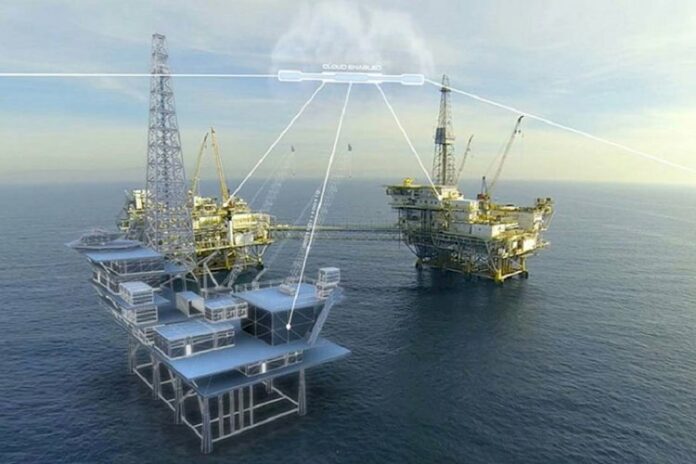
DNV GL has issued an international call to oil and gas operators and the supply chain to pilot a methodology that will prove whether the data generated by digital twins can be trusted, and if the technology is delivering value.

Companies manufacturing hardware across the oil and gas value chain must prove the safety, quality and integrity of components, equipment and assets through recognised quality assurance principles. However, no standard process exists to provide the same mechanism of trust and value for digital representation of a physical asset and its behaviour. 

DNV GL is developing and testing a methodology for the qualification of digital twins which will provide that assurance, and ultimately encourage wider adoption of the technology in the oil and gas sector. An initial partnership with TechnipFMC has led to the creation of the pilot, which is now being opened to the wider industry. 

Digital twins are a rapidly developing technology widely expected to become a significant contributor to the future management of major industrial sites. The digital twin market is estimated to grow from USD 3.8 billion in 2019 to USD 35.8 billion by 20251.  

DNV GL’s Technology Outlook 2030, a research report identifying transformative technologies in key industries, highlights a digital value chain run by machines and algorithms as a prevailing trend for the oil and gas industry in the decade ahead. 

The research expects cloud computing, advanced simulation, virtual system testing, virtual/augmented reality and machine learning will progressively merge into full digital twins which combine data analytics, real-time and near-real-time data on installations, subsurface geology, and reservoirs. 

Liv A. Hovem, CEO, DNV GL – Oil & Gas, said:

“Solving the digital trust challenge will be key to the dramatic evolution that we expect to see in digital twin technology in the years to come. If more sophisticated digital twins are to be widely accepted and developed at scale by the oil and gas industry, they need to be supported by accurate, valuable and trusted technology.

Technology decision-makers in our sector will increasingly offer support to the use of digital twins when they see the technology provide consistent, accurate information which brings tangible value against the investment needed. Our work with TechnipFMC and other partners through this new pilot aims to provide the industry benchmark to qualifying that a digital twin will perform as intended.”

DNV GL’s methodology will address the fact that many digital twins – some created at point of the construction or completion of a new asset – currently represent an asset’s initial form and struggle to reflect developments in their physical counterparts as the asset matures. 

Digital twins must evolve, mature, and reflect the current condition of the real asset they represent. At present, the use of twins and trust in their accuracy is restricted by the fact that the data they contain does not always reflect the most up-to-date condition of the physical asset. 

Kjell Eriksson, Vice President, Digital Partnering, DNV GL – Oil & Gas, said:

“Our methodology is a process of providing evidence that a digital twin will provide valid information, predict system performance within well-defined limits and to a stated level of confidence over time. Following our process, you should have a twin that creates value, and that you can trust.”

HMM names world’s largest container vessel

0

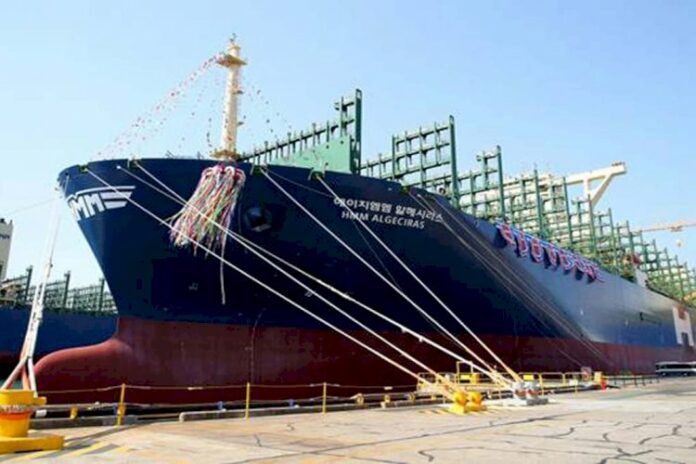
HMM held a naming ceremony for a 24,000 TEU-class containership ‘HMM Algeciras’, the world’s largest containership, at the DSME (Daewoo Shipbuilding & Marine Engineering)’s Okpo shipyard in Geoje, Korea.

About 160 distinguished persons attended the ceremony. First Lady Kim Jung-sook served as godmother who cut the ropes to officially name the ship during the ceremony.

‘HMM Algeciras’ is the first of twelve 24,000 TEU-class vessels scheduled to be sequentially delivered until September, 2020. In September 2018, HMM signed a formal contract for its twenty eco-friendly mega container vessels with three shipyards – DSME, HHI (Hyundai Heavy Industries) and SHI (Samsung Heavy Industries) in an effort to take proactive actions towards market change as well as form a sustainable profit-generating structure.

DSME and SHI build seven and five 24,000 TEU-class containerships, respectively, which are expected for delivery until September, 2020. HHI constructs eight 16,000 TEU-class containerships to be delivered from the second quarter of 2021. HMM plans to enhance its environmental capabilities by operating newly-launched twenty containerships. The vessels are basically equipped with a scrubber system in preparation for IMO 2020 environmental regulation. Optimised hull design and highly-efficient engine are also expected to improve energy efficiency and reduce carbon emissions.

Moon Jae-in, President of the Republic of Korea, says:

“For me, it is very meaningful that HMM takes delivery of the most technologically advanced containership in this difficult time. I would like to celebrate it and hope that HMM continues to secure a competitive advantage as a Korean national flagship carrier.”

Bae Jae Hoon, President & CEO of HMM, adds:

“HMM will strive to expand its presence in the global shipping industry based on optimised fleet management and new cooperation with THE Alliance.”

‘HMM Algeciras’ will be deployed on Far East Europe 4 (FE4) service, one of the Asia-North Europe trade lanes of THE Alliance, with its port rotation starting at Qingdao, Busan, Ningbo, Shanghai, Yantian, Suez Canal, Rotterdam, Hamburg, Antwerp, London Gateway, then Singapore via Suez Canal.