3.9 C
New York
Home Blog Page 872

GNS makes new service free of charge to all users of VFI

0

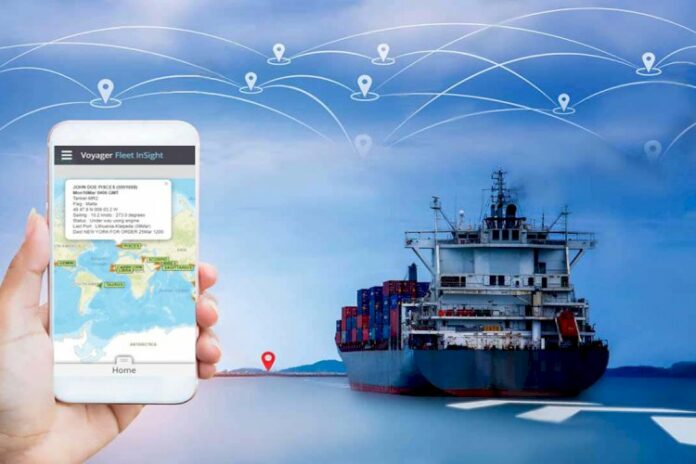
GNS, the maritime solutions company, has announced that users of its Voyager FLEET INSIGHT web service can now access fleet tracking, approve orders and access other navigation management tools via a new version optimised for smartphones.

VFI Go includes access to GNS’s fleet and vessel tracking, inventory and compliance management services, Port State Control inspection data and port call data. Additionally, users can also use VFI Go to review and approve digital and paper chart and publication orders more easily and efficiently.

Hayley van Leeuwen, GNS’s Director of Product and Marketing, said:

“VFI Go means customers can now enjoy an even better VFI experience on their smartphone to help them manage their fleets remotely. It was important for us to make it as easy as possible to access the vessel tracking and navigation management information that fleet managers need on the go, particularly with the unique set of operational challenges being created by the COVID-19 pandemic, we are providing VFI Go to all VFI users via their existing logins at no extra charge from day one.”

LUKOIL shares lubricant experience after first 100 days of operation on VLSFO

0

This draws on learnings over the past few months as well as experience from the transition from HFO to distillate fuels in 2015 with NAVIGO MCL Ultra (20BN). 

Using the right cylinder oil, such as NAVIGO MCL Extra with extra detergency, is only the first step to avoid excessive liner wear on VLSFO. Feed rate optimization is equally important for good engine condition, in combination with engine inspections and monitoring the wear metal content of drain oil samples. The feed rate optimization process involves Cylinder Scrapedown Analysis (CSA) at regular intervals, provided by LUKOIL as part of their OPTIMIZE program. The switch to VLSFO or between different VLSFO blends can still be challenging and requires careful attention.

The fuel that operators are switching from, the new fuel and how the transition is managed all play a major role in ensuring a smooth changeover. HFO is stable because it contains many polar hydrocarbons. Distillate fuels are non-polar and can cause instability in mixtures. Many ULSFO and VLSFO blends are such mixtures. When changing over from HFO to these fuels, the sludge, asphaltenes and cat fines which may have accumulated over time while on HFO can remain on the tank bottom and walls or in the fuel system unless these are fully cleaned or flushed as it was recommended before the transition to VLSFO.

This issue can be made worse because the ability of distillates, ULSFO and VLSFO to absorb cat fines and asphaltenes can cause them to be carried through to the filter, purifier and engine. Cat fine levels at the inlet to the main engine must be below 15 ppm, ideally below 8 ppm. Some ULSFO and VLSFO are treated with additives to improve their stability, but these further increase the fuel’s absorbance and must be handled with care.

Mixing fuels can cause problems due to incompatibilities which cannot be completely avoided. Measures to manage this risk include; segregating the fuel qualities, minimizing mixing and monitoring filter, purifier and engine condition. Engine monitoring includes, for example, regular inspections and adjusting the feed rate where necessary, as well as regular laboratory analysis of scrape down samples.
Some 100 BN cylinder oils, such as NAVIGO 100 MCL, offer improved detergency. Therefore, in some cases high BN cylinder oil is used for a short time to counteract deposits in the engine. In the long run, however, using excessive BN with VLSFO will lead to deposits in the piston top land and ring pack, which can ultimately lead to scuffing and, consequently, loss of liners and off-hire of the vessel. By contrast, NAVIGO MCL Extra has detergency comparable to a 100 BN cylinder oil but a lower alkalinity or neutralization capacity (BN). This keeps the engine free of deposits without the risks of excessive BN. A sufficient feed rate is required to prevent scuffing.

Another risk related to using high BN cylinder oil continuously for VLSFO operation is that it will change the surface structure of the liner and counteract the controlled corrosion that MAN favors in order to keep the surface rough. In this situation new rings are required to reduce the risk of scuffing. Extensive trials and monitoring have shown that NAVIGO MCL Extra provides exceptional scuffing resistance, but there is a limit to what can be achieved by lubrication. Hence, ring condition is critically important. Cermet coating provides improved scuffing resistance. The thickness of the cermet coating must be monitored and the rings must be replaced before reaching the critical values defined by the OEM, as MAN explains in its Service Letter SL2019-685 and WinGD’s ‘Guide for judging condition of relevant piston-running components’.

A liner that has experienced scuffing needs to be machined or exchanged, because the resulting hard surface cannot recover. In this case, exchanging only the piston rings will be insufficient, because the surface structure of the liner would still be polished and unable to provide enough lubrication.

An optimal feed rate is always better than an excessive feed rate. However, due to the surface structure of the liner and the ring coating, VLSFO operation can be compared to a constant running-in process. Running-in is the most critical operation mode for an engine and an increased feed rate is required to improve the oil film thickness and reduce the risk of scuffing. Hence, each engine must be evaluated individually and the condition of liners and rings dictates the required feed rate. For example, micro seizures in the liner indicate an elevated risk of scuffing and the need for a higher feed rate. At a stabilized condition, the feed rate can then be gradually optimized while closely monitoring the engine condition 

It is also necessary to consider potential loss of efficiency in old, worn lubricators. These might not sustain the expected feed rate and the resulting deviation is more critical on VLSFO then it may have been on HFO. An insufficient feed rate and BN while on VLSFO can also lead to cold corrosion and resulting high wear.
If an engine is not equipped with a piston cleaning ring or mini-sac nozzle (FAST or slide-valve nozzle), increased fouling of the exhaust gas and piston running components, such as top land, may lead to oil film disturbance and ultimately scuffing.

Scuffing starts at the top dead center where the piston has zero speed. If surface roughness is low, there will be less oil available and abrasive wear will start there. The type and condition of the ring coating in combination with a higher feed rate help to counteract this process, but it is important to use low BN cylinder oil optimized for VLSFO operation such as NAVIGO MCL Extra.

An elevated feed rate is also required to flush out wear particles to prevent further abrasive wear by the piston ring. This is comparable to the running-in process and must not be confused with the purpose of the cylinder oil’s detergency. The oil’s detergency keeps the ring groove and back of the ring clean and free of deposits to ensure that the ring can move freely. If ring movement is impaired, the load on the ring increases and so does the risk of scuffing. The correct feed rate and BN level of a cylinder oil with low alkalinity but increased detergency is needed to keep liner, piston and ring pack clean and with controlled wear levels.

Generalizing high feed rates as harmful is incorrect and may even be dangerous for certain engines. We highly recommend following OEM recommendations and lubricant manufacturers’ advice at all times.

Maersk Intrepid to drill for Martin Linge

0

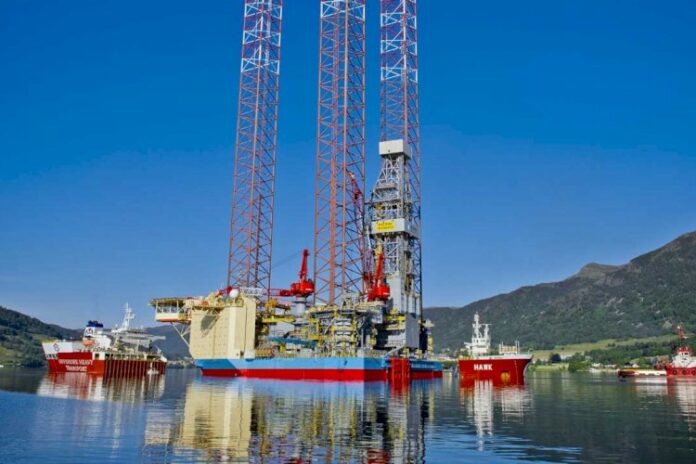
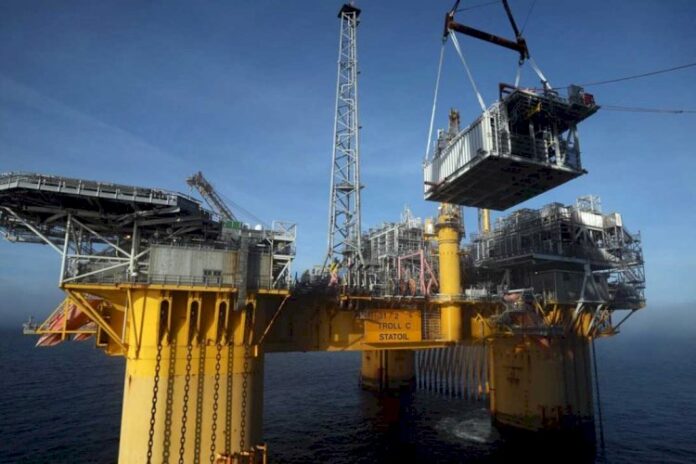
The hybrid jack-up rig Maersk Intrepid has been awarded a contract for the drilling of three wells and plugging of one on the Martin Linge field. 

The value of the contract is estimated at some USD 100 million, including rig modifications and upgrades and exclusive of intervention activities, integrated services and any incentive payments for safe and efficient operations. The new contract is scheduled to take effect in September. The contract includes an option to drill one well. 

Peggy Krantz-Underland, Equinor’s chief procurement officer,  says:

“We are pleased about the agreement we have entered into with Maersk Drilling. It builds on our long-term collaboration and facilitates continuous improvements in safety and efficient progress. This creates value for all parties.”

The integrated services in the rig contract are managed pressure drilling (MPD), slop treatment, cuttings handling and tubular running services.

Erik Gustav Kirkemo, senior vice president for drilling & well, says:

“This will be the first jack-up rig to have a hybrid package retrofit as one of several initiatives to reduce greenhouse gas emissions during operations. The rig will also be prepared for the use of automated drilling technology. So far, the rig has been used to improve the bed capacity on the Martin Linge platform. We look forward to starting the drilling operations with Maersk Intrepid.”

Maersk Intrepid is a CJ70 jack-up rig tailored for operations in ultra-harsh environment.

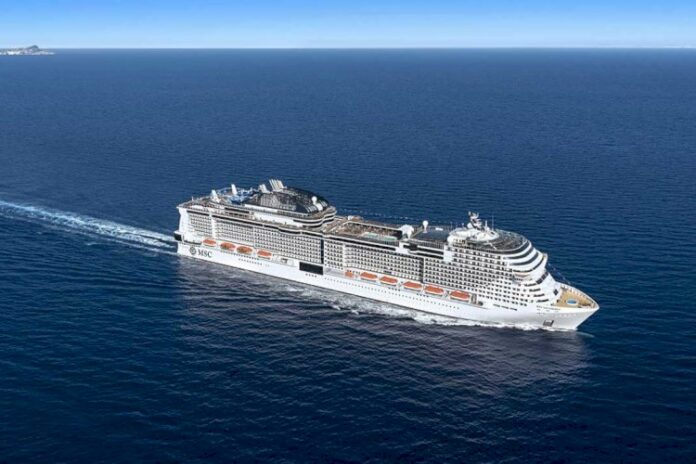
MSC Cruises extends fleet-wide halting of operations through to 10 July

0

MSC Cruises is offering guests affected by this measure a Future Cruise Credit (FCC) where they have the opportunity to transfer the full amount paid for their cancelled cruise to a future cruise of their choice – on any ship, for any itinerary — through to the end of 2021.

In addition, for all guests who are currently booked with MSC Cruises between 11 July through 30 September 2020 the Company today announced that these bookings will now be covered under an extension of its Flexible Cruise Programme.

MSC Cruises’ Flexible Cruise Programme allows guests who are already booked on an MSC Cruises ship, either directly or through a travel agent, to reschedule their cruise to a future departure date through to 31 December 2021. Guests and their travel agents will be able to transfer any such bookings at no cost, now also to any ship with any itinerary in the MSC Cruises fleet.

The Company previously announced the temporary halting of all its ships globally through to 29 May.

Huisman develops UQC for Jan de Nul for safer offshore installations

0

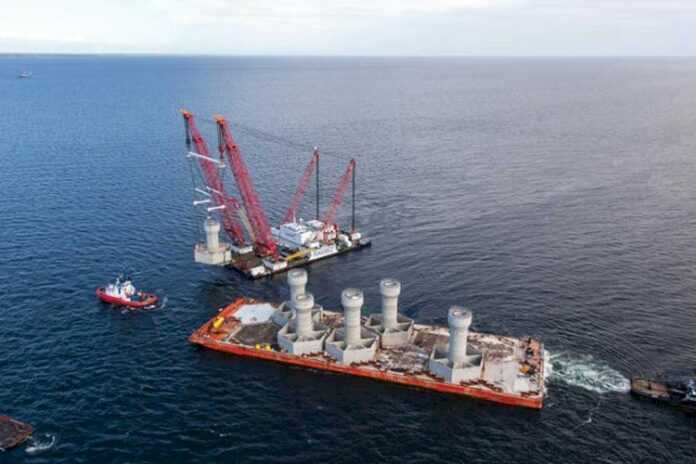
Upon the order of both vessels in 2019, Jan De Nul Group awarded the contract for the engineering, construction and delivery of two highly innovative cranes to Huisman.

For these cranes, which will be the largest in their class, Huisman developed the Universal Quick Connector (UQC) based on the expertise of Jan De Nul Group’s operational and engineering team. The result is a ground-breaking innovation, resulting in a major step change in safer offshore hoisting activities.

The UQC is a smart, modular and robust clamp which is mounted inside the crane’s lower block. It allows to lift objects through a direct connection, without intermediate rigging and totally hands-free.

Robby De Backer, Director Newbuilding at Jan De Nul Group:

“Our newbuilding department has developed the Universal Quick Connector together with Huisman, our trusted partner in pioneering technology. This innovation will considerably increase the safety during offshore lifting and installation activities. With this UQC, we provide our offshore installation teams on board of both vessels with better means to control the lifting operations in a safe way. This will definitely improve and support the offshore installation industry in general.”

Henk Weterings, Chief Technology Officer (CTO) at Huisman:

“We are delighted to have Jan De Nul Group as launching customer for our Universal Quick Connector tool. By refining this concept with the operational and procedural expertise of Jan de Nul’s engineering teams, we have created an integrated tool which will increase safety and workability on board. We envision that this tool will be the first of many in the offshore lifting industry.”

The UQC attaches and detaches loads and tools directly to the crane’s lower block without rigging, entirely hands-free and fully automatic. This automated working method creates a safe environment in which the personnel’s safety is not compromised. The complex task of – typically manual assisted – (de)rigging can be prepared outside of the critical path of the lifting operation.

Overall, the UQC also improves workability. Because rigging is no longer needed, the crane fitted with the UQC can optimise available lifting heights and work subsea where traditional equipment encounters difficulties when rigging a load.

The UQC is fitted with an active rotation device increasing operational control when attaching the load. It allows rotation of the load to fine-tune its orientation without additional taglines. This enables the accurate positioning of heavy components as well as wind turbine components with strict bolt pattern tolerances.

The UQC connects to the lifting tool with a specific pin. Any lifting tool fitted with this pin can be used by the UQC. Thanks to its versatile design, the UQC will also be able to hoist existing lifting tools by means of an intermediate lifting eye and pin connection. In case conventional rigging is needed, a traditional hook fitted with the pin can be mounted in the UQC.

Carnival Cruise Line utilizing its ships to return crew members home

0

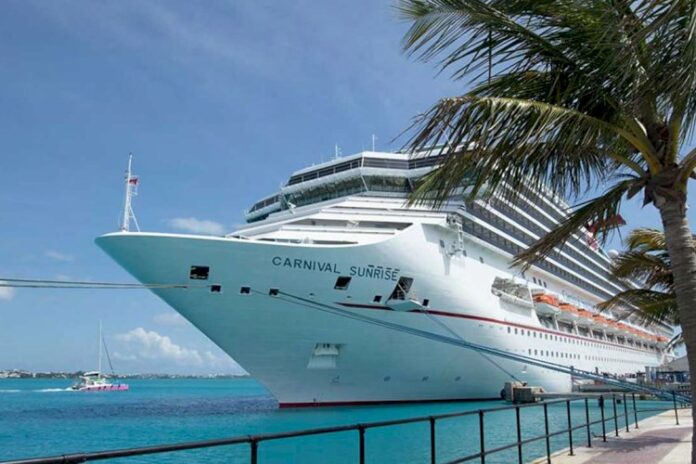
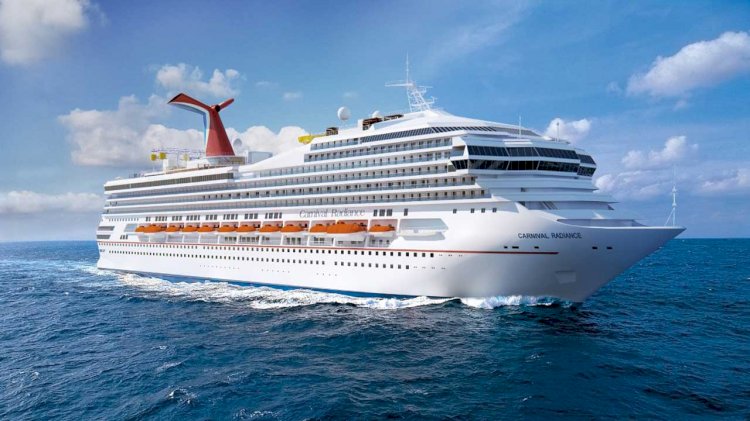
Eighteen Carnival Cruise Line ships will rendezvous in The Bahamas over the next several days as the final plans are put in place to sail nine of the ships to repatriate more than 10,000 healthy crew members who remain on board due to restrictions limiting air travel to Asia, Africa, Europe, India and Latin America.   

The ships have been at various U.S. homeports provisioning supplies and bunkering fuel for their journeys.  Certain crew will join ships using water shuttles off the coast of The Bahamas.  Once completed, nine ships will sail to their destinations with crew members from North American-based ships on board.  The remaining nine ships will spend most of their time in anchorage positions in The Bahamas or Panama and eventually all ships will reduce their crew numbers to safe operational manning levels.

Christine Duffy, president of Carnival Cruise Line, said:

“The safety and well-being of our team members continues to be a top priority. Given the pause in our operations, we are committed to getting our crew members safely home to their families. We sincerely thank them for their hard work, patience and understanding during this process. We would also like to thank the government of The Bahamas for their support of this operation, as well as the CDC, U.S. Coast Guard, U.S. Customs and Border Protection and local port agencies.”

Crew members who will be returning home have undergone a health check and cleared fit for travel by Carnival’s medical team. The company has been working closely with immigration officials in arriving countries on an efficient debarkation process.  All crew members have their temperature taken daily and will do so again during the debarkation process, and follow enhanced operational protocols to ensure the health and safety of the crew.

Prior to Carnival’s pause in operations on March 13, its fleet of 27 ships had nearly 29,000 crew members on board.  Since that time, Carnival has already repatriated more than 10,000 crew via flights and another 10,000 will be traveling on the nine voyages leaving this week.   Approximately 6,000 additional crew will be repatriated by air charters or three ships that already departed from Australia and Long Beach.  By the time all these movements are completed, the Carnival fleet will be down to approximately 3,000 crew members identified for safe operational manning, plus several hundred that will be repatriated as quickly as possible.

Hanseaticsoft launches software apps to automate business processes

0

To help shipping companies digitalise essential business processes during the Coronavirus pandemic, Hanseaticsoft, a leading provider of maritime software has launched an Efficiency Booster bundle giving companies access to 15 applications which are part of its Cloud Fleet Manager (CFM) portfolio.

With many companies facing changes to normal working practices including more staff working remotely or having to self-isolate on board or on shore in different locations, having a digital infrastructure to enable employees to work effectively together, whilst apart is crucial.

The Efficiency Booster bundle is designed to help companies eliminate hidden information silos and share data and information no matter where employees are located, enabling them to streamline processes, work more efficiently and free up time to focus on other tasks.

The Efficiency Booster doesn’t require time-consuming installation or migration, and all applications run natively in the browser, so no desktop applications or browser-plugins are required and they can be accessed from anywhere in the world. To gain insights on the move, the bundle is also complemented by a free Android and iOS app called ‘CFM Go’ to enable untethered mobility.

Software apps include a Partner Portal for sharing information with partner organisations to ensure supply chains are not interrupted; Employees app to manage all employee data; Holidays app for planning staff absences and MRV & IMO DCS to ensure continued compliance with regulations at a touch of a button.

There is also a Port app which can help crew find contact details and other information quickly and a Disturbance Report app for managing service requests and assigning them directly to the person responsible.

Alexander Buchmann, Managing Director, Hanseaticsoft said:

“In the shipping industry there is a constant pressure to drive efficiencies and find operational savings. This is being amplified during the coronavirus pandemic with companies facing challenges around working practices and putting established ways of working to the test.

Accessing and exchanging of information, as well as collaboration between colleagues on and off shore, can become difficult, if not even impossible without a robust digital infrastructure. Our Efficiency Booster bundle gives shipping companies the ability to introduce a digital system quickly to manage processes more efficiently no matter where office staff and crew are based and give access to data in real-time.

Companies benefit from this software immediately, helping them to overcome challenges due to Coronavirus, but it will also set them up for the future giving them the digital tools to become more efficient operationally and remain competitive.”

SCHOTTEL to power next SOV for Louis Dreyfus Armateurs

0

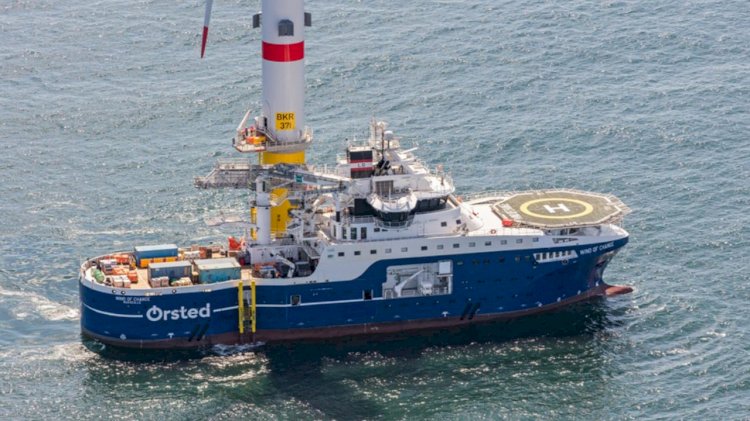
French shipping company Louis Dreyfus Armateurs has selected SCHOTTEL to supply a range of propulsion systems for its second wind farm service operation vessel (SOV) the “Wind of Hope”, the sister vessel of the “Wind of Change”. 

The new walk-to-work vessel is currently under construction at Cemre shipyard in Turkey and will enter service operating under a long-term contract with Ørsted.

The propulsion system of the Salt Ship Design vessel is powered by four diesel generators, which drive the electric motors of the SCHOTTEL propulsion package. Two SCHOTTEL Rudderpropellers type SRP 430 FP, each with an input power of 1,660 kW and a propeller diameter of 2.4 m, are installed at the stern. Two SCHOTTEL Transverse Thrusters type STT 6 FP (1,400 kW each) at the bow and one SCHOTTEL Retractable Rudderpropeller type SRP 260 R FP (880 kW) will allow for better manoeuvrability during dynamic positioning of the DP 2-compliant vessel. 

The “Wind of Hope” will provide modern accommodation (individual cabins with sea view and video on demand, a gym and a cinema, etc.) for more than 60 technicians for several weeks at a time. As is the case with its sister vessel “Wind of Change”, the technicians will be safely transferred to the wind turbines by means of a daughter craft in good weather. A dynamic motion compensated gangway will allow for a fast and secure transfer of the personnel in heavy seas.

Upon delivery in 2021, the 83.0-metre long and 19.4-metre wide vessel will become part of a contract with Ørsted, the largest energy company in Denmark. It will support the Hornsea Project Two offshore wind farm off the coast of England.

Neptune Energy announces Eneco as latest partner on hydrogen pilot

0

Neptune Energy today announced Eneco, a leader in the field of sustainable energy, has joined as a partner on the PosHYdon pilot, the world’s first offshore green hydrogen project.

Eneco will supply simulated wind data from its offshore wind farm, Luchterduinen, to support the project which aims to integrate three energy systems in the North Sea: offshore wind, offshore gas and offshore hydrogen. 

The data will be used to accurately model the use of electricity generated by the windfarm to power the electrolysis process on the Neptune-operated Q13a platform, using sea water. The sea water is demineralized on the platform in order to produce hydrogen.

Lex de Groot, Managing Director of Neptune Energy in the Netherlands, said:

“We are very pleased to welcome Eneco onboard as a partner. Their participation will provide realistic data for the pilot, which in turn delivers better insights for the next stages of the project.

The goal is to obtain valuable lessons for successfully integrating offshore energy systems to support the acceleration of the energy transition, and the Dutch North Sea is ideally suited for this. The ability to convert energy from windfarms to hydrogen, then transport it via the existing gas infrastructure offers major advantages, particularly for those windfarms located much further offshore.”

Ruben Dijkstra, Director Offshore Wind for Eneco added:

“Hydrogen is important for achieving the climate objectives to support sectors such as industry, the built environment and transport in their sustainability. With the possibilities of offshore wind and the enormous potential that the North Sea still offers, hydrogen production in the North Sea is an important element in the energy transition. Eneco gladly supports the steps being taken in this direction with the PosHYdon pilot. In addition to the technical aspect of offshore electrolysis, Eneco also has a strong interest in developing green hydrogen certificates and adding hydrogen to the natural gas network.”

The Luchterduinen wind farm is located approximately 23 kilometres off the coast of Zandvoort / Noordwijk and about 25 kilometres north of the Q13a platform. There will be no direct connection between the wind turbines and the platform for the pilot. The Q13a is the first fully electrified platform in the Dutch North Sea, located approximately 13 kilometres off the coast of Scheveningen (The Hague).

PosHYdon is an initiative of Nexstep, the Dutch association for decommissioning and reuse, and TNO, the Netherlands organisation for applied scientific research, in close collaboration with the industry. Eneco is the latest partner to join the pilot, following Neptune’s announcement earlier this month regarding Gasunie, Noordgastransport BV and NOGAT BV.

Partners in the Q13a-A platform are: EBN B.V. (40%) and TAQA Offshore B.V. (10%).

REMAIN introduces remainMybox to fully digitize its business processes

0

REMAIN GmbH Container Depot and Repair, EUROGATE group’s unit for the repair and maintenance as well as the intermediate storage of containers, has been using the new depot information and control system “remainMybox” since the beginning of 2020.

The software, which was developed in collaboration with the IT department of the parent company EUROGATE, completely digitizes all operational and administrative processes of REMAIN and transmits all process data to the users in real time.

Kai Warnken, Managing Director of REMAIN, said about the market launch of remainMybox:

“The replacement of manual work steps by digital control of the entire depot operations is a quantum leap for us. With this solution, we have not only arrived in the 21st century, but have also created a new standard that is second to none in the market.”

The new depot information and control system “remainMybox” is adapted to all current and future requirements of a modern container depot. The aim of developing this solution was to increase efficiency, transparency towards customers and sustainability by abolishing paper-based individual processes. The modular system now offers these results in practice, for example through digital container files, the digital recording of check and inspection processes, the digital workshop card, direct integration of all large devices used (reach stackers and empty handlers) via the iPad app and automatic creation and sending estimates and invoices.

Patrick Jandt, Head of IT at EUROGATE, said:

“remainMybox not only simplifies the processes in the depot; it efficiently merges them. Thanks to mobile devices, the colleagues at REMAIN can now determine and transmit all essential data in real time and in a quality that has not existed before. The first weeks of using remainMybox already show a noticeable improvement in all parts of the control of the company. ” Kai Warnken added: “When developing remainMybox we always had a special focus on our customers. I am sure that they, like us, will quickly benefit from the advantages of the accelerated and smoothly functioning control system.”