5.9 C
New York
Home Blog Page 873

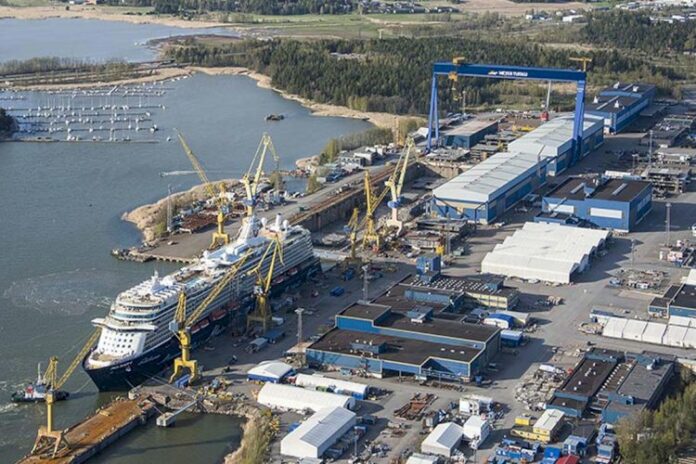
Meyer Turku starts negotiations to lay off people

0

Since then, the corona virus pandemic influenced market situation of the shipyard’s customers’ is coming visible and is now forcing Meyer Turku to change the scope of the negotiations.

These negotiations will include the permanent layoff of 450 people and other 900 are affected by other measures. These include temporary layoffs of different length, work time adjustments and other arrangements. All personnel groups and levels are part of the negotiations.

CEO of Meyer Turku, Jan Meyer, states:

“The corona pandemic has changed the situation unexpectedly and totally. We are facing the fact that the corona-caused pause in cruising requires to stretch the order book. We are currently discussing the details with our customers. This new situation will force us to take painful adaptation measures to secure a sustainable future for Finnish cruise ship building and the network.

Our preparations have been for the future. Now unexpectedly that future has changed and we have to adjust to that new future. Instead of a further ramp-up from one to two large ships delivered per year until 2023, the estimation is now that Turku shipyard will in the future build one large cruise ship per year and not further ramp-up.”

The exact changes to the building and delivery times of the seven ships in Meyer Turku order book (formerly reaching until 2025) are still under negotiations with the shipyard’s customers.

Furthermore Meyer Turku has published the 2019 financial figures. Ship project Costa Smeralda was delayed due to difficulties with the shipyard’s substantial ramp-up until today and the ship’s size & complexity. The losses are mainly related to delayed delivery of Costa Smeralda and reservations for the coming years.
MHI Vestas blade materials to be sourced in Taiwan

0

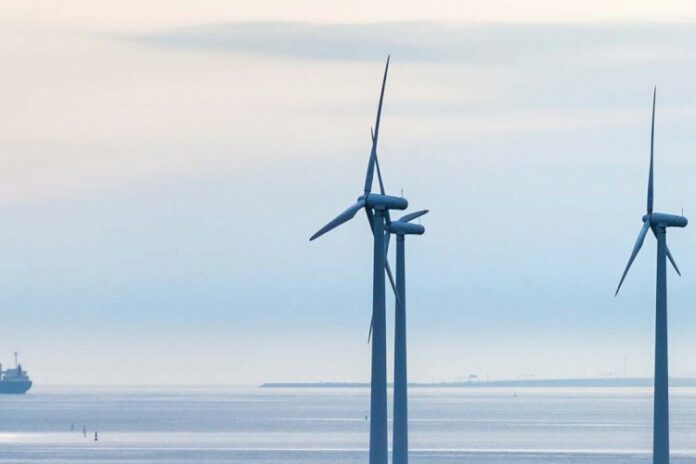
In another step forward for MHI Vestas’ industry-leading localisation plans in Taiwan, the company has confirmed a purchase agreement with Swancor to source several key blade manufacturing components locally. This contract strengthens Swancor’s presence in the offshore wind sector, and will deliver substantial value to the Taiwanese economy through knowledge sharing, jobs and direct investment.

The scope of the Swancor contract goes substantially beyond local requirements for blade materials and covers a significant percentage of the direct materials value of overall blade manufacturing (including carbon tow, carbon pultrusion, resin, and bonding glue).

This is the second purchase agreement signed by MHI Vestas related to blade production in Taiwan, following selection of Tien Li Offshore Wind Technology Co., Ltd. to manufacture blades in a new facility to be built near Taichung Harbour.

Taiwan Business Director, Maida Zahirovic, said:

“The addition of Swancor to our local suppliers is a significant boost to our ambitions in Taiwan. The local supply chain is currently under development in Taiwan, and we are pleased to support an established group such as Swancor broaden their presence in the offshore wind sector. We look forward to working together to create long-term Taiwanese jobs.”

MHI Vestas has been awarded firm contracts for the Changfang and Xidao projects developed by CIP (total combined capacity of 589 MW), as well as preferred supplier status for the 300 MW Zhong Neng project developed by CSC and CIP.

Robert Tsai, Chairman of Swancor, said:

“We are honoured to sign the purchase agreement with world-renowned offshore wind turbine manufacturers MHI Vestas, including infusion resins, bonding glues, pultruded carbon plates, to become an international wind turbine blade material supplier of MHI Vestas. We aim to continue to expand further cooperation with MHI Vestas in the global market.”

CIP Changfang and Xidao Projects’ Chief Development Officer Marina Hsu noted:

“Since 2018 we have been working closely with MHI Vestas on localisation for blades. Apart from resin, a required item by Taiwan’s localisation policy, the contract between Swancor and MHI Vestas also additionally includes the supply of carbon tow, carbon pultrusion, and bonding glue. The active effort from MHI Vestas and CIP greatly enhances the value of a local blade supply chain. Now with Tien Li and Swancor, the right supply set up for blade manufacturing is in place. CIP is looking forward to receiving the first local fabricated offshore blade in Taiwan for its Changfang and Xidao projects.”

This contract will support up to 570 jobs in blade material provision to Taiwan between 2020 and 2025. Additionally, up to NT$850m in economic value (gross value added) will be added to the Taiwanese economy from blade material production and induced value.

MHI Vestas, along with CIP, is committed to delivering value to Taiwan across all components of turbine manufacturing. Beyond recent progress on blades and blade materials, MHI Vestas has also signed contracts in Taiwan for switchgear, cables, tower production and castings.

VideoRay and Sonardyne demonstrate benefits of combined technologies

0

UK-based underwater positioning specialist Sonardyne initially integrated Micro-Ranger 2 Ultra-Short BaseLine (USBL) technology with VideoRay’s Mission Specialist Technology for ROVs in 2018. Since then, the systems have been deployed together in a range of applications from aquaculture to mine countermeasures operations.

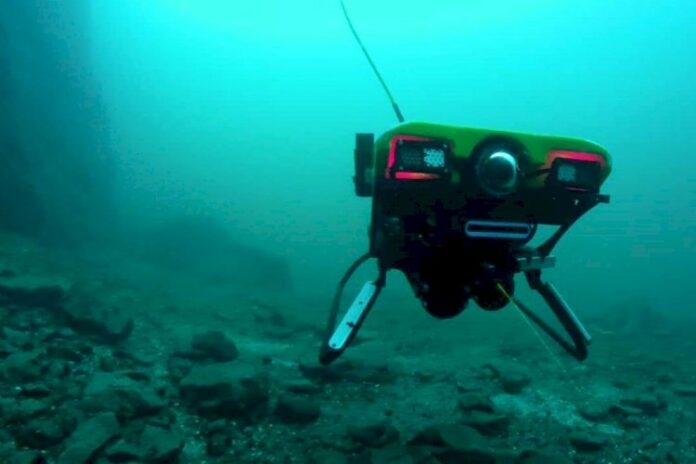
Sonardyne’s Micro-Ranger 2 USBL system is designed for shallow water tracking of divers and small ROVs and autonomous underwater vehicles (AUVs).
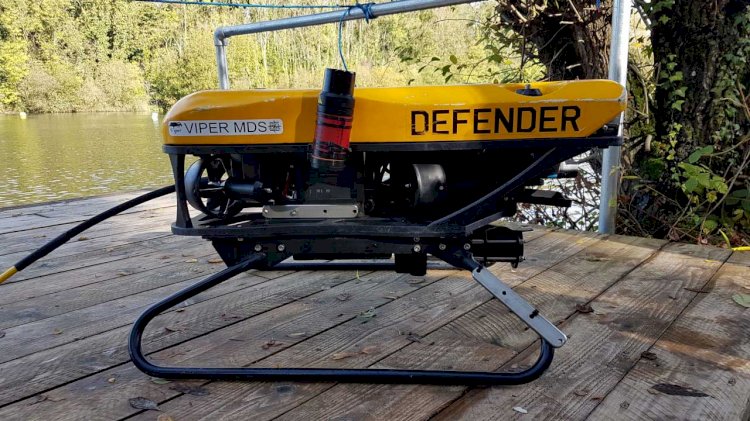
VideoRay’s Defender and Pro 5 ROVs feature Mission Specialist Technology. This platform is designed using interchangeable, modular components, so it is an excellent fit for Sonardyne’s Micro-Ranger 2.

In recent trials, the Defender was successfully equipped with a Micro-Ranger 2 and a Viper mine disposal system from ECS Special Projects. Viper is a twin-shot disruptor with the capability of deploying multiple “shots” during one dive mission.

says Chris Gibson, Vice President of Sales, Marketing & Business Development at VideoRay, says:

“Micro-Ranger 2 worked flawlessly, accurately tracking the Defender as it deployed the Viper charge on a simulated manta mine. It’s a high-performance tool that gives our ROVs even more range and flexibility when matched with the Viper system.”

Extremely portable and quick to mobilize, Micro-Ranger 2 can be deployed from any waterside location or vessel. This makes it ideal for supporting marine operations conducted in rivers, lakes and coastal waters. The system has an operating range of 995 meters and can update the position of each target being tracked up to twice a second.

Micro-Ranger 2 calculates the position of underwater targets using a transceiver at the surface to transmit an acoustic signal to transponders attached to each of the targets to be tracked. Using the return signal from each transponder, Micro-Ranger 2 determines its range (distance), bearing (heading), and depth, displaying the results on a radar-style software display.

VIDEO: Novel inspect-and-repair robot for offshore wind turbine blades

0

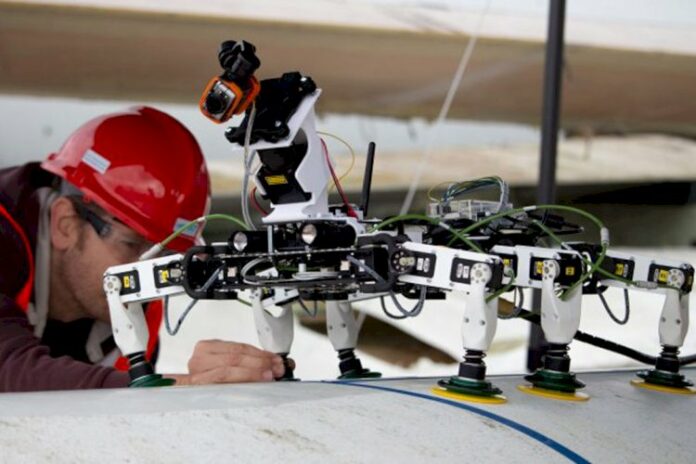
The six-legged blade crawler has now reached a major milestone in development under a £1 million project – BladeBUG 2, partly funded by Innovate UK, enabling technical integration to begin with the ambitious MIMRee system for fully autonomous wind farm operations.

During the trials, which took place in early March, the lightweight robot walked on blade surfaces, proving the stability of its vacuum adhesion technology and its dexterity in adapting its gait to the varying curves of the blades. Ancillary tethers, which would allow the robot to operate for extended periods offshore and enable rapid deployment to and from blades, were proven.

With these capabilities now firmly under its belt, BladeBUG will begin integration into another Innovate UK funded project, MIMRee (Multi-Platform Inspection Maintenance and Repair in Extreme Environments), where it will operate alongside other robotic and autonomous systems.

MIMRee is a £4.2 million consortium project, led by Plant Integrity, that is developing fully autonomous inspection and repair missions to offshore wind farms. An autonomous vessel will act as a launch platform, deploying teams of drones and BladeBUG robots to inspect, test and repair blade surfaces.

During the project, BladeBUG will be integrated with:

  • A robotic repair arm for resurfacing damaged blades that is now fully developed by the Royal College of Art’s Robotic Laboratory;
  • Wootzano’s novel electronic skin for the blade crawler’s feet that allows it to sense the quality of attachment to blade surfaces;
  • A human-machine interface developed by Professor Sara Bernardini of Royal Holloway University of London; utilising mission planning technologies used in space exploration;
  • A novel inspection drone developed by the universities of Bristol and Manchester, and the Thales Halycon autonomous vessel; and a non-destructive testing payload developed by Plant Integrity.

Technologies like BladeBUG, which reduce manual working at offshore wind farms, are an essential ingredient for the expansion of renewable energy, according to Chris Hill, Operational Performance Director at ORE Catapult:

“Inspection and maintenance of wind turbines at sea are mammoth tasks for technicians, who largely manually test and repair tens of millions of bolts, thousands of blade surfaces at significant heights above sea level, or as part of the foundations or cables at the seabed. This work is conducted in challenging conditions, subject to delays and downtime.

The BladeBUG concept recognises that there is a safer, more cost-effective and efficient way of working. If advanced robotics can take on some manual tasks offshore, we can move our future jobs towards more data-driven, remote supervision onshore – expertise that will be in high demand in the future global economy.”

With this expanding vision for the robot, BladeBUG has also won a place on ORE Catapult’s National Launch Academy initiative, a technology accelerator programme for the offshore wind industry, focusing on near to market solutions. The BladeBUG team has also grown from one to six full-time employees. Chris Cieslak, the founder of BladeBUG, explains the company’s growth since it first entered an ORE Catapult SME incubation programme:

“The BladeBUG journey has moved at a fast pace since our first conversations around the concept with ORE Catapult back in 2015. Our latest developments are informed by observers from several global wind industry operators: their feedback on requirements and regulatory issues is crucial in getting our product to the commercialisation stage. Also, working with ORE Catapult’s National Launch Academy for SMEs entering the offshore renewables arena is helping us translate our technological achievements into a marketable product.”

Aberdeen Harbour creates ‘click and collect’ slots for vessels

0

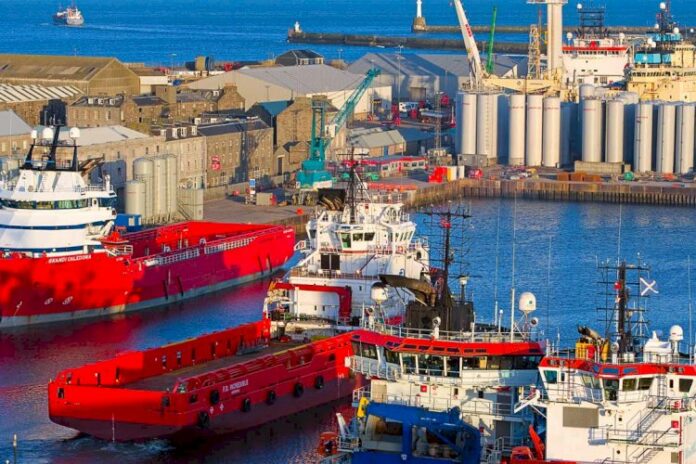
Aberdeen Harbour Board has launched a special scheme to run during COVID-19 aimed at supporting crews who are currently working on vessels moored in their anchorage.

The scheme allows vessels to book a four-hour ‘welfare visit’ slot for their vessel in the port, instead of making a full port call booking. The slot allows a vessel to stock up on essential supplies such as foodstuff, fuel, and critical spares.

The Port’s Operations Manager, John McGuigan, explained:

“Dues for coming into the harbour are normally paid by the company chartering the vessel. and they book a full port call to allow the vessel to be loaded with cargo. During the COVID-19 crisis, however, when there is less work available, we wanted to support vessel owners and crews who are currently not on charter and to ensure their welfare throughout these unprecedented times. We are calling the scheme ‘Stow and Go’, but I guess it is a bit like booking your pick-up slot at the supermarket”.

Harbour Chief Executive, Michelle Handforth, added:

“We are very conscious of the impact that the current public health crisis is having, not only on our customers but also on the vessel owners and crews who support them. Whilst crews are in-between work they can spend significant time out at the Aberdeen anchorage – there are on average 20 vessels on any given day located there – and we were keen to make the situation as conducive as possible for those crew who, along with those keeping the port open, are essential workers, doing their bit in this crisis”.

The scheme is open to all vessels located at the anchorage and will be reviewed at the end of the lock-down period with a view to it being extended.

Reefer containers are currently scarce in South Africa

0

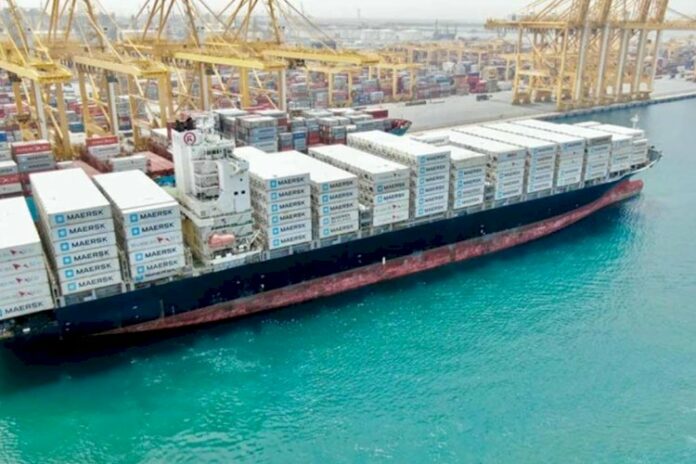
To offset the scarcity of reefer containers in South Africa ahead of this citrus season and to support the nation’s agricultural sector, Maersk, the world’s largest integrated container logistics company, has brought 1,800 empty refrigerated 40-foot containers from the Middle East as additional stock to serve customers.

There is additional supply to come and this will complement the refrigerated containers that are already in the country and available to customers.

The containers have departed Jebel Ali last weekend and are expected to arrive in Durban early May to be distributed among Maersk and Safmarine customers. 

Reefer containers are currently scarce in South Africa due to the imbalance in trade flows, which has been impacted by the lockdown in China in Q1 and the expected stronger demand for South African fruit.

Jonathan Horn, Managing Director for Maersk Southern Africa and Indian Ocean Islands, says:

“Knowing the importance of the upcoming export season to our customers as well as the South African economy, Maersk remains committed to serve our South African reefer customers ensuring their fresh citrus continues to be delivered globally. We will continue to support South African companies, industry and producers with viable solutions to work through the current challenging scenario to keep their goods moving.”

Maersk offer multiple solutions to customers in South Africa such as Phytosanitary Certification, customs house brokerage, cold storage and a comprehensive array of inland haulage solutions. Maersk’s vast array of digital offerings allows customers to continue their business online and to track goods worldwide using the company’s app.

Since February, Maersk has developed several global solutions for customers to work through the current challenging trade scenario. They include providing alternative sea and land routes, terminals, cold-storage depots in China and Russia, extra trucking services, rail services support and daily advisories, updating customers worldwide on how to keep their goods moving. 

JRC/Alphatron Marine introduces a special inland version of the VHF

0

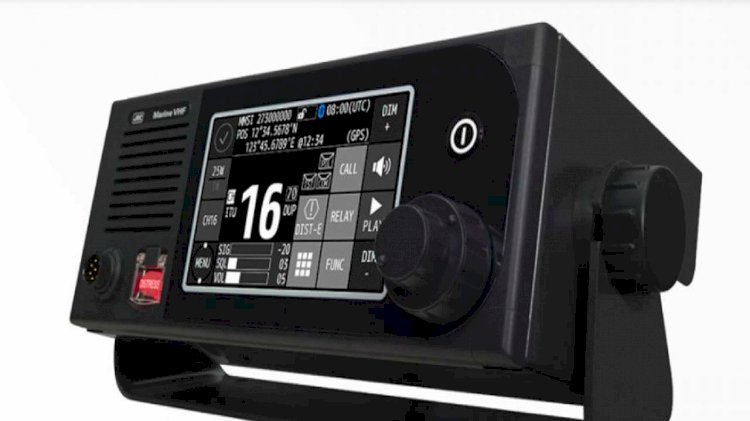
JRC/Alphatron Marine has announced the introduction of the new inland version of the A-Class VHF radio, the JHS-800S. The VHF for marine use has been updated with a new function called Block Channel Function.

The inland waterways in Europe are divided into different block areas, each using a different VHF channel. Normally the crew has to change the VHF channel manually. This is no longer necessary because of the Block Channel Function. The VHF channel is automatically adjusted to the correct block channel when the ship moves from one block area to another. This will make the VHF traffic much safer because the VHF radio can no longer be positioned on the wrong block channel.

The all-in-one JHS-800S (control unit with speaker, a transceiver with DSC) has high sensitivity performance, crystal clear HI-FI audio quality via the build in speaker, and protection rate of IP56. JHS-800S is the first Class A DSC Compatible marine VHF radiotelephone featuring a 5-inch high-brightness color LCD touchscreen, which makes it an outstanding innovative design.

The JHS-800S has a Bluetooth microphone as a wireless handset and also new innovative functions for playback and record transmissions in real-time and an easy-to-operate self-diagnosis function.

Neptune Energy begins Fenja drilling campaign

0

Fenja is Neptune’s first operated development project on the Norwegian Shelf and is estimated to contain 97 million boe. Fenja will deliver around 40 kboepd at plateau.
 
Neptune’s Director of Projects and Engineering in Norway, Erik Oppedal, said:

“Sunday’s drilling start-up represents an important milestone in the project. The aim of these first geo-pilots is to gain a better understanding of  the reservoir and to optimize the location of the production wells. As our first operated development in the Norwegian North Sea, Fenja is an exciting project for Neptune and underlines the importance of the region to our geographically-diverse business.”

Located in the Norwegian Sea 120 kilometres north of Kristiansund and at a water depth of 320 metres, the subsea field will be developed as a tie-back to the Njord-A platform. At 36 kilometres, it will be the world’s longest electrically trace-heated pipe-in-pipe subsea development.

The development plan combines two subsea templates with six wells, including three oil producers, two water injectors and one gas injector. The gas injector will be converted to a gas producer towards the end of field life.

The Fenja drilling campaign has been modified to address delays resulting from the impact of COVID-19 with the licence partners opting to carry out drilling in three phases over the next two years. This also provides greater flexibility to respond to subsurface insights gained from the geo-pilots, and the current challenging market conditions.

The drilling program for 2020 includes two top holes and two geopilots, with an expected duration of 85 days. The drilling program for 2020 will be carried out by the West Phoenix drilling rig, operated by Seadrill.

Production start-up at Fenja is expected by Q4 2021. 

KIZAD rolls out new set of digital services through Maqta Gateway

0

Khalifa Industrial Zone Abu Dhabi (KIZAD), a subsidiary of Abu Dhabi Ports today announced that it has successfully brought online a new set of services which will enable customers to avail of more of its services from anywhere in the world, in collaboration with Maqta Gateway, developer and operator of the first Port Community System in the UAE, and a wholly-owned subsidiary of Abu Dhabi Ports.

The rollout brings the total number of KIZAD digital services to 84, which are available to customers through the online portal.

In addition to the existing services, online payments; submission and processing of free zone applications; visa and ID card services; entry permits; establishment cards; and notarisation and attestation services can now be applied for and transacted through the system, without the need for customers to physically visit the KIZAD Customer Service Centre or present hard copies of documents. Moreover, the system is mobile responsive and equipped with advanced features including SMS notifications, real-time updates to enhance customer experience.

Mohamed Ghareeb, Vice President of Service Delivery, IZ, KIZAD said:

“The convenience of our customers has always been a top priority for KIZAD. Rolling out this new set of services means that our customers now have a broader set of services which they can avail online, from a place of their convenience and a time of their choosing.

Through the digital services, customers can make informed decisions based on real-time analytics, and get up to the minute updates on their service requests. As we continue to bring more services online, the digital submission of documents also means that we are well on our way to completely paperless transactions in the future.”

Rashid Al Hosani, Commercial Director, Maqta Gateway said:

“Our collaboration with KIZAD on the launch of digital services will benefit more than 600 companies with an enhanced customer experience through optimised processes, with significant reduction in paperwork, administration and processing times, in addition to eliminating the need for physical visits to customer service centres.

Maqta Gateway is committed to providing innovative solutions to its customers and continue to explore ways to facilitate trade in Abu Dhabi and contribute towards its sustainable economic development plans.”

The KIZAD digital services, available through Maqta Gateway, enable customers to view all services offered by KIZAD for Free Zone and Domestic Economic Zone customers. Customers can track the status of their requested services and view and download documents required for the completion of the process.

Additionally, In a communication to customers recently, KIZAD had announced that as part of keeping customers safe during the coronavirus pandemic, all documents required for any services could be submitted digitally.

The region’s largest industrial zone is currently home to more than 600 companies, which will benefit from the new rollout.

Van Oord installs world’s first submerged Slip Joint successfully

0

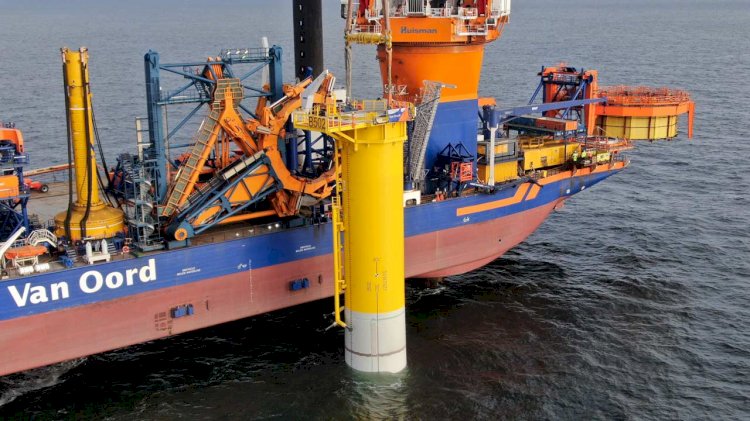
It is the first time anywhere that a submerged Slip Joint was used on a full-sized offshore wind turbine on a fully commercial basis.

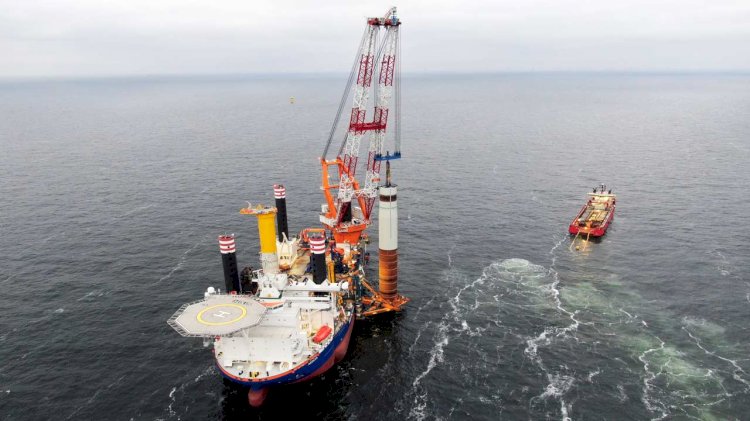
After years of developing the system in cooperation with its technology partners, Van Oord deployed offshore installation vessel Aeolus to install the Slip Joint foundation this week. The design and production of the Slip Joint was certified by DNVGL in the autumn of 2019, with MottMcDonald assessing it on bankability aspects. The Borssele Site V project consists of two 9.5 MW wind turbines and Van Oord has been awarded the Balance of Plant scope for this project.

The Slip Joint is an alternative connection between foundation elements, a monopile and a transition piece. It consists of two conical sections placed on top of each other. The Slip Joint is based on friction, with the weight ensuring firmness and stability. Installation takes place by sliding the wind turbine’s foundation elements over the monopile, without having to use grout or bolts.

Unlike standard solutions, the Slip Joint makes a submerged connection possible, allowing for a more balanced weight distribution between monopile and transition piece. It therefore opens up the possibility of manufacturing larger foundations for the next generation of wind turbines with existing manufacturing facilities and installing them at deep-sea locations using existing vessels. The (conical) sections that make the connection are produced using standard manufacturing methods. The Slip Joint provides a rapid, simple and safe installation solution in combination with reduced maintenance for the duration of the project.

The Borssele Wind Farm Site V is a new sustainable energy zone some 20 kilometres off the Dutch coast, which is designated as an innovation site within the Borssele Wind Farm Zone. Two Towers BV, consisting of Van Oord, Investri Offshore and Green Giraffe, has been awarded the project and given a unique opportunity to introduce advanced technologies for commercial application in future offshore wind farms with larger turbines and in deeper waters and to demonstrate the practical value.

The other technologies demonstrated at the Borssele V Site are Thermally Sprayed Aluminium (TSA), Impressed Current Cathodic Protection (ICCP) optimisation, oval cable entry holes and Eco-friendly scour protection. By demonstrating these technologies, the Borssele V Site contributes to decreasing the Levelized Cost of Energy (LCoE) of offshore wind energy.

It is therefore expected that the demonstrated innovations will set a new standard for future foundation designs. The project was only possible through close cooperation between government, industry and scientific research institutes. Once operational in 2021, the 19 MW offshore wind farm will provide sustainable energy to 25,000 households.