3.9 C
New York
Home Blog Page 871

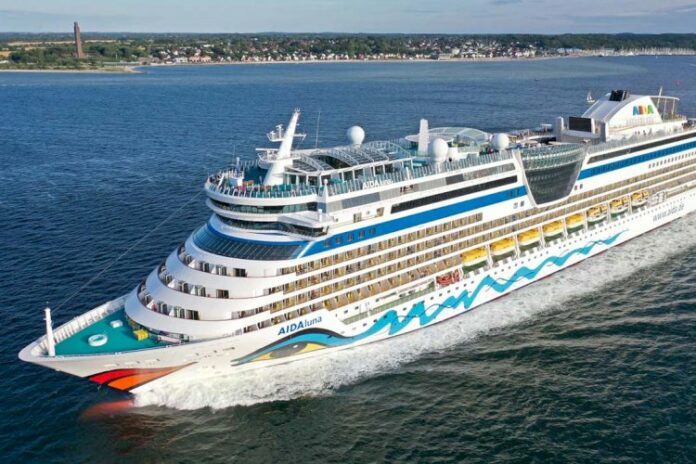
AIDA Cruises cancels trips until 30 June

0

International holiday travel has come to a standstill due to the Corona pandemic. Unfortunately, normalisation before the end of June 2020 can no longer be expected due to the current entry regulations in AIDA’s destinations. These exceptional and unforeseeable circumstances therefore force AIDA to extend the temporary interruption of the AIDA travel season again. The German government has issued a worldwide travel warning until at least mid-June.

All trips up to and including 30 June 2020 cannot take place as planned. All guests who have booked a trip with AIDA during this period will be informed. Bookings will be processed chronologically according to departure date.

AIDA very much wants their guests to enjoy their long-awaited AIDA holidays at a later date. To this end, AIDA will reimburse all guests whose cruises between March 8 and June 30, 2020, have been cancelled for the travel price already paid in the form of a travel credit. AIDA would like to thank guests for their confidence by offering them a bonus of 10% on top of the payment already made. The credit can be used for bookings until December 31, 2021, for the complete range of AIDA trips on offer. Guests are free to choose which services they would like to use their credit for – whether as a settlement with the travel price, for an on-board credit or for MyAIDA services such as excursions, culinary delights and wellness treatments.

In order to support travel agencies in these challenging times, AIDA will pay out a liquidity advance. This is 10% of the credit value and will be transferred to the sales partner as soon as AIDA has issued the travel credit for the joint customer.

Guests who do not wish to use their travel credit including the 10% bonus will be reimbursed by AIDA upon request in the amount of the payment already made.

AIDA has also adapted the offer for more flexibility: All new bookings up to 31.07.2020 can be rebooked once free of charge up to 60 days before the start of the journey within the originally booked tariff.
Digital twin solution to transform offshore wind management

0

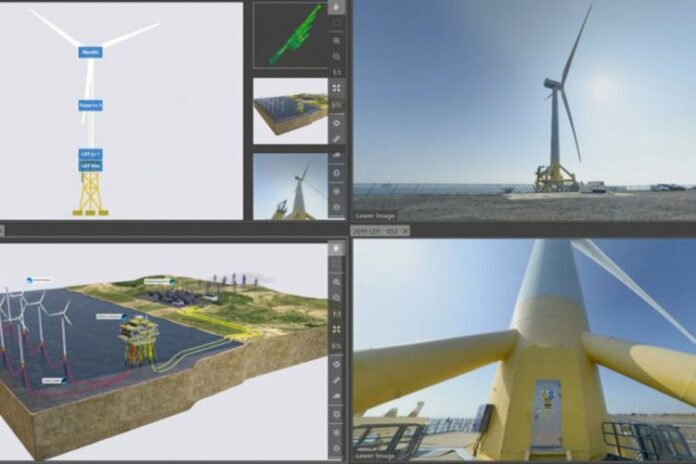
The digital asset and data management specialist, JF AIS, has completed a critical research project with the Offshore Renewable Energy (ORE) Catapult, the UK’s leading technology innovation centre for offshore renewable energy, supporting new technologies with ground-breaking potential.

Adopted by the supermajors in oil and gas, R2S produces virtual walk-throughs embedded with data, enabling personnel to remotely visit sites and easily access technical and operational data – saving time and cost, improving safety, and enhancing collaboration.

Both organisations identified the technology could offer game-changing benefits to the offshore renewables industry. As such, JF AIS undertook a pilot project, recreating a data-rich digital twin of ORE Catapult’s Levenmouth Demonstration Turbine.

Lorna Bennet, mechanical engineer with ORE Catapult, said:

“We believe  that R2S’ technology could revolutionise offshore wind O&M. By digitalising the Levenmouth Turbine, the digital twin has proven to be a unique solution enabling technicians and interdisciplinary teams to view the turbine’s inner workings and all pieces of equipment anywhere, at any time. This has enabled remote inspection of the turbine, boosting the planning of operations and reducing the need to go offshore. It has also changed the ways individuals are working – generating significant time and financial savings.”

Laura Fairley, JF AIS market development manager:

“Collaborating with ORE Catapult has increased our understanding of the sector and demonstrated how our technology brings value to offshore wind clients. With offshore turbines getting bigger and more powerful, operations and maintenance costs have escalated. R2S has proven to be an effective planning tool. We are confident our digital twin solution will eliminate non-essential journeys to offshore wind farm sites, but also facilitate the training and familiarisation of teams before deployment.

JF AIS is now looking to work with Vattenfall on the European Offshore Wind Demonstration Centre. We are looking forward to working closely with the developers to unlock the power of their data.”

From the hugely successful project, R2S is now expected to further support offshore wind by transforming wind farm management and turbine inspection methods.

SevenCs launches navigation software for pilots and mariners

0

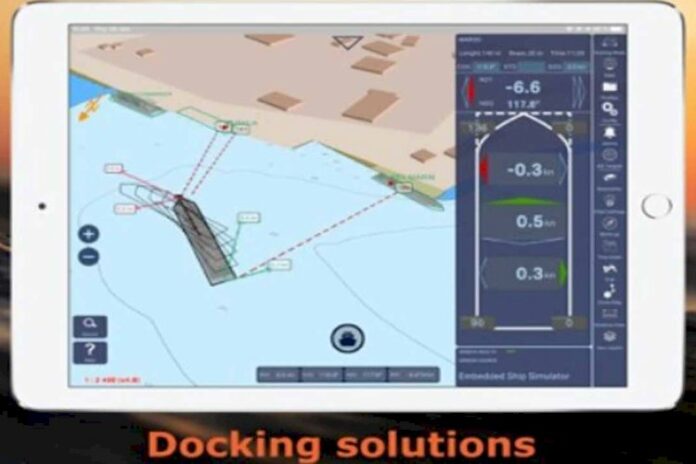
SevenCs, part of the ChartWorld Group, has announced the release of its ground-breaking ORCA™ Pilot X software. Originally designed as a primary navigation aid for Pilots, ORCA Pilot X is the industry’s leading tool for professional navigators. In an industry first, ORCA Pilot X is being offered as a free download on the Apple AppStore for iOS tablets.

SevenCs has a long tradition of developing bespoke navigation applications for pilots around the world. Following the feedback and input from many users, SevenCs began the development of ORCA Pilot X as the natural evolution from ORCA Pilot G2.

Ralf Lehnert, SevenCs’ Director of Navigation Solutions commented:

“We had a look at what was on the market, balanced that against what could be developed, and realized there was an opportunity to provide a system that included the best hardware and software, delivered a unique 3D Head-Up situational awareness mode, rapid installation of official ENCs and chart updates, bathymetric data, route planning, navigation, and docking modes. Simply put, it’s an awesome piece of software developed for those with the industry’s most demanding requirements: Pilots and leading professionals.”

Oliver Schwarz, Business Development Director at ChartWorld commented:

“ChartWorld’s ECDIS as a service model really shook up the commercial shipping navigation industry, and we make no secret about planning to do the same thing here. ORCA Pilot X is a significant step forward in the navigation tech available, not exclusively to Pilots, but to all professional seafarers.” 

Gasum closes the acquisition of Linde AG’s LNG and Biogas business

0

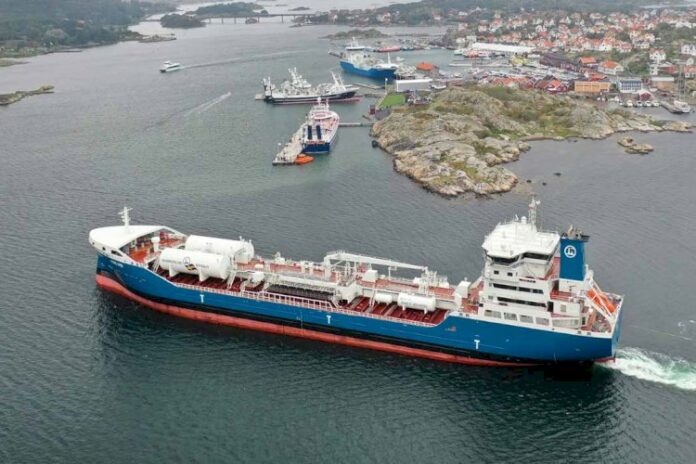
The Nordic energy company Gasum has closed the acquisition of Linde AG’s LNG and Biogas business in Sweden and Norway and Nauticor’s Marine Bunkering business in Germany on April 30, 2020.

The acquisition is an integral part of Gasum’s strategy execution to accelerate growth for cleaner transport solutions across the Nordics. Along with the acquisition, the company further strengthens its capacity to offer a broad range of gas solutions for various customer segments in multiple locations.

In the transaction, Gasum acquired Linde’s LNG and Biogas business and Nauticor’s Marine Bunkering business, and around total of 35 employees, a customer base and several assets were transferred to Gasum. The businesses generate annual revenues of more than EUR 100 million. The transaction strengthens Gasum’s strategy by developing the Nordic gas market and creating a platform for a broader offering to its customers in the maritime, industry and road transport segments. The acquisition also accelerates Gasum’s growth strategy for cleaner transport solutions in the Nordic heavy-duty vehicle market.

Gasum CEO Johanna Lamminen, says:

”We are very pleased about this transaction which is an important step for Gasum when building the Nordic gas ecosystem and responding to  increasing customer demand for low-emission energy solutions. The acquisition is part of our strategy execution and further strengthens the company’s capacity to offer gas solutions for various customer segments in multiple locations. The acquisition enables Gasum to supply and to ensure the availability of a competitive, low-emission form of energy to meet the demands of industrial, maritime and road transport customers in the Nordic countries.”

Jan Ellringmann, Business President, Linde Region Europe North, says:

“We are certain that Gasum will be a strong owner that will successfully develop the cleaner energy and maritime bunkering businesses further.”

In the transaction, several assets were transferred to Gasum:

  • LNG terminals in Sweden and in Norway
  • Bunkering vessel Seagas
  • Bunkering vessel Kairos
  • 48 gas filling stations in Sweden and Norway

F-drones completes its first commercial BVLOS drone delivery in Singapore

0

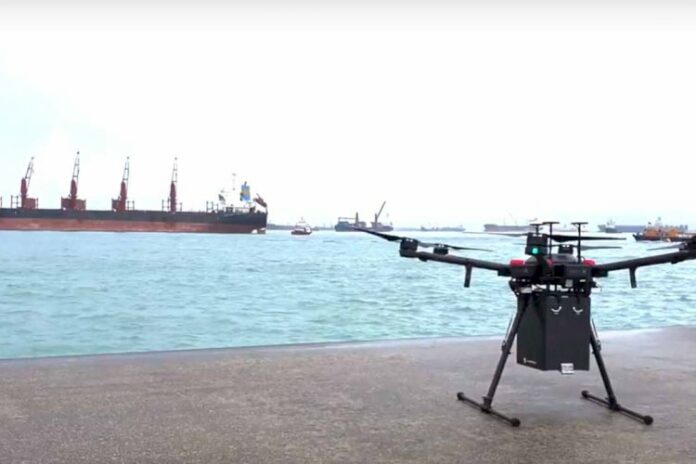
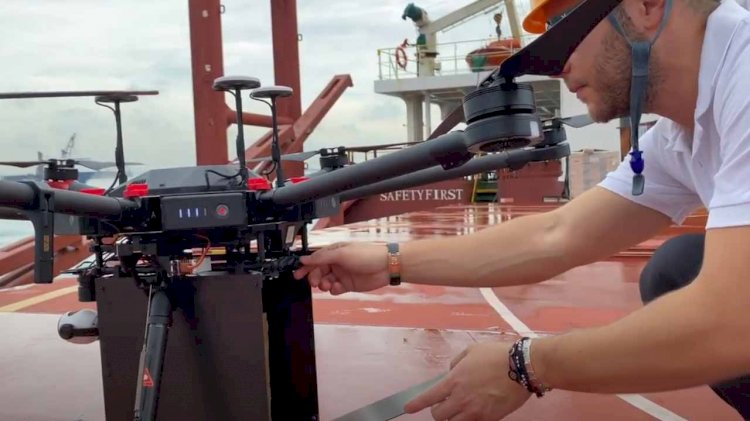
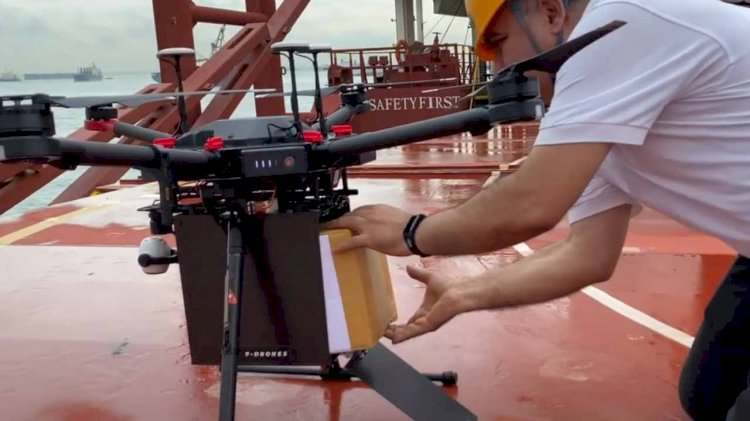
The drone delivered 2 kg of vitamins over 2.7 km in 7 minutes, to a ship managed by Eastern Pacific Shipping (EPS). EPS, which is one of the world’s largest privately-owned ship managers, is F-drones’ first paying customer.

In Singapore, like in most parts of the world, a BVLOS authorisation or permit is required when operating drones beyond the visual range of drone pilots. Without which, commercial drone delivery services would not be viable. 

F-drones is the first company in Singapore to receive an authorisation from the aviation authority, to conduct BVLOS drone deliveries to ships in Singapore. For now, this is limited to drone deliveries to ships anchored south of the marina area. This already is a significant milestone for both F-drones and Singapore, as globally, there are only a handful that are operating commercial BVLOS drone deliveries. And F-drones is already working towards expanding their area of operations.

Started little more than a year ago, F-drones is a home-grown startup developing large-scale delivery drones which are fully electric and autonomous. Their goal is to eventually use their proprietary drones, which would be able to send 100kg loads over 100km to ships and offshore platforms. This would help alleviate the pain of sending supplies in marine & offshore applications, which rely on small boats and helicopters. 

Nicolas Ang, CEO of F-drones, says:

“These traditional means of transport are expensive, slow, labour and carbon intensive. F-drones’ solutions can help save up to 80% of the costs, time and CO2 emissions. Besides being efficient, delivery drones can also reduce unnecessary human contact amid the COVID-19 pandemic.”

For now, F-drones is using an off-the-shelf drone which can only deliver 5kg loads over 5km. Its CTO, Yeshwanth Reddy, says this is “one of the best drones we can buy off the market”. He adds “as the marine & offshore industry requires much bigger loads to be sent over longer distances, F-drones is innovating on the aircraft at a systems-level.”

F-drones plans to complete the development of its 100kg-100km drone in the second half of 2021. Its latest prototype, which is its third, named as Hyperlaunch, would be able to deliver 5kg loads over 50km to ships. F-drones will be starting commercial operations using Hyperlaunch towards the end of 2020, after more tests and improvements. Hyperlaunch in itself is already an attractive product for the shipping industry.

Gil Ofer, the Head of Open Innovation at Eastern Pacific Shipping, says:

“EPS has been part of F-drones’ test deliveries since November 2019, when they joined the Eastern Pacific Accelerator powered by Techstars. We believe their solutions will play a significant role in reducing shipping’s overall carbon footprint. The successful BVLOS delivery is a milestone event, and we are extremely proud to be part of their journey.”

F-drones is also working with Hafnia, a world leading product tanker company. Shanker Pillai, Head of Innovation & Change at Hafnia, adds:

“We are excited to work with F-drones to develop drone technology with the aim to conduct remote delivery of small packages and emergency deliveries to vessels. Amidst the COVID-19 pandemic, drones can potentially help to reduce human contact during deliveries. We are glad to be part of this development and are looking forward to the first commercial drone deliveries to our vessels.”

Indeed, drones have proven to be of great value in dealing with COVID-19 around the world. F-drones’ BVLOS authorisation is certainly timely, allowing it to commence commercial deliveries at a time when human contact needs to be reduced.

Saudi tanker armada set to strain oil storage with 43 million-barrel load

0

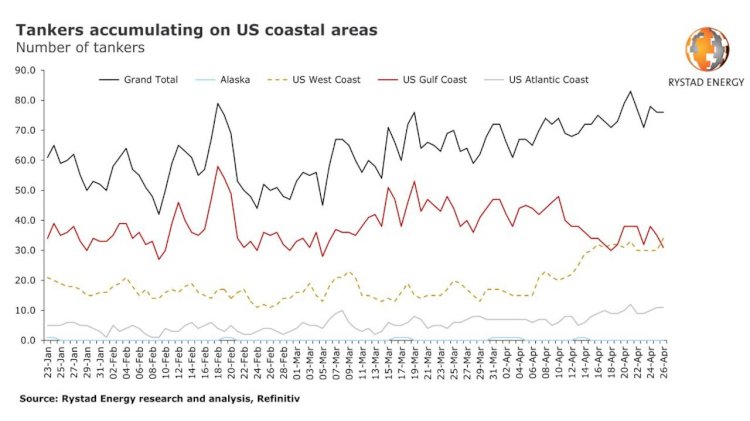
With the Covid-19 pandemic reducing global oil demand by devastating numbers, oil storages are filling quickly in the US, forcing producers to start shutting output in the country and creating a big tanker congestion on its coasts. A Rystad Energy analysis reveals that 28 tankers with Saudi oil, including 14 VLCCs and carrying a total of 43 million barrels, will arrive on the US Gulf and West coasts between 24 April and 24 May.

The Saudi fleet, with oil loaded at Ras Tanura, will join an existing congestion of 76 tankers that are currently waiting to unload in US ports. Most of these tankers are on the West Coast, where 34 tankers are waiting in line to offload about 25 million barrels of crude. In addition, about 31 tankers, carrying a similar load, are waiting for a slot to unload on the US Gulf Coast.

The tanker congestion has spiked in recent days because refiners are canceling or deferring their purchases, as they adjust utilization rates to match the steep fall in demand for road and jet fuels.

Paola Rodriguez-Masiu, Rystad Energy’s Senior Oil Markets analyst, says:

“The total volumes booked to arrive from Ras Tanura are four times higher than the previous four-week average of imports from Saudi Arabia. Given the current storage situation and the level of congestion on US coasts, we find it unlikely that all tankers will be able to unload upon arrival. The congestion at US ports has reached new highs.”

If all the Saudi tankers unload, the crude they carry will offset during May almost all of the production reductions from March levels, effectively maintaining the current high storage filling rates.

The limited storage is a growing concern in the oil market and among the key reasons why prices have taken a steep downturn in recent weeks, with US WTI crude even trading negative a few days ago.

Before the official stock build data for week 17 (ending on April 24), commercial crude stockpiles stood at 518.6 million barrels, nearly 9% above the five-year average for this time of year, and just 16.9 million barrels away from hitting the record level of 535.5 million barrels reached during the spring of 2017.

Rodriguez-Masiu concludes:

“While US refinery demand for crude has dropped over 3.0 million bpd during the last four-week period, the EIA reported that oil production has only decreased by 800,000 bpd. We expect it to drop by another 800,000 bpd in the following weeks. However, crude imports are forecasted to remain at around 5.8 million bpd during the next four weeks due to the Saudi cargos that are fast approaching US shores.“

US oil production is bracing for a steep decline in May and June as operators shut some of their producing wells due to storage constraints and oil price economics. The operator-communicated shut-ins alone (from six operators) are calculated to reach at least 300,000 barrels per day (bpd) in May and April, Rystad Energy has estimated.

Total shut-ins only account for a portion of the US total production decline since March 2020 as the shut-in figure only includes production losses from producing wells that have been turned offline. It does not include production potentially lost from canceling drilling and completion plans.

Navis updates its software for complying with IMSBC Code 2020

0

Navis, the leading provider of maritime software solutions for efficient and compliant cargo and vessel performance, has announced a major update in MACS3 Loading Computer Software for complying with the new amendments of the International Maritime Solid Bulk Cargoes (IMSBC) Code 2020. Currently, implementing the newly amended IMSBC Code 2020 is optional, but will become mandatory on January 1, 2021.

Carrying solid bulk cargoes may pose a serious risk to ships and crews, making it vital that bulk carriers meet the standards of the IMSBC Code. With MACS3 Loading Computer Software, Navis can ensure its customers meet these standards while reducing serious risks of carrying solid bulk cargoes such as fire and explosions due to chemical hazards and  inrush of water, and damage to ship due to poor loading procedures. The implementation of the IMSBC Code 2020 into MACS3 Loading Computer Software prompts bulk carriers to maximize safe and secure voyage, due to its stowage and segregation checks and validation. 

Apart from bulk carriers, general cargo vessels also fall under the scope of the IMSBC Code, however, general cargo vessels also need to follow the IMDG Code. In the case of general cargo vessels, MACS3 Loading Computer Software guarantees a full integrated system, which gives the ability to crews work with both the IMDG Amendment 39 and the IMSBC Code 2020, simultaneously. Emergencies on-board are also a highly sensitive topic and add to hazards for the ship, crew, and environment. Implementing the MACS3 Loading Computer Software on ships can ensure that they are responding to emergency cases properly, on time, and according to the IMSBC Code 2020.

Younus Aftab, Chief Product Officer at Navis, said:

“Complying with the defined rules and regulations under the scope of the IMSBC Code 2020 is an extremely significant milestone and accomplishment. It is our top priority to ensure that our solutions are seamless, safe and current, lining up with the needs of our customers and the maritime industry.”

The implementation of the IMSBC Code 2020 into MACS3 Loading Computer Software yields greater confidence in obtaining the compliance of the IMSBC code along with managing serious risks of carrying solid bulk cargoes and general cargoes on-board. 

Marlink unveils monitoring tool for increased transparency of its networks

0

Marlink has announced the release of a new stand-alone entry version of its ITLINK software, designed to improve transparency in monitoring and reporting of the status of IT networks onboard ships.

Starting in 2021, vessel operators will be required to demonstrate compliance with a revision to the International Safety Management (ISM) Code, which requires them to risk assess their shipboard IT systems – including those used to operate the vessel – and detail procedures employed to manage cyber security risks. Owners of specialised tanker tonnage are already required to demonstrate similar preparedness under the Tanker Management and Self Assessment version 3 (TMSA) and Ship Inspection Report Program (SIRE) requirements.

ITLINK is part of Marlink’s portfolio of added value services launched last year, an operational platform that enables Marlink customers to standardise, simplify and automate their vessel IT environment, enabling fast migration and effective operation of IT services across the fleet.

It has been specifically designed for IT department’s managers and administrators to provide remote fleet-wide monitoring status of shipboard servers, computers, operating system and applications to efficiently achieve transparency of software and hardware onboard.

The service reports Operating System, software and hardware details together with established KPIs to an onshore dashboard, removing the requirement for the crew to record and report this information. With shipowners and operators facing new requirements for demonstrating IT security preparations to both regulators and their customers, ITLINK can provide a simple, secure means of improving visibility without increasing seafarer workload.

Marlink President, Maritime Tore Morten Olsen, says:

“The leading edge of vessel operators have already adopted the mindset and the tools that reflect the new reality of IT network transparency and compliance which is increasingly seen as a licence to operate. Our ITLINK portfolio and especially this new network monitoring functionality provides an important tool not just for enabling compliance with cyber security requirements but also removing the burden of proof from the crew while improving transparency for shoreside teams.”

Waves Group introduces new remote survey capability

0

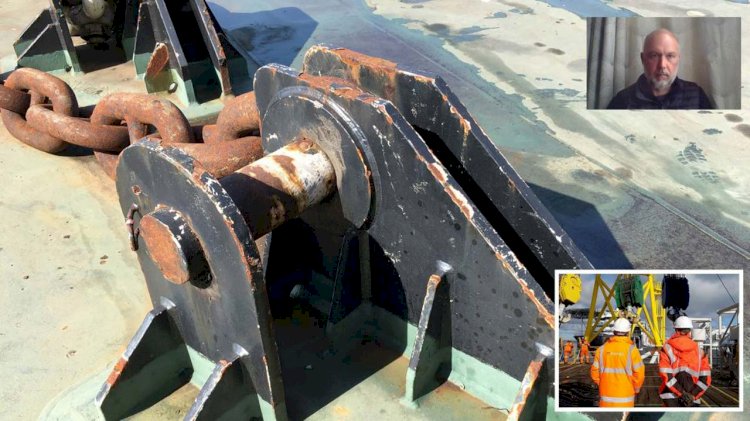
Waves Group has continued the expansion of its digital capabilities with the introduction of a new remote survey and inspection capability using mobile digital technology. The remote survey capability allows operations to continue, whilst using Waves Group’s problem solving and risk management expertise, even when site attendances are more difficult due to the global COVID-19 pandemic.

Using standard mobile devices, the remote survey is jointly conducted by the Waves Group team (based at home or its offices) and a member of the vessel’s crew or another person who can attend the site. The survey call is fully interactive and directed by our ‘remote surveyor’ in real-time, with all footage and still images saved in a secure, cloud-based server using a specifically developed application.

Each survey is fully planned and customised prior to the survey call and all relevant documentation is reviewed before the call to maximise efficiency and ensure a methodical approach to the survey, whilst also considering the health and safety requirements for the person on site.

The remote survey capability uses standard mobile devices, such as smartphones, and therefore does not require any special devices at site. All footage is streamed using standard Wi-Fi or telephone connections, or where connectivity is more limited, the survey scope is agreed and then uploaded when complete and when communications allow.

Photo: Waves Group

This new capability immediately offers significant benefits for our clients, as well as exciting potential applications for the future. The remote survey application will benefit clients due to the speed of response it gives, potential cost reductions due to reduced travelling and most importantly, the ability to effectively manage project risks for offshore operations and to inspect an incident, whilst still being able to rely on our expertise and experience in real-time.

Applications for the remote survey capability include:

  • Marine Warranty Surveys (MWS) – Suitability surveys for vessels and for witnessing critical marine operations for a project, to issue Certificates of Approval (CoA), as part of the project risk management strategy.
  • Marine casualty management and investigations – Orchestrating the management and investigation of a marine casualty using remote surveys (for inspections) and its digital evidence capabilities to provide a complete remote service.

KVH offers the service to yachts in the Mediterranean beginning June

0

KVH Industries, Inc., (Nasdaq: KVHI), has announced that beginning June 1, it will add the Mediterranean region, a premier superyacht destination, to its KVH Elite™ service for unlimited HD-quality streaming onboard yachts.

The dedicated service, which includes no overages or data limits, was initially launched last October in the Caribbean, where it was well-received by both private and charter yachts.

KVH will continue to offer KVH Elite in the Caribbean—including Florida, the Caribbean, and the islands of the eastern Caribbean—in addition to beginning service in the Mediterranean, including the Adriatic Sea and the Black Sea. The Mediterranean yachting season begins in June and has historically attracted superyachts not only from Europe but also from the Caribbean, although global travel restrictions may prompt many yachts currently in the Caribbean to remain there for the balance of the year.

Mark Woodhead, KVH executive vice president for mobile connectivity, says:

“Yachting is a source of enjoyment for yacht owners and charter guests, and they want to be able to stream movies and other entertainment content just like at home. The yachting market, especially during this unprecedented time, is seeing an incredible demand for VSAT connectivity. KVH Elite unlimited streaming service is one more example of how KVH’s premium VSAT connectivity can enhance the yachting experience.”

KVH Elite enables people onboard to use their favorite apps for streaming popular HD movie and TV content, music, and more, on an unlimited basis with no overages or data usage limits. The streaming service uses KVH’s award-winning VSAT antenna systems— the 1 meter diameter TracPhone® V11-HTS with download speeds as fast as 20 Mbps, and the 60 cm diameter TracPhone V7-HTS with download speeds as fast as 10 Mbps—and is designed for ease of use, with simple over-the-air activation that does not require any hardware changes to the antenna system or its belowdecks control unit. Yachts currently using the TracPhone V11-HTS or V7-HTS are KVH Elite-ready for activation.

KVH Elite is available as a weekly or monthly airtime plan, and seamless access to the service is managed by KVH Superyacht Group’s concierge service. Yachts enjoy their selected V11-HTS or V7-HTS high-speed and unlimited use data plans and the benefits of KVH’s global HTS service when not in the KVH Elite streaming regions.

KVH Elite relies on KVH’s mini-VSAT Broadbandsm HTS network, which utilizes Intelsat’s FlexMaritime service to deliver global multi-layered coverage, enabling vessels to see multiple HTS and wide beam satellites for maximum availability of broadband service.