-1 C
New York
Home Blog Page 87

RWE and Telehouse agree 10-year Power Purchase Agreement

0

RWE has signed a 10-year power purchase agreement (PPA) with Telehouse International Corporation of Europe, a leading global data centre service provider.

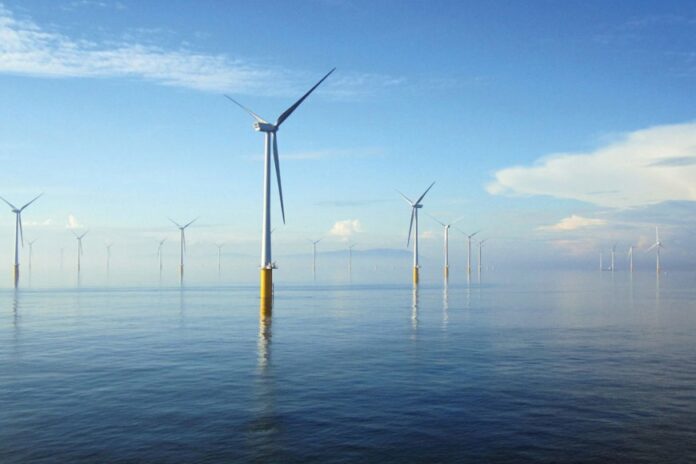
Under the agreement RWE will supply a substantial amount of the renewable energy used at Telehouse’s London Docklands campus, Europe’s most connected data centre hub, until the end of 2035. The electricity will be supplied by the London Array offshore wind farm located in the outer Thames Estuary. The PPA will commence secure the supply of power to Telehouse and its customers for many years to come.

Olaf Lubenow, Head of Commodity Solutions UK, North & South Europe, of RWE Supply & Trading, said: “This power purchase agreement ensures Telehouse and its customers have reliable access to clean, renewable electricity, providing certainty on the robustness of supply. We are pleased to support Telehouse also in its decarbonisation efforts as our goal is to advance climate protection in all sectors of the economy with clean energy solutions.”

Mushtaq Choudhary, Head of Procurement at Telehouse Europe, said: “Telehouse is committed to enhancing energy efficiency, promoting green procurement, and reducing our carbon footprint and that of our customers. Thanks to this PPA with RWE, the electricity purchased for our London Docklands campus will continue to be derived from renewable energy sources, demonstrating our efforts to drive efficiency at our campus and deliver real benefits for our customers. 

London Array is operated by RWE and owned by a consortium of four partners (RWE, Caisse de dépôt et placement du Québec, Greencoat UK Wind PLC, Masdar Energy UK Limited). It has 175 wind turbines and an installed capacity of 630 megawatts.
ESL Shipping and SSAB extend long-term cooperation in raw material transports

0

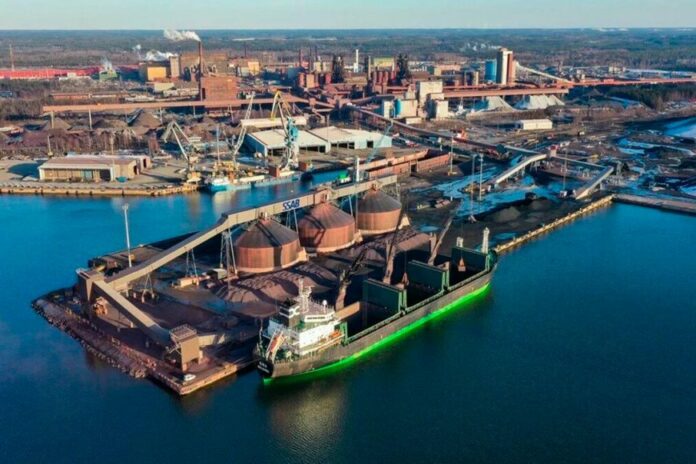
In addition, the new contract covers transport of SSAB’s fossil-free sponge iron produced with HYBRIT technology including the possibility of fossil-free shipments. The sea transport volume covered by the agreement is estimated to be 6–7 million tons annually.

“We are extremely pleased to continue our long-term sea transport partnership with SSAB. Our strategy is based on sustainability leadership and together we share the common vision for fossil-free sea transports”, says Mikki Koskinen, Managing Director of ESL Shipping.

“SSAB appreciates the long-term collaboration with ESL Shipping, and the recent extension secures the unique needs of coming years’ raw material supply for our Nordic operations, with high focus on continuous improvements of energy-efficiency and sustainability”, says Jani Verkasalo, Procurement Director of Raw materials and Energy, SSAB.

With this agreement, the companies continue the long-term work to improve efficiency and reduce emissions from SSAB’s raw material logistics. ESL Shipping is well-prepared to support SSAB in its transition to fossil-free steelmaking. The company announced in October 2024 that it would invest around 186 MEUR in four 17,000 dwt multipurpose vessels, which can operate fossil-free using green methanol.

“This extended cooperation with SSAB offers strong evidence that ESL Shipping strategy is productive. We have made major investment decisions during the past years, the latest in handysize vessels that can operate on hydrogen-based E-fuel and earlier in electric hybrid coaster sized vessels. I am glad to see that these investments are well received by our customers”, says Rolf Jansson, CEO of Aspo Plc and Chairman of the Board of ESL Shipping.

NH1 tidal power project will benefit from funding of €31.3 million

0

Normandie Hydroliennes has announced that its NH1 tidal project has been selected as a winner of the European Union’s 2023 Innovation Fund. With this distinction, they will benefit from €31.3 million in funding to accelerate the development and deployment of their innovative system. 

This marks an important milestone for marine tidal energy in France. This funding will support the deployment of one of the country’s first commercial-scale tidal energy pilot projects, reinforcing the role of tidal energy in the transition to clean energy.

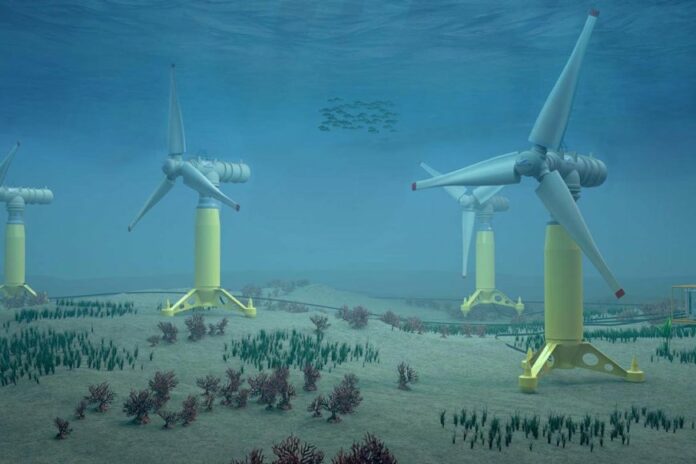
Katia Gautier, Director of Normandie Hydroliennes, commented: “Being selected by the Innovation Fund is a major recognition of our work and the impact that our technological system, the innovative Proteus AR3000 horizontal axis turbine, can have on decarbonisation and the energy mix.”

The European Commission’s €4.8 billion Innovation Fund 2023 supports innovative low-carbon technologies. The European Commission’s Innovation Fund is one of the world’s largest funding programmes for the demonstration of innovative low-carbon technologies. 

The projects supported were assessed on several criteria: 

  • GHG reduction potential; 
  • degree of innovation; 
  • technological, financial and operational readiness, replicability; 
  • and economic profitability. 

It aims to bring to market industrial solutions to decarbonise Europe and support its transition to climate neutrality.

A boost for the realization of tidal power in Normandy and France’s energy strategy. Thanks to the support of the European Commission, tidal energy is gaining the momentum it needs to develop and integrate into the energy mix of France and Europe. France has the second largest current in Europe. With a demonstrated development potential of around 5 to 6 GW, it represents a production of 15 to 18 TWh to supply electricity to 8 million people.

The NH1 project contributes to France’s 2030 renewable energy targets and continues the Government’s strategy of investment, innovation and reindustrialisation. This pilot farm will operate 4 AR3000 horizontal axis turbines, the most powerful in the world and the most efficient in commercial operation. Built in Cherbourg, they will produce 34 GWh per year of clean, sustainable and 100% predictable energy to the French national grid and will supply 15,000 people in 2028, paving the way for future tidal farms in the region.

Boosting the blue economy – With a final objective of 80% of the construction value of the NH1 project produced in France, it will mobilize around 400 full-time jobs (direct and indirect) and the remainder in Europe, in order to guarantee energy sovereignty.

Recognition of a project and its very promising innovative system. Accelerating commercialization – NH1 will reduce costs, develop tidal energy and contribute to France’s independence in renewable energy. Indeed, the NH1 project was selected in particular on the basis of its reduction of greenhouse gas emissions, its technological innovation, its maturity, its reproducibility and its economic viability. This success reflects not only their commitment to the energy transition, but also to innovation, performance, and thus validates the solidity of their NH1 project.

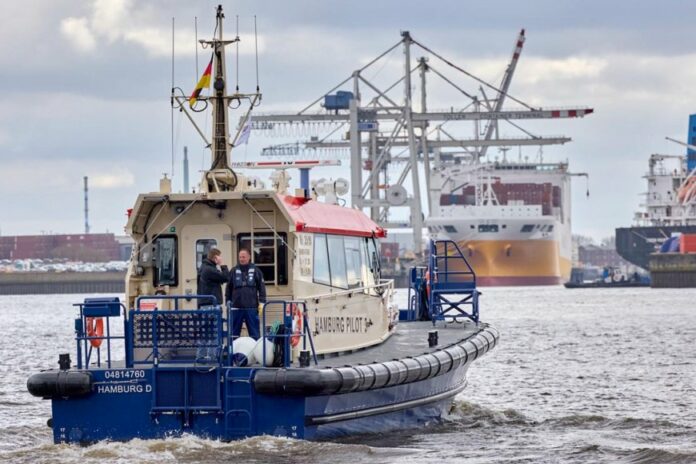
New pilot ship ‘Hamburg Pilot 3’ in the Port of Hamburg

0

Dr Melanie Leonhard, Senator for Economy, Transport and Innovation, inspected the new pilot vessel ‘Hamburg Pilot 3′ in the presence of Jens Meier, CEO of the Hamburg Port Authority, Karsten Schönewald, Managing Director of the Flotte Hamburg, and Henrik Lüders, Senior Pilot of the Hamburg Harbour Pilots’ Association

After a construction period of about one year at the Estonian shipyard Baltic Workboats AS, the vessel was transported by sea to the Port of Hamburg. Following completion of sea trials and crew training, the new vessel will enter service in April this year, replacing the existing pilot ship ‘Lotse 3’.

The vessel was purchased following a European-wide tender. The procurement process was carried out by the Newbuilding and Innovation Department of the Hamburg Fleet in close cooperation with the Hamburg Port Pilots’ Association.

When selecting the new vessel, we were looking not only for high performance but also for technical equipment. As with the existing newbuildings, we are also focusing on environmental protection with ‘Hamburg Pilot 3’: the new pilot vessel is therefore equipped with the latest exhaust gas treatment technologies and runs on synthetic GTL (gas-to-liquid) fuel,” says Karsten Schönewald, Managing Director of Flotte Hamburg. In addition, the ship has been designed to be able to run on climate-neutral e-fuels in the future. In this way, it will make an important contribution to the Hamburg fleet’s goal of becoming climate-neutral by 2040.

The Hamburg Harbour Pilots’ Association is pleased to have started the modernisation of the pilot launches in Hamburg with the pilot boat after the handover. It is impressive to see how quiet and low-vibration the launch is and how well the boat sits in the water. New standards have been set here for crews, pilots, the environment and safety in the port,’ says Henrik Lüders, 1st Elder of the Hamburg Port Pilots’ Association.

Technical specifications HAMBURG PILOT 3

  • Length overall: 17.93 m
  • Beam overall: 5.88 m
  • Maximum draught: 1.50 m
  • Speed: 20 knots

Special features

  • Exhaust gas after-treatment (catalytic converter and particle filter)
  • Wave-piercing bow for particularly smooth handling in rough seas
  • Automatic trim system for increased comfort and reduced fuel consumption

Jan De Nul signs agreement with National Grid for strategic HVDC interconnections

0

Jan De Nul in consortium with Hellenic Cables, the cables segment of Cenergy Holdings, have signed a framework agreement with National Grid. Thus securing the consortium’s position as one of the contractors appointed to participate in future HVDC cable projects across the UK and Europe

This agreement will entitle the consortium to participate in upcoming tenders for call-off projects for the design, manufacturing, supply, installation, testing, and commissioning of HVDC cable systems as part of National Grid’s large-scale offshore and onshore transmission infrastructure investment program. This framework agreement, which has an initial term of five years with an option for extension of up to three additional years, is a key component of National Grid’s strategy to secure long-term partnerships that support deliverability for critical projects in the UK. 

The UK Government’s commitment to achieving Net Zero by 2050 has placed significant emphasis on expanding the country’s electricity grid infrastructure to integrate renewable energy sources, such as offshore wind. National Grid’s cable framework aims to support this transition, ensuring a robust and reliable energy network. This framework will play a crucial role in enhancing grid resilience, facilitating renewable energy integration and ensuring energy security for the future. 

The consortium will participate in potential future tenders for turnkey projects. 

Wouter Vermeersch, Director Subsea Cables Offshore Energy at Jan De Nul, said:

“This agreement confirms our position as World Builders of the energy transition through providing vital power cable links.”

Hellenic Cables has implemented a strategic investment programme in its manufacturing facilities in Corinth and Thiva, Greece. This has expanded production capacity and enhanced technological capabilities to meet the evolving needs of the energy transition. These investments reinforce Hellenic’s commitment to delivering high-quality, innovative, and sustainable cable solutions for global energy infrastructure projects.

Jan De Nul’s ambition to facilitate the energy transition is evident in its strategy of continuous innovation and investment in offshore installation capabilities. This is exemplified by Jan De Nul’s investment in two XL next-generation cable laying vessels Fleeming Jenkin and William Thomson, both with an unrivalled carrying capacity of 28,000 tonnes. These vessels enable expeditious development of HVDC interconnector projects such as those included within the National Grid framework portfolio.

Wouter Vermeersch, Director Subsea Cables Offshore Energy at Jan De Nul, said: 

“We are proud to partner with National Grid through this framework for strategic HVDC interconnections. The agreement confirms our position as World Builders of the energy transition through providing vital power cable links.”

Kostas Savvakis, General Manager, Hellenic Cables, said: 

“This agreement strengthens our commitment to supporting the UK’s energy transition and offshore wind ambitions. We are proud to be part of this critical framework, providing world-class HVDC cable solutions.”

Seacoat SCT signs Global Sales Partnership with PAC Ocean Solutions

0

Texas-based maritime coatings company Seacoat has entered into a strategic partnership with PAC Ocean Solutions, a marine services provider headquartered in London, UK.

PAC Ocean Solutions will act as Seacoat’s global sales partner, enabling Seacoat to expand the reach of its advanced SEA-SPEED coating technology across the international maritime industry.

SEA-SPEED is a silane-siloxane-based coating that optimizes vessel performance without compromising long-term durability. Engineered for the underwater hulls of commercial, cruise, and military ships, it outperforms traditional antifouling paints in both longevity and efficiency.

With a ten-year lifespan that is double that of conventional coatings, SEA-SPEED creates a surface five to ten times smoother than competing products. This minimizes drag to deliver a fuel saving estimated between 4% and 12%, as well as accompanying reductions in fuel costs and lower greenhouse gas emissions. 

At a time when shipping companies face growing regulatory and commercial pressure to reduce their carbon emissions, including regional emissions regimes, Seacoat offers a sustainable coatings solution that will deliver significant savings for years to come.

Dr. John Bowlin, Seacoat CEO, commented: “We are excited to enter this agreement with PAC Ocean Solutions. PAC’s commitment to supporting customers with best-of-breed performance and service aligns exceptionally well with that of Seacoat’s. Together, our two companies are focused in helping the maritime industry achieve greater operational efficiencies and compliance towards the reduction of emissions.”

Melvin Varghese, CEO of PAC Ocean Solutions, said: “We are thrilled to embark on this partnership with Seacoat, a company that shares our vision of excellence and commitment to the maritime industry. Their dedication to delivering top-tier performance and service perfectly complements PAC Ocean Solutions’ mission to support our customers with innovative and sustainable solutions. This collaboration marks the start of a promising journey, and we look forward to driving growth and innovation while making a lasting impact on emissions reduction.”

Titan completes first bunkering to MOL under new term contract

0

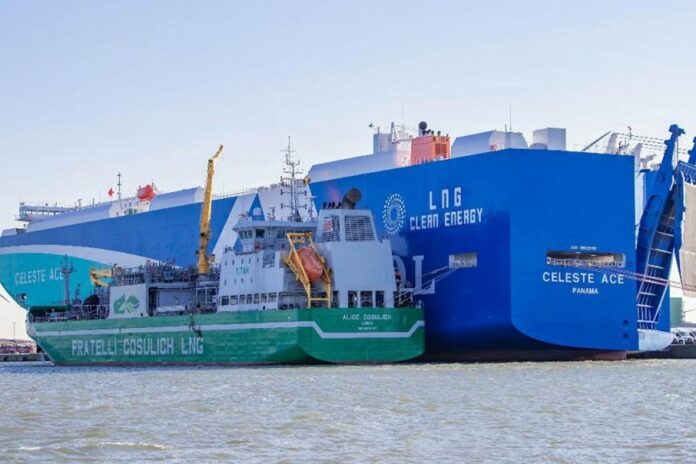
Titan Clean Fuels (Titan) and Mitsui O.S.K. Lines (MOL) have completed the first LNG and liquefied biomethane (bio-LNG) bunkering operation of a new multi-delivery contract for MOL’s vehicle carrier fleet.

On Sunday the 16th of March, Titan’s Alice Cosulich LNG bunkering vessel delivered 500 tons of bio-LNG and 400 tons of conventional LNG to the Celeste Ace vehicle carrier. The simultaneous operation (SIMOPS) bunkering took place in the Port of Zeebrugge’s International Car Operators (ICO) terminal.

Titan’s delivery of ISCC-EU-certified mass-balanced bio-LNG marks the first of a series of bio-LNG deliveries to the Japanese shipping company. The bio-LNG was produced using waste and residue, which reduces GHG emissions by up to 100% compared to marine diesel on a well-to-wake basis. LNG, bio-LNG, and renewable hydrogen-derived e-methane can be blended at any ratio and ‘dropped into’ existing LNG bunkering infrastructure with little to no modification.

Nicolas Ganas, Senior Trader and Business Development Manager at Titan stated: “We applaud MOL’s commitment to LNG and bio-LNG as marine fuels, reinforcing the shift towards cleaner shipping. This collaboration strengthens our partnership in the region, and we look forward to reliably supplying their vessels with lower-carbon fuel solutions.”

Adding to this, Caspar Gooren, Commercial Director of Renewable Fuels at Titan, commented: “This bunkering highlights the growing role of bio-LNG in decarbonizing international shipping today. With bio-LNG availability expanding, its deep decarbonization potential, and increasing commercial viability, the LNG pathway offers practical solutions for shipowners and operators. Moreover, with a global maritime leader like MOL putting its commercial weight behind bio-LNG, this is an exciting time for the clean fuels transition.”

Yoshikazu Urushitani, Marine Fuel GX Division General Manager at MOL said: “We are exploring the use of ammonia and hydrogen fuels as part of our strategy to adopt clean alternative fuels, while moving to expand the use of LNG-fueled vessels and more quickly achieve a low-carbon society. We will also be early adopters of bio-LNG and synthetic LNG. Partnering with Titan, we will start using bio-LNG to lead the shipping industry in the transition to clean alternative fuels. We remain committed to adopting clean fuels to reach net zero GHG emissions by 2050.”

The number of vessels in use and on order that can use LNG, bio-LNG, and in the future e-methane, showcases how significant a role the LNG pathway will play in shipping’s decarbonisation. MOL currently operates 5 LNG-fuelled vehicle carriers and will have 6 more delivered by the middle of 2025. In total, there are 62 vehicle carriers that can operate on LNG today and another 146 of these LNG-fuelled vessels are on order.1  Some 90% of vehicle carrier orders feature LNG dual-fuel propulsion.

V.Ships Leisure to manage new Orient Express sailing yachts

0

V.Ships Leisure, part of V.Group, announces its partnership with Orient Express Sailing Yachts for the management of two groundbreaking sailing yachts.

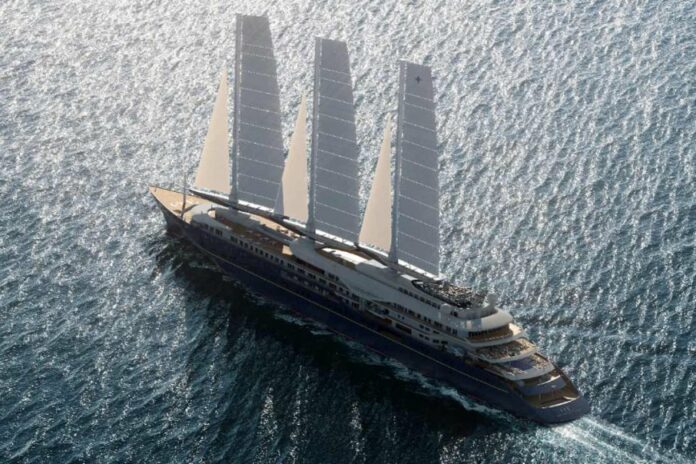
Managed from Monaco by V.Ships Leisure, the first vessel, Orient Express Corinthian, will be the world’s largest sailing yacht, featuring hybrid LNG propulsion and AI-driven noise reduction technology. It will enter service in June 2026, sailing across the Mediterranean, Adriatic, and Caribbean. Orient Express Olympian will follow in 2027.

Per Bjornsen, CEO of V.Ships Leisure, commented: “We are honoured to partner with Orient Express on this revolutionary maritime project, where exceptional design meets cutting-edge technology and sustainability.

“Our role is much more than a ship manager. By working in close partnership with our clients, building a strategic and collaborative relationship, we are providing real value and impact. At a time when the industry is getting more and more complex, we have the agility to support small and medium-sized companies in the hospitality space, whilst providing the scale of a global business. It’s a real win-win for all.”

Florian Richard, Fleet Director of Orient Express Sailing Yachts added: “V.Ships Leisure shares our commitment to excellence and our vision for a refined, sustainable travel experience.”

AtoB@C Shipping welcomes hybrid multi-purpose carrier to fleet

0

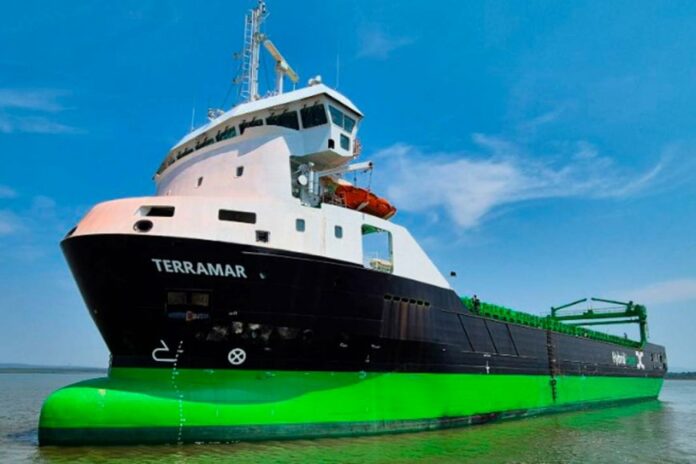
AtoB@C Shipping has taken delivery of Terramar in Goa, India on 14 March 2025. The delivery of Terramar marks the halfway point in the company’s newbuilding program, as Terramar is the sixth vessel in the series of twelve 5,400 dwt plug-in hybrid vessels.

Terramar, like its sister vessels, boasts advanced hybrid propulsion and shore power connectivity. With a deadweight tonnage of 5,400 and an ice class rating 1A, Terramar is engineered for efficient and sustainable year-round operations in the Baltic Sea and Northern Europe. The integration of cutting-edge battery technology enables emission-free and quiet port visits, significantly reducing CO2 emissions per cargo unit by nearly 50% compared to the current generation of vessels.

“”The delivery of Terramar is a significant achievement for AtoB@C Shipping as we have reached the halfway point in our newbuilding program. It reflects the hard work and commitment of our entire team. We are proud to lead the way in sustainable shipping”, says Frida Rowland, Commercial Director and Head of BU Coasters, ESL Shipping and AtoB@C Shipping.

The newbuilding program is progressing in schedule and one vessel is expected to be delivered every quarter until the autumn of 2026. Seventh vessel in the series, Biomar, was launched on March 2nd and the steel-cutting ceremony for the eleventh vessel, Megamar, was celebrated in February.

ClassNK issues AiP for large ammonia-powered ammonia carrier

0

The approval was given through ClassNK’s review of basic design drawings and risk assessment conducted by ClassNK based on the basic design. In order to respond quickly to the future demands, the design have been completed in more detail than generally required for the AiP.

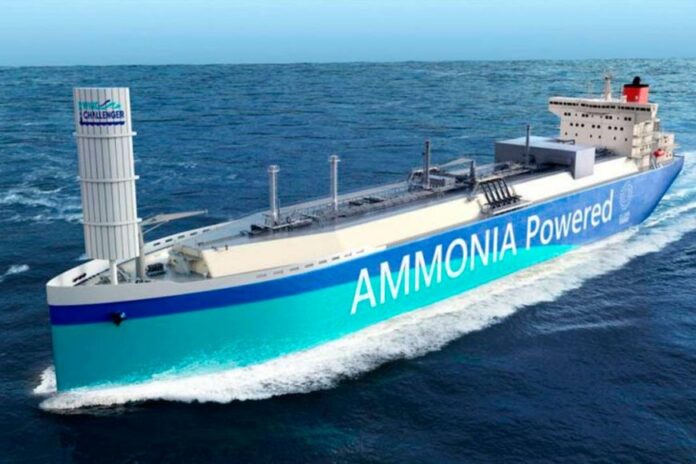
ClassNK has issued an approval in principle (AiP) for a large-size ammonia-powered ammonia carrier, jointly developed by Mitsui O.S.K. Lines, Ltd., Namura Shipbuilding Co., Ltd., and Mitsubishi Shipbuilding Co., Ltd. to transport large volumes of ammonia with low emissions. The certification demonstrates its feasibility from regulatory and safety perspectives.
 
Ammonia is expected to see wider use as a zero-carbon fuel and increased demand in power plants since it does not emit CO₂ when combusted. The carrier features larger cargo tanks than very large gas carriers (VLGCs) and very large ammonia carriers (VLACs), while also enabling low-emission transport with ammonia as fuel. In addition, it meets the restrictions on entry into major power plants in Japan, while maintaining specifications consistent with current VLGCs in terms of connections to power plants and ammonia supply terminals during loading and discharging.