-1 C
New York
Home Blog Page 88

Equinor starts production at the Halten East development in the Norwegian Sea

0

Equinor has started production at the Halten East development in the Norwegian Sea, two years following approval from Norwegian authorities.

“We are starting up Halten East at a time where piped gas from Norway is in high demand and important for energy security. In a challenging cost and inflation environment, the project has been delivered both on time and within our cost estimate,” says Geir Tungesvik, executive vice president for projects, drilling, and procurement in Equinor. The estimated pay-back time for the project is one year.

Halten East is a tie-in development located in the Kristin-Åsgard area in the Norwegian Sea. Vår Energi and Petoro are partners. The development consists of six gas discoveries and flexibility for three prospects in addition, utilizing existing infrastructure and processing capacity at Åsgard B.

The plan for development and operation (PDO) was approved by authorities in February of 2023. Now, gas from the first well Gamma is on stream two years later, on plan. The first phase consists of six wells from five discoveries. The second phase is planned in 2029. It will include a sidetrack and an additional three possible wells. The total investment of the project is around NOK 9 billion for both phases.

The reservoirs of Halten East contain gas and condensate. The recoverable reserves are estimated to be around 100 million barrels of oil equivalent from the discoveries. The gas will be sent to Kårstø from Åsgard B, from where it will be exported to Europe via pipeline.

“Halten East demonstrates the importance of area solutions and cooperation between licence owners and authorities to realise the full resource potential on the Norwegian continental shelf. Together, we can develop industrial solutions that will continue to deliver energy with low costs and low emissions. We have a large portfolio of projects that will connect discoveries to our producing hubs. Equinor expects to put over 30 such projects on stream at the NCS within 2035,” says Kjetil Hove, executive vice president for development and production on the Norwegian continental shelf.

Around 90% of Halten East investments have gone to suppliers in Norway. The development phase of Halten East is estimated to provide around 3000 person-years of employment per year from 2022 to 2029.

In November 2024, Equinor acquired Sval Energi’s 11,8% share in the Halten East Unit, increasing its ownership to 69,5%.

Partners: Equinor Energy AS (69.5%, operator), Vår Energi ASA (24.6%), Petoro AS (5.9%)
DNV awards AiP for LCO2 carrier design developed by Shell and Brevik Engineering

0

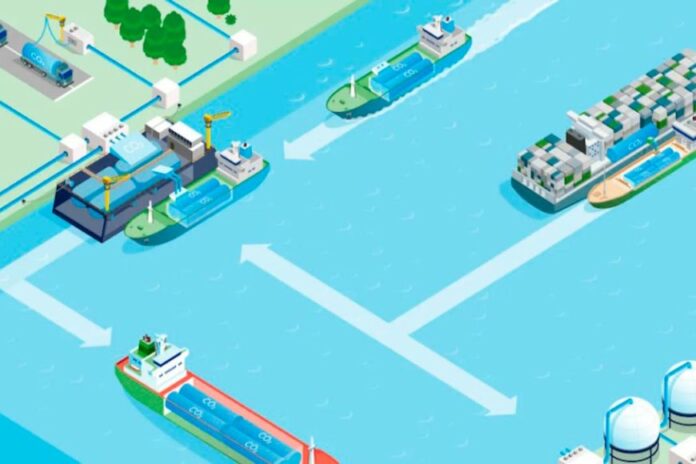
DNV has awarded a detailed Approval in Principle (AiP) to Shell International Trading and Shipping Company Limited and Brevik Engineering for their design of a 74,000 cubic metres (cbm) liquid carbon dioxide (LCO 2) carrier. 

Carbon capture and storage (CCS) is set to play a key role in decarbonization of industry in Asia Pacific. Emitting countries such as Japan, Korea, and Singapore are studying the possibility of shipping substantial quantities of their own CO2 to store locations within the wider region. This necessitates the development of larger capacity vessels than those currently planned for European CCS projects. Low-pressure cargo tank designs are a key enabler to commercialise these large LCO2 ships to enable transportation of CO2 at lower cost.

This AiP from DNV covers a comprehensive scope across a wide range of disciplines, including the assessment of specific technical challenges for LCO2 carriers. Over 50 documents have been reviewed, with special emphasis on cargo tank design, including tank integrity analysis and suitability of material.

With dimensions capped at 290 meters in length and a 12-meter draft to access key East Asian ports, the designed ship mirrors the size of a 174,000 cbm LNG carrier. It features 15 cylindrical tanks that store 74,000 cbm of liquid CO2 at around -50°C and 6–8 barg, a low-pressure industry standard. The vessel is also designed for future onboard capture of CO2 from the main engine exhaust.

This achievement marks a significant milestone in showcasing the viability of innovative low-pressure shipping technology for CO2.

Mathias Sørhaug, Business Development Director CO2 shipping, DNV Maritime said: “We are pleased to be collaborating closely with Shell and Brevik Engineering on bringing this innovative gas carrier design to fruition. This AiP underscores the importance of joint innovation and collaboration in advancing solutions that support the development of the wider CCS value chain. Scale is essential to drive down the cost of CCS and this work demonstrates the feasibility of large CO2 carriers with a low carbon footprint.”

Lee Teng-Huar, Shell General Manager, Maritime Operations, Asia Pacific and Middle East commented: “After months of technical research, we are proud to have received this detailed Approval in Principle confirming the feasibility of low pressure shipping with a design that is tender-ready. We are excited to see how innovations like this can potentially enhance safety, achieve scalability and flexibility to drive cost competitiveness in the implementation of large-scale cross-border CCS.”

Evert Grødal, Managing Director of Brevik Engineering AS, is proud to bring the company’s experience in marine design and CO₂ ship logistics to the development of this novel low-pressure CO₂ carrier, where the key philosophy has been to reduce technological risk and ensure compliance with current regulations: “Based on a comprehensive technology study, conducted in collaboration with Shell, this innovative design is expected to set new benchmarks in safe, efficient, and sustainable large-scale CO₂ shipping,” he concluded.

An Approval in Principle (AiP) is an independent evaluation of a concept based on a predefined framework of requirements. It confirms the feasibility of the design and ensures there are no significant technical obstacles hindering its implementation.

The construction of the next CSOV for BS Offshore starts at Ulstein Verft

0

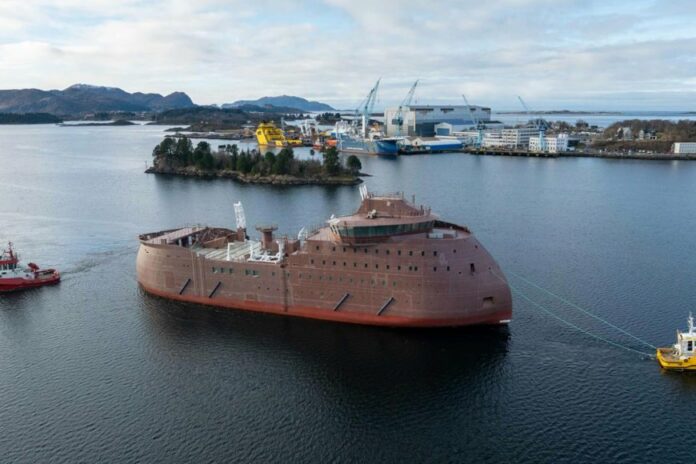
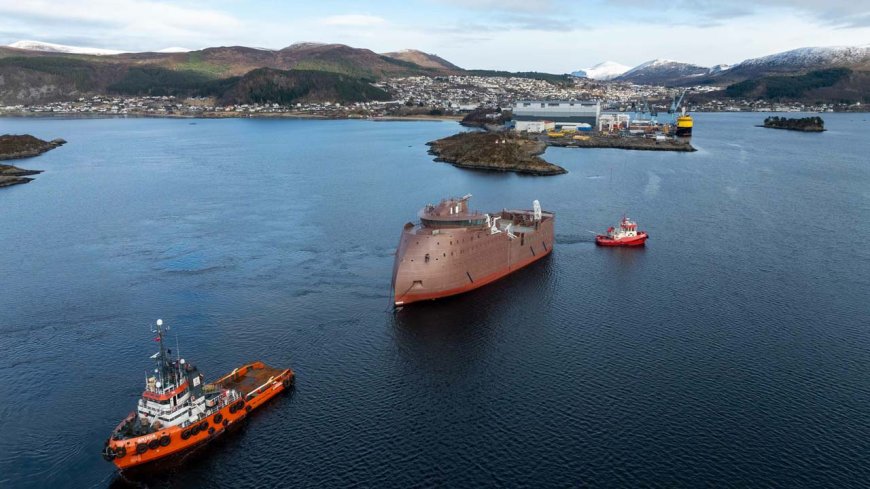
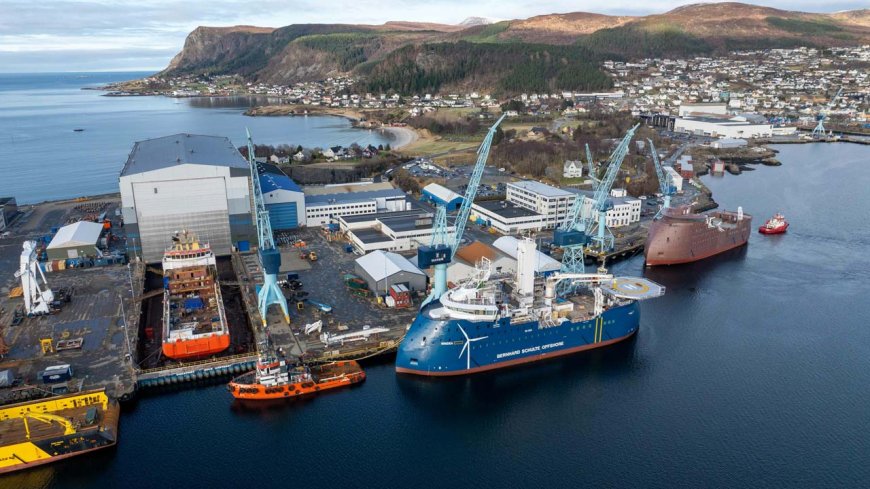
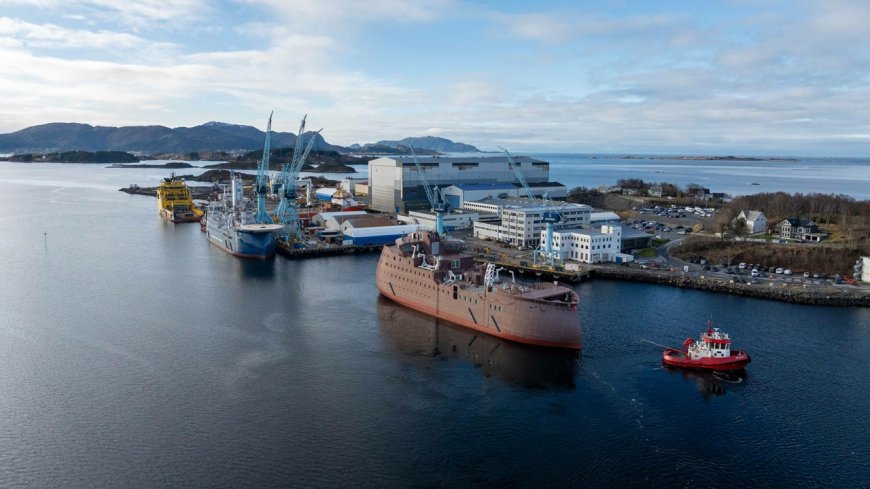
On 11 March 2025, the hull of yard number (Yno) 321 for BS Offshore arrived at Ulstein Verft. This marks the beginning of a new phase in the shipbuilding process.

While the hull has been under construction at the CRIST yard in Poland, closely monitored by a site team from Ulstein Verft, the designers and engineers at the various Ulstein companies in Norway and Poland have been working on finalising the detailed drawings for the ship. The hull arrival at Ulstein Verft marks a new phase, which includes securing, painting, outfitting, piping, equipment installations, electrical work, and system integration.

The vessel is a sister to Yno 320, launched at Ulstein Verft on 23 February.

“We are pleased to see the journey toward completing the second CSOV is progressing and look forward to the continued progress and collaboration in bringing this vessel, designed with efficiency, safety, and sustainability at its core, to life”, says Matthias Müller, Managing Director BS Offshore.

This is Ulstein’s fifth W2W vessel for BS Offshore. All have been designed by Ulstein Design & Solutions AS and constructed at Ulstein Verft. BS Offshore is a pioneering ship owner, and Ulstein is proud to continue the partnership, contributing to the advancement of sustainable maritime solutions.

TWIN X-STERN

Like its predecessor, the newbuild is part of the innovative TWIN X-STERN CSOV series, known for its exceptional operational performance and seakeeping abilities. During the outfitting phase, the vessel will be equipped with advanced technology, including a 3D-compensated crane and a gangway, ensuring safe and efficient personnel and cargo transfer to offshore wind turbine facilities.

Hybrid propulsion

The vessel will also have a diesel-electric propulsion system with substantial battery energy storage, significantly reducing the environmental footprint. She is prepared for methanol as a future fuel.

Accommodation

After her delivery in 2025, the vessel will be ready to support the offshore wind sector with modern, high-comfort accommodation for up to 132 crew and clients.

Kongsberg wins design contract for Olympic Group’s two subsea construction vessels

0

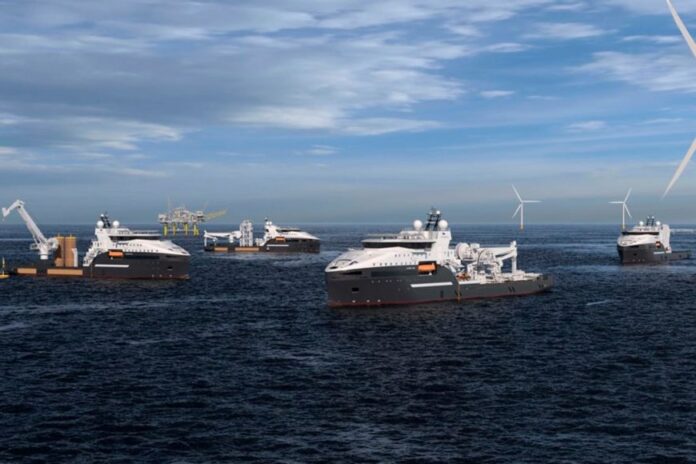
Kongsberg Maritime has signed a significant contract for the design of two multipurpose subsea vessels. The UT7623 SEV (Sustainable Energy Vessel) vessels will be methanol-ready and feature battery hybrid technology.

These vessels are the first references for Kongsberg Maritime’s latest subsea construction vessel designs and will feature a fully integrated package of technology including rim-drive propulsion, hybrid power and winch systems.

The UT7623 SEV vessels are designed in close collaboration with Olympic and are set to be the most energy-efficient in their category. The extensive package of integrated technology from Kongsberg Maritime includes rim-drive electric azimuth propulsion, retractable azimuth bow thrusters, switchboards and thruster drives. Hybrid battery power, an integrated bridge system, automation and control systems, dynamic positioning system, tank sounding, mooring winches and an overhead ROV launch and recovery system (LARS) is also included.

Kongsberg Maritime’s expertise as an integrator ensures that these vessels are built for multiple purposes and optimised for advanced offshore operations under rough conditions, providing Olympic with unparalleled performance and efficiency.

Olympic has taken a leading role in the transition to environmentally and climate-friendly vessels. The UT7623 SEV vessels are a testament to this commitment, marking a new milestone in the company’s journey towards more sustainable operations.

“At Olympic, we have always been at the forefront of innovation, setting new standards for sustainable offshore operations. The UT7623 SEV vessels build on our long-standing experience in renewable energy and oil and gas, offering unmatched flexibility and efficiency. With Kongsberg Maritime’s cutting-edge technology, we are once again delivering vessels that lead the industry forward,” says Stig Remøy, CEO & President, Olympic.

The vessels will be constructed at the CMHI shipyard in Shenzhen, China, with delivery scheduled for the summer of 2027. They will operate in both the renewable energy and oil and gas sectors, featuring advanced technologies that significantly exceed the requirements of the Paris Agreement. The UT7623 SEV vessels are methanol-ready dual fuel, setting new benchmarks in the industry for energy efficiency and environmental sustainability.

“We are excited to deliver the UT7623 SEV vessels to Olympic,” says Per Kristian Furø Sales Director at Kongsberg Maritime. “These vessels represent the latest offering from our extensive ship design portfolio. They are methanol-ready dual fuel, and have a fully electric propulsion system, setting new benchmarks in the

industry for energy efficiency and environmental sustainability. This new design exemplifies the qualities of next-generation ships through their innovative design, environmental sustainability, operational efficiency, and economic impact. They are vessels that not only meet but exceed the demands of modern offshore operations and will do so with extremely low fuel consumption.”

ADNOC L&S and SeaOwl sign agreement to design remotely operated marine supply vessels

0

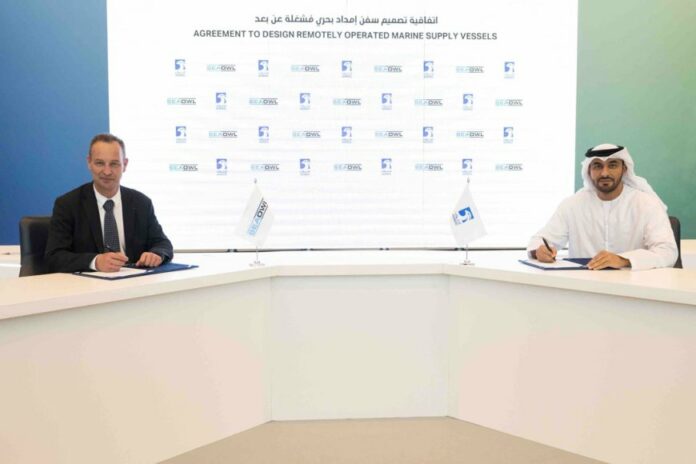
ADNOC Logistics & Services has signed an agreement with SeaOwl for the design of unmanned Remotely Operated Vessels (ROV) capable of transporting vehicles, equipment and supplies to and from offshore sites. 

The agreement was signed by Captain Abdulkareem Al Masabi, CEO of ADNOC L&S and Xavier Génin, CEO of SeaOwl at the UAE Climate Tech Forum organized by the Ministry of Industry and Advanced Technology.

The innovative design of the ROV will reduce carbon emissions up to 30% as the vessel will be lighter and smaller, as facilities for a crew are not required. In addition, the smart automation systems will optimize routing and propulsion, further decarbonizing ADNOC L&S’ offshore operations in support of the UAE’s Net Zero by 2050 Strategic Initiative and ADNOC’s 2030 Sustainability Agenda.

Captain Abdulkareem Al Masabi, CEO of ADNOC L&S said: “A strategic commitment to sustainability and innovation plays a crucial role in ADNOC L&S’ ability to serve its customers. The vessel is another example of this commitment as we leverage the latest technology to optimize our maritime operations, reduce our carbon footprint and improve safety while increasing efficiency.”

The design for the 55 meters long ROV will allow the vessels to be operated from an onshore control room through a satellite link using the latest automation and self-navigation technology. The design will utilize state of the art artificial intelligence systems to control propulsion, dynamic positioning, remote communication and cyber security.

SeaOwl, a French company specializing in the automation and digitalization of maritime services, will design the vessel, oversee its construction, and facilitate navigation permits. Seaowl will partner with Bureau Veritas (BV), a world leader in testing, inspection, and certification, to facilitate obtaining the necessary navigation permits from the UAE maritime transportation affairs.

Xavier Génin, CEO of SeaOwl said: “After the success of our Proof of Concept supported by the French Government, we are delighted to join forces with ADNOC L&S to bring a new era of sustainable logistics operations through digital automatization. This project will create strong ties with the UAE industrial landscape, as we plan to engage many other UAE players in this exciting journey.”

This design will improve safety and reduce operational costs as the vessels will be able to operate in harsher conditions with no exposure to seafarers.

Upon construction, the ROVs will join ADNOC L&S’ large and diverse fleet of modern and technologically advanced vessels. Combined with its 1.5 million square meter logistics base in Abu Dhabi and its integrated logistics capabilities, ADNOC L&S is one of the region’s largest shipping and integrated logistics companies.

Wärtsilä engines selected as South American vessel operator targets 25% emissions reduction

0

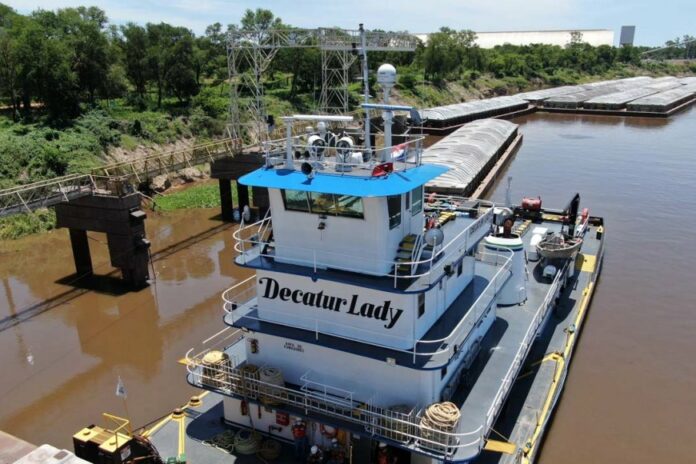
The vessels are owned by ADM Naviera Chaco (ADM). The vessel modifications and new engine installations will be carried out in Asuncion-Paraguay. The orders were booked by Wärtsilä in Q2 and Q4 2024.

The new engines will enable a reduction of the environmental impact and increase the efficiency of the tug pushers. ADM’s stated target is to reduce emissions by 25 percent by 2035, and the advanced Wärtsilä engine technology is an important opportunity to advance that effort in South America.

“The Wärtsilä engines selected for this project have the fuel flexibility that we seek, especially as we look to the potential of alternative future fuels. At the same time, the project will help us to improve operational reliability and lower our maintenance costs,” says Raul Valdez, Logistic Director – ADM NAVIERA CHACO S.R.L.

The two vessels covered by this contract are the Decatur Lady and the Tendota. Each will be refitted with three Wärtsilä 20 engines. Delivery of the engines to the shipyard took place earlier this year. The Wärtsilä 20 is a well-proven compact, lightweight marine engine, offering fuel flexibility and reliable performance in genset and main engine applications.

“We are delighted that Wärtsilä engines have been selected for this important project, which highlights the marine industry’s shift to greater sustainability and increased efficiency. ADM’s vision to be the provider of choice to meet the demand for low-carbon intensity feedstocks is very much in line with Wärtsilä’s own commitment to supporting the industry’s decarbonisation efforts,” comments Hanno Schoonman, Director of Sales for AMER region – Wärtsilä Marine.

ADM is a global leader in innovative solutions from nature, with a transportation and logistics network that includes 2,500 barges and more than 160 boats.

WinGD delivers exceptional results in full-load X-DF-A ammonia engine test

0

Swiss marine power company WinGD has confirmed key parameters for its X-DF-A ammonia-fuelled engine design after full-load testing at its Engine Research and Innovation Centre in Winterthur, Switzerland. The performance and emission measurements deliver timely assurance as the first users prepare their vessels and auxiliary systems for ammonia fuel.

The tests confirm engine performance data that WinGD has published in its General Technical Data (GTD) software, available online, and guaranteed to customers. Operation on ammonia achieved the same thermal efficiency as for diesel fuel, with pilot oil consumption at the targeted 5% of overall fuel consumption at full load. 

Emissions data was also encouraging, with ammonia emissions below 10ppm and N2O below 3ppm. NOx emissions for ammonia operation were well below those generated during diesel use. Crucially, the low emissions were achieved without the use of exhaust gas after-treatment, allowing WinGD to confirm that no ammonia slip catalyst (ASC) will be needed to operate the engine with ammonia fuel.

WinGD Vice President Research & Development Sebastian Hensel said: “Our well-structured development approach has paid off. After intensive efforts to understand the principles of ammonia injection and combustion, we are the first two-stroke engine designer to demonstrate 100% ammonia operation with 5% pilot fuel consumption and such low emissions.”

WinGD’s ammonia combustion investigations began in 2021 and have since progressed through several carefully planned stages. These include the use of proprietary technology such as the unique, full-scale Spray Combustion Chamber that enables combustion parameters to be observed under realistic two-stroke engine conditions. Performance predictions based on this and later rig testing have now been confirmed at full-load during engine testing.

The first engines will be delivered from mid-2025 for ammonia carriers owned by Exmar LPG, and bulk carriers operated by CMB.Tech, deploying 52- and 72-bore engines respectively, to be built in Korea and China. These ammonia engines will be the first low-speed ammonia engines to be delivered for commercial ships, marking the beginning of a new era for the shipping industry. 

WinGD has already secured nearly 30 orders for X‑DF‑A engines in the bulk carrier, containership, tanker and LPG/ammonia carrier segments.

2.5 GW Mareld floating offshore wind farm in Sweden granted Natura 2000 permit

0

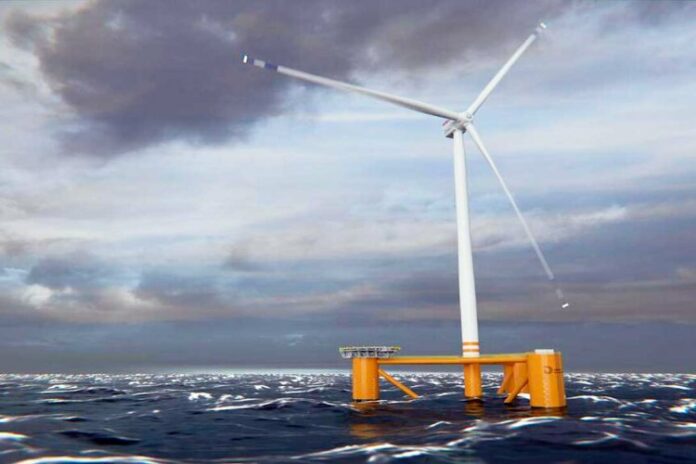
Freja Offshore, a joint venture owned by Hexicon and Mainstream Renewable Power, has received the Natura 2000 permit for the Mareld offshore wind farm, located approximately 40 kilometres west of Lysekil, within Sweden’s exclusive economic zone.

The County Administrative Board of Västra Götaland has granted a Natura 2000 permit for Freja Offshore’s Mareld offshore wind farm, planned off the coast of Bohuslän. This decision marks a significant milestone for the project’s continued development. Now, only the government’s approval remains.

Mareld is expected to produce up to 12 TWh annually, enough to power around two million households. With electricity demand in West Sweden projected to double by 2030 as the region’s industries undergo energy transitions, Mareld will play a crucial role in meeting the growing need for renewable energy.

“The Natura 2000 permit is a welcome decision and reaffirms our commitment to developing a sustainable wind farm that respects high natural values. We are now carefully reviewing the additional conditions outlined in the permit,” said Marcus Thor, Chairman of Freja Offshore.

Natura 2000 is a network of protected areas across the EU established to achieve the convention’s goals for preserving biodiversity. Bratten, which borders the area where Mareld has been granted permission, hosts a unique ecosystem that plays a vital role in supporting marine species and habitats. The permit demonstrates that the project can be carried out with respect for the area’s high natural values and that offshore wind power can coexist with protected environments.

“Mareld, which would be one of Sweden’s largest offshore wind farms, is a key piece of the puzzle in addressing West Sweden’s growing electricity demand. We now look forward to receiving the government’s approval for the remaining permits so we can deliver electricity in time to meet the region’s needs,” added Marcus Thor.

The Natura 2000 permit is one of three permits required to build the wind farm. The next step is to secure government approval for the remaining two permits, according to the Act on the Swedish Economic Zone (SEZ) and the Continental Shelf Act (KSL), which have already been recommended by the County Administrative Board and the Geological Survey of Sweden (SGU).

New map of landscape beneath Antarctica unveiled

0

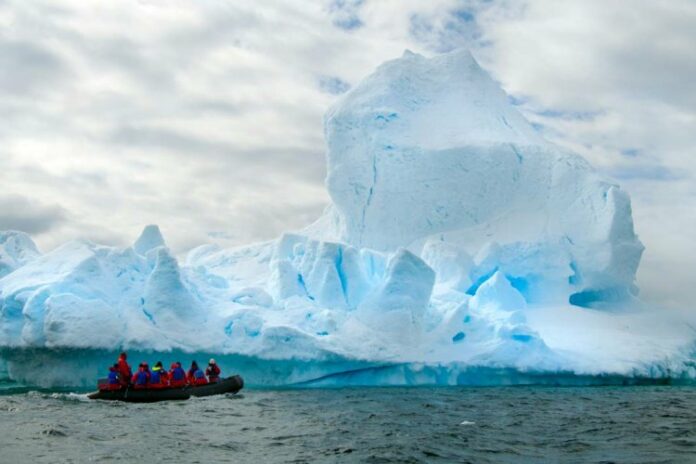
Known as Bedmap3, it incorporates more than six decades of survey data acquired by planes, satellites, ships and even dog-drawn sleds. The results are published this week (12 March) in the journal Scientific Data.

The map gives us a clear view of the white continent as if its 27 million cubic km of ice have been removed, revealing the hidden locations of the tallest mountains and the deepest canyons.

One notable revision to the map is the place understood to have the thickest overlying ice. Earlier surveys put this in the Astrolabe Basin, in Adélie Land. However, data reinterpretation reveals it is in an unnamed canyon at 76.052°S, 118.378°E in Wilkes Land. The ice here is 4,757 m thick, or more than 15 times the height of the Shard, the UK’s tallest skyscraper.

Bedmap3 is now set to become an essential tool in the quest to understand how Antarctica might respond to a warming climate, because it enables scientists to study interactions between the ice sheet and the bed.

Dr Hamish Pritchard, a glaciologist at BAS and lead author on the study detailing the new map, says:

“This is the fundamental information that underpins the computer models we use to investigate how the ice will flow across the continent as temperatures rise. Imagine pouring syrup over a rock cake – all the lumps, all the bumps, will determine where the syrup goes and how fast. And so it is with Antarctica: some ridges will hold up the flowing ice; the hollows and smooth bits are where that ice could accelerate.”

Bedmap3, as the name suggests, is the third attempt to draw a picture of Antarctica’s rock bed that began in 2001, but this new effort represents a dramatic refinement. It includes more than double the number of previous data points (82 million), rendered on a 500 m grid spacing.

Big knowledge gaps have been filled by recent surveys in East Antarctica, including around the South Pole, along the Antarctic Peninsula and West Antarctic coastlines, and in the Transantarctic Mountains.

The outline of deep valleys is better represented. So too are those places where rocky mountains stick up through the ice. The latest satellite data have also more accurately recorded the height and shape of the ice sheet and the thickness of the floating ice shelves that push out over the ocean at the continent’s margin.

The map also records a comprehensive new, continent wide view of grounding lines – the places where ice at the edge of the continent meets the ocean and and  begins to float.

The landscape of the rock bed under Antarctica’s ice is sensed by a variety of techniques, including radar, seismic reflection (sound waves) and gravity measurements.

Subtracting this topography from the shape and elevation of the ice above provides some fascinating statistics on the polar south.

  • Total volume of Antarctic ice, including ice shelves: 27.17 million cu km
  • Total area of Antarctic ice, including ice shelves: 13.63 million sq km
  • Mean thickness of Antarctic ice, including ice shelves: 1,948 m. (Excluding ice shelves: 2,148 m)
  • Potential global sea-level rise if all ice melted: 58 m

Peter Fretwell, mapping specialist and co-author at BAS, says:

“In general, it’s become clear the Antarctic Ice Sheet is thicker than we originally realised and has a larger volume of ice that is grounded on a rock bed sitting below sea-level. This puts the ice at greater risk of melting due to the incursion of warm ocean water that’s occurring at the fringes of the continent. What Bedmap3 is showing us is that we have got a slightly more vulnerable Antarctica than we previously thought.”

Liza Unity becomes world’s first FPSO to receive ABS SUSTAIN-2 notation

0

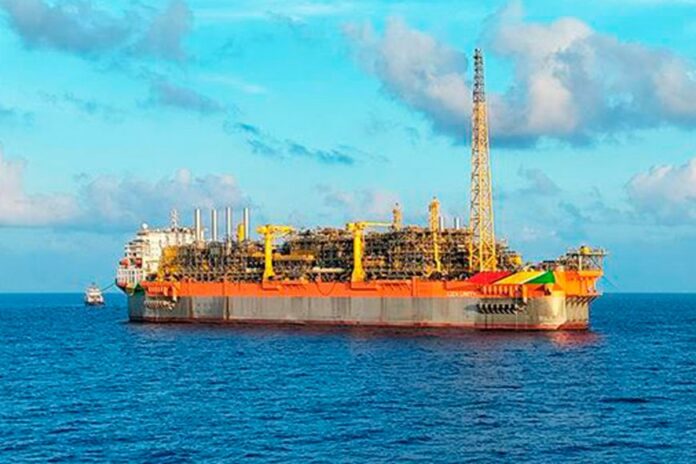
The ABS-classed Liza Unity has become the first FPSO in the world to receive the SUSTAIN-2 notation from ABS.

The notation is the next level in the vessel sustainability program developed by ABS to help fleets meet the environmental and human elements requirements contained in the strategic Sustainable Development Goals (SDGs) from the United Nations.

Liza Unity was the first FPSO to receive SUSTAIN-1 in 2021, recognizing sustainability-related aspects like pollution control and waste management. SUSTAIN-2 recognizes additional attributes such as the usage of low-carbon fuels and human-centered design.

“ABS continues to work closely with our clients to develop innovative solutions for new market challenges. With the award of SUSTAIN-2, we are proud to continue to support SBM Offshore and their comprehensive strategy to address sustainability considerations,” said Miguel Hernandez, ABS Senior Vice President, Global Offshore.

Alex Glenn, COO at SBM Offshore stated: “We are very proud that Liza Unity has become the first FPSO to be awarded the advanced SUSTAIN-2 notation by the American Bureau of Shipping (ABS). This achievement highlights SBM Offshore’s commitment to protecting the environment by adhering to stringent standards for emissions reduction, pollution management and life cycle sustainability.”

The Liza Unity FPSO is owned by ExxonMobil Guyana Limited and operated by SBM Offshore. It was the second FPSO built for ExxonMobil’s Stabroek Block development in Guyana. It was also the first FPSO delivered under SBM Offshore’s Fast4Ward® program and has an installed production capacity to produce approximately 220,000 barrels of oil per day.