-3.8 C
New York
Home Blog Page 863

Prysmian Group adopts Mermaid® software

0

Cable installation expert Prysmian has become the latest offshore operator to adopt James Fisher Marine Services (JFMS) Mermaid® to assess weather risk and accurately plan its various worldwide installation projects, supporting enhanced decision-making in the early planning stages that will lead to significant long-term cost savings. 

The software is one of the most sophisticated marine operation planning tools available, already used by a range of offshore developers and operators in support of offshore projects. 

Andrew Ross, Prysmian Installation Engineer, said: 

“Studying potential weather downtime for numerous scenarios at tender stage is becoming increasingly time consuming.  Being able to optimise installation solutions including numerous activities simultaneously provides huge time savings in our tendering resource.  Mermaid assists with investigating multiple solutions and scenarios, allowing an improved assessment of the potential future risk to Prysmian, the client and the project.” 

Mermaid® increases understanding of the impact of weather and tidal forces by accurately simulating marine operations against historical data. As weather and sea conditions are often harsh, identifying opportunities to carry out offshore work and potential bottlenecks can be difficult –so these accurate assessments enable better planning, which in turn delivers large savings. 

Adam Leonard-Williams, marine operations consultant at JFMS, said:  

“We’re absolutely delighted to add Prysmian to our ever-growing Mermaid user group. It’s been an interesting journey helping them discover how Mermaid can be best used for operations such as large cable installation jobs and long transits.  I am looking forward to supporting Andrew and his colleagues get the very best out of the software and it shows how Mermaid can be used for a really wide range of offshore operations; We can now add cable installation engineers to wind farm developers, geotechnical and survey, tidal and wave energy developers.”  

LOC China contract win for Jieyang II offshore windfarm

0

LOC announces it has won a contract to provide Marine Warranty Services (MWS) to support transport and installation operations for the development of the Jieyang II windfarm. The contract is with China Pacific Insurance Co (CPIC), which is headquartered in Shanghai and listed on the Shanghai Stock Exchange.

Under the term of the agreement, LOC China will provide document review and verification of all critical marine operations and procedures, including on-site attendance to approve procedures. The scope of work will also include vessel suitability surveys to support the project for the duration of critical operations. The work is anticipated to start in August 2020.

The Jieyang II windfarm will consists of 64 wind turbines, with an installed capacity of 350MW, and a 220kV offshore booster station. The turbines will be connected to the booster station through 16 circuits of 35kV submarine cable.

The windfarm is owned by State Power Investment Group, one of the major electricity generation companies in mainland China, and Guangdong Electric Power Co. Ltd, a company involved in the investment, construction, operation and management of electric power projects, as well as the production and distribution of electric power, mainly in the Guangdong province of China.

The project will be managed by the Company’s office in China, which is celebrating its 15th anniversary, with support from other group offices around the world. It follows already 9 offshore wind farm construction projects, for which LOC China has provided marine warranty survey services.

Shi Wenchao, MD of LOC China, said:

“The Jieyang II windfarm is a major project win and our first post the coronavirus pandemic in China. We are delighted to have won this  contract and to be involved. LOC has a strong position in renewables, based on extensive experience and knowhow, which, combined with our understanding and presence in the Chinese market, put us in a good position to win the work and deliver on the project. We are looking forward to getting started and contributing towards the delivery of the Jieyang II windfarm”.

Four integrated bridge systems for Seabulk Towing Inc.

0

Seabulk Towing Holdings Inc. provides ship services in seven ports in the Gulf of Mexico ports and Florida coast ports.

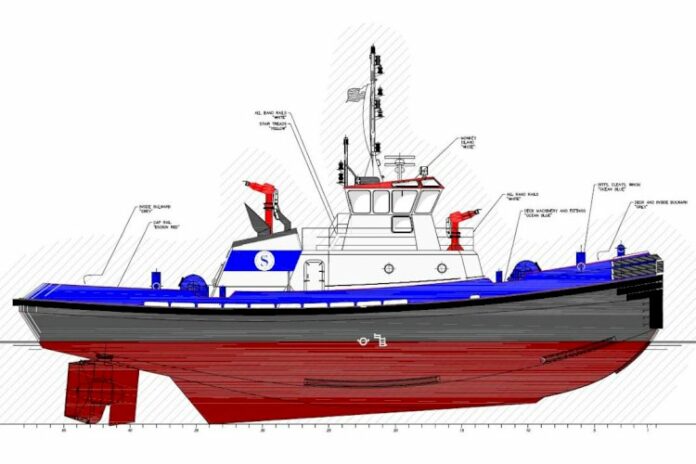
The new vessels, two upgraded ART 90-98US tugs, and two new Rapport 3000 are being built at Master Boat Builders. One of the tugboats is expected to be deliverd in December 2020. The other three tugboats will be delivered in January 2021, June 2021 and July 2021.

Two of these newbuilds will be added to the company’s existing Rotortug fleet. The other two will represent Seabulk’s initial investment in hybrid power towing assets and will operate alongside the company’s existing fleet in the Gulf of Mexico and Florida.

New World Electronics, a dealer of JRC / Alphatron Marine since 2001, will be providing and installing the ordered equipment on four 80 metric ton bollard pull harbor tugs. JRC / Alphatron Marine will provide the integrated bridge systems for all four vessels. These integrated bridge systems combine navigation and communication equipment as well as engine, lighting, and winch controls in one easy-to-access console in the pilothouse. The equipment consists of radars, autopilot controls, GPS, depth sounder, navigation PC, and internal communications.

This tugboat concept is developed together with some of the biggest tugboat operators in the world. The bridge combines two ergonomic and dynamically designed consoles with a central captain’s chair mounted on rails. Emphasizing the attention to detail in all areas, careful consideration has gone into enhancing the performance, satisfaction, and situational awareness of the Watch Officer. The AlphaTugboat bridge concept offers full control from a sitting position and exceptional all-round visibility. 

Vestdavit secures boat handling performance for HMS Protector

0

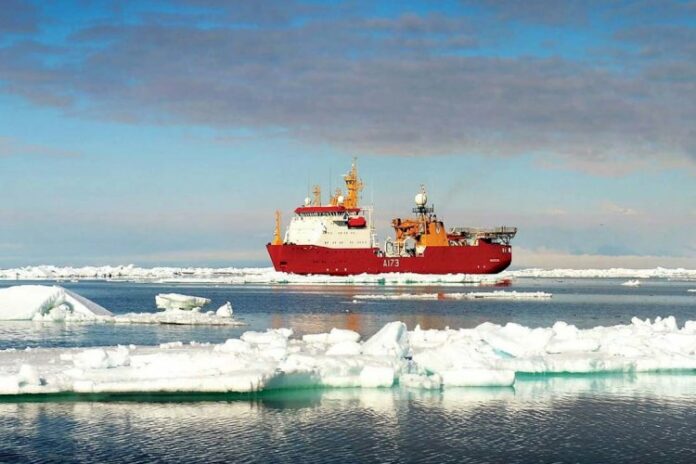
Leading boat launch and recovery systems supplier Vestdavit is bringing new fast craft handling capability to HMS Protector, the only Royal Navy ship dedicated to Antarctic Patrol & Survey duties.

The advanced icebreaker, which provides a UK presence in the Antarctic and meets treaty obligations on inspections, hydrographical charting and in support of scientific research, is to be equipped with a specially-enhanced PLR-5000 davit from Vestdavit. All seven of the davits onboard HMS Protector have been supplied by Vestdavit.

Part of a five-year docking and recertification package undertaken in the UK, the latest davit addition is a replacement unit supplied by Vestdavit to support missions by a newer and larger Fast Rescue Craft (FRC). The new PLR-5000 unit is fully winterized to function in line with the International Code for Ships Operating in Polar Waters.

The Code demands that marine equipment exposed to polar conditions can operate in temperatures 10 degrees Celsius below the Mean Daily Low Temperature (MDLT) of -30C. In line with the Royal Navy’s exacting requirements for its harsh Antarctic operating environment, the PLR-5000 davit system supplied will be certified in accordance with DNV-GL Rules as having been designed and built to operate in extreme temperatures of -40C.

William Goodall, Area Sales Manager for Vestdavit in the UK, says:

“Having been stationed in Antarctica during my naval career, I am well aware of the challenges presented by extreme conditions and temperatures in the operation of advanced launch and recovery systems. This is a challenge that Vestdavit has met head-on and I am proud that we, as a team, are playing our part in increasing the operational capability of one of the Royal Navy’s highest profile vessels.”

The Vestdavit systems installed on HMS Protector comprise a mix of lifeboat and life raft davits, FRC davits and work boat davits, with the ship sometimes referred to as the supplier’s ‘Flagship’. The latest order calls for the 19th PLR-5000 delivery to the Royal Navy, confirming the equipment type’s position as preferred technology for the Hydrographic Flotilla and Fishery Protection Squadron. Overall, this will also be the 30th davit supplied by Vestdavit to the RN.

Drawing on previous deliveries to the Royal Navy, the PLR-5000 will support safe launch and recovery of the FRC and boat crew in Sea State 5 conditions. Its wide operating window is made possible by proven features supplied by Vestdavit as standard, including shock absorbers, high performance winches and a constant tension system.

Goodall adds:

“HMS Protector plays a key role in ensuring the safety of navigation and understanding the marine environment in the Antarctic. Vestdavit is delighted that its boat launching and recovery systems continue to make a critical contribution to the Royal Navy’s commitments in these unforgiving seas.”

Corvus signs contract with BMA Technology for delivery of ESS for LFC

0

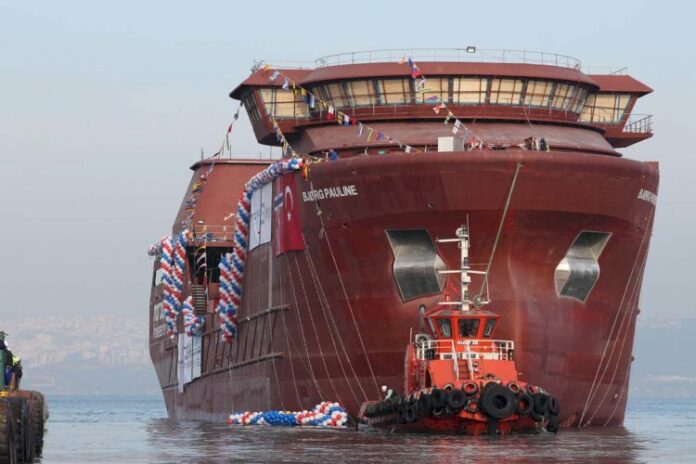
Corvus Energy has announced that company have been selected by BMA Technology in Turkey to supply the lithium-ion battery-based energy storage system (ESS) for a new Live Fish Carrier to be built at Tersan Shipyard in Turkey.

This is the second vessel in a series of two for Norwegian salmon and trout producer, Nordlaks. Corvus Energy also delivered the ESS for Bjørg Pauline, which was recently launched from Tersan Shipyard.

The NSK Design 4126 – Live Fish Carrier, LNG HYBRID is amongst the most efficient and most advanced of its type. The 84 meters long and 19 meters wide vessel includes LNG hybrid propulsion (gas-electric with battery package), with built-in redundancy. The vessel is ice-strengthened to ice-class 1A and has shore connections for port operation in addition to several other advantages for flexible and stable transports. Estimated savings is 1864 tons of CO2 per year (equals 30%) in addition to 30% cost reduction.

Akın Artun, Technology Division Director of BMA Technology, says:

“Due to slow response and long recovery time of LNG generators, ESS installation on the vessel will serve to guarantee safe and optimal operation, especially during fast load changes. The battery package will be used for peak shaving, spinning reserve, zero-emission operation during low load and to reduce impact of start currents.” 

Mert Unlusan, Managing Director of BMA Technology, says:

“A key to success is close collaboration and reliable long-term partners. Through the past years, we have had numerous successful projects on hybrid and all-electric projects together with Corvus Energy. Through this relationship and our confidence in Corvus Energy, we also wanted to team up with them for this special project.”

Corvus Energy will deliver a 678 kWh battery system for the vessel and the equipment is scheduled for delivery in September 2020. According to plan, the vessel will be delivered to Nordlaks in February.

Roger Rosvold, Senior Vice President Sales at Corvus Energy, says:

“We appreciate the close relationship which goes far back in time. The first time we visited BMA Technology, they were 15 people. Now they are more than 650. Their work and their achievements are impressive, and it is a pleasure to work with them.

We are excited to be selected as the preferred supplier of batteries for this highly innovative design. The fishing industry, like all other maritime sectors, is seeking solutions to reduce overall operating costs and lessen the environmental impact. We see a clear increase in the demand for our products across all segments.”

As the leading manufacturer of energy storage systems for maritime applications, Corvus Energy provides battery power to more hybrid or zero-emission vessels than all other providers of energy storage systems combined. Corvus offers a comprehensive and innovative ESS solutions portfolio and has unsurpassed experience from 275+ projects, totaling over 235 MWh and 2,5 million operating hours.

Penguin selects SCHOTTEL for eight executive fast crew boats

0

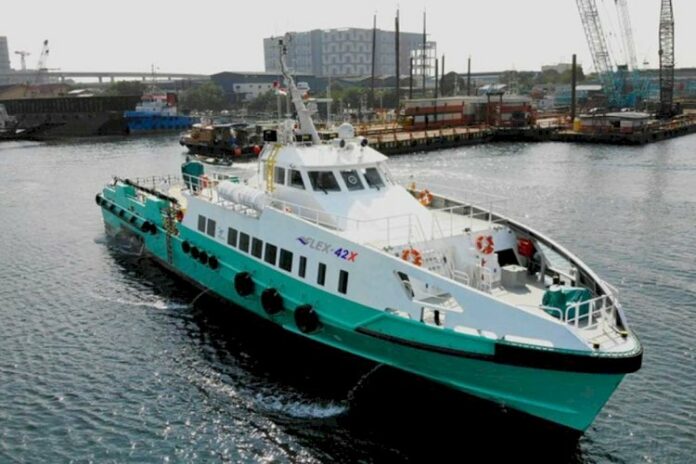
Following a successful testing and evaluation programme, Singapore-based Penguin International Ltd. has selected SCHOTTEL’s Tunnel Thruster STT 51 FP for its flagship Flex-42X series of eight executive fast crew boats.

Penguin is an integrated designer, builder, owner and operator of high-speed crafts as well as a prolific builder of mid-sized crew boats and armoured security boats for sales and charter. With a 95 kW electric motor controlled by a variable frequency drive, the STT will be installed in the new vessels being built by the customer’s shipyards in Singapore and Indonesia.

As the vessels are based on a completely re-designed aluminium monohull form, the STTs feature an aluminium tunnel as well as an aluminium lower gear housing. They thus support the vessel’s overall material properties with the advantages of reduced vessel weight and enhanced performance. Apart from this, the STT’s general low levels of noise and vibration support the vessels’ complete smooth ride, berthing and mooring.

The newly designed mid-size FLEX-42X has an overall length of 42.00m, a moulded breadth of 8.00m, and a design draft of 1.60m. The clear deck cargo area is about 110 m², the fuel capacity is about 80,000 litres. With a luxurious business class seating for 80 passengers plus a crew of 12 the vessel offers more cabin space than any of the other fleet’s crew boats. With a luxurious business class seating for 80 passengers plus a crew of 12 the vessel offers more cabin space than any of the other fleet’s crew boats. Apart from that, they are designed to execute a variety of missions, including security and escort, search and rescue, fire fighting and medivac. 

The fuel of the future will be produced at Mongstad

0

The first users of the hydrogen are envisaged to be two common goods carrier vessels under development by Wilhelmsen group.

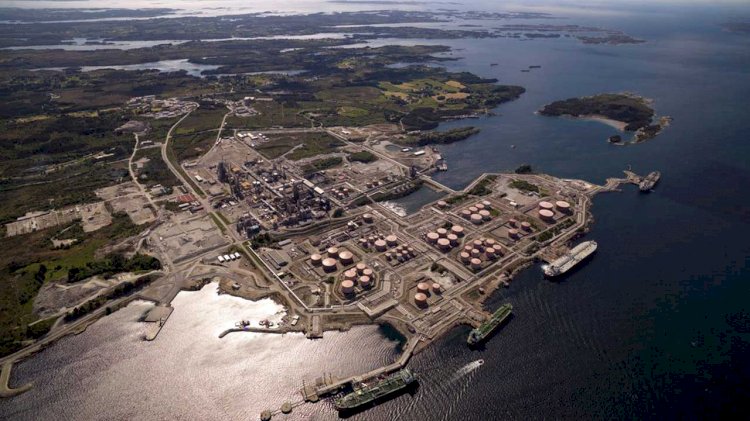
Just before Christmas last year, as part of a consortium led by BKK, NorSea was allocated funds through the public funding scheme PILOT-E to develop a complete liquid hydrogen supply chain in Norway for maritime applications. Mongstad Industrial Park, one of the largest industrial areas in Norway, has now been chosen as the candidate production and liquefaction site.

Mongstad is ideally located in Vestland county on the west coast of Norway, close to customers in the maritime sector. It also offers promising opportunities for expansion to meet future increase in demand for liquid hydrogen. Furthermore, the park allows the project to maximize industrial synergies, as it is also close to project partner Equinor’s Mongstad refinery.

The investment decision on the plant is expected to be made already at the end of 2020. The consortium partners are in parallel developing solutions for storage and transportation to end users in the maritime sector. The project aims to make liquid hydrogen available for commercial shipping by early 2024.

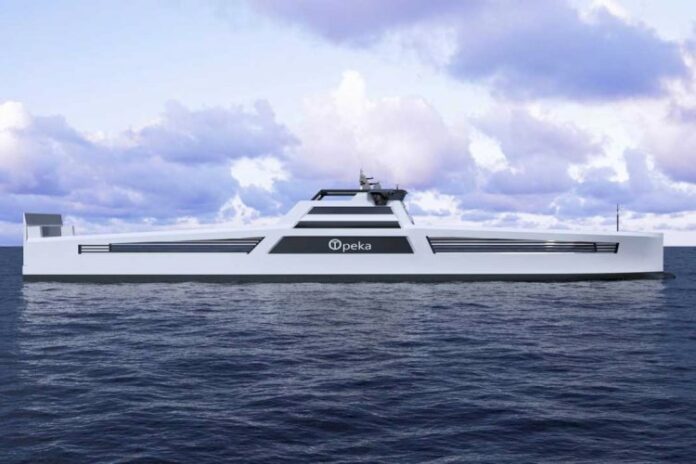
The cargo ship “Topeka” will probably be the first user. Steinar Madsen, project manager for the ship project, which has been named “Topeka”, said:

“The ships set a new standard, as they have an emission-free range of 700 kilometers. It is like going from Buddy to Tesla at sea.”

The goal is to move freight from the E39 Coastal Highway Route to the sea between the Bergen area and Stavanger – while contributing to zero emissions in freight transport. Liquid hydrogen is considered to be one of the low-carbon solutions that can decarbonize heavy-duty transportation such as ships. The first user of the hydrogen produced at Mongstad is envisaged to be the common carrier concept “Topeka” currently under development by Wilhelmsen.

Wilhelmsen has plans for two “hydrogen ships” that will go on a fixed route with calls at eight ports daily, between Mongstad and Stavanger. Madsen explains:

“The total investment will be over NOK 700 million, and we hope that Norwegian shipyards want to be part of the project. Several Norwegian industrial companies are already in the project, and the ship is designed by LMG marin in Bergen.”

As consortium partners, and to explore possibilities for the decarbonization of transport, Wilhelmsen and Equinor conducted a feasibility study on how vessels fueled by liquid hydrogen could serve Equinor’s base-to-base logistics. The concept foresees two ships transporting equipment and materials mainly between onshore bases in Stavanger in Rogaland county and Mongstad. The ships could replace a substantial number of the trucks currently driving between the bases, offering a considerable reduction in emissions and enhancing road safety.

Wilhelmsen plans to take an investment decision on the vessels towards the end of 2020, depending on sufficient grants from public sources and sufficient market interest. The project also aims to set up hydrogen terminals at NorSea’s supply bases along the coast to secure hydrogen availability also for other vessels.

Jan Eyvin Wang, Senior Vice President in the Wilhelmsen group, says:

“Hydrogen as a fuel enables opportunities for low- or zero-emission shipping. The Topeka shortsea concept types with zero-emission voyages up to 400 nautical miles will provide useful experience for all vessel types. The hydrogen terminals will contribute to removing barriers for the oil and gas industry as well as other sectors to invest in hydrogen solutions.”

Ingrid von Streng Velken, Corporate Director Innovation and Development at consortium leader BKK, says:

“This is a very important project at a very challenging time for the offshore and maritime industry. It can represent the beginnings of a large Norwegian hydrogen industry that will create new jobs and strengthen Norwegian maritime suppliers’ competitiveness in a global market, where decarbonization of shipping is high on the agenda.” 

Sturle Bergaas, Vice President at Equinor’s Mongstad refinery, says:

“With this project the partners are taking steps to create a hydrogen value chain. As an energy producer, Equinor’s ambition is to reduce net carbon intensity from our products all the way from initial production to final consumption, and we believe hydrogen can be part of the solution in the maritime sector.”

Frederic Despreaux, Vice President, Cluster Northern Europe & CIS countries at consortium partner Air Liquide, says:

“We are proud to be part of the world’s first large-scale, low-carbon liquid hydrogen project for maritime applications. This partnership also illustrates Air Liquide’s contribution to meet the challenge of the energy transition and clean transportation by offering an alternative energy solution, in line with the Group’s climate objectives.”

ULSTEIN announces delivery of first two PSVs for COSL

0

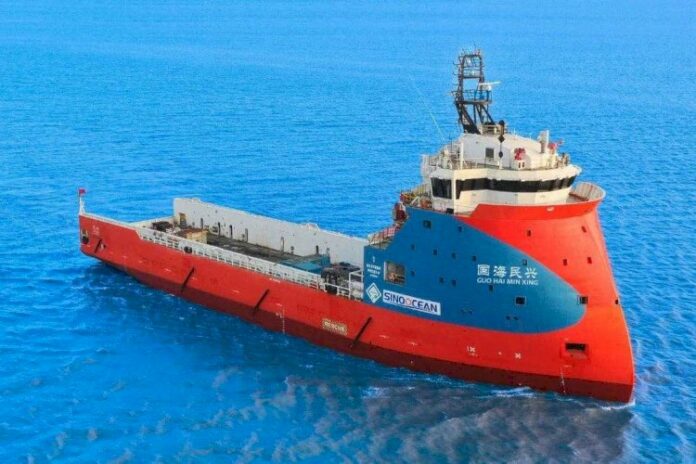
8 May 2020 saw the delivery of the first two platform supply vessels of the ULSTEIN PX121 design built at SWS, China, the ‘Guo Hai Min Xing’ and the ‘Guo Hai Min Sheng’. They are operating for COSL – China Oilfield Services Limited, for whom they have a long-term charter.

Two more vessels of the same design at SWS (Shanghai Waigaoqiao Shipbuilding Co., Ltd.), have completed their sea trial and will also be delivered to COSL shortly, according to schedule. Owner of all four vessels is Sinoocean.

The ULSTEIN PX121 is a flexible platform supply vessel design featuring the X-BOW hull line design for smoother motions in head seas. In total, 30 vessels of this design have so far been contracted. A platform supply vessel of this design has a competitive combination of fuel-efficiency and cargo capacities/deadweight. This translates to a performance level that is usually expected from larger PSVs, but at a medium-sized PSV cost – delivering excellent value-for-money for the owner and operator.

DNV GL Expert: ICEs will be the dominant force in shipping for the next 20–30 years

0

With the current focus on alternative marine power sources, it’s easy to overlook the overwhelmingly dominant position of the internal combustion engine, or ICE, in marine propulsion. The marine two-stroke ICE is so well proven and so well established that it will continue to have a central place in ship propulsion for decades to come.

If demands for decarbonization in shipping are to be met, the question then becomes one of fuel: which fuels can be green enough, and available soon enough, to satisfy stricter emissions regulations, and how will engine makers adapt to the new norm of fossil-free fuel?

Christos Chryssakis, Business Development Manager at DNV GL – Maritime, says:

“All the big engine makers are looking at alternative solutions, everything from energy sources to engine technology.”

Chryssakis believes that internal combustion power will be the dominant force in shipping for the next 20–30 years, due both to the development timelines for alternative power solutions and to the time it will take for those solutions to become a force in the marine market.

He says:

“In the meantime, if we manage to find good alternative fuels, ICEs can compete. The big two-stroke engines are close to efficiency limits, but gains can be made in other energy efficiency technology that will open the way for smaller engines consuming less fuel.”

Kjeld Aabo, Director New Technologies, MAN Energy Solutions, backs up Chryssakis’ claims with numbers:

“We have more than 25,000 two-stroke engines operating, and more than 300 orders for alternative fuel engines.” The market for ICEs will be open for many years, he believes. “Right now there is no better power solution for ships of 2,000 dwt and above.”

So what is the right combustion fuel for the future? Chryssakis confirms:

“That is the big question. It is still open to discussion, but we are learning a lot about some of the more likely options.”

While still searching for the right solution, shipping will soon need to achieve critical mass in low-carbon fuels to reach the IMO emissions targets for 2050, he says. These targets stipulate a 50 per cent reduction in greenhouse gas emissions and a 70 per cent reduction in carbon intensity by 2050. Some of this will be achieved through efficiency measures, but the rest will have to come from alternative fuels.

The role of DNV GL will be to provide fact-based figures on how much fuel is needed and how it will be produced. Chryssakis says:

“We are now updating our energy transition model based on the latest learning and regulations.”

While markets and regulations will dictate price, another key issue is how fuels are produced. Chryssakis points out:

“Alternative fuels have to be produced with renewable energy and in a sustainable manner or they will ultimately not help to reduce the overall carbon footprint.”
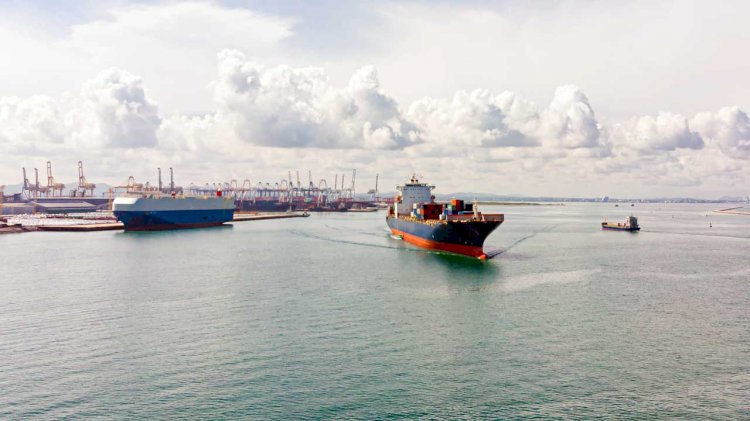
Already a familiar industrial commodity, ammonia is one fuel alternative steadily attracting more interest in the industry. Chryssakis says: “Ammonia is a good way of storing hydrogen, but it has different handling requirements than natural gas.” Ammonia takes up less space than hydrogen, but it is both toxic and corrosive. Existing class rules for ammonia as a cargo and as a refrigerant are a good starting point for developing rules for ammonia as a fuel, he says, but emissions still represent a challenge.

Emissions from combusted ammonia may contain a high amount of nitrous oxide (N2O), a powerful greenhouse gas, even small amounts of which present a risk to the environment. 

Chryssakis mentions the option of ammonia tankers burning their cargo as fuel, much the same as modern LNG tankers do. But this technology will first gather momentum in newbuilds, he maintains, while regulations and contracts favouring sustainable power will drive retrofits. The cost of producing ammonia will also influence decisions.

Kjeld Aabo says:

“We have a pallet of different fuels already, and ammonia will soon be added to that.”

MAN plans to offer engines designed to burn green ammonia by 2024, with testing scheduled to begin in 2021. The goal is no ammonia slip at all. Both odour and N2O should be eliminated with these tests.

Kjeld Aabo reports that some owners are asking for ammonia-burning engines before 2024:

“These are the carriers of ammonia who can burn their cargo as fuel, but there is also a broader interest out there for ammonia.”

Burning hydrogen in combustion engines is another option, says Chryssakis. And though hydrogen contains no carbon atoms, and thus emits no CO2 when consumed, it is often produced using natural gas. Hydrogen can be used to partly replace LNG in combustion engines, thereby reducing their carbon footprint.
Biofuels have long been considered an alternative to petroleum-based fuel, but producing them at scale remains an issue. Chryssakis says:

“Large-scale production, including facilities, has not performed well enough to justify realization, either economically or technically. For example, if it takes 50 years for a forest to mature, and only two per cent can be harvested annually if we are to ensure regeneration, that would limit access to sustainable feedstock.”

Synthetic fuels can use the same infrastructure and engines as petroleum fuels, but they will need to be produced from renewable energy in order to qualify as green. Chryssakis says:

“The issues right now are scaling up production, and identifying suitable energy sources. For example, it has been estimated that we would need 8 km2 of solar panels to produce enough ammonia to operate one large container vessel for a single year.”

Despite its status as a fossil fuel, LNG should not be discounted as a short and medium-term solution, Chryssakis maintains:

“LNG can contribute a 15–20 per cent greenhouse gas emissions reduction, and it can also serve as a basis for using other fuels in the future. Evolving engine technology could also reduce methane slip from LNG.” All engine makers are working to resolve this issue.

If so-called bridge fuels are abandoned, he says, the alternative is to continue burning oil while in pursuit of the “perfect” solution: “But we cannot bet safely today on a solution that will not be available until 2035 or 2045. It is better to work with what we have, and concentrate on building a future-proof infrastructure that can match future ships.”

Chryssakis notes that batteries with currently available chemistries are approaching the physical limits of energy storage:

“New storage chemistries may emerge that can offer tenfold improvement, but they are still not proven on a commercial scale, and probably the first applications will be seen in automobiles, not large units like ships.”

Fuel cells are more suited than batteries when size is an issue, he says:

“But they perform better under constant loads, so they need batteries to even out consumption.”

Then there are the issues of fuel access and storage to resolve, as well as fuel production methods. Fuel cell life expectancy also remains a significant variable, he notes. The relative attractiveness of different power solutions will vary between segments as well, Chryssakis says:

“For example, cruise passengers might be willing to pay a premium for cleaner ships. But how quickly are consumer attitudes changing in the same direction?”
That being said, charterers and owners in the transport trade are becoming more attentive as consumer sentiment shifts towards green alternatives, and they are actively seeking alternatives, he confirms.

Chryssakis says:

“Right now we are still in the phase where we need to explore all available options for ICEs. The most important thing is not to close doors too early. We can experiment today with what is available until the best alternative emerges.”

Kjeld Aabo agrees:

“We have a zero-emission strategy, but we must also be prepared for markets to evolve. Many in the industry want to follow their hearts in one direction or another, but we do not know enough about the right direction yet.”

ICEs can accommodate nearly all types of fuel, he says, but the market must be ready or manufacturers will not be able to justify committing their design capacity. Aabo acknowledges:

“There are so many balls in the air now that stakeholders are facing very complicated decisions. We know that ICEs will provide the highest efficiency possible in the foreseeable future. Unless something completely unexpected turns up, ICEs will be around for many years.”

Source: DNV GL

Marlink deploys Brazil Teleport services for Petrobras offshore operations

0

Marlink has confirmed that its new local Teleport, network infrastructure and support capabilities meet new pre-requirements to provide VSAT services for Petrobras-chartered vessels operating offshore Brazil.

Offshore support and service companies with vessels on charter to Brazilian National Oil Company will enjoy secure and resilient connectivity from a single service provider.

Petrobras has set strict new connectivity and services standards for offshore vessels carrying Petrobras crew, following the decision to discontinue its in-house VSAT network by 2023. New bids and contracts for offshore vessels already consider such requirements that will apply to the vast majority of vessels operating in Brazil as existing contracts are renewed.

The main requirements are strict latency standards (~650 milliseconds), redundant direct interconnection to Petrobras data centres, and local support in Portuguese language.

The VSAT technology selected by Marlink for the Brazil teleport is able to efficiently deliver compliant speeds to all types of vessels, including high bandwidth consumers like FPSOs and drilling rigs.

Marlink will fulfil the requirements through co-operation with global and local Brazilian partners and is committed to further developing its established presence and capabilities in the region in support of digitalisation of all maritime and offshore operations.

To further extend its range of customer solutions, Marlink also has agreements in place with satellite operators to provide a full range of licensed L-band services in Brazil.