-3.8 C
New York
Home Blog Page 864

Siem Offshore uses an innovative crew competence assessment tool

0

An innovative digital tool which enables personnel assessments to be carried out online, K-CAT’s abilities range from pre-employment evaluation through to crew competence verification.

It is available via all computers and smart devices with an internet connection, and can also be configured in offline mode. Of particular relevance to Siem Offshore, the K-CAT’s range of competence assessments can determine how well personnel understand dynamic positioning (DP) systems, as well as gauging the knowledge level and practical expertise of DP operators. These assessments comply with both the DNV-GL and IMCA M 117 (Training and Experience of Key DP Personnel) standards.

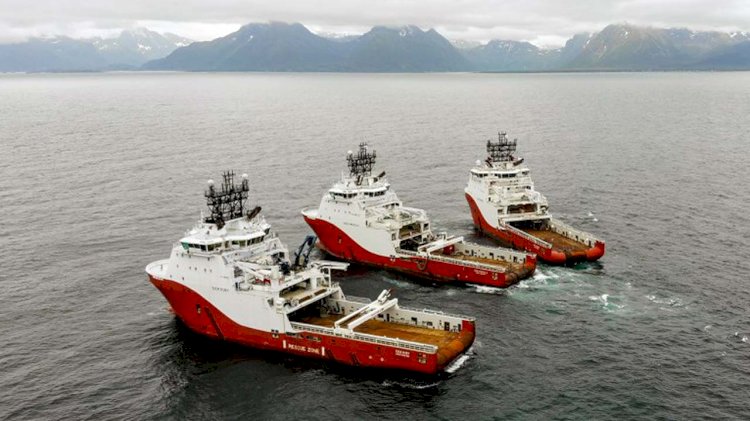
With its 35-strong fleet, including offshore subsea construction craft and anchor-handling tug supply vessels, Siem Offshore is applying K-CAT’s IMCA M 117 benchmark criteria to measure skills in four crew categories: bridge officers, engineers, ETOs (electro-technical officers) and DP company authorities. K-CAT is also being used to accurately ascertain the suitability of prospective job candidates.

This investment by Siem Offshore addresses a growing trend across the maritime industry, where verification of crew competence is being increasingly recognised as key to enhancing the safety and efficiency of complex operations. By rapidly and precisely identifying competency gaps, K-CAT allows fleet managers to tackle any shortcomings at source with the implementation of targeted training programs.
Siem Offshore Vessel Manager, Bernt Morten Tallaksen, says:

“We have chosen to invest in this mode of assessment to simply and fundamentally prove, with strict adherence to IMCA M 117 parameters, that we have the most qualified and competent DP key personnel on board our vessels. We’ve already found the focused relevance of the K-CAT question banks to be very advantageous in this regard, enabling us to ensure that the work our vessels perform is carried out to the highest standard with respect to crew safety and the ocean environment. We’ll be deploying K-CAT on all our vessels in future, as a means of comprehensively educating our key DP personnel and cementing a principle of continual operational improvement.”

Irene Bøen, Kongsberg Maritime DPO and Product Advisor, adds:

“Remote training is something that the industry has been curious about for a while, and so have we. Due to the coronavirus the focus on online assessment has increased over the last couple of months and it is now essential for a lot of our customers to get remote training in place. We have managed, together with Siem Offshore, to deliver a remote, online solution without compromising quality.

Siem Offshore is our pilot customer for K-CAT, so it’s encouraging to receive such positive feedback so quickly. We see this competence assessment tool becoming a worthwhile asset in many other maritime contexts as the convention of remote training and e-learning spreads, allowing personnel to safely gain hands-on experience wherever they are located.”
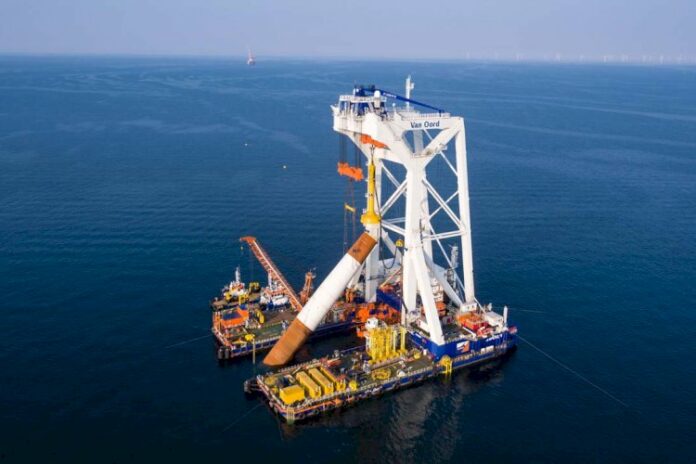
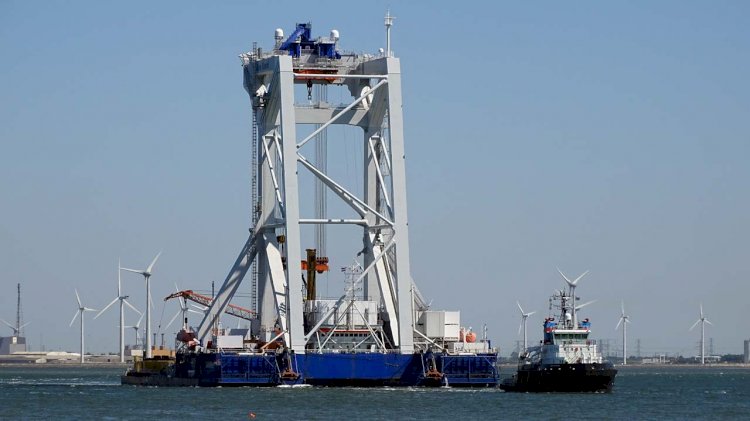
Van Oord’s heavy lift installation vessel has arrived at Kriegers Flak wind farm

0

Van Oord entered into an agreement with Vattenfall for the transport and installation of the foundations for Kriegers Flak wind farm.

Van Oord will install the 72 monopiles and transition pieces. With a production capacity of just over 600 MW, Kriegers Flak will be Denmark’s largest offshore wind farm and is scheduled to be fully operational in 2021. The Danish Kriegers Flak Offshore wind farm is constructed in the Baltic Sea across a range of 15 to 40 kilometres from the Danish coast.

The monopiles of up to 800 tonnes will be transported floating from Rostock, Germany, directly to the offshore site. The transition pieces will be transported on barges from Aalborg, Denmark. A noise mitigation system will be used to reduce the underwater noise resulting from offshore pile driving. In April, Van Oord’s subsea rock installation vessel Bravenes started the installation of the seabed protection.

Van Oord’s 8,000-tonne lift installation vessel Svanen provides a cost-effective solution for its clients. So far, the vessel has installed approximately 650 foundations throughout Europe, of which the vast majority of monopiles in the Baltic Sea including the Anholt, Baltic 2 and Arkona projects. More wind farm projects are expected to be launched in the Baltic in the near future.

Nova module lifted onto Neptune Energy’s Gjøa platform

0

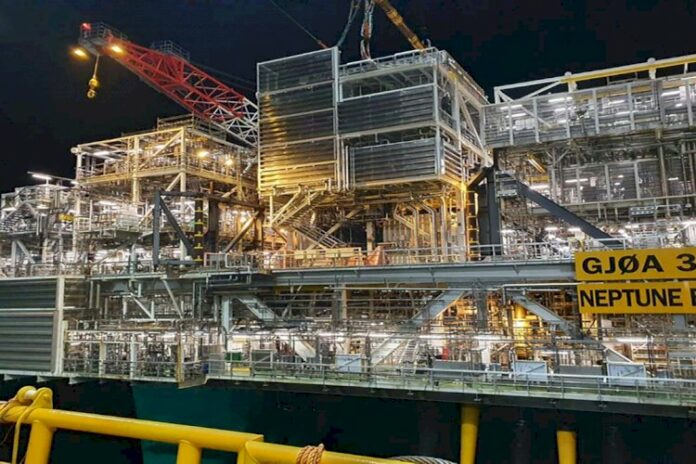
The world’s largest crane vessel, Heerema Marine Contractors’ Sleipnir, safely transported the topside module onto the Neptune-operated Gjøa platform in a three-hour operation.

Managing Director of Neptune Energy in Norway, Odin Estensen, said:

“This impressive heavy-lift marks the beginning of a new era for the Gjøa platform. The Nova field adds valuable resources, prolongs the life of the platform and increases the profitability of Gjøa’s own production. Electrified with hydro power from shore, Gjøa is becoming the efficient, low-carbon hub she was designed to be.”

The Nova field is operated by Wintershall Dea. Sharing infrastructure and making use of smart subsea solutions reduces costs, improves efficiency and lowers the carbon intensity of the operations for Wintershall Dea and Neptune.

The Duva and Gjøa P1 fields, both operated by Neptune, will also be tied-back to Gjøa in the future. 

Wintershall Dea Nova Project Director, Andre Hesse, said:

“The close collaboration with Neptune Energy, our partners and suppliers has been a highlight of the Nova project to date. Construction and installation of the topside module is a critical component of the Nova project, which has been handled on time, with total professionalism and a high regard for safety. Sleipnir’s safe lift of the module onto the Gjøa platform brings us another important step closer to production start on the Nova field.”

The Nova field is being developed as a subsea tie-back, connecting two templates to the Gjøa platform. When Nova production begins in 2021, the topside module will receive the hydrocarbons from the field and provide water injection for pressure support and gas lift.

The Nova field is located about 120 kilometres northwest of Bergen and approximately 17 kilometres southwest of the Gjøa platform in the Norwegian North Sea, at a water depth of 370 metres.

Licence partners: Wintershall Dea (operator 45%), Capricorn Norge AS (a fully owned subsidiary of Sval Energi AS) (10%), ONE-Dyas Norge AS (10%), Spirit Energy Norge AS (20%) and Edison Norge AS (15%). 

The Gjøa field is developed with five subsea templates tied to the Gjøa semi-submersible platform for processing and export. Production started in 2010. Oil is exported by pipeline to Mongstad and gas by pipeline to St. Fergus in the UK.

Licence partners: Neptune Energy Norge (30% and operator), Petoro AS (30%), Wintershall Dea Norge AS (28%) and OKEA (12%). 

VIDEO: Offshore patrol vessel construction at Osborne Naval Shipyard

0

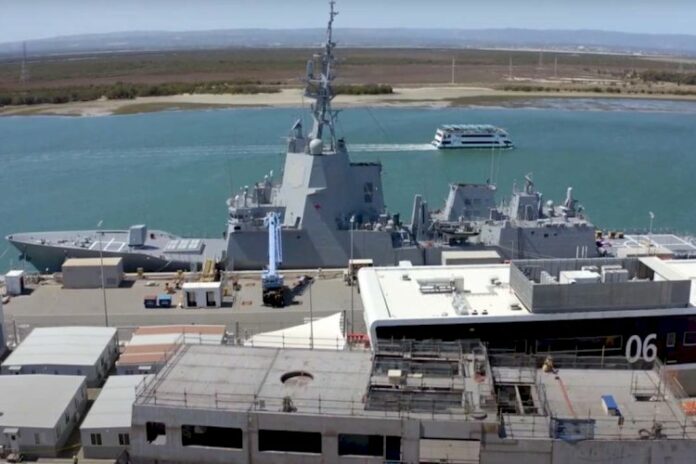
In a further milestone for the Offshore Patrol Vessel (OPV) program, the two halves of the first of class ship, Arafura, built by Luerssen Australia and its partner ASC have been brought together and welded to form a complete hull.  
 
In what was the largest block move in the history of the Osborne Naval Shipyard and a considerable engineering feat, Australian Naval Infrastructure’s (ANI) operations team manoeuvred the two mega-blocks together, with only millimetres between them.

Chief of Navy Vice Admiral Mike Noonan said:

“The naming of a vessel is also a significant milestone and as you know, the first OPV, when commissioned, will be named HMAS Arafura, and thus the class will be referred to as the Arafura-class. Significantly, it will be the first Royal Australian Navy ship to ever carry this name. It also represents a significant coastal land and sea region of Australia.”

OPV 2, upon commissioning into Navy, will be known as HMAS Eyre, which will occur in 2023.

Opinion: Producers may need to kill their old, loss-making FPSO’s in this downturn

0

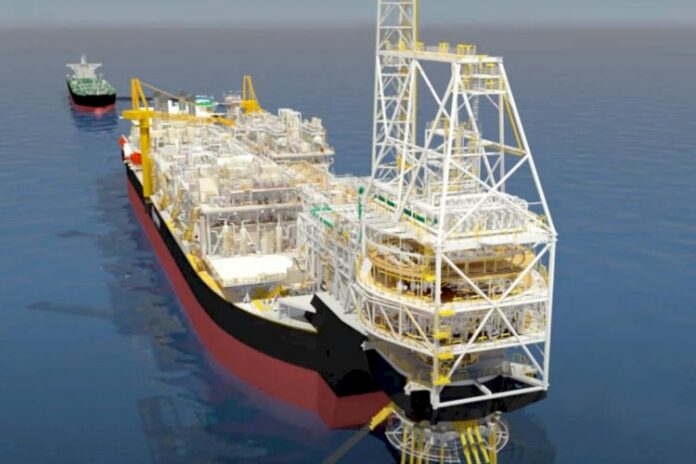
This is a jaw-dropping decline from 2019’s $11.10 per barrel, a Rystad Energy impact analysis reveals.

Rystad Energy also estimates that 40% of the 96 assets which have produced more than 75% of their original resources will end 2020 with a negative cash flow. Given the base case oil price outlook, with prices recovering next year and into 2022, free cash flow will climb back to 2019 levels. However, as these mature fields see production stagnate, free cash flow will quickly return to a decline, ultimately threatening the profitability of many FPSO assets.

Aleksander Erstad, a Rystad Energy energy service analyst, says:

“A concern arising for operators is whether the profitability of producing fields will degrade to such an extent that prematurely shutting down ageing fields will prove to be the most rational decision.”

Field economics alone are causing headaches for many FPSO operators, but other challenges might also compound the problems.

Unplanned production shut-ins on FPSOs due to Covid-19 outbreaks have already occurred, and continue to be a risk that could seriously harm both the health of individuals and the field’s profitability. Some FPSOs are also the target of supply cuts, a factor which could add to other woes and result in several late producing FPSOs being shut down for good.

Fields utilizing leased FPSOs are in the worst position, with around 70% of late producing assets estimated to have net present values below zero. This puts not only operators in an uncomfortable position, but also FPSO suppliers, who are faced with two possible outcomes – none of which are favorable.

FPSO contracts can be renegotiated for a lower day-rate in order to bring lease opex down, thereby improving the field’s net present value(NPV) . Or, in the worst case, lease contracts can be terminated early.

Current dire market conditions mean that upcoming FPSO sanctioning is at a minimum, and few opportunities remain for FPSO suppliers to find new work and redeploy their vessels. This essentially forces suppliers to accept a day-rate reduction in order to keep their vessels working.

The NPV for late producing fields with leased FPSOs is currently estimated at -$2.90 per remaining barrel, while the overall figure for all FPSOs stands at $3 per remaining barrel. Although positive overall,  Rystad Energy’s analysis of the 96 FPSO fields that have already produced more than 75% of their original resources shows that 30%-40% of those are estimated to have negative NPV.

AAM launches first of two 78’ catamarans for GWA

0

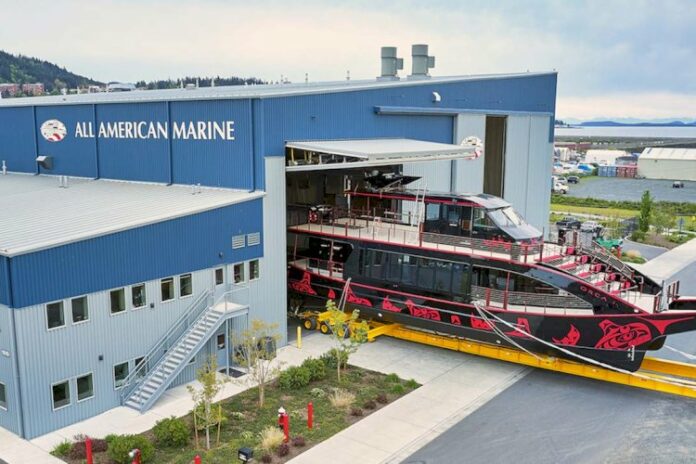
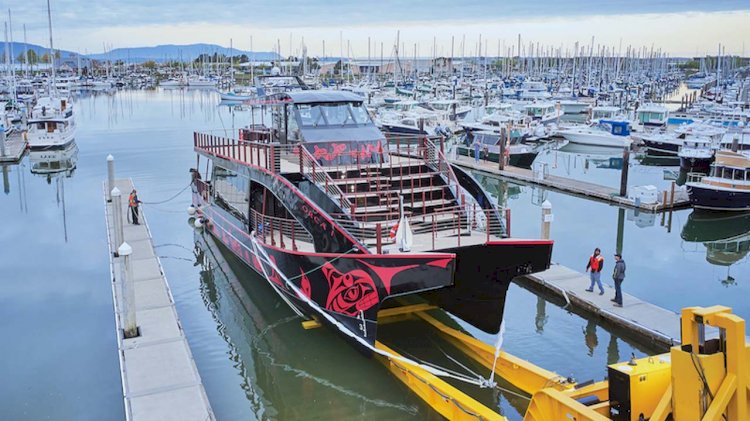
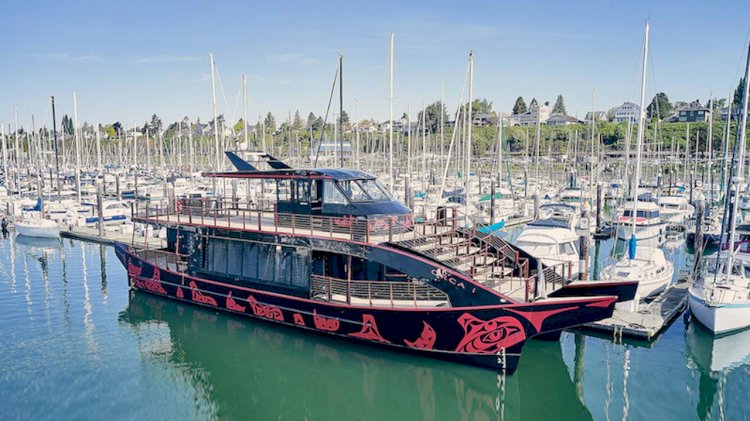
All American Marine, Inc. (AAM), together with Great Western Attractions (GWA), has announced the launch of the first of two 80’x 27’ aluminum catamarans for operation as a passenger excursion vessels in Puget Sound.

Designed by Teknicraft in Auckland New Zealand, these identical Subchapter T certified vessels were constructed at All American Marine’s state-of-the-art 57,000 square foot facility on Bellingham Bay. These vessels will be a part of GWA’s multi-faceted tourism experience based in downtown Seattle. The second, sister ship will be launched in June.

GWA selected industry leaders AAM and Teknicraft Design, widely acknowledged for designing and building high quality and fuel-efficient aluminum vessel designs at a great value. These new vessels will combine innovative design features to enhance the passenger experience during excursions, as well as celebrating the prominent native culture that is a significant part of life in the Pacific Northwest.

One specific feature is the unique design of an extended hull section on the bow and stern, creating a canoe-like appearance. These 149 passenger catamarans are powered by Twin Caterpillar C18 Engines rated at 803 bhp at 2100 rpm, driving Veem NiBrAL propellers, and are constructed to USCG Subchapter “T” standards, designed as a passenger vessel for use on “Lakes Bays and Sounds.”

All American Marine’s Business Development Manager Ron Wille said in a statement:

“All American Marine is proud to build such unique vessels for an iconic Seattle company and to support expansion of GWA’s tourism operations. Our mission is to provide our operators with the best custom vessel for their application, and we are excited to help design and build GWA’s first two vessels.”

Kyle Griffith Vice President of Great Western Attractions stated:

“We always provide the best experience for our customers and throughout our operations, so selecting All American Marine to build the boats for our new marine division made perfect sense. All American builds the highest quality vessels and offers the best value overall value in the country. When we visited their state of the art facility and saw the rapid progress and the quality of work on our first boat, we decided to go ahead and build two vessels.”

As owners of the “Seattle Great Wheel” and “Wings over Washington” both located on Pier 57 on Seattle’s waterfront GWA is a leader in the Seattle tourism industry. Building their first vessel with AAM will only help grow their presence as well as contributing to an ever-increasing and valuable tourism industry on Seattle’s bustling waterfront.

Joint group develops instrument for monitoring impact of deep sea mining

0

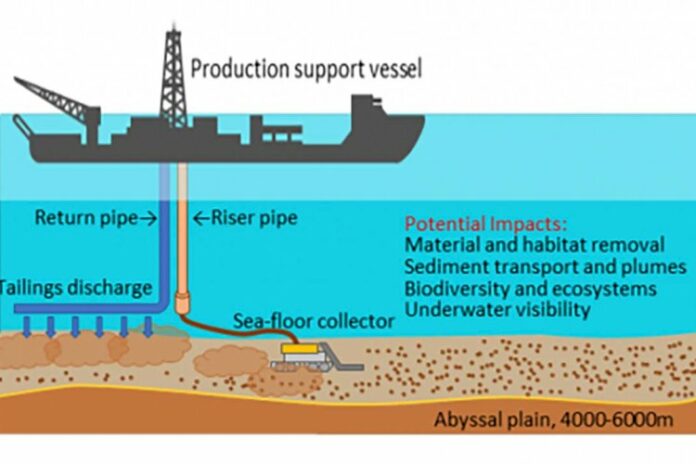
Sequoia Scientific, Inc. has announced receipt of an SBIR grant from the US Department of Energy’s (DoE) Advanced Research Projects Agency-Energy (ARPA-E) to develop novel environmental instrument technology that will monitor key elements of suspended sediment plumes generated by mining operations in the abyssal ocean, at depths down to 6000 m.

Sequoia is the prime recipient of the grant, which also includes collaboration with Prof. Thomas Peacock (The Environmental Dynamics Laboratory, MIT) and Prof. Matthew Alford (The Multiscale Ocean Dynamics Group of Scripps Institution of Oceanography, UC San Diego).

Sequoia expects this new environmental instrument will fill a growing need in the deep-sea mining industry: In the last decade, deep-sea mining has grown alongside the expansion of renewable energy research and development since the abyssal ocean possesses vast reserves of cobalt, nickel, copper, and manganese; minerals that are crucial in advanced battery technology and clean energy research. However, deep-sea mining can create large sediment plumes, which are cause for environmental concerns surrounding proposed mining locations. The scale and impact of these sediment plumes on the deep-sea benthic habitat is fundamentally unknown. Currently, no commercial technology can make in-situ measurements of these deep-sea plumes to ensure environmentally responsible operations.

Sequoia’s proposed instrument will be named the LISST-RTSSV (Real-Time Size and Settling Velocity) and will measure sediment size, settling velocity and concentration within the sediment plumes in real-time. This will be of direct use to deep-sea mining companies and regulatory agencies: providing baseline environmental data prior to mining operations, and subsequently underpinning environmental monitoring and modeling of these operations. The LISST-RTSSV is also expected to see widespread use within the offshore oil and gas industry, dredging industry, and sediment research.

Sequoia’s President & CEO, Dr. Ole Mikkelsen, says about the award:

“We are very excited to have been awarded this SBIR together with MIT and Scripps. It is a great recognition of the abilities of the entire team, evidenced by a number of SBIR’s completed by Dr. Slade over the last couple of years, as well as by the pioneering efforts from Professors Peacock and Alford in understanding deep-sea mining impacts. Amidst the COVID-19 pandemic, it is also a testament to our Federal Government’s efforts to assist that it keeps evaluating and awarding grants to small businesses such as Sequoia, helping us to maintain operations and stay in business under challenging circumstances.”

The SBIR research project is divided into Phase I (feasibility and proof of concept) and Phase II (development of an instrument prototype) over the course of two years. Testing and refinement of a prototype instrument is expected during late 2021 into early 2022, followed by commercial availability in late 2022.

The Ocean Cleanup wins $1M award to combat river plastic waste in Jamaica

0

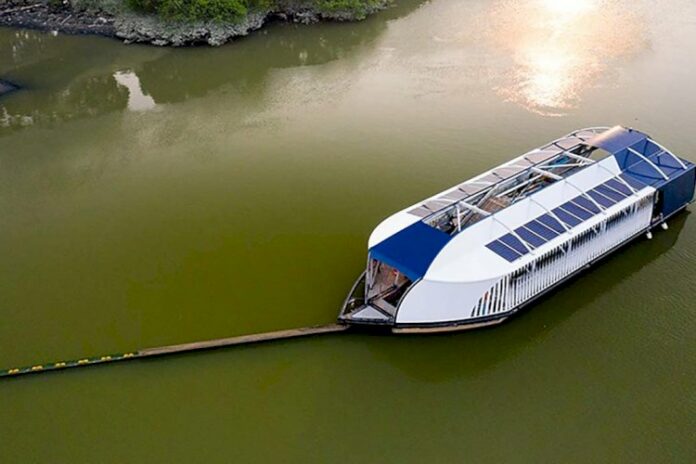
Funding will support the deployment of The Ocean Cleanup’s Interceptor at Kingston Harbour, Jamaica in a multi-year project – using advanced technology to close the tap and drive behavioral change in collaboration with Recycling Partners of Jamaica

The Ocean Cleanup, the Dutch non-profit organization developing advanced technologies to rid the world’s oceans of plastic, has announced it has been awarded $1M USD by the Benioff Ocean Initiative to stop plastic from reaching the ocean at Sandy Gully in the heart of Kingston Harbour, Jamaica.

The highly visible location, which is vital to Jamaica’s international tourism industry, will reaffirm the country’s strong commitment to protecting the environment and arm it with new capabilities to address the challenge. The project will be one of the first river projects The Ocean Cleanup is undertaking while scaling up to tackle the 1000 heaviest polluting rivers in the world. The project is expected to be initiated at the beginning of 2021.

The award to The Ocean Cleanup is one of nine granted by the Benioff Ocean Initiative, in a partnership with The Coca-Cola Foundation. Per research conducted by The Ocean Cleanup, Hunts Bay is Jamaica’s most polluted waterway, responsible for an estimated 578,000 kg of plastic flowing into the ocean each year, which equates to roughly the weight of 80 African elephants.

Boyan Slat, Founder and CEO of The Ocean Cleanup, said:

“To clean the world’s oceans, it is important, but not enough to collect plastic debris that has accumulated in the ocean; we must also stop new plastic from reaching the ocean. We are grateful to the Benioff Ocean Initiative and The Coca-Cola Foundation for their support and for recognizing the key importance of addressing rivers in solving ocean plastic pollution.”

In Collaboration with the Recycling Partners of Jamaica
For this project, The Ocean Cleanup will collaborate with the Recycling Partners of Jamaica (RPJ) to deploy an Interceptor, its scalable and solar-powered solution that is capable of capturing 50,000 kg of trash per day. RPJ will operate the Interceptor and ensure the environmentally sound disposal of all collected plastics and materials. Key national focus will also be placed on a robust communication and community education program that will encourage proper waste disposal and active recycling cultures. Additional funding to maintain the project will be secured through other partners.

Nalini Sooklal, General Manager of RPJ, said:

“Jamaica’s rivers and oceans are intrinsic to our landscape and livelihoods. By deploying an Interceptor from The Ocean Cleanup, we will remove a tremendous amount of garbage from Kingston Harbour before it has a chance to wash into the ocean, and at the same time greatly increase awareness of our efforts, further motivate our people to adopt new behaviors. We wish to thank The Ocean Cleanup and the Benioff Ocean Initiative for this opportunity to positively impact vital resources and our community.”

The project is part of The Ocean Cleanup’s ambition to stop plastic pollution at the source by tackling the 1000 heaviest-contributing rivers in the world. The Ocean Cleanup currently has Interceptors online in Jakarta (Indonesia) and Klang (Malaysia), and will soon start installation in Santo Domingo (Dominican Republic). Prior to Jamaica, Interceptor scale-up projects were announced for Vietnam, Thailand, and Los Angeles County (USA).

As part of The Ocean Cleanup’s research to map the problem, it was established that 1,000 of the world’s 100,000 rivers (1%) are responsible for roughly 80 percent of the garbage entering the oceans. The product of their global scientific measurement and modeling efforts has been visualized in an interactive map that is accessible here.

Royal IHC strengthens cooperation with APC Jordan through signing of three contracts

0

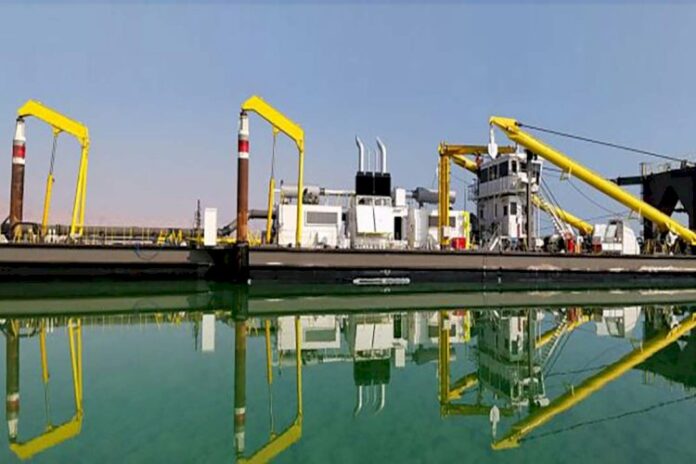
The first contract comprises the delivery of a custom-built CSD, the second is a three-year maintenance contract for the IHC dredgers JARASH and MUTAH, and the third involves another dredger, which will be a copy of JARASH.

The newly built CSD – the ALKARAMAH – is based on a modified, innovative IHC Beaver® 65 DDSP with three different working depth ranges: up to 18, 25 and 32 metres. It will be further adapted for the stepping, swinging and cutting of firm soil types, and include a Christmas tree configuration for dredging at 32 metres. A work boat modified from a DMC 1450 is also part of the contract and both units will be made suitable for operations in the Dead Sea.

Included in the contract will be the supply and international transport of equipment and services to ensure a smooth start-up of activities at two different locations. Furthermore, APC will be supported by IHC with extensive field engineering services such as overland transportation, (de)mobilisation, dredger modifications, crew training, and maintenance support services. 

APC will deploy the CSD at the Dead Sea in Jordan, where it will be initially used to develop a new pump station. After completion, the ALKARAMAH will be modified by IHC and redeployed to APC’s Salt Ponds to support the existing fleet in the cutting and removal of crystallised salt.

The second contract comprises a three-year maintenance agreement for APC’s dredgers: JARASH (a custom-built CSD) and MUTAH (an IHC Beaver® 40), both delivered by IHC. The purpose of the maintenance contract is to achieve and maintain an agreed level of uptime for the two dredgers.

All maintenance and repair work will be managed and executed by IHC’s local office in the Middle East, including the supply of spare parts. With this contract, IHC is now delivering a complete integrated value proposition, from the design and build to maintenance, with an agreement in place regarding the performance of the dredgers. 

The third contract will see the turnkey supply of a custom-built vessel named ALYARMOUK – a 3,557kW CSD. It is a further developed copy of the CSD JARASH, which IHC delivered to APC in 2018. As part of its long-term growth strategy, APC will use ALYARMOUK at its site in Jordan, where it will cut and remove crystallised salt under harsh conditions.

Through the three contracts, IHC remains fully committed to further developing its long lasting cooperation with APC in the field of dredging and wet-mining by supplying dredgers, equipment and services. This total integrated value proposition will help to support and maximise APC’s growth, competitiveness and profitability in the global wet mining market.

IHC’s Regional Commercial Director Amin Ezzedin, says:

“We are proud that Arab Potash has again chosen IHC to be its reliable partner. This includes not only the delivery of a newly built vessel, but also a custom-built copy of the JARASH, as well as supporting our business continuity through a multi-year contract in the field of services.”

Remote work technology: The one oil and gas services segment that Covid-19 has benefited

0

There are no hard numbers yet to illustrate the extent to which the Covid-19 pandemic has affected the oil and gas industry’s digitization. However, a Rystad Energy analysis of service companies’ earnings calls reveals a clear growth in cost-saving remote work technologies.

Given the limited options of low-hanging cost savings in the current downturn, operators and suppliers are looking towards digital technologies to realize cost efficiencies. For operators whose cash balances are not under short-term strain, the low oil-price environment is an ideal testing ground for new technologies as the opportunity costs of implementing these are lower.

Daniel Holmedal, energy service analyst at Rystad Energy, says:

“Despite being positive news for suppliers offering digital technologies, spending by operators may have been accelerated as a result of Covid-19 instead of actual business needs. Growth seems to have mostly centered around remote work, while technologies focusing on optimization of drilling and production seem to have hit some speed bumps.“

Recent earnings calls have given us a taste of how digital technologies have fared during the start of the downturn. Despite recent market events that have forced operators and suppliers to turn their focus towards cash conservation, development on this digital revolution still seems to be relatively robust.

In fact, both Schlumberger and Halliburton noted in their earnings calls for the first quarter of 2020 that the current downturn could accelerate the adoption of digital technologies. This is especially true for technologies that enable remote operations, which remains an area where great cost efficiencies could be realized with more efficient operations.

Covid-19 has already accelerated remote operations due to the movement restrictions imposed in many countries to limit the outbreak. Schlumberger recently deployed its DELFI platform for Woodside so that the operators’ asset team and geoscientists could have full access to their data while working from home.

Schlumberger, in its first quarter earnings call, underlined intentions of doubling down its digital strategy in the years ahead, with over 60% of the OFS provider’s drilling operations in March being conducted remotely. At a more general level, Covid-19 has also paved the path for key decision makers to get more first-hand experience with digital tools. This could eventually increase their willingness to fully buy in on the digital revolution in other parts of their companies.

Halliburton, similarly, noted during its first-quarter earnings call that demand for cloud infrastructure services saw an uptick in April 2020. In late February, Halliburton helped Pertamina deploy a large portion of its processes and applications to the iEnergy cloud, which has allowed for well data to be structured and analyzed to improve drilling performance, increase production and allow for better data-driven decisions along the well life-cycle.

National Oilwell Varco (NOV), one of the largest suppliers within the drilling tools and services segment, also reported updates on its digital technologies in the latest earnings call. Using its TrackerVision augmented reality technology, which streams real-time audio and video, NOV is able to provide instructions on rig repairs remotely.

Despite the growth in remote work digital solutions, not all is well for suppliers of digital technology, warns Holmedal:

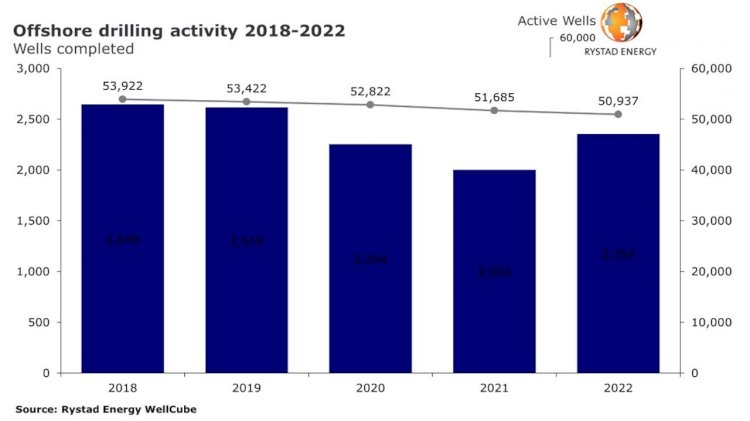
“Our activity forecast for 2020 indicates that spending on new technologies in the well services market will come under significant pressure. We expect the number of wells drilled globally this year to drop by 21% from 2019, ending up at around 56,000 wells, with 2,200 of the wells being drilled offshore.“

Service companies also warned of a downturn, with some already taking action such as furloughing some employees related to research and development and cutting back on sales, general and administrative expenses.