-0.4 C
New York
Home Blog Page 850

Rolls-Royce to supply complete MTU propulsion systems for Royal Navy vessels

0

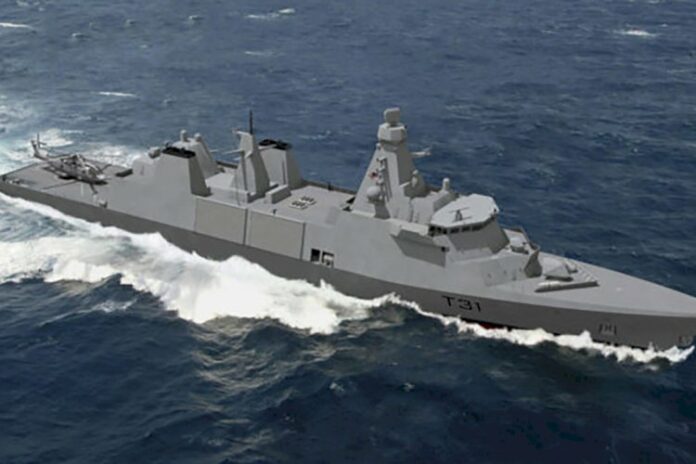
Rolls-Royce is to supply complete MTU propulsion systems for five new Type 31 general-purpose frigates for the Royal Navy.

In total, the order comprises of 40 engines and generator sets to be used for main propulsion and on-board power generation, the MTU Callosum propulsion control and monitoring system, and Integrated Logistics Support (ILS). Each new frigate will be powered by four MTU 20V 8000 M71 engines, each delivering over 8,000 kW. On-board power will be provided on each vessel by four MTU generator sets based on 16V 2000 M41B units, each delivering in excess of 900 kW.

In September 2021, Rolls-Royce will deliver the first shipset comprising four main propulsion engines and four generator sets to prime contractor Babcock International Group. Integrated Logistics Support for propulsion and onboard power systems will ensure efficient and cost-effective maintenance throughout their entire service life. It is expected that the MTU Callosum propulsion control and monitoring system will be officially added to the supply contract very shortly.

Sean Donaldson, Managing Director for Energy & Marine at Babcock International, said:

“We’re delighted to welcome Rolls-Royce with its MTU solutions as a supplier to our Type 31 Programme. Its engines and on-board generator sets are already proving their mettle in numerous comparable vessels worldwide.”

Knut Müller, Vice President Marine & Defense at Rolls-Royce business unit Power Systems, said:

“We’re very proud of the fact that Babcock International Group has opted for MTU propulsion and on-board power solutions on this highly significant project. MTU products now feature in almost all current and future projects of the Royal Navy. That is impressive proof of the trust our British partners place in us and of the reliability and flexibility of our products.”

The Royal Navy relies on Rolls-Royce propulsion solutions across its surface and submarine fleets. MTU Series 2000, 4000 and 8000 units will feature in future in most Royal Navy warships – in destroyers (Type 45), all frigate classes (Type 23, 26, 31) and submarines (Astute class).

RINA develops the ‘smart’ helmet to perform remote surveys of energy infrastructure

0

The COVID-19 pandemic has brought many challenges to both society and industry. Its impact on economies and financial markets is being felt globally. Social distancing has imposed homeworking to many, and travel restrictions are preventing easy access to places that were previously welcoming visitors.

In the Energy sector, the supply of safe, secure and sustainable energy remains a priority as the world shifts towards lower carbon energy production and consumption. Within this context, COVID-19 is creating barriers to safely operate and maintain facilities using normal practices, and as a consequence, significant non-essential maintenance activities are being deferred. However, many safety-critical inspections and tasks are still needed to ensure risks associated with managing energy infrastructure are kept under control, including lack of supply, environmental releases and increased costs. Managing this in the confines of the COVID-19 travel restrictions and social distancing in a very complex environment is proving difficult for many.

RINA believes that technology plays a key role addressing these challenges, including increasing safety, productivity and reducing cost whilst at the same time protecting and generating jobs. In fact, RINA has secured funding from the UK innovation agency, Innovate UK, as part of the UK government’s £40M investment to drive forward new technology, stimulate growth and mitigate the impact of the COVID-19 pandemic.

RINA will develop the ‘smart’ helmet, a proven remote inspection technology consisting of a hard hat integrated with ruggedized communication and sensing devices for use in industrial applications. Clients with ‘smart’ helmets can use facility employees to perform hands free inspections with remote subject matter experts providing the necessary technical assistance, eliminating resource mobilisation, reducing operational carbon footprint, and enabling faster, lower cost inspections.

Information is provided to the inspector via a near field display and noise cancelling headphones. Remote experts and interested parties connect to a secure digital platform to access sound, real time video and thermal imaging from the inspector at the plant. Key to this development is digital twin acquisition technology that creates a fully immersive digital experience based on a 3D model of the plant. Advances in technology recently have driven down hardware cost, such as 360⁰ cameras, and processing power accelerating digital twin adoption across many industries. With this innovation, inspectors can remotely access critical asset information, such as P&IDs, process conditions and previous inspection reports, in the field enabling clients to quickly make the best operational decisions.

Data is easily transferred over a range of existing network technologies and can be managed through RINA’s secure cloud platform, RINACube, with its underpinning cybersecurity, predictive analytics and big data capability.

First ever traceability standard for reclaimed plastic from the hydrosphere

0

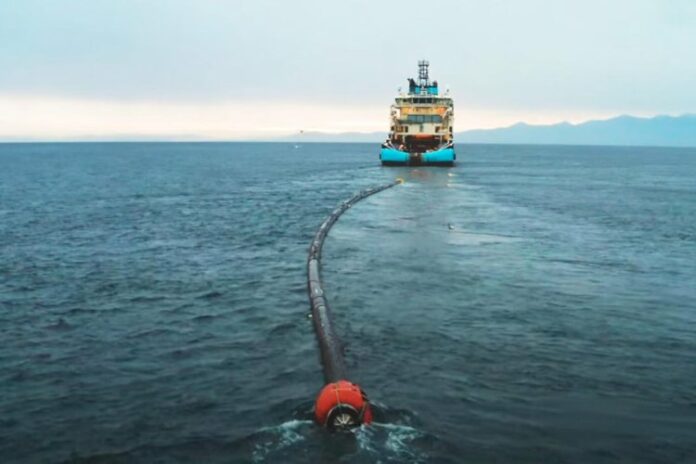
The problem of ocean plastic garbage is massive and to solve it requires ground-breaking technology and significant resources.  Moreover, extracting the plastic from oceans and rivers is only the first step in addressing one of the biggest threats to our world’s waters. There are currently trillions of pieces of plastic in our oceans with an estimated 8 million pieces added every day. The scale needed requires a shift from a linear to a circular plastic future. 

Nicola Privato, Global Operations and Technical Director, DNV GL – Business Assurance, says:

“Using the abandoned plastic into new products is essential. By turning trash into something valuable, that consumers are willing to pay for, enables a circular business models that not only resolves the problem of how to dispose of the trash. As customers are eager to buy such products and companies, even big brands, are willing to contribute, the proceeds from the sales can be used to further fund the cleanup. However, for people to pay for the products, they need assurance of authenticity – that this plastic is really coming from the ocean.” 

A product or company’s sustainability efforts and performance, even if considerable, can be completely secret or difficult to share with consumers in a trusted way. Moreover, there may be a need to distinguish against wrongful claims of authenticity or share of reclaimed plastic in products. To address this problem and build confidence into the circular ocean plastic economy, The Ocean Cleanup connected with DNV GL. 

Leonardo Avezzano, Head of Valorization at The Ocean Cleanup, says:

“To give our supporters added trust that our products are indeed made of plastic from the Great Pacific Garbage Patch, we knew we needed support from a reputable, independent, third party – which is why we sought out DNV GL, as a leading verification body. With their newly established standard, we hope this gives supporters greater confidence in The Ocean Cleanup products, which are soon to be unveiled.”

The DNV GL standard is the first of its kind, guaranteeing the authenticity, origin and amount of reclaimed plastic in a product. This kind of traceability and transparency must be built from the start of the value chain, requiring an end-to-end verification process from extraction offshore to the onshore landing, transportation, manufacturing and sales.  

While The Ocean Cleanup was the first to apply the best practices, the standard is public and available to any organization for application and certification.  Any organization wanting to have its plastic certified must first understand the standard’s requirements and implement compliant processes along the entire value chain or parts thereof.  The verification process ensures full traceability of collected abandoned plastic allowing consumers themselves to check authenticity when buying the product.

DEME adds windfarm expertise to Neptune’s PosHYdon hydrogen pilot

0

Neptune Energy today announced DEME Offshore, a leader in offshore wind energy and green hydrogen production, will bring its expertise to the PosHYdon pilot, the world’s first offshore green hydrogen project.

Part of the Belgian DEME Group, the company joins as a partner and will provide the hydrogen unit for installation on the Neptune-operated Q13a platform. The pilot aims to integrate three energy systems in the North Sea: offshore wind, offshore gas and offshore hydrogen by producing hydrogen from seawater on the Q13a.

Lex de Groot, Managing Director of Neptune Energy in the Netherlands, said:

“The integration of offshore energy systems requires new and unique expertise and we are therefore pleased with the entry of DEME Offshore as a partner. Their knowledge of connecting windfarms is crucial, not only for this pilot, but also to gain experience for the follow-up projects after PosHYdon.

The expertise that DEME has built worldwide helps us all to scale up after PosHYdon from 1 MW to 100 MW – a crucial step for further developing offshore wind energy and enabling conversion to hydrogen in the North Sea.

This will be important for windfarms far away from the coast which will be built after 2030, particularly given electricity prices are so low, which could slow down the further development of offshore windfarms. This development is essential to support achieving future climate targets.”

DEME’s expertise in the field of producing green hydrogen was recently underlined with new partnerships signed via subsidiary DEME Concessions in the ports of Ostend in Belgium, and Duqm in Oman.

Bart De Poorter, General Manager DEME Offshore, said:

“Within DEME we are always working on new markets and developing opportunities that we see. Together with DEME Concessions, we see the system integration, green hydrogen production and electrification of existing platforms at sea as a very interesting market.

PosHYdon is a starting point. DEME is involved in the conceptual design of a 100 MW offshore Hydrogen gas production plant and Task leader in the evaluation of the business case in line with this 100 MW concept.

DEME will also be involved in the transport and installation of the onshore Hydrogen unit to the Q13a platform. We are very pleased with the strong partners within the consortium and with the collaboration with Neptune Energy, one of the pioneers in this market.”

PosHYdon is an initiative of Nexstep, the Dutch association for decommissioning and reuse, and TNO, the Netherlands organisation for applied scientific research, in close collaboration with the industry.

DEME is the latest partner to join the pilot, following Neptune’s announcement in April regarding Gasunie, Noordgastransport BV, NOGAT BV, and Eneco.

Partners in the Q13a-A platform are: EBN B.V. (40%) and TAQA Offshore B.V. (10%).

LOC wins Jieyang Shenquan 1 offshore windfarm contract

0

Under the terms of the agreement, LOC China will provide document review, marine assurance and on-site inspections for all critical marine operations. The scope of work will also include inspections of the proposed support fleet as well as risk assessment and management meetings ahead of critical marine operations.

The Jieyang Shenquan 1 OWF is owned by State Power Investment Group, one of mainland China’s major electricity generation companies, and Guangdong Electric Power Co. Ltd, a company involved in the investment, construction, operation and management of electric power projects, as well as the production and distribution of electric power, mainly in the Guangdong province of China.

The windfarm will consist of 73 wind turbines of 5.5MW each, with a total installed capacity of 400MW. The project will also involve the building of an offshore booster station, which will be connected to the turbines through 16 circuits of submarine cable. Work on the project is expected to commence in August 2020.

Winning the Jieyang Shenquan 1 OWF contract underlines LOC China’s expertise in the Chinese renewables’ market and comes on the back of its expanded footprint.

Li Shixi, Risk & Renewable Manager at LOC China, said:

“Winning a further recent contract, for the development of offshore wind farms in China, is a demonstration of our experience and knowledge of the sector, as well as our understating of the Chinese market, as we celebrate our 15th anniversary in the country. It is also a reflection of the growth of the renewables sector in South-East Asia, with an increasing number of projects across the region”.

New high-speed ferry for Danish operator Molslinjen

0

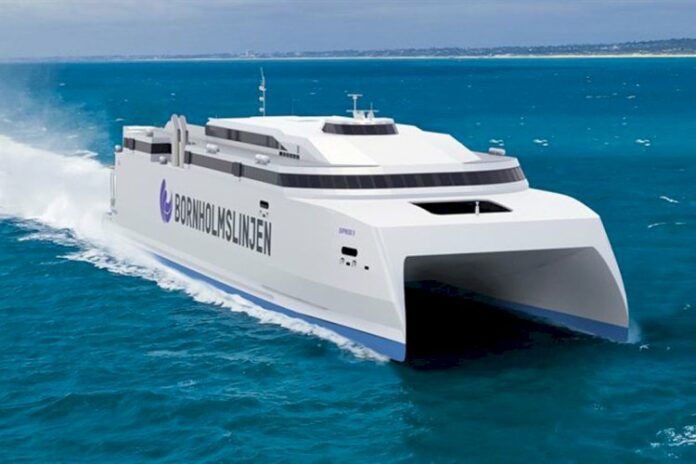
The vessel is being built by Austal at the Australian shipbuilder’s yard in the Philippines for Danish operator Molslinjen

It will feature four Wärtsilä 31 engines, recognised by Guinness World Records as being the world’s most efficient 4-stroke diesel engine, and four high-performance Wärtsilä WXJ1500SRI waterjets. Wärtsilä will also supply its state-of-the-art ProTouch bridge controls system. The order with Wärtsilä was placed in May this year.

Stefan Nysjö, Marine Power Solutions, Wärtsilä Marine, says:

“This combination of the Wärtsilä 31 engine and WXJ waterjets is unique for fast ferries, delivering exceptional fuel efficiency, reliability, quality and performance. This is an exciting project, and we are honoured to have been selected to provide the level of propulsion demanded.”

This large ferry will be capable of carrying 1610 passengers, and will have space for 450 cars or 617 lane metres for trucks plus 257 cars. It will have an operating service speed of close to 37 knots.

Wayne Murray, President Austal Philippines, says:

“The size of the vessel, together with the speed and propulsion efficiency makes this a very special project. It will be, by volume, the largest ferry ever built in our shipyards, and it will offer a powerful, yet economical and environmentally-friendly solution.”

Flemming Kristensen, Technical Director, Molslinjen, says:

“We have Wärtsilä waterjets on several of our fast ferries, so we are familiar with the quality and performance they deliver. We are also familiar with the Wärtsilä 31 engine, which is really in a class of its own in regards to efficiency.”

The Wärtsilä WXJ waterjet series was introduced in 2019 as the successor to the company’s successful LJX series.  This is the first time the WXJ waterjets and the Wärtsilä 31 engine have been used in combination for a fast ferry, offering an unprecedented level of performance, reliability and quality.

The Wärtsilä equipment will be delivered to the yard commencing in July 2021, and the ferry is scheduled for delivery in the first quarter of 2022. It will operate on the Molslinjen Bornholm route between Ystad and Rønne in Denmark.

Goldenport-Oceangold Group doubles Fleet Xpress speeds for all vessels

0

Navarino’s long-standing partnership with the Goldenport-Oceangold Group has been built over more than a decade. The two companies have worked closely together over the years to deliver the most advanced connectivity and technology solutions to the Groups’ fleet of 27 ships that operate worldwide.

Having been one of the very first fleets to install Fleet Xpress, Goldenport-Oceangold recently took the decision to upgrade the bandwidth on all ships by doubling FX speeds onboard to 4 MBp/s through its Cobham FX100 antennas. This speed upgrade will allow the company to continue to develop its advanced business communications options include remote management of fuel monitoring software, Alarm Monitoring Systems connected to flow meters, torque meters and vessel performance tools as well as on board CCTV.

Another major reason for the speed upgrade is to offer even better crew welfare possibilities to its seafarers as the company keeps its’ crews well-being very high on the agenda. Many of these tools are managed and operated through Infinity Cube, which has been installed from the start of its FX installations, while the cyber security of the fleet is overseen by Navarino’s Angel service, its fully managed cyber security solution designed especially for the maritime sector.

Mr Ioannis Agelis, the Groups’ IT Manager said:

‘We are very happy with the performance of the Navarino suite of services provided to our vessels during our longstanding cooperation. By upgrading our FX bandwidth, we are responding to the needs of our business and our crews and enabling both these very important parts of our company to grow and develop as new technologies emerge in the maritime world. We look forwards to continuing to work with Navarino in using technology to innovate and to help our fleet remain one of the most digital – ready fleets in the world.’

Kiriakos Striboulis, Navarino’s VP Market Intelligence said:

“We are very pleased to expand our excellent cooperation for another 3 years. More than ever before, the maritime industry requires a reliable and technological advanced provider like Navarino. This new agreement will ensure that critical business applications will always have high-speed, reliable bandwidth across the FX Network and crew members will gain fast access to Social Media and the most advanced communications with their families and beloved ones”

Thousands of seafarers sign global petition for crew change

0

On the other side, those who are at land also needs to go back to their jobs as financial crunch starts to impact them. 

“In relation to the deteriorating wellbeing of seafarers which are stuck on board ships and seafarers currently at home due to the impossibility to make arrangements for crew replacements leading to seriously endangered safety and security of international shipping, and  also in view of securing uninterruptedness of the global supply chains,

we, the undersigned, 

Insist that member states of International Maritime Organization and International Labour Organization to:

1. Designate as “key workers” the seafarers and other personnel engaged in the maritime business, which should be done by adoption of new and clear national definitions and rules and procedures duly notified to all national authorities – maritime, immigration, health, and port authorities. 

2. Ensure free access and movement of seafarers to and from the ships, as well as for persons employed in shipping-related activities.

3. Permit sufficient number of airplane flights related to embarkation and repatriation of seafaring personnel and movement of maritime transport specialists. 

4. International Maritime Organization and the International Labour Organization member-states should develop and implement a unified simplified plan for realization of the above measures as soon as possible. 

5. Not subject the seafarers to mandatory quarantine upon debarkation from ships where it is possible to promptly make COVID-19 tests and the test results are negative.”

Sigh the petition here

Antwerp@C investigates potential for halving CO2 emissions in Port of Antwerp by 2030

0

Port of Antwerp brought seven leading chemical and energy companies together at the end of 2019 to reduce CO2 emissions and take practical steps in the transition to a sustainable, low-carbon port. The consortium consists of Air Liquide, BASF, Borealis, ExxonMobil, INEOS, Fluxys, Port of Antwerp and Total.

With the project entitled Antwerp@C the partners aim to keep CO2 out of the atmosphere and so to make a significant contribution towards the climate objectives, thanks to applications for capturing and utilising or storing CO2, all within a relatively short time span and at reasonable costs. The project has the potential to reduce the CO2 emissions within the port (18.65 million tonnes greenhouse gas emissions in 2017) by half between now and 2030. This week Fluxys, Port of Antwerp, Total and Air Liquide submitted EU subsidy applications for taking the project one step further.

Port of Antwerp is home to the largest integrated energy and chemicals cluster in Europe. This makes it the ideal location to set up new, cross-border collaboration projects for innovative CO2 reduction. To this end, Air Liquide, BASF, Borealis, ExxonMobil, INEOS, Fluxys, Port of Antwerp and Total joined forces at the end of 2019 under the name of Antwerp@C, to investigate the technical and economic feasibility of building CO2 infrastructure to support future CCUS (Carbon Capture Utilisation & Storage) applications. Carbon Capture & Storage (CCS) and eventually also Carbon Capture & Utilisation (CCU) – i.e. reusing CO2 as a raw material for the chemical industry – are seen as important routes in the transition to a carbon-neutral port.

Antwerp@C is currently carrying out a feasibility study with the support of the Flemish Agency for Innovation & Enterprise (Vlaams Agentschap Innoveren & Ondernemen, or VLAIO). This will investigate the possibility of building a central “backbone” in the form of a pipeline along the industrial zones on both the Right and Left banks of the Scheldt, along with various shared processing units, a shared CO2 liquefaction unit, interim storage facilities and cross-border transport of CO2, both by ship and by pipeline.

Since Belgium does not have suitable geological strata, international collaboration will be necessary to transport the CO2 across borders and store it permanently in e.g. depleted offshore gas fields. For this purpose Antwerp@C is investigating the possibilities of transport to Rotterdam by pipeline or by ship to Norway.

Broad support – especially financial support – by the EU, the Belgian Federal Government and the Flemish Government will be essential to ensure the success of the project. Antwerp@C is pursuing two initiatives for cross-border CO2 transport infrastructure, namely the CO2TransPorts project for a pipeline to Rotterdam and the Northern Lights project for transport to Norway by ship. Since CCS is seen by the EU as an important lever to combat climate change these initiatives have been granted recognition as Projects of Common Interest (PCI). Subsidy applications for detailed studies were submitted this week for both projects under the terms of the Connecting Europe Facility (CEF). A decision for grant award is expected in November. In addition subsidy applications are being prepared for the European Innovation Fund as part of the Green Deal.

Port of Antwerp CEO Jacques Vandermeiren declared:

“This promising project will enable us to play our pioneering role even more effectively. It demonstrates once more that collaboration is key for generating a cluster effect and creating innovative, operational added value. If this shared infrastructure can actually be realised then it will benefit the entire industrial community in the port and make a valuable contribution towards the Flemish, Belgian and European climate goals.”

Wouter De Geest, chairman of the Antwerp@C consortium:

“As the largest petrochemical cluster in Europe we are assuming our responsibility with unprecedented collaboration between eight leading companies. Together we are investigating the possibilities for cutting CO2 emissions from our production processes, as well as additional innovative solutions for more sustainable petrochemistry in Antwerp.”

Port alderman Annick De Ridder:

“This project demonstrates our capabilities for technological progress are closely tied to the future of our climate. If we as the second-largest port in Europe can contribute towards saving up to half of our CO2 emissions, this will open up countless opportunities for sustainable growth in our industry and our prosperity. By taking on this pioneering role we aim to be an inspiration for the entire port community.”

Lubrizol joins shipping’s zero emissions ambition

0

An international group currently endorsed by 14 governments and composed of more than 100 organizations, it aims to drive the development of commercially viable, zero-emissions deep-sea ships by 2030. This partnership between the Global Maritime Forum, the World Economic Forum and Friends of Ocean Action boasts leading ship owners, ports, technology providers and fuel companies as well as academic and research institutions.

Lubrizol brings a wealth of experience in lubricant and fuel research. It recently analyzed IMO 2020-compliant very low sulphur fuel oil blends to develop a robust cylinder oil additive package to handle the widely varying properties of these fuels.

Simon Tarrant, business manager – large engines, with Lubrizol, says:

“Joining the Getting to Zero Coalition is an opportunity for Lubrizol to contribute to one of the most important challenges of our time. It is also a chance to align with forward-thinking industry stakeholders to gain some insight into the engine and fuel solution challenges of the future.”

The coalition has chosen 2030 as its target date because most ships after that date will still be sailing in 2050, by which time global regulator the International Maritime Organization hopes to at least decrease greenhouse gas (GHG) emissions from shipping by half. To fulfil that vision, a big proportion of the fleet will need to operate on low- or zero-carbon fuels.

New fuels and enhanced engine design will bring new operating condition challenges. For example, while today’s lubricants must counter the corrosion caused by sulphuric acid in cylinders—the result of sulphur in fuel—new fuels will form different acids. New lubricant formulations will therefore be needed to tackle any challenges that arise.

Ian Bown, technical manager – marine diesel engine oils, with Lubrizol, adds:

“We are talking with engine manufacturers to understand the challenges that new fuels might bring. This will help us to evaluate the type of additive chemistry required in the future. But to gain more understanding we need in-service testing, which depends on the availability of ships operating on the relevant fuels.”

Lubrizol’s wider approach to sustainability aims to reduce both the environmental impact of making its products and the impact of the products themselves. It takes a lifecycle analysis approach to sustainability decisions in order to identify genuine opportunities to reduce its impact and prevent shifting the environmental burden from one product, process or phase to another.

Tarrant says:

“We are excited about the important work the coalition is doing and look forward to working together to help the shipping industry achieve its emissions goals by 2030.”