0.3 C
New York
Home Blog Page 849

PortXchange results in shorter idle times on departure of vessels

0

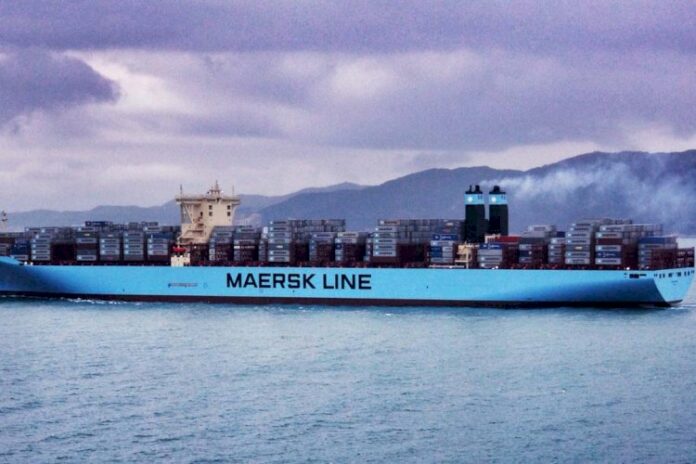
Participants in the trial were APMT, Maersk, the ship agent Inchcape Shipping Services (ISS), the towing services Svitzer and Fairplay and the local pilots of Loodswezen. A baseline measurement among 177 ships had established that on average, vessels wait 47 minutes before leaving the quay after cargo handling at the terminal has been rounded off. Surely there are opportunities to cut this ‘idle time on departure’.

Anne Geelhoed, business consultant at the Port of Rotterdam Authority, says:

‘As the port of Rotterdam, we continue to invest in efficient port calls. Ships need to be able to efficiently depart from the facility after cargo handling. We need to minimise the time between when a vessel orders nautical services and its actual departure. We can all take optimal advantage of the available resources to this end.’

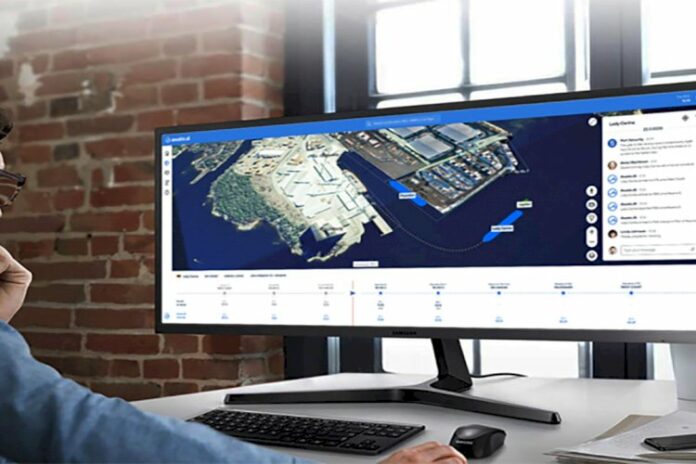
PortXchange allows the Port of Rotterdam Authority to facilitate the exchange of plannings and real-time status updates between all parties involved. This offers insight into when nautical services have been ordered and when they’ve been rounded off. As soon as the terminal operator can predict when cargo handling will be rounded off, it can contact the agent to order nautical services. PortXchange notifies the nautical service providers well in advance how late they are expected at the terminal.

It’s important to swiftly update the other parties in the chain on any possible delays at the terminal or in the provision of nautical services. This will enable them to adapt their planning if need be. For example, a tug can choose to serve another vessel first, or to take more time travelling to the terminal – which can help save fuel. To make this work, you need to work together, which is why the participants in the trial gave each other a look behind the scenes.

After the start of the trial in September 2019, the partners met every week to jointly compare the plannings – and their actual execution. They mainly focussed on ships with an idle time on departure of over 45 minutes. Geelhoed says:

‘We can use the data in PortXchange to determine which calls are delayed, and why. If bunkering is scheduled too closely to the departure time, you can jointly anticipate what comes next. Can bunkering be moved forward, or should we ask the nautical service providers to come by later?’

By January, the average idle time on departure had decreased from 47 to 32 minutes. According to Michiel Zeevaart, the terminal’s regular updates played a significant role in this improvement:

‘You’re basically focussed on your own processes and tend to assume that the terminal is ready from the moment that the nautical service providers have been ordered. In the old days, delays and early completions at the terminals often weren’t reported. Now they are.’ 

In the meantime, a large share of Rotterdam’s container sector has already joined PortXchange – including all deep sea terminals. Right now, the Port of Rotterdam Authority is focusing on connecting other segments. 
First Green Loan for Van Oord

0

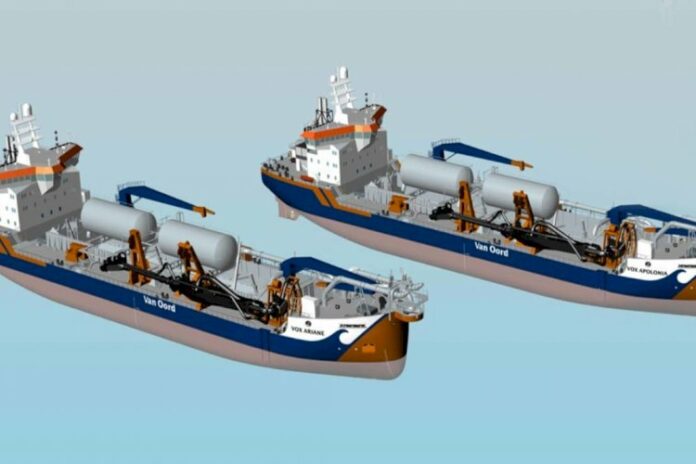
The first Green Loans under the agreement were signed by Rabobank and BNP Paribas last week. The Green Loans are linked to Van Oord’s sustainability programme S.E.A. and are intended for the financing of the three new LNG trailing suction hopper dredgers currently being built by Keppel FELS Limited in Singapore.

The Green Loan is structured according to the Green Loan Principles 2020 as drawn up by the Loan Market Association, the authoritative voice of the syndicated loan market. The Green Loan Principles aim to support environmentally sustainable economic activities. Van Oord’s Green Framework contains the criteria that the vessels must meet in order to qualify for this type of loan. One of the advantages of this Green Loan Framework is that additional green loans can be added to the framework in the future.

Danielle van Rieven, Director Treasury, said:

“With the Green Loan Framework we are leveraging Van Oord’s sustainability strategy to our financial partners. I am proud that we have now taken out the first Green Loan for the three sustainable vessels.”

The new trailing suction hopper dredgers are part of Van Oord’s innovative investment programme and fit in with Van Oord’s ambition of making its fleet more economical and energy efficient. The vessels will obtain a Green Passport and Clean Ship Notation and by using LNG, van Oord will reduce the emissions of its fleet.

Innovative floating renewable energy platform in the UK

0

The £1.4million MARLIN STAR project, funded by the Energy Catalyst programme, will progress the development and commercialisation of an innovative modular, floating renewable energy platform that will enable coastal community access to stored and transferable clean energy.

A UK-based consortium, led by Frontier Technical, will deliver the project, which has huge export potential to countries where remote off-grid coastal communities can benefit directly from local offshore renewable energy generation.

The platform will be capable of hosting a wind turbine with capacity up to 2MW, as well as onboard energy storage and transfer capabilities. Its controllable float modules fit into standard ISO shipping containers and assembly completed underwater without the need for large port infrastructure or heavy floating crane vessels.

The MARLIN modular floating platform is the patented invention of engineer Trevor Hardcastle. He said:

“Our intention is for the configurable MARLIN floating platform to be a UK innovation success story. We will apply UK research, technology and manufacturing expertise and export to countries in need of replacing fossil fuels and wood burning with cost-effective sustainable renewable energy that can be operated and maintained locally. I’m excited to see the Frontier Technical vision starting to take shape and look forward to working with our partners in the project”

The UK consortium partners include the Offshore Renewable Energy (ORE) Catapult, which will undertake market analysis and the mechanical testing, assembly and initial demonstration of the floating platform. Durham University’s Energy Institute (DEI) will carry out sociotechnical research in island communities in Bangladesh and India. Engineering services firm Francis Brown Ltd will progress offshore fabrication and Tension Technology International will be working on an innovative synthetic mooring and anchoring system, with Plymouth Marine Laboratory deploying and testing the platform offshore. The consortium will also be joined by India-based The Energy and Resources Institute, providing social science research in coastal communities in Gujarat state in India.

Stephen Robertson, ORE Catapult’s Head of Business Development, said:

“The MARLIN STAR project is a great example of UK ingenuity and collaboration, with huge potential as a floating wind solution for powering off-grid coastal communities. We are extremely pleased to be part of a consortium responding to the call of an international innovation challenge, especially as it reinforces the UK’s strengths in offshore renewable energy”

RightShip will transition to a new Safety Score

0

RightShip, the world’s largest maritime risk management and environmental assessment organisation, has announced the launch of its new Safety Score, heralding a new era for safety and due diligence in the shipping industry.

The launch of the new Safety Score comes as RightShip responds to industry feedback that called for more transparent methods of assessing vessels. RightShip has spent the last two years working in collaboration with stakeholders from across the shipping industry. The new Safety Score provides a metric that is explainable, transparent and only includes factors which are in the control of the operator, to help support improved safety across the entire maritime sector.

The Safety Score will be housed on the new RightShip Platform, which will replace the current platform Qi as well as the predictive Risk Rating once the Safety Score goes live. The announcement is being made before its formal launch in September 2020, to provide the maritime industry with a period of time to prepare for the switch over.

RightShip’s previous Risk Rating predicted the likelihood of a vessel having an incident across the next 12 months. The new Safety Score focuses on providing the operational performance at the vessel, DOC holder, flag and class level.

The Safety Score uses a refined methodology that analyses the severity of any previous incidents, the frequency of incidents and any previously identified detentions and deficiencies for a given vessel. The new score also takes account of the proactivity of owners, operators and managers in managing safety and risk, by looking at their responsiveness to incidents, deficiencies or detentions. This in turn helps to provide a clear, identifiable path towards improving safety standards and processes.

It creates a level playing field for all vessels on the water, regardless of type, size, age or builder, allowing industry participants to benchmark their safety procedures against the sector’s best performers. It is intended to help users gain an initial perspective on the operational performance of a potential charter, and to encourage shipowners to invest in improved processes and technologies that make the entire supply chain safer.

Commenting on the launch of the Safety Score, Martin Crawford-Brunt, CEO at RightShip, said:

“Since 2001, RightShip’s mission has been to help improve safety across our industry. An important element of this mission has been to ensure that we provide the market with the tools that ultimately help to underpin that pursuit of continuous improvement. Our new Safety Score recognises considerable industry feedback calling for greater transparency and control of ratings, and is the result of widespread collaboration with owners, operators, managers, charterers and others across this global industry.

“We have created a balanced score which can be used by all members of the supply chain. For our due diligence customers, it provides a clearer insight to the operational performance of a vessel and DOC holder. The Safety Score is an indicator designed to be used as one of many factors in the due diligence process. Coupled with maritime expertise, it allows for the assessment of a nominated vessel and the provision of a vetting recommendation for a charterer.

“For the shipowning community, the new Safety Score takes into account management performance and approach, giving owners a true understanding into how they can improve safety across multiple parameters. It also encourages shipowners to invest in system improvement, processes and technologies that make the entire supply chain safer.

“We believe that this will support improving wider safety standards across the industry and drive a new conversation within shipping about how we manage risk whilst safeguarding our operations, which is particularly important in our current environment.”

Over the coming months, RightShip is providing a range of resources to support the launch of the new Safety Score and facilitate the transition. These include educational webinars and a dedicated resource page at comingsoon.rightship.com. Existing RightShip members will also be invited to familiarise themselves with the new user interface and functionality during a dedicated Beta testing window, commencing 30th June 2020.

Four Marseille companies selected to work on the new ferry terminal

0

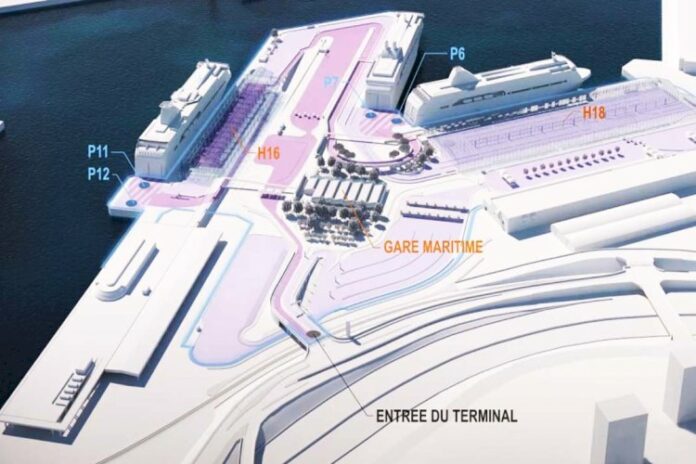
Having secured a favourable recommendation from the inquiry commissioner to build the new Cap Janet international terminal in late 2019, the Port of Marseille Fos selected Eurovia Méditerranée, GTM Sud, Isolbat, and Snef to carry out the work.

Every year, the Port of Marseille Fos caters for around 500,000 passengers travelling to and from North Africa. This passenger traffic results in 400 calls currently spread over 2 sites: one opposite Cathédrale de la Major and the other near Cap Janet. In order to improve the accessibility and passenger reception conditions, the Port of Marseille Fos and Aix-Marseille Provence Metropolis, in partnership with the government, and regional and département authorities, will group all these operations on the Cap Janet site.

The new international ferry terminal will provide direct access from the A55 motorway – just after the Port’s Gate 4. It will incorporate a route with a capacity of 3,000 vehicles per day, upgraded border control units and comfortable spaces for waiting passengers as well as a 600 passenger-capacity pedestrian terminal.

Following the official publication of the call for tenders, the Port of Marseille Fos selected GTM Sud for the structural work (€5.6 million), Isolbat for the finishing work (€1.3 million), Eurovia Méditerranée for the roads and networks (€2.4 million) and Snef for the technical equipment (€3 million). These four companies were selected as the best bidders in terms of both technical and financial criteria.

Work is expected to start at the end of the summer, and the terminal should be ready for operation in 2022. Now the Port and the companies are beginning the site preparation phase. The present health crisis has forced them to innovate and find solutions to ensure that the staff are safe and the timetable is maintained. 


SGRE confirms order for 496 MW Bay of Saint Brieuc offshore wind power plant

0

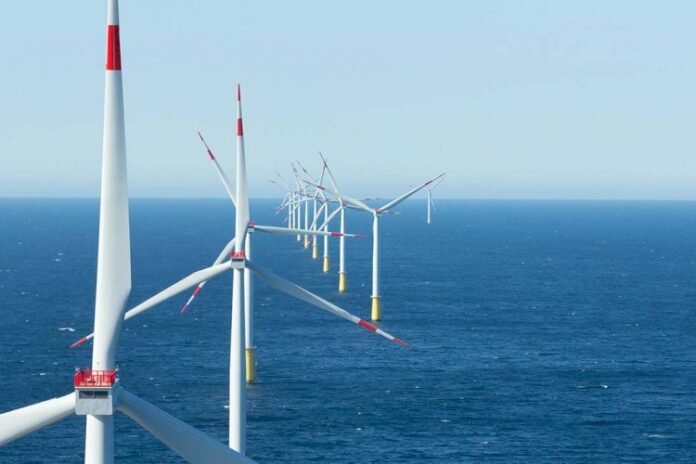
Siemens Gamesa Renewable Energy (SGRE) has received the firm order from Ailes Marine, an affiliate of Iberdrola, for 62 SG 8.0-167 DD offshore wind turbines for 496 MW Bay of Saint Brieuc offshore wind power plant. This order also includes a 10-year agreement for turbine maintenance services.

Andreas Nauen, CEO of the Siemens Gamesa Offshore Business Unit, said:

“We are extremely excited to add France to the many markets around the world where our offshore wind turbines contribute to providing clean energy and combatting climate change. Making Bay of Saint Brieuc Siemens Gamesa’s first firm offshore order in France is a historic moment and a testament to our dedication to growth in the market, and to driving the globalization of offshore wind energy. We thank Ailes Marines for their confidence in our products as well as our manufacturing plans for France.”

Filippo Cimitan, Managing Director of Siemens Gamesa Renewable Energy France, added:

“This is excellent news for the energy transition, the offshore wind energy sector, and the industry in France. This first firm order is an important step toward the concretization of our industrial plant project in Le Havre, and confirms our status as the leading supplier of offshore wind turbines in the market.”

The main components of the 62 turbines of the Bay of Saint Brieuc offshore wind power plant will be produced at Siemens Gamesa’s planned offshore wind turbine factory in Le Havre.

The Bay of Saint Brieuc offshore wind power plant will produce the equivalent of the electricity consumption of 835,000 people.

Javier García Perez, President of Ailes Marines and Iberdrola’s International Offshore Business Director, said:

“By selecting Siemens Gamesa Renewable Energy’s 8 MW wind turbines, Saint-Brieuc offshore wind farm secures a best-in-class, high-performance technology.  Ailes Marines is fully committed to the development of the French offshore wind industry, which is creating thousands of high-skilled jobs, driving the green economic and industrial recovery of France and contributing to delivering the renewables-led net zero targets.”

Key project figures:

  • Area: 75 km2
  • Turbines: 62 Siemens Gamesa SG 8.0-167 DD, each with an 8 MW capacity
  • Installed capacity: 496 MW 
  • Annual production: 1,820 GWh, the equivalent of the annual electricity consumption of 835,000 people (including heating)

ILO, IMO and ICAO urge governments to act on crew change, ‘key worker’ status

0

Fang Liu (International Civil Aviation Organization), Kitack Lim (International Maritime Organization) and Guy Ryder (International Labour Organization) say that the aviation and maritime transport sectors, along with fisheries industry, are too important to global supply chains to have any disruption caused by government restrictions preventing crew change and travel.

The leaders said:

“Our three Organizations seek to ensure that seafarers, marine personnel, fishing vessel personnel, offshore energy sector personnel, aviation personnel, air cargo supply chain personnel, service provider personnel at airports and ports are designated as ‘key workers’, regardless of nationality, to exempt them from travel restrictions, to ensure their access to emergency medical treatment and, if necessary, to facilitate emergency repatriation.”

The international bodies also urged governments to remove restrictions stopping crew from disembarking from ships in port. Currently, many transport workers cannot transit through a territory to an airport or other transport hub for a crew change and repatriation home. They say repatriation flights must be sped up.

They said:

“We are seeking the support of Governments to facilitate crew changes, operations essential to maintain the global cargo supply chains and operations related to humanitarian aid, medical and relief flights. For humanitarian reasons – and the need to comply with international safety and employment regulations – crew changes cannot be postponed indefinitely.”

Governments have been encouraged to grant all seafarers, fishers, offshore energy workers, and aviation and airports workers exemptions from national travel- and health-related restrictions in order to facilitate the resumption of crew changes on ships and aircraft, and in airports and cargo facilities. 

The call adds pressure on governments to act urgently on maritime crew changes. Approximately 200,000 seafarers are currently stuck on board vessels across the world, unable to relieved by fresh crew due to the Covid-19 restrictions brought in by governments across the world.

The 16th of June is looming as the deadline given by the ITF and maritime employers for governments to implement the IMO protocols that would make crew changes possible.

The ITF has warned that the restrictions must be removed to avoid any shutdown in global trade.

Click here to see the full Joint Statement which includes further details on the specific actions needed by governments.

To support the campaign for a crew change, you can sign the Seafarers Matter Petition.

Smart Delta Resources launches project to substantially reduce CO2 emissions

0

Capturing and reusing or storing CO2 (Carbon Capture & Utilisation/Storage, or CCUS for short) has the potential to cut CO2 emissions in the North Sea Port area by 30% (6.5 million tonnes of CO2 per year).

With this in mind, a consortium of Belgian and Dutch companies have set up the Carbon Connect Delta project, starting with a feasibility study on CCUS in 2025. The study will examine all aspects of CCUS: the technical, economic and legal aspects, the required infrastructure for the transport of CO2 by pipeline or ship, finance options, commercial feasibility and permit procedures. The consortium expects to complete the feasibility study by the end of 2020, after which the project will be further developed for implementation.

The consortium is made up of Smart Delta Resources, North Sea Port, the companies ArcelorMittal, Dow Benelux, PZEM, Yara and Zeeland Refinery and infrastructure partners Gasunie and Fluxys. Together, the consortium partners have a broad network and the required knowledge and expertise to make the Carbon Connect Delta project a success. Because the consortium cooperates across industrial sectors (chemicals, petrochemicals and steel), as well as with the relevant government agencies in both countries, unique synergies and opportunities for a sustainable economy will be generated.

The consortium’s aim is to capture 1 million tonnes of CO2 per year as early as 2023 and to increase this to 6.5 million tonnes per year by 2030, which will represent a 30% reduction in CO2 emissions in the Scheldt-Delta region. In this way, the Carbon Connect Delta project will make an important contribution to the Paris climate objectives and the more recent European Green Deal.

CCUS is one of the tracks that Smart Delta Resources (SDR) is pursuing in order to achieve climate-neutral industry in the Scheldt-Delta region by 2050. SDR, supported by Impuls Zeeland, the Province of Zeeland and the Province of East Flanders, is also working on other development tracks, such as sustainable hydrogen (Hydrogen Delta), residual heat, electrification and recycling.

Smart Delta Resources has already taken steps to substantially reduce CO2 emissions. In early 2018, a Roadmap was adopted to enable the industry cluster to meet the Paris climate objectives. In recent years, various studies have been completed on the required energy infrastructure. A hydrogen link between Dow in Terneuzen and Yara in Sluiskil has already been built. In addition, the innovative Steel2Chemicals (Dow Terneuzen) and Carbon2Value (ArcelorMittal Gent) projects are well-advanced.

Viking Line will open up passenger service starting June 1

0

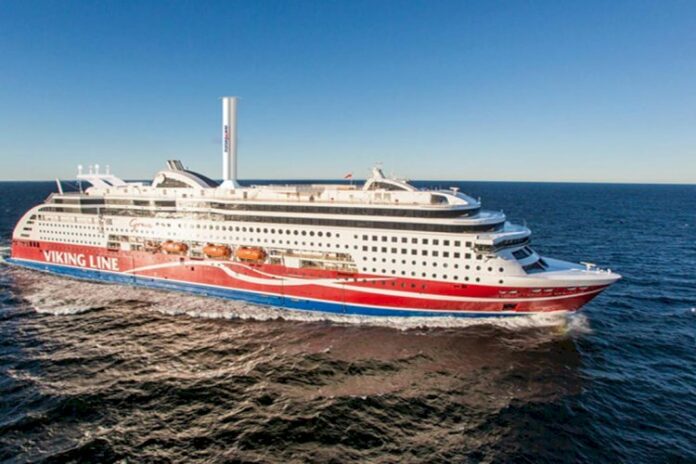
In view of the Finnish government’s decision to gradually ease some coronavirus-related restrictions, Viking Line will open up passenger service at a cautious pace starting June 1.

The Port of Mariehamn has reopened as a passenger harbour. This means Viking Line can now offer its passengers a day of fresh sea air in the archipelago from Turku. Places are limited given the current situation, so travel is on a first come, first served basis. Going forward, passengers should observe the government restrictions in effect, and Viking Line recommends that all passengers study the instructions in effect prior to their trip.

Five of Viking Line’s seven vessels will operate between Finland and Sweden, the Åland Islands and Estonia. People can still continue to travel as usual between the Finnish mainland and Åland.

Jan Hanses, President and CEO of Viking Line, says:

“We look forward to resuming our normal service with the hope that this can take place in time for the summer peak season. We have taken great effort to make travel safe and secure for our passengers. According to a number of surveys, there will be great interest in holidaying locally. We can be of service here by providing trips to our destinations and above all through our unique archipelagos, which are now at their most beautiful.”

Awake.AI announces its webinar about a revolutionary platform for maritime actors

0

Awake’s open and collaborative platform drives the digital transformation in maritime logistics, and its “Smart Port as a Service” TM spearheads the smart port ecosystem creation.

The platform and its service will enable improved efficiency, sustainability, competitiveness, and lower costs for all port actors, including port authorities, terminal operators, cargo owners, and many more.

Pasi Salmela, stevedoring and terminal advisor, says:

“We believe that information sharing and transparency among different actors is the foundation for smarter ports, better situational awareness and operational efficiencies. And Awake’s platform is offering exactly that.”

Join this webinar to discover some of the latest Awake.AI’s innovations.

Key takeaways:

  • Save time and cost of transport and port calls
  • Improve operational planning
  • Reduce emissions

Speakers and agenda:

  • New dawn for maritime logistics!
    Karno Tenovuo, Co-founder, CEO – Awake.AI
  • AI in maritime logistics
    Jussi Poikonen, Co-founder, AI & Analytics – Awake.AI
  • Revolutionizing berth planning
    Pasi Salmela, Regional Director, Senior Advisor – Oy M. Rauanheimo Ab
  • Awake platform and ecosystem
    Anssi Lappalainen, Senior Project Manager – Awake.AI
  • Smart port as a service
    Sami Kaksonen, VP of Sales & Marketing – Awake.AI

DATE: June 16th
TIME: 9:30 – 11:30 (EET)

Registration is open now.