0.3 C
New York
Home Blog Page 848

Sanmar and Svitzer deliver power and performance to Port of Sohar

0

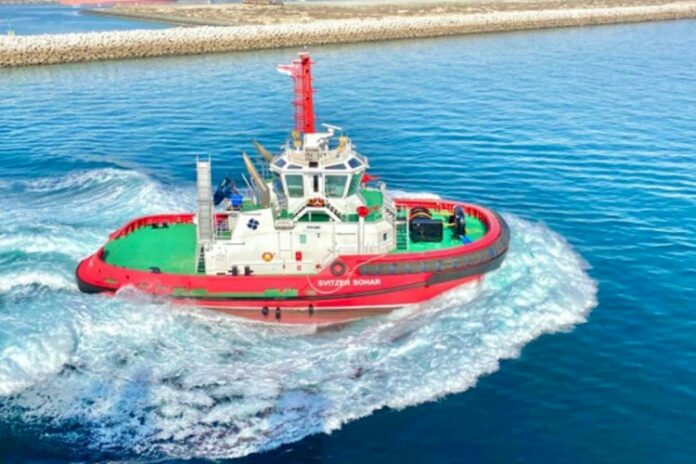
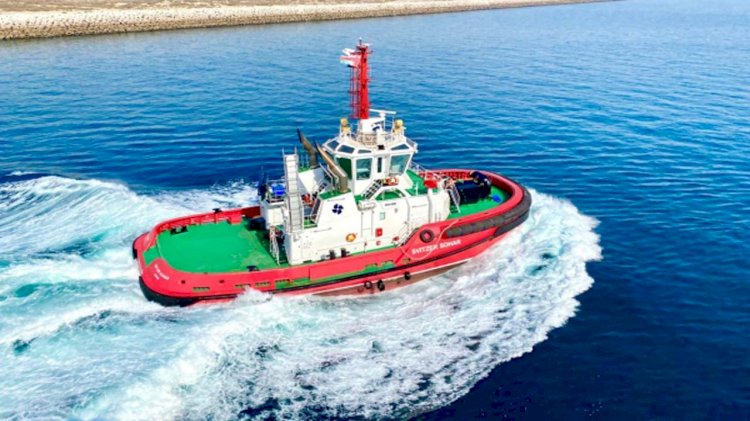
The arrival of this tug to the Port of Sohar, alongside its two sisters due shortly, will conclude the fleet development aims of the operator, Svitzer and Port of Sohar; agreed as part of the 15 year renewal of the formers marine services contract, awarded in early 2019. It is expected that the remaining two Bigacay class units will be mobilised to Sohar port together once the third unit completes sea trials in June.

The Bigacay class deliver a whole new level of tug power and performance to the port. Gary Dockerty, Sales Director (Middle East and Africa) of Sanmar Shipyards stressed:

“The Bigaçay series was developed with our design partners Robert Allan Ltd. (RAL) for Sanmar exclusively and is a variant of the RAstar range described as ‘RAstar 2900SX” compact tugs aimed at ensuring efficient construction while still meeting the customisation requirements of discerning clients.”

The design has a sponsoned hull form which is proven to provide significantly enhanced escort towing and seakeeping performance.
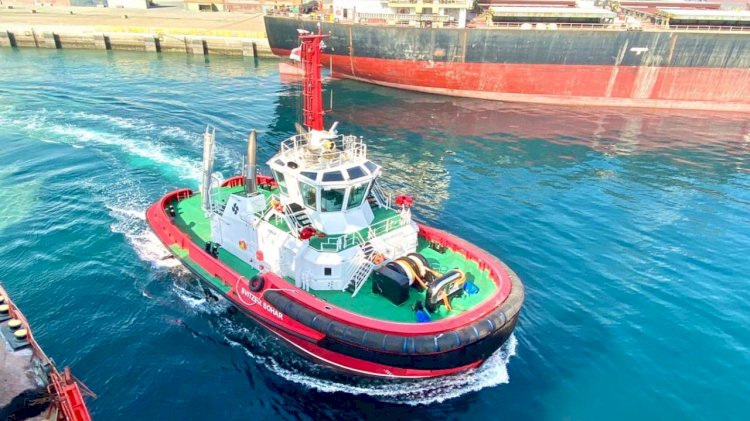
The trio, measuring 29.4m in length with a moulded beam of 13.3 and an overall draft of 6.0m, are  powered by  a pair of CAT 3516C main engines, each delivering 2,525kW coupled to Kongsberg US255FP azimuth thrusters for a mighty +80t bollard pull . As well as towage, the other services the tugs will be required to provide are: Fire-fighting, pollution response support and salvage operations within the Port.

A comprehensive towing capability is ensured with DMT supplying a high performance escort towing winch forward along with an aft towing winch on one of the three tugs. A Data anchor windlass and Palfinger deck crane are also included in the deck equipment list while FFS provide a main engine-driven external firefighting system meeting FiFi1 notation via two forward bridge deck monitors.

Accommodation is provided for eight persons with master and chief engineer cabins on the main deck and three twin-berth cabins on the lower accommodation deck. All cabins are en- suite and with the area of operation in mind a comprehensive HVAC system is included throughout the accommodation and wheelhouse areas.

Peter Rosewall, Svitzer Port Manager Sohar, said:

“We are all very excited to receive the first of the Bigacay class tugs here in Sohar. Svitzer Sohar, the first of the Bigacay class tugs, was recently delivered to Svitzer in Istanbul, and she is a huge step up with bags of power, a lightning fast winch – and being highly manoeuvrable, allows the operations to flow smoothly and quickly. The size and power of the tugs matches nicely with the Valemax vessels regularly calling at Sohar allowing for a higher margin of safety. She is also fitted with FiFi class 1 and provides Sohar port with 24 hour seaborne and quayside firefighting capability needed for the multitude of cargos being transported through the port.”

Svitzer has previously placed orders with Sanmar Shipyards in recent years for 25 tugs in total, 23 ASDs and 2 ATDs, employed in the fulfilment of various towage contracts. 
Biosensors in Arctic bivalves for environmental monitoring

0

Monitoring the quality of ocean water is important, for various societal, economic and ecological reasons. But it is also costly and time-consuming, and the monitoring task itself can sometimes put humans at risk. We are looking for better ways to monitor water quality in high-risk environments.

Traditional systems for monitoring water quality in aquatic environments are rather expensive and rely on intensive exploitation of human resources to collect samples, do chemical analysis, and measure toxicity. This is especially true in the Arctic, where environmental conditions can be harsh, particularly in the winter due to low temperatures and poor availability of light. A desirable solution is to develop systems that can work without hands-on human control, either as sensors by themselves or as early warning detectors to trigger a sampling campaign.

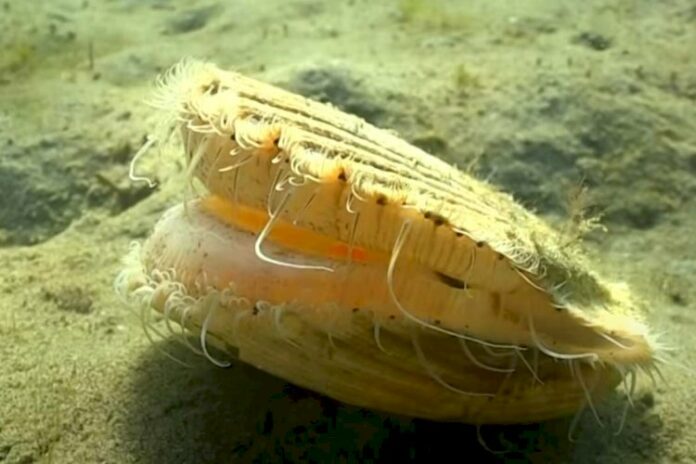
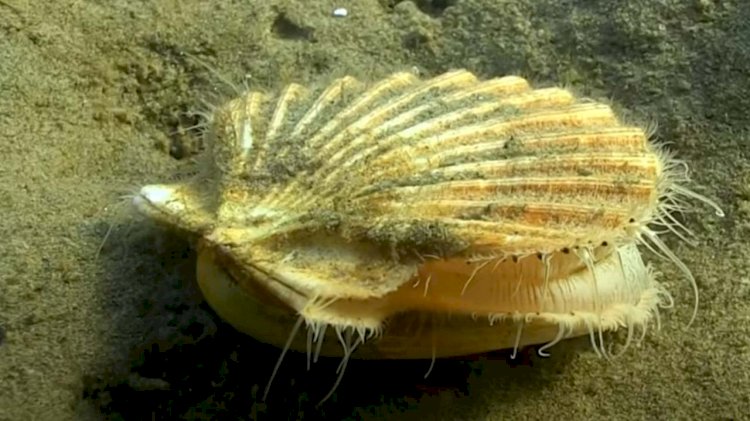
In 2012, researchers from Akvaplan-niva AS and EPOC, a research unit of the University of Bordeaux and the French National Centre for Scientific Research, teamed up to deploy a valvometer – a device that monitors the gaping behavior of bivalves – in Ny-Ålesund, Svalbard. The aim of this deployment was to adapt this biosensor developed by EPOC to Arctic conditions in order to study how the Icelandic scallop Chlamys islandica behaves and how its biologic rhythms are adapted to the Arctic environment. A new deployment with blue mussels Mytilus sp. was carried out in 2016 to study that species’ biology. The blue mussel had disappeared from Svalbard, but due to climate warming, it has resettled since the beginning of the 2000s.

To monitor the bivalves’ activity directly in the field, the valvometer is installed inside a cage. A pair of extremely light electrodes with flexible cables are glued on each half shell. An electromagnetic current generated between the electrodes makes it possible to measure the mollusk shell opening and closing. In a typical biosensor deployment, sixteen pairs of electrodes are coupled to a waterproof box next to the animals, simultaneously recording the behavior of sixteen bivalves.

This box contains a circuit board that manages the electrodes and is connected by cable to a second circuit board at the sea surface or on land. The data are saved and digitised, and then transferred to a supercomputer. The system measures the bivalves’ opening status every 1.6 seconds.

The continuous monitoring of Icelandic scallops and, more recently, blue mussels in Ny-Ålesund is allowing to understand the baseline gaping behavior and shell growth of both species and how changes in the environment affect the species’ life cycles. A surprising discovery was that despite the lack of light during the polar night, both species continue to grow in winter, and maintain a daily cycle in their behavior.

Once researchers have characterised baseline behavior, they can study how stressors such as increased temperature or the presence of toxins in the water disturb the species’ gaping behavior. In 2020, they will expose Icelandic scallops to harmful algae under laboratory conditions, to test whether the species changes its baseline behavior. If researchers manage to record behavioral changes that can be attributed to the presence of phycotoxins in the water, they will have developed a biosensor that can be employed as an early warning system to detect harmful algae blooms in the north. Such monitoring tools are much-needed nowadays, especially by the salmon aquaculture industry.

Future projects also include testing whether the biosensor coupled with a hydrophone can be employed to study the effects of noise pollution in the sea. In this regard, this innovative tool holds promise for marine monitoring, allowing managers to assess the environmental status of marine and freshwater ecosystems remotely and in real-time.

Brødrene Aa delivers high-speed all-electric ferry

0

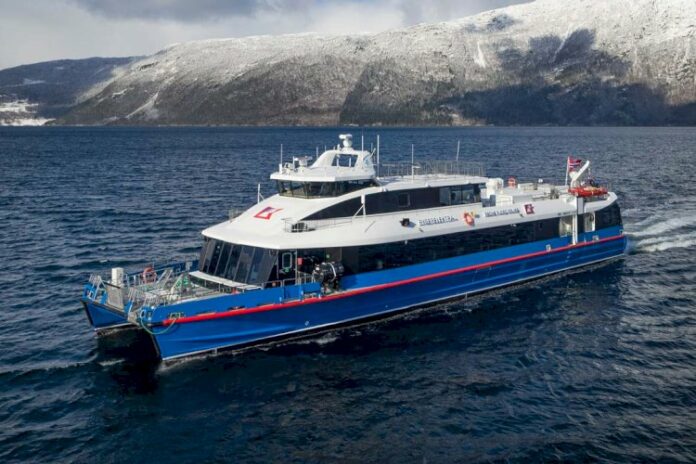
The 297 passenger all-electric ferry measures 42 meters in length and is capable of 23 knots.

At full passenger capacity, she will have an operational range of 50 nautical miles at a speed of 17 knots and will use less than 70% of her 2.0 MWh battery capacity between charges at this speed. This vessel is breaking barriers for environmentally conscious transportation and serves as a testament to what is possible with all-electric propulsion.

Rygerelektra was delivered to the longtime customer Rødne Fjord Cruise as a sightseeing vessel based out of Stavanger, Norway. This is the 20th vessel Rødne Fjord Cruise has purchased from Brødrene Aa over the last 50 years and is intended to be the company’s flagship vessel for their eco-friendly fjord sightseeing trips.

Petrofac awarded significant North Sea well management contract

0

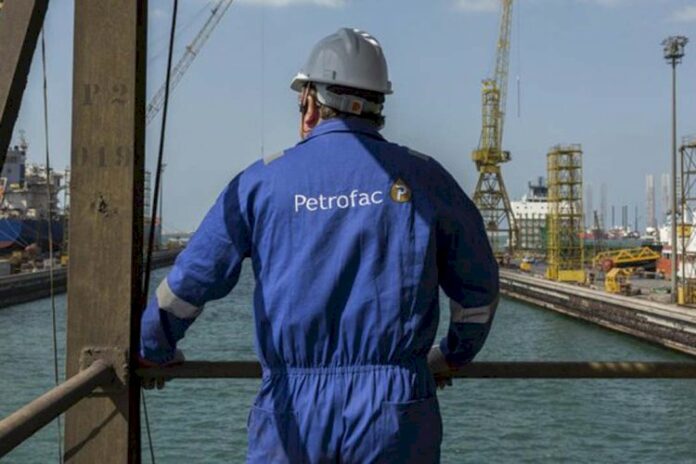
Petrofac’s Engineering & Production Services business (EPS) announces today that it has secured a well management contract for Phase 1 of Independent Oil and Gas plc’s (IOG) Core Project. 

Petrofac will support IOG’s development of the Southwark, Blythe and Elgood fields in the UK Southern North Sea (SNS). The five-well contract scope covers the planning, execution and close-out phases of the Phase 1 drilling programme, with Petrofac intended to act as Well Operator on behalf of IOG, a role it has performed for nine other companies in the UK North Sea.

The planning phase includes detailed well design, risk assessment and management of well-related regulatory requirements. During the execution phase Petrofac will manage well engineering, procurement and logistics, assure well construction and integrity, and provide onshore and offshore personnel to support the drilling campaign.

Nick Shorten, Managing Director for Petrofac Engineering and Production Services West, said:

“We are thrilled to be supporting IOG’s prestigious SNS gas development project. Through the deployment of our extensive asset and well management expertise, we will work closely with IOG to assure the integrity of the wells and deliver a safe and cost-efficient drilling programme to support the advancement of their development.”

Andrew Hockey, CEO of IOG, commented:

“We are very pleased to have selected Petrofac as the well management contractor for Phase 1 of our core UK SNS gas development. Petrofac has demonstrated that they have the right credentials and expertise to execute what will be a critical role in helping IOG to deliver a safe, productive and cost-effective five-well Phase 1 drilling campaign kicking off in the first half of next year. The IOG drilling and subsurface teams have already established a strong working relationship with the Petrofac team in recent months and this will deepen further as Phase 1 drilling preparations ramp up.”

Qatar Petroleum signs the largest LNG shipbuilding agreements in history

0

Qatar Petroleum entered into three agreements today to reserve LNG ship construction capacity in the Republic of Korea to be utilized for Qatar Petroleum’s future LNG carrier fleet requirements, including those for the ongoing expansion projects in the North Field and in the United States.

Under the agreements, the “Big 3” Korean shipyards – Daewoo Shipbuilding & Marine Engineering (DSME), Hyundai Heavy Industries (HHI) and Samsung Heavy Industries (SHI) – will reserve a major portion of their LNG ship construction capacity for Qatar Petroleum through the year 2027.

The agreements were signed by His Excellency Mr. Saad Sherida Al-Kaabi, the Minister of State for Energy Affairs, the President and CEO of Qatar Petroleum in a virtual signing ceremony attended by His Excellency Mr. Sung Yun-mo, the Minister of Trade, Industry & Energy of the Republic of Korea. Also attending were Sheikh Khalid Bin Khalifa Al Thani, CEO of Qatargas, the CEOs of the Korean shipyards, senior representatives from Korea’s Ministry of Trade, Industry & Energy, as well as executives from Qatar Petroleum, Qatargas, and the three Korean shipyards.

On the Korean side, the agreement with DSME was signed by Mr. Sung Geun Lee, the President and CEO of DSME, the agreement with HHI was signed by Mr. Sam H. Ka, the President and Board member of HHI, and the agreement with SHI was signed by Mr. Joon Ou Nam, the President and CEO of SHI.

Speaking at the signing ceremony, His Excellency Minister Al-Kaabi said:

“The signing of today’s agreements with the three esteemed Korean companies reflects our commitment to the North Field expansion projects, even during these extraordinary times. We are moving full steam ahead with the North Field expansion projects to raise Qatar’s LNG production capacity from 77 million today to 126 million tons per annum by 2027 to ensure the reliable supply of additional clean energy to the world at a time when investments to meet these requirements are most needed. These agreements will ensure our ability to meet our future LNG fleet requirements to support our expanding LNG production capacity and long-term fleet replacement requirements.”

His Excellency Minister Al-Kaabi added:

“With the conclusion of these milestones agreements, we have everything in place to commence the largest LNG shipbuilding program in history. We have secured approximately 60% of the global LNG shipbuilding capacity through 2027 to cater for our LNG carrier fleet requirements in the next 7-8 years, which could reach 100+ new vessels with a program value in excess of 70 billion Qatari Riyals.”

The new LNG vessels will be equipped with the latest generation slow speed dual fuel engines, utilizing LNG as a fuel. This will ensure the most efficient performance and compliance with the latest global emission and environmental regulations.

His Excellency Minister Al-Kaabi said:

“We will continue working on reducing emissions from our fleet to protect the regional and global environment in line with the environmental objectives of the Qatar National Vision 2030.”

Delivering his congratulations on the signing ceremony, His Excellency Minister Sung Yun-mo said:

“Despite the recent difficulties facing the international community, today’s signing was made possible by the long-standing mutual trust between Korea and Qatar as well as the outstanding risk management capability of His Excellency Minister Al-Kaabi.”

Mr. Joon Ou Nam, the President and CEO of Samsung Heavy Industries, said:

“I am deeply grateful for the signing of this agreement between Qatar Petroleum and Samsung Heavy Industries. SHI promises to deliver the best quality LNG carriers with on-time delivery. Particularly, we will build the best LNG carriers for Qatar Petroleum in terms of efficiency, reliability and HSE through the technology and workmanship developed within our company.” 

Qatar Petroleum’s LNG carrier fleet program is the largest of its kind in the history of the LNG industry, and will play a pivotal role in meeting the shipping requirements of Qatar Petroleum’s local and international LNG projects, as well as replacing part of Qatar’s existing LNG fleet.

Tero Marine enhances its e-procurement solution with a new purchasing app

0

Leading fleet management software provider Tero Marine extends its e-procurement solution to mobile devices to optimize the supply chain for people on the move.

The versatile app automatically alerts users’ mobile devices when a PO requires their approval, within preset rules.

These rules are configured in TM Master’s approval matrix and can be based on a variety of  parameters including; order type, account group, cost code and vessel.

Rune Lyngaas, Tero Marine’s CEO, said:

“The new app improves the e-procurement work-flow as decision makers can approve purchase orders on the move, ensuring that supply chains are not hindered by POs stacking up in the pipeline awaiting authorization. The app strengthens Tero Marine’s TM Procurement solution, which is a fully integrated part of the fleet management software system TM Master V2.”

In an industry where autonomy and automation is emerging, the timing of the launch of this app is perfect. The new app is available from 1st June.

Tero Marine is part of the Ocean Technologies Group, which is a global learning and operational technology company dedicated to accelerating the potential of innovative companies that serve the maritime industry in the 21st Century.

The Group also includes maritime e-learning training providers Seagull, Videotel and Maritime Training Services plus document and HSEQ solutions provider COEX.

PORTAUTOMATION launches smartphone ISPS card checks

0

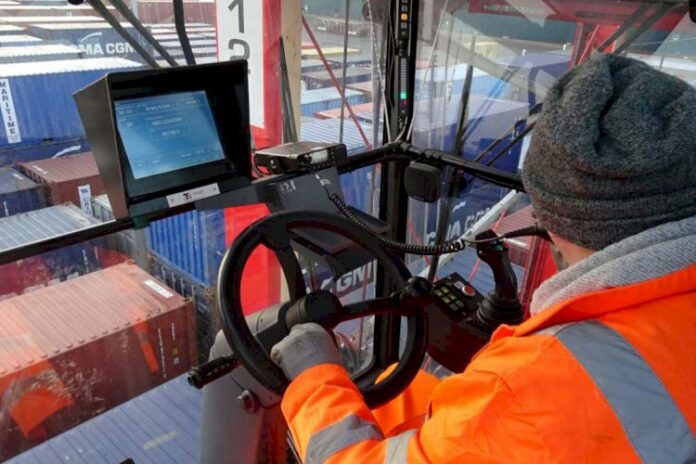
D-MON is part of the PORTAUTOMATION suite of systems. Using the operators ISPS card it checks whether a Cargo/Container Handling Equipment operator is authorised to drive the equipment. It prevents them from operating the equipment if they don’t have approval.

Now D-MON has been upgraded with the addition of a smartphone app to provide greater transparency and is helping promote secure and safe operation for port equipment and vehicles.

The D-MON smartphone app is part of the administrative tool set, allowing managers and supervisors to check individuals card credentials “on the go”. It allows managers to check who is driving what from their smartphones, and update credentials if necessary.

D-MON in action

  • D-MON card reader captures cards, preventing operators from logging-in for other operators.
  • D-MON can be fitted to any kind of CHE – or any vehicle used in your port or terminal.
  • Secures equipment, ensure only trained and authorised operation
  • Does not require separate identification, uses the site access card
  • Provides management with full operational visibility
  • Updates are centralised, does not require system update on each machine

RAN’s Fleet Cyber Unit deploys in support of Op MANITOU

0

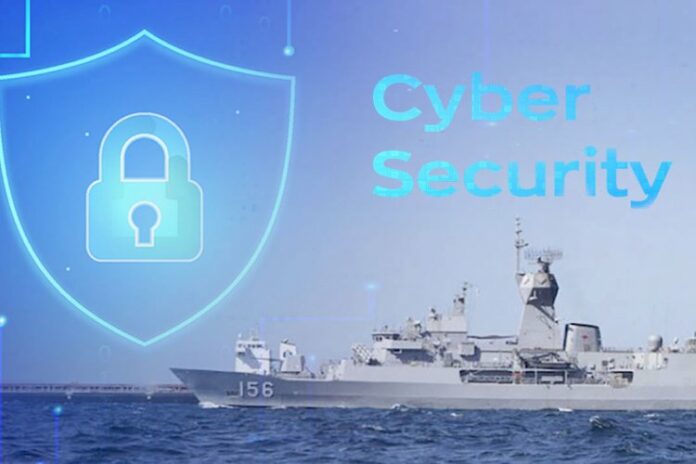
The Fleet Cyber Unit deployed two personnel and specialised equipment to work across multiple systems and defend networks against cyber attack.

Fleet Cyber Unit detachment lead, Lieutenant David Hayes, described the defensive operators as a roving guard force that searches the network for unusual trends and malicious activity.

Lieutenant Hayes said:

“The team’s goal is also to normalise Cryptologic-Network category integration into the full spectrum of cyberspace operations within maritime campaigns.”

Cyberspace is the notional environment in which communication over computer networks occurs.

The aim of Navy’s cyber operations is to fight and win in the information domain by effectively integrating cyberspace effects in support of the mission and at-sea deployments.

Lieutenant Hayes said:

“FCU will contribute by developing priorities to defend Navy’s mission-critical systems from adversary collection, manipulation and denial. In today’s operational environment, state and non-state actors regularly attempt to use cyber effects to achieve results that can have a greater impact on Royal Australian Navy operations than traditional kinetic means, often with an added layer of deniability.”

The nature of cyber warfare also means adversaries deliberately target the most vulnerable systems.

The FCU detachment is also conducting cybersecurity awareness briefings to Toowoomba’s ship’s company.

Able Seaman Cryptologic Networks Jackson Cronin said the emphasis was on the Navy Information Warfare Branch-developed ‘Navy Nine’ cyber awareness criteria. Able Seaman Cronin said:

“The ship’s company have been receptive to our support as they understand the significance of cyber threats in the Middle East.”

This is the 68th rotation of a Royal Australian Navy unit in the Middle East since 1990, Toowoomba’s sixth deployment to the region, and her second as part of Operation MANITOU.

Operation MANITOU is the Australian Government’s contribution to the international effort to promote maritime security, stability and prosperity in the Middle East Region (MER). An enhanced security environment ensures Australia’s safe and open access to the region while fostering trade and commerce.

Prysmian to supply french offshore wind farm with inter-array cables

0

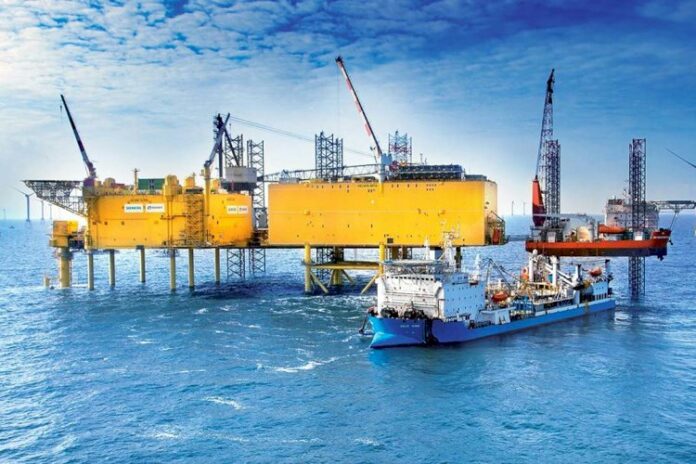
Ailes Marines in charge of the development, construction, installation and operation of the offshore wind farm in the bay of Saint-Brieuc, has awarded Prysmian Group, world leader in the energy and telecom cable systems industry with a contract worth of about €80 million to provide the submarine inter-array cable systems for the Saint-Brieuc offshore wind farm in France.

Prysmian will provide its comprehensive turn-key approach for the design, supply, installation, and commissioning of 90 km of three core 66 kV HVAC XLPE-insulated inter-array cables. Cable cores will be manufactured at the Group’s centres of excellence in Montereau-Fault-Yonne and Gron (France) and then assembled and finished in Nordenham (Germany), providing the French market with Prysmian’s state-of-the-art cable systems manufactured locally. Delivery and commissioning are scheduled for the end of 2022.
 
Hakan Ozmen, EVP, Projects Business Unit, Prysmian Group, stated:

“This award confirms once again our technological leadership enabling the energy transition also in France, while also underlining our ability to provide our customers with locally-manufactured solutions that ensure high performance.”

Olivier Angoulevant, BU Director Offshore Wind, Prysmian Group, added:

“This award represents an important milestone for Prysmian as it shows that our ambition to become a one-stop solution provider covering the entire supply chain is credible and sustainable. Our 66 kV cables system for inter-array networks allows twice as much power to be transported in comparison to 33 kV.”

This award confirms also Prysmian Group successful and continued relationship with Iberdrola Renewables who have awarded Prysmian several projects in recent years as the Wikinger offshore wind farm, located in the Baltic Sea, and the Vineyard offshore wind farm, located in Massachusetts, US. Javier Garcia Perez, President of Ailes Marines and International Offshore Business Director at Iberdrola said:

“The contract with Prysmian for the inter-array cables of Saint Brieuc offshore wind project is yet another important milestone which showcases that Ailes Marines is fully committed to investing in the green economic and industrial recovery of France while contributing to delivering the renewables-led net zero targets.”

BPA: Green maritime fund critical to emissions reductions in ports

0

The British Ports Association has published new research examining the barriers to shore power in UK ports, setting out three proposals to support the industry to meet ambitious emissions reductions targets.

Shore power, also known as cold ironing, is the provision of shore-based electricity to ships at berth, allowing them to turn off their auxiliary engines. These auxiliary engines are used for crew and passenger accommodation and cargo operations (such as pumps or heating or cooling systems) and typically use a type of diesel. Shore connections either provide power from the grid or nearby generation sources. They are commonly fixed at one berth but mobile solutions (by barge) are also in operation.

There are currently no large scale shore power connections in UK ports, due to the prohibitively high capital costs associated with such projects. The price of electricity in the UK and a general lack of consistent demand also means that there is rarely a commercially viable business case for investing in shore power. Such systems, however, have the potential to significantly reduce emissions from ships at berth.

The report identifies three primary barriers and three proposed solutions:

Primary Barriers

  1. High capital costs, both within the port and associated with energy network upgrades
  2. High electricity prices make it difficult to compete with relatively cheap marine fuel
  3. A lack of consistent demand from shipping, although that may be starting to turn for some parts of some sectors

Proposals

  1. a Green Maritime Fund to support emissions reductions projects, including shore power
  2. The removal of taxes on electricity from shoreside power in line with that available for marine fuel
  3. Goal-based approach to increasing demand, such as a zero emission berth standard

Commenting on the report, Mark Simmonds, Head of Policy at the British Ports Association, said:

“Shipping remains the most efficient way to move freight to, from, and around the UK. We recognise that whilst emissions from ports and ships are relatively small parts of the emissions puzzle, there is work to do to continue to bring them down.

Shore power is likely to play a role in reducing emissions from ships in ports in the future, but there are significant barriers to introducing it in UK ports. Government investment in green maritime to mirror investment in green vehicles is critical to helping the industry to continue to lower emissions.

We believe that a green maritime fund is needed to support decarbonisation in the ports and shipping sectors, but this alone will not overcome the challenges. We want to have a discussion about how a zero emission standard might help lower shipping emissions and bring greater certainty for ports and investors in low emission technology and infrastructure.”

Research undertaken by Arkevista for the BPA found that the total power usage of vessels at berth in the UK was over 641 Gigawatt hours of energy in 2019 – roughly 0.5% of the UK’s total energy demand. Other findings include:

  • Lack of demand: Whilst the number of vessels in the world fleet of 96,000 vessels with shore power is unclear, research suggests it is currently around 1500, with 809 of those container ships. Only 1.5% of ships on the order book currently will be ready to connect.
  • High Electricity Costs: Electricity prices for big business users is over twice that (per kWh) than other countries where plugging in ships is common, making it difficult to compete with the cost of marine fuel
  • Uncertain Energy Planning: Adding new capacity presents ports with punitive charges and risks ‘spiky’ demand, further inflating costs, whereas benefits accrue solely to port customers (i.e. ships). Just one shore connection could double the required electricity capacity needed by a port.
  • Container and cruise ships look the most likely segments to be shore power ready in future, although these require the most electricity which presents technical problems. Some ferries and offshore service vessels (OSVs) are also be promising sectors

The research was supported with advice, expertise and experience from a number of BPA associate members, including Arkevista, Arup, Schneider Electric, TT Club, and UK Power Networks Services.

Mike Hughes, Schneider UK & Ireland Zone President, said:

“We welcome the British Ports Association’s report examining the barriers to shore power connections in the UK. Research shows that by plugging into the power grid with 100 per cent renewable electricity and turning off their auxiliary diesel engines, ships at berth in the UK could reduce emissions equivalent to taking between 84,000 and 166,000 diesel buses, or 1.2 million diesel cars off our roads. As we look for ways to support a green recovery, shore-to-ship solutions powered by green energy represent an easy win. We would encourage the government to implement the report recommendations without delay and help ensure we can continue to enjoy the environmental benefits we are currently experiencing whilst supporting the economic recovery.”