0.8 C
New York
Home Blog Page 829

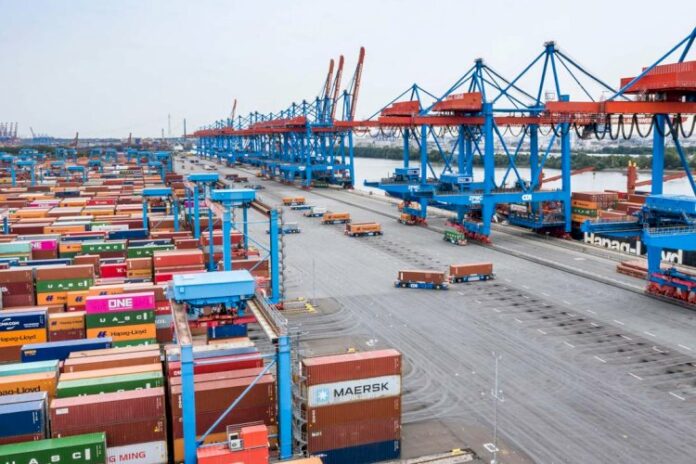
CTA recertified as the only climate-neutral container terminal worldwide

0

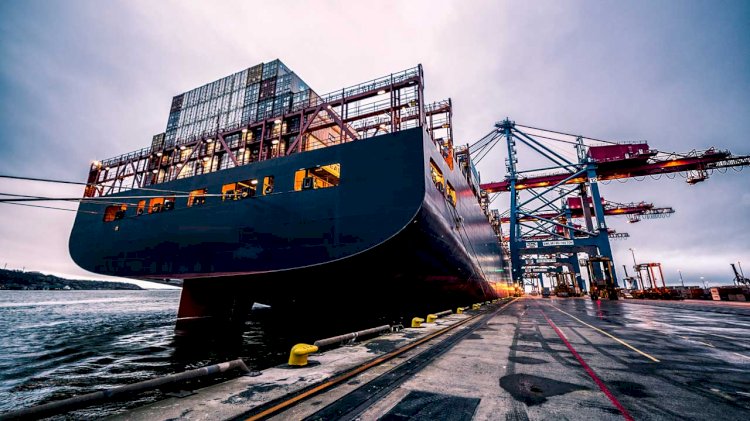
TÜV Nord, which certified the climate neutrality of the state-of-the-art facility last year for the first time, has now reconfirmed its rating. The CTA therefore remains the only certified climate-neutral container terminal in the world. However, the development is by no means complete. Hamburger Hafen und Logistik AG (HHLA) intends to be climate-neutral by 2040. The CTA plays a key role in the attainment of this goal.

Angela Titzrath, Chairwoman of HHLA’s Executive Board, says:

“Though climate and environmental protection have receded into the background due to the coronavirus pandemic, this does not mean the need to act has diminished. Regardless of the current challenges, HHLA remains firmly committed to its climate protection goals.”

This means halving its absolute carbon emissions by 2030 compared with 2018 and achieving climate neutrality in the Group by 2040.

HHLA’s goals make it a pioneer in the Free and Hanseatic City of Hamburg. In the city’s new cross-party coalition agreement, the CTA is highlighted as a standard-bearer for the governing parties’ objective of making the Port of Hamburg climate neutral by 2040.

HHLA regards technical excellence and process efficiency as crucial elements in developing sustainable solutions, being environmentally responsible and operating successfully. The CTA’s renewed TÜV certification demonstrates how technical innovation, automation and digitalisation make climate-neutral container handling possible.

The 14 container gantry cranes for seaborne handling, the 52 completely electric gantry cranes in the container storage blocks and the four rail-mounted gantry cranes at the largest rail terminal in Europe are all powered by 100 percent green electricity. Half of the approximately 100 container transporters (Automated Guided Vehicles/AGVs) at CTA already run on lithium-ion batteries. Two-thirds of the fleet will be replaced by the fast-charging battery technology by the end of this year and by 2022, all AGVs will have been switched.

The focus of technical enhancements is the avoidance or reduction of carbon emissions under economic conditions. HHLA offsets terminal processes for which this is not yet possible, due for instance to a lack of viable technical solutions, by means of emission reduction certificates. The goal is to consistently reduce the portion that is offset. Last year the carbon footprint at CTA was reduced by a further 6.4 percent which therefore did not require compensation. At the same time, HHLA is working with manufacturers on the development of new technological solutions. For example, prototype tests of battery-powered tractor units for use between block storage and the rail terminal are currently being carried out.     

Titzrath says:

“Since its opening in 2002, the CTA has undergone continuous development. Today, it also serves HHLA as a research and testing laboratory for new, highly promising technologies. Solutions that have proven themselves here are frequently used later at terminal facilities around the world.”

V.Group will leverage on Ocean Technologies Group’s digital platforms for e-learning

0

V.GROUP, the leading global provider of ship management and marine support services, and Ocean Technologies Group, the leading provider of maritime learning and operational technologies, have entered a strategic partnership to offer best-in-class e-learning to V.Group personnel and customers.

Starting later this year, V.Group will leverage on Ocean Technologies Group’s digital platforms to provide innovative and industry leading integrated e-learning solutions to V.Group’s customers.  The new solutions will include bespoke V.Group content, cutting-edge technologies in micro-learning, adaptive and gamified learning and virtual reality training developed by Ocean Technologies Group.

As part of the landmark cooperative agreement, the Marlins Maritime English assessment product and Marlins global ‘Approved Test Centre’ scheme will be transferred to Ocean Technologies Group and become part of its growing list of offerings.

V.Group’s CEO, Graham Westgarth, explains:

“The Covid-19 crisis serves to highlight the maritime industry’s increasing reliance on digital platforms. It’s clear that distance learning will become increasingly important to companies and individuals who need to meet legislative and industry requirements. E-learning is reliable and provides continuity because it is protected from the negative impact of global events. Above all else, this initiative will meet our key priority of delivering an added value service to our customers.”

Manish Singh, CEO of Ocean Technologies Group, added:

“Blue-chip ship owners, operators and managers recognise that the fast-changing operating environment requires each stakeholder to focus on their core competencies. Our customers realise that strategic partnerships with Ocean Technologies Group based on core strengths and expertise deliver economies of scale and offer best solutions to their crew and customers.

This partnership enables V.Group to deliver the most effective ‘through-career learning support’ for their personnel and provide a greater customer service globally. Their customers will enjoy a seamless transition to a more comprehensive offering. As part of the transaction, Marlins English language testing will become part of Ocean Technologies Group’s learning solutions further cementing Marlins’ position as the industry standard for maritime English.

The Marlins English test is recognised the world over as the de facto standard for Maritime English assessment. In adding it to our portfolio, we have acquired a trusted brand with a huge market reach and will ensure it continues to develop and benefit from our investment programme.”

Algeria: Total and Sonatrach extend their pathnership in LNG

0

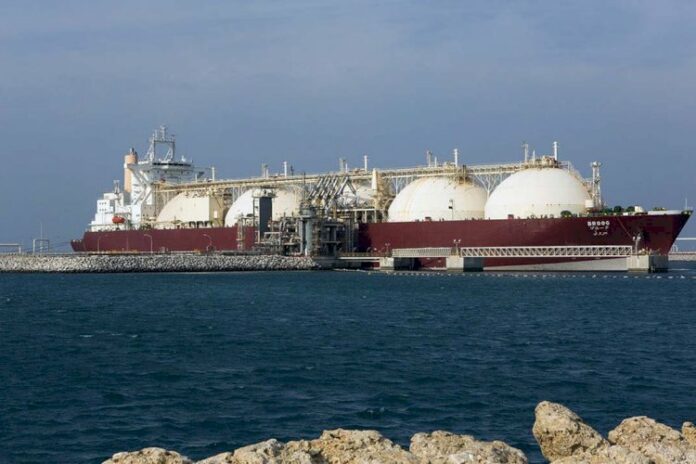
This agreement notably allows to extend the existing supply contracts for 3 additional years in order to provide 2 million tons per year of Algerian LNG to the French market, primarily through the LNG terminal at Fos Cavaou. The agreement also includes the sub-charter of an LNG tanker of Total by Sonatrach.

Laurent Vivier, President Gas of Total, said:

“This agreement is part of the long history of cooperation between Total and Sonatrach. Thanks to the quality of our relationship we were able to conclude it in an extremely volatile market environment. This new contract further enhances the flexibility of Total’s LNG portfolio and strengthens our position as a major partner of Sonatrach.”

Total has been a historic player in the energy sector in Algeria for almost 70 years. The group is active in oil and gas exploration and production (participating interests in the TFT II and Timimoun gas fields and in the oil fields of the Berkine basin), as well as in liquefied natural gas through supply contracts with Sonatrach. The group is also active in the marketing of lubricants and bitumens. In addition, Total and Sonatrach have launched engineering studies for a petrochemical project in Western Algeria.

Total is the second-largest private global LNG player, with an overall portfolio of around 50 Mt/y by 2025 and a worldwide market share of 10%. With over 34 Mt of LNG sold in 2019, the Group has solid and diversified positions across the LNG value chain. Through its stakes in liquefaction plants located in Qatar, Nigeria, Russia, Norway, Oman, Egypt, the United Arab Emirates, the United States, Australia or Angola, the Group sells LNG in all markets.

Alaska LNG Project announces updated $38.7 Billion project construction cost

0

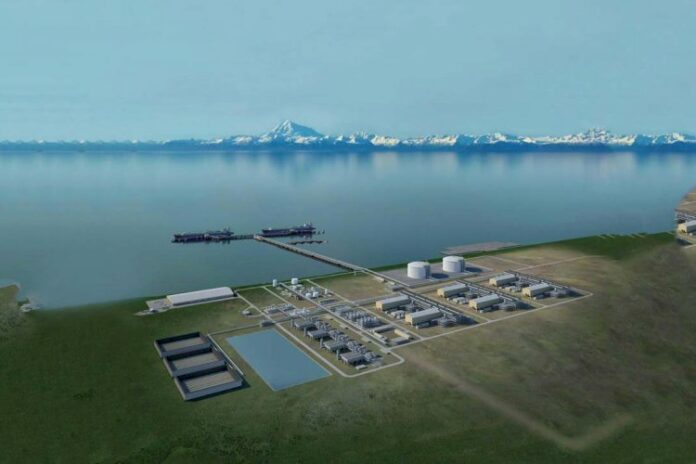
Alaska Gasline Development Corp. (AGDC) has released an updated $38.7 billion cost estimate for the Alaska LNG Project, which will increase the project’s ability to deliver natural gas to Alaskans and LNG to export markets at competitive prices. The updated cost estimate was presented during today’s AGDC board meeting.

The updated estimate reflects a $5.5 billion (12.4%) cost reduction off the previous $44.2 billion cost estimate, which was compiled in 2015 by the project’s previous joint venture leaders, which included BP Alaska, ExxonMobil Alaska, ConocoPhillips and AGDC. The new estimate will enhance the competitive price of LNG from the Alaska  LNG Project versus similar projects vying to serve major Asian markets. Long-term LNG demand is forecast to exceed available supply as consumers seek the environmental benefits of LNG over other energy sources.

The $38.7 billion estimate announced today was established during a rigorous, fourteen-month process incorporating significant third-party natural gas and LNG industry expertise.

Alaska LNG Project cost reductions capitalize on technology and process improvements developed in the LNG industry over the past several years, reflecting maturation of the LNG industry. These improvements include advancements in gas liquefaction technology and modular construction techniques, lower engineering costs, and a streamlined project management team. The cost estimate validates the efficiency of the Alaska LNG project’s design and major components, including a North Slope gas treatment plant, an 800-mile pipeline, and a Nikiski, AK-  based LNG plant.

AGDC President Frank Richards said:

“These updates improve the competitive position of the Alaska LNG Project and its ability to deliver LNG and natural gas at favorable prices. We are incorporating these results into our discussions with potential partners as we work to transition to a new market-led project team and maximize project benefits for the State of Alaska. While today’s results strengthen the case for developing this project, it will ultimately be the market that determines the best path forward.”

AGDC obtained federal authorization to construct and operate the Alaska LNG project on May 21, 2020.

New research center will lead the way for decarbonizing shipping

0

The shipping industry has made a strong commitment to reduce its global carbon emissions towards 2050. A group of leading industry players are taking the next step to develop new fuel types and technologies by launching the Mærsk Mc-Kinney Møller Center for Zero Carbon Shipping.

The founding company partners behind this initiative are ABS, A.P. Møller – Mærsk, Cargill, MAN Energy Solutions, Mitsubishi Heavy Industries, NYK Line and Siemens Energy.

The center, which will be based in Copenhagen, Denmark, is made possible by a start-up donation of DKK 400m by the A.P. Møller Foundation.

Chairman of the Board in the A.P. Møller Foundation, Ane Uggla comments:

“With this donation, The A. P. Møller Foundation wishes to support the efforts to solve the climate issue in global shipping. My father, Mærsk Mc-Kinney Møller was a visionary leader in the global shipping industry for more than 7 decades. He was concerned about shipping’s impact on the environment. Already in the 1980’ies he championed the use of low sulphur fuel, and he pioneered the first double hull oil tankers in the 1990’ies to minimize the risk of oil spills. Therefore, I find it very natural that my Father’s name will be connected to the center.”

The center will be a non-profit organization, set up as a commercial foundation with a charitable purpose. As an independent research center, it will work across the entire shipping sector with industry, academia and authorities. A highly specialized, cross-disciplinary team will collaborate globally to create overviews of decarbonization pathways, accelerate the development of selected decarbonizing fuels and powering technologies, and support the establishment of regulatory, financial and commercial means to enable transformation.

To define the strategic direction of the center, a Board of Directors is being established. Søren Skou, CEO of A.P. Møller – Mærsk has been confirmed as Board Member. Additional members of the Board of Directors will be announced upon appointment.

Future member of the Board, Søren Skou, says:

“The founding partners and the A.P. Møller Foundation share a long-term ambition to decarbonize the shipping industry. The establishment of the center is a quantum leap towards realizing that ambition. This joint initiative will fast-track the maturation of solutions and strengthen the basis for decision making among industry players and regulators and hence accelerate investments and implementation of new technologies. I am looking forward to join the Board of this ambitious collaboration.”

Furthermore, the center will have a management board, which will be headed by Bo Cerup-Simonsen as CEO of the center. Bo Cerup-Simonsen holds a PhD from the Technical University of Denmark in Mechanical Engineering, Naval Architecture and has a proven track record in leadership of large-scale industry projects, maritime technology, research and innovation.

Bo Cerup-Simonsen adds:

“This is the early days of a demanding and necessary transformation of an entire industry. Thanks to the A.P. Møller Foundation and the support from industry-leading partners we now have a unique opportunity to unfold the potential of a sector-wide collaboration towards complete decarbonization. The Mærsk Mc-Kinney Møller Center for Zero Carbon Shipping provides a solid platform for the entire eco-system to join forces, demonstrate new solutions and identify the next steps to make it happen. I’m excited to let the work begin, expanding the collaboration with a broad variety of contributors.”

The founding partner companies bring a common commitment to decarbonizing shipping and specialized knowledge and research capabilities. Furthermore, the founding partners will donate expert people resources and/or testing platforms to support the operations. The Center expects to attract several more partner companies in the future.

During the first two to three years the center will recruit around 100 employees to the Copenhagen-based office and collaborate with new partners across the globe. The founding partner companies have committed one-third of the needed staff, the remaining two-thirds will be recruited independently. In addition to leadership and administration, the Center staff will include subject matter experts in energy, fuels and ship technology as well as regulatory affairs, finance and the global energy transition.

The shipping sector accounts for around 3% of global carbon emissions. The industry has made a firm commitment to reduce this to zero within this century. Short-term measures related to increased energy efficiency is enabling a 40% relative reduction by 2030.

Achieving the long-term target requires new fuel types and a systemic change within the industry. As shipping is a globally regulated industry, there is opportunity to secure broad-based industry adoption of new technology and fuels.

To accelerate the development of viable technologies a coordinated effort within applied research is needed across the entire supply chain. Industry leaders play a critical role in ensuring that laboratory research is successfully matured to scalable solutions matching the needs of industry. At the same time, new legislation will be required to enable the transition towards decarbonization.

LOC Qatar awarded master service agreement by Seafox Qatar LLC

0

LOC Group, the premier international marine and engineering consulting firm, is pleased to announce that it has been awarded a Master Service Agreement by Seafox Qatar LLC, a leading global provider of offshore jack-up support units for oil & gas, wind and related operations.

Under the agreement, LOC will provide Rig Move Master Services and Geotechnical Services for rig moves. Work under the award has already begun, with services provided to support the moving of the Seafox Burj and the Seafox Frontier. Both are three-legged, self-elevating jack-up units for accommodation and offshore support services. Work on mobilising further units is ongoing.

The award will be serviced out of the Company’s Doha office, with specialist in-house support from other LOC group companies, including Longitude Engineering, Marine Advisory and Consultancy Services. The Master Agreement will run for the next 24 months.

This agreement follows a number of similar awards won by the Company to provide Jack-up services to operators based in Qatar.

Commenting, Cris Partridge, Regional Director, LOC Middle East and India, said:

“Winning this award reflects our ability to provide a high-quality service at competitive rates in the local market. It comes on the back of having won similar work for multiple operators based in Qatar. We are delighted to be working with Seafox, who are a well renowned global provider of units for both the oil & gas and renewables industries.”

The pros and cons of blended learning for seafarers

0

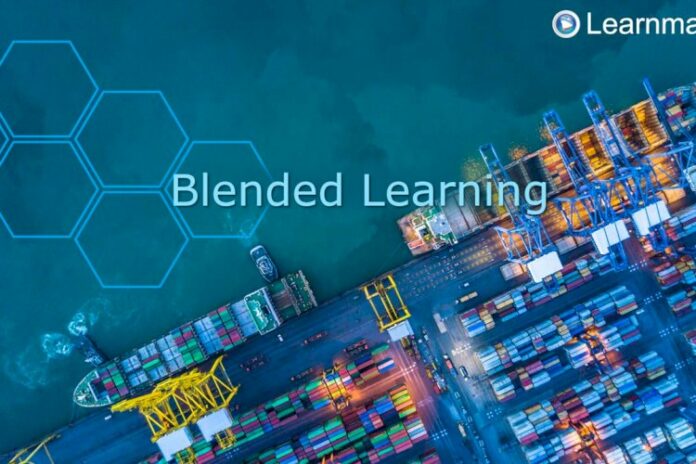
Shipping is an industry, where continuous learning is an integral part of the process. The diploma alone is not enough. Seafarers are required to enhance their competence through various training courses, seminars, etc. But since they already spend months working, very few are eager to devote even more of their time to studying. And that is where blended learning comes in.

A fresh approach to teaching

Blended learning is a relatively new concept in the maritime industry. One of its main components is conventional classroom teaching. But the second component is distance learning, that is, self-learning and communicating with teachers online.

Aleksandr Pipchenko, the head of an educational platform Learnmarine, explains:

“Here is how it works. A few weeks or even months prior to the training, seafarers get online access to course materials. Adequate time allows seafarers to study the new subject at their own convenient pace. By the beginning of traditional classroom lectures, they should already be well-versed and knowledgeable in the topic studied.”

Special tests carried out before the lectures help to ascertain that a seafarer has examined the material. However, if a trainee fails a test, he/she cannot proceed to the next stage of training and has to restudy the course.

Then upon completion of the training seafarers have to pass the final test. Provided the successful passage of the examination, seafarers are issued a certificate confirming their proficiency.

Specific features of blended learning

It has now become apparent that blended learning has significant advantages over conventional learning. This approach is suitable for both seafarers and companies that intend to send their employees for training.

1. The opportunity to study at convenient time and place.

Even while at sea, on board a vessel, seafarers can combine work and study. On the one hand, they have enough free time during this period, and on the other, they cannot thoroughly enjoy the vacation, because, in fact, they are still at work. But if they spend these free hours on training, then subsequently they will save their time and when ashore they can devote it to their families, friends and proper vacation.

2. Studying at your own pace.

This point follows from the previous one. If you get to decide where, when and what to learn, then you can pay more attention to complex topics and brush up on familiar ones. This is indeed very important because the level of knowledge and personal learning speed is different for everyone. But, in any case, the time allocated by a seafarer to self-learning would be enough to study all the necessary material.

3. Logistics facilitation.

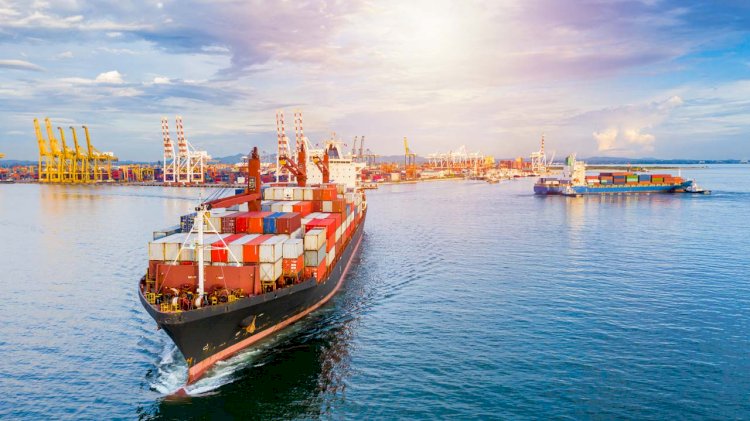
And that’s a great advantage for companies interested in training their seafarers because ship crews are usually international. To organize a traditional face-to-face training course for a team like that, you need to gather people from different countries together in the same classroom, pay their travel expenses, accommodation, meals, etc. This would be rather costly and logistically challenging to arrange. Blended learning automatically resolves the lion’s share of these issues since seafarers study independently.
4. Exchange of experiences among seafarers of different ranks.

If the course is conducted for the members of the same team, seafarers will maintain hierarchical relationships even during the training. Strict subordination inhibits people, keeps them from voicing their opinions and sharing their experiences.

Aleksandr says:

“In such situation, a master wouldn`t want to seem like lacking knowledge in front of the team and thus won`t ask questions. Subordinates wouldn`t venture to ask anything in the presence of their superiors in order not to appear incompetent as well. Of course, a lot depends on trust and relationships within a crew, but in general, this problem is quite common.”

Blended learning excludes such situations, as it involves members of different crews in training. One group can easily include several masters, several chief officers, etc. They can communicate freely, putting subordination aside, since they are not at work. This allows them to discuss all the subtleties in a relaxed atmosphere and reach a consensus. It is all about the so-called “best maritime practices”.

5. Effective learning through test assessment.

Several stages of testing not only allow trainees to monitor the progress but also encourage them to study more. As a result, one of the main goals of blended learning is fulfilled: the quality of education remains high even with the use of independent and distance learning methods.

Aleksandr adds:

“The test assessment itself is a stage of the studying process, which proves to be the most productive. Because there is a certain barrier to overcome. A trainee looks for a solution and at that moment memorises it. It is during tests that training is most effective. We usually give several attempts to take a test and provide a report on the results for self-analysis. At the same time we don`t show correct answers, but point the sources where trainees can find the necessary information and figure them out themselves.”
How to organise a blended learning course?

Of course, not only seafarer`s personality and motivation play an important role but ways of presenting information as well. The more representational training materials, the more clear and intelligible the lectures are, the easier it is to understand the subject and the more effective the training is.
Most modern maritime training centres were established by private companies. These training centres are equipped with full-mission bridge simulators, engine room simulators, simulators for specific training, etc. Even self-study materials are developed and visualised as thoroughly as possible, although creating a high-quality product is a difficult task.

Aleksandr Pipchenko says:

“Development of the whole course and relevant materials requires engaging a number of professionals. We need people who understand theoretical and practical part of the subject, can structure this knowledge and professionally present it, as well as people who can visualise data and create an online version of the course. We are glad that in just a few years of our activity we managed to achieve a high level of performance in this area. By now we have even established a partnership with major maritime industry players, for whom we have designed and implemented a number of specific courses.”

It is clear that blended learning will continue to evolve together with the advancement of technology. And it will work for the benefit of the entire maritime industry.

by Iryna Umanets

ABS develops practical guidance for Brazil FPSO operators

0

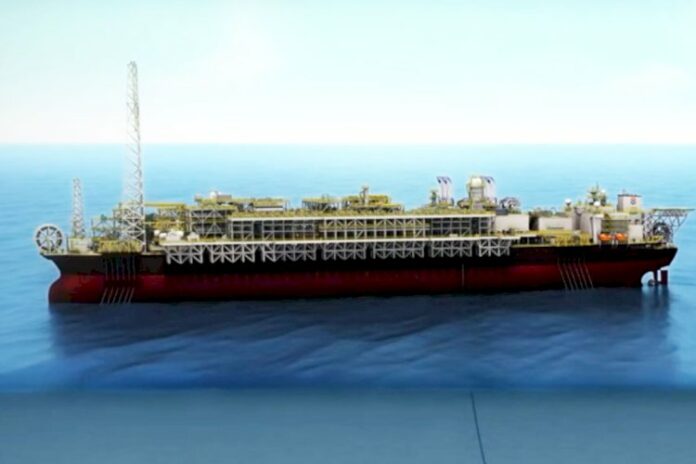
Practical Considerations for Regulatory Compliance in Brazil is designed to help floating production installations operating in Brazilian Jurisdictional Waters comply with a series of requirements that are specific and set forth by multiple local agencies.

It forms part of the industry’s most comprehensive support for offshore operators in Brazil, with ABS also offering two notations to help achieve compliance.

Matt Tremblay ABS Senior Vice president, Global Offshore, said:

“Developing an offshore production installation is a complex task with multiple aspects to consider in order to meet production targets and operational requirements while meeting safety goals. ABS is well-positioned to assist operators in navigating Brazil’s unique regulatory environment. With the largest fleet of classed floating production installations in Brazil and 70-years of operating in this region, ABS has deep sector knowledge and the experience to support clients in achieving regulatory compliance.”

Practical Considerations for Regulatory Compliance in Brazil will be made available to support ABS FPSO clients from the early stages of design. A high-level abstract, Brazil Brief, including representative examples of the detailed content will be made available to the industry.

The ABS BRZ and BRZ+ notations provide shipyards, construction yards, designers, owners and operators with a design and construction-focused approach to help achieve compliance with domestic regulations for FPSOs and FPUs operating in Brazilian Jurisdictional Waters. The Practical Considerations for Regulatory Compliance in Brazil provides the guidance for the implementation of physical regulatory requirements covered by each notation.

Report: technology can benefit crew safety, health and wellbeing at sea

0

Inmarsat, the world leader in global, mobile satellite communications, has published a new report focusing on the way technology can benefit crew safety, health and wellbeing at sea, at a moment when COVID-19 has exposed the welfare of seafarers to global scrutiny.

‘Welfare 2.0: How can the next generation of technology enable better crew safety, health and wellbeing at sea?” report, has been prepared by consultancy Thetius.  It follows an earlier ‘Trade 2.0’ report focusing on the impact new technologies and start-ups can have on efficiency in vessel management.

Ronald Spithout, President, Inmarsat Maritime, says:

“When we first discussed this report last year with the author and the welfare organisations and charities we work closely with, none of us could have foreseen the impact that COVID-19 would have on the world, shipping, seafarers and their families. However, even then, we all felt that safety and crew welfare was being left behind in the technology stakes and much more needed to be done to look at how it could help improve the lives of seafarers.”

The new report explores the underlying factors affecting crew safety, welfare and learning, and highlights those companies working to address the pain points. It shows that, while the maritime industry prides itself that seafarer safety and welfare is its highest priority, lack of investment in the digitalised technologies benefiting worker welfare, particularly compared to investment in other sectors, undermines the narrative.

Spithout said:

“We are at a point in time when lack of shore leave, unplanned contract extensions, fear of job loss and separation from family are weighing heavily on seafarers worldwide. Technology cannot provide a “silver bullet”. Its role is vital in embedding policies and practices to enhance safety and wellbeing on board. Data-based tools test what does and doesn’t work for the ‘human element’ and track changes over time.
The new report also represents the first step in Welfare 2.0. Inmarsat is already working towards the launch of a ‘Crew Welfare Open Innovation Challenge’ with Shell Shipping and Maritime and Thetius – which is a corporate startup collaboration programme aiming to promote and nurture digital crew wellbeing solutions.”

In a global workplace wellness market worth $48 billion in 2018, report author and Thetius founder and Managing Director, Nick Chubb says that investments in crew welfare start-ups pale in comparison with vessel management technology. While difficult to break-out, the $3.8 billion spent on ship management software each year, Chubb identifies that startups focusing on issues like wellbeing, welfare and safety have on average attracted only $2.25 million in investment since 2010. This compares to $9.6 million for ship performance technology start-ups.

The report strongly recommends the value that data models capturing, storing and analysing factors contributing to seafarer health, welfare, and safety can have in shipping.

The author cites one key insight as an alarming disparity between cardiovascular-related deaths at sea and available information, support and tools that minimise risks and deal with emergencies. The report shows how fleet managers could look to invest in various digital seafarer monitoring and awareness tools specific to cardiovascular health.

COVID-19 may itself have made maritime stakeholders more amenable to telemedicine services. Over 200 ships have already signed up to a new COVID-19 video consultation service from Vikand, facilitated by AI start-up FrontM and Inmarsat Fleet Connect bandwidth. Elsewhere, start-up Motion Ventures has repurposed a financial compliance tool to support secure healthcare monitoring for crews at home, on board or in transit.

The report also explores possible consequences of the coronavirus for seafarer training, with the closure of education facilities encouraging faster uptake of remote learning. Wallem, Anglo-Eastern and Star Bulk have deployed virtual training from OMS-VR to learn about dangerous activities, for example. UK-based Seabot XR is developing ship-specific VR and augmented reality training and familiarisation, accessible to seafarers via their smartphones.

Downloadable toolboxes bridging the gap between seafarers and vessel safety are also at last starting to emerge. The Scoutbase platform, for example, allows crew to offer feedback anonymously of life on board to build a picture of emerging safety issues and separately Maritime startup Big Yellow Fish creates a “net safety score” and uses gaming technology to reinforce desirable behaviours.

Spithout says:

“Technology is not the only answer but its development is vital if the industry is going to start to eliminate the issues we currently face with crew wellbeing. It is imperative that all stakeholders now come together to create and work on common platforms to collect data, anonymise it, share it and use it to identify wider welfare trends.”

Royal Navy launches “smart boat”

0

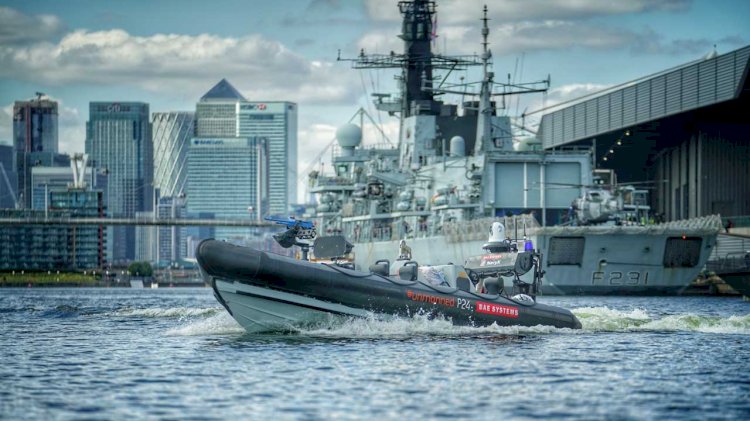
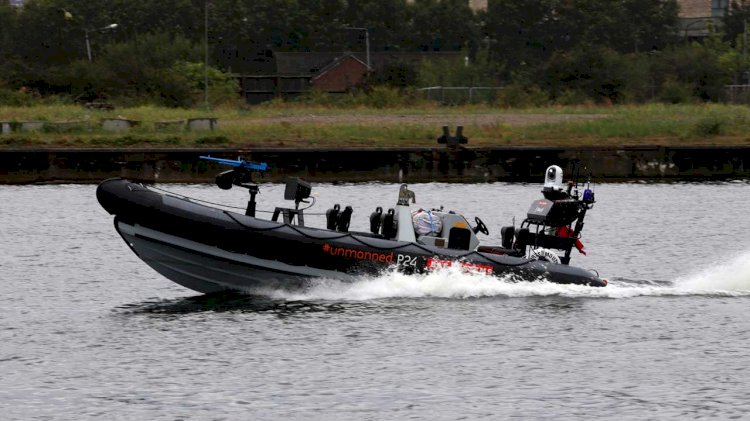
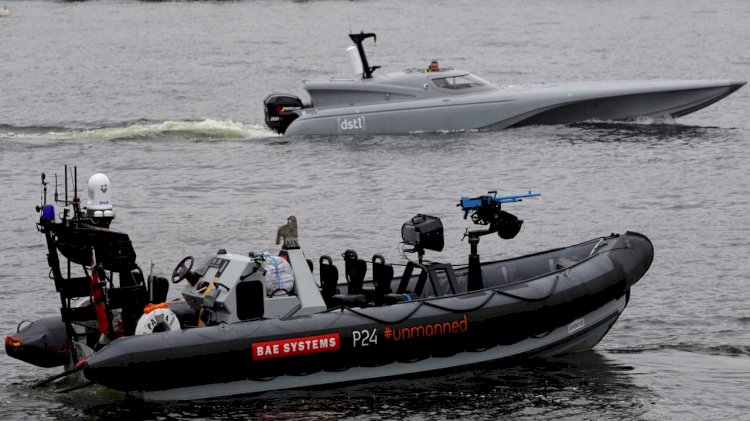
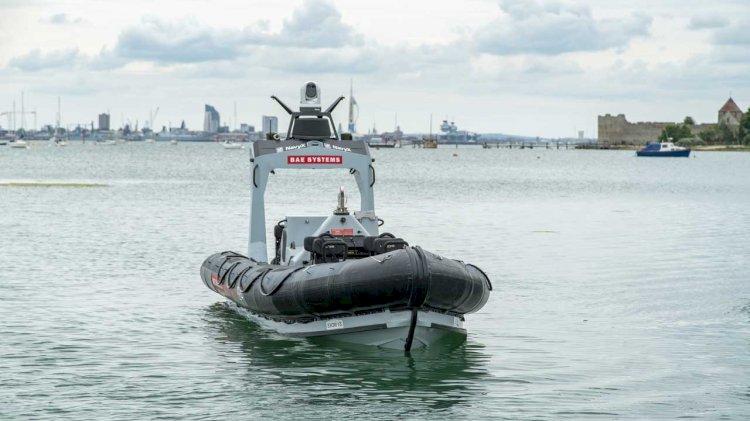
More than £3m is being invested in the crewless Pacific 24 boat – and other autonomous small craft technology.

The boats could operate individually – or in groups – racing over the ocean at speeds of up to 38 knots (nearly 44mph).

The Pacific 24 has been the backbone of sea boat operations from Royal Navy warships for more than a quarter of a century, with the latest variant, the Mark 4, introduced four years ago.

The boats are fundamental to life-saving search-and-rescue duties, serve as the springboard for commandos and sailors on board-and-search operations looking for drugs in the Caribbean and Middle East, and ferry personnel and stores between ships or from ship to shore.

But there may be occasions when a crewless vessel might perform the same, similar, or even entirely new missions.

The crewless Pacific 24 is sponsored by NavyX – the specialist wing of the Royal Navy dedicated to rapidly developing, testing and trialling cutting-edge and new technologies for use on the front line.

The team has worked in partnership with BAE Systems, who build the Pacific 24 in Portsmouth, to commission the new boat.

A prototype, controlled from frigate HMS Argyll, debuted at the DSEI defence/technology showcase in London last September, since when BAE and the Navy have pressed ahead with a working model fit for the front line.

While the boat’s hull and propulsion system remain the same, the control system and sensors have been changed/added to allow for autonomous movement – a sailor should be able to give the unmanned craft generic tasking, and the boat will decide for itself how it carries out that task.

The potential of the autonomous boat will only truly be realised when it is put “in the hands of the warfighter” – it will begin trials with a Royal Navy warship later this year which should determine whether the UK invests in a fleet of such craft or just a few for specific missions.

Trials with the new craft begin this month, followed by integrating it into a front-line warship’s combat and navigation systems later in the year.