-0.8 C
New York
Home Blog Page 826

RH Marine and VSTEP cooperate in maritime training simulators

0

As a result, VSTEP can now supply RH Marine’s ECDIS chart and navigation system with its bridge simulators for schools, training institutes and fleet owners.

VSTEP supplies software and hardware for NAUTIS simulators around the world from the Middle East, Southeast Asia and Europe, but also in North, Central and South America. Realistic bridge training is made possible on advanced simulators that place trainees in immersive virtual environments. RH Marine supplies electrical and automation systems to defence, safety and security ships and superyachts, including complete bridge systems.

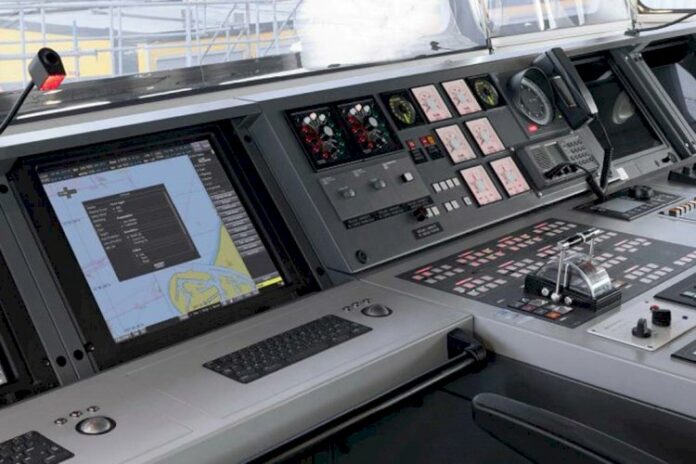
One of those systems is the electronic chart display and information system ECDIS, a so-called TomTom Navigation at sea. This system is mandatory on every seagoing vessel. Ties Klapwijk, Head of Business Development NAUTIS at VSTEP Simulation, says:

“We are two Dutch companies whose products complement each other very well. Thanks to this cooperation, RH Marine’s ECDIS system is now included in our portfolio for customers. We are very happy with that option.”

Both companies have teamed up before, for instance for the Offshore Experience of the Maritime Museum in Rotterdam. With this simulator, visitors must, among other things, keep a DP ship in place. VSTEP made its simulator software available for this and RH Marine did so with its DP software. VSTEP also supplied the VR software for the RH Marine Demonstrator, with which the company demonstrates the operation of its bridge systems to customers and during trade shows. That software is now being upgraded as part of the cooperation.

Last year, both companies worked together on the new bridge simulator at the Royal Institute for the Navy (KIM) in Den Helder. For this simulator RH Marine also supplied the chart and navigation software and VSTEP supplied the 360 degrees virtual outside view.

The closer cooperation has various benefits for customers and companies. RH Marine customers will soon be able to virtually train their ECDIS skills in more locations anywhere in the world. In addition, customers from outside the naval and superyacht industry can also get acquainted with its ECDIS system.

Portfolio manager Marcel Vermeulen of RH Marine says:

“Although leading, we operate in a niche market. This increases our availability and visibility abroad. Moreover, as more people start using our system, we can receive more feedback. As people increasingly come into contact with our system during their education or training, the better known it becomes with our target group.” 

According to Klapwijk, the cooperation also offers benefits in case of service or malfunctions. He says:

“Because we are based close together and the lines of communication are short, we can react quickly.”
GCube highlights growing cyber threat to renewable energy companies

0

GCube Insurance (GCube), the leading provider of insurance services for renewable energy projects, has emphasised that renewable energy asset owners relying more heavily on digital systems during the current period of lockdown – and beyond – must adapt to increased exposure to cyber threats such as ransomware, denial-of-service and human error.

Recent cyber-attacks on global renewable energy businesses have underlined the scale and nature of this previously under-reported threat.

The emergence of Covid-19 has led to an unprecedented lockdown worldwide, leading many renewable energy companies to take advantage of remote monitoring systems and working practices to try and ensure ‘business as usual’ despite the disruption.

Though cyber-attacks such as ransomware and denial-of-service remain significantly under-reported in the renewable energy industry, recent high-profile examples in the UK, the US and Portugal have provided additional public demonstration of the need for asset owners to invest in cyber insurance products which can provide financial cover in these ‘non-physical damage’ events.

Geoffrey Taunton-Collins, Senior Analyst at GCube, said:

“Digitalisation of course drives significant efficiency gains for businesses and is now a necessity for renewable energy companies looking to maintain continuity during the Covid-19 pandemic. But with portfolios now at greater risk of cyber-attacks, we are seeing even greater demand for our cyber insurance product as project owners are increasingly realising the very real threat that cyber-attacks pose.”

Numerous businesses have approached GCube in recent weeks seeking a means to mitigate their financial exposure to cyber-attack. These include wind projects owned by leading firms such as Eolenerg and Molly Wind Ltd, who have either procured the coverage outright or included the product as part of their insurance renewal.

GCube’s research suggests that though cyber-attacks are estimated to be responsible for over $3trn in losses annually – and are set to rise – the cyber insurance market last year was only worth approximately $5bn, with many insurers not yet providing cyber cover.

Heerema works on innovations that could reduce underwater noise pollution

0

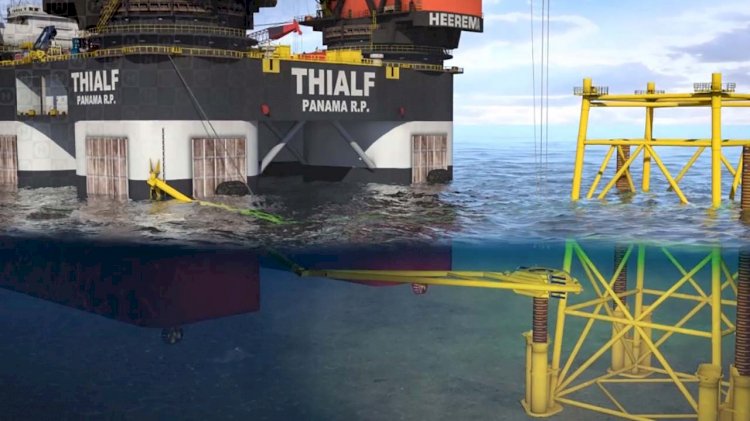
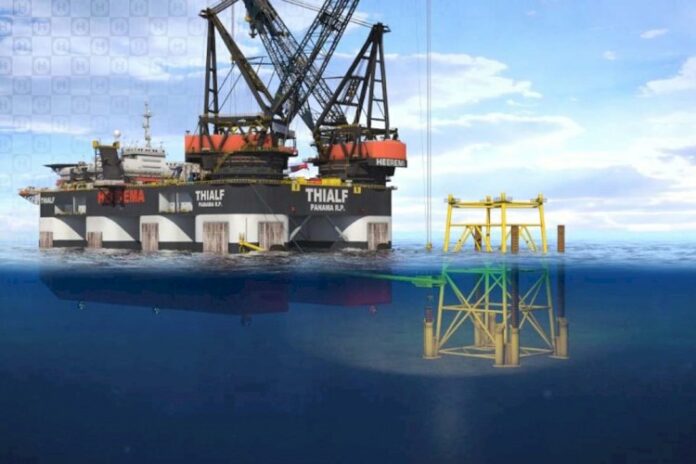
Heerema Marine Contractors and Heerema Fabrication Group are currently working with the University of Dundee’s School of Science and Engineering on innovations that could significantly reduce or eliminate underwater noise pollution. 

Throughout the marine industry, there is an increasing focus on sustainability, which has introduced measures to reduce air pollution from harmful emissions within many companies. However, noise pollution, especially within offshore construction, is an area that still requires significant improvements. 

The impact of noise pollution on marine life is two-fold; there are concerns about direct hearing damage in animals (temporary or permanent) alongside disruption to their communication and navigation signals, which in turn can affect migratory patterns. All of these issues can cause stress to marine life, and with difficulties gathering data, the long-term impact is unknown.

During the installation of wind turbines, wind farm substations, converter platforms, and traditional oil and gas facilities, pile-driving operations generate considerable noise. Globally, several countries are challenging noise pollution by introducing underwater noise restrictions; however, for Heerema, the ambition is to go further than to be compliant and to create ‘silent foundations.’ The development of alternative pile foundations that could be installed without producing significant underwater noise is currently ongoing. 

Two foundation concepts are under development, and these are push-in piles and large helical or screw piles. The push-in pile design replaces a traditional single open tubular pile with a cluster of four smaller diameter open tubular piles. This design can eliminate noise pollution as it requires no pile-driving or hammering – instead, after some strokes, each of the piles is pushed into the soil with two or three providing the uplift resistance required to push in the fourth. This concept might sound complicated, but it uses a similar principle to onshore installations of sheet pile walls. 

The helical pile foundation suits foundations that require shallow penetration in the seabed. The pile has a helical blade at its tip rotated during installation to allow the pile to penetrate the soil. This concept includes a moment arm that will connect to one of Heerema’s vessels to provide the required reaction force. Also, this pile is prepared for the future as by reversing the process, we can use it for removing foundations allowing low-cost decommissioning and full recycling or re-use of piles. 

The University of Dundee’s School of Science and Engineering is carrying out a six-month testing and modeling program. The researchers involved have considerable experience developing helical piles in previous research projects in collaboration with Durham University and the University of Southampton. This program includes physically testing the piles using 3D-printed steel models in a geo-centrifuge, a device that simulates realistic soil stresses and installation conditions to match full-scale behavior using small models (1 to 100th scale).

In the centrifuge, the installation requirements (forces and torques) and the installed capacity of the piles and pile clusters can be tested and measured directly. These tests complement the University of Dundee’s ongoing research using discrete element method (DEM) modeling for varying soil conditions and pile designs. By using this method, a complete evaluation of the installation process and in-place performance can be analyzed using a range of variables. 

Their process replaces the millions of soil particles the pile would contact with on the seabed with larger balls with the same behavior as sand particles. Using this approach of combining physical and numerical modeling helps with rapid development in a controlled environment where many impacts on pile behavior can be assessed. Their testing program will reduce development costs when we move to full-scale tooling development and helps to de-risk future use of these low noise and sustainable foundation concepts.

Tallink Grupp purchases ro-pax vessel MS Sailor

0

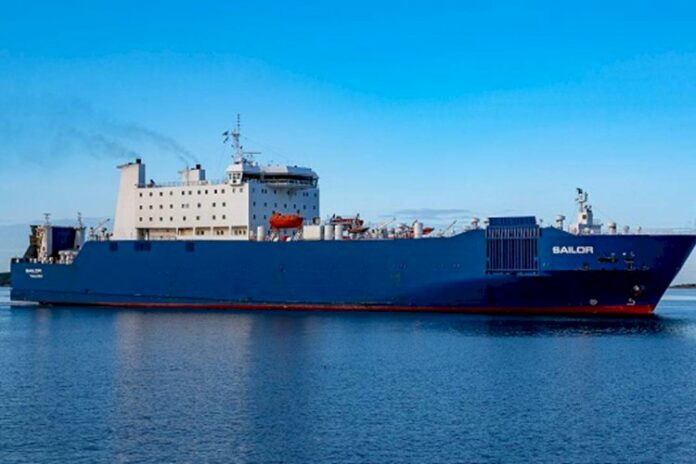
Tallink Grupp has announced to the stock exchange that it has signed a contract with Navirail OÜ for the purchase of ro-pax vessel MS Sailor.

The vessel is a ro-pax type cargo ferry, built in 1987 at the Gdansk shipyard in Poland. It is 157m long and 25m wide with a gross tonnage of 20, 921. The vessel has a total of 60 cabins, accommodating 23 crew and 119 passengers. She has 1500 lane meters for ro-ro cargo and pax vehicle transportation on board. The vessel’s speed is about 19 knots.

The vessel is currently owned by Navirail OÜ, but has until recently been chartered out to shipping company DFDS and has been operating on the Paldiski-Kapellskär route. Originally built in late 1980s for Neste OY, the vessel has previously been owned by Nordö Link and Finnlines and operated until 2015 under the name Finnsailor.

Commenting on the strategic purchase, Tallink Grupp’s CEO Paavo Nõgene, said:

„The recent crisis has made it very clear that we need to strengthen our fleet with ro-pax vessels to ensure that whatever happens in the world, we are able to react to any changes fast and have the necessary flexibility within our fleet to scale up either ro-ro cargo or passenger transport as necessary. During the COVID-19 pandemic there was an urgent and great need to secure ro-ro cargo transportation between our home markets and this was mainly done with our passenger ferries, that are geared for operating feasibly if they carry both cargo and passengers. Carrying only ro-ro cargo with a minimum number of passengers with such large passenger ferries is not economically viable and can only be done for a short time with subsidies.

For example, at present we have increased cargo capacity on the only Estonia-Sweden route between Paldiski and Kapellsär with our passenger ferry Isabelle.  The vessel predominantly transports cargo only as tourism between Estonia and Sweden is still not recommended due to the Swedish coronavirus situation, which in essence means that we are transporting over 600 empty cabins back and forth between the two countries every day. Operating passenger ferries for cargo transportation alone isn’t cost effective for our business.

With the above in mind and with several lessons learned from the recent pandemic, it thus makes perfect sense to diversify and strengthen our fleet for the future. Tallink Grupp ship Management team’s technical experts have carried out a thorough inspection of the ship and determined its excellent condition for our needs. We are confident this is a sound investment for the future for our company and strengthens our existing fleet.“

The transaction price is EUR 8.5 million.

The vessel was registered to Tallink Grupp under the Estonian flag in the Cyprus Ship Registry similarly to Tallink Grupp’s other vessels and will be handed over to Tallink Grupp in Paldiski on 9 July 2020. The company will make decisions and announce the vessel’s route and schedules in the near future.

Houlder consults on scope of marine carbon capture study

0

PMW Technology is among the latest organisations to receive funding from the UK Government’s Department for Transport’s Transport-Technology Research Innovation Grant (T-TRIG). With funding from T-TRIG, the study will evaluate the feasibility, costs, infrastructure, impacts, and potential benefits of using advanced carbon capture from marine engine emissions to decarbonise the shipping industry.

PMW Technology’s advanced A3C carbon capture process is designed to extract carbon dioxide from marine exhaust gases by freezing, then subliming the carbon dioxide. It is then liquified and stored in dedicated tanks onboard, allowing for carbon capture from vessel emissions without radical technical overhauls of marine engines and fuels.

Rupert Hare, CEO of Houlder, comments:

“We’re pleased to be working with PMW Technology and its partners on this study and look forward to sharing our learnings upon its completion, for the benefit of all of those transforming industries that stand to benefit from advancements in carbon capture.

In the technology sector in particular, there is rapidly growing interest across the marine and energy sectors for cleaner technologies to accelerate the drive towards a zero-carbon future. The appetite for technology creates fertile ground for start-ups, and we relish the opportunity to share our 30 years’ expertise with our entrepreneurial partners and guide their projects through feasibility testing and to operational reality.”

The international marine and energy markets are at the apex of the climate crisis, and Houlder is well-placed to support the accelerated transformation of these sectors; using experience, knowledge and specialist expertise to support clients in navigating the challenges ahead and understanding how to benefit from the energy transition.

Carbon capture from marine engines offers shipping the opportunity to avoid the huge cost of new fuel systems, as well as retention of existing vessel and current high-performance engine designs. Assessing carbon capture’s potential as a more affordable means of achieving marine decarbonisation will accelerate progress towards to IMO’s 2030 and 2050 targets.

Subsea 7 awarded contract offshore Norway

0

The re-development concept includes a new Wellhead platform (Hod B) tied back to Valhall Field Centre with rigid pipelines and an umbilical.

The contract scope includes EPCI for pipelines, umbilicals and tie-ins using key vessels from Subsea 7’s modern fleet. The production pipeline is a pipe-in-pipe design and will include the world’s first application of mechanically lined pipe based on GluBi® (2) technology from BUTTING. 

Project management and engineering will commence immediately at Subsea 7’s offices in Stavanger, Norway. Fabrication of the pipelines will take place at Subsea 7’s spoolbase at Vigra, Norway and offshore operations will take place in 2020 and 2021.

Monica Bjørkmann, Vice President for Subsea 7 Norway said:

“Subsea 7 is very pleased with this award by Aker BP, through the Aker BP Subsea Alliance. It acknowledges Subsea 7 as a key partner in the delivery of pioneering technology, transforming the economics of field development. We look forward to continuing our alliance with Aker BP for the Hod Field Development, with safety, reliability and quality at the forefront throughout.” 

Key construction milestone for MSC World Europa

0

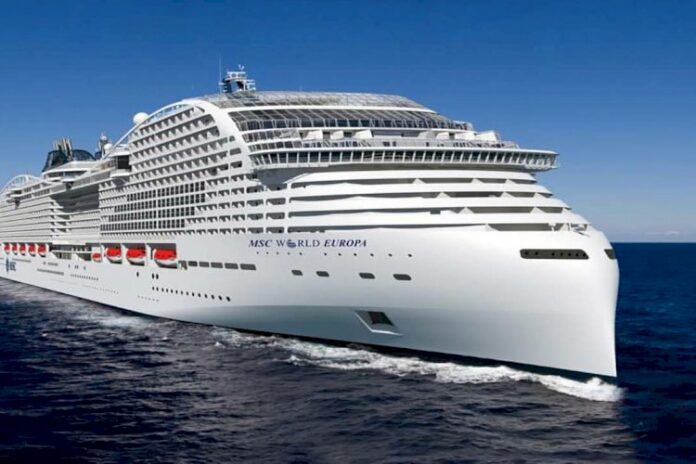
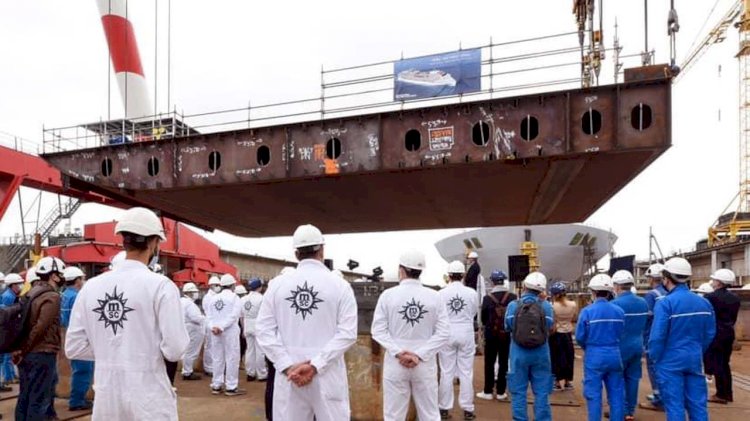
A maritime coin ceremony tradition took place earlier today at the Chantiers de l’Atlantique shipyard in Saint-Nazaire, France when the keel was laid for MSC Cruises’ first liquified natural gas (LNG)-powered ship, MSC World Europa.

The 200,000-plus GT ship is scheduled to enter service in 2022 and be one of most technologically- and environmentally-advanced LNG-powered cruise vessels in its class, and the first ever to be built in France.

Zoe Africa Vago, daughter of Alexa Aponte-Vago and her husband Pierfrancesco Vago, MSC Cruises’ Executive Chairman, and Aurore Bezard from the HR Department of Chantiers de I’Atlantique performed the traditional maritime ritual as godmothers representing the ship owner and the shipbuilder when they placed two coins under the keel as the historical sign of blessing and good fortune for the project, and the ship’s operational life at sea.

Pierfrancesco Vago, Executive Chairman, MSC Cruises, said:

“MSC World Europa is further proof of our commitment to environmental stewardship as she is set to reduce carbon emissions even further than many other existing cruise ships powered by LNG, which is currently the most environmentally-friendly fuel for commercial maritime operations. With this vessel, we also reconfirm our belief in investing in advanced environmental technology to meet our long-term goal of zero emissions from operations.”

Laurent Castaing, General Manager, Chantiers de l’Atlantique, added:

“We are proud to start the building of a ship which will set the standards for the cruise of the future. This is a major milestone in the history of our 20-year cooperation with MSC Cruises, which has already resulted in some of the most innovative cruise ships ever built.”

MSC World Europa will feature a new 50-kilowatt demonstrator system that incorporates solid oxide fuel cell (SOFC) technology and use LNG to produce electricity and heat on board, the first time an LNG-powered fuel cell has been used on a cruise ship.

This SOFC solution fuelled by LNG will reduce emissions of greenhouse gases (GHG) by about 30 per cent compared with a conventional LNG engine, with no emissions of nitrogen oxides, sulphur oxides or fine particles. It also offers the advantage of being compatible with LNG, as well as several low carbon fuels such as types of methanol, ammonia and hydrogen.

MSC World Europa will also feature a new generation wastewater treatment system that exceeds some of the world’s most stringent regulatory standards, as well other cutting-edge environmental technology.

MSC Cruises’ next flagship MSC Virtuosa is currently construction in Saint-Nazaire and readying for delivery next year. The Company also has firm orders with Chantiers de l’Atlantique for two additional LNG-powered ships, once each for the MSC World and Meraviglia classes of ships.

MSC World Europa’s Specifications:

  • Ship name: MSC World Europa
  • Ship prototype: World Class
  • Delivery date: 2022
  • Gross tonnage (GT): 200,000-plus
  • Length/Beam/Height: 333.3m/47m/68m

Maersk Drilling awarded one-well exploration contract by PETRONAS

0

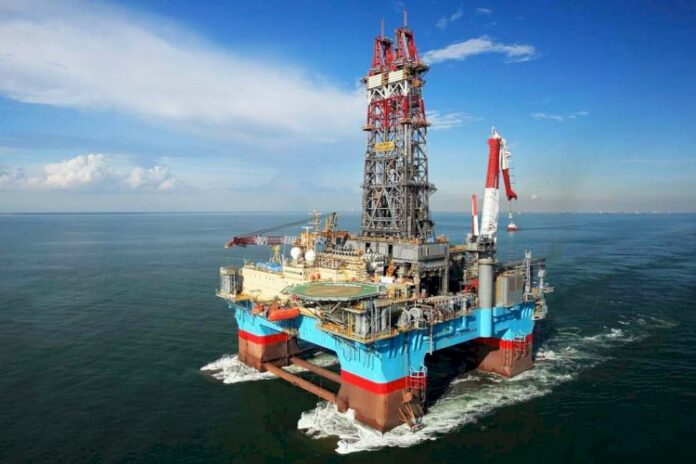
Mærsk Developer will be employed by PETRONAS Suriname Exploration & Production B.V. for a one-well exploration campaign in Block 52 offshore Suriname.

The contract is expected to commence in Q3/Q4 2020, with an estimated duration of 75 days. The value of the firm contract is approximately USD 20.4m, including integrated drilling services, mobilisation and demobilisation fees. The contract includes an additional one-well option.

COO Morten Kelstrup of Maersk Drilling says:

“It is great to work for PETRONAS again with a quick reactivation of Mærsk Developer for this campaign in the exciting Suriname-Guyana basin. This will showcase our ability to smoothly and efficiently establish operations in new jurisdictions, as Mærsk Developer will become the first of our rigs to operate offshore Suriname.”

The Mærsk Developer is a DSS-21 column-stabilised dynamically positioned semi-submersible rig, able to operate in water depths up to 10,000ft. It is currently warm-stacked in Aruba after ending its latest contract offshore Trinidad and Tobago.

Carbon free shipping: World’s first full scale ammonia engine test

0

The technology group Wärtsilä, in close customer cooperation with Knutsen OAS Shipping AS and Repsol, as well as with the Sustainable Energy Catapult Centre, will commence the world’s first long term, full-scale, testing of ammonia as a fuel in a marine four-stroke combustion engine. The testing is made possible by a 20 MNOK grant from the Norwegian Research Council through the DEMO 2000 programme.

Tina Bru, Norwegian Minister of Petroleum and Energy, says:

“This is a great example that illustrates the importance of dedicated petroleum R&D. This DEMO 2000 project is another steppingstone for reaching our ambitious climate targets and it is also aligned with our recently published hydrogen strategy. We need to develop and use new technologies that reduce emissions. We are very happy to support development work that can lead to increased use of ammonia as a fuel in shipping and in the offshore sector. Know-how from this project will also provide important input to the development of regulations for the use of ammonia and other low-carbon fuels.”

Ammonia is promising as a carbon-free fuel for marine applications, in view of the maritime industry’s need to fulfil the International Maritime Organisation’s vision of reducing greenhouse gas emissions from shipping by at least 50 percent by 2050. Furthermore, ammonia has huge potential for providing green energy to remote power systems, such as offshore installations on the Norwegian Continental Shelf.

Development work by Wärtsilä, as it prepares for the use of ammonia as a fuel, continues with this testing programme, which will be the world`s first full-scale four-stroke combustion engine test. The project will commence in the Sustainable Energy Catapult Centre’s testing facilities at Stord, Norway during the first quarter of 2021. 

Egil Hystad, General Manager, Market Innovation at Wärtsilä Marine Business, says:

“We are really excited to further develop and understand the combustion properties of ammonia as a carbon free fuel in one of our multi-fuel engines. Ammonia storage and supply systems will be designed and developed for maximum personal safety, and in parallel with the Fuel Gas Handling System under development as part of the EU project ShipFC. This project is coordinated by NCE Maritime CleanTech, and it involves an ammonia driven fuel cell which will be tested on the Eidesvik Offshore supply vessel, Viking Energy.”

Wärtsilä, as part of its development work on future fuels, has studied the use of ammonia as a future carbon-free fuel through the ZEEDS initiative. The company’s first ammonia combustions tests were commenced in Vaasa, Finland, in winter 2020, and will continue with this long-term testing at the Sustainable Energy Catapult Centre facilities in Stord.

Willie Wågen, CEO of Sustainable Energy Catapult Centre, says:

“We are extremely pleased to be part of this project that will prove for the industry the robustness of ammonia as fuel. The project confirms our test facilities’ and Norway’s leading position within the testing and development of solutions for the use of maritime carbon-free fuels.”

The centre is part of the Norwegian Catapult programme that facilitates a national infrastructure for innovation. The programme is run by SIVA in close cooperation with Innovation Norway and the Norwegian Research Council and financed by the Norwegian Ministry of Trade, Industry and Fisheries.

The full-scale fuel testing programme can pave the way for ammonia engines to be used in real vessel operations within few years, and several shipowners have shown interest in this possibility. It will also provide important insights into the long-term effect of an ammonia fuelled engine in relation to other systems and components in a vessel, including the required safety measures.  

Egil Hystad points out:

“A future implementation of ammonia as a carbon free fuel, combined with clean energy production from offshore wind or other renewable energy sources can be the start of a new industrial era for the Norwegian industry.

The Norwegian culture for collaboration and knowledge sharing across different companies and sectors, is a great support in closing big technology gaps. The assistance, cooperation and funding from governmental institutions are essential to drive the change towards a carbon free future.”

Alewijnse completes electrical conversion on board Jumbo Javelin

0

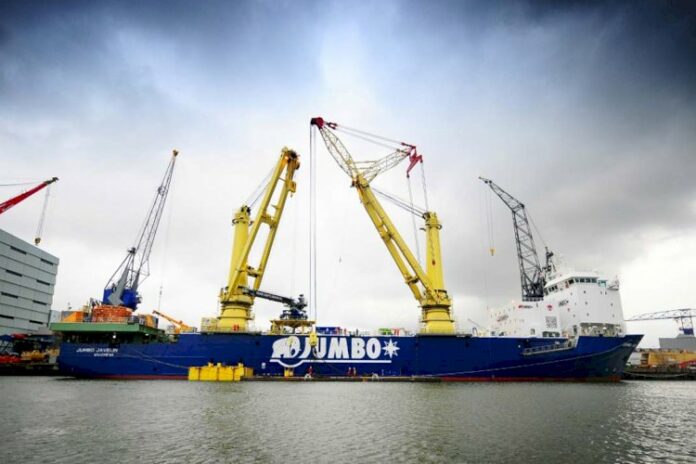
The new switchboards will manage the additional power provided by six temporary containerised generator sets, which Jumbo has had installed to increase the vessel’s capacity for a new offshore wind installation project in Taiwan.

The six generator sets have been fitted to supply power to the vessel’s bow thrusters and offshore equipment during DP operations. The Alewijnse switchboards will manage this increased power supply. 

Alewijnse’s Manager Service Ben Bonte says:

“Our switchboards have made it possible for the Jumbo Javelin to have a fully separated power supply for the two bow thrusters. In the previous set-up, there was not enough power available for the temporary equipment. The upgraded configuration gives Jumbo the extra capacity and reliability to take on the new project.”

Alewijnse has managed the complete integration of the new switchboards into Jumbo Javelin’s existing systems. Furthermore, the company installed the switchboards in such a way as to allow the ship’s electrical systems to return to their previous settings after the removal of the temporary generators. This has been  achieved through modifications to the PMS and PLC control systems. The new switchboards will, however, remain in position, giving Jumbo the option to increase the vessel’s power capacity again in the future.

The project has faced additional challenges as a result of the coronavirus crisis. Ben Bonte explains:

“Because of the COVID-19 measures we were not allowed to board the vessel for installation and commissioning works. We solved this by outsourcing the work to local staff in Singapore, while we coordinated the work preparation and supervision from the Alewijnse office in the Netherlands. Thanks to the close cooperation between the client, other subcontractors, local partners and the remote assistance of Alewijnse, we have succeeded in this.”

Ad van de Langeraad, Fleet Manager at Jumbo, added:

“For an upcoming offshore wind farm installation in Taiwan we needed an upgrade of the capability plot of our DP installation. We needed additional power for the bow-thrusters to get DP capability up to the required level. To make this happen, we contacted Alewijnse. They did the complete electrical installation when the Jumbo Javelin was built, as well as the conversion to DP2 in 2005.

“Alewijnse came up with an electrical solution for this DP upgrade that we can also use in the future. You can imagine that mobilizing an offshore construction vessel during the Covid-19 lockdown is not easy, but we managed it. After the modification we held a successful DP trial, including an FMEA.”

The Jumbo Javelin is a dynamically-positioned, heavy lift crane vessel operated by heavy lift shipping and offshore installation contractor Jumbo. The 144-metre vessel is currently mobilizing and will soon be handling the transportation and installation of wind turbine generator (WTG) structures at the Yunlin Offshore Wind Farm. When completed, this will be Taiwan’s first large, multi-megawatt, offshore wind project.