-1.5 C
New York
Home Blog Page 825

Damen delivers custom RHIB to Naarden Lifeboat Brigade

0

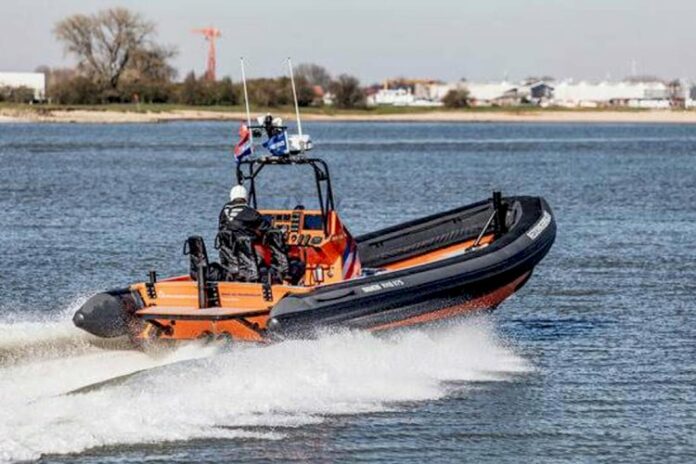
Damen Shipyards Group has recently delivered a new lifeboat, a Damen RHIB 975 Inboard, to the Naarden Lifeboat Brigade (Reddingsbrigade Naarden). Following a training period, during which the crew will familarise themselves with the new vessel, the Damen RHIB will conduct rescue operations on the Gooimeer, IJmeer and southern Markermeer lakes in the Netherlands.

The lifeboat has been made available to Naarden Lifeboat Brigade by a donor. Damen Shipyards Hardinxveld, where the RHIB was built, fully supports the initiative and has itself been partly involved in the sponsorship of the project. The brigade is a voluntary organisation that does not receive any governmental subsidies. It is, therefore, dependent on the support of such donations for its continued existence.
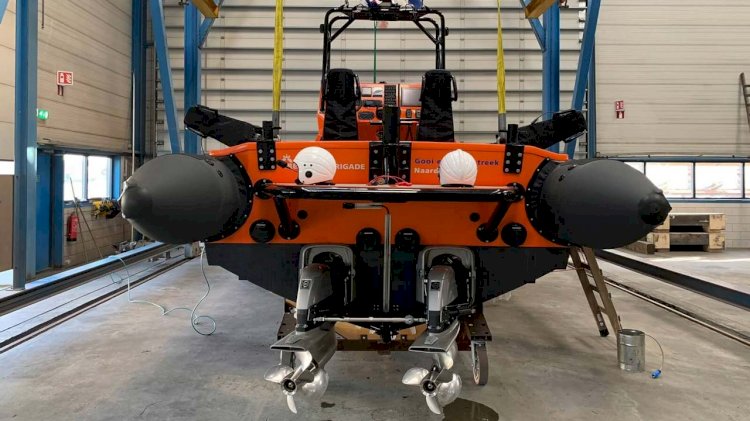
The Naarden Lifeboat Brigade provides a highly important service and has, so far this year, experienced 40 call outs. With this delivery, the lifeboat brigade has two operational lifeboats, thus ensuring that it is at able to provide assistance at all times, even when one vessel is undergoing maintenance. The new vessel is based at the Naarden Marina, from where it will perform search and rescue operations to watersports enthusiasts and commercial shipping alike.

Damen has delivered a customised vessel, designed specifically for the Naarden Lifeboat Brigade. The RHIB 975 is 9.75 metres long with a beam of 3.3 metres. It has two Volvo Penta D6 inboard engines, each offering 370 HP. With such propulsion the lifeboat can operate at speeds above 50 knots.
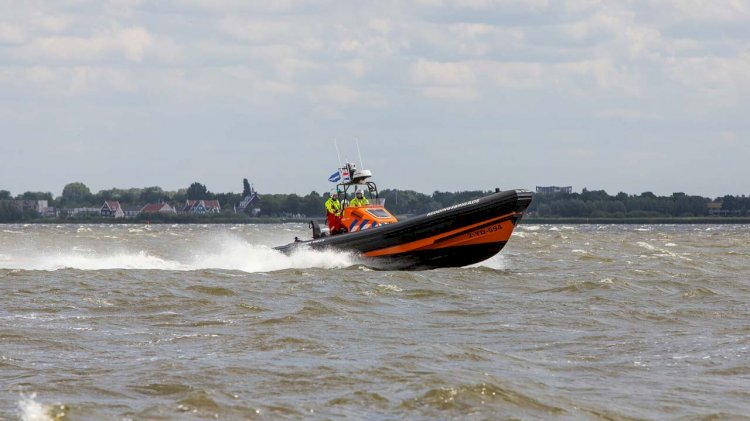
Other requirements were for ample deck and storage space in order that the vessel can easily transport the equipment necessary to save lives. The RHIB can accommodate four lifeguards and in the region of 25 rescue personnel. The crew are comfortably seated on Ullman Biscaya suspension jockey seats featuring ‘stay on’ cordura covers and rubber coated grip handles for extra safety.

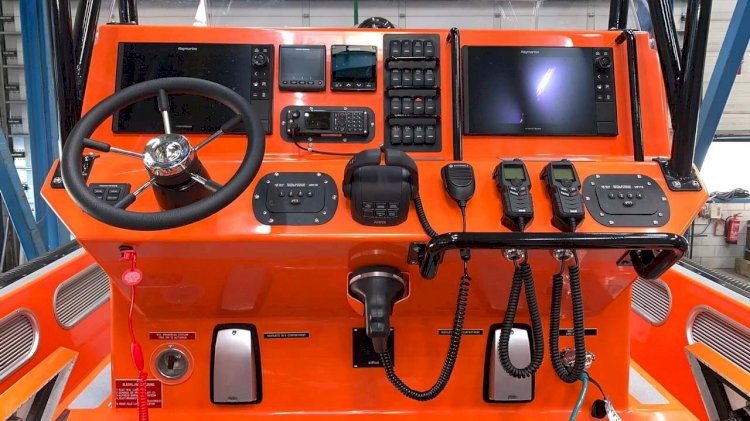
Damen also outfitted the RHIB with David Clark intercom communication, installed in the helmets worn by those on board. The vessel is equipped with modern communications and navigation systems to optimise its search and rescue capabilities. A dedicated towing bollard provided with a towing line on astorage drum ensures the RHIB’s ability to tow yachts in the event of engine failure or running aground. An additional feature is pre-heating on the engines. With this, the RHIB is ready to go immediately, whenever a call out is received.

The lifeboat is named Promers, after Bastion Promers, part of the distinctive fortifications of the historic city of Naarden.

IPCSA launches the Network of Trusted Networks

0

An innovative new concept for enabling port-to-port and cross-border exchange of data is being trialled by the International Port Community Systems Association (IPCSA) – in a two-year project covering up to 70 ports, ten airports and multiple inland terminals.

  • The purpose – to provide predictability, visibility and certainty within the supply chain.
  • The priority – to respond to the requirement of consumers and logistics companies for real-time, end-to-end information on their shipments.
  • The unique advantage – a trusted and neutral solution.

When it comes to providing this kind of cross-border solution, others have tried to deliver such a concept – but the key stumbling block is always ‘trust’. Where others are aiming to get direct users on board, IPCSA’s Network of Trusted Networks (NoTN) takes a different approach. NoTN users will be trusted, neutral platforms such as Port Community Systems, Cargo Community Systems and Single Window operators.

IPCSA chairman Hans Rook says:

“It is a trusted network because it isn’t going to the ‘end user’. The user is already identified and authenticated by the network. The platforms will only share data that they are allowed to share by their user.”

Thus the NoTN maintains the principle of commercial confidentiality, which is the cornerstone of Port Community System and Single Window operators.

Hans Rook adds:

“The benefits will be for the end-user. For example, if you have a shipment coming from Morocco into a UK port, you will be able to find out through your PCS whether your container has been loaded on the vessel, when it departed and when it is estimated to arrive in the UK port.”

The NoTN is being launched as a two-year proof-of-concept project, with 14 IPCSA members taking part in the pilot.

IPCSA secretary general Richard Morton says:

“IPCSA and its members has been considering how best to enable port-to-port and cross-border information. We have clearly identified that not all the problems are technical. In fact, some of the biggest problems are legal agreements between parties. In our daily lives we think nothing of downloading and using Apps – we considered how we could use this model for simplifying the exchange of information. This is what IPCSA is addressing in its proof-of-concept NoTN. The aim is to create simple cross-border exchanges and enable transparency through the supply chain.”

The two-year proof of concept will involve members learning and assessing value user cases, he explains:

“We have 14 IPCSA members from across the world taking part in the initial phase are. Between them, they cover 70 ports, ten airports and multiple inland terminals.”

In the initial phase, IPCSA is creating and building the concept based on the two ‘Track and Trace’ APIs it has developed for vessel status and container status. The system, always restricted to platform-to-platform, also provides for standardised and simplified contractual

arrangements and transparent fee negotiation between the ports or PCSs. No data is stored, and all data is encrypted.

Richard Morton says:

“The whole concept is driven by the platforms – not by IPCSA, which remains the completely neutral facilitator between them. The proof of concept is looking at how this develops, and we will evaluate and refine as needed.”

In the past, PCSs have generally only operated in their ‘local’ environment, supporting their direct customers, to simplify trade flow, he says:

“IPCSA’s NoTN gives them the opportunity to extend their service to give more information from different points in the supply chain, thereby enhancing their value. For the end user, it is all about transparency and knowing where your container is.”

The technical provider for the NoTN proof of concept is API first, data sharing platform NxtPort. As the facilitator, IPCSA has tailored the NxtPort offering to suit the neutrality of the NoTN initiative.

Hans Rook says:

“The objective is to set up a neutral, global, scalable and collaborative solution among PCSs, to share and exchange data port-to-port and cross-border and to simplify the associated administrative and technical solutions. We are very excited about the concept; by using existing technology to link IPCSA members, we will enable them to share data for the benefit of the whole supply chain.”

Denmark modernizes new shipping routes with virtual buoys

0

​Virtual AIS (Automatic Identification System) buoys are different from traditional buoys as the buoy does not exist physically in the water, but is only visible on the ships’ navigation equipment. However, the routes will still be defined with traditional physical aids to navigation optimized to the new routes.

The new shipping routes are intended to enhance the safe-ty of navigation in the main traffic routes to and from the Baltic Sea.

Andreas Nordseth, Director-General of the Danish Maritime Authority, says:

“With up to 70,000 ships annually through the Kattegat, it is essential to keep in mind the safety of navigation. Shipping in these waters is quite intensive, especially around the Skaw, and both in Denmark and abroad we have good experiences in enhancing the safety of navigation with routeing systems. At the same time, we introduce digital tools, as the routes will be marked with virtual buoys, which also is considered to en-hance the safety”.

The current routeing systems in the waters were originally established based on the mined swept routes established after World War II. The waters were declared free of mines in 1975, but the routes have still been used to guide the shipping traffic safely through the Danish waters. Now the routes are adjusted in accordance with the natural sailing patterns, so that they guide and separate the shipping traffic better.

The routes have been developed in close cooperation with the Danish Geodata Agency, the Swedish Transport Agency and the Swedish Mari-time Administration.

All changes to the routes can be seen on the Danish Maritime Authority’s website and are promulgated through the Notices for Mariners, as well as in the official sea charts from the Danish Geodata Agency.

Navarino launches its new software suite Spectrum

0

Spectrum is a software suite of tools and processes designed to cater specifically to the needs of maritime IT managers.

It offers a centralized platform for remote monitoring, maintenance and management of the entire IT and connectivity infrastructure onboard including network devices, satellite terminals, operating systems, applications and security measures. It offers a complete IT portfolio that helps to maximize efficiency and increase security while producing cost efficiencies and optimizing business processes both onboard and onshore.

Apart from its remote IT Management features, Spectrum offers to IT managers various options to comply with the cyber-risk management regulations that come into effect as from 1 January 2021. It provides with a designed-for-maritime toolset including:

  • Asset management
  • Network visualization
  • Remote Monitoring and Management
  • Software update and patching mechanism

Spectrum will be continuously updated based on ideas and feedback from its users. 

LNG Ferries designed by BMT Complete Sea Trials

0

BMT are pleased to announce the successful completion of sea trials for its latest design, the first of two 70m 100% LNG-fuelled ROPAX ferry designed for the operator Rederij Doeksen in the Netherlands. The two sistership ‘Willem Barentsz’ and ‘Willem de Vlamingh’ were built by Strategic Marine Shipyard (Vietnam) while final outfit and commissioning were completed by Rederij Doeksen.

With an operating area within an UNESCO World Heritage Site (The ‘Wadden Sea’), the main focus for Rederij Doeksen led by its managing director Paul Melles was on reducing the environmental impact of the vessel operation. BMT supported this ambition and provided the technical solution to reduce NOx, CO2, and noise while increasing the efficiency of the design to achieve lower operational costs.

In order to support the increased traffic on the route between Harlingen and Terschelling, different newbuild options were considered. The medium speed aluminium catamaran platform was selected to achieve significant fuel consumption reduction compared to an equivalent monohull.

Having considered these requirements together with the specificity of the route BMT developed the ship full detail design, Sylvain Julien, Director of Naval Architecture at  Specialised Ship Design, BMT, commented:

“The development of full aluminium vessel to meet national rules that typically assumes steel construction has, as always, been a challenge. Despite this, the end result demonstrates the benefits in terms of low power consumption, and specifically for Rederij Doeksen’s operation, the low operating draft”.

The development of the hull form followed a multi design criteria optimisation approach to account for the many constraints on the projects such as integration of the LNG containment systems and shallow water operation while offering lowest possible power requirement across the ferry operational range. The outcome of this work was successfully confirmed through a series of shallow and deep water model testing.

The low power requirement confirmed through this work also bolstered Rederij Doeksen’s  decision to use LNG as sole fuel onboard the vessel. Mr Melles confirmed the technology review part of the newbuild project clearly pointed towards LNG being the “most practical, reliable and clean energy source” for the route.

The propulsion system selected is based on the new MTU pure gas engines providing both fuel efficiency and sustainability with no marine gas oils being required for operation (unlike the more common dual gas engines). The IMO Tier III and EU stage V compliant engines each deliver 1,500 kW and drive the VETH VZ contra-rotative unit to achieve a service speed of 14 knots.

The vessel design integrates other features to enhance its green credentials and further reduce its emissions and operational costs. Aside for the LNG used for main propulsion and boilers, BMT and Rederij Doeksen paid particular attention to minimising energy consumption and reduce generator set sizing. Energy saving features include in particular a waste heat recovery and battery system to power the vessel bow thrusters and provide peak shaving capabilities.

The 70m Doeksen ferry includes; maximum capacity of 600 passengers, 66 cars, 120m truck lane, and 6 crew members. The vessel operates at a service speed of 14 knots.

Dutch Safety Board warns container ships of Wadden Islands route risks

0

The Dutch Safety Board (OVV) have warned owners and masters of large container ships that they must anticipate the route-specific risks of the shipping routes above the Wadden Islands, in the North Sea off the Dutch coast.

This follows an investigation into the loss of 342 containers from a large container ship in January 2019. The containers were lost overboard while sailing towards Bremerhaven, Germany, in a stormy northwesterly wind in the Terschelling-German Bight traffic separation scheme.

In addition to the usual incident investigation, the OVV led a further investigation into the route-specific risks on the shipping routes north of the Wadden Islands. The investigation considered both the southern route, close to the Wadden Islands and the northern route, which is situated further away from the coast. It found that both shipping routes present specific risks as a consequence of high beam seas, limited depths and the high stability of large, wide container ships.

The full report can be read here.

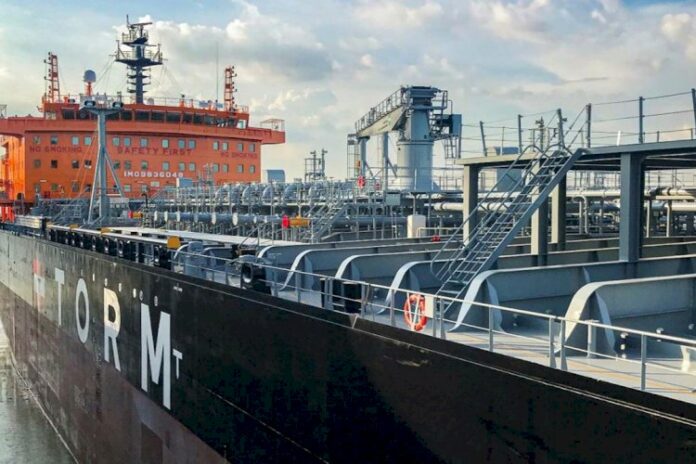
TORM saves time in remote DNV GL surveys with data from SERTICA

0

DNV GL’s Machinery Maintenance Connect (MMC) enables maintenance data from SERTICA to be presented in a digital dashboard, rather than requiring surveyors to travel to each individual vessel and go onboard. Most surveys – apart from annuals,  intermediates, and specials – can now be undertaken remotely and more efficiently, saving time and travel costs.

Danish TORM is frontrunner in this remote approach and today DNV GL can prepare for surveys in advance using data from SERTICA.

Sean Roberts, PMS Project Manager at TORM tells:

“We now prepare for our inspections digitally by uploading the data before an actual inspection. With all the data available in SERTICA this has proven to be relatively easy as it is only a matter of setting up a report in SERTICA, which is sent to DNV GL.”

Jesper Achard Henriksen from Logimatic explains:

“TORM is uploading maintenance data to MMC using our Analytics module in SERTICA. Typically, these data include job history on machinery class relevant jobs. SERTICA transfers the class-relevant machinery data automatically on a scheduled basis.”

TORM has uploaded maintenance data from the previous five years and updates the data every week. The weekly report is automatically sent to DNV GL and contains information such as vessel name, component class code, job description, job history, running hours and due hours.

Rolf Petter Hancke, Project Manager Digital Class at DNV GL tells:

“Once we have the maintenance data available in our dashboards, we can remotely perform the maintenance survey of TORM’s entire fleet in one process, saving time and reducing the disruption of daily operations.”

The dashboards replace the initial and annual MPMS survey on board and provides a complete breakdown of any class related maintenance already completed and overdue. Torm can access data in real time to create a maintenance plan and can compare sister vessels to optimize performance.

KOTUG to support SPHI Marine with BLNG contract

0

KOTUG International B.V. (KOTUG) from The Netherlands has secured a technical partnership agreement with SPHI Marine Sdn Bhd (SPHI Marine) from Brunei, who has been awarded a 10 + 5 year LNG terminal support contract to provide marine services for Brunei LNG Sdn Bhd (Brunei LNG).

The contract covers the provision of a complete marine package for the design, construction, and operation of three newbuild advanced Rotortugs® and one newbuild hybrid Rampage 4500 Anchor Handling Tug Supply (AHTS) vessel all having a range between 65 and 80 tons bollard pull.

The partnership between KOTUG and SPHI Marine traces back to 2014 when KOTUG started operations with 3 Rotortugs® for Brunei Shell Petroleum Company. Three strong tugs of the revolutionary Rotor concept are in charge of the berthing and unberthing operations of LNG Tankers, standby services during loading, oil spill response, SPM support, and firefighting duties. The RT Champion, RT Leader and RT Tasman will continue operating till the arrival of the new vessels.

The new vessels will be owned by SPHI Marine and fully technically managed by KOTUG for the first period of the contract. Based on a transition plan KOTUG will hand the management over to SPHI Marine during the second part of the contract. SPHI Marine will operate under their own Safety Management System supported by KOTUG through a technical Support Service Agreement ensuring smooth and reliable operations.

Dzairenny Muslim, Executive Director of SPHI Marine:

“We are delighted to build on our partnership with KOTUG, which will allow us to continue to develop local Bruneian offshore marine capability in support of the nation’s programme to maximise in-country value in the oil and gas industry.”

Ard-Jan Kooren, CEO KOTUG International:

“We are proud to be able to support SPHI Marine based on our extensive knowledge and experience on providing marine services and are grateful for the confidence presented by BLNG. A special appreciation goes out to our seafarers and staff in Brunei who are on the basis of this success having an open attitude to continue learning while remaining committed to the goal zero safety standards. In the end, it is our mission to exceeding our client’s expectations.”

SPHI Marine is a fully 100% Bruneian owned and managed company with a dedicated focus on providing best in class offshore marine services.

Neptune Energy awards remote monitoring contract to Fugro

0

Neptune Energy has announced the award of a subsea inspection contract to leading geo-data specialist, Fugro, which will employ state-of-the-art remote monitoring technology to survey subsea structures at the Cygnus gas field in the UK’s southern North Sea. 

Fugro’s scope of work includes inspection of subsea infrastructure including pipelines and umbilicals, spools and communication cables, and standard structural surveys of the Neptune-operated Cygnus gas platform jackets.

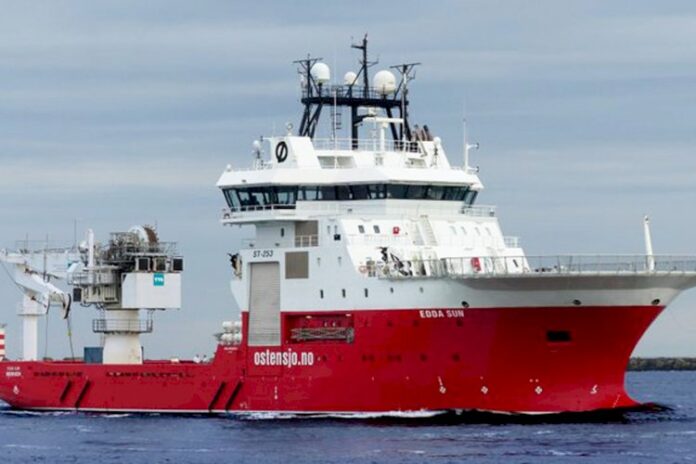
Fugro will deploy Remotely Operated Vehicles from the Edda Sun vessel to carry out the inspection work. Data processors, who would traditionally review the inspection data from onboard the vessel, will complete the work from Fugro’s new Remote Operations Centre (ROC) in Aberdeen, more than 600 miles away.

Using new digital compression and communications technology, the ROC team will interpret the inspection information, process the data and report to Neptune in real-time. This speeds up the process while reducing the number of team members physically present on the Edda Sun vessel, supporting the need to socially distance due to COVID-19.

Neptune’s Director of Operations for the UK, Mungo McLeish said:

“A routine programme of inspection work is a crucial part of ensuring the integrity of the subsea infrastructure and supporting safe, reliable operations. 
Across our geographically-diverse portfolio, we’re using digital technologies to enhance the safety and efficiency of our operations. Fugro’s use of their ROC is a strong example of the benefits to both operators and service partners of employing such technologies. Through remote monitoring, the team will have access to all available data and will reduce the logistical challenges of managing personnel on the vessel offshore.”

Karl Daly, Fugro’s Director for Inspection Repair and Maintenance (IRM) services in Europe, said:

“We’re delighted to continue our working relationship with Neptune. Fugro has worked at Cygnus for the past five years and will be utilising our ROC to provide high quality survey and inspection services, while reducing the number of personnel required offshore. Our in-house IRM expertise and technologies allow us to provide market-leading remote solutions, which are critical to our clients during this time.”

Cygnus partners: Neptune Energy (operator and 38.75%), Spirit Energy (61.25%)

​Qatargas delivers first Q-Flex LNG cargo to Adriatic terminal in Italy

0

​Qatargas Operating Company Limited (Qatargas) announced today the delivery of the first cargo of liquefied natural gas (LNG) on a Q-Flex LNG carrier to the Adriatic LNG receiving terminal in Italy.

The cargo aboard the Qatargas-chartered LNG vessel, ‘Tembek,’ was loaded at Ras Laffan on 9th June 2020 and delivered to the Adriatic LNG terminal on 21st June 2020. This is the first cargo discharge operation by Qatargas to this LNG terminal involving a Q-Flex LNG carrier

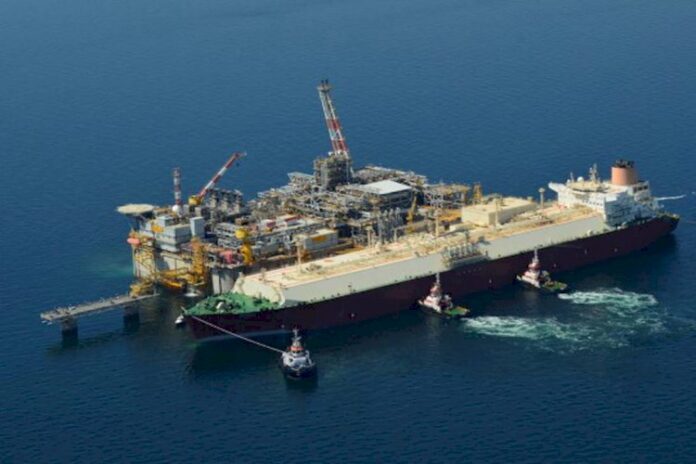
The Adriatic LNG terminal is located 14 kilometers offshore of Porto Levante in the northern Adriatic near Rovigo, Italy. It is the world’s first offshore gravity-based LNG regasification terminal. The terminal is operated by ExxonMobil (70%), Qatar Terminal Ltd. (23%), a subsidiary of Qatar Petroleum, and Snam (7%). The terminal is connected to the Italian national distribution network through integrated pipelines.

​The terminal has a regasification capacity of 8 billion cubic metres of LNG per year (equal to half the total Italian LNG import capacity) and it currently supplies over 10% of the country’s natural gas requirements.