-0.4 C
New York
Home Blog Page 818

Wärtsilä’s solutions being selected for a large wind farm MIV

0

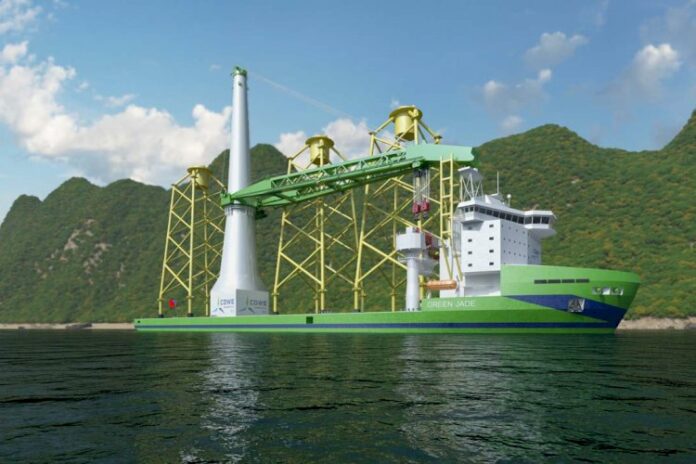
The technology group Wärtsilä’s experience and integration capabilities for wind farm service vessels has resulted in a broad scope of the company’s solutions being selected for a large wind farm main installation vessel (MIV). The ship is to be built at the CSBC shipyard in Taiwan for the joint-venture company CDWE (CSBC-DEME Wind Engineering) owned by CSBC and Belgium-based DEME Group. The order was placed in April.

The 216 metres long DP-3 MIV is the largest special vessel to be built at the CSBC yard for offshore wind farm applications. This high end vessel, the ‘Green Jade’, will play a major role in developing the offshore wind farm business in both new and established markets, including Taiwan. High efficiency and the flexibility to comply with the special needs of the vessel were key criteria in the selection of the Wärtsilä solutions. The full scope includes four Wärtsilä 46DF and two Wärtsilä 20DF dual-fuel engines, as well as Transverse and Steerable Thrusters, DP-3 solution, Navigation system, and selective catalytic reduction (SCR) systems for emissions abatement. The company will also provide site supervision services.

Östen Lindell, Director, Marine Unit East Asia & China, Wärtsilä, says:

“Wärtsilä has earlier delivered a comprehensive scope of integrated solutions for a similar vessel for one of the partners in this joint-venture company. The success of that project was clearly a contributing factor in the award of this contract.”

Mr Tseng CSBC President and CDWE Chairman says:

“We have worked with Wärtsilä for many years and have been very satisfied with the support they provide. In particular, their well-proven solutions and integration skills shorten the engineering and construction time, which is crucial to enabling an on-time delivery.”

The Wärtsilä equipment is scheduled to be delivered during 2021 and the ship is expected to begin operations in the Taiwan Straits in 2023. It will help boost Taiwan’s wind-power capacity, thereby aiding the government’s programme to achieve a 20 percent share of its energy from renewable sources by 2025.
 

Neptune Energy joins European Clean Hydrogen Alliance

0

The alliance was launched last week, bringing together industry, public authorities and civil society. It is part of the EU’s strategy to support efforts for Europe to become carbon neutral by 2050. 

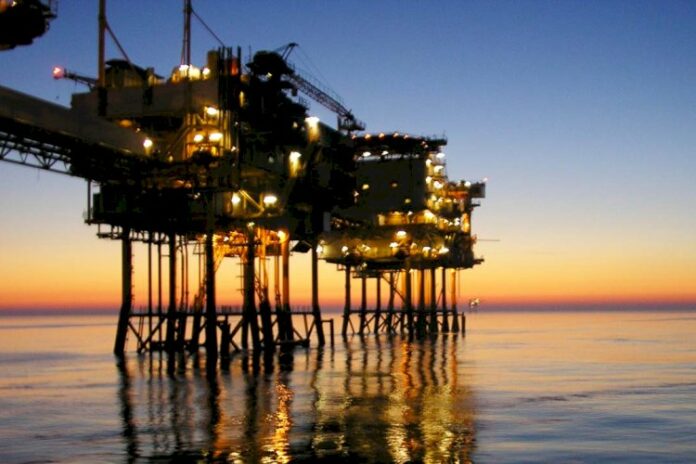
The Netherlands is particularly well-positioned to lead the transition to a hydrogen economy, given the abundance of wind energy and existing infrastructure at sea and on land for the transport of gas and hydrogen molecules. With Neptune’s PosHYdon project, electricity generated by offshore wind turbines will be used to power a hydrogen plant on the Neptune-operated Q13a platform, converting seawater into demineralized water, then into hydrogen via electrolysis.

Lex de Groot, Managing Director of Neptune Energy in the Netherlands, said:

“There is a growing consensus internationally that hydrogen will be required at scale in order for countries to meet the ambitious targets set out by the Paris Agreement.

“Hydrogen offers a solution to lower emissions in many hard-to-abate sectors, such as steel and heavy-duty transport. It can provide long-term energy storage at scale, support improvements in air quality and strengthen energy security.

“We believe hydrogen should play an important role in enabling decarbonisation and are already advancing efforts through our PosHYdon pilot, the world’s first offshore green hydrogen project.  We see strong, positive opportunities for hydrogen to play an important role in future energy supply.”

Alewijnse finalizes electrical installation for the TSHD Anchorage

0

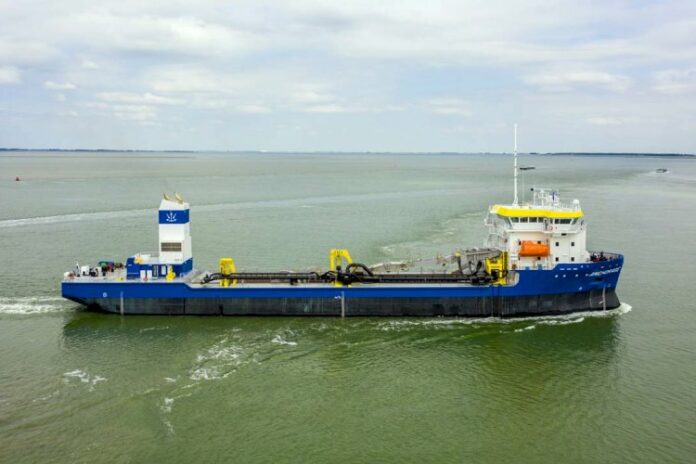
Once it is operational, the 106-metre vessel will be one of just a few diesel-electric TSHDs that specialize in sand and gravel extraction at sea and the dry landing of the cargo.

The vessel, ordered by De Hoop Terneuzen B.V, is one of two advanced dredger projects that were taken over by Thecla Bodewes Shipyards following the insolvency last year of Barkmeijer Stroobos BV. Alewijnse was appointed by the new shipyard management in the summer of 2019 to take responsibility for the completion of the works. This involved the design, building, installation and commissioning of the switchboards, consoles and the dedicated alarm, monitoring and control systems. It also included the design, engineering, supply and commissioning of the dredging automation system, including visualization, monitoring and process control.

For the control and monitoring of the dredging process, Barkmeijer has collaborated with Alewijnse to develop an intelligent and integrated bus-driven system. In addition to delivering high dredging performance, its capabilities mean that a crew of just 7 or 8 is all that is required to manage, load and unload the vessel. This ground-breaking system is now being made available to other clients via Alewijnse. Elsewhere on board, the diesel-electric power plants significantly reduce energy consumption and emissions.

Following the launch of the Anchorage earlier in the year, Alewijnse personnel completed the testing and commissioning of the automation systems for the dredging equipment, loading gutter and sieve in the last few weeks.

Thecla Bodewes Group and Alewijnse Marine have worked together successfully for many years with recently completed projects including the German Waddenferry Adler Rüm Hart. Alewijnse was contracted again for this latest project based on its extensive knowledge and experience in the dredging sector combined with its strong relationship with Thecla Bodewes.

Martin Terpstra, Operational Manager at Alewijnse Marine, says:

“We are very happy that Thecla Bodewes Shipyards gave us the opportunity to complete this dredger. The biggest challenge was to restart the project after the bankruptcy of Barkmeijer Stroobos. We had to begin over again with an unfinished engineering package and incomplete information, and also work both with the new team at the yard and a new owner. Despite this situation, the project is now complete thanks to excellent all-round cooperation and the total commitment of all the parties involved.”

Jos de Groot, Manager R&D at Thecla Bodewes Shipyards, says:

“I had selected Alewijnse during my time at Barkmeijer Stroobos, so both Alewijnse and I made the transfer to Thecla Bodewes Shipyards with the vessel. I have worked with Alewijnse on many complex projects over the last 22 years but the performance in this particular complex situation after a bankruptcy deserves great appreciation!  I hope to continue the cooperation with new challenges in the future.”

Vestdavit deploys augmented reality to enhance remote support

0

The platform, named ‘xAssist’, will be used in conjunction with head-mounted hardware ‘RealWear HMT-1’ to provide customers with consistent levels of service when Vestdavit engineers are unable to work on site.

After Sales Director Henric Collvin explains that the idea is not to replace Vestdavit technicians, but to ease the burden on them:

“Our engineers are highly skilled professionals with many years of experience servicing marine davits, and there is no replacement for that. However, they cannot be everywhere at once, and it is often far more practical to provide remote support.”

For example, if a client requires a small adjustment to one of its boat launch-and-recovery systems, Vestdavit can send the RealWear HMT-1 along with the necessary spare parts. Equipped with the headgear, the customer’s in-house engineer can perform the maintenance task with visual and audio instruction from a Vestdavit expert, who can see what the on-site technician is doing through xAssist.

This, says Collvin, brings great flexibility:

“We can provide remote support even if all of our specialist technicians are occupied. For instance, an engineer from our hydraulics or mechanical team will be able to guide the customer through any simpler tasks.”

The current global health crisis has exacerbated the need for this kind of service, explains Collvin, but Vestdavit was planning to adopt the UBIMAX platform even before the outbreak:

“Many companies are responding to the pandemic by investing in new technology, but remote maintenance had been gaining traction for some time. Customers are always looking for more efficient, cost-effective ways to operate. With xAssist, we maintain our usual service levels without having to send technicians to our client’s location. This reduces cost and saves time for both parties.”

But the benefits to Vestdavit could be further reaching. Collvin concludes:

“While making things easier for our customers, we are highlighting our engagement with modern technology – and that, today, is key to success.”

Cables for MHI Vestas wind projects in Taiwan to be produced by local companies

0

Deepening its commitments to Taiwan, MHI Vestas has become the only wind turbine manufacturer to source fasteners and cables locally, signing agreements with Boltun Corporation (Boltun) for fasteners and Walsin Lihwa Corporation for cables, respectively.

These agreements will see Boltun and Walsin Lihwa Corporation supply MHI Vestas for CIP-developed wind projects – Changfang Phase 2 and Xidao – to be delivered off the coast of Taiwan beginning in 2023.

The agreements with Boltun and Walsin Lihwa Corporation also cover the Zhong Neng project, where MHI Vestas has been named preferred turbine supplier. Changfang Phases 1 and 2, Xidao and Zhong Neng are the only four Taiwanese projects to have passed the government’s localisation review for projects allocated in Round 2.

Fasteners and cables are both key components of MHI Vestas’ cutting-edge V174 turbine, which is slated for first installation in Taiwan in 2022.

MHI Vestas APAC Regional Manager, Masato Yamada, said:

“We continue to prioritise the sustainable development of Taiwan’s local suppliers. As the only wind turbine manufacturer to be sourcing fasteners and cables from Taiwan, we are particularly pleased to be working alongside Boltun and Walsin Lihwa Corporation as they gain valuable experience and expertise in the offshore wind sector. We look forward to continue working with the government to deliver a competitive, regionally-capable Taiwanese offshore wind supply chain.”

Boltun is a well-regarded Taiwanese metal parts manufacturer that was established in 1988, headquartered in Tainan. Boltun will produce fasteners for MHI Vestas’ projects from its facility in Tainan, Taiwan, delivering valuable early learnings for the group’s expansion into the offshore wind sector.

Jason Chen, Sales Director of Boltun, said:

“As the offshore wind sector will be a key part of Taiwan’s energy story, we are pleased to be working with MHI Vestas to deliver fasteners for their first projects in the country. This early experience will be extremely valuable as we look towards the future and opportunities to export to the APAC region. We must secure our future with these early experiences, so consistency in technology is critical.”

Since its inception in 1966, Walsin Lihwa Corporation has produced power cables and wires for usage in a wide array of industries. As the offshore wind sector develops in Taiwan, early experience gained alongside MHI Vestas will enable Walsin Lihwa Corporation to potentially supply the broader Asia-Pacific region with cables.

Jin-Renn Leu, President of Walsin Lihwa Wire & Cable Business Group, said:

“To progress and grow with the Taiwanese government’s green energy policy, Walsin Lihwa Corporation has been dedicated to developing wind turbine cables in recent years. It is a pleasure to be the designated partner of MHI Vestas, and we will supply cables to their Taiwanese projects.  We hope to take this opportunity to work with the world-class wind turbine manufacturer and continue striving to be one of the top cable solution providers in the global market.”

Contracts have now been signed by MHI Vestas in Taiwan for local supply of blades, blade materials (bonding glue, resin, pultruded carbon plates), towers, switchgear, rotor hubs, hub plates and nacelle base frames, with more local supply chain contracts planned for 2020.

MHI Vestas is the only wind turbine manufacturer to procure blades, blade materials, switchgear, fasteners and cables from within Taiwan.

ABB to power the world’s largest diamond recovery vessel for De Beers

0

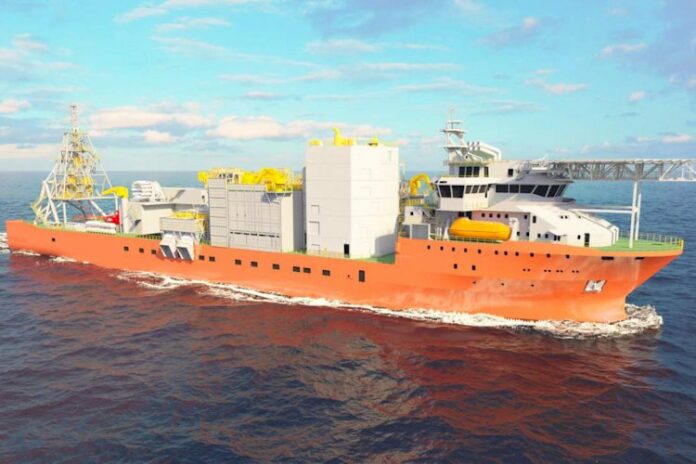
ABB will supply an integrated power system package that will ensure the world’s largest and most technologically advanced diamond recovery vessel meets exceptional safety, efficiency and availability requirements. The vessel is being built by Damen at Damen Shipyards Mangalia on the Black Sea in Romania. Financial details of the order were not disclosed.

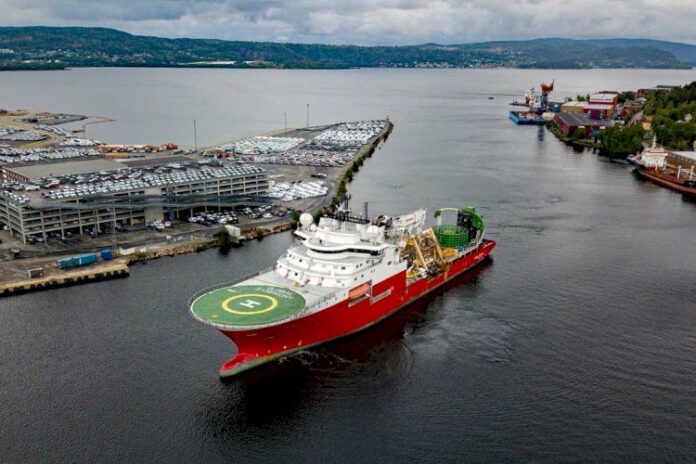
With a total cost of $468 million, the vessel is the largest single investment ever made in the marine diamond industry. It deploys advanced subsea crawling – a technique for recovering diamonds from the seabed. The newbuild will be delivered to Debmarine Namibia, a joint venture between the Government of the Republic of Namibia and De Beers Group in 2022. De Beers Group is the world’s leading diamond company, with unrivalled expertise in the exploration, mining and marketing of rough diamonds, driving it forward since 1888.

Namibia has the richest known marine diamond deposits in the world, with Debmarine Namibia extracting some of the highest quality diamonds available anywhere from water of between 90-150 meters deep off the south west coast of the country. Traditionally, onshore along the coastline of Namibia, diamond mining is done in open-cast mines, however, with the land-based output in Namibia expected to run out in 15 years, offshore mining is on the rise.

The new 177-meter ship has been designed by renowned Norwegian naval architects Marin Teknikk. It will become the largest ship in the owner’s fleet, exceeding the size of Debmarine Namibia’s current largest vessel, the Mafuta, by 8,000 tons displacement (vessel weight based on the amount of water displaced by the hull). It is expected to increase the shipowner’s annual production by 35 percent, contributing additional 500,000 carats to today’s production levels.

The offshore mining specialist has previously installed ABB’s power systems on board the SS Nujoma (SSN), Debmarine Namibia’s deep-water diamond exploration and sampling vessel.

Michael Curtis, who is heading the newbuild project for Debmarine Namibia, said:

“The success of the SSN, with high reliability, efficient positioning and low fuel consumption coupled with safe operation, was instrumental in selecting the same systems for the new diamond recovery vessel, with ABB’s power systems being and integral part of the solution.” 

The latest ABB technology will ensure that the vessel achieves unsurpassed uptime. In addition to the advanced system for power generation, distribution and variable speed drive propulsion systems, the solution includes a large online double-conversion marine uninterruptible power supply (MUPS) to support the ship’s vital control processes, significantly reducing the risk of critical power loss and downtime. ABB’s MUPS is designed for undisrupted availability, ensuring power backup for the vessel’s onboard control systems of the subsea-crawler and processing plant that sorts through sediment lifted from the seabed to extract diamonds. ABB’s advanced and tightly integrated power system will help optimize engine loading, as well as reduce running hours and fuel costs, and decrease maintenance needs.

Mark Vermeulen managing director Damen Offshore & Transport said:

“ABB is trusted globally as a leading technology company capable of delivering solutions for advanced and complex custom-built vessels. We are delighted to be working with them as part of a landmark newbuilding project for both companies.”

Juha Koskela, Managing Director, ABB Marine & Ports, said:

“This is a truly special ship, packed with sophisticated technology, and a project demanding an especially close relationship with the customer to ensure that optimal solutions were delivered for exact specifications. We are thrilled to see that the team behind this advanced vessel recognizes the benefits of efficiency, safety and uptime available through integration. This success is also consistent with growing traction for ABB’s electric, digital and connected solutions across an increasing number of vessel types and operational profiles.”

Ørsted and Van Oord installed all array cables of the Borssele I & II offshore wind farm

0

Ørsted and Van Oord have successfully installed all 94 array cables connecting the turbines of the Borssele I & II offshore wind farm. The installation started, ahead of schedule, in February this year.

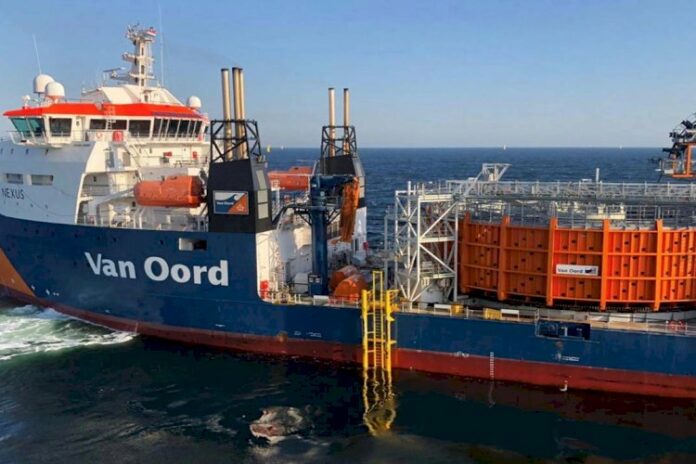
The cables are installed by Van Oord’s cable-laying vessel Nexus. Next month, Van Oord and Ørsted also expect to finalise the cable burial campaign with Van Oord’s trencher Dig-It. The 94 cables were fabricated by Nexans.

Kunuk Rosing, Project Manager Ørsted for the electrical project execution, said:

‘Despite the challenging times, we have finalised the cable installation process without delay or significant problems. This is an important milestone for delivering power for one million households by the end of the year. Reaching our goals was possible thanks to a very high performing team from Van Oord and good cooperation with Nexans and the TSO, TenneT.’

Arjan Dirkmaat, Project Manager Van Oord, said:

‘The installation of the cables went very well. The innovations initiated prior to the works paid out in high quality productions, setting a new standard for Van Oord’s cable installation works. I am proud of the project team, the vessel crews, suppliers and our riggers. They are the key to our success and delivered yet another cable installation project to our partner Ørsted ahead of time.’

Klaasjaap Buijs, Construction Manager Ørsted:

‘We are now approaching the last phase of the installation of Borssele I & II. Even with our stringent COVID-19 measures, we are still well on track to complete the installation before the end of the year. The cable installation scope was a good example of our excellent relationship with the neighbouring windfarm of Borssele III & IV, under construction by the Blauwwind consortium. It is not often that different companies successfully share cable installation vessels across different projects.’

VIDEO: Generals cargo ships collision in Welland Canal, Great Lakes

0

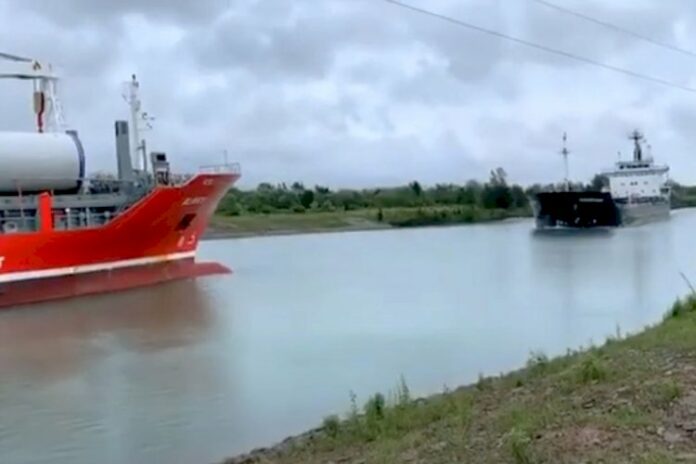
General cargo ships ALANIS and FLORENCE SPIRIT collided at around 2000 UTC Jul 11 in Welland Canal, which is connecting Lake Ontario and Lake Erie, Great Lakes.

Prior to the collision, both vessels appeared to be travelling in opposite directions on the same side of the canal, a key shipping route that connects Lake Erie and Lake Ontario.

The ships collided while proceeding in opposite directions, ALANIS en route from Toledo Ohio, Lake Erie, with cargo of wind turbines, FLORENCE SPIRIT en route from Montreal to probably, Colborne. Both ships were damaged in fore area, extent of damages unknown.

ALANIS reached Colborne and was berthed in about an hour after collision, FLORENCE SPIRIT was berthed at Welland, near collision site.
General cargo ship ALANIS, IMO 9468085, dwt 12744, built 2010, flag Antigua, manager RAMBOW REEDEREI (EQUASIS). General cargo ship FLORENCE SPIRIT, IMO 9314600, dwt 14001, built 2004, flag Canada, manager MCKEIL MARINE LTD (EQUASIS).

Oceaneering wins connector supply contract for offshore Western Australia project

0

Oceaneering International, Inc. (Oceaneering) announced that it has won a contract to provide a number of monobore diverless connectors for an offshore Western Australia project.

Oceaneering will supply 3-inch M5 connectors, which will be used for Monoethylene Glycol (MEG) and Chemical Inhibitor (CI) service on the field subsea distribution system.

The 3-inch M5 Connector enables the intervention of subsea assets. This ROV-flyable, full bore connector features the Oceaneering® Grayloc® metal-to-metal sealing system and proven M-series latch mechanism. The M5 Connector works for applications such as gas lift, chemical injection, well stimulation, hydrate remediation, flooding and venting operations, acid injection, and scale squeeze.

Nikunj Patel, Director of Engineering and Technology for Oceaneering, said:

“We are thrilled to provide our high pressure, high flow ROV-flyable M5 connectors for this project located in Australian waters. The M5 is a versatile, compact, and cost-effective solution ideal for high flow MEG, CI, and other chemical delivery applications. With this win, we continue building our track record with the M5 connectors being used in projects worldwide.”

SSEN commences Pentland Firth East cable replacement works

0

Scottish and Southern Electricity Networks (SSEN) is to commence its core work programme to replace one of the two submarine electricity distribution cables connecting Orkney to mainland Scotland, ensuring strengthened resilience of electricity supply to the islands ahead of the coming winter.

The £30 million cable replacement project, which received marine licence approval from Marine Scotland earlier this week, sees the installation of a new 33 kilovolt (kV) cable which follows the existing route from Murkle Bay, near Thurso, to Rackwick Bay on the island of Hoy.

The subsea cable replacement work will be undertaken by principal contractor, Global Offshore, with the cable expected to arrive by 15 July. Contract partners will support associated programme works, including near shore works, archaeological and ecological checks and works on the existing overhead network on Hoy.

The installation of the new cable will allow for the removal of some sections of existing overhead line on Hoy, to be replaced with underground cable. SSEN expects to complete all works by November, following an extension of the programme to avoid construction during bird breeding season on the island.

SSEN has been working closely with key stakeholders throughout the development of the programme, in recognition of the critical nature of the project, the impact of the coronavirus pandemic and associated travel restrictions.

All contractors working on the project will closely follow current Government guidance with measures taken to protect both the public and the construction teams. These include additional management of work and travel schedules, adherence to social distancing and the use of enhanced personal protective equipment.

SSEN is undertaking a significant programme of investment to replace around 90km of submarine cables connecting Scotland’s island communities by 2023 – a fifth of the total number currently in operation.

The Pentland Firth East cable was identified for replacement after routine inspections found it was coming to the end of its operational life. In July 2019, SSEN successfully completed repairs to the cable in Rackwick Bay following a cable fault. While customer power supplies were not impacted by this fault, a long-term solution was required to maintain a safe, secure and reliable power supply to homes and businesses in Orkney.