
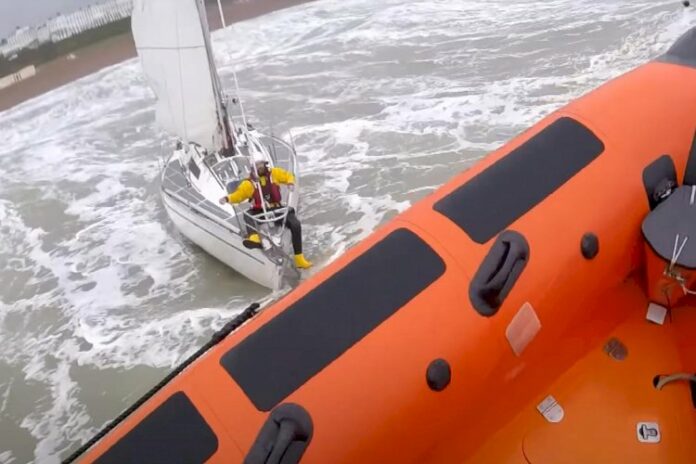
When the pager sounds, RNLI crews don’t know what they’ll be responding to – it could be anything from rescuing a dog that has slipped down a cliff, to a massive tanker drifting in storm force conditions.
Siemens Gamesa secures 165MW Vietnamese double
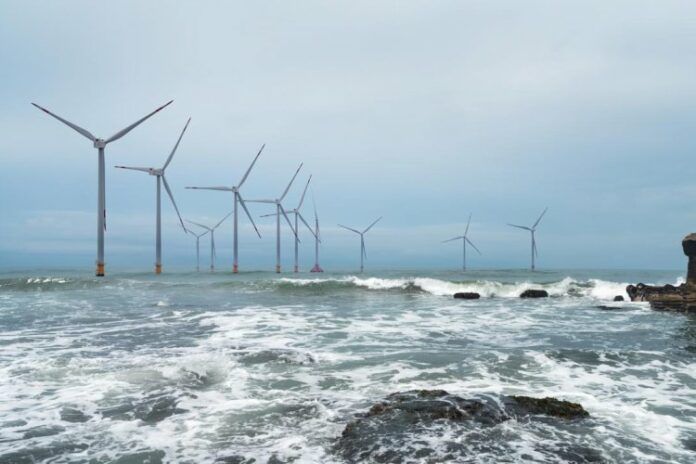
Siemens Gamesa has scored a double order, including one for the largest nearshore wind farm in Vietnam, as the country quickly advances on its renewable ambitions. The two deals, with 75 MW and 90 MW at the Tan Thuan and Thai Hoa wind farms respectively, will use the SG 5.0-145 turbines, which are among the most powerful turbines on the Vietnamese market.
The Tan Thuan wind farm is the fourth nearshore project Siemens Gamesa has secured in Vietnam and it is also the largest nearshore project to date in the country. The orders follow the company’s largest order in Vietnam announced in March for 113 MW, helping to cement its market leading position.
The two deals also mark the first-ever cooperation Siemens Gamesa has concluded with Power Engineering Consulting Joint Stock Company 2 of Vietnam and Pacific Corporation respectively. Following expected commissioning in mid-2021, they will generate enough electricity to power the demands of more than 350,000 Vietnamese and help alleviate power shortage in the country.
The company has also signed a 10-year contract to provide operation and maintenance services for Tan Thuan wind farm and a 20-year term sheet for servicing Thai Hoa wind farm, ensuring turbine performance and maximizing business case for the customers.
Enrique Pedrosa, Chief Regions Officer of Siemens Gamesa’s Onshore business unit, said:
“We’re pleased to see the Siemens Gamesa 4.X platform gaining a great deal of traction in Vietnam from the debut for our first nearshore project to the recent largest order and the combined 165 MW for two deals we are announcing today. We have been able to win trust from existing and many new customers thanks to our product innovation and a growing local team on the ground with strong project execution and servicing capabilities. We are committed to introducing our latest products and technology to Vietnam and partnering with customers to unlock the potential of renewables in Vietnam and Asia Pacific.”
Vietnam offers great potential for wind power development. According to the World Bank Group, the country has onshore potential capacity of 24 GW, and 475 GW of offshore capacity along its coastline of over 3,000 km. While the country had installed 487.4 MW of wind capacity by the end of 2019, capacity is forecast to grow by more than 11 GW by 2025 as the country looks to quickly escalate its renewable energy supplies.
In Vietnam, Siemens Gamesa has built three wind farms, with seven more wind farms under construction. The company has been expanding in the Asia Pacific region since the 1980s and has installed more than 8.4 GW of onshore turbines in the region. On the offshore side, the company completed the installation of Taiwan’s first offshore wind power project in 2019 (128 MW) and in addition reached close to 2 GW of firm orders.
Balmoral unveils integrated cable protection system
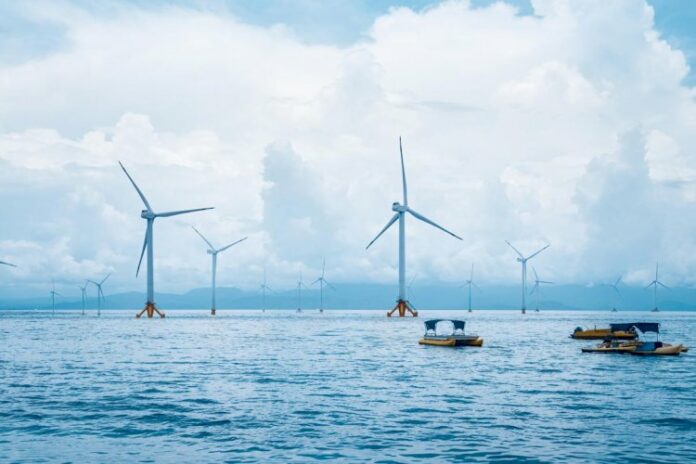
Multi-discipline engineering outfit Balmoral offers a range of cable protection systems (CPS) for inter array and export cables for fixed and floating offshore wind installations.
The independent company’s in-house ‘Discovery Unit’, a combination of product R&D, materials and testing specialists, has created an integrated CPS the company reports is unique.
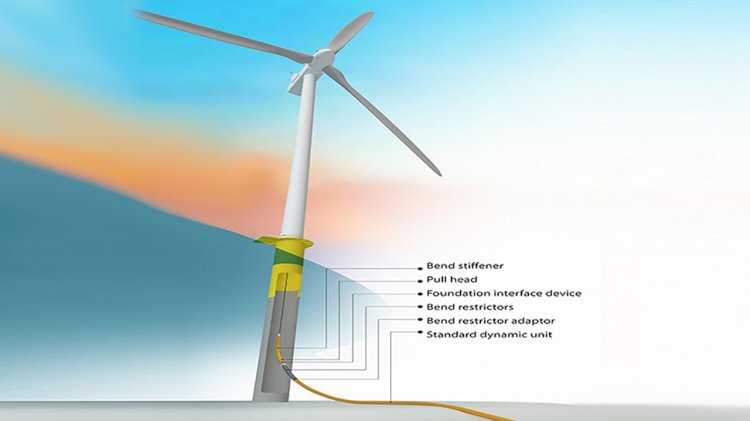
The patented system, which is available in three standard sizes, includes a combination of bend restrictors and a bend stiffener, foundation interface device, standard dynamic unit and a detachable pull head, all of which is designed, manufactured and brought together in-house before being tested on the company’s test rig.
Solutions for varying apertures on monopile installations are available as well as J-tube and I-tube options for jacket structures.
Balmoral’s patented fibre reinforced technology adds stiffness to the system controlling the curvature during the project lifespan
Dr Aneel Gill, product R&D manager, says:
“Our systems are designed based on the fatigue limit state (FLS) and offer something different because of their unique diverless removal feature and the ability to account for free span caused by scour development.
“Our patented fibre reinforced technology adds stiffness to the system controlling the curvature during the project lifespan. This reduces the amount of movement experienced by the cable, improving fatigue performance and greatly reducing the risk of failure through the life of field.
“The low weight components of the system permit efficient transportation, handling and assembly on deck. The system also allows for diverless removal of the CPS should cable maintenance be required.”
Balmoral says it is totally committed to the renewables sector and has invested heavily in its engineering, manufacturing and testing services. It said the company’s 40-year engineering and technical background was critical in creating the new CPS system.
Ian Milne, sales manager, comments:
“With over 300 employees at our Aberdeen facility we retain an impressive complement of design engineers, project managers, R&D, laboratory and testing personnel helping us maintain and strengthen our position as a leading subsea solutions provider for the energy sector.”
Through an established global network, Balmoral is ready to bring the benefits of its system to the worldwide industry. Milne continued:
“From what we read in the press and glean from the available data, the scale of global opportunity is quite staggering. Considering what is already happening in Europe and the Far East, to the potential that lies off the coasts of North and South America, the industry offers great prospects for companies that are willing to invest in new technology and innovative solutions – something we’ve been doing at Balmoral for many years.”
WinGD works with oil majors bringing greater transparency to cylinder oil decisions
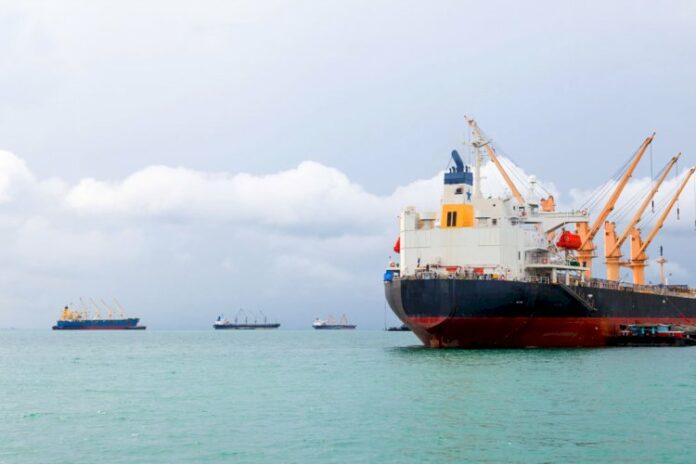
Engine designer WinGD (Winterthur Gas & Diesel) has prioritized collaboration and transparency in its new cylinder lubrication guide, to ensure that selecting the right oil is easier than ever.
The guidance is the result of several months’ work with major oil companies to make usage requirements more transparent. Previously, the guidelines for each oil were found only in the industry standard No Objection Letters (NOL) issued by WinGD to oil companies, and available only upon request by a customer to an oil company directly. Now this information has been included in the full list of approved cylinder oils.
To find an appropriate cylinder oil, users first select a suitable Base Number (BN) range based on their fuel sulphur content. Customers then look through the guide to see which oil products fall within a specified BN range. The document then highlights whether each oil is approved for general, long-term use or whether further stipulations – such as a time limit or greater frequency of inspections – are required. An additional category, labelled as ‘DF validated’ shows whether the oil has passed a validation trial while burning gas as the predominant fuel during that trial.
Frank Venter, WinGD Project Engineer Tribology Fuels & Lubricants, says:
“Cylinder oil is not just another consumable onboard – it’s considered an important engine component that ensures reliable operation. Given the already wide variability in existing fuels available, it is important that engine companies and oil suppliers work together to offer clarity for ship operators about which oils can be used and how. This will become increasingly important as we embrace a decarbonised future with potentially multiple varied sources of both liquid and gaseous fuels.”
The development follows extensive work with oil majors in the run up to 2020 to ensure that cylinder oils could meet the challenges of new fuel types. The engine designer’s well-established validation procedure has identified many cylinder oils with a broad spectrum of properties (including BN) which are fit for operation with both low and high-sulphur fuels as well as for gas fuel operation.
The correct use of appropriate cylinder oil completes WinGD’s robust and well-proven tribological design concept. Its engines feature state-of-the-art cylinder lubrication systems combined with unique cylinder liner, piston and piston ring designs. These improve reliability and enable a long time between overhaul for combustion chamber components, ultimately resulting in more predictable and lower cost engine maintenance.
COMSAT bolsters Inmarsat network with increased C-band and L-band capabilities
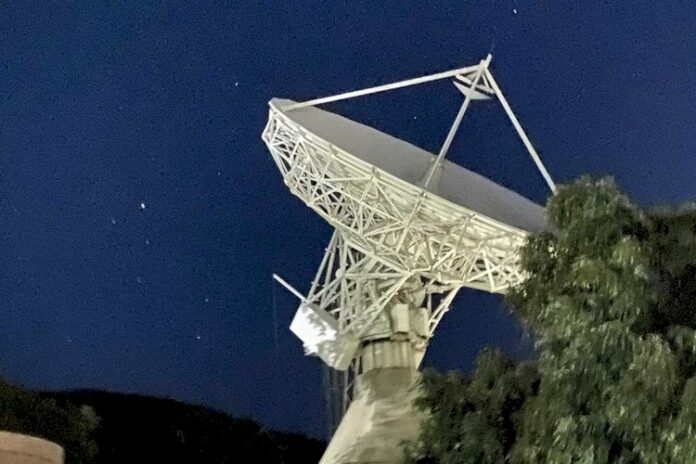
COMSAT, the global satellite connectivity solutions provider, is extending the life of Inmarsat’s existing satellites through the leasing of an additional antenna at COMSAT’s Santa Paula, CA. Teleport.
The newly leased 12.8m antenna is transmitting and receiving in both C-band and L-band frequencies, bolstering capacity for the Tracking, Telemetry and Command (TT&C) and traffic operations of the Inmarsat satellite network. The Santa Paula teleport hosts Inmarsat’s Standard C equipment, supporting Inmarsat in delivering the most reliable global-standard maritime safety service.
The additional C-band and L-band capacity is a key part of Inmarsat’s global network, providing robust, reliable life and safety communications for more than 1.6 million seafarers worldwide. The renewal of the existing agreement strengthens the long-standing business relationship between the two companies and builds on their heritage of providing the maritime industry with an invaluable communication lifeline that is unaffected by inclement weather.
David Greenhill, COMSAT CEO, said:
“This contract reaffirms Inmarsat’s commitment to utilizing COMSAT’s Santa Paula and Southbury teleports to provide this vital service for the international maritime community. As the original providers of Marisat operations which launched in 1976, COMSAT has a long and strong heritage of providing life-saving satellite communication services at sea. Technology has changed significantly since the original constellation was launched but what hasn’t changed is our commitment to providing a global service that keeps the seafaring community connected at all times no matter the weather or where they are in the world.”
Jason Smith, COO, Inmarsat said:
“The COMSAT teleport is an integral part of our global network that provides critical communications service for our maritime customers. With the satellite connectivity supported by the COMSAT teleports, we continue our commitment to provide essential and robust connectivity to the maritime community.”
The new contract follows hard on the heels of COMSAT being named 2020 Independent Teleport Operator of the Year by the World Teleport Association at the 25th annual awards held in March this year. It also complements an expansion plan currently in process at COMSAT’s Tier 4 WTA certified teleports in Southbury, CT, and Santa Paula, CA. On completion COMSAT will support more satellite constellation providers than any other terrestrial network.
Fugro chooses Sonardyne’s technology for its offshore wind operations
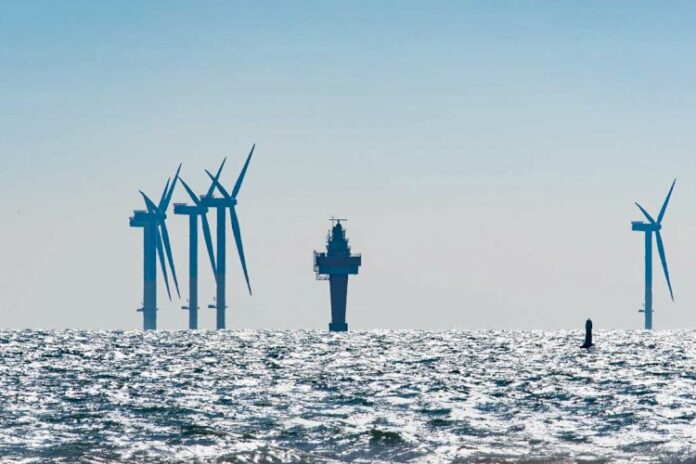
Leading geo-data specialist Fugro has chosen underwater positioning technology from Sonardyne Inc. for its upcoming offshore wind farm projects in North America.
Fugro has ordered three Sonardyne Mini-Ranger 2 Ultra-Short BaseLine (USBL) underwater positioning systems to support shallow water site characterisation surveys, and a standard Ranger 2 for positioning geotechnical boreholes that will influence turbine foundation design and installation. In addition, Fugro has also ordered Wideband Sub-Mini 6+ (WSM 6+) and Nano transponders to fit to the underwater equipment it will be tracking with is new USBLs, including side-scan sonars and transverse gradiometer systems.
Mini-Ranger 2 is ideal for nearshore operations using small vessels, moored barges and unmanned surface vessels, and needing survey-grade positioning performance. It can simultaneously track 10 targets at very fast update rates, is quick to install and has an operating range of up to 4,000 metres. For this application, the Mini-Ranger 2 HPT 3000 transceivers will be mounted over-the-side of Fugro’s vessels to provide very shallow, high elevation tracking, without losing positioning accuracy.
Ranger 2 is Sonardyne’s highest performing USBL system, capable of simultaneous long range target tracking, dynamic positioning (DP) and subsea communications. It is being supplied to Fugro with an HPT 7000 Gyro USBL which combines the vessel heading, pitch and roll data that’s critical to USBL system precision, with an acoustic transceiver in a single housing.
Using Gyro USBL means that owners can move their Ranger 2 between vessels of opportunity and avoid the need to undertake post-installation performance tests before subsea operations can begin, saving expensive vessel time.
Char Franey, Sales Manager for Sonardyne in Houston, says:
“Ranger 2 is a great fit for Fugro’s busy work programme off the US East coast this summer. Investing in both Mini and standard Ranger gives them the flexibility to mobilise different size vessels for different tasks and have them working close to each other without causing interference. And because all versions of Ranger 2 use the same software, their crews will be able to easily switch between using the two systems.”
Westports launches world’s first wireless remote P-Check system
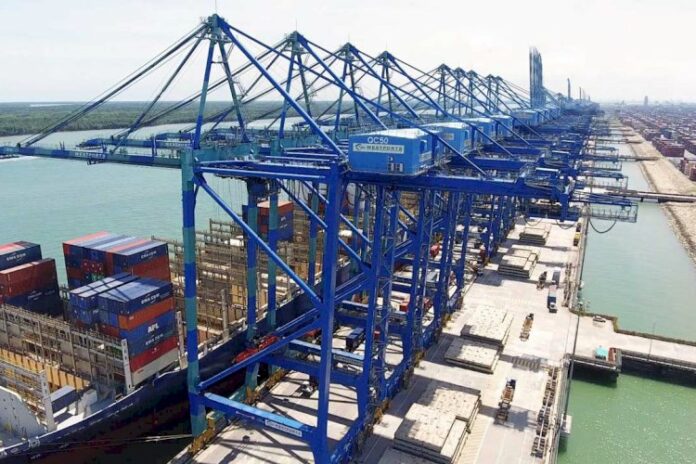
On 9th July 2020, the Minister of Transport, YB. Datuk Seri Ir. Dr. Wee Ka Siong officiated the launch of Westports’ Remote Physical-Check System (“RPS”).
Every container that is being unloaded from or loaded onto a vessel has to be verified at the wharf. The RPS allows the verification process to be performed via Video Analytic cameras installed on the Quay Cranes structure instead of having stowage clerks physically walking around container boxes performing the same function onsite at the wharf. Westports RPS is the world’s first in implementing this technology via a wireless network and infrastructure.
RPS marks another milestone in Westports journey towards digitalisation as the Company progresses from the manual process before 2000 to digital handheld devices in the 2000s and finally to wireless tablet devices before the introduction of RPS. The RPS’ 24/7 video streaming also facilitates weather and pollution proof verification process.
Westports RPS was developed internally over two years from the proof-of-concept in 2018, to pilot test in 2019, and finally full-scale gradual implementation in 2020. The Company has already implemented the RPS on 29 units of Ship-to-Shore Cranes and is expected to roll out the full application of the RPS by end 2020.
With the RPS, the stowage clerks’ work scope is upgraded as RPS clerks can perform the verification process remotely in the comfort of the office environment. Verification accuracy improves. Without the need to physically walk around the containers onsite at the wharf, work safety is enhanced – this incidentally improves verification efficiency as the turnaround time to check the containers is reduced by one-third to only 30 seconds.
The digitalisation with the RPS also reduces the need for RPS clerks as one staff can now multitask and perform the verification work of three staff previously. This allows Westports to redeploy and train staff for other areas of operations to support the Company’s growing requirements even as Westports plans for its multi-billion container terminal expansion at Pulau Indah.
Datuk Ruben Emir Gnanalingam, Group Managing Director of Westports, remarked that:
“The Remote Physical-Check System demonstrates Westports’ ethos and culture of striving and even developing innovative solutions to achieve improvement in operational efficiency for our clients and work safety for our staff. The system was developed at a fraction of the cost compared to some alternatives, and it is the world’s first wireless network system. The RPS will also support greater operational efficiency of Westports eventual expanded multi-billion container terminal expansion in the future.”
Mega One Triton shipwreck finally removed
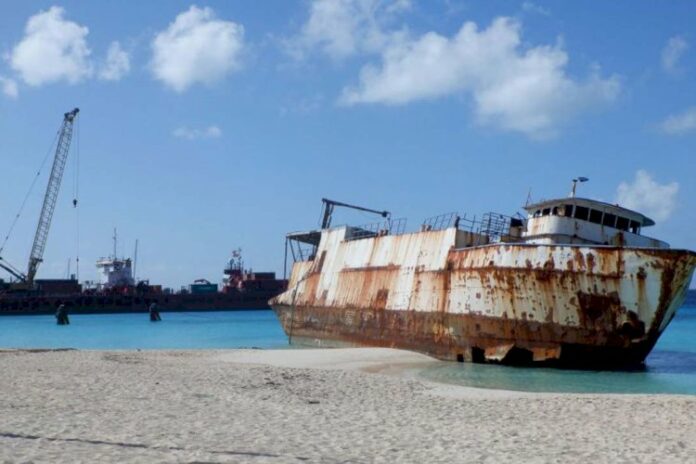
Waves Group has announced the successful removal of the wreck of the “Mega One Triton” from Governor’s beach on Grand Turk in the Turks and Caicos Islands. The project to remove the wreck was completed on schedule and within budget in March 2020.
The vessel went aground during the passing of hurricane Sandy in 2012 and had become an unfortunate attraction for visitors to the beach. However, since then, its deteriorating condition posed an increasing risk to the sensitive marine environment and the safety of the hundreds of visitors to this pristine tropical beach.
The “Mega One Triton”, which was built in 1972 and operated under a variety of former names, started service as an offshore supply vessel serving the oil industry in the Gulf of Mexico. Following this, it was sold to a retired Captain and continued operating on inter-Caribbean trade routes, delivering building materials and supplies from the Dominican Republic for over 20 years until it went aground on Governor’s beach.
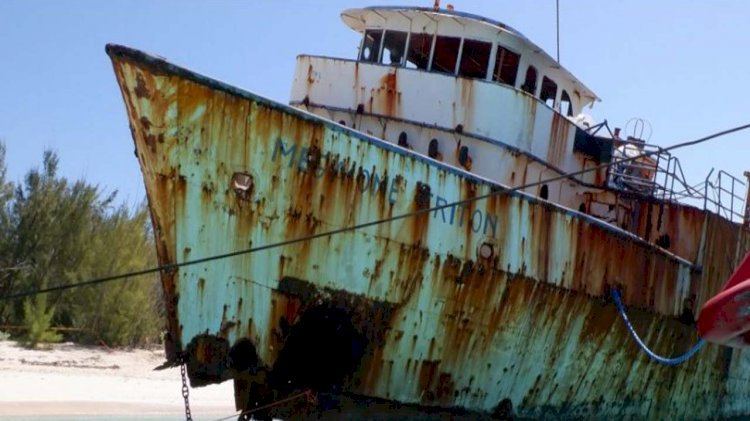
Waves Group were appointed as Client Representative and technical advisers to the Turks and Caicos Islands government in 2017 to oversee and manage the project for the wreck removal, including the initial survey and assessment of the wreck, as there were no available plans or drawing at that time.
Waves Group also undertook a follow up condition assessment in late 2019, prior to the project going out to competitive tender and were responsible for supporting the tender processes to appoint a removal contractor and overseeing the safe removal of the wreck.
The Turks and Caicos Islands government were very concerned about the environmental risk of pollution and damage to the sensitive marine environment of Governor’s beach – one of the most highly rated beach in the Caribbean, should the wreck remain in place beyond the 2020 hurricane season, which may have resulted in further deterioration of the wreck and an increased risk of significant environmental damage.
The scope of work involved the complete removal of the wreck (and all pollutants remaining on board) from the beach and the restoration of the beach to its natural state prior to the wreck grounding. Once removed from the beach, the waste materials were disposed of at an approved site and the majority of scrap material was to be recycled at an approved recycling facility on another Caribbean Island.
The project started in 2017 but was dormant for about two years following significant damage to the Island’s infrastructure caused by Hurricane Irma in late 2017. With support from a major cruise line, the project was delivered for a significantly reduced budget, which was critical in supporting the islands redevelopment after the hurricane.
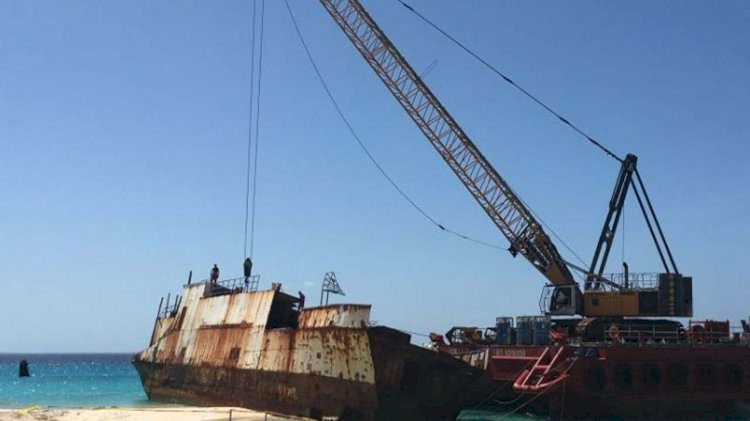
Following the tender process in late 2019, which attracted a large number of tenders from both local and international contractors, Koole Contractors were appointed as contractor to complete the removal of the “Mega One Triton” from the beach. The method employed involved cutting up the wreck into large sections and removing it from the beach by crane onto a barge which could then take the scrap directly to the recycling facility.
Operations to remove the wreck commenced on 17th February this year and were completed on 11th March to the complete satisfaction and approval of the Turks and Caicos Islands government, who are delighted that the beach has been returned to its previous pristine condition. Governor’s Beach is noted as the best in the region for snorkeling and dive excursion activities, hence any form of pollution would have had serious environmental and economic impacts and increased the project cost for the Government. We are delighted to have played a significant part in restoring the beach to its former glory for the enjoyment of the local community and the many visitors to the islands alike.
Roxana Shipping completes a major technology upgrade project
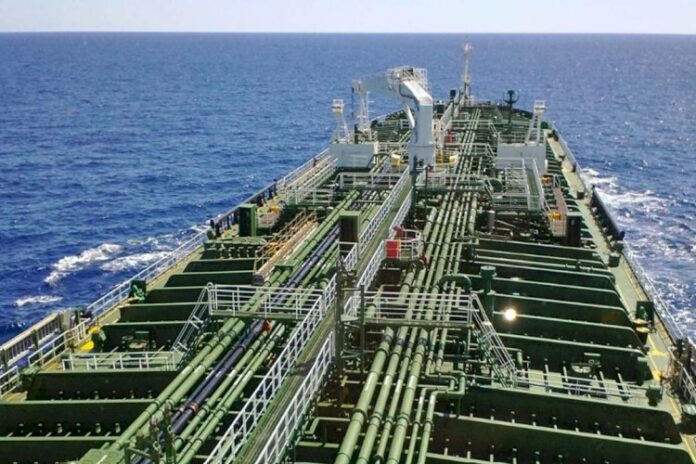
Roxana Shipping has recently completed a major technology upgrade project that saw the company install Inmarsat Fleet Xpress (FX) on all 10 of its tanker fleet.
The project has provided each vessel with the 2 Mb FX package in combination with Infinity Plus and Cobham 60 GX antennas, resulting in a significant bandwidth and technology boost for both their business and crew welfare requirements.
Stelios Kontozoglou, IT Manager and company Cyber Security Officer for Roxana, said:
‘Having recently completed the roll-out of Fleet Express on our tanker fleet with Navarino, we are more than happy with the benefits that the system offers. The increased bandwidth and lower latency has been a game-changer, facilitating a number of possibilities that were just not feasible before, including easier remote support, faster, low-cost crew internet and the ability to exchange large amounts of data with the vessel without restrictions or monthly quotas.
Furthermore, the lower latency makes a big difference to using on-line applications such as remote inspections and audits, remote control, teleconferencing and so on. Cost control is also made much simpler thanks to FX’s fixed fee, All You Can Eat model each month, with no unexpected cost surprises. The FX installations went smoothly, without any issues and the Navarino support team was always on hand and ready to assist. Fleet Xpress coupled with Navarino’s Infinity has given us a strong foundation and the infrastructure to introduce other advanced applications going forward.’
Ioannis Brougiannakis, Navarino’s Account Manager for Roxana, said:
‘Communication is an essential part of the ship’s infrastructure as it links people and systems on board to the shore office. In addition, the reliable, high-speed crew internet that FX provides is a must-have and is especially important now during these difficult times. Our Infinity platform provides an ever-growing list of tested, functional tools for ship operators and combines well with our 24/7 5-star customer experience that we strive to offer all our customers. Navarino is very proud of our partnership with Roxana Shipping and we look forwards to working closely with them for many years to help them meet all of their technology needs.’
Roxana Shipping S.A was established as a ship management company in 1997. The company currently operates 10 modern chemical tankers and 3 bulk carriers through another affiliated company.
Veson Nautical releases new Data Lake Module

Global market leader for commercial maritime software Veson Nautical has formally launched VIP Data Lake, the newest module of its innovative cloud solution, the Veson IMOS Platform (VIP).
One of VIP’s optional Data Solutions, Data Lake offers a cloud-native, scalable solution that allows users to interact with and download large amounts of data in a highly efficient manner. The module was first announced at Veson’s ONCOURSE user conference, which took place virtually last month.
Bill McConnell, Product Manager at Veson Nautical, commented:
“In a single day, the maritime shipping industry generates roughly 120 million data points related to contracts, vessel movement, cargo locations, and more. Without a proper solution, organizations are not able to effectively analyze their historical data. The Data Lake solution solves that problem by making data in the VIP operational database available on an ongoing basis, in a format compatible with leading data reporting and analytics tools.”
VIP Data Lake is designed handle vast quantities of data at one time, and is compatible with data warehouse, business intelligence and data analytics solutions. By increasing simplifying full access to historical operational data snapshots, Veson seeks to empower its clients to unlock powerful insights and make better, data-driven decisions.
Ben Thurecht, CTO at Veson Nautical, commented:
“Many of the conversations we have with our client base center around accessing, securing, and integrating data into downstream applications. VIP Data Lake allows clients to gain rapid access to all of the data stored in VIP, refreshed on either a daily or hourly basis. That data can then be downloaded and ingested into downstream systems, such as a custom data warehouse solution or a third party application. This allows our customers to retrieve and work with larger quantities of data easier than ever before, which in turn opens up a world of opportunity for extracting valuable insights and supporting decisions with data”
VIP Data Lake joins 16 other modules on the Veson IMOS Platform as an optional Data Solution in the market-leading end-to-end system. The module is available today.