5.8 C
New York
Home Blog Page 782

Japan’s first LNG-fueled PCTC named “Sakura Leader”

0

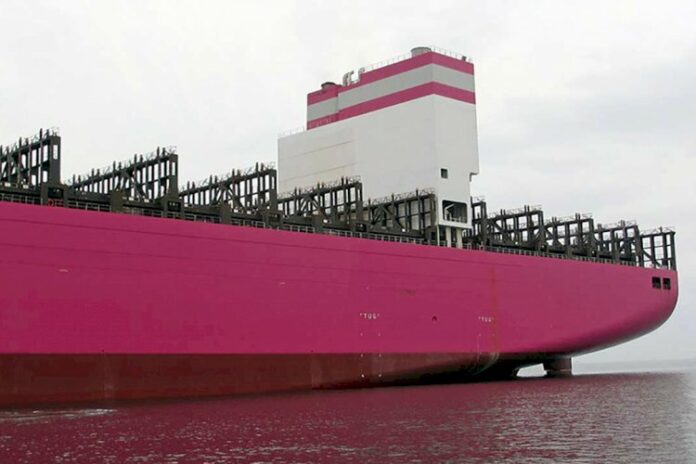
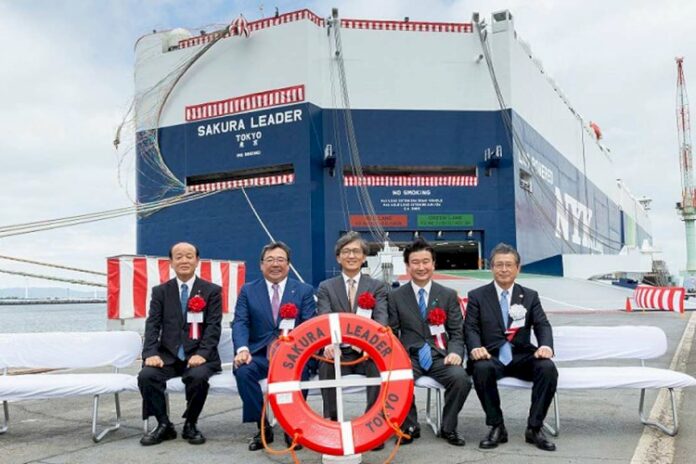
On September 1, a naming ceremony was held at Shin Kurushima Toyohashi Shipbuilding Co. Ltd. for a pure car and truck carrier (PCTC) capable of navigating oceans with only LNG as the ship’s main fuel. 

Beginning with this ship, NYK will proceed with the replacement of vessels in its PCTC fleet with next-generation eco-friendly ships.

The ship was named “Sakura Leader,” taking its name from the Japanese word for “cherry blossoms,” the national flower of Japan, with a wish for realizing and passing on a flourishing environment to the next generation through eco-friendly transportation.

This ship will be one of the world’s largest PCTCs, capable of transporting approximately 7,000 units (standard vehicle equivalent) per voyage, beginning with vehicles produced by the Toyota Motor Corporation.

The IMO (International Maritime Organization) has agreed on an ambition to reduce GHG emissions from shipping by at least 50 percent by 2050, and NYK has been making a proactive effort to realize environment-friendly transportation by reducing GHG emissions. In fact, in 2015 Japan’s first LNG-fueled ship, the tugboat Sakigake, was delivered, and in 2017 the world’s first purpose-built LNG bunkering vessel entered operation, which allowed NYK to expand its range of business to include LNG-fuel supply and sale. In the field of large cargo ships, NYK is positioning LNG fuel as one of the bridge-solutions until future zero-emission ships are realized. Sakura Leader takes the lead in NYK’s plan to switch its operating ships to LNG-fueled vessels.

By switching fuel to LNG and modifying vessel design, ships can become about 40% more energy efficient (by reducing CO2 emissions per unit of transport). These new LNG-fueled vessels are also expected to reduce sulfur oxide (SOx) emissions by approximately 99% and nitrogen oxides (NOx) by approximately 86% compared to ships using conventional heavy oil–fired engines.

Accordingly, LNG-fueled ships can meet the below requirements, including those that will become effective in the future:

1. SOx Global Cap regulations that were strengthened effective January 2020
2. EEDI phase 3 requirements for ships whose construction contracts will be concluded after January 1, 2025

Sakura Leader was selected as a model project by Japan’s Ministry of Environment and Ministry of Land, Infrastructure, Transport and Tourism, and will receive support from the ministries for technical verification of CO2 emission reductions during actual voyages.

NYK plans to switch all its future newly built PCTCs to next-generation eco-friendly ships, such as LNG-fueled ships, and aims to lead the construction of a clean transportation mode in the maritime industry. In fact, a second LNG-fueled PCTC will be delivered in 2022, and an LNG-fueled coal carrier will be delivered in 2023.

In accordance with its medium-term management plan “Staying Ahead 2022 with Digitalization and Green,” the NYK Group has incorporated environmental, social, and governance (ESG) criteria in the company’s business strategies, and seeks to enhance the company’s corporate value as well as contribute to sustainable development of society through business activities. Promoting replacement to next-generation eco-friendly ships in the PCTC fleet is one of the group’s activities.
Stena RoRo’s E-Flexer Galicia delivered to Brittany Ferries

0

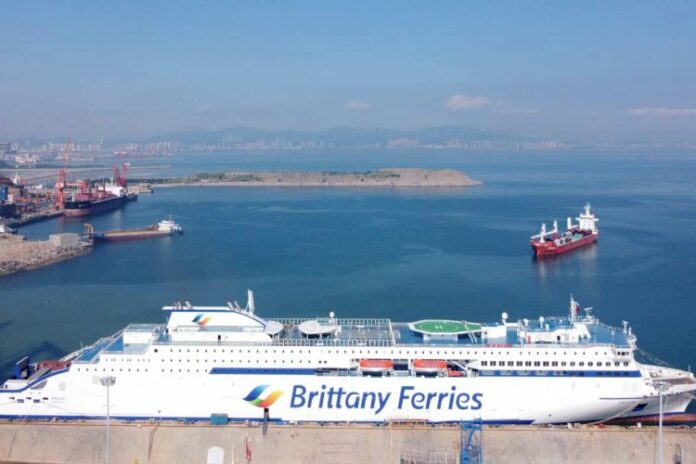
The Galicia, the first of three ships in the E-Flexer class ordered by Brittany Ferries was delivered on September 3. The vessel is the third E-Flexer of nine ordered by Stena RoRo from the Chinese shipyard CMI Jinling (Weihai). 

Construction of the E-Flexers is based on a standard developed for flexibility, and each vessel is tailored to customer needs. An example of an adaptation made in accordance with the wishes of Brittany Ferries is that the basic model car deck on deck 7 has been converted to cabins. This, in combination with the deckhouse having been extended on both decks 7 and 8, has enabled the number of cabins to be increased from 175 to 343. In addition, the Galicia has two scrubbers, one for each main engine, and two extra lifeboats added due to the ferry’s increased passenger capacity.

The interior has been designed by Richard Nilsson at Figura Architects, with whom Stena RoRo has been collaborating for quite some time. The public spaces on decks 7 and 8 have been partially given over to other functions compared to the basic model, but largely follow the E-Flexer standard. The design of the public spaces and the color scheme, however, are entirely unique and draw inspiration from Spain and the region after which the ship is named.

Per Westling, CEO for Stena RoRo, says:

“The Galicia is special because she is the first in the E-Flexer series to be delivered to an external customer. The design has been adapted to Brittany Ferries’ special requirements and the yard has been able to deliver according to schedule despite the ongoing pandemic, which we are very happy about.”

Christophe Mathieu CEO Brittany Ferries says:

“This is a significant milestone in our fleet renewal planning and we are delighted that we will shortly be welcoming Galicia to the Brittany Ferries family. The E-flexer class of ships are well suited to our long-haul routes. I am convinced that passengers will be as thrilled to travel on them as we are to take delivery of Galicia toda.”

Stena RoRo has an agreement with Brittany Ferries for long-term charters of two more vessels in the Stena E-Flexer series. Both will be powered by LNG, are under construction and will be delivered in 2022 and 2023, respectively.

Research: Ocean acidification causing coral ‘osteoporosis’ on iconic reefs

0

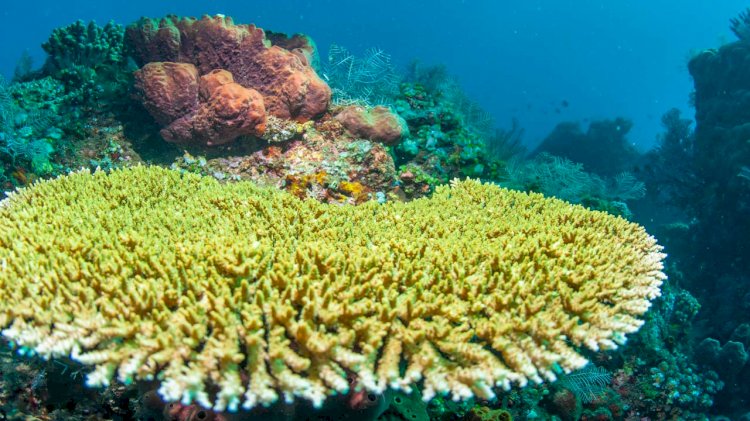
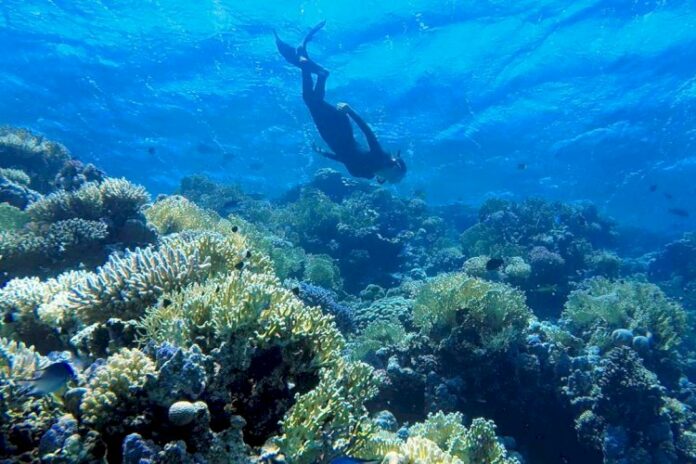
Scientists have long suspected that ocean acidification is affecting corals’ ability to build their skeletons, but it has been challenging to isolate the effect of acidification from the effect of simultaneous warming ocean temperatures, which also influence coral growth.

New research by scientists at the Woods Hole Oceanographic Institution reveals the distinct impact ocean acidification is having on coral growth on some of the world’s iconic reefs.

In a U.S. National Science Foundation-funded study published in Geophysical Research Letters, researchers show a significant reduction in the density of coral skeletons along much of the Great Barrier Reef — the world’s largest coral reef system — and on two reefs in the South China Sea, density reduction they attribute largely to the increasing acidity of the waters surrounding these reefs since 1950.

Lead author and WHOI scientist Weifu Guo says:

“This is the first unambiguous detection and attribution of ocean acidification’s impact on coral growth. Our study presents strong evidence that 20th century ocean acidification, exacerbated by reef biogeochemical processes, had measurable effects on the growth of a keystone reef-building coral species across the Great Barrier Reef and in the South China Sea. These effects will likely accelerate as ocean acidification progresses over the next several decades.”

Animals that rely on calcium carbonate to create their skeletons, such as corals, are at risk as ocean pH continues to decline (become more acidic). Ocean acidification targets the density of the skeleton, silently whittling away the coral’s strength, much like osteoporosis weakens bones in humans.

Anne Cohen, a WHOI scientist and co-author of the study, says:

“Corals aren’t able to tell us what they’re feeling, but we can see it in their skeletons. The problem is that corals really need the strength they get from their density, because that’s what keeps reefs from breaking apart.”

Added Daniel Thornhill, a program director in NSF’s Division of Ocean Sciences, says: “Scientists have long suspected that ocean acidification undermined key ecological processes such as calcification. Although previous studies documented this problem in a laboratory setting, this important study is one of the first to show that acidification is eroding corals in nature across large areas of the Great Barrier Reef and South China Sea.” 

Canadian company aims to remove failed tidal turbine in 2021

0

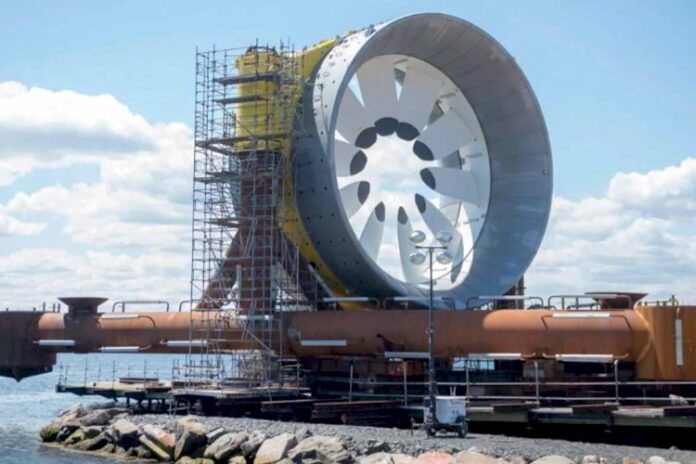
Big Moon Power recently won the competition to fill the vacant berth at the Fundy Ocean Research Centre for Energy (FORCE) site in Parrsboro, N.S.

However, it still has to retrieve the failed Cape Sharp tidal turbine from the bottom of the Minas Passage, and has been given until the end of 2024 to do so.

Big Moon CEO Andy Jenkins said:

“I think we do have a preferred timeline in mind that’s more on the sooner side than the requirements set out by the government. If everything goes according to our plan, we would look to have that resolved and behind us in the next year some time.”

Big Moon Power has provided a security deposit of $4.5 million around its commitment to retrieve the turbine.

The 1,300-tonne machine has been stranded in the Minas Passage since 2018 when a parent company of Cape Sharp Tidal Venture, OpenHydro Group Ltd., filed for liquidation.

Until now, most of Big Moon Power’s tidal research and development has been done in the community of Scots Bay, on the other side of the Minas Passage near Cape Split.

Jenkins said moving to the Parrsboro location gives the company better access to other infrastructure already in place.

He said:

“We can now kind of leap frog some of the requirements that were on us on the other side in terms of interconnection. It’s an accelerator for us.”

Big Moon Power will be trying to harness the Bay of Fundy’s powerful tides on the surface of the water, not on the ocean floor like other failed bids.

One of its original prototypes was a device called a Kinetic Keel. While the idea of the technology the company plans to use at the Parrsboro site is similar, Big Moon has made many modifications.

Jenkins said:

“The simplest way to describe it is we have figured out how to modernize and create a 21st-century version of a waterwheel. There is a pretty phenomenal opportunity to modernize that, to really improve its efficiencies while kind of maintaining the same principles that we set out to achieve — which is keeping it simple so it’s very cost effective and keeping all the components up out of the water.”

Source: CBC News

EPS inks world’s first dry bulk LNG Dual Fuel charter with BHP

0

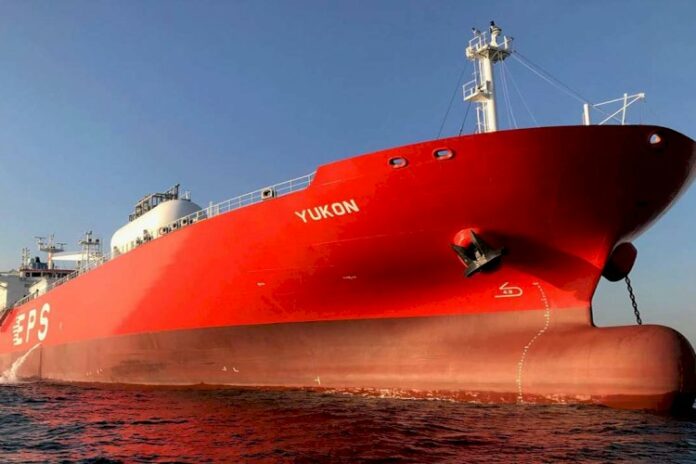
Eastern Pacific Shipping (EPS) has been awarded the world’s first LNG Dual Fuel Newcastlemax bulk carrier contract by global resource giant BHP. The five vessels, which will be carrying iron ore between Western Australia and China, are scheduled to be delivered throughout 2022.

The fleet of 209,000 DWT vessels will be powered by LNG, an alternative marine fuel proven to significantly lower greenhouse gas (GHG) emissions. LNG has emerged as a viable and readily available solution that reduces sulphur oxide, carbon dioxide, nitrogen oxide and eliminates particulate matter. In addition, these vessels will be fitted with high-pressure MEGI engines which reduces methane slippage to negligible levels.

EPS CEO Cyril Ducau states:

“We are thrilled to partner with BHP, one of the world’s largest dry bulk charterers on this landmark deal. When discussions began, it became evident that our values and sustainability agendas were aligned. BHP’s commitment to making a positive change for the industry resonated with our decarbonisation mission and our culture of environmental protection. This deal also sends a clear signal to the industry that progressive companies, like BHP, have viable options to lower their carbon footprint today. When these vessels deliver in 2022, they will be the cleanest and the most efficient in the entire dry bulk shipping fleet and will be IMO 2030 compliant eight years ahead of schedule.”

BHP Chief Commercial Officer, Vandita Pant said:

“As an established provider of marine transportation to the energy market for 60 years, EPS shares BHP’s commitment to lowering emissions in the maritime supply chain and we look forward working with them to align with the GHG goals of the International Maritime Organisation.”

Huisman lifts first batch of monopiles with Skyhook crane

0

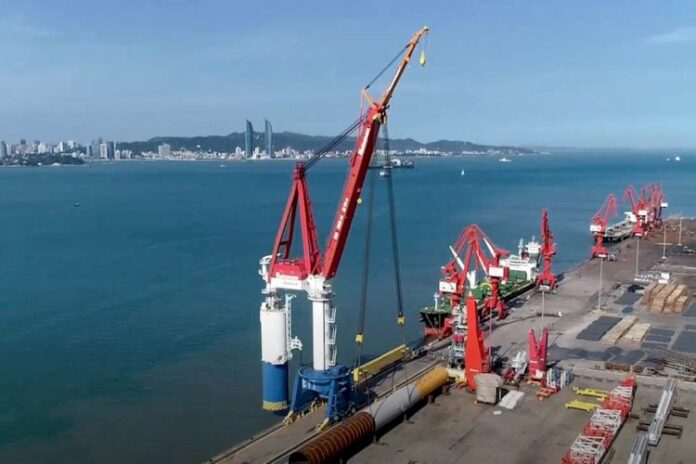
Huisman, the worldwide provider of step changing technical solutions, announces today that it has lifted the first batch of offshore wind monopiles with its 2,600mt Skyhook quayside crane at its facility in China. The monopiles with a length of approx. 100m have a weight of approx. 1,700mt excluding rigging.

With the 2,600mt Skyhook, Huisman has designed and built the largest Slewing Jib Quayside Crane in the world. The crane is employed at its own facility near Xiamen, P.R. of China. The Skyhook crane was dedicatedly designed for load-outs of heavy equipment, like the 10,000mt Tub Mounted Cranes for Heerema’s Sleipnir and the 3,000mt Offshore Mast Crane for Boskalis. With this lift Huisman demonstrated that the Skyhook is also equipped for offshore wind marshalling ports.

Cees van Veluw, Product Manager Cranes at Huisman:

“With the high ambitions for offshore wind in various parts of the world, we see that more permanent yet more flexible lifting solutions are key to further efficiency gains in the logistics chain. The capacity of the Skyhook matches the foundation sizes we see in the near future, while the Dual Main Hoist gives large advantages to easier connection and handling of loads. With new marshalling ports being developed worldwide, we see that the Skyhook can contribute to further optimising the logistics of offshore wind turbines and foundations.”

Capacities of the Huisman 2,600mt Skyhook:

  • 2,600mt @ 30m radius
  • Lifting height with Super Flyjib: 170m above waterline 

Features & benefits of the Huisman Skyhook:

  • A fully electrically driven system, resulting in reduced maintenance, higher reliability, as well as the potential to provide regenerative electrical power back into the grid.
  • Dual Main Hoist functionality, allowing for large flexibility in rigging setup.
  • Limited track loads, thus reducing the foundation cost on quaysides.
  • Optimised counterweight system, thus avoiding excessive wear when only lights loads are lifted.
  • Boom Stowage functionality, thus allowing the crane to be placed even in typhoon-sensitive areas.
  • Versions with SWL up to 5,000mt are available upon request.

Mitsubishi’s DIA-SOx scrubbers installed on 22 ships in 2020

0

DIA-SOx® that the marine SOx scrubbers produced by Mitsubishi Shipbuilding Co., Ltd., a part of Mitsubishi Heavy Industries (MHI) Group, have been successfully installed on 22 ships of 3 ship types (Note) during the last 8 months from the beginning of this year.

Whilst the infection of COVID-19 is continuing its spread across the world, Mitsubishi Shipbuilding successfully enabled to complete the installations as scheduled through remote commissioning conducted via close communication and cooperation with the engineers of its local partners in China and Singapore respectively.

The line-up of DIA-SOx® consists of the R Series and C Series. The rectangular tower design of the R Series is the most suitable for container ships and its multi-stream configuration can simultaneously with 1 tower treat exhaust gas discharged from multiple engines, including the large main engine. Moreover, its simplified configuration helps the ship crews to conduct the maintenance work easier. The C Series with cylindrical tower design also utilizes the multi-stream configuration, offering high flexibility that can be easily installed onboard various types of the ships.

Mitsubishi Shipbuilding also provides retrofit engineering for installation of both types of scrubbers, supporting customers to increase efficiency and improve reliability of their retrofitting projects. For 14,000 TEU (Twenty-foot Equivalent Units) container ships for which Mitsubishi Shipbuilding provided engineering services not only scrubber systems, the scrubber tower was installed in the built-in casings on the port side of the existing funnel, and therefore the scrubber system was installed without reducing container loading capacity, which is one of the advantages of the rectangular tower shape of the R Series.

Those systems, after the verification by sea trials, got approval from Nippon Kaiji Kyokai (ClassNK), Lloyd’s Register (LR), American Bureau of Shipping (ABS), and other classification societies.

As from January 1, 2020, the worldwide regulation of maximum sulfur content for fuel oil other than Emission Control Areas (ECA) has been strengthened to below 0.50% m/m (mass percent) from the previous standard of 3.50% m/m. Further, after March 2020, ships have been prohibited even from retaining onboard fuel oil with a sulfur content exceeding regulation levels. Nevertheless, the ships, approved by the relevant flag states as fitted with SOx scrubbers, can continue to use the less expensive high sulfur content fuel oil while operating the scrubbers.

Mitsubishi Shipbuilding will continue not only providing marine scrubbers, but also as an engineering company offering superior engineering services for scrubber installation to fully meet customers’ needs and requests, regardless whether for retrofittings or newbuildings, for ships built by MHI or others, in order to contribute to the further development of ocean transport, and to reduce the environment load that is increasing on a global scale.

Subsea 7 awarded contract extensions in Brazil

0

The extensions have a combined value of approximately USD 155 million, net of agreed reductions to the current day-rates, and increase the backlog relating to the four Brazilian PLSVs to USD 493 million at 31 August 2020.

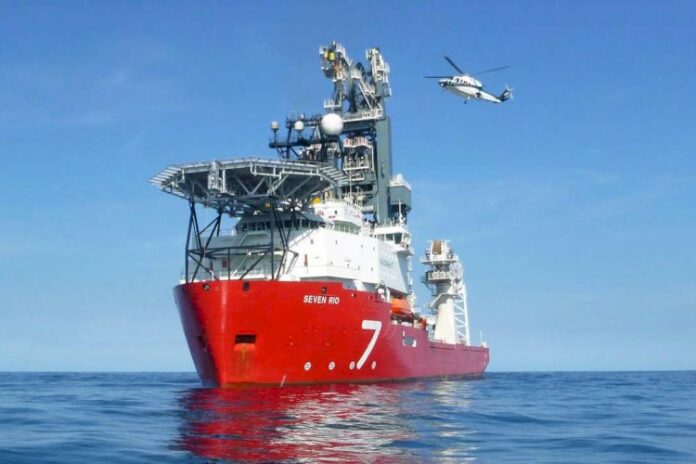
Seven Waves, Seven Rio and Seven Cruzeiro will operate at a new day-rate with effect from 1 August 2020 and their firm contract periods will now end in Q2 2022, Q3 2022 and Q4 2022 respectively. Seven Sun will complete its current contract in Q2 2022 at its prevailing day-rate.

Marcelo Xavier, Vice-President Brazil, said:

“These contract extensions reflect our long-standing relationship with Petrobras and desire by both parties to reach a mutually beneficial solution in these challenging times. We remain focused on performing safely and to a high standard for our valued client.”

DNV GL awards GASA to HHI for a centreline oil-tight longitudinal bulkhead

0

The new design will reduce potential damage and operational risk by featuring a simpler structural arrangement, loading patterns and piping arrangements.

Vidar Dolonen, DNV GL Regional Manager for Korea & Japan, delivered the certificate to Seung Ho Jeon, Executive Vice President of HHI at the shipyard group headquarters in Seoul. Vidar Dolonen, DNV GL Regional Manager for Korea & Japan, presented the certificate to Seung Ho Jeon, Executive Vice President of HHI, in Seoul.

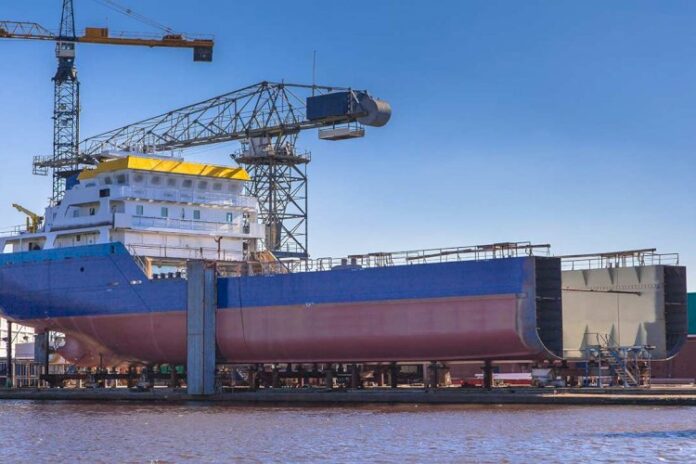
The new VLCC with a centreline longitudinal bulkhead design concept was developed by HHI, marking a world first. The concept introduces a single centreline design with two rows of cargo tanks, resulting in seven pairs of tanks and one additional pair of slop tanks.

The main benefit is an improvement in the operator’s convenience in terms of cleaning, inspection and maintenance by simpler structural, loading and piping arrangements, as well as the reduction of piping systems and instruments due to a smaller number of cargo tanks. Furthermore, the fuel consumption was improved by developing new design lines for the new VLCC with a centreline longitudinal bulkhead. 

Seung Ho Jeon said:

“Through joint development projects with DNV GL, we aim to develop new technologies which enable our clients to comply with environmental regulations and navigate their vessels in a safe and efficient way. We believe the recent GASA approval is opening up a new era of VLCC designs which significantly strengthen the competitiveness of these HHI built ships.”

Vidar Dolonen said:

“The purpose of DNV GL is to contribute to the construction and operation of smart and safe ships. We are pleased to have collaborated with HHI in this exciting project and we wish the shipyard further success with its new VLCC design.”

As part of the GASA scope, DNV GL carried out a full structural verification and feasibility study in accordance with classification rules and harmonized common structural rules (CSR). The details were confirmed by a fine mesh analysis and a fatigue analysis. In addition, the sloshing and local vibration analyses for cargo tanks were reviewed in a comparative study to enhance the structural reliability of this new VLCC.

Panther wins pipeline inspection in Gulf of Mexico

0

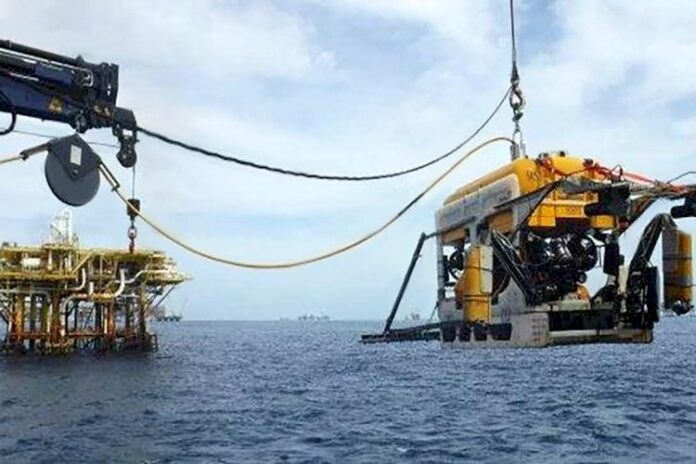
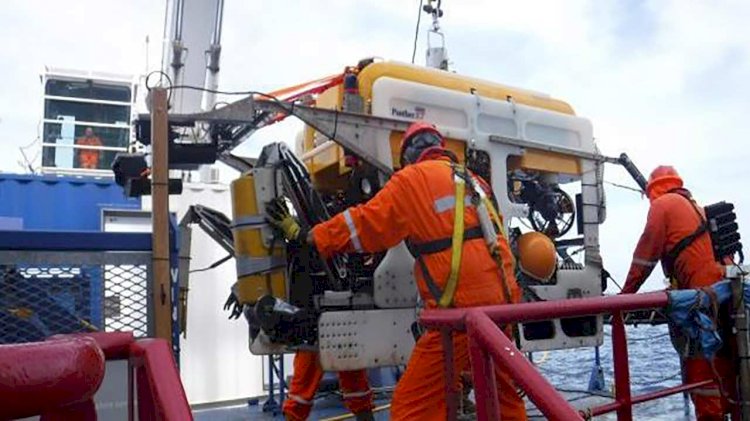
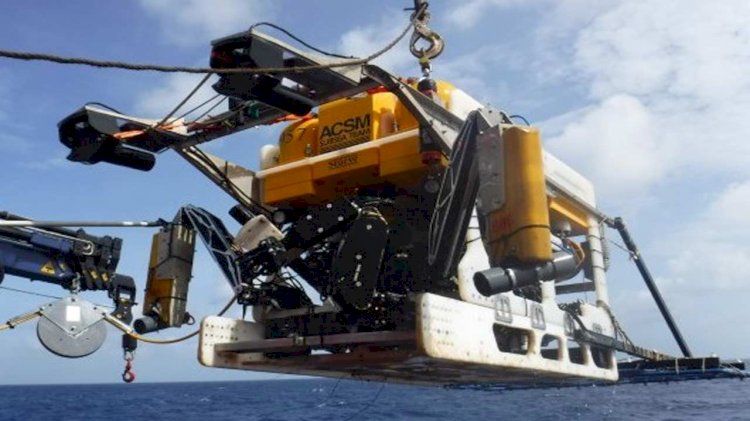
The Panther inspected 261 pipelines totalling 2,340 km in four fields in the Gulf of Mexico (GOM), at depths ranging from 15 to 130 metres, in a less than 10 month project duration.

ACSM chose the electric Saab Seaeye Panther because it can perform the full scope of work needed yet is far smaller than hydraulic equivalents.

Considerable savings come from deploying the 700 kg Panther system, rather than the much heavier hydraulic alternatives.

The 1000 m rated Panther’s proven success comes from a design architecture that can accommodate a wide range of tooling with a ‘plug and go’ simplicity that makes it easy to change, maintain and repair systems — and easy to operate.

The potent thruster power can handle the large array of equipment needed for full survey work — and provide the steadiness and agility needed to continue working even in strong currents when other vehicles are withdrawn from active service.

Acoustically quieter than hydraulic vehicles, means electric vehicles provide more accurate multi-beam sonar data.

The vehicle proved to be very reliable with minimal down time throughout the entire work period, says ACSM.

The ACSM Panther XT is fitted with a Kongsberg HDTV camera, Norbit Dual Head MBES, ROVINS INS, Tritech Super SeaKing sonar, Blueview multibeam sonar, Teledyne Navigator DVL, TSS 440 pipe tracking system, CTD, Laser Line, CP and five-function manipulators and booms.