5.8 C
New York
Home Blog Page 781

Maersk makes AE19 ocean-rail service from Asia to Europe permanent

0

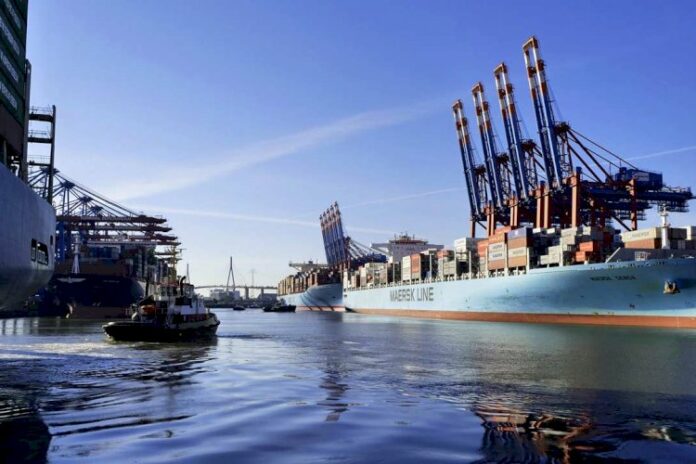
In July 2019, first cargo left the Russian Far East on A.P. Moller – Maersk’s AE19 service, a unique combination of a short-sea and intercontinental rail product, which connects several origins in Asia with ports in Northern Europe.

In September 2020, just over a year later and thanks to increased customer interest, the combined ocean-rail product becomes a permanent weekly service. 

The AE19 service complements Maersk’s regular Asia-Europe product offering based on conventional ocean services and offers highly competitive transit times from Asia to major ports in Europe. The service is based on a short-sea connection between Asian origin ports in Korea, Japan or China and the port of Nakhodka in the Russian Far East (operated by Sealand Asia – A Maersk Company), followed by an intercontinental rail connection across Russia from Nakhodka to St. Petersburg, which takes 11 days. The last leg of the product is another short-sea connection between St. Petersburg and ports in Finland (Helsinki and Rauma), continental Europe, such as Gdansk (Poland), Bremerhaven (Germany), or Scandinavia, operated by Sealand Europe.

Zsolt Katona, Managing Director, Eastern Europe at Maersk, comments:

“We are delighted that this unique product, designed for our customers in both Asia and Europe, formally becomes a weekly service and gets a permanent place in our product portfolio. This has been possible thanks to increased interest from our customers, who appreciate its attractive transit times and cost competitiveness.”

Being a standard product with a Maersk bill of lading for both refrigerated and dry containers, AE19 is a particularly attractive solution for customers with time-sensitive cargoes, offering them faster transit times compared to ocean-only products and significant cost advantage compared to air freight. In addition, the product allows customers to avoid congestion on border crossings and offers fast track options for transit in Russia based on the blockchain solution. This is enabled by TradeLens, a platform jointly developed by IBM and Maersk, which provides the AE19 customer base with shipping data directly from the source of each participating entity in near real-time, all while connecting this rail corridor directly to its established ecosystem of international transportation service providers.

AE19 is part of Maersk’s Asia-Europe portfolio alongside ocean. In March 2020, the service was also launched in the eastbound direction, connecting North European origins with several destination ports in Asia.
HMM cooperates with SHI to develop smart ship technology

0

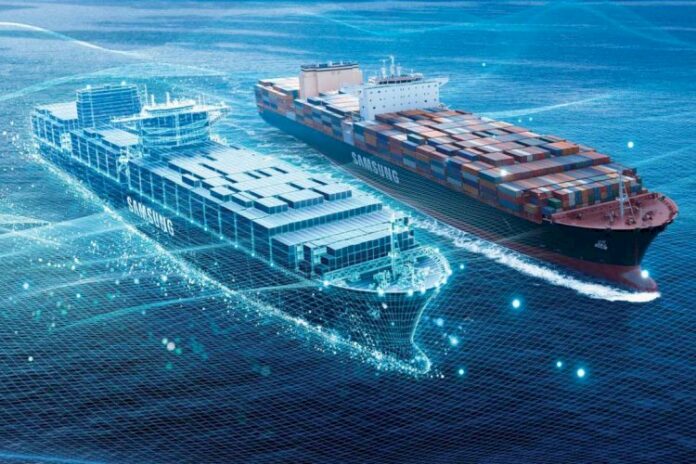
Under the MoU, HMM and SHI will collaborate in the research, development and innovation in the field of smart ship solutions.
The MoU mainly covers the development of eco-friendly technologies applicable for smart ships and the enhancement of technological competence related to the digitalisation of ships.

As part of this partnership, HMM has adopted ‘SVESSEL’, the most advanced smart ship solution developed by SHI. The cloud-based ‘SVESSEL’ has been applied to five out of twelve 24,000 TEU mega containerships delivered to

HMM this year. HMM will test operational data on its own container vessels. HMM official said:

“Both digitalisation and decarbonisation have become integral factors on the pathway to sustainable growth. HMM has concentrated on the exploration of new technologies for the future and has actively participated in various discussions with the parties concerned.”

In addition, HMM is preparing to operate a ‘Smart Ship Control Centre’ that enables to monitor the safety and efficiency of ships in real time based on an extensive range of data including cargo information, service routes, locations, ocean weather and vessel conditions.

The centre is scheduled to be in full operation from mid-September this year.

SVESSEL is the latest smart ship solution designed by Samsung Heavy Industries in the face of increasing demands for digital transformation. SVESSEL aims to expedite the transition from analog-based conventional ships into “Intelligent and Life-cycle managed Ships” through the convergence between ICT and Ship Operational Technology. This solution provides a variety of features such as vessel & fleet tracking, onboard data analysis, collaborative maintenance, monitoring of propulsion performance and so on.
 

Equinor drilling new wells on the Martin Linge field

0

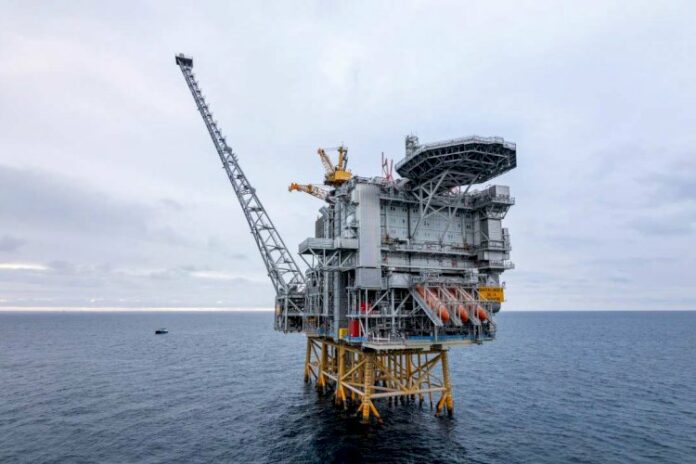
Equinor has conducted an in-depth analysis of the wells drilled at Martin Linge before the company took over as the operator of the field from Total in 2018. This review concludes that several of the wells do not have the necessary barriers. Equinor therefore plans to drill new wells in order to ensure safe production. 

In four gas wells that were drilled at Martin Linge before 2018 well barrier deficiencies that are considered to make them inappropriate for safe production have been established.   

 Petoro has carried out an independent assessment of well barriers that support the operator’s view.

Geir Tungesvik, acting EVP for Technology, Projects and Drilling in Equinor, says:

“The wells are considered safe as they are now, but we will keep them plugged and under continuous monitoring until we have reduced the pressure in the formation by producing from other wells. Safety is always priority number one.”

The Martin Linge plant is designed for a mixture of oil and gas, and needs gas wells that produce at a certain rate for start-up and production.    

Tungesvik says:

“Our number one priority is to ensure safe start-up of the field. We will therefore plan to drill up to three new gas wells in addition to the two remaining wells from the plan for development and operation (PDO) for the field to produce as originally planned.”

The costs of drilling up to three new wells total about NOK 2 billion.   

Equinor will give an update on all projects under development to Norwegian authorities, including the consequences of Covid-19. The plan will be published in connection with the presentation of the state budget in October.   

The Maersk Intrepid drilling rig recently started the drilling operations at Martin Linge.  

Equinor is the majority shareholder and operator of Martin Linge (70%). Petoro (30%) is the only partner.

Furetank, Eagle LNG and GAC achieve historic LNG bunkering in the U.S.

0

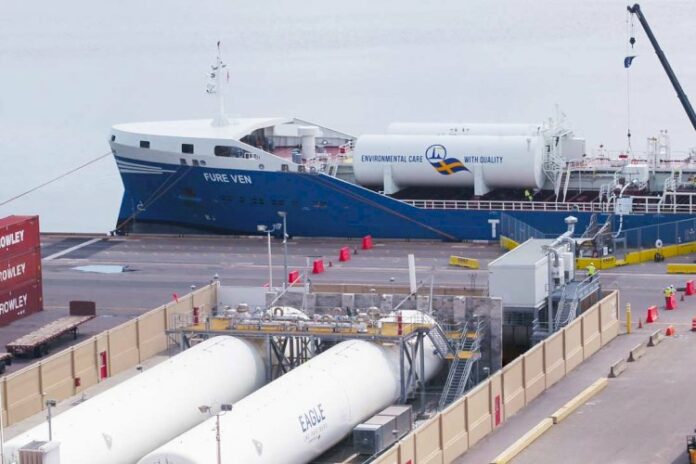
FURE VEN, a dual-fuel vessel owned and operated by Furetank of Donsö, Sweden, a global leader in the development of efficient and environmentally friendly product & chemical tankers, has become the first non-U.S. flagged vessel to bunker LNG in a U.S. port. Eagle LNG Partners, a pioneer in small-scale LNG and an LNG bunker supplier, is the first company to deliver LNG bunker fuel to a foreign flagged vessel.

The 18,000 DWT vessel transited the St. Johns River on 1 September, calling at JAXPORT’s Talleyrand Marine Terminal which serves Crowley Maritime Corporation. Eagle LNG Partners safely transferred 225 metric tonnes of LNG to the vessel from their on-site storage facility, with the bunkering evolution taking less than sevenhours to complete. The tanker was laden with renewable diesel cargo for Preem, the largest petroleum and biofuels company headquartered in Sweden.

GAC assisted all parties by broking the LNG fuel and providing ship agency services to the vessel during her voyage across the Atlantic Ocean. It was the first time that GAC’s Bunker Fuels division had secured a deal to supply LNG as a marine fuel.

FURE VEN is one of Furetank’s V-Series, a new generation of product & chemical tankers introduced in 2018, which leverage innovative design features and LNG to deliver a fuel reduction of approximately 40%. These climate smart vessels have also achieved substantial reductions in emissions – 55% less CO2, 86% less NOx, 99% less SOx and 99% less particulate matter (PM) – compared to vessels of the same size, of earlier designs. According to a study from the Swedish Environmental Research Institute in 2017, these reductions achieved by FURE VEN during this voyage alone have been calculated as an economic savings for the global community of more than $200,000, thanks to a reduction in the negative impacts of climate change and air pollution on human health and agriculture. If liquefied biogas was bunkered, then CO2 emissions would be eliminated completely.

Lars Höglund, CEO of Furetank, said:

“As early as 2014, Furetank decided to convert one of our vessels to LNG propulsion. Backed by the encouraging effects thereof, we developed the V-series, a vessel design with drastically lowered emissions and fuel consumption. These vessels have already cut CO2 emissions beyond the IMO target of a 50% reduction by 2050.

We note with pleasure that LNG bunkering is becoming available in more and more places, not least the U.S., and we are confident that investing in the V-series particularly contributes to a cleaner environment worldwide.”

Sean Lalani, President of Eagle LNG, said:

“As a pioneer in LNG bunkering and a global leader in small-scale LNG, the team at Eagle LNG is proud to have partnered with the trailblazers at Furetank and GAC, along with numerous crucial stakeholders including JAXPORT, Crowley Maritime and the U.S. Coast Guard, to safely accomplish this first-ever LNG bunkering in the United States. It is only fitting that this first bunkering happen in Jacksonville where JAXPORT, local officials and the community have embraced the shipping industry’s transition to the more sustainable, affordable LNG.

“Were it not for the pioneering spirit of our partners at Crowley Maritime, with whom we have already safely completed over 100 bunkering events, and the vision of Chairman and CEO Tom Crowley, this historic milestone for LNG bunkering globally and for North Florida would not have been possible. We look forward to utilizing our experience and assets to bunker more international vessels from this facility and our future operations in the Caribbean Basin in the coming months and years. Thank you to the innovators at Furetank and GAC for entrusting us with executing this monumental milestone.”

Nicholas Browne, GAC Bunker Fuels’ Global Director, said:

“We are proud to have worked alongside Furetank and Eagle LNG to deliver the safe and successful refuelling of FURE VEN in Jacksonville. Like Furetank and Eagle LNG, GAC wants to do more than simply follow the development of environmentally friendly shipping – we want to play an active role in creating and facilitating the transition.”

Global Marine awarded Desk Top Study for Singapore India Gateway cable system

0

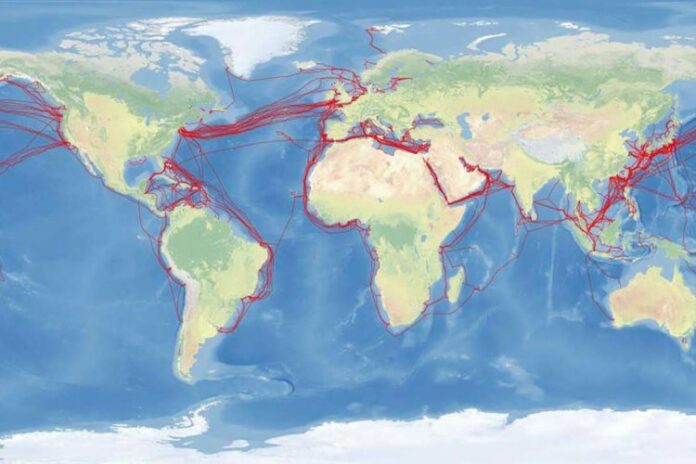
Global Marine, a leading provider of subsea fibre optic cable installation and maintenance solutions to the telecoms sector, and part of the Global Marine Group, has been awarded the Desk Top Study (DTS) for the Singapore India Gateway (SING) cable system by the system Purchasers.

The 9,000km system, with landing points in Singapore and India, will also have branches to Thailand, Indonesia and Oman. The desk-based portion of the cable route study has been completed and site visits will begin, working in line with local regulations on safe travel and work, when Covid-19 restrictions begin to ease further.

Global Marine’s DTS utilises bathymetry, geology, currents, weather, seismology, tides, permits and reviews of other seabed users to detail all the influences on cable route safety and provide sound engineering solutions for the environment encountered. The study also identifies possible sources of risk to the cable, and the extent of that risk, including an analysis of faults on existing systems nearby from Global Marine’s extensive worldwide database.

Bruce Neilson-Watts, Managing Director of Global Marine said:

“With wide-ranging experience in and around Asia and the Middle East, including the key landing points in India, Indonesia and Oman for both DTS and cable installation and repair works, Global Marine are well placed to complete this project for the Purchasers.”

Mr Neilson-Watts continued:

“We understand the importance of increased and reliable connectivity around the world, something that has been particularly highlighted in recent months. Our in-house knowledge and track record of Desk Top Studies for systems such as this means we have the flexibility and agility to structure the work around the current economic climate as effectively as possible.”

Maersk starts using a screening digital tool for undeclared dangerous goods

0

Exis Technologies and their parent company National Cargo Bureau (NCB), the New York based cargo inspection company have launched Hazcheck Detect, a cargo screening tool to detect misdeclared and undeclared dangerous goods in containerised shipments. Maersk are the first customer signed to the Hazcheck Detect solution. 

In a white paper published by NCB in July this year they reported that a recent Container Inspection Safety Initiative they had carried out revealed an alarming number of containers carried by sea include misdeclared dangerous cargoes that represent a serious safety risk to crew, vessel and the environment. The inspection initiative showed that 55% of containers were non-compliant with 43% failing to secure dangerous goods correctly within the container itself. Approximately 6.5% of containers carrying dangerous cargoes had been misdeclared. The white paper is calling for industry to adopt a comprehensive, holistic and coordinated approach to address this worrying trend with 12 recommendations ranging from embracing a safety culture for dangerous goods compliance to practical measures for container and vessel inspections and monitoring.

One of the white paper recommendations is the incorporation of integrated digital tools that automate critical compliance functions, like Hazcheck Detect.

Hazcheck Detect focuses on:

  • Undeclared dangerous goods  – looks for cargo that is not declared as DG, looking for suspicious items that should be declared as DG.
  • Misdeclared dangerous goods – looks for cargo which is declared as DG, but may not have been declared as the correct DG.

It scans all booking details for keywords, validates against rules and highlights suspicious bookings to identify misdeclared and undeclared dangerous goods (DG). Container lines that sign up to use the service will be able to screen their bookings and bills of lading using the same keywords and rules to try to find mis and/or undeclared dangerous goods, thereby helping to ensure the safety of the crew, ships and cargo. In the future there is also scope to apply the tool for use in other global screening applications not related to dangerous goods, for example, the illegal shipping of wildlife or other compliance cargo. Currently, the system has around 4,500 mis-declared rules and 10,000 undeclared rules available.

The solution supports the creation of rules based on keywords and the rules are designed to ensure that only search results of interest are returned for specific follow up. The rules are continually enhanced and will evolve using machine learning and AI techniques. 

Hazcheck Detect is delivered as a software-as-a-service solution, hosted and maintained by Exis Technologies. It includes a web user interface so that users can enter and maintain data search terms, keywords and rules.

Henrik Lauritsen, Director at Maersk said:

“Exis Technologies has developed a solution that could be used industry wide and allows easy sharing of keywords and rules between industry partners. This is very important so that container lines know that partner lines are searching using the same criteria. The service went into live operation in February 2020 and we are finding an average of 40 containers a week which are stopped, undeclared DG or re-declared as DG. In the past these containers would have been loaded on board as non DG cargo or misdeclared. Critically we get the search hits returned from Hazcheck Detect within seconds so that we can follow up quickly to ensure that suspicious cargo is not loaded on to the vessels. We are delighted to be the first shipping line to start using Hazcheck Detect and we encourage more lines to come on board.”


“The Emerald Tutu” wins NSF grant for design to protect Boston’s coastline

0
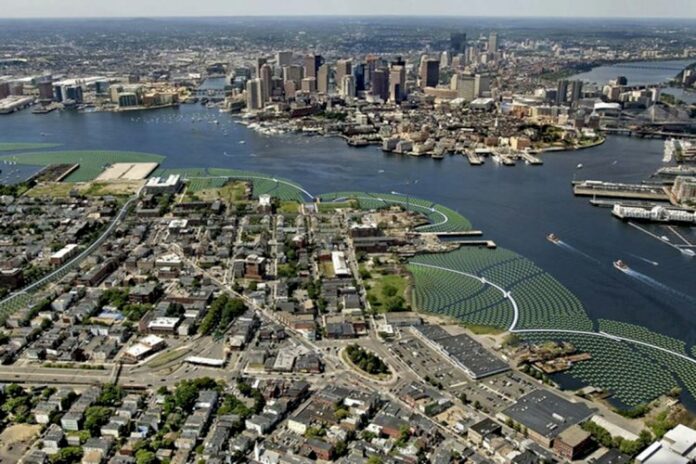
The Emerald Tutu began as a simple idea for a new kind of coastal protection system to address flood risk in Boston — and as a commentary on the urban history of the city.
Gabriel Cira ’08, CEO of The Emerald Tutu, Inc., says:
“To address the true danger of climate change in Boston, we wanted to focus on making infrastructure green, inhabitable, and accessible, rather than reinforcing the division and erasure that Boston’s major infrastructure initiatives of the 20th century brought.”
The U.S. National Science Foundation agreed, as they recently announced the award of a $256,000 research grant to help The Emerald Tutu realize their vision.
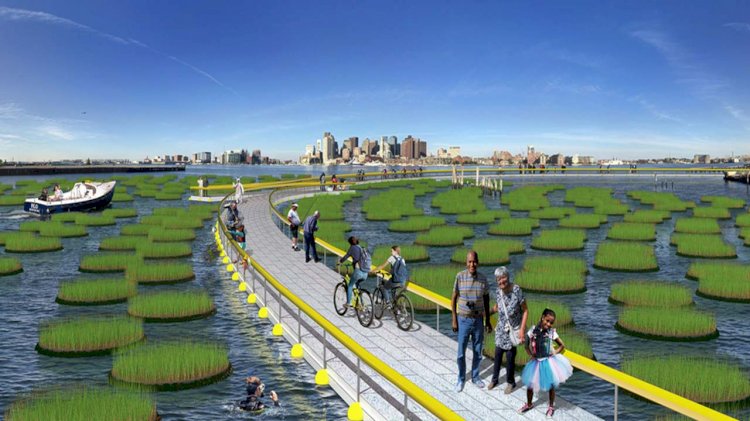
Deployed in Boston Harbor, the Emerald Tutu would be an interlinking array of fibrous floating mats loaded with biomatter that flank the waterfront areas of the city, reducing surge and waves from threatening storm events that are supercharged by climate change. Individual mats grow to be massive waterlogged units, with semi-aquatic marsh grass above and aquatic seaweeds attached below.
As an interconnected system, they absorb and transfer energy through the network, acting to disrupt large incoming waves, and the submerged biomatter impedes the inland rush of atmospheric pressure-driven tides known as storm surge. These factors add up to reduced inland flooding during storms, while creating a unique inhabitable public waterfront amenity during fairer weather. Channels and gaps between units allow navigation by all kinds of seafaring vessels, and the Emerald Tutu can safely avoid shipping lanes for Boston’s active container port and its other big-berth docks.

But the greatest parts of the Emerald Tutu are the materials it does not use. It manages to solve the question of coastal climate resilience in cities without reliance on traditional infrastructure, sometimes known as “gray infrastructure,” made of massive concrete and steel — which are carbon-intensive and do not result in human-friendly environments. Gray infrastructure projects tend to be extremely expensive, and take years to construct.
The Emerald Tutu also avoids any onshore modifications, such as berms or ditches, which are impracticable in densely-populated urban areas like Boston Harbor. And unlike gray infrastructure solutions such as seawalls or seagates, which have been shown to devastate water ecology, the Emerald Tutu does not block the normal flow of water in and out of the harbor. Instead, it adds back the marsh flora that existed before all the land infill of Boston, and improves water quality through bioremediation and nutrient stabilization.
Floating pathways lace through the design, providing a path for people to walk this new landscape — actually a restoration of the old marsh ecology of Boston Harbor.
As the Emerald Tutu is comprised of a simple set of modular parts, meant to be easily deployable, expandable, and reparable over time, the new NSF grant will allow the team to prototype and test those parts. The aim is to create a system that is easily manufacturable and deployable at the quantity needed — thousands of units — and that can withstand conditions of the harbor.

Trafigura to invest in improving Berbera Oil Terminal to become a regional supply hub

0
Trafigura Group Pte Ltd. (“Trafigura”), a market leader in the global commodities industry, has this week delivered a first shipment of low sulphur gasoil to the Port of Berbera, following the signing of a milestone storage agreement earlier this year with the Government of Somaliland’s Ministry of Trade,
Industry and Tourism. This is the first step in a commitment by Trafigura to invest in Berbera Oil Terminal (“BOT”) facilities to position it as a gateway to serve customers within the country, and integrate oil logistics across the Horn of Africa.
 
Trafigura, with the full support of the Government, intends to upgrade BOT in a phased approach to improve and expand the storage capacity, and eventually facilitate the import of jet fuel and LPG to meet local and regional demand whilst ensuring international health and safety standards. Plans also include increasing the draft to enable larger vessels to be received and allow local traders more economical import of refined products and access to re-export markets. This will help support the Somaliland Government’s ambition to transform Berbera port as a strategic hub in a region where demand is growing year on year.
 
Mr. Mohamoud Hassan Saad, Minister of Trade Industry and Tourism, said:
“We’re delighted to be working with a leading independent, international company like Trafigura to improve the quality and reliability of refined petroleum product supply into the country. By working with Trafigura there will be increased transparency, high standards, and increased competitiveness across the supply chain.”
James Josling, Head of Africa Energy Trading for Trafigura, said:
“The agreement gives Trafigura access to the existing terminal for storage of refined petroleum products in order to supply the local market in a strategically important regionю We are working alongside the Government to reduce sulphur limits in the local fuel specifications, to give the opportunity for Somaliland to align product specifications with regional market standards such as Ethiopia and Djibouti, which will promote cross-border trade while improving air quality in line with Trafigura’s wider ESG agenda and commitment to Africa.”

Humans’ construction ‘footprint’ on ocean quantified for first time

0

An international team of scientists has demonstrated that an area totalling approximately 30,000 square kilometres – the equivalent of 0.008 percent of the ocean – has been modified by human construction.

Proportion-wise, they say it is comparable to the extent of urbanised land, and greater than the global area of some natural marine habitats, such as mangrove forests and seagrass beds.

When calculated as the area modified inclusive of flow-on effects to surrounding areas, for example, due to changes in water flow and pollution, the footprint is actually two million square kilometres, or over 0.5 percent of the ocean.

The modifications include areas affected by tunnels and bridges; infrastructure for energy extraction (for example, oil and gas rigs, wind farms); shipping (ports and marinas); aquaculture infrastructure; and artificial reefs.

The research was published in Nature Sustainability and led by Dr Ana Bugnot, from the University of Sydney School of Life and Environmental Sciences, and the Sydney Institute of Marine Science.

The authors include Associate Professor of Marine Ecology Dr Emma Sheehan, who contributed her experience of monitoring Blue Industry installations, such as marine renewables and offshore aquaculture.

Dr Sheehan, the only UK author on the research, said:

“Development in the marine environment is often managed at local and regional scales. But working on this paper as the UK contributor to an impressive international collaboration really highlighted the issues we face at a global scale. Coastal development affects marine ecology and oceanography globally, and efforts to employ international legislation to manage our marine resources over appropriate spatial scales needs to be improved.”

Dr Bugnot said that ocean development has been going on for more than 4,000 years yet, in recent times, has rapidly changed.

She and her co-authors also projected even greater expansion in the future, centred around people’s increasing need for defences against coastal erosion and inundation due to sea level rise and climate change, as well as their transportation, energy extraction, and recreation needs.

Dr Bugnot said:

“Since the mid-20th century, ocean development has ramped up, and produced both positive and negative results. For example, while artificial reefs have been used as ‘sacrificial habitat’ to drive tourism and deter fishing, this infrastructure can also impact sensitive natural habitats like seagrasses, mudflats and saltmarshes, consequently affecting water quality. Marine development mostly occurs in coastal areas – the most biodiverse and biologically productive ocean environments.

The future projects are alarming. For example, infrastructure for power and aquaculture, including cables and tunnels, is projected to increase by 50 to 70 percent by 2028. Yet this is an underestimate: there is a dearth of information on ocean development, due to poor regulation of this in many parts of the world. There is an urgent need for improved management of marine environments. We hope our study spurs national and international initiatives, such as the EU Marine Strategy Framework Directive, to greater action.”

Digital spearhead Klaveness rolls out Dualog Data Transfer Solution in 24 hours

0

In modern shipping, there is a clear need for digitally connected systems that can work together efficiently. As the amount of data traffic increases at a rapid pace, the ability to manage data transfer on challenging bandwidth conditions across a fleet with minimal manual interactions becomes essential. This was a key motivation for Klaveness Ship Management choosing Dualog and completing the rollout of the new data transfer solution in record-breaking time.

Torvald Klaveness is known as a pioneering, data-driven and safety-oriented shipping company with both hands firmly on the digitalisation wheel. When Klaveness Ship Management began looking for a solution that could help them streamline information sharing and data replication across their fleet, the demands were specific; The new file transfer solution should be flexible, easy to use, hardware-independent and easy to implement.

Jan Erik Rogde is VP and Head of Fleet Management at Klaveness Ship Management. When asked to explain the reasoning behind why they opted for Dualog Drive, he replies:

“In our continuous work to improve safety, security and efficiency across the fleet we needed to improve collaboration and information sharing between office and vessel. With Dualog Drive, we replaced many manual and often email-based processes with digitised, integrated and hands-off solutions. Fewer emails with large attachments are just one of many achievements.”

Jan Erik Rogde, VP, Head of Fleet Management, Klaveness, says:

“In our continuous work to improve safety, security and efficiency across the fleet we needed to improve collaboration and information sharing between office and vessel. With Dualog Drive, we replaced many manual and often email-based processes with digitised, integrated and hands-off solutions.”

Collection and distribution of data between your vessels’ IT and OT systems and shore operations are not straightforward. Operational pains and business pains need to be addressed, including departmental siloes and complex software and hardware setup. Also, security is a key concern. This is precisely where Dualog Drive fits the bill.

When reviewing different options, the solutions ability to address these common concerns were at the forefront of Klaveness’ attention. 

Jan Erik Rogde says:

“We can now spend less time worrying about cybersecurity, data management and bandwidth bottlenecks while spending more time on additional business improvements.”

The Klaveness-Dualog co-operation dates to 2006 with the rollout of Dualog’s class-leading email solution across the entire fleet. As digital operations have expanded, the range of Dualog services has increased accordingly. With the rollout of Dualog® Drive in record-breaking time, Klaveness Ship Management and Dualog strengthen the co-operation further.