3.3 C
New York
Home Blog Page 783

SapuraOMV announces Bakong first production from SK408 gas fields

0

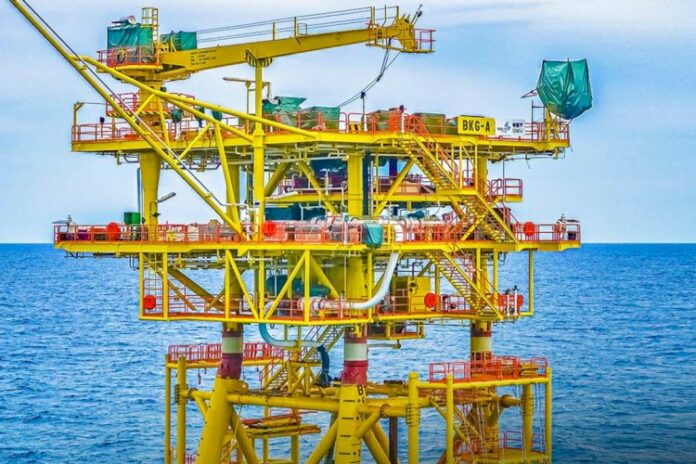
The production phase started in June 2020. This follows the successful production from SapuraOMV‘s Larak gas field which started in December 2019 and the start-up of the Shell-operated Gorek field in May 2020. With this first production from Bakong field, Phase 1 of the SK408 development is now entirely on stream.

The SK408 gas fields are part of the discoveries made by SapuraOMV Upstream in a drilling campaign in 2014. The Phase 1 development of SK408 Production Sharing Contract (PSC) aims to commercialize the gas reserves from Gorek, Larak and Bakong fields, which will help meet the growing gas demand in Asia. Under a long-term agreement with PETRONAS, SapuraOMV and its SK408 partners, Sarawak Shell Berhad and PETRONAS Carigali Sdn. Bhd. will supply gas from these fields to the PETRONAS LNG complex in Bintulu, Sarawak.

Tan Sri Dato’ Seri Shahril Shamsudin, Chairman of SapuraOMV Upstream. He further highlighted, said:

“With this achievement we continue to demonstrate to our stakeholders our commitment to safety and project delivery, despite the many challenges posed by the COVID-19 pandemic. This achievement further strengthens our presence in the existing market, propelling us to become one of the most significant gas producer in the country and in the region, which would further cement our position as a trusted and reliable oil and gas company.”

Johann Pleininger, Executive Board Member responsible for Upstream and Deputy Chairman of OMV:

“With the successful start-up phase, we are setting a further step in strengthening the gas focus in our production portfolio and it is a strong signal in our OMV core region Asia-Pacific.”

The SK408 gas fields are SapuraOMV’s second major upstream gas development project in East Malaysia, following the successful development and commencement of production from the SK310 B15 gas field. With the full ramp-up of the first phase of SK408, SapuraOMV’s production is scheduled to increase to more than 30 kboe/d in 2020, which will more than double the production rate compared to 2019. 

SapuraOMV’s partners under SK408 PSC are Sarawak Shell Berhad (30%) and PETRONAS Carigali Sdn. Bhd (30%).
CARB to further curb exhaust emissions from ships in Californian ports

0

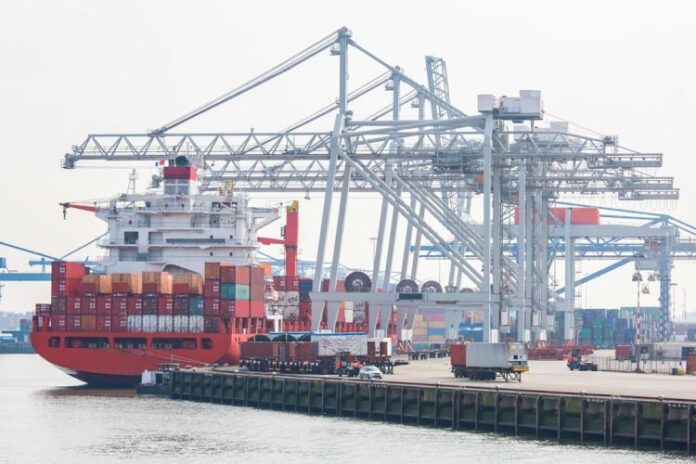
The rule builds on the existing At-Berth Regulation (ABR). It adds new vessel categories which will be required to control pollution when in port.

Vessels covered under the existing regulation include container ships, reefer ships (refrigerated cargo vessels) and cruise ships. The updated regulation adds vehicle carriers and tankers.

The updated regulation starts in 2023, when container, reefer and cruise vessels – already included under the existing rule – will transition to the new regulation. Vehicle carriers will need to comply starting in 2025. Tankers docking at the Port of Los Angeles and the Port of Long Beach must also comply starting in 2025, while tankers in Northern California have until 2027.

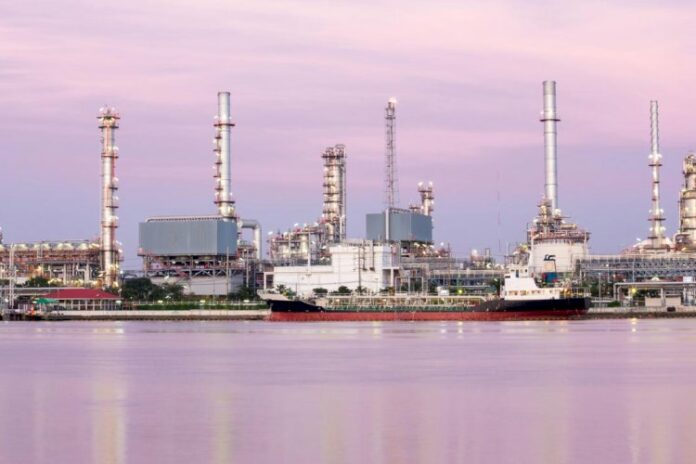
The rule requires that every vessel coming into a regulated California port either use shore power or a CARB-approved control technology to reduce harmful emissions, such as applying ‘capture-and-control’ techniques on the vessel’s exhaust emissions.

Source: North P&I

SCHOTTEL to equip two shallow-draft AHTS vessels for demanding operations

0

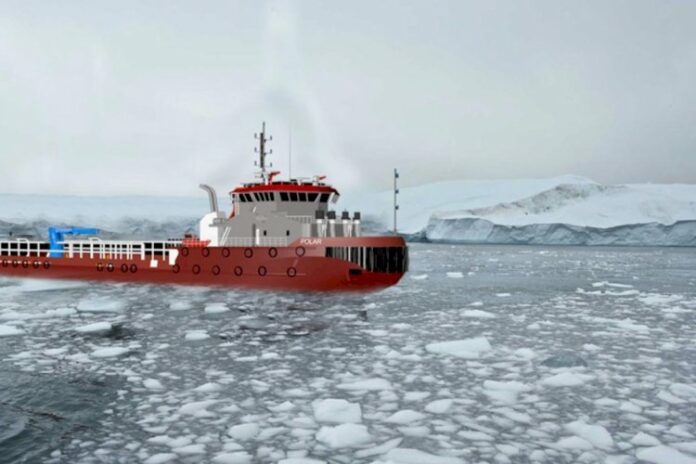
The German propulsion expert SCHOTTEL has been awarded a contract to supply a total of eight propulsion units to the Turkish Atlas Shipyard. Two Anchor Handling Tug Supply (AHTS) vessels, ordered by the Russian company POLAR LLC & POLUS LLC (affiliates of ARK Shipping & ADAMANT) and intended for operations in the Caspian Sea, will be equipped with ice-strengthened controllable pitch propellers and transverse thrusters from SCHOTTEL.

The two AHTS vessels – named “Polar” and “Polus” – will both be driven by three powerful SCHOTTEL Controllable Pitch Propellers type SCP 65 4-XSG, each with an input power of 1,740 kilowatts. These propulsion systems, featuring a propeller diameter of 2.1 metres and an optimized hub for full feathering mode, are powered by diesel engines. Designed by V Denge Technology, the new vessels will be able to achieve a free sailing speed of 12 knots and an expected bollard pull of 70 tonnes.

SCHOTTEL CP propeller systems are characterized by their outstanding performance in terms of propulsion efficiency and bollard pull. The SCP is designed to be both robust and user-friendly, guaranteeing minimum maintenance and thus a long service life. The flexibility and versatility of the SCP allow the propulsion power to be optimally adapted to the required operation profiles of the Russian AHTS vessels at all times.

In order to achieve maximum manoeuvrability, these new shallow-water vessels will all be fitted with highly reliable bow thrusters, provided in the form of a SCHOTTEL Transverse Thruster type STT 1 FP (400 kW) installed in each one. The bow thrusters will also provide full dynamic positioning to DP 1 standards.

To withstand the harsh conditions of the Caspian Sea, the controllable pitch propellers will be ice-strengthened according to Finnish-Swedish Ice Class 1A Super. The minimum draft of approximately 2.5 metres enables them to operate in shallower parts of the Caspian Sea.

Ark Shipping & ADAMANT, a Russian group of companies performing river and sea transportation, will take ownership of the vessels. The main functions of the 73.3 metre long and 16.9 metre wide vessels will be to haul, lay, retrieve and lift the anchors of semi-submersible drilling platforms or pipe-laying vessels. In addition to this, they will be able to tow drilling rigs, lighters, other vessels and floating facilities. They are also intended to serve as Emergency Response and Rescue Vessels (ERRVs) as well as supply transports.

Both vessels are set to be completed by the end of 2021.

PSA and HMM launch joint venture for container terminal operations in Singapore

0

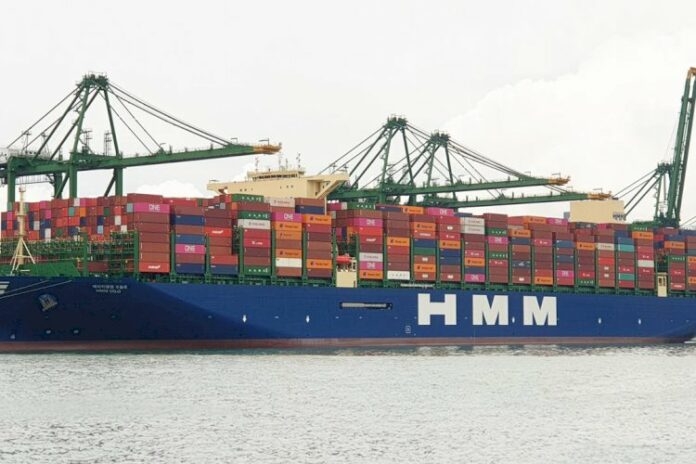
PSA Corporation Ltd (PSA) and HMM Co., Ltd (HMM) have joined forces to form a joint venture in Singapore, working together for enhanced operational excellence and efficiency in container operations.

Subject to regulatory approvals, the joint venture company, HMM-PSA Singapore Terminal Pte Ltd (HPST), is scheduled to commence operations before the end of this year. PSA will hold a 58 per cent stake in HPST, while HMM will own the remaining 42 per cent, both through their respective subsidiaries. This strategic partnership will offer long-term hubbing certainty to HMM’s fast expanding global vessel fleet in PSA Singapore.

Besides volume and terminal capacity assurance, PSA and HMM will also collaborate in operational technology developments and innovations. The enhanced partnership and staying ahead of the technology curve will ensure that PSA and HMM continue to deliver service excellence and exceed customers’ expectations.

Mr Ong Kim Pong, Regional CEO Southeast Asia, PSA International, said:

“We are honoured to join forces with HMM, one of the world’s top ocean carriers and a globally integrated logistics company, to maximise operational synergies and address the rapidly changing landscape of the shipping industry. PSA and HMM have had a steadfast and longstanding working relationship and we are excited to take this partnership to the next level, achieving a strategic win-win for both parties. We look forward to working alongside HMM to unlock the potential of our combined strengths and capabilities.”

Mr Jae-hoon Bae, President & CEO of HMM, said:

“Both HMM and PSA have extended their reach to every corner of the globe and have maintained a strong partnership based on mutual respect. We believe this joint venture terminal in Singapore plays a significant role as a springboard for both parties to move forward to a new phase. In addition, HMM looks forward to creating greater synergy for our 24,000 TEU vessels by securing berth on arrival and providing more reliable services for our customers through the joint venture.”

SMD secures new £multi-million plough contract

0

Innovative subsea vehicle specialists Soil Machine Dynamics (SMD) have secured a new contract working in collaboration with a leading global subsea cabling company.

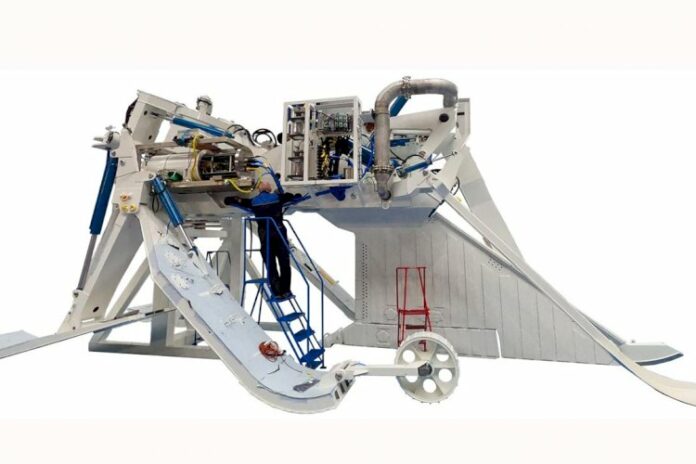
As part of the contract, SMD will supply the next-generation MD3-XT Plough, capable of trenching up to 3.3metres with jetting, at depths of up to 1,600metres.

The new contract includes the installation and commissioning of the complete turnkey system including (LARS). The MD3‐XT Plough is recognised globally as setting the standard in telecoms cable ploughing, reliably trenching in most soils including clays and sands. Its unique ‘multi-depth’ hinged chassis design allows for optimum burial performance which is variable up to 2.2m for shallower burial requirements or up to 3.3m, with an additional share boot fitted for deeper burial campaigns. SMD Curvetech equipment is packaged as the main backbone of the Plough power and control system providing reliability through the utilisation of standardised field-proven component modules.

The high-performance 530kW jetting capability of the plough increases the efficiency of the trenching process by fluidising the seabed in front of the share. This reduces the tow force required by the lay vessel by up to 50% resulting in significant fuel savings during operations and unlocking progress rates of between two to five times faster than its non-jetting equivalent, depending on seabed conditions.

The innovative new plough umbilical system has been upgraded to a semi buoyant jetting cable meaning no buoys are required to be tied to the cable during plough deployment making offshore operations safer, easier and faster. The A-Frame is an SMD 35Te wide-angle system certified for use in up to sea state 5 and allows the plough to be launched and towed from the same wire, reducing operation times and deck complexity.

Work is currently well underway on the design and manufacture, which is due for completion in Autumn 2020. It is the 3rd plough supplied by SMD for this company and will replace a former 12-year-old model.

Matthew Woodward, business development manager, telecoms systems, at SMD, said:

“We are delighted to have been chosen to deliver this new plough and launch system. We have a long-standing relationship with this particular client and the fact that this will be their 3rd plough is a testament to the value of our relationship and the reliability of our technology. We focussed on understanding the client’s unique needs and aspirations. We have worked closely with the customer to adapt the equipment to fit their existing vessel. This system provides significant innovations and upgrades to a ploughing solution that has served them well over many years.”

Shell and Prosafe agree on 2021 North Sea campaign

0

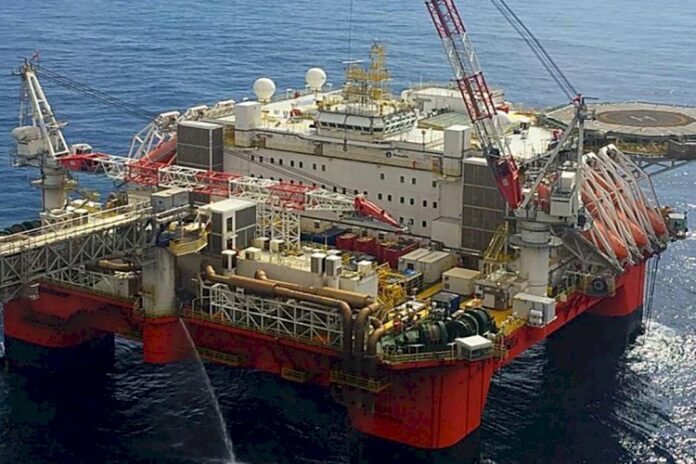
The revised firm duration of the contract of 115 days commences in March 2021 although Shell has the option of adding either 30 or 45 days to the front end resulting in an earlier commencement date. Shell retains the option to extend the contract after the firm duration by up to 30 days.

As part of the agreement, Shell will compensate Prosafe through a fee considering the 10 month mobilization deferment. Additionally, Shell and Prosafe will strategically work closely for 2022 and 2023, maximizing opportunity to benefit both parties.

Jesper Kragh Andresen, CEO of Prosafe says:

“Shell has been, and will continue to be, one of our most valued customers. The COVID-19 pandemic has impacted the industry hard – operator and contractor alike – and it has been encouraging to work with Shell to solve the mutual challenges in a way which resulted in an agreement for the 2021 Shearwater turnaround, and a stronger strategic collaboration thereafter.”

Fugro delivers crucial site characterisation in Maldives during global pandemic

0

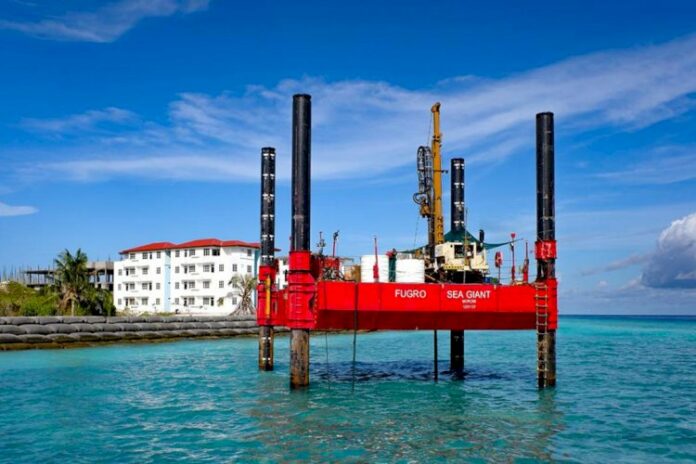
Fugro accelerated mobilisation from the UAE to the Maldives ahead of global Covid-19 lockdowns to ensure that this project of national importance could meet the Ministry of National Planning, Housing and Infrastructure’s (MNPHI’s) ambitious delivery schedule.

Fugro applied innovation and ingenuity to maintain delivery during a time of unprecedented restrictions on global shipments. The Maldives were locked down just as the project was mobilising but Fugro used their self-propelled jack-up barge Fugro Amberjack as the designated in-country quarantine facility, meaning offshore personnel could work whilst safely isolated. They also mitigated the risk of further delays by mobilising the marine geophysical vessel Fugro Mapper from India to acquire geophysical data.

Fugro implemented its Transformer Model of working, whereby the self-elevating platforms Sea Giant and Skate 3D were transported on and dynamically assembled from the Amberjack. This execution strategy enabled safe and rapid delivery of multiple drilling assets into the project area, providing MNPHI with an unparalleled rate of Geo-data acquisition in water depths between 0 m and 46 m and in challenging metocean currents. When MNPHI and their engineering consultancy were unable to mobilise their intended supervision teams offshore due to the lockdown, Fugro’s data delivery platform, Gaia Books, meant they could monitor the acquired Geo-data remotely in near real time.

Chris Arnott, Fugro’s Country Manager for the UAE, said:

“Despite the Covid-19 crisis, our team completed 4 weeks ahead of schedule thanks to their determination and ingenuity in difficult circumstances, utilising marine assets designed, owned and maintained by Fugro for exactly this type of challenging marine environment. MNPHI can now proceed on schedule with their landmark national development and we look forward to further opportunities to support the project.”

Austal USA delivers 12th expeditionary fast transport to US Navy

0

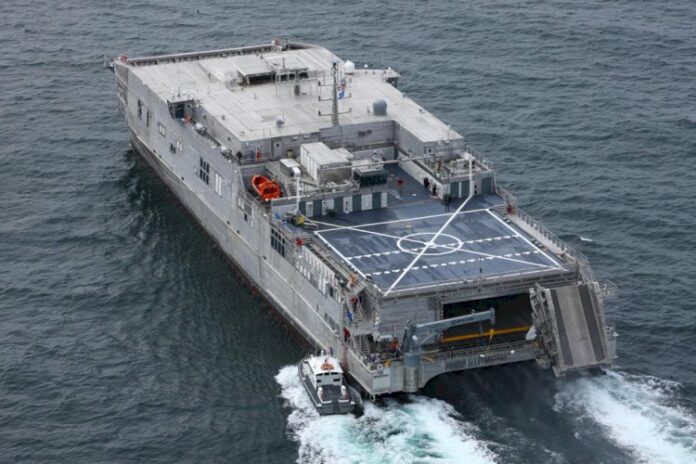
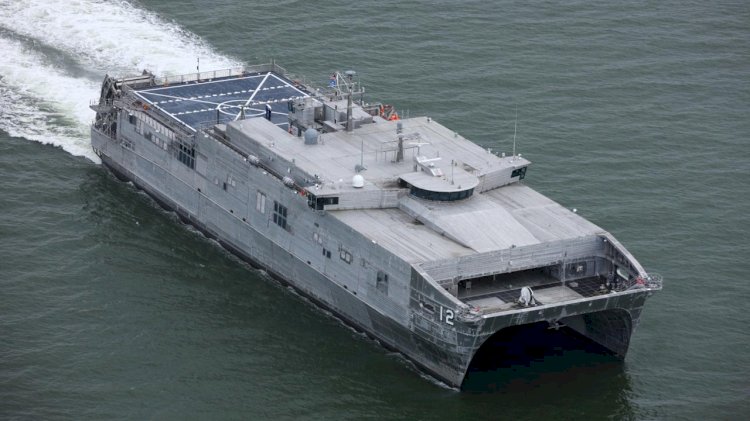
USNS Newport is the 12th Spearhead-class Expeditionary Fast Transport (EPF) ship to be delivered to the United States Navy – and brings the total number of ships delivered to the Navy by Austal USA to 24 in ten years, including three this year.

Austal Chief Executive Officer David Singleton said the delivery of EPF 12 by Austal USA further strengthens the status of its Mobile, Alabama shipyard as an industry-leading facility.

Mr Singleton said:

“Austal USA has now delivered 24 ships to the US Navy, in just over ten years, including three in this year alone. This is a remarkable achievement and testament to the productivity and efficiency of the shipyard, which is now expanding to enable the shipbuilding and support of steel vessels. The ongoing, successful delivery of both the Spearhead-class EPF and Independence-class LCS shipbuilding programs has positioned the Austal USA shipyard to pursue new aluminium and steel shipbuilding opportunities in the future.”

The Spearhead-class EPF is a 103-metre high-speed aluminium catamaran with a large, 1800 square metre cargo deck, medium-lift helicopter deck and seating for 300+ embarked troops; providing a fast, high-payload transport capability to combatant commanders around the world.

The Austal-designed EPFs support a wide range of missions – from maritime security operations to humanitarian aid and disaster relief. An EPF’s flexibility also allows it to support potential future missions; such as special operations, command and control, and primary medical operations.

One additional Spearhead-class EPF is under construction at Austal USA’s shipyard; the future USNS Apalachicola (EPF 13), while the future USNS Cody (EPF 14) is scheduled to commence construction before the end of the year.

In addition to the EPF program, Austal USA is contracted to deliver 19 Independence-class Littoral Combat Ships (LCS) for the U.S. Navy. Twelve Independence-class LCSs have been delivered, with an additional five ships in various stages of construction and two contracted but yet to start.

PrimeServLab extends scope of engine-fluid analyses

0

A department of MAN PrimeServ – MAN Energy Solutions’ after-sales division – PrimeServ Lab performs analyses of such fluids as fuel oil, lube oil, cooling water, lube-oil separator control samples and fuel-oil separator control samples for both stationary and marine four-stroke engines.

Owing to the new fuels types introduced in 2020, PrimeServ Lab has now introduced a fuel-stability analysis of the new types and their compatibility with other fuels. As a result, the so-called p-value has now become part of PrimeServ Lab’s standard, fuel-analysis programme. The scope of diesel-fuel analysis has also been increased with lubricity, biofuel content  and ignition delay added to standard reporting.

MAN PrimeServ’s Dr Holger Gehring said:

“PrimeServ Lab offers a unique analysis portfolio. Our undisputed competitive advantage is the outstanding knowledge of engines and engine fluids that we have, as an OEM, which enables us to evaluate fluid analyses with great accuracy. In contrast with most other labs, PrimeServLab doesn’t specialise in the analysis of individual fluids but, rather, specialises in the analysis of all engine fluids – to provide a complete picture. Our comprehensive solutions cover all essential fluids and enable us to extend engine-lives and identify potential issues or risks that could cause disruption if unnoticed. This significantly reduces the amount of downtime, damaged equipment and profit losses our customers would otherwise endure.”

Similarly, due to the introduction of SCR (Selective Catalytic Reduction) catalysts, PrimeServ Lab now also analyses urea solutions to ensure reliable catalyst function in SCR systems.

Joint R&D starts for practical application of ammonia-fueled tugboat

0

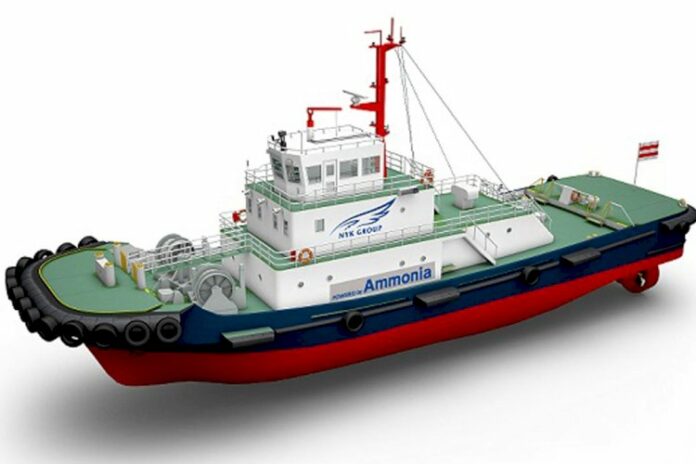
On August 18, NYK, IHI Power Systems Co., Ltd., and Nippon Kaiji Kyokai (ClassNK) signed a joint research and development agreement to put the world’s first ammonia-fueled tugboat into practical use.

With the entry into force of the Paris Agreement in 2016, global momentum for decarbonization has increased, and reducing GHG emissions has become an issue in the shipping sector. In 2018, the International Maritime Organization (IMO) set a goal of halving GHG emissions from the international shipping sector by 2050 and reaching a target of zero as early as the end of this century. Since carbon dioxide (CO2) is not emitted when ammonia is burned, it is viewed to have promise as a next-generation fuel that could mitigate shipping’s impact on global warming. In addition, it is said that zero emissions can be realized by utilizing CO2-free hydrogen as a raw material for ammonia.

Thus, the companies have decided to start this joint R&D for an ammonia-fueled tugboat. In fact, the companies worked together to jointly develop the LNG-fueled tugboat Sakigake*, which was built in 2015 as Japan’s first ship fueled by liquefied natural gas (LNG). In this new joint R&D project, we will utilize the knowledge cultivated in the development, construction, and operation of Sakigake.

The companies will proceed with R&D from both technical and operational aspects for the introduction of ammonia as a marine fuel for tugboats.
Specifically, in fiscal 2020 the companies will tackle themes such as technological development of the hull, engine, and fuel supply system, and development of safety navigation methods. After evaluating the practicality of the R&D results, we will begin study of the construction of the ammonia-fueled tugboat and the plan for construction.

The introduction of ammonia as a marine fuel is highly expected to be a practical solution for decarbonization in the shipping sector. This joint R&D envisions the implementation of ammonia marine fuel in tugboats that require high output, and we will firmly establish the technical and operational requirements for that purpose. If it is possible to commercialize marine equipment that uses ammonia, which is one of the candidates for a next-generation fuel, and establish a method for operating the vessel, it is expected that the Japanese maritime industry will make a significant contribution to decarbonization of the international shipping sector.

* LNG-fueled tugboat Sakigake

Sakigake is owned by NYK Line and operated in Yokohama port and Kawasaki port under the navigation of Shin-Nippon Kaiyosha. Japan’s first LNG-fueled tugboat, Sakigake was built at Keihin Dock Co. Ltd. and is equipped with a dual-fuel engine that can use either LNG or diesel oil, depending on conditions. The tugboat’s engine was constructed by IHI Power Systems Co., Ltd. (Niigata Power Systems Co., Ltd. at the time of construction). When using LNG fuel, Sakigake becomes an eco-friendly tugboat compared to when using heavy oil because sulfur oxide (SOx) emissions are reduced by approximately 100%, nitrogen oxide (NOx) emissions by approximately 80%, and carbon dioxide (CO2) emissions by approximately 30%.