7.9 C
New York
Home Blog Page 780

Fairway adjustment in Hamburg on its home stretch

0

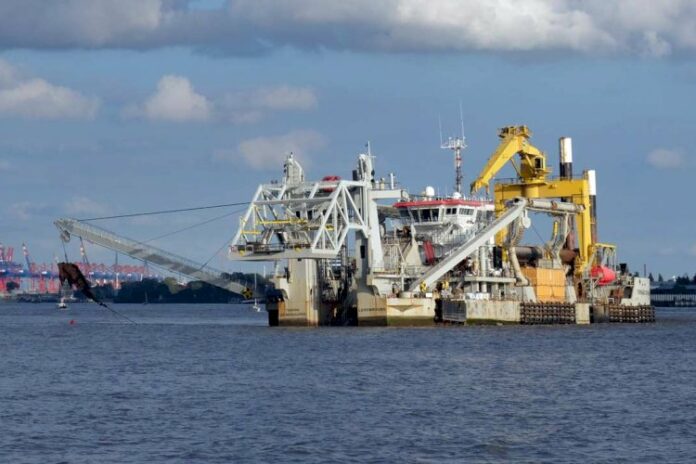
In the final stage this week, the so-called cutter-head suction dredger “Fernão de Magalhães” will do the remaining work on the Elbe river bed.

This is the first time that a dredger of this type is operating in Hamburg. The “Fernão de Magalhães” of the commissioned hydraulic construction company Jan de Nul has been working for example on the expansion of the Panama Canal.

The special dredger is expected to be in operation until the end of September. As the ship is used near the shore in the Blankenese area, noise pollution may arise occasionally, but this will be reduced to a minimum.

At the same time, the last work is currently being carried out on the two new leading lights in Blankenese, which were set up in June and July respectively. Currently, the installation of the lights and connection to the main system are being prepared. In autumn, the work on the passing box and leading light line will be completed so that the dismantling of the old lighthouses can begin.

The entire fairway adjustment between the North Sea and the Port of Hamburg will be completed in 2021 as planned.

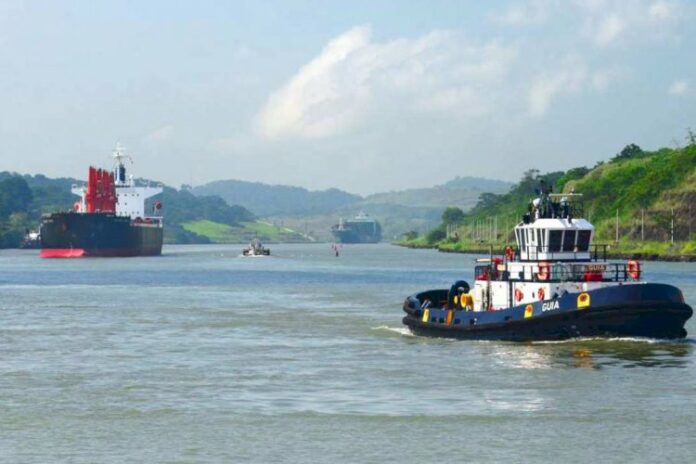
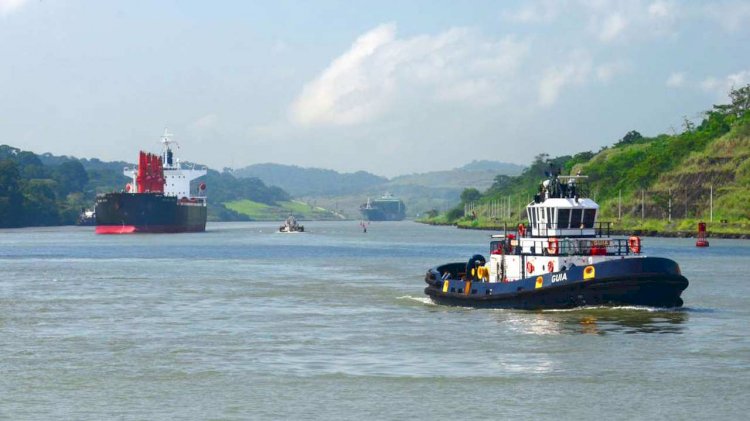
Panama Canal launches tender for new water management system

0

The Panama Canal has published a Request for Qualifications (RFQ) for the pre-qualification of potential offerors for the engineering, design and construction of a new water management system that will guarantee an adequate water supply for both Canal operations and local consumption for the next 50 years.

The Panama Canal plans to shortlist the most-qualified firms by the end of year. After this time, each pre-selected bidder will be invited to submit his or her best value proposals for a portfolio of water management projects at the waterway.

Panama Canal Administrator Ricaurte Vásquez said:

“Securing sustained, operational water levels is paramount for the long-term viability of the Panama Canal. The historically low levels of water in the recent years only exacerbated the need to adopt a comprehensive plan. As the Canal’s largest investment since the Expanded Canal in 2016, I am confident this move will safeguard the waterway’s future as one of the most important hubs for global commerce. To achieve this, we are investing in an innovative system to address water quantity, quality and control effectively.”

The implementation of an improved water management system has become a critical priority for the Panama Canal in recent months.

As a result of climate variability, the Panama Canal watershed experienced its fifth driest year in 70 years in 2019. This unprecedented drought constrained water levels severely at Gatun and Alhajuela Lakes, the main sources of water for the Canal and half of Panama’s population. Despite extensive use of water conservation measures at the Canal already, water levels were projected to drop below operational levels that would cause unprecedented an impact on customers if no further adjustments were made accordingly.

Faced with this scenario, the Canal implemented measures such as a charge for fresh water that came into effect in February, on top of water conservation practices already in place. These measures allowed the Canal to secure a steady draft after less than three months. Today, the draft level is 49 feet, the highest offered in more than 12 months.

By investing in a robust water management system, with proper environmental, social and economic safeguards, the Panama Canal looks to ensure its long-term operational reliability, which will be critical as it adapts to long-standing and coronavirus-driven shifts in global trade.

The Panama Canal also aims to use this investment to extend its role as an engine of economic development in Panama and green route for global maritime trade.

CMA CGM enhances CIX service

0

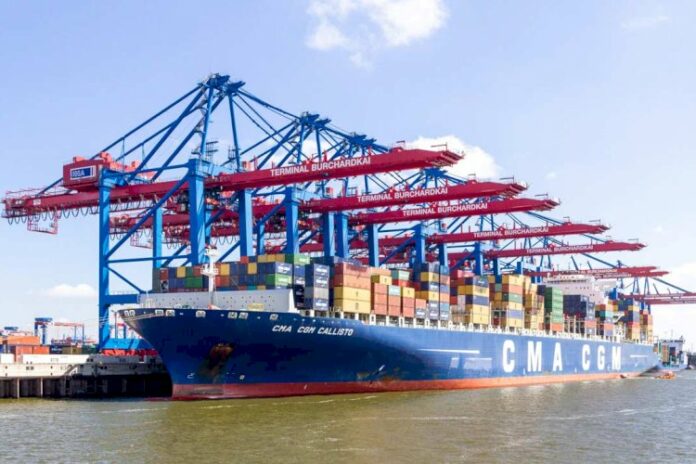
CMA CGM has announced that it will be enhancing its existing China India Express (CIX) service that connects Asia with the Indian Subcontinent region.

The CIX enhancement will see Xingang and Pusan being added as its ports of call, making CIX a comprehensive weekly service that links key ports in China and Korea to Colombo, Nhava sheva and Pipavav.

Via the trans-shipment hub of Hong Kong, shipments onboard CIX will be able to gain access to important markets situated in Central and South China through the shipping network of CNC and the CMA CGM Group.

The enhanced CIX, complemented by the existing Asia Subcontinent Express (AS1) and Asia Subcontinent Express 6 (AS6) services, forms part of CMA CGM’s portfolio of Asia-Indian subcontinent services. 

CIX will begin its new port rotation from Xingang on 20 October with the following port rotation: Xingang – Pusan – Shanghai – Xiamen – Hong Kong – Shekou – Singapore – Colombo – Nhava Sheva – Pipavav – Port Kelang – Singapore – Hong Kong – Xingang.

Fugro’s major upgrade to LADS technology improves hydrographic data collection

0

The enhanced LADS HD+ technology was developed in Fugro’s laser laboratory in Adelaide, Australia, and is a sophisticated hydrographic mapping system that accurately measures water depth over both the marine and coastal zone environments.

The new advances to the system have doubled the laser speed and the swath width and improved the object detection of the system, greatly increasing data collection efficiency for nautical charting. The system builds upon the proven Australian-developed LADS technology and has been designed for safe, high-speed and cost-effective surveys of clean, shallow coastal areas in depths up to 80 m. ALB can be integrated with traditional hydrographic survey methods using acoustics, such as multibeam echosounders (MBES), to support nautical charting and coastal zone management. This development will also complement Fugro’s lightweight Rapid Airborne Multibeam Mapping System (RAMMS), which can be operated from small aircraft or from an uncrewed aerial vehicle (UAV).

Mark Sinclair, Fugro’s Director of Hydrography in Asia-Pacific, said:

“This innovation will deliver enhanced survey coverage and object detection to improve our nautical charts, which are critical to our maritime trade. These data collection enhancements are also supported by more efficient data processing with Fugro’s Australian-developed Pyxis cloud-based processing, which combines artificial intelligence and machine-learning.”

The Fugro LADS HD+ system will now be deployed to Papua New Guinea for nautical charting projects, continuing Fugro’s work in Pacific Small Island Developing States supporting safety of navigation and climate change adaption.

ABS introduces ‘Alternative Fuel Ready’ approach to support shipowners’ fleet investment planning

0

ABS has introduced an ‘Alternative Fuel Ready’ approach to help shipowners prepare their fleets for the introduction of alternative fuels.

Introduced through the newly published Guide for Gas and Other Low-Flashpoint Fuel Ready Vessels, the new approach is the latest contribution from ABS to assist the industry with the adoption of new fuel technologies.

The guide is designed to support shipowners looking to build a new vessel or convert an existing one to use LNG, methanol, ethane, LPG, hydrogen, ammonia and other gases or low-flashpoint fuels. Already an emerging trend, use of low-flashpoint fuels is expected to increase significantly as the industry addresses IMO 2030 and 2050 targets.

Gareth Burton, ABS Vice President, Technology, said:

“The decision to build a new ship or convert an existing one to use gas or other low-flashpoint fuels is complex, due to the many technical and commercial challenges that need to be faced during the design of the vessel and all the associated systems. This guide introduces the concept of ‘Alternative Fuel Ready’, which allows shipowners to plan their future fleets to adapt to the evolving regulatory and technological landscape. This is just one of the ways ABS is supporting the industry through the challenging transition to low carbon operations. Our industry-leading range of guidance is informed by our extensive experience and backed by our global network of technical experts and sustainability support located in key shipping centers.”

Uniquely, the guide, which replaces the Guide for LNG Fuel Ready Vessels, supports owners looking to commission conventionally powered vessels that are ‘Alternative Fuel Ready’- designed to be capable of adaptation to low-flashpoint fuels at a future date.

The guide, which also introduces a range of ‘Alternative Fuel Ready’ notations, defines a program of three levels of alternative fuel readiness through concept, design and installation. The approach identifies the key technical issues to assist owners, designers, and shipyards in developing vessels capable of low-flashpoint fuel operations.

Patrick Terminals – Sydney AutoStrad migrates to N4 to advance automation capabilities

0

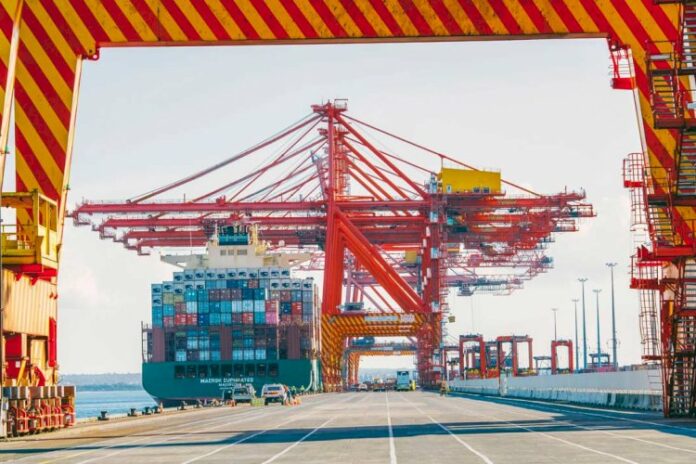
Navis a part of Cargotec Corporation and provider of operational technologies and services that unlock greater performance and efficiency for the world’s leading organizations across the shipping supply chain, today announced that Patrick Terminals – Sydney AutoStrad, has migrated to N4 3.8 from its decades old, in house TOS. As a result of a well-planned and executed strategy, the go-live was successfully completed remotely with minimal staff on site.

Strategically located in Port Botany on the Australian coast, Sydney Automated AutoStrad  terminal is the largest container terminal in Australia by capacity. Operating at 1.2 million TEU annually, Sydney AutoStrad manages 580 vessels per year, handles over 1400 gate moves per day and has the greatest quay line length in the region of 1.4km. Additionally, the terminal has four container berths on site, which allows the team to be flexible to adjust vessel working and provide berths if unplanned events impact the schedule. With modernization and automation in mind, Patrick Terminals selected N4 as its TOS for Sydney AutoStrad to optimize its performance and streamline operations at the terminal to meet the growing trade demand in the region.

Adrian Sandrin, CIO for Patrick Terminals, said:

“Replacing our 30-year-old legacy TOS system with Navis N4 has been a major milestone for Patrick’s business. We have successfully implemented N4 in our two manual terminals over the past 6 months and have now integrated that technology suite at our Automated AutoStrad Terminal in Sydney. Patrick’s has always emphasised the importance of information technology and real time systems and with the help of our new N4 TOS, Patrick will optimize our central vessel planning, improve processes and create efficiencies to ensure we meet the complex and changing requirements of our industry.”

Charles Gerard, VP & General Manager, APAC at Navis, said:

“As more terminals are planning to advance their automation capabilities, we are able to help them upgrade their offerings and reach their goals with our innovative, best-in-class TOS. We are proud of the work we did with Patrick Terminals over the past year and are looking forward to continuing to support their terminals and their modernization plans, for years to come.”

Equinor teams up for offshore wind growth in Japan

0

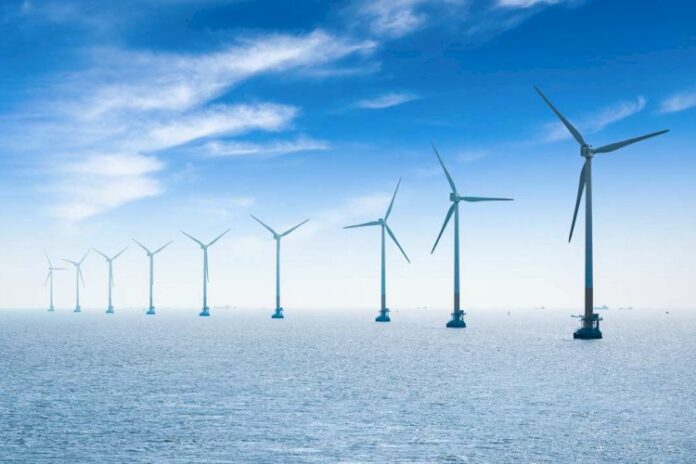
The three companies will jointly evaluate and work towards submitting a joint bid in the Round 1 auction once the Japanese government officially opens what will be country’s first offshore wind auction.

Establishing this consortium is in line with Equinor’s renewable strategy of building scale in core regions and develop growth options in selected markets to become a global offshore wind major. 

Senior vice president for Business development in New Energy Solutions in Equinor, Jens Økland, says:

“We have joined forces with Jera and J-Power, two strong local partners, to participate in Japan’s first offshore wind auction and develop what could potentially be Equinor’s first offshore wind farm in Japan.”

The Japanese Government has dedicated Yurihonjo and Noshiro, two areas offshore the northern Japanese prefecture of Akita, as promotional zones for offshore wind, each representing an area for bottom-fixed offshore wind farms of approximately 400 MW and 700 MW respectively. The upcoming auction is anticipated to start within the next months, with bid submission taking place six months after the auction opens. Once the auction is closed, the results are expected to be announced towards the end of 2021. Potential wind farms would then tentatively be operative post 2025.

Økland says:

“Japan has a high potential to develop a market for offshore wind. Their ambitions to increase their renewable energy sources from today’s 15-16% to about 22-24 % by 2030 hereunder a target of 10 GW wind capacity to meet their climate change commitments and become more energy independent, present exciting opportunities. The opportunities long-term, are within both bottom fixed and floating offshore wind as waters in Japan are on average deeper than in other parts of the world. With Equinor being the leading floating offshore wind developer, we have the competence and technical skill needed and are ready to contribute long term to the country’s ambitious offshore wind plans.”

China’s first hybrid-electric rescue vessel relies on ABB technology for safety and sustainability

0

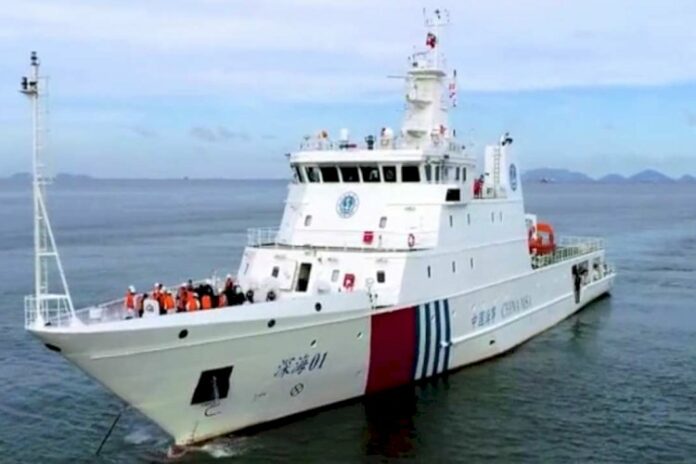
The first Chinese-built hybrid emergency rescue vessel is powered by ABB’s bridge-to-propeller technologies, including Azipod® electric propulsion, energy storage system and state-of-the-art automation and control solutions that further optimize operational efficiencies.

Successfully delivered to Shenzhen Maritime Safety Administration (MSA) by Huangpu Wenchong Shipbuilding, the 78m length vessel will be deployed to provide emergency responses at sea and carry out rescue operations. Shenhai 01 can be fully powered by batteries for up to three hours of operations, which is particularly crucial for safe rescue operations in areas affected by hazardous gas.

Mr. Xiubin Guo, Deputy Director General of Shenzhen Maritime Safety Administration, said:

“As the first China-designed and built emergency rescue vessel, Shenhai 01 is ranked among the top technologically advanced ships around the world. ABB is a leading integrated solutions provider, especially for advanced and complex vessels. We are very glad that the first project between MSA and ABB Marine & Ports has been such a great success.”

Alf Kåre Ådnanes, General Manager of ABB Marine & Ports China, said:

“We are very proud to contribute to this benchmark project. This project marks the first delivery of our energy storage system in China, and it has been an honor to work with such forward-thinking shipowner and yard from the drawing board all the way to vessel delivery.”
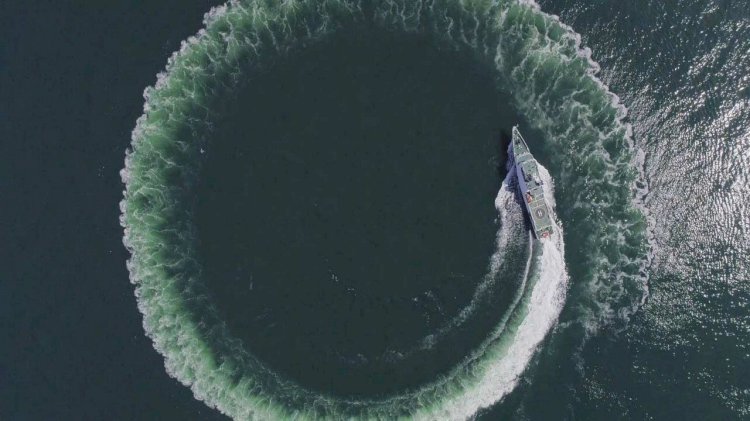
The power setup will be controlled by ABB’s integrated Power and Energy Management System (PEMS™), which will optimize the energy use on board. The system controls three sets of diesel generators and two sets of lithium batteries with total capacity of 1680kWh. The PEMS™ system not only increases vessel power plant performance and diesel engine efficiency, but also supports zero-emission operations in the fully electric mode.

The vessel is powered by twin Azipod® electric propulsion units with a combined power of 6 megawatt. Azipod® units can rotate 360 degrees to increase maneuverability and operating efficiency, with the proven ability to cut fuel consumption by up to 20 percent compared to traditional shaftline propulsion systems. For close to three decades, Azipod® electric propulsion has been the driving force behind safe, efficient and sustainable operations for a wide range of vessels. ABB’s scope of supply also includes the remote control system for maneuvering the Azipod® units from the bridge.

Shenhai 01’s operations will be remotely monitored and supported by experts from ABB’s global network of ABB Ability™ Collaborative Operations Centers. Remote support and connectivity, together with advanced data analytics enabled by the ABB Ability™ Remote Diagnostics System, will further enhance the vessel’s operational safety and ensure optimal performance, while helping to promptly detect and correct faults on board. This is particularly important for vessels carrying out rescue operations in remote areas.

Van Oord successfully applies Atlantis tubes at Fish Migration River project

0

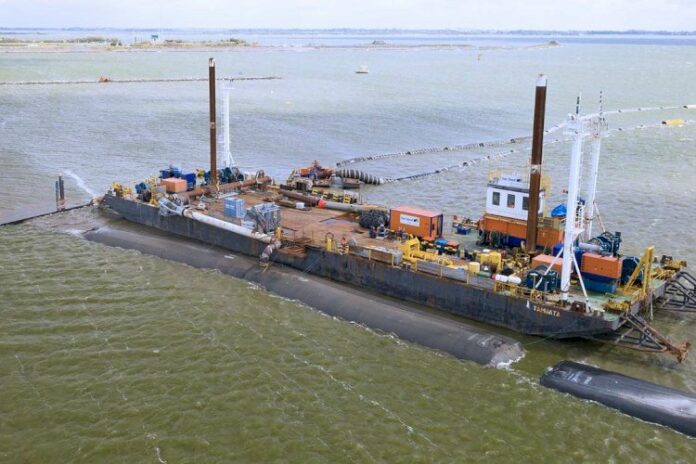
Contracted by the Dutch Province of Friesland, Van Oord has successfully installed five Atlantis tubes in Lake IJsselmeer near Kornwerderzand.

The 340 metre long dam is part of the construction work for the Fish Migration River project. Atlantis tubes are elongated bags made of specially developed plastic fabric which are filled with sand by dredging equipment. This is the first time the Atlantis tubes have been used to create a dam. 

Atlantis tubes offer the possibility to construct both temporary and permanent dams in a sustainable manner. This method reduces the use of primary building materials such as stones and sand and therefore also reduces the emission of fossil fuels by transport. Finally, there is a significant cost reduction due to the absence of purchasing, transport and application of stone materials. It also gives substance to the ambition of the Province of Friesland: sustainable and cost-effective building.

The Atlantis Tubes are derived from Geotube® technology and are made of extra strong plastic fabric that combines a high sand density with a high water permeability. The storage capacity is up to 2,000 cubic metres of dredged material. Thanks to this unique combination, it is now possible to use dredging equipment such as trailing suction hopper dredgers and cutter suction dredgers for the filling process. During this process, the water flows through the textile and specially designed overflow valves to the exterior and as a result the sand and sludge are compacted into a solid sand body. The Atlantis tubes have a maximum length of 150 metres and a diameter of almost 5 metres.

Van Oord and Ten Cate Geosynthetics have jointly developed the Atlantis tubes for use in hydraulic engineering projects worldwide. Atlantis tubes are produced by Ten Cate Geosynthetics and installed by Van Oord.

Damen delivers FCS 2710 ‘Green Waves’ to Rederij Groen

0

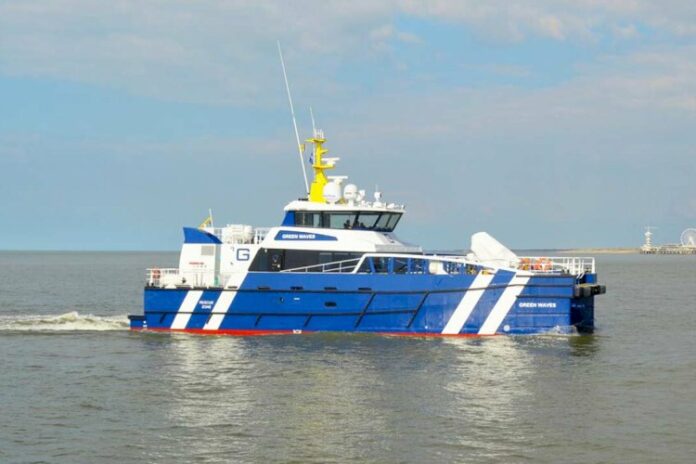
On 4th September, Damen Shipyards Group delivered a Fast Crew Supplier (FCS) 2710 to Rederij Groen. This, the first delivery of the new FCS vessel in the Netherlands, took place in Scheveningen. The vessel has been named Green Waves. It has been less than 6th months from contract signing to vessel handover.

The speed of delivery is due to Damen’s practice of building standardised vessels in series and for stock, the hull was already under construction at Damen Shipyards Antalya, Turkey. Rederij Groen has secured a contract to use the vessel to undertake crew transfers for the oil & gas industry in Germany and Denmark.

Rederij Groen already operates ten Damen vessels, including three Damen FCS 2610 vessels. Like its predecessor, the FCS 2710 draws upon Damen’s Sea Axe hull – here seen in Twin Axe formation – to deliver safety and comfort, even in rough seas. The Sea Axe significantly reduces vertical slamming, enabling the vessel to glide through the waves.

Building on the success of the FCS 2610, Damen has designed the FCS 2710 to offer more flexibility, greater deck space, more tank capacity, increased comfort and more accommodation. A key aspect of the improved comfort credentials is the vessel’s 1 metre increase in height above the water. This enables the FCS 2710 to operate in waters with over 2 metre wave height, considerably raising uptime.

Although the vessel is just one metre longer than the FCS 2610, it is able to transport twice as many passengers – the FCS 2710 can transport 26 personnel in its standard configuration. Damen has achieved this be creating a flush desk for the FCS 2710, maximising efficiency in space usage. In addition to the increased accommodation, this has enabled an increase in the size of the wheelhouse, whilst retaining 90m2 for cargo transportation.

Vincent de Maat said:

“We are very proud of the fact the Rederij Groen has decided to use three Damen crew tender vessels –three FCS 2610 vessels and now the new FCS 2710, for their new project. Two of the FCS 2610 vessels – Green Wind and Green Water have been refitted earlier this year at Damen Shipyards Hardinxveld in preparation for their new job.”