7.9 C
New York
Home Blog Page 779

Snam and Saipem sign MoU to work together on technologies for the energy transition

0

Snam and Saipem have signed a Memorandum of Understanding to start working together on new energy transition technologies, from green hydrogen to capturing and reusing CO2, with the aim of fighting climate change and contributing to the launch of the hydrogen market, supporting the European Commission’s Hydrogen Strategy.

The aim of this agreement, signed by Marco Alverà, CEO of Snam, and Stefano Cao, CEO of Saipem, is to jointly define and develop initiatives for green hydrogen production and transport, and for carbon dioxide capture, transport and reuse or storage (CCS and CCU).

Snam and Saipem have already started working together, focusing in particular on developing the technology of water electrolysis, a process that makes it possible to reduce CO2 emissions to zero in the production of green hydrogen, thus effectively fighting global warming.

This agreement also involves a collaborative effort to develop feasibility studies in order to find new solutions to transport hydrogen in both liquid and gaseous form, by using and adapting existing infrastructure and networks as well as by shipping it by vessel, and to capture, transport, store or enhance CO2.

With this Memorandum of Understanding, Saipem and Snam also explore the possibility of participating in EU-funded technological innovation projects.

As one of the first companies in the world to experiment with introducing hydrogen into a gas transport network, Snam is highly committed to ensuring that its infrastructure is compatible with increasing hydrogen volumes and to supporting the growth of the Italian hydrogen value chain by developing technologies in order to promote its use in a variety of sectors, from industry to transport.

Today, Saipem acts as a promoter of energy transition both by developing projects involving the hybridisation and decarbonisation of conventional oil and gas complexes (new or existing),  both through the new business line dedicated to “new energies” in the E&C Onshore Division of Saipem, and through its recent acquisition of CO2 capture technologies from the Canadian company CO2 Solution Inc.

Marco Alverà, CEO of Snam, said:

“With this cooperation, we aim to strengthen our commitment and partnership network in the field of new energy transition technologies, especially green hydrogen and its use in existing infrastructure. Also through its dedicated business unit, Snam is deeply engaged in developing hydrogen and in contributing to the creation of an Italian value chain. Because of its geographical location, the natural resources available to produce renewable energy and the strength of its manufacturing sector, our country can become a European and Mediterranean hydrogen hub, thus making a significant contribution to the fight against climate change as well as creating new opportunities for development and employment”.

Stefano Cao, CEO of Saipem, commented:

“The agreement we have signed with Snam, with whom we have established a long-standing and productive relationship, is part of our strategy to make Saipem become a global provider of solutions for the energy and infrastructure sector. Therefore, it is consistent with the decarbonisation process that we are committed to pursuing in all our activities, as we strive to be leading players in the process of transition to low-environmental-impact energies.

To date, 70% of our order book in the engineering and construction (E&C) sector is not related to oil. Over the next few years, hydrogen will become a commodity which, together with LNG, will shape the energy transition process: Saipem is currently concentrating on both blue hydrogen production technologies, using energy from fossil fuels, and green hydrogen from renewable sources, also drawing on the experience gained from several projects implemented worldwide throughout the Carbon Capture & Storage chain”.

The agreement will eventually be the subject of subsequent binding agreements that the parties will define in compliance with the applicable regulatory profiles, including those relating to transactions between related parties.
Marlink’s smart network technology enables SeaOwl’s remotely operated vessel project

0

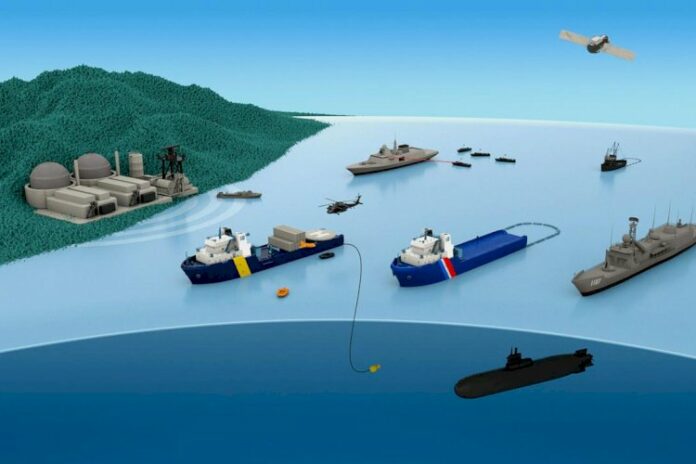
Marlink, the leading provider of Smart Network Solutions, is providing a special purpose highly resilient satellite network solution for the Remotely Operated Service at Sea (ROSS) project developed by offshore services operator SeaOwl.

SeaOwl successfully demonstrated the concept to strategic partners including French energy major Total in early September. The ROSS project aims to bring down the cost of operations by remotely controlling a vessel from shore, initially in the offshore sector with potential application to other civilian and military craft.

The project has focused first on achieving the regulatory acceptance needed to operate without crew onboard. This has involved close work with France’s Directorate of Maritime Affairs in order to secure the navigation license necessary for a demonstration voyage.

Marlink and SeaOwl held several engineering workshops to create a highly resilient and redundant connectivity and control system comprising a Sealink VSAT system with three antennas, dual satellite feeds and dual below decks equipment. The system features a unique customized dashboard interface for the ROSS system to monitor link key performance indicators including latency, jitter and throughput.

The installation is built on a backbone of state-of-the-art technology and leverages Marlink’s expertise in cyber security and network resilience, working closely in co-operation with Bureau Veritas ensuring compliance to meet statutory requirements.

SeaOwl was founded three years ago by former merchant navy officer Xavier Genin, in partnership with state environmental promotion body ADEME which financed 50% of the Euro4m R&D investment. With regulatory approval in place SeaOwl plans to make its first vessel orders and ultimately build around 20 remotely operated, electrically powered ships between 2023 and 2028, which will be used for underwater inspections of oil and gas fields and windfarms.

SeaOwl CEO Xavier Genin says:

“Unlike an autonomous vessel, the vessel’s crew will pilot the ship from land to achieve cost savings and minimise a range of operational risks safer operations. There are already remote-controlled or autonomous military ships, but we are the first to obtain the ‘grey card’ which gives us permission to sail as a merchant navy vessel.”

Erik Ceuppens, Marlink Group CEO, says:

“Our cutting edge satcom engineering expertise and intelligent hybrid network that enables the digitalisation of our customers’ remote operations makes Marlink a natural partner for the most innovative projects in the industry. Our focus on close cooperation and co-creation with our customers enables us to go above and beyond in delivering solutions that meet the most demanding operation environments.”

Kongsberg Maritime to design and equip an innovative new krill vessel for Rimfrost

0

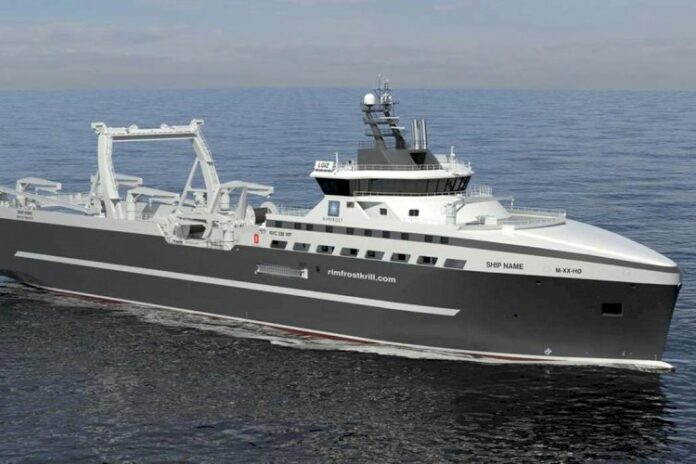
Kongsberg Maritime has announced that it has been contracted to design and equip a highly innovative vessel for the Norwegian krill processing firm Rimfrost. The ship is to be built by Westcon, who will complete the vessel at their facility in Norway after initial construction at the Tersan Shipyard in Turkey. 

The contract has been awarded in several stages during 2020, with the final stage signed in September 2020. The total value of the contract exceeds 200 MNOK.

Kongsberg Maritime’s design incorporates technology which is destined to set a completely new standard for krill fishing in Antarctica in terms of climate-friendliness, sustainability and optimal resource use, satisfying both DNV GL Clean Design class notation and the IMO’s Polar Code. Extensive use of heat recovery from exhaust gases, coolant water and factory processes will ensure the best possible energy utilisation, while the large-scale application of electric components will limit the danger of pollution from hydraulic systems.

Much of this innovative technology is sourced from KONGSBERG’s comprehensive product portfolio, including propulsion, steering and deck machinery, power, automation and telecoms. A Fishmaster integrated bridge solution comprising navigation, fish finding, catch monitoring and communications systems will also be supplied by KONGSBERG, in addition to remote support.

The ship’s pioneering design is firmly focused on sustainable operation in one of our planet’s most fragile ecosystems. With this in mind, the vessel will be able to carry out much of the product processing on board, making more efficient use of the krill caught and thereby reducing the quantity required. Rimfrost CEO Stig Remøy explains: “This will be the only vessel in the world where health food and food supplements are actually produced at sea immediately after catching. Short and careful processing will have a positive effect upon product quality. This will allow us to develop a number of new products as food additives for humans, animals and farmed fish as well as for pharmaceutical use. We believe this vessel will revolutionise krill fishing in Antarctica.”

Rimfrost gained its krill licence from the Norwegian Directorate of Fisheries based on the environmental and innovative aspects of the application, in addition to the vessel’s planned use as a research platform. There is also an option to construct a further vessel.

Egil Haugsdal, President, Kongsberg Maritime, said:

“It’s inspiring to partner Rimfrost in such an innovative project. Here at Kongsberg Maritime we are strongly focused on a sustainable maritime future, and Rimfrost’s vision pairs perfectly with our own. Our deep involvement with this project, both in its design and in its equipment specification, has allowed us to plan a vessel which we believe is a real game-changer. By minimising emissions and maximising the efficient use of energy, we can make our industry smarter, safer and more sustainable.”

Rivertrace launches digital water monitoring technology calibration portal

0

The free-to-access digital portal, that can be retrieved at any time via desktop and mobile browsers, was developed by Rivertrace in conjunction with development partner Intellore. Hosted on the AWS (Amazon Web Services) cloud, the portal allows Rivertrace’s network of staff, customers, OEMs and agents to access important information relating to the entire range of Rivertrace monitoring products, including calibration forms, product manuals and certification.

Once registered, a user can enter the IMO number of any vessel that has Rivertrace monitoring equipment onboard and track its movement, and ETA for next port call. This enables the easy set-up of appointments with agents to carry out calibration checks, as and when required.

Additionally, the digitalised system is designed to send e-mail reminders to Rivertrace and monitoring equipment users when re-calibration checks are due. With all parts, customer information and serial numbers integrated with Rivertrace’s Manufacturing Resources Planning System, accurate information required for calibration is provided seamlessly. API (Application Programming Interface) integrations enable the automation of transactions and ensure that accurate, valid information is easy to find.

Martin Saunders, Operations Director, says:

“This is an important step in our on-going digital offering to our customers. As a company, we are embracing digital transformation and we want to pass on the benefits to our global customer base. This platform will allow us to explore further advantages to our customers and make accessing information simple and intuitive.”

Opinion: Turkey’s hooked Tuna gas discovery could save it up to $21 billion in import costs

0

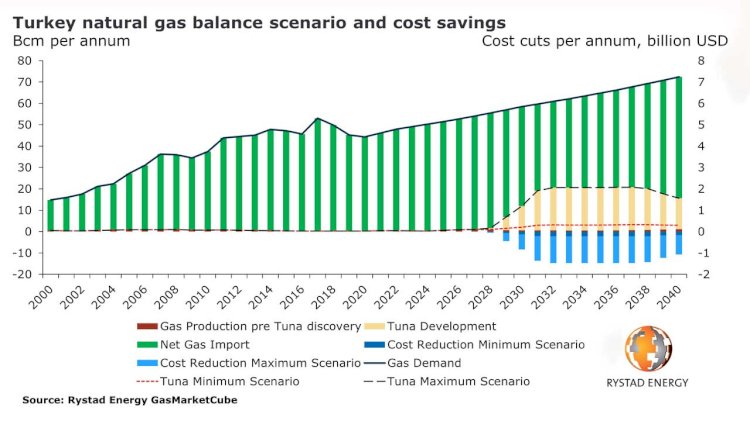
The future development of Turkey’s giant Tuna-1 gas discovery could save the country up to $21 billion in import costs, Rystad Energy estimates, depending on the field’s peak output, which remains to be determined pending appraisal drilling and further testing. Actual savings could be even higher as global gas prices and import costs are expected to rise in coming years.

The discovery is reported to have an initial gas reserve volume of approximately 320 billion cubic meters (Bcm), but the size of its actual recoverable reserves is still uncertain. As a result, Rystad Energy’s calculations are based on a peak production range of between 2.5 Bcm and 20 Bcm per year. The lower end reflects a more cautious approach, while the higher end a far more bullish outcome.

In any case, a successful development of the field would represent a substantial reduction to the country’s import costs – between $200 million and $1.5 billion per year – based on the field’s breakeven price range and Turkey’s average gas import price for 2020.

Sindre Knutsson, Rystad Energy’s Vice President Gas Markets, says:

“The timing of the discovery could hardly be better, as nearly 40% of Turkey’s contracted import volumes – representing 24 Bcm out of the country’s 59 Bcm per annum imports of pipeline gas and LNG – are set to expire in 2020 and 2021.”

A successful development of the Tuna-1 discovery could offer Turkey significant natural gas supplies at much more competitive terms, taking effect from the field’s estimated startup date of 2028. Rystad Energy estimates the breakeven price for the field to be between $3.00 and $3.50 per MMBtu, significantly below the cost of imported gas.

Rystad Energy estimates that the import price for LNG to Turkey in 2020 will average about $4.70 per MMBtu, including both Brent index contracts and spot volumes. We further estimate that the average price of Brent-indexed pipeline imports to Turkey will be about $6.40 per MMBtu this year. The effect of weak Brent prices this year will be seen in the second half of 2020, as Brent-indexed gas prices are normally priced with a lag of three to six months.

Rystad Energy does not expect the volumes from the Tuna-1 field to come online before 2028, but the prospect of a new competitive source of gas, and the confidence that Turkey will be less reliant on imports in the future, will increase the country’s bargaining power in relation to its current suppliers.

Turkish buyers will likely be keen to move away from oil-indexed contracts and instead use a European price benchmark, such as TTF, to which they can index their contracts.

Meanwhile, Turkey’s natural gas demand is set to recover after seeing two consecutive years with falling gas consumption. This development was driven primarily by declining demand from the power sector, where gas been displaced by renewable energy, including hydro, wind and solar. Total natural gas demand declined to 44 Bcm in 2019 after reaching a record of 52 Bcm in 2017.

Rystad Energy forecasts that Turkish demand for gas will rebound to 59 Bcm by 2030 and 71 Bcm by 2040. The two main sectors contributing to this increase are the industrial sector, driven by high economic growth, and the residential sector. Industrial demand is forecast to reach 23 Bcm by 2030, up from 14 Bcm in 2019, and residential demand is expected to climb from 13 Bcm to 17 Bcm over the same period.

Natural gas demand in the power sector, however, is expected to continue to slide gradually as both renewables and coal-fired power plants are poised to displace gas in the coming decade. Rystad Energy forecasts that demand for natural gas in the power sector will decline from 14 Bcm in 2019 to 13 Bcm in 2030.

Turkey is, for all intents and purposes, entirely reliant on imports at present to meet its natural gas demand, as domestic production stood at only about 0.3 Bcm in 2019, thereby representing less than 1% of domestic demand. Turkey remains heavily dependent on pipeline imports of gas from Russia, Iran and Azerbaijan, which collectively accounted for about 33 Bcm, or 73% of total imports, in 2019.

The growth in the LNG market has, however, allowed Turkey to diversify its supply sources, opening the market to a long list of LNG exporting countries.

Algeria, Nigeria and Qatar all have long-term LNG contracts with Turkey, and the United States has emerged as one of the largest suppliers of LNG to the country over the past two years. Cheap spot prices in the LNG market have made flexible US LNG cargoes attractive for Turkey, replacing supplies from other traditional sources of pipeline gas such as Russia and Iran, both of which have Brent-indexed long-term contracts with the country.

LNG has outcompeted pipeline gas in Turkey this year, driven by a vast oversupply in the LNG market that has caused spot prices to plunge. Rystad Energy estimates that Turkey’s pipeline imports will fall from 33 Bcm in 2019 to 30 Bcm in 2020, while total LNG imports will increase by 50% from 12 Bcm in 2019 to 18 Bcm in 2020.

Knutsson concludes:

“Turkey’s newfound hope that low-cost discoveries are feasible will no doubt pave the way for further exploration programs. The government seems to have grasped the strategic importance of this breakthrough, as demonstrated by its decision to send no fewer than five war ships to escort the seismic vessel Oruc Reis through the Mediterranean Sea.”

COVID-19: Shipping data hints to some recovery in global trade

0

The number of ships pulling into ports to unload and load containers rebounded in many parts of the world in the third quarter of 2020, according to new UNCTAD calculations.

This offers a hopeful sign for world merchandise trade, which suffered a historic year-on-year fall of 27% in the second quarter.

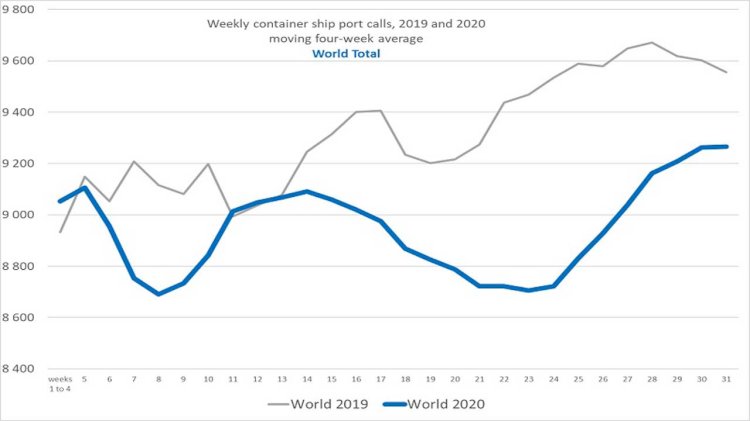
Maritime shipping saw a dramatic slowdown earlier this year as government measures used to curb the COVID-19 pandemic restricted economic activities and travel. By mid-June, the average number of container vessels arriving weekly at ports worldwide had sunk to 8,722, an 8.5% year-on-year drop.

But new data show that, globally, the average weekly calls have started to recover, rising to 9,265 by early August, just 3% below the levels of one year earlier.

Shamika N. Sirimanne, director of UNCTAD’s technology and logistics division, says:

“Most of the manufactured goods that we produce and consume are shipped in containers. The latest containership port call patterns therefore offer a ray of hope for economic recovery from the pandemic.”

A new UNCTAD article explores how data on the movement of vessels – which carry over 80% of the goods traded globally – can help policymakers navigate the troubled waters of a crisis while they wait for official statistics on trade and gross domestic product.

Figure: Weekly container ship port calls, world and selected regions

The UNCTAD article shows that, globally, container ship arrivals started to fall below 2019 levels around mid-March 2020 and then to recover gradually around the third week of June.

The start of the decline coincided with the World Health Organization’s decision on 11 March to classify COVID-19 as a pandemic, while the gradual recovery reflects the timeline when some countries began easing out of lockdown.

The UNCTAD article says that although most regions have seen some recovery in the third quarter of 2020, both in absolute numbers and compared to 2019 levels, the global figures hide important regional differences.

For example, while weekly container ship port calls in China and Hong Kong had climbed to 4.1% higher than the 2019 numbers by early August, calls in North America and Europe were still 16.3% and 13.2% below the levels registered one year earlier.

The diverging and volatile port call patterns across regions since June 2020 also underscore the fragility of the apparent recovery and the presence of factors that extend beyond the pandemic and lockdown restrictions.

Not all weekly changes in port calls are the result of the pandemic, UNCTAD says:

“Trade policy changes resulting in shifting trade patterns and regulatory measures that affect shipping and ports can also affect port calls.”

The article adds that the ship deployment strategies used by carriers as well as decisions by shipping alliances can influence port call choices as well.

Equinor partners with BP in US offshore wind to capture value and create platform for growth

0

Equinor has entered into an agreement with BP to sell 50% non-operated interests in the Empire Wind and Beacon Wind assets on the US east coast for a total consideration before adjustments of USD 1.1 billion. Through this transaction, the two companies are also establishing a strategic partnership for further growth within offshore wind in the US.

Currently Equinor holds a 100% interest in both the Empire Wind lease, located off the coast of New York State, and the Beacon Wind lease, located off the Massachusetts coast. The transaction is in line with Equinor’s renewable strategy to access attractive acreage early and at scale, mature projects, and capture value by de-risking high equity ownership positions.

Equinor will remain the operator of the projects in these leases through the development, construction and operations phases and it is anticipated that the wind farms will be equally staffed after a period of time.

Chief executive officer in Equinor, Eldar Sætre, says:

“We look forward to working with BP who share our strong ambition to grow in renewable energy. Our partnership underlines both companies’ strong commitment to accelerate the energy transition and combining our strengths will enable us to grow a profitable offshore wind business together in the US.”

Executive vice president for New Energy Solutions in Equinor, Pål Eitrheim, says:

“This transaction with BP demonstrates Equinor’s ability to create value from developing offshore wind projects. Over the past decade Equinor has built world-class technical expertise in offshore wind. This has enabled us to access and high-grade wind acreage, resulting in a material, high-quality project pipeline. Optimising equity and bringing in new partners allow us to realise value, increasing our financial flexibility to fund further growth.” 

Through this partnership Equinor and BP will consider future joint opportunities in the US for both bottom-fixed and floating offshore wind and will leverage relevant expertise to jointly grow scale. As the partnership develops, both companies hope to expand this cooperation further in a market that is forecast to grow to between 600 and 800 gigawatts (GW) globally by 2050.

Equinor has already set ambitions to grow its renewables capacity to 4 to 6 GW by 2026 and 12 to 16 GW by 2035, and has recently announced its expectation to accelerate these ambitions. Equinor is working to build scale in core areas – the North Sea, the United States and the Baltic Sea – while securing growth options in other selected markets for both bottom-fixed and floating offshore wind.

BP’s acquisition of the interests in Empire Wind and Beacon Wind has an effective date of 1 January 2020 and is expected to close in early 2021, subject to customary conditions including purchase price adjustments and authority approval. 

Research on technologies to lower the cost of floating offshore wind power generation

0

Penta-Ocean Construction Co., Ltd., in collaboration with TEPCO holdings and the University of Tokyo, has applied to and been successfully selected by the New Energy and Industrial Technology Development Organization (NEDO) to participate in its “Research and Development on Technologies to Lower the Cost of Floating Offshore Wind Power Generation”.

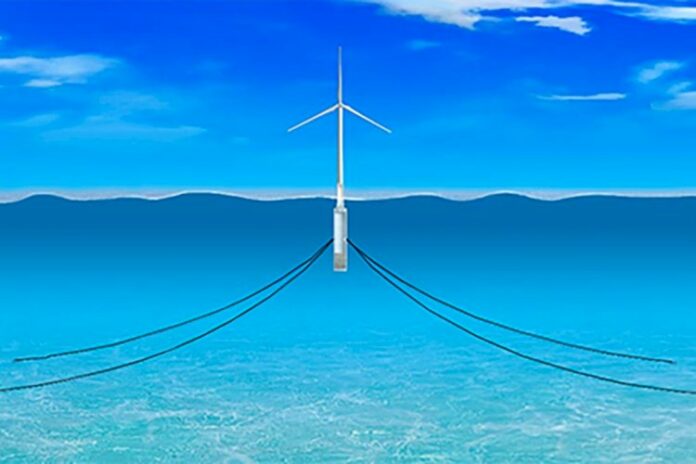
In this research, the company will conduct a study on a rational and efficient construction method for spar-type floating structures  capable of mounting a 10 MW class wind turbine under the severe metocean conditions in Japan, with the aim of reducing the construction cost of offshore wind turbines.

So far, targeting the bottom-fixed offshore wind power generation, Penta-Ocean has started operation of Japan’s first offshore installation vessel, as called SEP vessel, with an 800t lifting capacity crane, and are currently building a larger vessel equipped with a 1,600t lifting capacity crane. In this April, the company established the Offshore Wind Farm Business Divisions Group to strengthen our initiatives towards the takeoff of offshore wind farm projects in Japan.

Konecranes wins order for fleet of Konecranes Noell Sprinter Carriers

0

The HDC Hyundai Development Company of Korea has ordered a fleet of 28 Konecranes Noell Sprinter Carriers for Busan New Port 2-4 in Busan, Korea. The Sprinter Carriers will be delivered as part of the port’s expansion project 2-4. The order was booked in August 2020.

Peter Kania, Head of Sales for Straddle Carriers, Konecranes Port Cranes, said:

“The HDC Hyundai Development Company is a renowned developer of container terminals and we are proud to have received this repeat order as Busan New Port continues to expand. We delivered Sprinter Carriers as part of Busan New Port’s earlier growth phase. This further order is a vote of confidence and trust in the performance and reliability of these machines as horizontal transport vehicles from the quayside, working closely with the automated stacking cranes in the container yard.”

When the Sprinter Carriers on order are delivered and working, Busan New Port will have a Konecranes Noell Sprinter Carrier fleet of 64 machines.

The Sprinter Carriers on order are man-driven, diesel-electric machines stacking containers 1-over-1 as part of swift container transfer between the quayside and container yard. The order will be delivered in three batches starting at the end of 2021 and ending by July 2022. All of the machines will be equipped with Stage IV diesel engines, and they will all have 8 wheels by special customer request to reduce ground pressure. The standard Konecranes Noell Sprinter Carrier has 6 wheels.

All of these Konecranes Noell Sprinter Carriers will have built-in readiness for automation. This puts Busan New Port on Kone­cranes’ path to port automation, where container terminals improve productivity and safety in manageable steps. The path to port automation applies to all container handling equipment brands. Full automation can be the final goal but it doesn’t have to be. Flexibility is the key.

Sanmar brings Svitzer and Port of Sohar to full strength

0

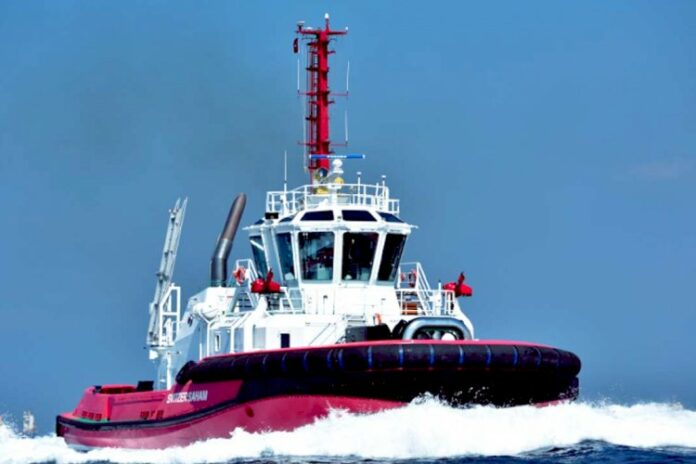
The final piece of the tug fleet regeneration programme for Sohar Port has reached its finale with the technical delivery of the third powerful 80t bollard pull RAstar 2900SX variant, Sanmar’s Bigacay class, to Svitzer.

She will be named Svitzer Saham and will join her two sisters (Svitzer Sohar and Svitzer Shinas) alongside two other earlier deliveries in 2020 of the 50t bollard pull variant of the RAmparts 2200 (named Svitzer Liwa and Svitzer Barka), Sanmar’s Sirapinar class, to the same client.

The arrival of this tug to the Port of Sohar will conclude the current fleet development aims of the operator, Svitzer and Port of Sohar; agreed as part of the 15 year renewal of the formers marine services contract, awarded in early 2019. These five tugs will together deliver a mighty 340 tonnes of total bollard pull across the new fleet; providing the port with the confidence and assurance to handle the ever increasing safe towing demands of modern shipping well into the future. Mobilisation to the Port of Sohar from Turkey will commence imminently under the direction of a Sanmar delivery crew.

The Bigacay class deliver a whole new level of tug power and performance to the port. Gary Dockerty, Sales Director Middle East and Africa stressed: “The Bigaçay series was developed with our design partners Robert Allan Ltd. (RAL) for Sanmar exclusively and is a variant of the RAstar range described as RAstar 2900SX; compact tugs aimed at ensuring efficient construction while still meeting the customisation requirements of discerning clients”.

The design has a sponsoned hull form, which is proven to provide significantly enhanced escort towing and seakeeping performance.

Complimented by the Sirapinar series and best summed up earlier this year by Jacob Bac, Deputy Harbour Master at the Port of Sohar when commenting:

“The Svitzer Liwa and Svitzer Barka bring a whole new level of towage to Sohar Port. With their sharp handling and manoeuvrability along with their instant power and good looks, they certainly are a force to be reckoned with. We look forward to welcoming the Bigacay class tugs to Sohar in the near future”.

Svitzer has previously placed orders with Sanmar Shipyards in recent years for 25 tugs in total, 23 ASDs and 2 ATDs, employed in the fulfilment of various towage contracts.