-9.1 C
New York
Home Blog Page 749

CSA and SRC enter into joint development of advanced ASV platform

0

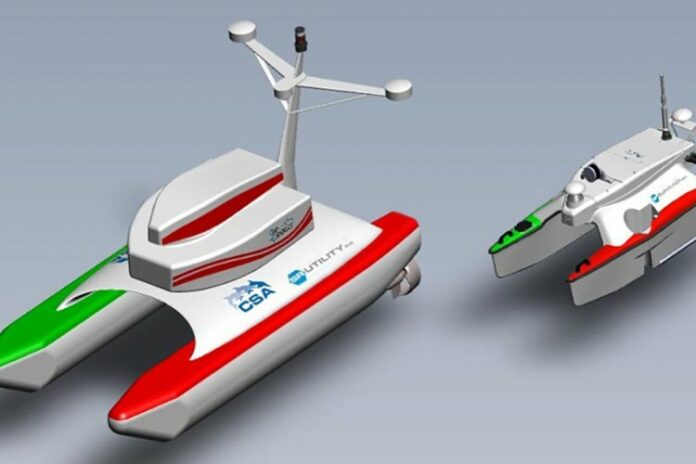
Based on the highly successful, fully integrated SR-Surveyor M1.8 ASV, introduced by SRC in 2019, the new Utility Class ASV will deploy the same fully integrated control, survey, and autonomy systems, providing the market with a fully compatible line of ASVs that are capable of addressing a wide range of tasks – from 1.8 m inshore/nearshore vessels to over 12 m ocean going vessels.

The SR-Utility 3.0 and SR-Surveyor M1.8 will share common spare parts, software, and operator training by sharing a common uni-cab architecture. The unique SRC uni-cab design standardizes the core of the ASV product line, providing customers a standardized fleet that can be easily configured to address a wide variety of tasks quickly and cost effectively while still retaining the fully integrated Surveyor software and controls.

Kevin Peterson, CEO of CSA, stated:

“Finally, a highly reliable and flexible standardized product line of ASVs for the professional market. The SR-Utility 3.0 adds to our existing fleet of SR-Surveyor M1.8s, while allowing us to maintain the same crew training, spare parts, and support depots already established. For a commercial enterprise, standardization makes a difference in running a profitable operation.”

Lou Dennis, VP of SRC also noted:

“The development of this upgraded line of Utility Class ASVs will give us an extremely flexible standardized product line, with an extensive selection of thrusters, power systems, hull sizes, payloads, and sensor configurations, of which many of the upgrades can be handled by our customers over their years of ownership as new opportunities are identified. Having the direct input of a highly experienced customer such as CSA will ensure that this next generation of Utility Class ASVs will be capable of a wide range of precision tasks in the environmental, geophysical, and ocean sound survey markets already supported by CSA.”

Since the new Utility Class ASV is based on the application of existing autonomy and standardized technology recently introduced to the market by SRC, units will be available for shipment in 2020.

BT and Belfast Harbour to build the UK and Ireland’s first 5G Private Network for ports

0

BT and Belfast Harbour have announced a landmark partnership to build a state-of-the-art 5G ecosystem within the Port.  The partnership will deliver a series of 5G-led innovations to accelerate Belfast Harbour’s digital transformation and help deliver its smart port strategic ambitions.

In a UK and Ireland-first, BT will build and manage a live 5G Private Network designed specifically to achieve the highest levels of ultrafast mobile connectivity, coverage, reliability and security across the Port’s main operational areas. The highly secure and scalable network will enhance safety, security and sustainability across the Harbour Estate and is expected to go live across large parts of the 2,000-acre site early next year.

Belfast Harbour is an important gateway to trade and a significant contributor to the regional economy. Every year, more than 1.75 million people and over half a million freight vehicles arrive and depart through the Port, while 24 million tonnes of goods are managed and carried by ferries, container ships and general cargo vessels.

The deployment will allow Belfast Harbour to drive operational efficiencies and accelerate its digital transformation through optimising processes across transport, logistics, supply chain and shipping, as well as boosting productivity through the smooth-running of the Port’s operations. The partnership will also explore how 5G and other emerging technologies such as AI, IoT and Connected Autonomous Vehicles can be used together to enhance public safety, physical security and address climate change across the Port and other parts of Belfast City.

For example, the partnership will explore how 5G-led capabilities can help Belfast Harbour to ensure a safe and secure environment for businesses, employees and the wider public. The two organisations will work on improved productivity and safety measures by enabling 5G remote controlled inspection technology to reduce the need for staff to work at height. Meanwhile, the roll out of 5G enabled sensors to monitor air quality and other environmental factors will support Belfast Harbour and the wider city in achieving its green recovery and sustainability ambitions.

The strategic partnership follows a successful UK-first trial of 5G technology by BT and Belfast Harbour last year and supports Belfast Harbour’s ambitions to become the world’s best regional smart port.

Gerry McQuade, CEO of BT’s Enterprise unit, said: 

“Our UK-first 5G trial with Belfast Harbour last year was a powerful illustration of how 5G-led technology can transform port operations, propel the success of local businesses and drive economic growth. Today’s deal with Belfast Harbour will make these benefits a reality, with the creation of a sophisticated digital ecosystem comprising of 5G, AI, IoT and Connected Vehicles. This will act as a springboard for Belfast Harbour to achieve its ambition to be the world’s best regional smart port and an innovation hub for the region.

“Ports are fundamental to the UK economy, and Belfast Harbour is responsible for roughly two thirds of Northern Ireland’s trade. With the rising demands on transport and logistics, and the growing need for operations to be safe, secure and sustainable, we’re excited to work with Belfast Harbour as its technology partner, building 5G-led innovations to unlock the productivity benefits for the port and contribute to the region’s green recovery ambitions.”

Joe O’Neill, Chief Executive of Belfast Harbour added:

“One of Belfast Harbour’s key strategic ambitions is to become a smart port that engages creatively and effectively with customers, visitors and employees. Following a successful test programme last year, we are pleased to have engaged BT to bring 5G technology into Belfast Harbour and delighted that this private network is a first for the UK and Ireland.

“The smooth and efficient running of our Port logistics network relies on the accurate tracking and integration of data gathered from multiple sources.  We believe the increased capabilities of 5G technology can have a beneficial effect on our operations, helping us for example to capture, process and interpret data in real time and giving insights that will speed decision making, better manage vehicle traffic through our Harbour Estate and improve productivity across our operations and services.”

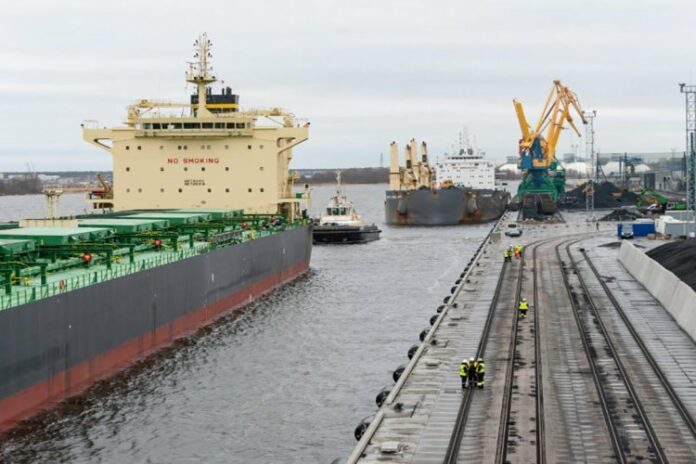
Port of Riga: new tanks for processing of polluted water have been put into operation

0

Ship-generated waste and polluted water is being managed in the port by the SIA “Eko osta” according to the mandate of the Freeport of Riga Authority. By strengthening the polluted water treatment capacity, the SIA “Eko osta” has built and put into operation a new pumping station and two more polluted water storage tanks, increasing the polluted water tank park by one and a half times.

Due to these investments the SIA “Eko osta” is one of the largest companies in the region for the polluted water reception and treatment, as well as further processing of polluted products.

Nowadays in Europe, and especially in the Baltic Sea region, increasingly stringent environment protection standards are being introduced every year, both in maritime transport area and in port operations. 

Mr.Andrejs Jaunkalns, the SIA “Eko osta” CEO, emphasized:

“Our strategy is to continuously improve the quality of services provided in the port, as well as to modernize technologies and equipment so that all services in the port are provided in compliance with the EU regulations and client needs. We follow all the latest trends, both in the field of environment protection and waste recycling. By introducing more and more cost-efficient waste recycling methods, we are able to provide cost-competitive services to the port clients. By sustainable investment in process improvement and production development we confirm our ability to perform all tasks related to waste management in the port.”

The SIA “Eko osta” specializes in the collection, storage, recycling and utilization of all types of ship-generated waste – municipal waste, municipal wastewater, as well as polluted water generated by vessels due to their operation. Most of the waste is recycled in-house. Due to its extensive technical support, modern technologies, waste storage and processing capacities the SIA “Eko osta” also plays an important role in the elimination of pollution in the port water area as well as collected polluted products, when necessary.

Establishment of polluted water storage and processing facilities for “Eco osta” has cost 980 thousand EUR. After the commissioning of the new tanks, “Eko osta” can receive polluted waters in tanks with a total volume of up to 17.5 thousand cubic meters. The company has also installed an electrical transformer to improve the company’s electrical safety and ensure business continuity in the event of an emergency, thus increasing the overall security level within the port.

NOAA and Google announce new data partnership

0

NOAA’s Satellite and Information Service (NESDIS) has signed an agreement with Google to explore the benefits of Artificial Intelligence (AI) and Machine Learning (ML) for enhancing NOAA’s use of satellite and environmental data.

Under this three-year Other Transaction Authority (OTA) agreement, NESDIS and Google will pilot specific AI- and ML-related projects to amplify NOAA’s environmental monitoring, weather forecasting, climate research, and technical innovation. 

Neil Jacobs, Ph.D., acting NOAA administrator, said:

“Strengthening NOAA’s data processing through the use of big data, artificial intelligence, machine learning, and other advanced analytical approaches is critical for maintaining and enhancing the performance of our systems in support of public safety and the economy. I am excited to utilize new authorities granted to NOAA to pursue cutting-edge technologies that will enhance our mission and better protect lives and property.”

Research will initially focus on developing small-scale AI/ML systems. With the results yielded from those efforts, NOAA and Google Cloudoffsite link will then focus on executing full-scale prototypes that NOAA could ultimately operationalize across its organization. If successful, this has the potential to be a significant leap in NOAA’s ability to leverage the enormous volume and diversity of environmental data in order to enhance prediction, including for extreme weather events such as hurricanes and tornadoes.  

Mike Daniels, vice president, Global Public Sector, Google Cloud, said:

“By bringing together NOAA and Google’s expertise and talent, we can both resource and jointly explore AI/ML methods to achieve a more effective use of satellite and other environmental data. Our goal is to increase scientific impact, and improve the efficiency and effectiveness of environmental and satellite data by leveraging Google Cloud’s infrastructure and AI/ML know-how. All this will help improve weather forecasting, research and unlock innovation.”

Through this agreement, NOAA and Google will work together on a number of projects, offering hands-on AI training opportunities to the NOAA workforce. NOAA’s AI strategy aims to infuse new technologies and approaches to increase efficiency and skills through partnerships, training, and AI-related research and development.

NOAA developed an AI/ML strategy and a data strategy to dramatically accelerate the use of data across the agency and with other key partners, maximize openness and transparency, deliver on mission, and steward resources while protecting quality, integrity, security, privacy, and confidentiality.

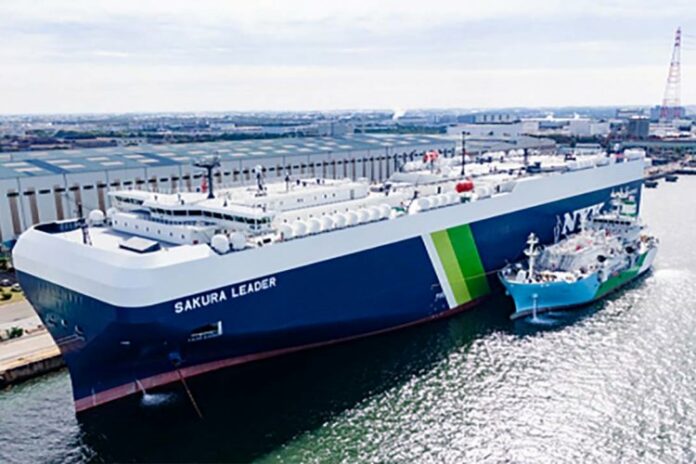
LNG-fueled PCTC “Sakura Leader” accredited as the world’s first digital smart ship

0

On October 28, NYK-operated Sakura Leader, Japan’s first LNG-fueled pure car and truck carrier (PCTC), was accredited by Nippon Kaiji Kyokai as the world’s first Digital Smart Ship (DSS), a ship class code confirming that the vessel is equipped with advanced digital technology.

NYK’s medium-term management plan “Staying Ahead 2022 with Digitalization and Green,” encourages the development of ship operation data-related systems such as SIMS (1) and LiVE for Shipmanager (2), in addition to participation in the i-Shipping project (3) and the assurance of optimal safe, economical operations. This DSS acquisition applies to the latter.

Nippon Kaiji Kyokai’s DSS notation was developed with the aim of supporting environmental conservation, safety improvement, and sustainable development at sea by promoting the expansion and development of new technologies. This particular accreditation was for DSS (Energy Efficiency), which applies to the analysis of energy consumption efficiency; DSS (Machinery Monitoring), which applies to engine monitoring, data processing on board, and data transmission to land; and DSS (Connected Ship).

The accreditation confirms that the vessel is making advanced efforts through the use of innovative technology. The acquisition of these three notations is more than just a concept-design recognition; in fact, Sakura Leader is the world’s first accredited ship to engage in actual operations.

With the support of Japan’s Ministry of the Environment and the Ministry of Land, Infrastructure, Transport and Tourism’s “Model Project for CO2 Emission Reduction Measures from Ships by Utilizing Alternative Fuels,” this vessel will make maximum use of LNG fuel and demonstrate carbon dioxide (CO2) emission reduction in actual operations. Functions related to this DSS notation will also be utilized in measurement of emission reduction.

The acquisition of this notation aims to further improve environmental protection and safety by making use of NYK’s technical know-how and utilizing it for future technological development. 

(1) SIMS – Ship Management Information System
A system developed by the Group for timely sharing of detailed ship data such as operation status, fuel efficiency, and plant status between ships and shore

(2) LiVE for Shipmanager
An application that gathers various operation data collected by SIMS and enables shipowners and ship-management companies to use it for optimal operation and safe operation with low fuel consumption

(3) i-Shipping
A project launched mainly by Japan’s Ministry of Land, Infrastructure, Transport and Tourism (MLIT) in response to rising expectations for the advanced safety of vessels that utilize IoT in the shipping industry. NYK and MTI Co. Ltd. are participating in projects such as “engine plant accident prevention” and “collision prevention and autonomous ship maneuvering.”

Innovez One signs agreement with HHH Marine in Singapore

0

Innovez One, one of the world’s leading providers of port management information software for the world’s busiest ports and towage operators, has signed a multi-year contract with HHH Marine, one of Singapore’s leading launch and supply boat operators to digitise its fleet operations. 
 
Innovez One will enable HHH Marine to streamline its entire ordering, vessel and job planning, update, and billing operations with real-time execution underpinned by Innovez One marineM’s AI engine, built specifically for the maritime sector. 

marineM will provide unprecedented mobility, enabling HHH Marine to dispatch logistics jobs wirelessly to mobile devices. HHH Marine will be able to monitor the movements of its fleet in real-time as well as the progress of every single job simultaneously by using GPS and AIS tracking. 

By utilising a digital solution, HHH Marine will significantly increase the efficiency and sophistication of its organisation and become ‘paperless’ within its operations. On completion of launch jobs, service documents will be generated which can be signed digitally, then sent wirelessly for billing processing with key billable data sent directly into the marineM billing system for the auto-generation of bills.

The marineM solution will be rolled out in phases starting with HHH Marine’s small boat fleet, to further extend the use of marineM to include the operations of its supply boats and off port limits operations. Full implementation is planned to be completed by Q1 of 2021.

David Yeo, group CEO and founder of Innovez One said:

“We’re delighted that HHH Marine has decided to digitise its launch operations and partner with Innovez One. Our marineM solution will revolutionise HHH Marine’s management of launch services by turning complex, manual tasks into a streamlined, efficient process underpinned by cutting-edge digital.”

Currently, many operators in the marine logistics sector rely on manual, paper-based processes or Excel spreadsheets to arrange and execute jobs. Digitising these processes can deliver substantial cost savings every year for fleets, as well as giving them close control over their operations and providing crews with the right support that they need.

David Yeo continued:

“Launch and supply boat operators, such as HHH Marine, are on the front line in digitising the port’s sea transport and logistic operations. Operators can improve the efficiency and sustainability of their operations, as well as increase their profitability, commercial success, and competitiveness in the eyes of their customers with the right application of digital technology. For companies like HHH Marine, investment in digital new technology is an essential step to benefit from a port environment that is rapidly adopting the latest digital technology as the port gears itself towards JIT operations. Strategically when a maritime company improves its productivity and provides greater value to its customers, it ultimately benefits the competitiveness of the port.”

Annie Tan, director of HHH Marine & Logistics Pte Ltd said:

“Implementing Innovez One’s marineM solution is a critical development for us in improving our operations and services for customers, and an important step in realising the benefits that digital technology can deliver. To meet the increasing demands of our customers, we looked for a solution that will boost the efficiency, competitiveness, and commercial success of our operations, which Innovez One provides with proven, tangible results.

“After a careful review, Innovez One’s innovative use of AI planning tools will enable our growing fleet to become increasingly efficient, reducing costs, and reducing unnecessary fuel consumption.”

Costa’s Favolosa and Toscana to sail on South America cruises in 2021-22

0

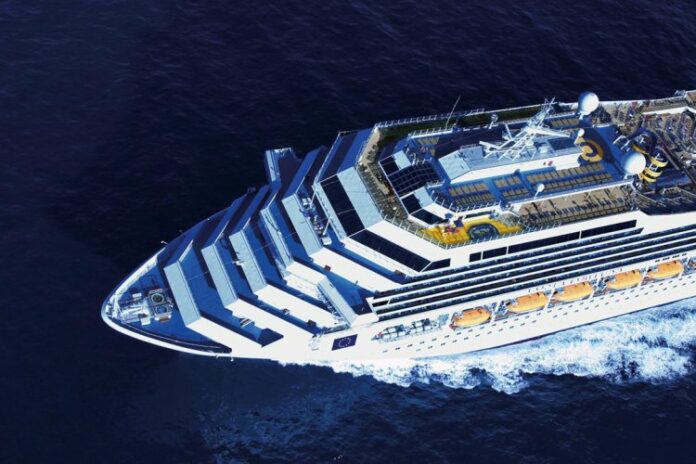
Costa Cruises, the leading cruise line in Europe and a part of Carnival Corporation & plc, presented its programs for the 2021-2022 season in South America during an online conference led by Dario Rustico, the brand’s General Manager for Central and South America.

For its restart in South America, the Italian cruise line will introduce two developments: its new flagship Costa Toscana will make her debut in Brazil, and Costa Favolosa will extend her season to almost five months.

Dario Rustico, General Manager for Central and South America for Costa, said:

“The debut in Brazil of our most innovative ship strengthens the special 72-year long bond between Costa Cruises and South America. Costa Toscana promises to be a highly popular attraction in 2022.”

Costa Toscana is currently under construction at the Meyer shipyard in Turku, Finland. With gross tonnage of over 180,000 tons and more than 2,600 staterooms, including a new cabin category with balcony and terrace, she is the sistership to the recently introduced Costa Smeralda.  

The inaugural cruise of Costa Toscana will include New Year’s Eve, as it will depart from Santos on 26 December 2021 for a seven-night holiday to Salvador and Ilhéus, returning to Santos on 2 January 2022.

Singapore’s first floating energy storage system

0

The Energy Market Authority (EMA) and Keppel Offshore & Marine (Keppel O&M) have jointly awarded a research grant to pilot Singapore’s first floating Energy Storage System (ESS). 

This project was awarded to a consortium led by Envision Digital International Pte Ltd (Envision Digital). This is part of the $10 million partnership between EMA and Keppel O&M to develop innovative energy solutions in the marine sector announced earlier in April this year.

Keppel O&M will be working with the consortium to deploy a 7.5 MW/7.5MWh lithium-ion battery ESS on Keppel O&M’s Floating Living Lab (FLL). This will be Singapore’s largest ESS deployment to date, with sufficient capacity to power more than 600 4-room HDB flats a day. As Singapore’s hot and humid environment can affect the performance of the ESS, the testbed will use an innovative liquid-cooling solution that utilises seawater to cool the battery cells and enhance the lifecycle of the ESS.

The ESS will also explore the first-of-its-kind battery stacking solution in Singapore. This could potentially reduce the footprint required for deployment by up to 40%. Findings from the project are expected to be applied to ESS on mainland Singapore. This would help support power grid stability and resilience, and facilitate the adoption of more renewable energy such as solar.

EMA’s Chief Executive, Mr Ngiam Shih Chun, said:

“Energy storage and smart energy management systems support the deployment of more renewable energy in Singapore. This project will pave the way to overcome our land constraints, and set the blueprint for similar deployments in the future. We hope to continue co-creating more of such energy solutions with the industry as we work towards a more sustainable energy future for Singapore.”

The ESS will also be integrated with a Smart Energy Management System (SEMS) on the FLL to enhance its operational efficiency. Supported by artificial intelligence and machine learning algorithms, the SEMS will optimise the efficiency of operations and reduce overall energy usage.

Mr Chris Ong, Chief Executive Officer of Keppel O&M, said:

“We are proud to work with the consortium led by Envision Digital to pilot the first floating ESS on our FLL. Besides supporting Singapore’s energy needs, the developed solution will have multiple applications such as supporting areas with intermittent power supply, and rapid deployment to provide emergency power for places or remote islands affected by power disruptions. It can also be deployed on hybrid or fully electric vessels to significantly reduce carbon emissions.”

With the aim of encouraging greater adoption of cleaner energy, the $10 million partnership forged between EMA and Keppel O&M highlights the co-creation efforts from the government and industry to spur innovative energy solutions and build capabilities in the wider industry ecosystem.


Ocean Technologies Group collaboration promotes benefits of using PMS

0

Tero Marine and Maritime Training Services, both part of global learning and operational technology innovator, Ocean Technologies Group, have collaborated on a project to promote the benefits to ship operators of using a software developed Planned Maintenance System (PMS).

The e-learning module, freely available on all Ocean platforms, outlines the advantages of using a PMS software suite to digitally manage all aspects of a vessel’s maintenance procedures and documentation.

Using screenshots from the maintenance module of Tero Marine’s TM Master as a working example, the module illustrates how using a software based PMS as compared with its manual equivalent, is much more efficient and less time consuming, leading to fewer mistakes with lower risks and costs.

Raal Harris, Creative Director, Ocean Technologies Group, said:

“This joint initiative is an excellent example of how our different group companies can combine their contrasting knowledge, skills and expertise.
With so many customers considering implementing PMS tools, we thought it would be useful to create an informative resource. It shows both those onboard and in the office the benefit of using an interconnected software system that details all the aspects required to perform a maintenance job successfully and safely, from component lists and inventory control to detailed job descriptions and drawings.”

Damen completes the extensive rebuild of “OceanXplorer”

0

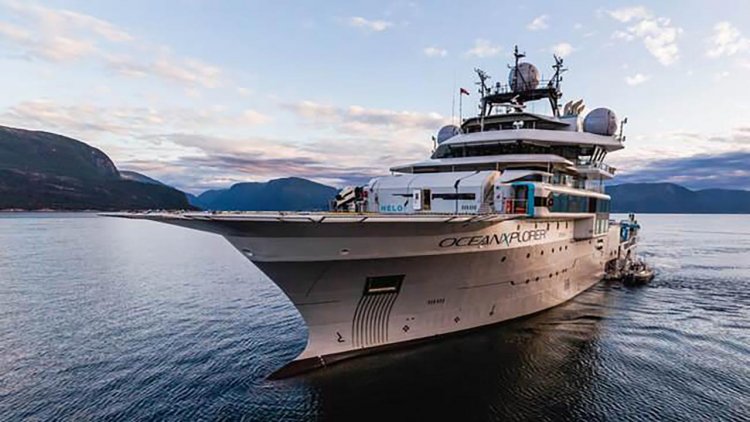
The vessel will contribute significantly to OceanX’s mission – to explore the ocean and bring it back to the world. In this way, the initiative aims at the building of a global community engaged with understanding, enjoying and protecting our oceans.

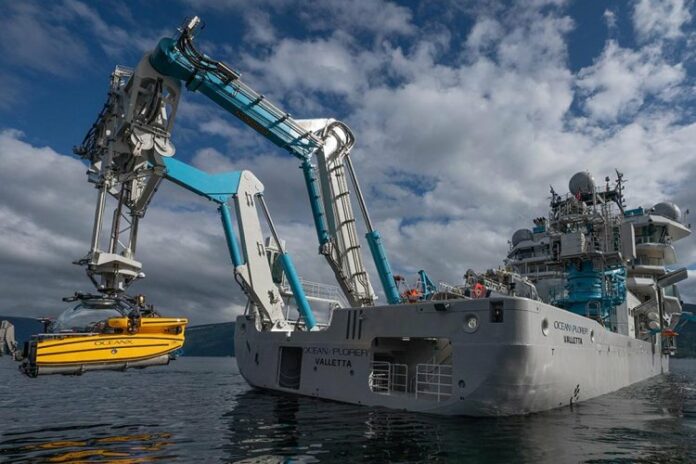
Upon completion of the project, OceanXplorer has become the most advanced exploration, research and media vessel in the world. As OceanX’s new flagship, she builds on the legacy of the organisation’s first vessel, Alucia and takes things to the next level. Equipped with a series of submersibles, sonar arrays, manned submarines, an ROV and AUV, OceanXplorer is able to explore and map the depths of the oceans.

The vessel is able to collect live samples and bring them aboard where they can be analysed by scientists in state-of-the-art laboratories – with the capabilities, amongst other things, to carry out DNA sequencing.

OceanXplorer’s outstanding research facilities are paired with Hollywood quality filming and media studios – developed in partnership with renowned filmmaker James Cameron. With this, the vessel’s findings can be live-streamed to audiences worldwide at the exact moment of discovery.

Damen served as main contractor in this complex and challenging project, fulfilling an extensive scope of work that brought together various disciplines from across Damen Shipyards Group – including offshore and survey newbuild, repair & conversion and yachting specialisms.

The project required Damen to rebuild the vessel – a former offshore survey ship – in essence from the main deck upwards by stripping the existing accommodation and adding a complete new and much larger accommodation to house the new laboratories, workshops and submarine hangar. Also a fully integrated heli hangar was added to the superstructure as well as extensions on both sides of the accommodation decks to house new cabins over the (increased) full beam of the vessel. Following the structural part, the work included overseeing the complete integration of all ship’s systems including specialist hydrographic and laboratory systems and an innovative IT infrastructure to facilitate the combination of state-of-the-art research facilities with the on board Hollywood standard cinematography and media studios.

Damen worked closely with OceanX’s specialist teams, developing the scope of the project in order to fulfil all requirements. This included responsibility for the interior and exterior of the vessel. The ship is unique in its combining of up-to-the-minute research facilities – courtesy of renowned naval architects Skipsteknisk – and top-of-the-line interior accommodations, designed by Christina Fallah. The vessel’s additional interiors as well as its exterior were styled by Steve Gresham.

The project also required Damen to undertake a docking scope, including removal and refurbishment of azipull and bow thrusters, blasting and coating of tanks and complete overhaul and upgrading of crew accommodation.

Tjarco Ekkelkamp, project director for the OceanXplorer project at Damen said:

“This has been a challenging project, the result of which we are very proud of. On the one hand, this shows the extensive capabilities of Damen as a group – the powerful synergies within our group, covering both newbuild and repair & conversion capabilities and spanning commercial vessels and superyachts. On the other, this is a vessel that represents a force for good in the world – one that will enhance human involvement, understanding and ultimately conservation of our oceans. With our strong commitment to maritime sustainability, we are delighted to have played our part in the development of OceanXplorer.”