-7.3 C
New York
Home Blog Page 715

VIDEO: Jumbo Offshore installs Karish FPSO mooring at record depth

0

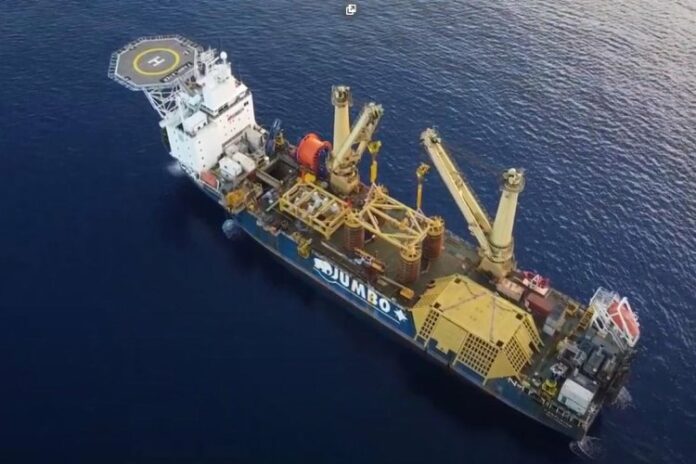
On behalf of TechnipFMC, Jumbo Offshore successfully completed the first phase of work on Energean’s Karish gas field offshore Israel in October. 

Jumbo installed the components at a depth of 1,760 metres, breaking its own deep-water installation record. Jumbo’s work is scheduled to recommence in 2021, with the hook-up and installation of the Energean Power FPSO, the first FPSO ever to operate in the East Mediterranean.

Installing the mooring spread for the Energean Power FPSO, Jumbo installed 13 suction piles of 176 tonnes each and one weighing 235 tone. Both the deck layout and the two 900-tonne cranes of Jumbo’s offshore construction vessel Fairplayer were reconfigured to enable each part of the installation. This involved the Fairplayer’s deep-water winches being modified to allow installation work down to 3,000 metres deep.

Joost van der Wiel, Lead Project Engineer at Jumbo, said that  installation of the large suction pile was especially challenging and required a specially engineered method in which the pile was first taken down to a depth of 200 metres, where it was hung off a Dyneema pennant. He said:

“We then recovered the hook, reconfigured the crane, picked up the pile from the pennant and began the second lift down to 1,760 metres deep. That’s a record for us and I am very proud of the team that made this happen!”

The installation of the tie-in manifold and the 24-inch gas sales SSIV closing spool illustrate Jumbo’s position as a full service T&I contractor, continues Jumbo Project Manager Wieteke Looijschelder:

“The gas sales spool is a flexible piece of equipment, so lifting and lowering it called for a dual lift with a complex rigging arrangement. This technical efficiency is a good example of how our DP2 vessels can handle both the transport and installation needs of a project with just one vessel.”

Offshore Construction Manager Barry ten Brinke adds:

“The Karish contract was a multi-disciplinary operation and was a unique challenge for Jumbo. And, just as with all project completions, its success was driven by a great team onboard and ashore.”

Viking marks float out of the fitst expedition ship

0

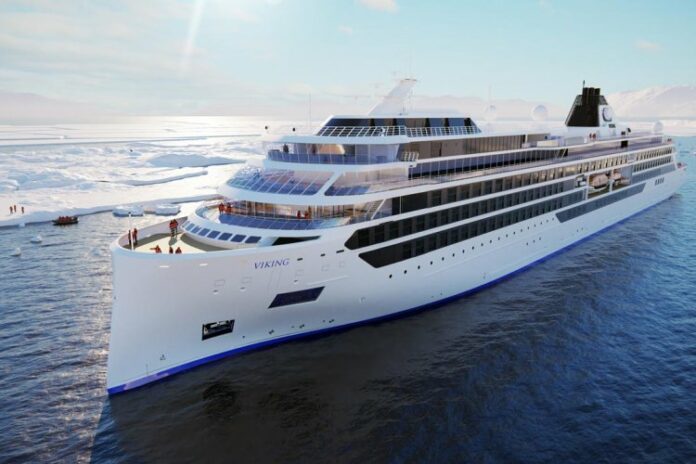
Viking® has announced its first expedition ship – the 378-guest Viking Octantis®– was “floated out,” marking a major construction milestone and the first time that the new ship touches water. 

Scheduled to debut in early 2022, Viking Octantis will spend her maiden season sailing voyages to Antarctica and North America’s Great Lakes. A second, identical expedition ship, Viking Polaris®, is set to debut in summer 2022 and will sail journeys to Antarctica and the Arctic. Viking has also developed a series of short videos about the new expedition voyages, ship design and prestigious scientific partnerships, which can be found on its website here .

Torstein Hagen, Chairman of Viking, said:

“Working with Fincantieri over the last eight years, we have built the world’s most beautiful ocean ships. We are pleased to continue our partnership with Fincantieri’s VARD and celebrate this important milestone in the construction of our first expedition vessel. In creating ‘the thinking person’s expedition,’ we are perfecting polar expedition cruising, and we will usher in a new era of comfortable exploration in the heart of North America. Viking Octantis and her sister ship, Viking Polaris, will allow our guests to explore further – to the ends of the earth as well as closer to home.”

The float out is significant because it denotes a ship moving into its final stage of construction. The float out ceremony of Viking Octantis took place on December 22; she was then moved to a nearby outfitting dock for further construction and interior build-out. After final outfitting, Viking Octantis will be delivered at Fincantieri’s VARD shipyard in Søviknes, Norway.

The new Polar Class 6 Viking Octantis and Viking Polaris will host 378 guests in 189 staterooms. Designed by the same nautical architects and engineers that designed Viking ocean ships, the ships are optimally sized and built for expeditions – small enough to navigate remote polar regions and the St. Lawrence River, while large enough to provide superior handling and stability in the roughest seas. The ships will feature public spaces that are familiar to Viking’s ocean cruise guests but that have been reimagined for expeditions, as well as new public spaces created specifically for expeditions. Straight bows, longer hulls and state-of-the-art fin stabilizers will allow the ships to glide over the waves for the calmest possible journey; ice-strengthened Polar Class 6 hulls will provide the safest way to explore; and U-tank stabilizers will significantly decrease rolling by up to 50 percent when the ships are stationary. Viking’s expedition ships will feature modern Scandinavian design with elegant touches, intimate spaces and attention to detail. 

Carbon dioxide capture solution progressing at the Port of Gothenburg

0

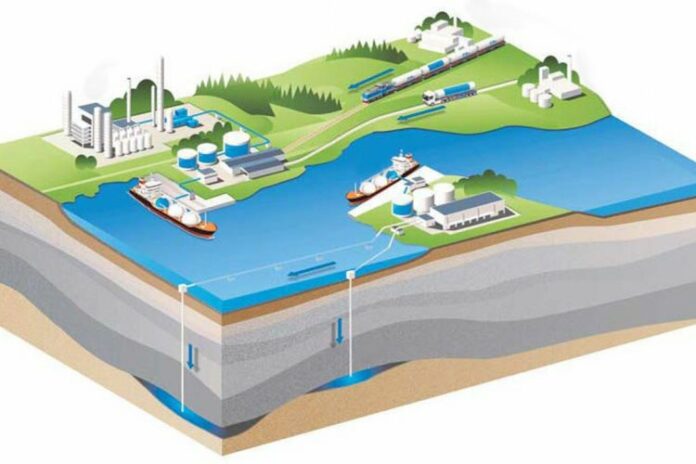
A prestudy commenced in May to determine whether a joint solution could be found for an efficient, sustainable infrastructure for captured carbon dioxide. Every aspect of this undertaking is being examined in detail, both on the drawing board and out in the port.

Hesam Mortazavi, project manager at the COWI consulting group, said:

“Our remit was to investigate the possibility of creating an optimised logistics and intermediate storage chain, the ultimate aim being to transport up to two million tonnes of captured carbon dioxide each year from facility to quayside. To realise this ambition, a highly efficient infrastructure needs to be in place, and we are currently working flat out to produce analyses, scenarios, and estimates.”

A visit was made recently to the Energy Terminal at the Port of Gothenburg to identify a suitable location for intermediate storage and possible liquefaction of carbon dioxide.

Claes Rödén, Engineering Manager at the Gothenburg Port Authority, said:

“We have found a potential site close to the quayside that could work. We have also been around the port to get an overall picture of the situation and to formulate ideas about the configuration of the new pipelines down to the quayside.”

Previous experience has shown that complex infrastructure projects in general tend to be extremely cost-intensive, and funding is frequently a crucial issue. With this in mind, the focus during the prestudy was on the potential to optimise the cost of investment and energy consumption and determining which alternative – an individual or joint investment – would be most suitable. The CinfraCap prestudy will be completed in March 2021 and the results will then be presented.

Isabella Herstad-Norin, process manager for CinfraCap at COWI, said:

“Regardless of the outcome, we have already acknowledged the need to recommend subsidies. As it will be a costly project to implement and maintain over time, it is vital that we have an established investment framework in place for both the facility and the pipelines, and that we take full account of future operating costs. However, there is a commercial upside in the fact that the companies can sell emission rights and by doing so reduce their carbon emissions when they use CCS technology.”

Epic Gas and Lauritzen Kosan to combine fleet and businesses

0

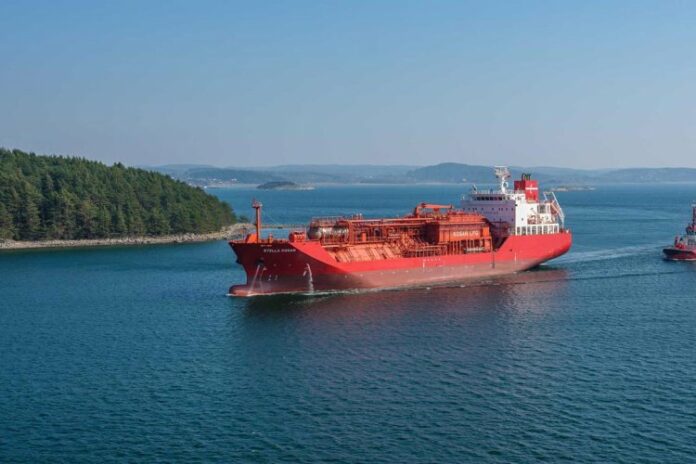
Epic Gas Ltd. and Lauritzen Kosan A/S have entered into a transaction agreement to combine their fleet and business activities to create BW Epic Kosan.

  • Combination creates a world leader in last mile delivery of LPG and other speciality gases and petrochemicals: Lauritzen Kosan will contribute 34 gas carriers to Epic Gas’s fleet of 43 pressurised gas vessels, in addition to certain other assets, in exchange for new shares in Epic Gas equivalent to a 27% stake.
  • BW Epic Kosan will have greater scale and synergies across the organisation – the combined fleet of 77 LPG/ethylene vessels will range in size from 3,500 cbm to 12,000 cbm. 53 of the vessels will be wholly owned, with a Gross Asset Value of USD 900 million. The combined organisation will have significant commercial and technical capability across pressurised, semi-refrigerated, refrigerated gas and petrochemical transportation.
  • BW Epic Kosan will be headquartered in Singapore, with Copenhagen as a regional office alongside offices in London, Manila, and Tokyo. Epic Gas’s current CEO Charles Maltby will be CEO of the combined entity, Lauritzen Kosan’s CEO Thomas Wøidemann will lead the commercial organisation, and Epic Gas CFO Uta Urbaniak-Sage will be CFO. The team will be built on the strengths of both organisations.
  • Reduced cost of finance – As a part of this transaction, BW Epic Kosan has secured committed finance for the Lauritzen Kosan fleet at USD 155 million from SEB, Danske Bank, Nordea, Danish Ship Finance and Crédit Agricole CIB.
  • Strong shareholder base – Post-completion, BW Group will be the largest shareholder in BW Epic Kosan with 58%, followed by J. Lauritzen A/S with 27%, Tailwind, and Epic’s existing minority shareholders. The shares will continue to trade on Euronext Growth Oslo as EPIC.
  • Completion of the transaction is subject to obtaining necessary competition clearances, as well as other customary closing conditions. The transaction is expected to close by the end of Q1 2021.

Andreas Sohmen-Pao, Chairman of Epic Gas, says:

“This transaction combines two well reputed operators into a strong new entity in the sector. We welcome our colleagues from Lauritzen Kosan and look forward to working together to build a great company delivering cleaner energy and feedstock to communities around the world.”

Tommy Thomsen, CEO of the Lauritzen Foundation and Chairman of Lauritzen Kosan, says:

“We are delighted to be partnering with BW Group and other Epic shareholders. This will help to improve operational efficiencies and deliver an enhanced service offering to our customers. With a large and modern fleet spanning LPG and other petrochemical gases, BW Epic Kosan will be well positioned to deliver value for customers, while meeting IMO objectives for decarbonisation.”

Mission to investigate giant iceberg launches

0

A team of scientists, led by British Antarctic Survey (BAS), will set sail on one of the National Oceanography Centre’s research ships bound for the sub-Antarctic island of South Georgia. 

The huge iceberg – which broke away from Antarctica’s Larsen C Ice Shelf in 2017 – is now 3900sq km in area. After satellite images revealed its movement towards South Georgia, the BAS science team put a proposal to NERC to fund an urgent mission south. Recent images captured from the air by the MOD show that the iceberg is breaking up. The team will investigate the impact of freshwater from the melting ice into a region of the ocean that sustains colonies of penguins, seals and whales. These waters are also home to some of the most sustainably managed fisheries in the world. 

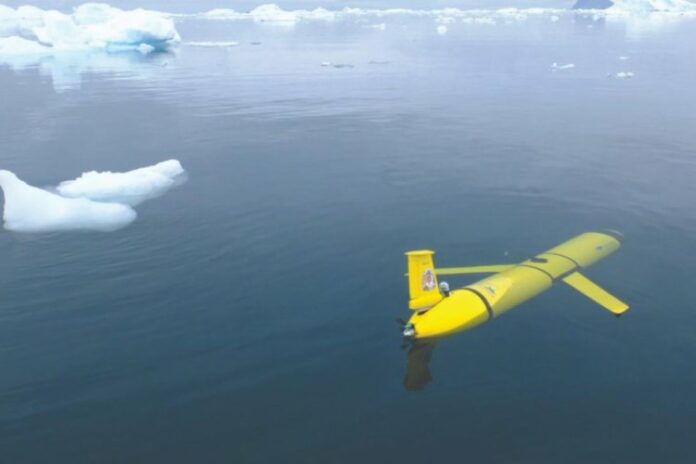
Underwater robotic gliders will be deployed from the NOC research ship RRS James Cook, which departs the Falkland Islands for the iceberg in late January. 

Lord Goldsmith, Minister for Pacific and the Environment, commented:

“We need to understand the effects that huge icebergs can have on wildlife and marine life, so I’m delighted the Blue Belt Programme, which works with British Overseas Territories to protect and sustainably manage their waters, is able to support this critically important research mission.” 

Oceanographer Dr Povl Abrahamsen, from British Antarctic Survey, is leading the mission. He said:

“We have a unique opportunity to visit the iceberg. Normally, it takes years to plan the logistics for marine research cruises, but NERC, working with the Government of South Georgia and the South Sandwich Islands and the UK Government’s Blue Belt Programme, recognised the urgency to act quickly, allowing us to study the iceberg during an upcoming voyage to monitor the ecosystem and climate of the Southern Ocean.  Everyone is pulling out all the stops to make this happen.”

The two 1.5-metre long untethered submersible gliders will spend almost four months collecting measurements of seawater salinity, temperature, and chlorophyll from opposite sides of the iceberg, piloted over satellite link by personnel at NOC and BAS. The team will also measure how much plankton is in the water and compare their findings with long-term oceanographic and wildlife studies around South Georgia and nearby Bird Island.  

Steve Woodward, the NOC’s Glider Technical Lead, who will be managing the National Marine Equipment Pool (NMEP) glider operation, said:

“Autonomous submarine gliders are an excellent, cost-effective, and sustainable means of gathering and recording important marine data. In this case, we will program the NMEP gliders to get as close to the edge of the iceberg as we feel is safe and practicable, and collect the data that will be needed to enable the team to understand the implications of what is taking place with A-68a.”

Waters around South Georgia are recognised as among the most biologically rich places on the planet with more described marine species than the Galapagos, and is one of the world’s largest Marine Protected Areas. The iceberg, if it grounds near the island, poses a risk to colonies of penguins and seals during the breeding season. 

Professor Geraint Tarling, an ecologist at BAS, said:

“The iceberg is going to cause devastation to the sea floor by scouring the seabed communities of sponges, brittle stars, worms and sea-urchins, so decreasing biodiversity. These communities help store large amounts of carbon in their body tissue and surrounding sediment. Destruction by the iceberg will release this stored carbon back into the water and, potentially, the atmosphere, which would be a further negative impact.

“However, whilst we are interested in the effects of A-68a’s new arrival at South Georgia, not all the impacts along its path are negative. For example, when travelling through the open ocean, icebergs shed enormous quantities of mineral dust that will fertilise the ocean plankton around them, and this will benefit them and cascade up the food chain.” 

Andrew Fleming, Head of Remote Sensing at BAS, has been tracking the iceberg’s journey on images from the Copernicus Sentinel-1 and other satellites. He says:

“We are watching the progress of the A-68a iceberg very closely as we haven’t seen a berg of this size in the area for some time.  As it breaks up, thousands of smaller icebergs have the possibility to obstruct shipping lanes in the area, especially as they disperse. The European Space Agency has delivered regular Sentinel-1 images and we will use these to continue tracking in the coming months.

“The images and footage collected by MOD flight missions have helped enormously in confirming some of the features we can see in the images from space. Close up images provide detail on how the berg is starting to break up and allow us to better understand these processes.”

Dr Mark Belchier, Director of Fisheries and Environment at Government of South Georgia and the South Sandwich Islands (SGSSI), said:

“With such events predicted to increase in frequency, understanding their impacts on SGSSI’s ecosystem is essential for informing the Government’s sustainable stewardship of the territory.”

Gunvor invests in Artemis Technologies to revolutionize maritime transport

0

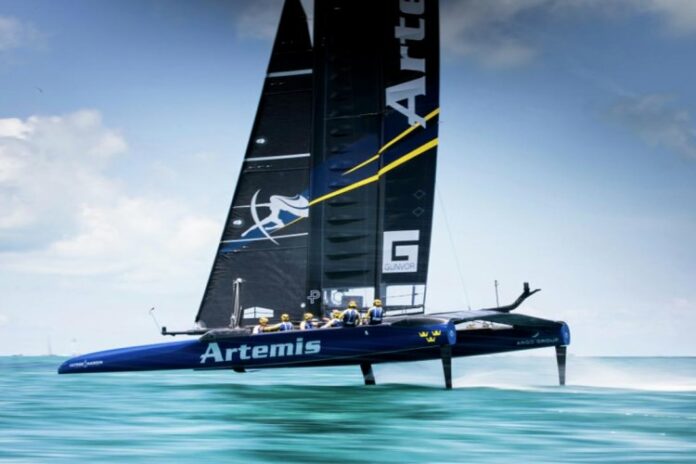
Gunvor Group, one of the world’s largest physical energy commodities traders, has made an investment in Artemis Technologies as a part of the company’s commitment to developing nonhydrocarbon solutions to maritime transportation.

The investment by Gunvor follows the recent award of a £33 million UK Government innovation grant to the Artemis Technologies-led Belfast Maritime Consortium, which aims to develop zero-emission high-speed ferries.

Artemis Technologies, founded in 2017, is an applied technologies spin-off of the Artemis Racing sailing team, which competed in the 34th and 35th editions of the America’s Cup—the most technologically demanding sailing competition in the world. Artemis Technologies is a purely commercial endeavour that draws on the team’s world-class designers, engineers, and boat builders to develop practical applications for its advancements in speed and efficiency.

Torbjörn Törnqvist, Chairman of Gunvor Group, said:

“Artemis Technologies is working on a number of compelling innovations that will help decarbonise the maritime sector at a time when there is growing demand for low-carbon alternatives. Gunvor has committed to reduce the carbon footprint of the commodities we’re trading and our industrial processes, as well as to explore relevant commercial opportunities. There is no silver bullet to the climate change issue. Many solutions are needed.”

Gunvor’s investment will aid Artemis Technologies’ development of a transformative electric hydrofoiling propulsion system, the Artemis eFoiler™ that will power “green” vessels of the future. The vessels developed as a part of the Belfast project will operate with up to 90% lower fuel costs compared with traditional ferries, with the capability of carrying up to 350 passengers and produce zero-emissions during operation.

This Artemis eFoiler™ system combines technologies from the 13-partner Belfast syndicate, which includes a mix of companies within the maritime, aerospace, energy and automotive industries, as well as academic institutions and public bodies.

Double Olympic sailing gold medallist and CEO of Artemis Technologies, Dr. Iain Percy OBE, said:

“With approximately 30% of ship emissions coming from domestic voyages, the maritime sector is under pressure to develop and adopt new disruptive innovations. This means that reducing emissions on smaller domestic fleets, which typically make these shorter journeys, will be key in meeting net zero goals.”

Thialf completes removal of Sable Project offshore facilities

0

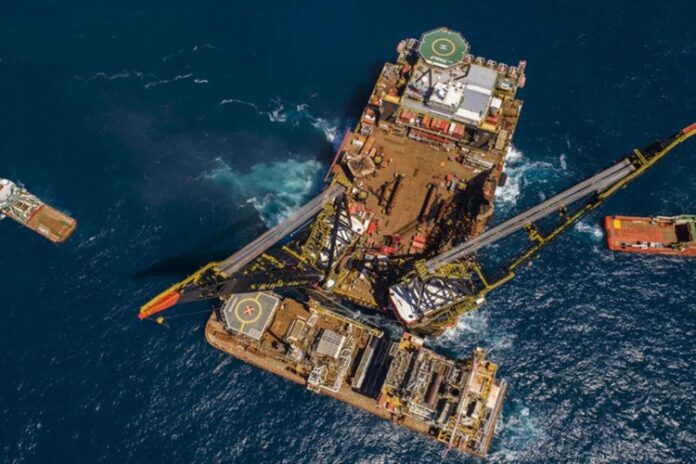
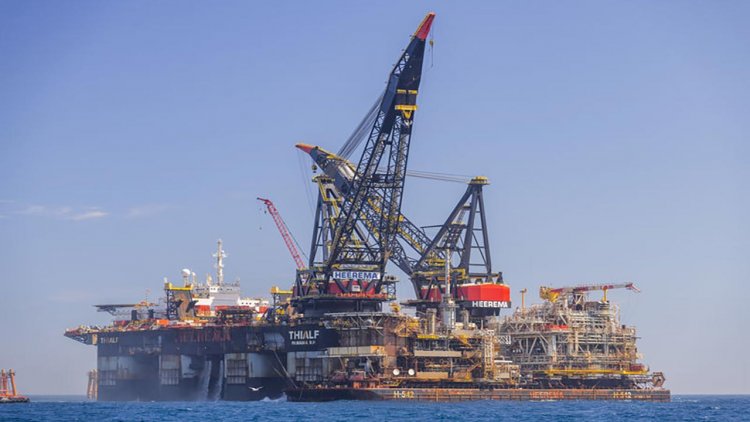
Thialf arrived in Canada in early April and mobilized to the Sable Field on May 1 to begin executing a sequence of separate lifts of platform components using a reverse-installation method. 

The campaign entailed the Engineering, Preparation, Removal, and Disposal (EPRD) of seven platform topsides, seven jackets and 22 conductors. A total of five barge loads carrying Sable platform components, weighing approximately 48,000 metric tons, were towed across the Atlantic by the Heerema tugs Kolga and Bylgia. 

Components were typically transported from the Sable Field to Chedabucto Bay to be prepared (sea-fastened) before their transatlantic voyage. After dismantling at the ABLE UK decommissioning yard in Hartlepool, England approximately 99 percent of the material will be recycled primarily into steel. 

Following a project delay due to the global pandemic in early 2020, an onboard crew of approximately 300 international and domestic workers, aided by support vessels and helicopters, completed the work. The removals campaign involved multiple crew changes and was completed safely and without a single case of COVID-19. 

The Sable Offshore Energy Project was developed in the late 1990s, and produced more than two trillion cubic feet of natural gas and liquids before production finished on December 31, 2018. Sable provided Nova Scotia with a new clean energy source and helped reduce the province’s reliance on coal and heavy fuel oil as primary energy sources.  

Pandion Energy partners in significant oil discovery in the Norwegian Sea

0

Pandion Energy AS (Pandion Energy) holds a 20 per cent interest in the Slagugle discovery in production license 891 in the Norwegian Sea. 

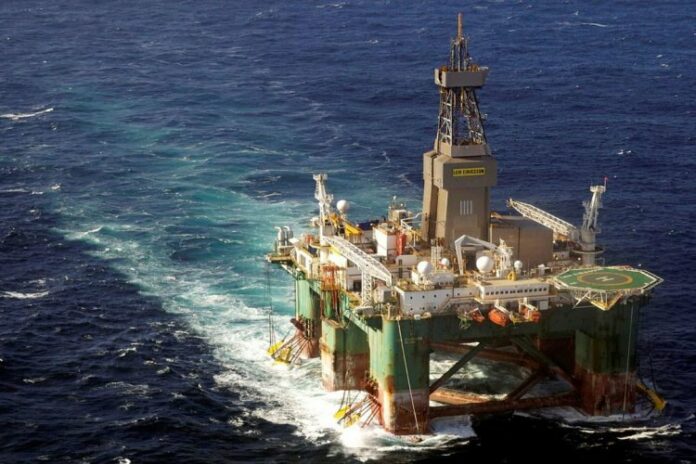
The wildcat well 6507/5-10 S is located about 23 kilometers north of the Heidrun field in the Haltenbank area, in the central part of the Norwegian Sea.

Preliminary estimates place the size of the discovery between 12 and 32 million standard cubic meters (Sm³) of recoverable oil equivalent, or about 75 to 200 million barrels oil equivalent.

The well encountered a total oil column of 270 metre in the Åre Formation and Grey Beds. Sandstone layers of 90 meters were encountered within the oil column with generally very good reservoir properties.

Pandion Energy, together with operator ConocoPhillips Scandinavia AS, will assess the results of the discovery together with other nearby prospects to determine the future appraisal and potential development solutions.

VP of Exploration and Appraisal at Pandion Energy, Bente Flakstad Vold, comments:

“We are proud to take part in the largest discovery in Norway this year. This illustrates the value creation potential in the team’s ability to make quick decisions based on a multidisciplinary work methodology. In light of the knowledge gathered from the discovery well, we see an exciting resource upside in both the discovery itself and other parts of the license. We now look forward to continuing our good cooperation with ConocoPhillips and contribute to realizing the full value potential in PL 891.”

Pandion Energy acquired its 20 per cent interest in the production license in July 2019 from operator ConocoPhillips, which holds the remaining 80 per cent.

CEO of Pandion Energy, Jan Christian Ellefsen, adds:

“The Slagugle discovery is a prime example of our exploration strategy targeting opportunities close to existing infrastructure with focus on prospects with material upsides. This is truly a great Christmas present and demonstrates the significant remaining resource potential on the NCS.”

The Slagugle well is the third discovery that Pandion Energy announces in 2020. In March, the company made an oil and gas discovery near the Balder field, in production license 820 S. The licensees are currently planning an appraisal campaign of this Iving discovery in 2021. In November, a minor gas discovery was announced in production license 263 D/E in the Norwegian Sea.

APM Terminals launches a new facility in Kalundborg, Denmark

0

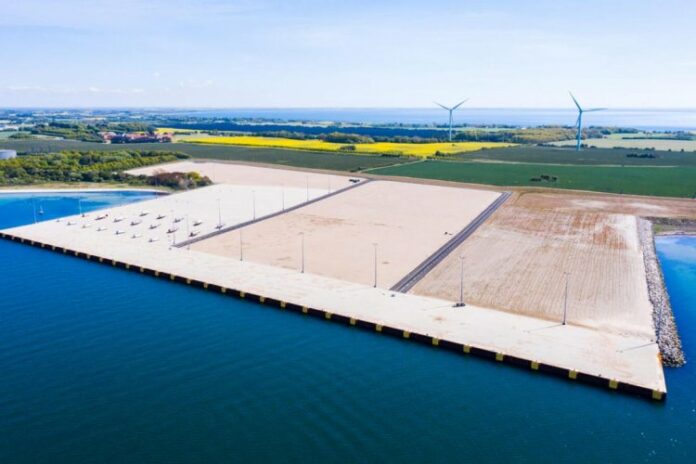
As part of the agreement between A.P. Moller – Maersk and APM Terminals, Kalundborg will receive two weekly feeder services with rotation Bremerhaven (Germany), Hallstahammer (Sweden), Helsingborg (Sweden), Kalundborg (Denmark), Aarhus (Denmark), Fredericia (Denmark) and back to Bremerhaven, which represents approximately 30% of the volumes of the island of Zealand in Denmark.

With the new connection, Kalundborg will be added to global supply chain routes by gaining a link with Aarhus and therefore Maersk’s AE5 service, which connects Aarhus and North Europe ports with Asia.

Dennis Olesen, Managing Director Nordics, APM Terminals, said:

“We are proud that A.P. Moller – Maersk as our first customer subsequently has chosen APM Terminals in Kalundborg to serve as their main point of logistics in the Eastern part of Denmark. With Kalundborg, we see an opportunity to provide customers with a great service and an efficient and competitive product in a strong location which is well connected, accessible and closer to industry and customers of the port.”

APM Terminals has agreed with Port of Kalundborg to establish terminal operations in the area Ny Vesthavn effective March 2021. The new area has been designated by the Port of Kalundborg with a water depth of 15m and fully paved with the required infrastructure to start operations. APM Terminals will be ramping up presence to have staff and equipment in place to start operations and serving customers in March.

Stig Kirkegaard, Country Manager Denmark of A.P. Moller – Maersk, said:

“Kalundborg is a port undergoing rapid development and investments and now also with APM Terminals as operator, we see a great synergy in moving our business to Kalundborg. Also, Kalundborg is situated well to cater for our growth ambitions in Zealand and to ma

Costa Cruises took delivery of the new Costa Firenze ship from Fincantieri

0

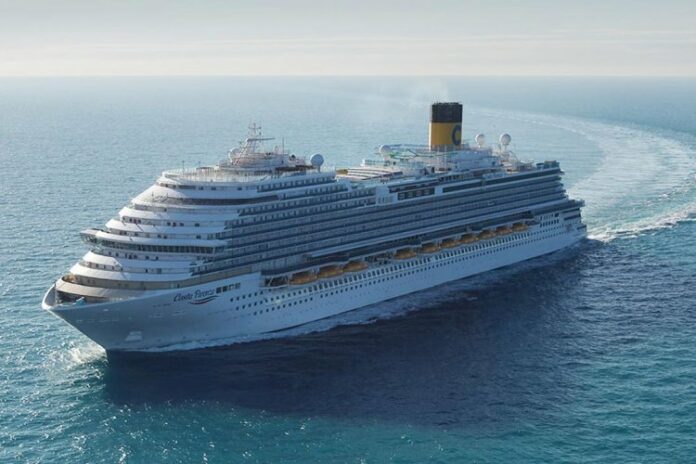
Costa Cruises, a part of Carnival Corporation, officially took delivery of the new Costa Firenze ship from Fincantieri, designed and built in the Marghera shipyard and inspired by the Florentine Renaissance. 

With 135,500 gross tonnage and a capacity of more than 5,200 guests, the Costa Firenze is part of the development plan that includes seven new ships to be delivered for the Costa Group by 2023, for a total investment of more than €6 billion. Costa Firenze is the fourth of these new ships to be delivered with three more to come. Of the 14 ships currently operating in the Costa Cruises fleet, 11 were built by Fincantieri.

Michael Thamm, group CEO of Costa Group and Carnival Asia, stated:

“Costa’s goal is to design the future of sustainable and zero emission cruising and we hope that our long-lasting partnership with Fincantieri can bring our companies to work together on a roadmap that can lead to this ambitious yet essential objective.”

Giuseppe Bono, CEO of Fincantieri, said:

“Costa Firenze is the third cruise ship we have delivered since September and we are pleased that the name of this unit recalls one of the most famous cities of art in Italy and in the world. The delivery is an important moment because it is the concrete demonstration that the company is getting back to its normal production activity.”

Mario Zanetti, chief commercial officer of Costa Cruises and president of Costa Group Asia, said:

“Costa Firenze is a superb ambassador of Italian style, bringing a distinctive Italian taste for beauty to the seas around the world, from Europe to Asia. The concept of the Costa Firenze is inspired by an iconic city, which represents Italian art, taste and refinement in the world’s collective imagination. We have designed this ship to offer our guests a unique experience, especially for the family target, with a specific offer of entertainment and services.”

Costa Firenze’s interior design is a celebration of the Tuscan city, cradle of Renaissance art and culture. The common spaces reflect the harmony of a stroll through a Florentine street or square, even in the choice of colors. 

The Costa Firenze project also takes sustainability in special regard. Costa Firenze’s excellent environmental performance has been acknowledged by RINA, an international certification organization, with Green Star 3, a voluntary notation covering all the main aspects of a ship’s environmental impact and requiring maximum protection and prevention across areas such as waste, grey water, black water, machinery oil, CO2, ozone, greenhouse gases, particulate matter, sulphur oxides, nitrogen and ballast water, among others. In addition to honoring compliance with a series of environmental sustainability standards, the certification also recognizes the design solutions and operating procedures that Costa has implemented voluntarily, both during construction and navigation, aimed at outperforming the environmental protection requirements of international regulations.

The ship will first sail in the Mediterranean in 2021, providing two different week-long itineraries in the western Mediterranean.