-9.3 C
New York
Home Blog Page 716

Lundin Energy will produce some of the lowest carbon barrels of oil the world from 2022

0

From 2022 Lundin Energy will produce some of the lowest carbon barrels of oil the world has ever seen by electrifying the Edvard Grieg field using power from shore. 

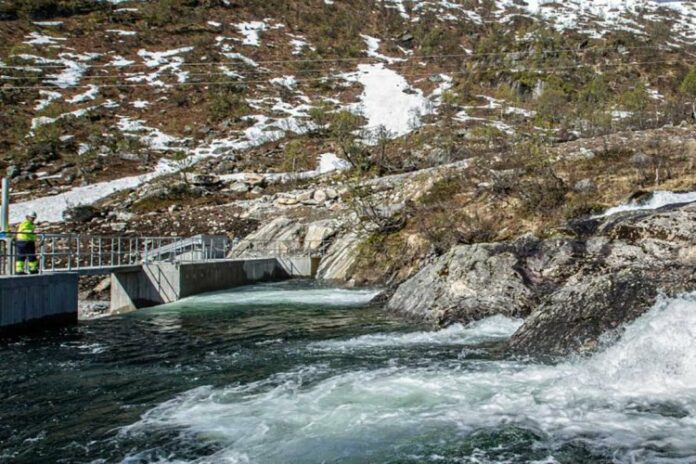
In Leikanger on the west coast of Norway, the energy company Sognekraft is in the process of completing one of the largest new hydropower plants in Norway, which will generate renewable electricity (gross) equivalent to the annual consumption of 50,000 European households. Last year, Lundin Energy secured 50 per cent ownership interest in the power plant in order to contribute to realising new renewable power in the Nordic power market and to support the achievement of Lundin Energy’s goal for carbon neutrality.

Terje Bakke Nævdal, managing director in Sognekraft, says:

“Releasing capital will enable us to realise new power projects. We are very pleased to have Lundin joining us as co-owner in the Leikanger power plant.” 

Lundin Energy’s objective is to become carbon neutral across its operations by 2030. In addition to driving efficiencies in production, this also entails emissions reductions in the supply chain, and ensuring that the company compensates for its electricity consumption by making investments that enable delivery of net new renewable capacity to the Nordic grid.

Kristin Færøvik, Managing Director of Lundin Energy Norway, says:

“Electrification of Edvard Grieg and Johan Sverdrup make us as a company, and the Norwegian Shelf, extremely competitive in the markets of the future, but it also makes us large-scale consumers of electricity.”

That’s why Lundin Energy has the goal of replacing its entire net power consumption from shore with investments in renewable electricity projects by 2023. In addition to the hydro power plant in Leikanger, Lundin has 50 per cent ownership in the Metsälamminkangas (MLK) wind farm in Finland, which will add around 400 GWh (gross) per year to the Nordic grid. This is the equivalent to the electricity consumption of ~100,000 European households annually.
Khalifa Port’s south quay now operational

0

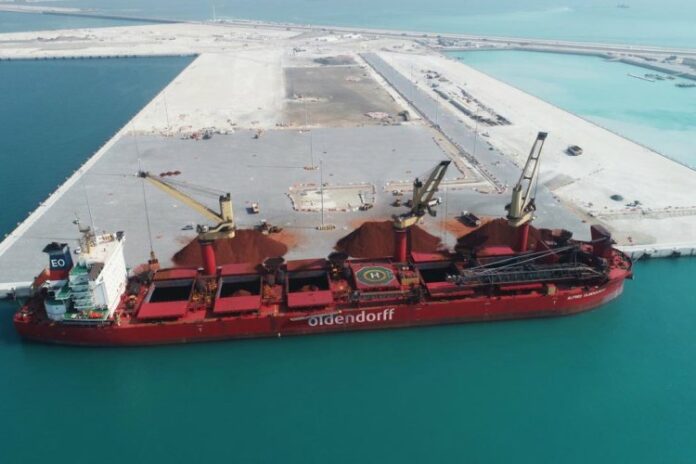
The first shipment, carrying bauxite, destined for Emirates Global Aluminium (EGA)’s Al Taweelah alumina refinery, called at Khalifa Port’s South Quay, marking the commencement of operations at the newly launched facility.

The bulk carrier, Alfred Oldendorff, the first in several shipments to the South Quay for EGA, was swiftly followed by two large general cargo consignments, making use of the recently completed first phase of South Quay, offering a total of 650 m of quay wall comprising two berths and 37,000 sqm of terminal yard.

EGA will use the South Quay, in addition to its own nearby quay, which began receiving Capesize vessels loaded with bauxite in 2019.

The onset of the South Quay’s operations at Abu Dhabi’s dedicated flagship deep-water terminal is the latest in a string of major achievements for the port’s owner and operator, Abu Dhabi Ports.

Saif Al Mazrouei, Head of Ports Cluster, Abu Dhabi Ports, said:

“Abu Dhabi Ports is proud to have achieved this momentous milestone ahead of schedule.

“The commencement of operations at the South Quay provides clear evidence that Abu Dhabi Ports stands as a leader in developing a truly inspiring and integrated multipurpose port proposition.

“Khalifa Port’s upgrade and expansion not only enables dramatic growth in our bulk and general cargo handling capacity, but further serves to demonstrate Abu Dhabi Ports’ firm commitment in supporting the individual needs of new and existing customers.”

The introduction of the South Quay, together with the adjacent Khalifa Port Logistics (KPL) development will dramatically boost Khalifa Port’s ability to handle any type of cargo and service a wide variety of customers.

In addition to the South Quay phase 1 completion, approximately 800 m of quay wall and almost 175,000 sqm of land within KPL has been handed over in advance of the project’s full phase 1 conclusion in Q1 2021.

Two prestigious accolades underscore Khalifa Port’s successful growth and development journey: the port made significant gains in the latest Lloyd’s List One Hundred Ports rankings, achieving the highest percentage of growth in all container ports listed; and also won ‘Port of the Year’ at the recently-held Maritime Standard Awards 2020.

GE Renewable Energy to supply Haliade-X turbines for Dogger Bank C

0

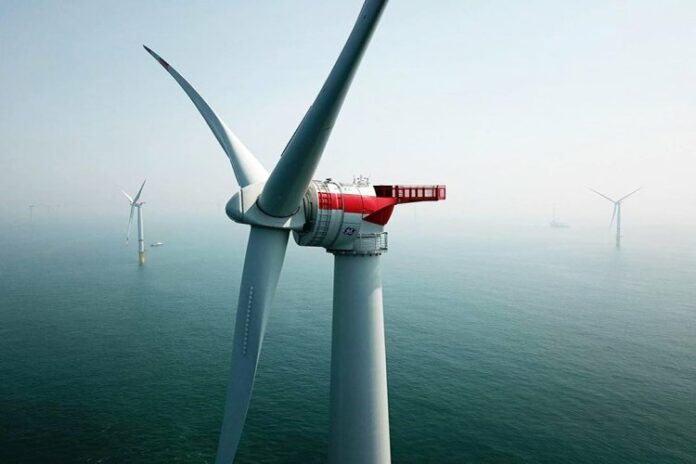
GE Renewable Energy announced today that it has been confirmed as the preferred turbine supplier for Dogger Bank C, the 1.2 GW third phase of the 3.6 GW Dogger Bank wind farm (a 50:50 joint venture between SSE Renewables and Equinor) that will become the world’s largest offshore wind farm when complete in 2026.

The agreement includes the upscaled Haliade-X 14 MW wind turbine and a Service Supply Agreement to provide operations and maintenance support for five years. The Turbine Supply Agreement and Service and Warranty Agreements for Dogger Bank C, will be finalized in the first quarter of 2021. Installation of the turbines for Dogger Bank C is set to begin in 2025 ahead of completion of the overall project in 2026.

GE is now confirmed as supplying Haliade-X turbine technology to all three phases of Dogger Bank Wind Farm including a record-breaking order for 190 units of GE’s 13 MW Haliade-X for phases A and B announced in September.

John Lavelle, President & CEO, Offshore Wind at GE Renewable Energy, said:

“Dogger Bank C will use a 14 MW version of the Haliade-X, the most powerful offshore wind turbine in operation today. In doing so, this unique project will both continue to build on the UK’s leadership in offshore wind and serve as a showcase for innovative technology that is helping to provide more clean, renewable energy.”

Steve Wilson, Dogger Bank Wind Farm’s Project Director at SSE Renewables, said:

“We’re delighted to be working with GE Renewable Energy on all three phases of our development, as the first wind farm in the world to install their innovative and record-breaking Haliade-X turbine technology. Together with GE we are continuing to lead the way on innovation in the offshore wind industry and we’re proud that Dogger Bank will now use a 14 MW turbine at Dogger Bank C alongside the 13 MW turbine already confirmed for phases A and B.”

The Dogger Bank Wind Farm is located over 130 km off the north-east coast of England and will be capable of powering the equivalent of up to 6 million homes each year when complete in 2026. Due to its size and scale, the site is being built in three consecutive phases; Dogger Bank A, Dogger Bank B and Dogger Bank C. Each project is expected to generate around 6 TWh of electricity annually.

GE Renewable Energy will continue its testing and Research & Development activities on Haliade-X platform in the UK by partnering with ORE Catapult and other institutions to develop programs that reduce the time people spend at sea to increase safety and use robotics, digital and remote operations to help reduce energy costs.

Kuril-Kamchatka Trench in the Pacific Ocean is a trap for microplastics

0

Together with colleagues from the Alfred Wegener Institute and the Johann Heinrich von Thünen Institute, Senckenberg scientists Serena Abel and Angelika Brandt examined sediment samples from the Kuril-Kamchatka Trench for the presence of microplastics. 

In their study, which was recently published in Environmental Pollution, the researchers show that 1 kilogram of sediment contains between 14 and 209 microplastic particles. Overall, the team was able to document 15 different types of plastics in the samples.

Humans produce more than 400 million tons of plastic each year—and the negative side effects are apparent in the form of plastic islands in the oceans and plastic waste in rivers, forests and along roadsides. 

Serena Abel of the Senckenberg Research Institute and Natural History Museum in Frankfurt explains:

“Plastic remains can even be found in the deepest oceans. Therefore, we were interested in discovering the extent of microplastics pollution in the sediments of the Kuril-Kamchatka Trench—a deep-sea trench in the northwestern part of the Pacific Ocean.”

To this end, the research associate teamed up with Senckenberg’s department head for Marine Zoology, Prof. Dr. Angelika Brandt, and colleagues from the Alfred Wegener Institute and the Johann Heinrich von Thünen Institute to analyze eight sediment samples from a deep-sea expedition in the year 2016.

Abel explains:

“The proportion of microplastics in our samples varied between 14 and 209 particles per 1000 grams of dry sediment. The most frequent occurrence of microplastics was recorded at one of the deepest sampling stations in the Kuril-Kamchatka Trench.”

The eight samples came from four stations at depths of 5143, 6065, 7138, and 8255 meters. 

Abel says:

“Apparently, a significantly higher amount of microplastics accumulates in the deeper regions. This is likely due to the fact that the particles can easily be transported to these areas but subsequently are caught there. These trenches thus act as veritable plastic traps.”

Overall, the research team identified 15 different types of plastics in the samples. All sediments contained polypropylene, a standard plastic commonly used in packaging materials. In addition, 75 percent of the samples contained polyethylene, and about 63 percent contained polyester. 

The marine researcher from Frankfurt adds:

“All microplastic particles showed sizes below 375 micrometers, and the vast majority were smaller than 125 micrometers, i.e., about one-eighth of a millimeter.”

The scientists were able to discover the minute microplastic particles by means of the so-called Micro-FTIR method, a special variant of a spectrometer.

Brandt says:

“We do not know exactly how much plastic is present in the deep sea; however, our results show that the trenches on the ocean floor, in particular, can serve as plastic sinks. Global estimates of the incidence of microplastics in our oceans indicate that there must be a portion that exists outside the water column and is missing from these estimates. The accumulation of microplastics in these areas could represent this ‘missing’ share. Microplastics in the deep sea also mean that the basis of the food chain is affected, since many invertebrates feed on sediments, including the microplastic particles. Therefore, future generations unfortunately will have to deal with the consequences of today’s environmental pollution for a long time to come.”

Aramco to bring Google Cloud Services to Saudi Arabia

0

Saudi Aramco Development Company, a subsidiary of Aramco, today announced it had teamed up with Google Cloud to offer high-performance, low-latency cloud services to enterprise customers in Saudi Arabia.

The Kingdom is being added to the global network of Google Cloud Platform regions, as part of a strategic alliance agreement signed between the Company and Google Cloud this month. Google Cloud will establish and operate a new cloud region in Saudi Arabia, while a new company will be formed following all required regulatory clearances to supply cloud solutions and services to enterprise customers, with an emphasis on businesses inside Saudi Arabia. 

This new cloud region will allow organizations nationwide to grow and scale their offerings, while delivering digital products and services faster and more reliably. The collaboration taps into rapidly expanding cloud services demand in Saudi Arabia, which is forecasted to reach a market opportunity up to $10 billion by 2030. Increased dependence on online services during the COVID-19 pandemic has further accelerated the shift toward digital solutions. The rollout of Google Cloud services and infrastructure in Saudi Arabia will deliver robust, reliable and agile solutions to meet growing demand for IT and cloud services.

Aramco Senior Vice President of Technical Services, Ahmad Al Sa’adi, said:

“We live in a world driven by data, and it is essential that companies not only have secure infrastructure to protect enterprise data, but also the tools that enable them to make the best use of it. Bringing Google Cloud to Saudi Arabia will deliver significant benefits, both now and in the future, and we are grateful to the Ministry of Communications and Information Technology for supporting this initiative. The future of Saudi Arabia’s business transformation and growth depends on its ability to successfully leverage cloud services.”

Google Cloud CEO Thomas Kurian said:

“We are committed to helping businesses modernize and accelerate their digital transformations with Google Cloud. With this agreement, Google Cloud’s innovative technology and solutions will be available to global customers and enterprises in Saudi Arabia to enable them to better serve end consumers.”

DOF Subsea awarded new contracts in Atlantic region

0

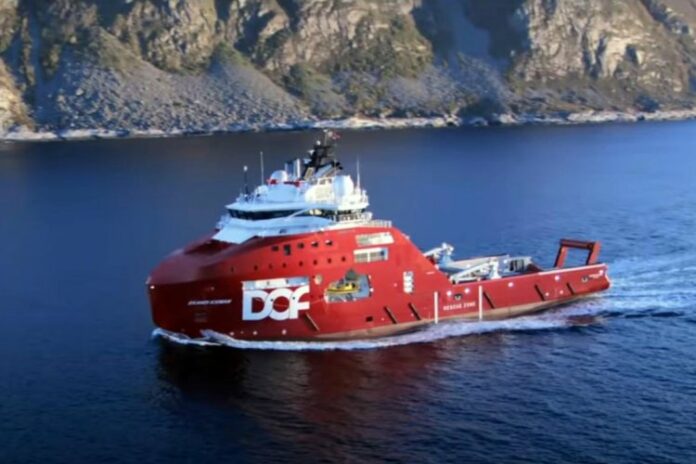
Contracted work include a number of turnkey subsea projects within our core service lines – Survey, Inspection, Maintenance & Repair (IMR) and Construction.

The vessels Skandi Acergy, Skandi Skansen, Skandi Neptune and Skandi Seven shall be utilized to deliver work totalling more than 180 vessel days excluding any options. All works shall be carried out between 4th quarter 2020 to 2nd quarter 2021.

All awards include Project Management, engineering, procurement and logistics which shall be delivered by our integrated subsea team across Bergen, Aberdeen and Luanda.

In the North Sea, DOF Subsea shall assist a key client with winter subsea inspection programme at UK continental shelf, whilst supporting a leading operator with start-up and commissioning activities for a subsea satellite development in Norway.

In Angola, DOF Subsea shall carry out a greenfield AUV and ROV seabed mapping campaign for an international client, prior to commencing a previously announced contract.

DOF Subsea has mobilized Skandi Neptune from the North Sea for an undisclosed international client in Africa, conducting FPSO class and field inspections programme.

Mons S. Aase, CEO, DOF Subsea said:

“DOF Subsea continues to secure projects with key oil & gas operators across North Sea, Mediterranean and Africa. These awards secure continuous utilization of our regional pool of specialised subsea vessels and integrated project teams.”

Atlantis tidal generation equipment arrives in Nagasaki

0

Atlantis has announced an important update in delivering Scottish made tidal generation equipment to Japan.

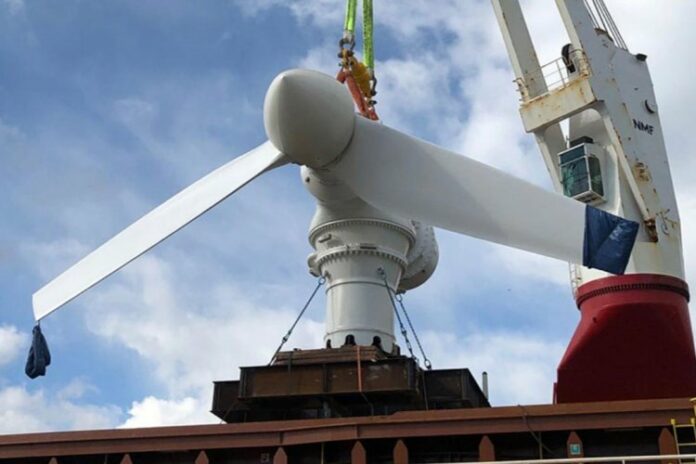
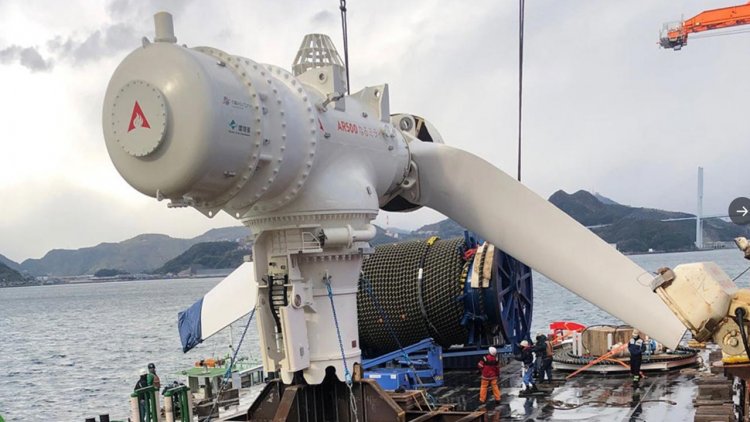
The Atlantis designed and built tidal generation system has arrived in Nagasaki harbour, Japan having left Scotland in October. It will now be transported in January 2021 by support vessels to the designated deployment site in the Naru Strait, located between the islands of Naru and Hisaka in the Goto Island chain.

The AR500 tidal generation system will be deployed at the Naru Strait site initially operating at a capped maximum generation output of 500kW, as data collection (performance and environmental) and device validation are undertaken for the client and Japanese regulatory bodies.

Drew Blaxland, Director of ATES Division, commented:

“Given the obvious challenges COVID presented during the turbine building program in Scotland this year and the logistical challenges presented during transit more recently, we have still managed to deliver a turbine quayside in Japan before Christmas. To see this AR500 machine arrive in Japan, a first of its kind here, is a great achievement.  Our focus now is in getting the power export cable, foundation and turbine nacelle installed safely, then we all look forward to this Scottish built turbine delivering predictable, sustainable renewable energy for Japan post commissioning.”

BW LPG takes up further option for LPG-retrofits

0

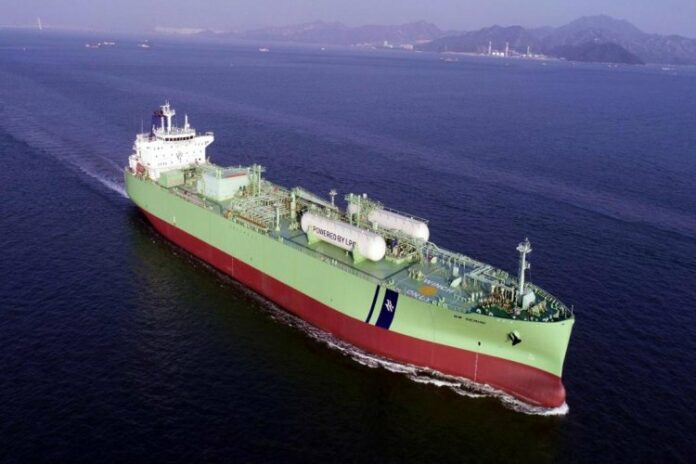
BW LPG has announced that it will retrofit a further three MAN B&W 6G60ME-C9.2 type engines to MAN B&W 6G60ME-C9.5-LGIP dual-fuel types, capable of operating on fuel oil and LPG. This is another option of a 4+4+4+3 contract with MAN PrimeServ – MAN Energy Solutions’ after-sales division.

MAN Energy Solutions announced the first four retrofit orders in September 2018 in advance of the official launch of the ME-LGIP engine at its Research Centre Copenhagen, and exchanged the contract publically with BW LPG during the event. Two +4 options were subsequently confirmed with this new +3 option making a total of 15 vessels for ME-LGIP retrofits.

The confirmation of the latest option follows on the heels of the successful ME-LGIP conversion in late-October 2020 of the main engine aboard BW LPG’s LPG carrier, ‘BW Gemini’ making it the world’s first commercial vessel to be propelled by a two-stroke LPG dual-fuel engine.

BW LPG has previously commented on its choice of retrofits over newbuildings where Pontus Berg, Executive Vice President, Technical and Operations, LPG, said:

“Retrofitting allows us to minimise our carbon footprint – the process emits up to 97% less carbon dioxide compared to a newbuilding construction. Retrofitting also means that we do not add additional tonnage that the world does not need. In addition, BW LPG’s fleet is already widely recognised amongst charterers for its efficiency, and so retrofitting its vessels to dual-fuel LPG would help to further reinforce the company’s strong reputation in this area.”

Bjarne Foldager, Senior Vice President and Head of Two-Stroke Business at MAN Energy Solutions, said:

“We are very happy to confirm this option for a further three retrofits, which in great part is due to the recent successful conversion of the BW Gemini that has since re-entered service. There is no doubt but that we are moving towards a zero-carbon future with a strong global push towards sustainability. These new conversions display BW LPG’s committment to decarbonisation and showcase our dual-fuel engine portfolio that is future-proofed to handle whatever alternative fuels come to prominence in the decades ahead.”

Foldager added: “Apart from the 15 retrofits for BW LPG, three new orders in November bring our current total of newbuilding orders for the ME-LGIP engine up to 51 – a number we expect to significantly increase this month [December 2020].

The vast majority of current orders for LPG carriers over 30,000 cubic metres are with ME-LGIP technology, enabling these vessels to use their own cargo as fuel in the future. In my view, LPG as a low-carbon fuel is well on its way to becoming the new market standard in this segment.”

With LPG as a marine fuel, the BW Gemini’s output efficiencies rise by around 10% against fuel oil, which will in turn generate notable gains in total voyage fuel-economics. This, along with other advantages, secures LPG’s position as a long-term, sustainable marine fuel.

Cost-wise, LPG is also a better option than compliant fuel oil, with high lifetime-savings prospects. By leveraging LPG as a marine fuel, BW LPG’s vessels benefit from savings due to lower fuel consumption and full dual-fuel flexibility, which guards against price sensitivity to post-2020 fuel price fluctuations. Furthermore, the ability to use LPG cargo as a supplemental fuel source also reduces time and fees for fuel bunkering.

Harnessing LPG propulsion translates into cleaner, more efficient engines that are cheaper to maintain. In addition, the fuel flexibility of dual-fuel engines ensures full redundancy for uninterrupted operations.

Simultaneously, MAN PrimeServ’s research showed that a retrofit would be the most environmentally friendly solution. A retrofitted vessel generates 35 times less CO2-emissions compared to a newbuild vessel and, compared to 2020-compliant fuels, using LPG as a fuel would reduce: SOx by 99%, CO2 by 15%, NOx by 10%, and particulate matter by 90%.

Caspian crisis: Sinking sea levels threaten biodiversity, economy and regional stability

0

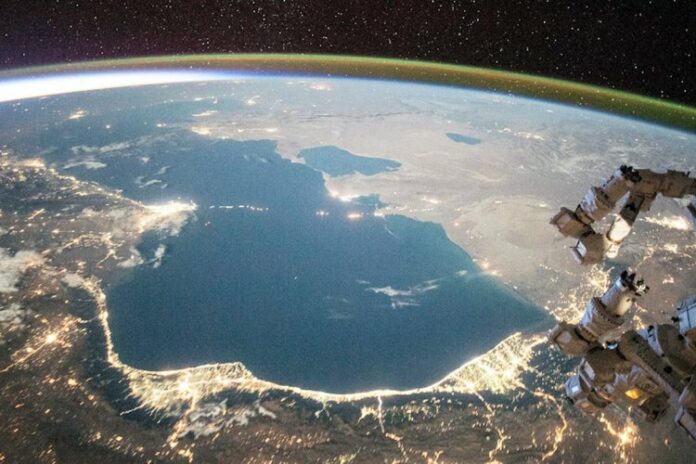
Technically, this sea is a land-locked lake, but it is the largest on the planet (371.000 km2), and quite salty. Since the ’90s, the water level has been dropping a few centimeters every year. This drop will accelerate during the upcoming decades, according to scientists from the German universities of Gießen and Bremen, together with Dutch geologist Frank Wesselingh.

The water levels of the Caspian Sea will be 9 to 18 meters lower than they are now, German and Dutch researchers calculate. In an article published in Communications Earth & Environment, they urge the world to act.

Wesselingh says:

“If the North Sea would drop 2 or 3 meters, access to ports like Rotterdam, Hamburg and London would be impeded. Fishing boats and container giants alike would struggle, and all the countries on the North Sea would have a huge problem. Here, we are talking about a decrease of no less than nine meters—in the best-case scenario.” 

In the worst-case scenario, the drop is 18 meters, and the Caspian Sea will lose over a third of its surface area.

In the journal Communications Earth & Environment, the three scientists are calling for action. Increased evaporation and the loss of sea ice in the winter will accelerate water-level drop, they explain. This will affect the unique ecosystems in the area, with their migratory birds, beluga and the endemic Caspian seal, which raises its offspring on the sea ice in the North of the Caspian Sea. It will also have dire consequences for the millions of people living near the sea, or around the rivers that run into it.

These problems also play in a region that is already politically tense. Azerbaijan, Russia, Iran, Turkmenistan and Kazakhstan all share a piece of the Caspian Sea, and would have to make new agreements regarding borders and fishing rights. Wesselingh and his German colleagues urge the formation of an international task force led by the United Nations Environmental Programme that would coordinate the mitigation of this problem.

Ortelius joins Jan De Nul fleet

0

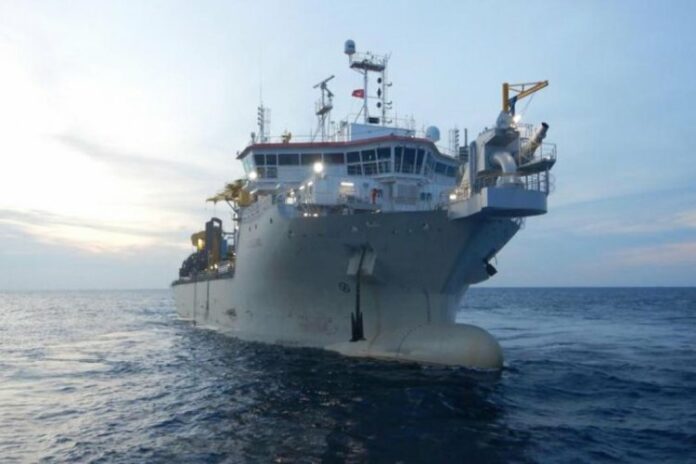
This vessel is an identical copy of the Ultra-Low Emission vessel Sanderus, in service since February 2020 and currently at work on the River Scheldt in Belgium.

Ortelius is the fifth dredger delivered by Keppel O&M to Jan De Nul Group, following the delivery of three 3,500 m3Trailing Suction Hoppers Dredgers (TSHD) and one 6,000 m3TSHD, the Sanderus. All five are Ultra-Low Emission vessels (ULEv), equipped with a two-stage catalytic filter system.

Built to the requirements of the EU Stage V and International Maritime Organisation’s (IMO) Tier III regulations, Ortelius is diesel-electric driven and able to dredge to a maximum depth of 35 m. It features a shallow draught, is highly manoeuvrable, and suitable for working in confined areas.

Mr Robby De Backer, Director of Newbuilding Department of Jan De Nul Group:

“Ortelius, like all our new dredgers showcases the capabilities of dredging at the lowest levels of emissions to date. Our teams closely worked with the Keppel teams to overcome the challenges caused by COVID-19 and expedite the delivery of Ortelius. We are proud to partner with industry leader Keppel, who has, through their engineering expertise and excellent service, provided assurance in the safe delivery of high-quality vessels.”

Mr Tan Leong Peng, Managing Director (New Builds) of Keppel O&M:

“The delivery of a fifth dredger is testament to Keppel O&M’s newbuild capabilities and technological expertise. Our partnership with Jan De Nul has grown from strength to strength, and we were able to deliver all five Ultra-Low Emission dredgers to them safely and efficiently as a result of a holistic construction methodology. In dealing with COVID-19, we have put in place safe management measures, optimised operations and diversified our supply chain network, enabling us to catch up on work in a safe and efficient manner.”

Internal combustion engines without post-treatment emit air pollution affecting both climate and air quality. Air pollution and particulate matter damage our health and also have a direct impact on our living environment.

With its Ultra-Low Emission vessels, Jan De Nul Group aims for much better air quality. These vessels are equipped with a catalyst that renders nitrogen oxides harmless and with a soot filter blocking the finest particles. Several of these pollutants also affect our climate so that the post-treatment also ensures a reduction of greenhouse gases.

The newest generation of Jan De Nul vessels is fitted with this highly advanced dual exhaust gas filter system, making Jan De Nul a frontrunner within global shipping.