-5.4 C
New York
Home Blog Page 695

Wärtsilä wins an order to provide 36 dual-fuel engines for six LNG carrier vessels

0

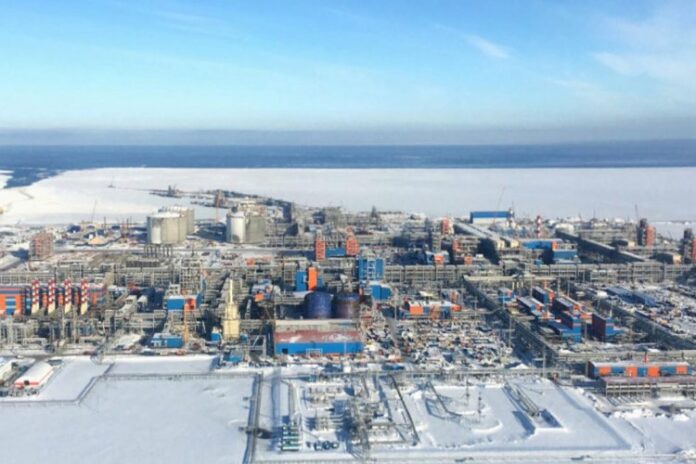
The technology group Wärtsilä will supply the dual-fuel engines for six new 172,500 cbm LNG carrier vessels being built to serve the Arctic LNG 2 project in Russia’s Arctic waters.

The order, which is valued at more than EUR 100 million, was placed in December 2020 by Daewoo Shipbuilding and Marine Engineering. There is an option for a further four ships.

Wärtsilä’s vast experience and proven competence in delivering efficient and reliable propulsion solutions for icebreaking and gas carrier applications in the demanding Arctic environment, were cited as being key considerations in the award of this contract.

Östen Lindell, Sales Director, East Asia & China, Wärtsilä Marine Power, says:

“This is a major newbuild project, and we were able to propose a technical solution that ensures clear benefits and cost savings for the customer. Our experience with LNG applications is unmatched, and this order represents an acknowledgement of that fact.”

Each vessel will be fitted with six Wärtsilä 46DF dual-fuel engines, plus gas valve units and auxiliaries. Deliveries of the equipment will commence in August 2021.

Wärtsilä has earlier supplied the engines for 15 ships serving the Yamal LNG project, as well as numerous dual-fuel engines for other LNG carriers built at the Daewoo yard.

Tidewater accelerates digitalisation strategy with Fleet Xpress

0

Inmarsat has developed a product roadmap of advanced vessel technology efficiencies solutions and enhanced and reliable communications for crews, which bring competitive advantages for Tidewater.

Tidewater was one of the largest users of Inmarsat’s legacy iFusion service, which was scheduled for network shutdown on December 31, 2020.  Tidewater and Inmarsat created a joint project team and comprehensive plan to fast track vessel installations and upgrades to deliver the project in six months, with a scope of 60 active vessels, across 15 countries and involving a team of 75 from the combined organisations.

The project was highly complex due to its scope and number of vessels, managing activities through the middle of a pandemic and requiring expert precision to achieve installations and upgrades on time and plan. All 60 vessels in the project were successfully transitioned before year-end and vessels experienced no disruptions during the iFusion shutdown events. In January, Tidewater will have 56 active vessels with Fleet Xpress providing new capabilities for their vessels, crews and customers.

Cherise Brooks, the IT program manager for this project, stated:

“This transformational project advanced Tidewater to a new level of vessel communications with Fleet Xpress’s combination of high-speed Ka-band and continuous back-up using L-band creating an always on bandwidth for our vessels. Tidewater has deployed this new technology to provide internet demands for crews and customers, a capability previously not available for these vessels. The project success of achieving an aggressive six month schedule and significantly upgrading our fleet with advanced technology was only made possible by the exceptional efforts of the Tidewater shore based teams, Tidewater crew members, Inmarsat and their partners.”

Inmarsat’s Sales Director for Offshore and Fishing, Chuck Moseley, adds:

“Tidewater will be the first beneficiary of new investments Inmarsat has made in reporting capabilities and a new addition to Inmarsat’s product portfolio. Once again, a big-name brand in the offshore space has confirmed the compelling case Fleet Xpress presents as the platform for flexible digital solutions that meet operator needs on vessel efficiency, crew welfare and client demands. The combined Tidewater and Inmarsat project teams delivered amazing results and commissioned a significant ramp-up of Fleet Xpress installations in record times. Inmarsat is looking forward to continuing the partnership and delivering the 2021 product roadmap to further advance the Tidewater fleet.”

Oldendorff Carriers in joint project to develop wind-assist propulsion solution for bulkers

0

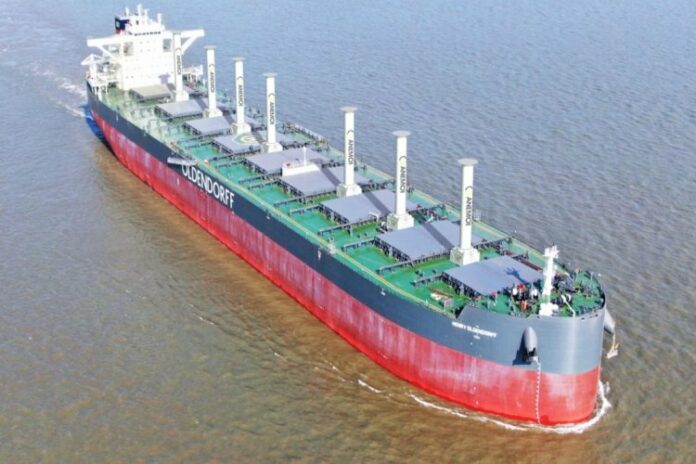
Oldendorff Carriers (OC) has signed a Joint Development Project (JDP) with Anemoi Marine Technologies (Anemoi), Lloyd’s Register (LR) and Shanghai Merchant Ship Design and Research Institute (SDARI) to develop a wind-assisted propulsion solution for Dry Bulk Carriers. 

The project, scheduled for completion in 2022, breaks down significant barriers for the installation of rotor sails technology and paves the path for commercial-ready applications across the industry in the short-term.

Torsten Barenthin, Director Innovation of Oldendorff Carriers stated:

“This JDP, together with other ongoing projects in our company, is a testament to our commitment to the development and application of green technologies across our fleet. By partnering with the ship designer (SDARI), manufacturer (Anemoi) and Classification Society (LR), OC seeks to achieve a comprehensive functional application of wind technology that returns environmental and commercial benefits throughout our vessels’ entire life cycle”.

The adoption of this fuel saving technology consists of installing Anemoi’s patented vertical rotors on deck. These mechanical sails, when driven to rotate, harness the power of the wind to provide additional thrust to vessels, reducing fuel consumption and lowering carbon emissions. In order to ensure the rotors do not interefere with cargo operations and air draft limitations, the sails are mounted with a folding system that enables them to be lowered from vertical into a horizontal position on deck (See how the system works).

By fitting vertical rotors on a Newcastlemax bulk carrier of 207,000 tdw, wind propulsion can be tested on long haul voyages. Once the design and study phases have been concluded, the results obtained will determine whether we proceed with the installation of the wind rotor technology aboard one of our vessels.

OC approaches decarbonisation from a holistic perspective. As shipowner and operator, our efforts to achieve zero greenhouse gas emissions are not only benefiting the company but also the entire value chain. By adding renewable energy to our array of sustainable shipping projects, we continue adding value to the entire spectrum of stakeholders by reducing the overall environmental impact of our operations.

Mark Darley, LR Marine & Offshore Chief Operating Officer, said:

“As the need to decarbonise the shipping industry becomes more pressing, this JDP with leaders in maritime marks an important milestone on the journey and further demonstrates LR’s commitment to accelerating this transition. The partners’ collective action and joint collaboration will see the development of solutions that will meet current and future environmental targets.”

Wang Gang Yi, Chief Engineer of SDARI commented:

“It is our great honor to provide green solution designs to Oldendorff Carriers, a leading shipping company. We believe the JDP shows the maritime community OC’ is serious about its efforts to reduce GHG emissions and make shipping sustainable and competitive. We think that using wind assistance for enhancing propulsion is a viable way of helping to decarbonise the industry.”

The rotor sails technology is a complementary solution suitable for combination with other green developments. Last year OC also signed an agreement with the Massachusetts Institute of Technology’s Center for Bits & Atoms to investigate disruptive improvements in ship design and propulsion to achieve the IMO 2030/50 goals.

First turbine at Kriegers Flak offshore wind farm in place

0

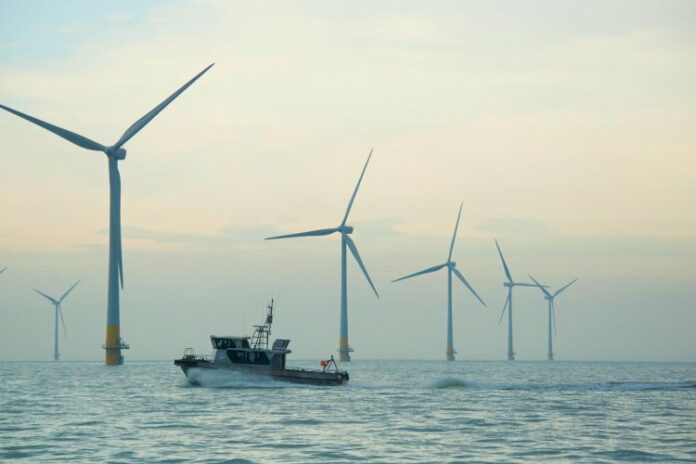
On 27 January, the tower, nacelle and blades were installed for the first turbine at the Kriegers Flak offshore wind farm in the Baltic Sea. A process that normally takes about 14 hours.

Jacob Nørgaard Andersen, Country Manager at Vattenfall Denmark, says:

“We are proud that the first of many turbines at Kriegers Flak is now in place and ready to produce electricity. We expect that households and industry one of the coming days will receive the first fossil-free electricity from the turbine. It is an important milestone in the project, it is happening on schedule and it is fantastic to see the offshore wind farm take shape.”

The installation follows the granting last week by the Danish Energy Agency of the license to produce electricity. Despite the restrictions caused by the COVID-19 pandemic, the construction of Kriegers Flak is generally proceeding according to plan and scheduled to be fully operational by the end of 2021, at the latest.

Catrin Jung, Head of Offshore Wind in Vattenfall, says:

“Kriegers Flak makes a significant contribution in the Nordic region to our goal of enabling fossil-free living. It is a unique project integrating offshore wind production and interconnectivity between two countries – Denmark and Germany. And at the same time, it signals that the exploitation of the Baltic Sea’s huge potential for offshore wind is now gaining momentum.”

Compared to 2019, Kriegers Flak will increase the Danish production of wind energy by 16 per cent or enough to cover the annual electricity consumption of approximately 600,000 Danish households.

The individual parts of the turbines are assembled at Port of Roenne on the Danish island of Bornholm. Afterwards they are shipped in sets of four to the construction site at sea. The 72 turbines are produced by Siemens Gamesa Renewable Energy and will be commissioned on an ongoing basis as they are installed.

Neptune starts to build the first large Sailing Cargo Vessel Canopée ever made

0

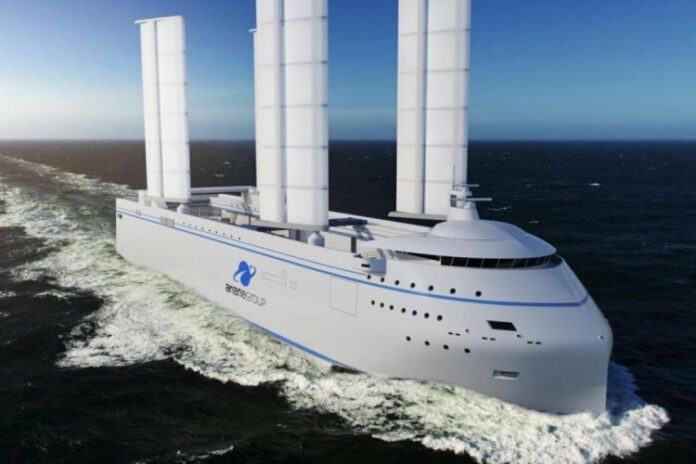
In order from the French shipping company Jifmar Offshore Services, Neptune has started to build the first large Sailing Cargo Vessel ,,the Canopée” (yard number NP572) ever made. 

The Canopée will be equipped with four 30-metre high Oceanwings. These sail panels with an area of 375 m2 each (total 1500 m2) should positively effect fuel consumption of the diesel direct mechanical propulsion systems. The controllable pitch propellors can be put in feather mode when Ocean wing wind system delivers sufficient effective power for the vessel under speed. Resulting in a shutdown of both or one of the two Wartsila main engines. 

The construction of the hull is subcontracted to Partner Stocznia Sp. z o.o., Szczecin, the steel cutting was started just before Christmas and the first bottom sections are already under construction. The outfitting completion will be executed at Neptune Hardinxveld. Delivery of the vessel is scheduled end of 2022 after a series of trials and tests.

Damen launches revolutionary Fast Crew Supplier

0

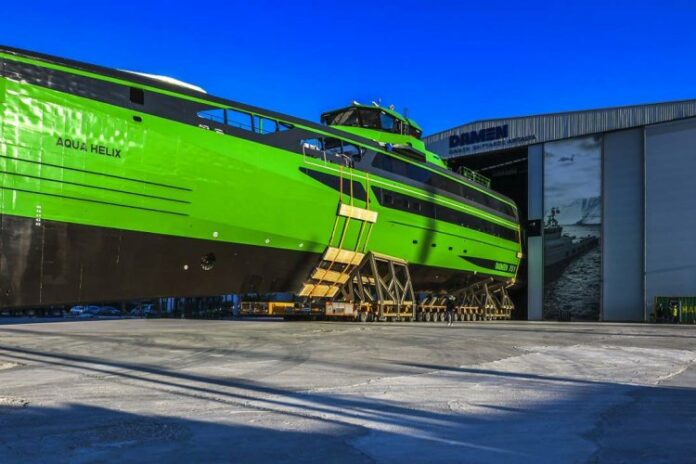
On 21st January, Damen Shipyards Group’s revolutionary Fast Crew Supplier (FCS) 7011 was launched into the water at Damen Shipyards Antalya, Turkey. 

The vessel, hailed as a quantum leap forward in marine access solutions, is the result of close market consultation. To meet the needs of an offshore industry faced with consistently low oil prices, Damen has developed the FCS 7011 as a cost-effective crew transportation alternative boasting robust safety characteristics.

The construction of the FCS 7011 has continued throughout the coronavirus pandemic, with Damen implementing robust measures to ensure the safety and well-being of all involved with the project. Due to the ongoing nature of the pandemic, the launch was a very low-scale event instead of the large celebration that would usually be held for such a momentous occasion.

The vessel is the largest ever to have been launched in Antalya Free Zone. On top of that the launching was a very specific operation handled by two cranes which were transported by 50 trucks to settle on site since the current launching facility is under re-construction.

Despite this, the launching remains a very important milestone in the development of the vessel and a significant step towards its completion. Following the conclusion of outfitting activities now taking place, the FCS 7011 will undergo seatrials off Antalya to test and demonstrate her capabilities. Following this, she will sail to the Netherlands, where Ampelmann will install their gangway system, ready for fully-integrated proof of concept trials in the North Sea.

To cut the costs of crew transfer, the FCS 7011 offers the opportunity to transport up to 122 personnel in a single trip. This raises the prospect of a move away from day-rate structures towards a pay per journey model and, potentially, vessel sharing, thereby increasing the efficiency of offshore operations.
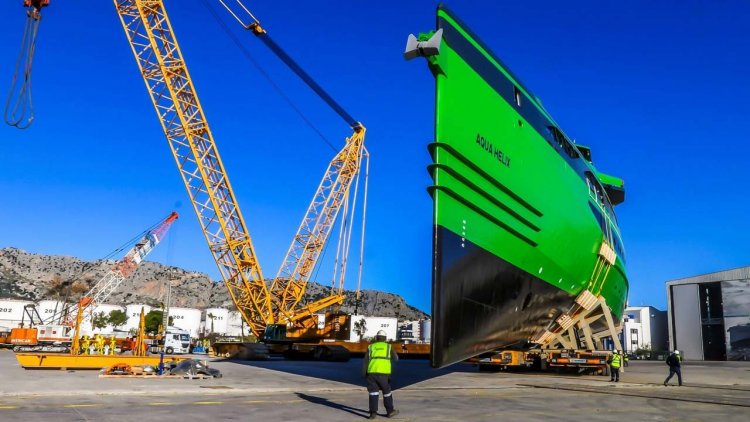
The design of the FCS 7011 pays particular attention to on board comfort – in both transit and transfer. During transit, the vessel’s Sea Axe bow plays an important role, reducing slamming to a minimum. Meanwhile, the accommodation is located just aft of mid-ships – where pitching motions are experienced minimally. Damen has incorporated interceptors to the vessel’s aft to reduce both pitch and roll motions during sailing.

Inside, passengers have luxurious reclining seating with excellent visibility that helps connect them to the sea, enabling them to adjust and reducing the potential for seasickness.

To ensure that the theme of comfort continues during people transfer, Damen has integrated numerous motion-compensating technologies to achieve the optimal result. This involves the Kongsberg DP system, the tailor-made Ampelmann gangway, VEEM gyrostabiliser, MTU main engines, Hamilton waterjets, Danfoss shaft generators and Veth bow thrusters.

Typically, each of these components would be applied individually. Damen’s approach – which has been thoroughly tested via scaled models and simulations – has been to focus on enhancing the interaction between each one, creating a tightly integrated advanced control system that allows each part to excel in its specific task, resulting in a system greater than the sum of its parts. This will set new standards in the marine access market on a global scale.

In line with Damen’s aim of becoming the most digitalised shipbuilder, the FCS 7011 will also feature Damen Triton – a connected vessel platform. With sensors located around the vessel, the platform will collect information that will benefit operators, enabling remote monitoring, preventive maintenance and efficient sailing, resulting in lower fuel consumption and emissions.

ABS to Class first Jones Act wind farm service operation vessel

0

The first U.S.-flagged Jones Act offshore wind farm service operation vessel (SOV) ever ordered will be built to ABS Class.

The SOV will be engineered, constructed and operated by Edison Chouest Offshore (ECO) for long-term charter to service the planned Revolution Wind, South Fork Wind and Sunrise Wind offshore wind farms in the northeast United States.

Matt Tremblay, ABS Senior Vice President, Global Offshore, said:

“ABS’ unique understanding of the U.S. regulatory environment and our industry-leading offshore experience means we are uniquely well placed to support projects such as this. We are fully committed to supporting development of the U.S. offshore wind industry and proud to be part of this initiative, which will play a key role in delivering its exciting potential.”

Gary Chouest, ECO President & CEO, said: “We are unique in the U.S. offshore marine vessel industry with our own in-house design and engineering group, our own shipyards, and a wealth of expertise in the offshore industry.  This puts us in an industry-leading position as the only U.S. company capable of fully engineering, constructing and operating specialized vessels for this market.  ECO put the first deep water support vessel in the Brazil offshore market with the Damon Chouest in 1991.  ECO put the first purpose designed and built deep water support vessel in the Gulf of Mexico with the Amy Chouest in 1992.  And now ECO will again be first by placing the first SOV in the U.S. windfarm market.”

The 80-meter-long vessel, which will be capable of housing 70 passengers/wind turbine technicians, will operate on diesel electric power meeting EPA Tier 4 emission standards and will feature proprietary ECO Variable Frequency Drive to substantially reduce fuel consumption and greenhouse gas emissions.

Completion of exploration well on the Bask prospect in the southern Barents Sea

0

Lundin Energy AB has announced that its wholly owned subsidiary, Lundin Energy Norway AS (together Lundin Energy), is now completing exploration well 7219/11-1, targeting the Bask prospect in licence PL533B, in the southern Barents Sea, northwest of the Alta discovery.

The main objective of the well was to prove hydrocarbons in Paleocene aged sandstones. The targeted formation contained poorly developed reservoir, and although traces of hydrocarbons were found, it is not considered commercial and the well is classed as dry.

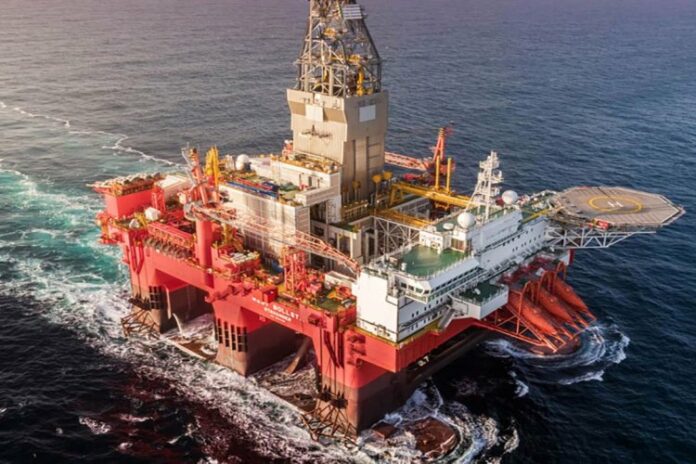
The Bask well was drilled 35 km northwest of the Alta discovery and due south of the Johan Castberg field by the West Bollsta semi-submersible drilling rig. Lundin Energy is the operator of PL533B with a 40 percent working interest. The partners are AkerBP ASA with 35 percent and Wintershall DEA Norge AS with 25 percent.

The West Bollsta rig will now proceed to drill the Lundin Energy operated (65 percent working interest), Segment D prospect in PL359, adjacent to the Solveig subsea tie back development project, on the Utsira High. Well 16/4-13S will target Permian and Triassic aged sandstones, similar to those found at Solveig. On the success of Segment D, development would be via a low cost tie-in to the Solveig subsea facilities.

The partners are OMV (Norge) AS with 20 percent and Wintershall DEA Norge AS with 15 percent working interests.


Intellian launches C700 Iridium Certus® maritime terminal

0

With its best-in-class RF performance, the C700 can deliver out-of-the-box uplink speeds of 352kbps and downlink speeds of 704kbps by default, with equally impressive low-elevation-angle RF efficiency thanks to its unique 12-patch phased array antenna technology.

The advanced performance of the C700 provides customers across all markets with the flexibility to deploy it as the primary communication antenna or as a companion to a VSAT system for seamless redundancy. For primary communications, the Below Deck Unit (BDU) incorporates key features which make it ready to deploy without additional cost, including firewall, IP PBX, WAN port and built-in Wi-Fi. The stability and reliable connectivity afforded by the C700 also make it a platform for future safety services, including the Global Maritime Distress and Safety System (GMDSS).

The BDU, weighing approximately 1.2kg, is available as a standalone bulkhead mount system or a 19” all-in-one rack-mount version.The C700 can be carried on board by just one technician or crew member for rapid and low-cost installation. Once the C700 is installed, the built-in, AptusLX software enhances the commissioning and setup experience of customers and partners.

Wouter Deknopper, Vice President and General Manager of Maritime, Iridium, observes:

“Many vessel owners and operators may decide against VSAT for budgetary reasons, lack of deck space or the absence of adequate coverage on their voyage routes, so Iridium Certus is ideal as a primary means of communication, supported by the ease of upgrading to the C700 from an existing system.

“Iridium Certus also excels as a VSAT companion, combining the benefits of LEO with GEO, and L-band with Ku-band. VSAT can suffer from certain degradations and also isn’t global. That’s where you need a strong hybrid system, and Intellian of course is a highly respected manufacturer of maritime VSAT antennas and the new C700, so it is in a strong position to offer a very competitive turnkey hybrid package on the market. The flexibility of the airtime packages Iridium and our partners offer for Intellian customers is also an essential consideration in such uncertain times for the shipping industry and beyond.”

L-band is particularly resistant to rain fade and other forms of atmospheric interference, and the C700’s 12-element antenna arrangement is designed to supply rapid and efficient tracking performance, leading to optimal high-speed data and voice connections.

Troels Christensen, Product Manager, EMEA, Intellian, explains:

“The signal stability is exceptional even on fast boats or smaller vessels in rough seas, where you may experience heavy pitch and roll. The fact that it can be retrofitted by reusing a vessel’s old mast mount, cables and power supply saves additional time and money. There’s no need for extra boxes, there are no hidden costs, and Iridium Certus provides truly global coverage, even at the poles, so the C700 is an L-band innovation that pays ample dividends not just for smaller vessels, but right across the board.”

Over 300 companies join forces to help resolve a humanitarian crisis on the world’s oceans

0

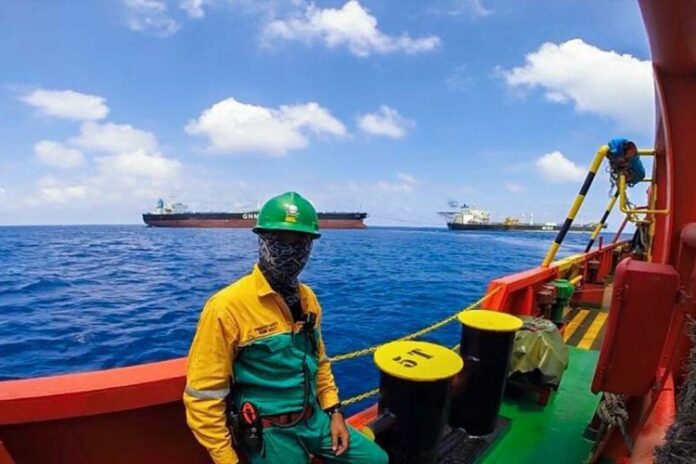
Hundreds of thousands of seafarers from across the globe have been left stranded working aboard ships beyond the expiry of their initial contracts and are unable to be relieved since the outbreak of the coronavirus pandemic. 

Fatigue after long periods at sea has significant consequences on the physical and mental wellbeing of seafarers. It also increases the risk of maritime incidents and environmental disasters, and poses a threat to the integrity of maritime supply chains, which carry 90% of global trade.
Despite significant efforts by international organizations, unions, companies and some governments to resolve this untenable crew change crisis we are starting to see the situation getting worse as governments bring in more travel bans in response to the new strains of the Covid-19 virus. A number of key issues leave this critical situation unresolved: national authorities around the world continue to see crew changes and international travel as a Covid-19 risk; high-quality health protocols are not being consistently implemented by ship operators; and the disruption of international air travel has reduced the number of flights between traditional crew change hubs and major seafaring nations.

More than 300 companies and organizations recognize that they have a shared responsibility based on their roles across the entire maritime value chain, and beyond, to ensure that the crew change crisis is resolved as soon as possible. Including the International Association of Ports and Harbors, they have signed the Neptune Declaration on Seafarer Wellbeing and Crew Change that defines four main actions to facilitate crew changes and keep global supply chains functioning:
 
• Recognize seafarers as key workers and give them priority access to Covid-19 vaccines
• Establish and implement gold standard health protocols based on existing best practice
• Increase collaboration between ship operators and charterers to facilitate crew changes
• Ensure air connectivity between key maritime hubs for seafarers
 
Guy Platten, Secretary General, International Chamber of Shipping, commented:

“Seafarers are the unacceptable collateral damage on the war on COVID-19 and this must stop. If we want to maintain global trade seafarers must not be put to the back of the vaccine queue. You can’t inject a global population without the shipping industry and most importantly our seafarers. We are calling on the supply chain to take action to support seafarers now.”

The Neptune Declaration has been developed by a taskforce of stakeholders from across the maritime value chain including A. M. Nomikos, Cargill, Dorian LPG, GasLog, Global Maritime Forum, International Chamber of Shipping, International Maritime Employers’ Council, International Transport Workers’ Federation, ONE, Philippine Transmarine Carriers, Sustainable Shipping Initiative, Synergy Group, V. Group, and World Economic Forum.

Patrick Verhoeven, IAPH’s Managing Director, added:

“IAPH has also been cooperating with an initiative led by the International Chamber of Shipping (ICS) on COVID-19 related guidelines for ensuring a safe shipboard interface between ship- and shore-based personnel. It has also participated in the formulation of a 12-step framework of protocols on crew changes compiled by ICS in coordination with the maritime industry and supports the rapid adoption of the FAL requirement on digital health security. The Maritime health declaration along with the Crew list (FAL Form 5) must take absolute priority to facilitate crew changes and treatment for sick crew members.”