-5.4 C
New York
Home Blog Page 696

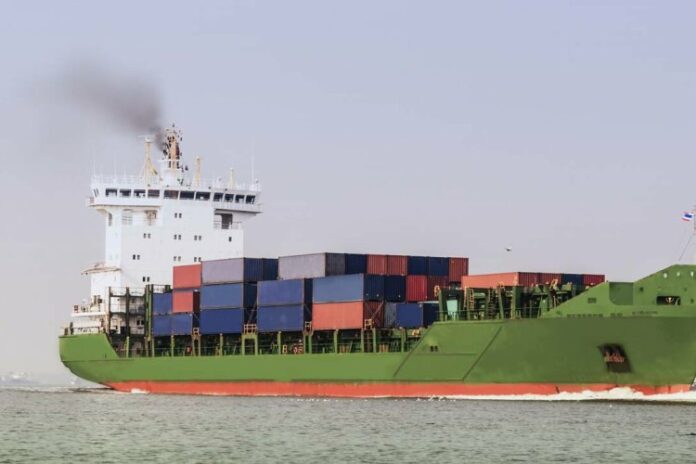
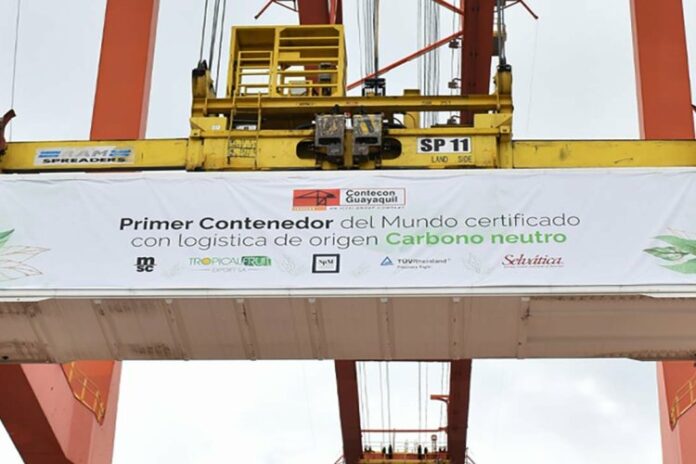
Contecon Guayaquil handles first carbon-neutral container shipment in the world

0

The milestone operation was achieved through the participation and cooperation of TropicalFruit Export SA, CGSA, and Societe International d’Importation (SIIM)–all carbon neutral-certified and known for their strong adherence to sustainable development and environmental care principles, as well as strict compliance to clean technologies and neutralization of their respective carbon footprints.

The shipment of Ecuadorian bananas came from TropicalFruit, an Ecuadorian company dedicated to exporting high quality tropical fruits using high quality standards with emphasis on environmental preservation, social responsibility, health, and safety. The company has been certified as carbon neutral since 2015.

CGSA loaded the container to Antwerpen-bound vessel MSC Geneva.  CGSA, the first port operator in the Americas to obtain ISO 14064 carbon neutral certification from TUV Rheinland, strictly applied the principles of environmental stewardship and use of clean technology to protect its surrounding areas. CGSA’s certification and compensation process was performed locally by Sambito S.A.

Finally, the bananas were distributed and marketed under the SIIM brand Selvatica.  SIIM, a French wholesale distributor of fruits and vegetables, is also involved in developing sustainable agriculture since 2014 through its foundation, and is an advocate of the United Nations’ Sustainable Development Goals.

José Antonio Contreras, CGSA Chief Executive Officer, said:

“This achievement was made possible thanks to the trust of the country’s exporting companies who choose Contecon Guayaquil for their operations, our business partners and government entities with whom we work hand in hand, our employees and management, and most especially our parent company who continually decides to invest in infrastructure that not only allows economic and port growth but also the preservation of the environment.”

Ecuadorian Minister of Transport and Public Works Gabriel Martínez stressed the importance of the CGSA concession:

“It’s such a source of pride for us that Contecon Guayaquil S.A., concessionaire of Guayaquil’s public port, has achieved this milestone, and that it has been the first to do so. We weren’t wrong last year when we released USD170 million worth of investment for this port, and we signed the addendum to give them 19 more years for the concession.”

The milestone demonstrates how exporters can certify their supply chain processes to achieve greater competitiveness in the most exacting markets and at the same time be in compliance with global regulations to successfully meet consumer demand for products from sustainable processes.
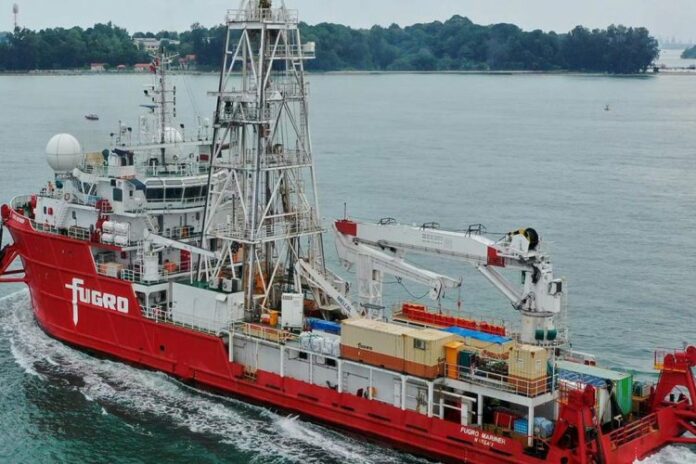
Fugro selects Sonardyne for its uncrewed vessel operations

0

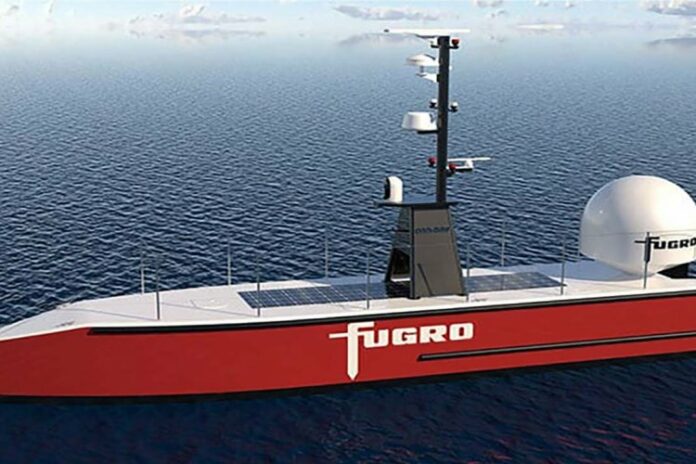
Fugro will integrate Sonardyne’s Mini-Ranger 2 Ultra-Short BaseLine (USBL) positioning system, configured with the company’s Marine Robotics software extension pack, into its new 12 m-long Blue Essence USV, of which the first vessel will be delivered to Fugro’s base in Perth in February.

Mini-Ranger 2 with the enabled Marine Robotics pack will allow the Blue Essence to be used to deploy, track, command and control the Blue Volta electric remotely operated vehicles (eROVs) and autonomous underwater vehicles (AUVs) as part of inspection, survey and data harvesting projects, all controlled from Fugro’s onshore remote operations centres.

Construction of further vessels that will bolster Fugro’s global footprint are under way at SEA-KIT’s bespoke facility in Tollesbury, UK, where integration of the Mini-Ranger 2, complete with hull-mounted acoustic transceiver will take place.

Mini-Ranger 2 is ideal for use from small vessels, including USVs, where survey-grade positioning performance is required. It can simultaneously track 10 targets at very fast update rates, is quick to install and has a standard operating range of 995 m, extendable to 4000 m. Sonardyne’s Marine Robotics software pack unlocks valuable additional capability when used with a compatible subsea vehicle mounted instrument such as AvTrak 6. This includes secure data exchange and remote control of multiple AUVs deployed in swarm scenarios.

Ivar de Josselin de Jong, Global Solution Director for Remote Inspection at Fugro, says:

“The integration of Sonardyne’s positioning system into our unique remote inspection offering, which combines the Blue Essence USV with the Blue Volta inspection eROV, is key in supporting Fugro’s strategy to lead the development of remote and autonomous solutions for a safer, more sustainable and more efficient approach to the construction and maintenance of marine assets. Our fleet will deliver an entirely remote-controlled inspection solution for the first time in history and this will play a pivotal role in the rapidly growing offshore wind sector.”

Graeme Buchanan, Sales Manager with Sonardyne in Singapore, says:

“We’re pleased to be continuing to support the ongoing transition towards increasingly remote and uncrewed operations across all marine sectors. Enabling entirely remote-controlled inspection with solutions such as our Mini Ranger 2 is delivering safer, more sustainable and efficient operations across the ocean space.”

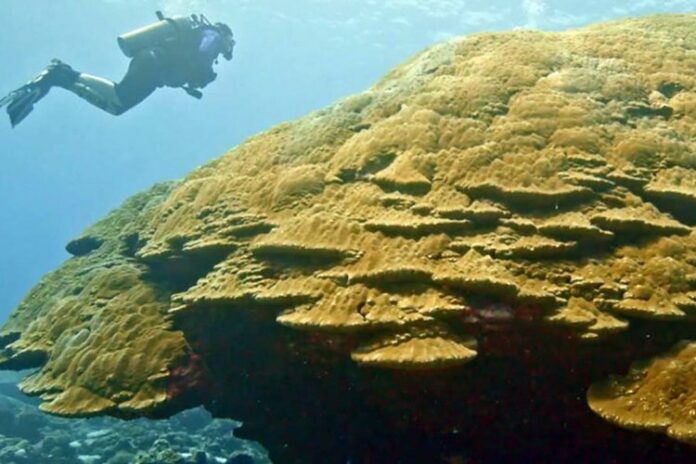
NOAA researchers and partners find new record-sized coral colony in American Samoa

0

The colony was measured and described during a monitoring survey conducted by a multi-agency team including NOAA’s National Marine Sanctuary of American Samoa (NMSAS), American Samoa’s Coral Reef Advisory Group, American Samoa’s Department of Marine and Wildlife Resources, and the National Park of American Samoa, and funded by NOAA’s Coral Reef Conservation Program. The findings were published recently in Natureoffsite link. 

Jennifer Koss, director of NOAA’s Coral Reef Conservation Program, said:

“We are always learning more about coral reefs and ways to conserve them. This is precisely why NOAA continues to have hope for the future of coral reef ecosystems.” 

More than 80 of these exceptionally large corals are scattered around the island of Ta’u, under many different environmental conditions. These unusually large coral colonies could be due to mild wave or atmospheric climates and minimal human impacts, the researchers said.

Atuatasi Lelei Peau, acting superintendent of NMSAS, said:

“Many of these large corals, including the coral known as Big Momma, are located within the sanctuary. It was exciting to learn of another exceptionally large colony on the opposite side of Ta’u. We will continue to work with our partners and the local community to protect these valuable reefs.”

While U.S. coral reef ecosystems cover an area slightly larger than the state of Rhode Island, they provide billions of dollars annually in food, jobs, recreation and tourism, and coastal protection. A U.S. Geological Survey study determined coral reefs annually provide flood protection to more than 18,000 people and $1.8 billion worth of coastal infrastructure.

NOAA’s National Marine Sanctuary of American Samoa is the largest American marine sanctuary and protects 13,581 square miles of shallow water coral reefs and open water. 

NOAA’s Coral Reef Conservation Program awards at least $8 million annually in grants and cooperative agreements for coral reef conservation research and activities.

Silverstream Technologies joins project to decarbonise shipping

0

Clean technology company Silverstream Technologies has announced that it is part of a consortium led by the University of Vaasa which has been granted EU funding under the Horizon 2020 research and innovation programme to accelerate shipping’s decarbonisation pathway.

Project CHEK – deCarbonising sHipping by Enabling Key technology symbiosis on real vessel concept designs – combines the expertise of a range of market leaders, including Silverstream Technologies, Cargill Ocean Transport, MSC Cruises, Wärtsilä, Lloyd’s Register, Climeon, Deltamarin, BAR Technologies, Hasytec Electronics and World Maritime University, all with the aim of reducing shipping’s emissions through the integrated use of low-carbon energy forms and propulsion systems, combined with energy efficiency technologies.

The consortium will work together to demonstrate the impact of a holistic approach to emission reduction in the design of two concept vessels; a bulk carrier, which will utilise sails to capture wind energy, and a cruise ship powered by hydrogen fuel. Both ship designs will feature Silverstream’s air lubrication technology – the Silverstream® System – as a central part of a suite of complimentary energy efficiency technologies. The Silverstream® System has been proven to generate between 5-10% net emissions savings, depending on vessel parameters.

By treating energy efficiency as a fundamental building block of vessel design, and combining it with the application of clean technologies and future fuels, it is estimated that the designs will achieve a 99 percent reduction in greenhouse gas emissions and a 50 percent reduced energy consumption.

Speaking on the new consortium, Noah Silberschmidt, CEO, Silverstream Technologies, said:

“Bold and progressive vessel designs that combine the most effective clean technologies with the cleanest future fuels are an obvious and necessary next step for a sector that needs to tackle decarbonisation today. This project recognises the central role that efficiency technologies will play in that decarbonisation journey. It also reflects the fact that only by uniting the best efficiency ideas and practices in integrated and intelligent designs will we achieve our goals.”

Project CHEK is scheduled to commence in spring 2021. The consortium believes that the holistic approach to emissions reduction pioneered in the two initial vessel designs can also be applied to other vessel types, such as tankers, container ships, general cargo vessels, and ferries.

The project will also prepare for future scenarios and conduct an analysis of factors affecting the development potential for low-carbon shipping, including current and planned infrastructure

Fugro and NYK team up with OYO Corporation for Japan’s offshore wind industry

0

On April 1, 2019, a new law intended to facilitate the development of offshore wind projects off Japan became effective, and demand within the offshore wind power generation market is now expected to expand. Before constructing an offshore wind power plant, it is necessary to collect geotechnical data in the sea area when considering the basic design of the wind turbines and the layout of the power plant.

Following the recent announcement of Fugro and NYK forming a partnership to provide offshore geotechnical services in Japan, the two companies have signed a strategic Memorandum of Understanding (MOU) with leading Japanese geoscience specialist OYO Corporation (OYO).

OYO is Japan’s largest geotechnical investigation company, and is recognized for its surveys and evaluations, include SPTs, to meet domestic construction standards. The CPT is one of the various offshore geotechnical services provided to the offshore wind power industry.

The addition of OYO to the team will further strengthen Fugro and NYK’s position as leading service providers for the growing offshore wind site characterisation market in Japan.

Fugro, NYK and OYO will provide a comprehensive service for the offshore wind energy industry in Japan through the combination of the joint operation of an offshore geotechnical investigation vessel by NYK and Fugro, Fugro’s global knowledge and experience in site investigations for offshore wind farms, and OYO’s insights into the Japanese geoscience market.

Jerry Paisley, Fugro’s Marine Site Characterisation Director for Asia-Pacific, said:

“We’re delighted to welcome OYO to the team alongside Fugro and NYK and view this as another positive step forward for the Japanese offshore wind industry. OYO’s mission to contribute to the creation of a safe and secure society blends perfectly with Fugro’s vision to create a safe and liveable world, and increasing the proportion of renewable energy generated in Japan is our joint investment in Japan’s greener future.”

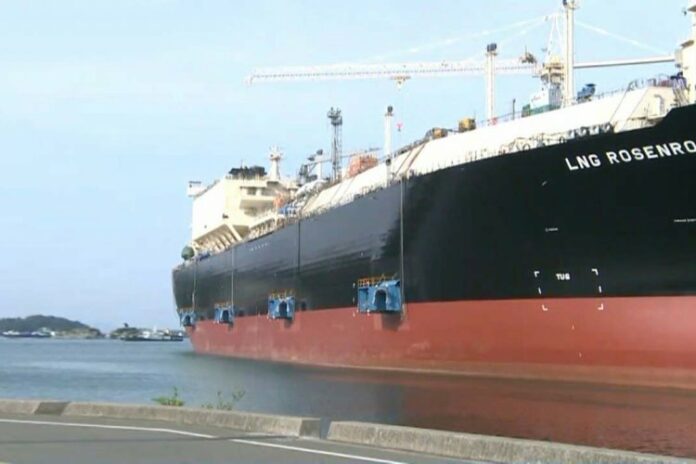
MOL’s newbuilt LNG carrier LNG Rosenrot goes into service for Uniper

0

Mitsui O.S.K. Lines, Ltd. today announced that on January 25th, the LNG carrier LNG Rosenrot, jointly ordered by MOL and Itochu Corporation was delivered at the Okpo shipyard by Daewoo Shipbuilding & Marine Engineering Co., Ltd. (DSME) in South Korea. 

The ship has entered into a transportation service contract with Uniper Global Commodities SE, 100% owned by one of the largest European gas and electricity companies, Uniper SE.

The LNG Rosenrot is a sister vessel of LNG Schneeweisschen that was delivered on 31st July 2018 and is serving under transportation service for Uniper Global Commodities SE. LNG Rosenrot is equipped with the slow-speed two-stroke engine (X-DF) made by Winterthur Gas & Diesel, which can run on natural gas, MGO and Heavy Fuel Oil, and takes main engines efficiency to the next level. X-DF technologies will make LNG transport more efficient and economical.

MOL as one of the world’s leading LNG carrier owner/operator, will service Uniper by providing safe, reliable and highest possible quality LNG transportation services and will as ever meet high expectations of its global customers by leveraging its accumulated experience and know-how and bringing solutions utilizing the state of the art marine technologies.

Outline of LNG Rosenrot:

  • Length: 297.9m
  • Breadth: 47.90m
  • Draft: 11.50m
  • LNG tank: Membrane type
  • Cargo tank capacity: 180,000m3
  • Main engine: X-DF double-engine, twin-shaft system
  • Speed: 19.5 knots
  • Shipbuilder: DSME
  • Ship management company: MOL LNG Transport (Europe) Ltd.
  • Shipowner: MOL 80%, Itochu 20%

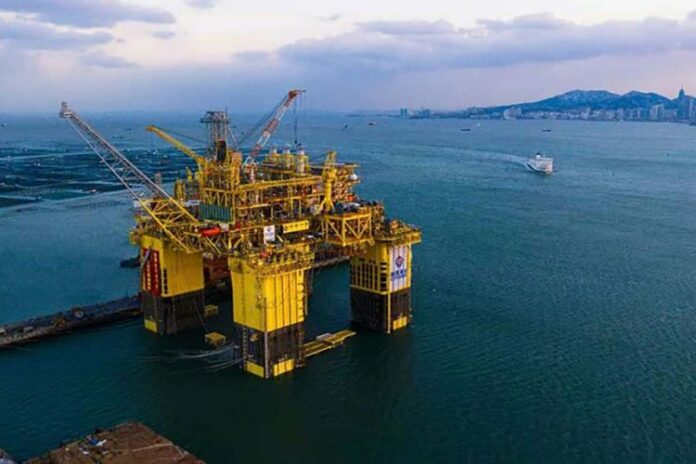
World’s first 100,000-ton deepwater semi-submersible production and storage platform built to ABS Class

0

The world’s first 100,000-ton deepwater semi-submersible production and storage platform, which is built to ABS Class, has been launched in the latest offshore Classification first.

China National Offshore Oil Corporation (CNOOC) will now begin installation and commissioning on the platform, which is a key component of the Lingshui 17-2 Gas Field Development Project.

Matt Tremblay, ABS Senior Vice President, Global Offshore, said:

“We are delighted to be able to support this important project. As the world’s leading offshore Classification organization, ABS’ extensive experience means we are uniquely well placed to support delivery of a project of such scale, complexity and significance to the Chinese offshore industry.”

Uniquely, the platform has a maximum oil storage capacity of nearly 20,000 cubic meters of condensate for ship-to-ship offloading. The Lingshui 17-2 field is the first self-operated, 1,500-meter deep-water gas field development project in China and is a landmark in Chinese offshore history. 

It is just the latest first for ABS in offshore Classification. ABS was the first Class organization to venture offshore, certifying the world’s first mobile offshore drilling unit in 1958 and classing the first jackup, semisubmersible, drillship, FPSO, TLP and spar. ABS Classification services are constantly evolving to meet the needs of changing demands in offshore operations.

Port of Rotterdam Authority launches smart bollard trial at ECT

0

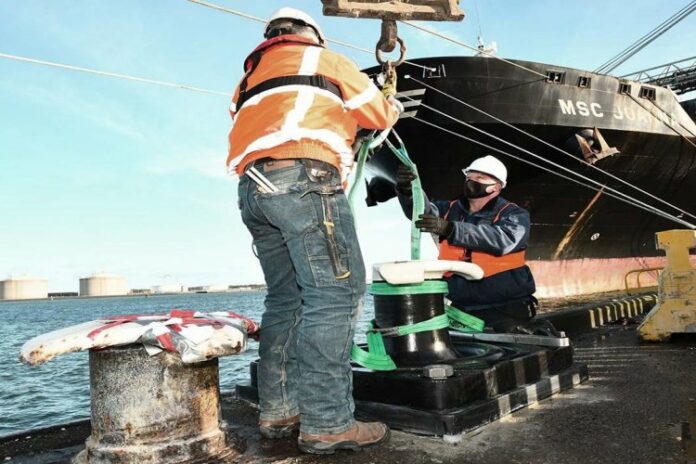
The smart bollard was developed in collaboration with Straatman BV, Zwijndrecht. By measuring the strain on the mooring lines in real time, the bollard not only allows the real-time monitoring of safety, but it also provides a clearer picture of which vessels can moor at which quays.

The trial is in line with the Port of Rotterdam Authority’s policy of making the port more efficient through digitisation.

Until now, it has not been possible to measure the strain on mooring lines. The lack of exact data measured on moored vessels meant we had to assume maximum mooring loads exerted on the lines by the vessels and quay walls. These forces vary due to differences in local conditions. The smart bollard can help give us a better understanding of the forces involved.

When force is applied to a bollard, it moves very slightly. A sensor measures the force and sends the results directly to the Port of Rotterdam Authority. Before the smart bollard was installed, it was successfully put through its paces on a test bench in Zwijndrecht.

The Port of Rotterdam Authority specialises in the construction and maintenance of quay walls. It manages 80 kilometres of quay wall and 200 kilometres of bank shoring, monitoring the structures using collected data. For example, sensors are installed in many quays and the results have shown that quay walls last much longer than had previously been assumed. This research has now resulted in the updating of the European standards for structural design (Eurocodes). The smart bollard trial is part of a series of measures aimed at using digital technology to manage highly capital-intensive assets such as quay walls more efficiently.

Eco Marine Power to utilise new KEI-64S marine computer for system platforms

0

As part of its ongoing product development program Eco Marine Power Co., Ltd. (EMP) has announced that it will incorporate the KEI-64S marine computer system into its zero emission solutions for shipping and offshore applications plus utilise the system architecture for other systems. These solutions include the patented EnergySail®, Aquarius Marine Solar Power and Aquarius Marine Renewable Energy (MRE).

The KEI-64S is a multifunctional computer system designed to be robust and be able to operate in temperatures up to 55°C. It incorporates a 1.33GHz dual core processor and has interface units that support numerous communication protocols including NMEA, MODBUS, USB2.0 and RS-232C. Connections to the ship’s LAN are also possible via Ethernet ports.

In cooperation with KEI System of Osaka, Japan, this new computer will become the core component of the EnergySail Automated Control System (ACS). This control system automatically manages the operation of each EnergySail so that they are positioned to be suit the prevailing weather conditions and lowered and stored as necessary. It also enables each sail to be optimized so that they provide a zero emission source of propulsion and power for ships.

In addition, the KEI-64S will replace the KEI-3240 computer as the main processor for the Aquarius Management & Automation System (MAS). Aquarius MAS is a cost effective monitoring, alarm handling and data logging platform suitable for a wide range of ships. The system can also monitor & log fuel consumption in real-time and calculate emissions (SOX, NOX, CO2). It will also be used as the management system for EMP’s marine solar power solution, be utilised as a data logger and can form part of a battery management system (BMS).

The first KEI-64S based system from Eco Marine Power is expected to be installed this year after which it will become the standard marine computer system for all Eco Marine Power developed solutions.

Kongsberg technology will secure green footprint of new next-generation WTIU

0

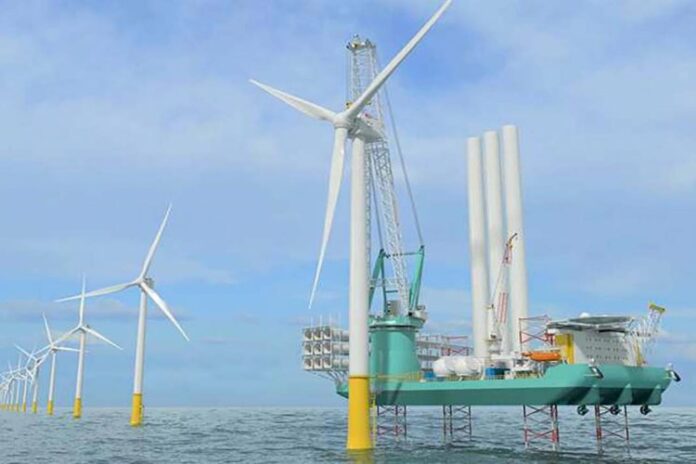
Kongsberg Maritime has signed a Letter of Intent with Chinese shipbuilder Yantai CIMC Raffles Offshore to deliver a large technology package for the BT-220IU Wind Turbine Installation Unit. BT-220IU is to be built for the Norway-based company OIM Wind, with an option for another vessel of identical design. The vessel will be suitable for transporting and installing multiple sets of next- and future-generation wind turbines, and their foundations.

Crucial to the cost-effective and environmentally responsible profile of the new vessel, which is expected to be delivered by the end of 2022, is a Kongsberg Maritime Integrated Solution for Wind Turbine Installation Units. This well-proven solution combines KM’s motion control, propulsion and dynamic positioning functionalities to maintain operability in all conditions.

Monitoring and controlling of the KM components will be handled by a K-Chief 700 marine automation system, and the company’s scope of delivery is rounded out with a comprehensive Digital Solution with a new planning, advisory, monitoring and reporting tool to improve the safety and operation of the vessel.

Included in the delivery are Bergen LNG (Liquified Natural Gas) engines, together with an LNG Fuel Gas Supply System. KM’s new state of the art PM azimuth thrusters will secure optimised performance both for transit, manoeuvring and dynamic positioning. The scope of supply also includes an array of appropriate deck machinery.

The electrical system will make use of KM’s Energy Storage Solution, a green, load-smoothing initiative which will optimise power production and enable the vessel to operate for limited periods on battery power alone. By allowing these stretches of zero-emission running, the solution will reduce the need for installed power and minimise maintenance costs, and can reduce energy consumption by up to 30%.

With the highly efficient power plant running on LNG the vessel will be the most environmentally friendly WTIU built to date.

OIM founder, President and Chief Executive Oddgeir Indrestrand, said:

“OIM have been working closely with Kongsberg Maritime for many years, and we are very happy to include their advanced range of future-proof equipment and solutions into our units.”

Brynjulv Standal, Vice President Sales-Offshore, Kongsberg Maritime, said:

“It’s a source of real pride for us to be such an integral part of the specification for this new wind turbine installation unit. The environmentally friendly principles which shape its design, construction and operation mirror our own ambitions to engender sustainability in offshore wind projects, and of course in all maritime sectors. Our technologies are a key element in achieving these green goals.”