-6.7 C
New York
Home Blog Page 694

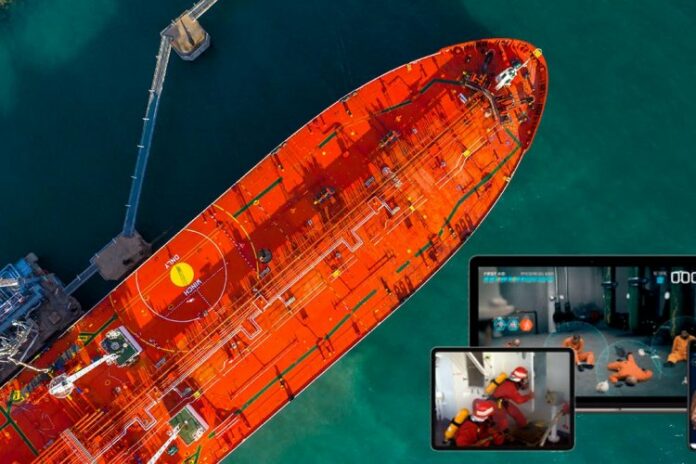
Wallem implements Ocean Technologies Learning Platform

0

The OCEAN Learning Platform is designed to deliver blended learning, assessment and competency management solutions to improve knowledge, skills and behavioural development. The new platform will boost learner interaction and engagement and drive the very best learning outcomes. Wallem’s 7,000 seafarers will access training content on board and ashore, track their progress and follow designated learning paths.

Implementing the platform is the next step in Wallem’s strategy to deliver the highest level of safety and quality operations. It also expands Wallem’s commitment to support the next generation of seafarers by broadening access to some of the best learning content available, going beyond compliance and defining personalized training and career progression plans.

John-Kaare Aune, interim CEO, Wallem Group, said:

“We want to make sure training and development of our seafarers do not take a back seat in this time of increased demand and change. We need tools to accelerate the time-to-competence for our seafarers.”

Yvette de Klerk, Head of Training, Ship Management, Wallem Group, commented:

“The OCEAN Learning Platform enables us to proactively close training gaps and increase training effectiveness, which in return will strengthen our safety culture. Simultaneously, the trainers at Wallem will benefit from the automated processes, training data analysis and ability to track crew achievements online.”

Manish Singh CEO of Ocean Technologies Group, commented:

“We are delighted that Wallem has chosen to strengthen its partnership with us, being amongst the first customers to sign up to our new best of breed learning platform. As a progressive ship management company with a diverse fleet and global training initiatives across ship and shore, Wallem is ideally placed to take advantage of the comprehensive new features and services we now offer.”

“We are particularly excited to introduce the platform to Wallem’s 7,000 seafarers and to deliver them a new level of learning experience that will help them to stay safe and achieve their career goals.”
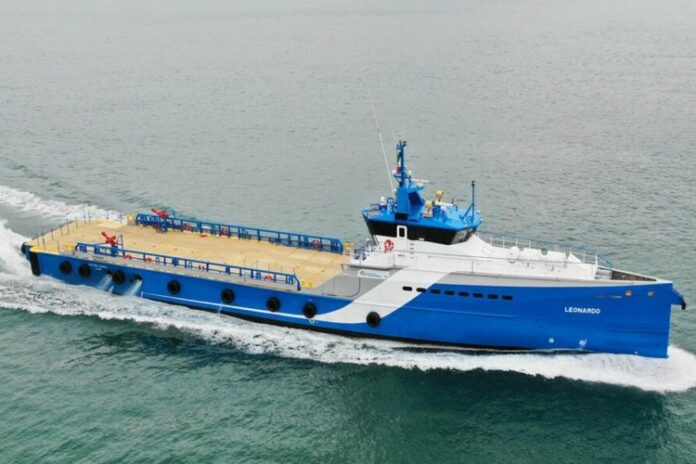

Damen will supply the gyrostabiliser to one of Naviera Integral’s latest FCS

0

Damen Shipyards Group has placed an order with VEEM – the Western Australia-based market leader in marine stabilisation products – for a VG1000SD Gyrostabiliser. Damen Services will supply the gyrostabiliser to one of Naviera Integral’s latest Fast Crew Suppliers (FCS) 5009, as well as providing the required engineering and supervision of the installation.

The vessel, which is one of fifteen Damen FCS 5009 vessels in Naviera Integral’s fleet, operates in the Gulf of Mexico. The company’s client sees the advantages in the increased safety and cost-efficiency offered by marine access solutions.

The incorporation of the 20-tonne VEEM unit will reduce roll motions significantly, enabling the vessel to operate with optimal speed and efficiency, even in rough seas.

Marcel van Hemert, account manager at Damen, said:

“Installing the stabilisers to the FCS 5009 will considerably increase comfort for those on board. Additionally, the vessel will be able to operate in harsher weather conditions, maximising uptime. We are very confident that integration of gyrostabilisers to marine access solutions has a promising future. This paves the way for marine access farther from shore to become a more relevant and practical solution, making offshore transfers both safer and more cost-efficient.”

The use of a VEEM Gyrostabiliser on a Damen Fast Crew Supplier has already been proven. In 2018, twin VEEM VG260SD stabilisers were fitted to an FCS 5009 and tested in the North Sea.

During the trials, the simple effects of switching the stabilisers on and off very clearly demonstrated their success; roll motion of the vessel was reduced by between 35 and 40% in DP mode.

As a result of this trial, Damen is currently installing a VG1000DS stabiliser to its forthcoming FCS 7011 vessel, currently under construction at Damen Shipyards Antalya, Turkey.

VEEM typically produces its gyrostabilisers for motor yachts, fast ferries, workboats and naval vessels. The installation of the stabilisers to Damen’s FCS 7011 and 5009 vessels marks the first time this game-changing technology has been used in the commercial offshore supply sector.

Alfa Laval joins the Mærsk Mc-Kinney Møller Center for Zero Carbon Shipping

0

Alfa Laval – a world leader in heat transfer, centrifugal separation and fluid handling – has joined the Mærsk Mc-Kinney Møller Center for Zero Carbon Shipping to accelerate and work with the development of low- and zero carbon technologies for the marine industry. As a strategic partner Alfa Laval will be part of the Center’s advisory board, providing strategic and technical guidance for future development projects and activities.  

The International Maritime Organization (IMO) targets a 50 percent reduction of vessel-related greenhouse gas emissions by 2050. To achieve the long-term target of decarbonization the industry must shift to new fuel types and technologies. The development of new technologies requires coordinated efforts by industry leaders to ensure that research and innovations are successfully matured into scalable solutions.

The collaboration with the Mærsk Mc-Kinney Møller Center will focus on accelerating the development of low- and zero carbon technologies through joint projects and activities. One example is the recently announced ‘SOFC4Maritime’, which targets solutions for green fuels to generate power onboard marine vessels.

Sameer Kalra, President of the Marine Division, says:

“Collaboration with industry experts is vital to achieve a shift towards more sustainable solutions. We need a common view of the roadmap for the shipping industry, and we will bring our individual expertise to the table to drive and accelerate the development. One of the latest projects ‘SOFC4Maritime’ (for solid oxide fuel cells) is just one example of activities which stems from that ambition.”

Bo Cerup-Simonsen, CEO of the Mærsk Mc-Kinney Møller Center comments:

“Alfa Laval shares our vision of a zero-carbon maritime industry and acknowledges the vast effort required to get there. Their vital experience and knowledge will enable the Center to establish the overall narrative of the transition and contribute to the projects and activities which will accelerate the development of tomorrow’s solution.”

Neptune Energy commences Seagull drilling campaign

0

The Gorilla VI (JU-248) jack-up rig, operated by Valaris, will drill four wells for the development over the course of the drilling campaign which is expected to last 18 months.

Neptune Energy’s UK Managing Director, Alexandra Thomas, said:

“In late 2020, we successfully completed the first subsea construction phase for the Seagull project, that underpins Neptune’s further growth on the UKCS. Thanks to a collaborative approach between Neptune, our partners bp and JAPEX and key contractors, we are progressing with the project at pace and have reached another important milestone. Seagull is expected to produce 50,000 boe per day (gross) and will make a significant contribution to both UK MER and energy security, as well as supporting local supply chains.”

Seagull is a high pressure, high temperature (HPHT) development on UK licence P1622 Block 22/29C, 17km south of the bp-operated ETAP Central Processing Facility (CPF). Proved plus probable gross reserves are estimated at 50 million boe.

The development will be tied back to the ETAP CPF, partially utilising existing subsea infrastructure. Gas from the development will come onshore at the CATS processing terminal at Teesside, while oil will come onshore through the Forties Pipeline System to the Kinneil Terminal at Grangemouth. 

Neptune is the operator of Seagull and has a 35% equity interest. Its joint venture partners are bp with 50% and JAPEX with 15%.

DeepSea launches AI-driven platform for vessel performance insights Cassandra Light

0

DeepSea Technologies, the AI led maritime technology company, has launched Cassandra Light, the world’s first cost-effective, hardware-free AI-driven platform able to deliver accurate vessel performance insights using only noon data. 

For less than the cost of a ton of fuel, Cassandra Light enables charterers and shipowners to gain visibility and transparency on vessel performance across their whole fleet.

Cassandra Light monitors and visualises CO2 emissions and notifies users of fuel over-consumption, representing a key tool in charterers’ and shipowners’ efforts to reduce the environmental impact of their fleets in line with the wider goal of decarbonisation, and helping drive a significant reduction in fuel spend. The platform also provides AI-based performance insights to present an at-a-glance overview of key vessel metrics in one place. This includes alerts that quickly detect performance anomalies and critical events that might need further investigation. Cassandra Light provides instant full fleet monitoring and assessment, allowing charterers and shipowners to benchmark their assets against the global fleet A critical breakthrough, it uses AI to validate reported consumption figures, bringing a new level of accuracy to noon report data.

The Cassandra Light technology makes AI accessible to every company with no barriers to entry and without any upfront investment or hardware installation. The product is beneficial to charterers and ship owners of all sizes and stages in their digitalisation journey. This includes companies at an early stage in their digitisation journey, as well as those with mixed-age or regularly changing fleets who want a flexible and low overhead solution for performance transparency and insights. Critically, Cassandra Light, is ideal for those who want to trial an AI-driven platform without making a substantial CAPEX investment.

Commenting on the announcement, Roberto Coustas, Co-Founder and CEO DeepSea Technologies, said: 

“Cassandra Light is an industry-first platform that makes, for the first time, – cutting edge technology accessible to everyone, becoming the perfect ally for charterers and ship owners at all stages of digitalisation, supporting their journey to performance transparency, maximised profitability and decarbonisation.

“By accurately capturing the wide range of variables that impact vessel performance, Cassandra Light offers the opportunity to see these elements in a new light that enables critical business decisions to be made with greater confidence. The implications of a product such as Cassandra Light stretch far beyond individual vessels and fleets, with the potential to redesign fundamental relationships, unlock competitive and societal benefits, radically transform the industry and be game-changing from an investment and a chartering perspective.”

While there are other products on the market such as ERP systems which organise noon report data, Cassandra Light has the ability to integrate with current noon reporting data systems to extract performance and monitoring information, which in turn supports business decisions that lead to fuel and emissions savings.

Cassandra Light is the latest addition to the Cassandra suite, which is the most powerful vessel performance monitoring technology on the market and provides 360° technical optimisation. The platform utilises the depth of knowledge gained from its large pool of high frequency data to build AI models based only on AIS, noon reports and weather data.

Important contracts in place in the Northern Lights project

0

Subsea 7 has won an EPCI (engineering, procurement, construction and installation) contract for pipelaying and subsea installations. The contract value is estimated at about NOK 500 million.

The supplier will fabricate and lay a 100 km long pipeline that will transport CO2 from the intermediate storage site at Energiparken in Øygarden to the injection well in the North Sea.

Subsea 7 will also install a 36 km long umbilical that will connect the injection well to the Oseberg field from which the subsea injection facilities will be operated.

Project management and engineering will be delivered by Subsea 7’s office at Forus, while fabrication of pipes will be done at the Vigra spool base near Ålesund. The contract is expected to result in approximately 250 man-years during the project’s life. Planning of the work will start immediately, and the main offshore operations are scheduled to be carried out during 2022-2023.

Peggy Krantz-Underland, Equinor’s chief procurement officer says:

“The new contracts in the Northern Lights project will create important activity for the supplier industry. Most contracts are now in place, and we look forward to working together with the selected suppliers to realise this pioneering project.”

Photo: Equinor

Aibel has been awarded an EPCI contract for the Northern Lights subsea control system located on the Oseberg A platform. The contract is awarded as a call-off against the existing Oseberg portfolio agreement signed in July 2020. The estimated value of the assignment is about NOK 140 million.

The scope of work includes all necessary upgrades on the Oseberg A platform to pull in and operate the umbilical system that will connect the platform and the Northern Lights subsea facilities.

Project management and engineering will be performed at Aibel’s offices in Bergen and Stavanger, and prefabrication will take place at the Haugesund yard. The project will contribute with about 60 man-years for Aibel. The work will start in January 2021 and is planned to be completed late 2023.

Sverre Overå, project director of Northern Lights, says:

“The Northern Lights project is the first of its kind offering a solution to cut emissions from industrial sources in Norway and Europe. Work has started at the site and with these two important contracts in place, we are ensuring that the project progresses according to plan in order to deliver a key part of the important Longship project.” 

Damen delivers two FCS 2710 in support of offshore wind industry

0

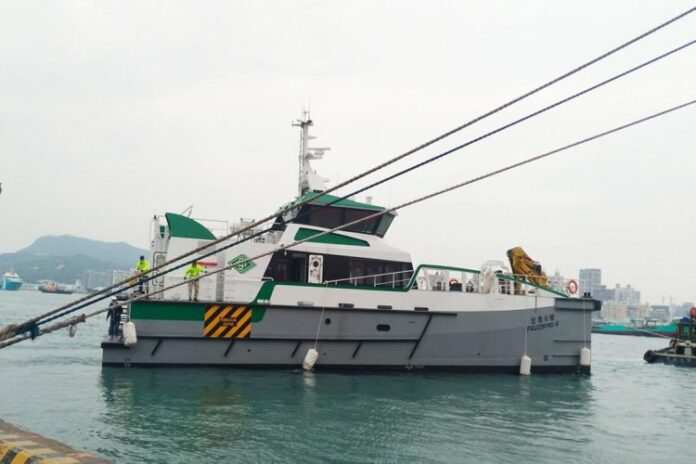
Damen Shipyards Group has delivered two Fast Crew Suppliers (FCS) 2710 to Hung Hua Construction Co., Ltd. in Taiwan. The vessels, named Falcon No. 5 and Falcon No. 6, join two other Damen FCS 2710 vessels and an FCS 2610 in the company’s fleet.

Like the previous vessels, Falcon No. 5 and Falcon No. 6, will be operated by Dong Fang Offshore (DFO), a wholly owned subsidiary of Hung Hua Construction. The vessels serve the local offshore wind industry currently being developed in Taiwan.

Damen has built the latest two vessels during the challenging times presented by the global coronavirus pandemic. To ensure the well-being of all involved in the project, the shipbuilder introduced robust safety measures. This included social distancing and reducing the amount of personnel on site at one time to minimise risk of spreading the virus.

As a result of such measures, the construction of the vessels was able to continue. Damen has taken steps to ensure their arrival in Taiwan in time for the start of the offshore work season. This has included transporting the Falcon No. 5 and Falcon No. 6 on a heavy lift vessel – faster than sailing the vessels on their own keel. Following their arrival, the vessels are undergoing final preparations ready to commence work in March.

Polin Chen, DFO’s Operations Director, stated:

“We are pleased to see Falcon No. 5 and Falcon No. 6 joining our fleet in the beginning of 2021. Throughout 2020, the FCS 2710 has proven its workability and efficiency on the west coast of Taiwan during rough sea conditions. We hope to continue to capitalise on this advantage as we are confident that we will gain a strong foothold in this segment.”

Damen sales director Asia Pacific, Michiel Hendrikx, said of the delivery:

“It’s good to see these two vessels joining the Hung Hua Construction fleet. We see this repeat order as confirmation of the FCS designs’ capability to meet market requirements. We see strong potential for growth in the region, with numerous projects planned in Taiwanese and Asian waters in the coming years.

To these ends, Damen has already started work on the construction of two further FSC 2710 vessels at its Damen Song Cam Shipyard in Vietnam.

This is the Damen approach to shipbuilding in action. We produce our standardised, proven vessels for stock – in the areas where our clients need them. This way, when the needs arise we can deliver the vessels in the fastest possible time.”

DecomBlades consortium awarded funding for a wind turbine blade recycling project

0

Ten months after becoming carbon neutral, the Science Based Targets initiative verifies that Siemens Gamesa’s emission reduction strategy is aligned with what climate science says is required to meet the 1.5°C trajectory. Siemens Gamesa joins a group of 430 other global organizations who have had their targets approved by the SBTi, where only about 150 have targets consistent with meeting the most ambitious 1.5°C scenario.

Ten Danish project partners have been awarded funding from Innovation Fund Denmark’s Grand Solutions program to co-fund the research and development project ‘DecomBlades’: a three-year project which seeks to provide basis for commercialization of recycling of wind turbine blades using sustainable solutions. The project partners are rooted in Denmark, but many operate all over the world and have the capability to implement solutions on a global scale.

The cross-sector consortium behind DecomBlades consists of Ørsted, LM Wind Power – a GE Renewable Energy business, Vestas Wind Systems A/S, Siemens Gamesa Renewable Energy, FLSmidth, MAKEEN Power, HJHansen Recycling, Energy Cluster Denmark (ECD), University of Southern Denmark (SDU) and Technical University of Denmark (DTU). Together, these partners represent the value chain required to establish a recycling industry for composite materials – from supply, to processing, to implementation.

Today 85 to 95% of a wind turbine can be recycled, but cost-efficient recycling of composite materials remains a challenge. On a global scale, an estimated 2.5 million tons of composite materials are currently in use in wind turbines.

The wind power industry produces far less composite waste compared to other industries – such as the construction, electronic, transport and shipping industries – nonetheless it is an important objective for the wind power industry to ensure sustainable recycling solutions exist for all materials used in a wind turbine. As the wind power industry grows, that responsibility becomes even bigger.

John Korsgaard, LM Wind Power Senior Director of Engineering Excellence and Chair of the DecomBlades Steering Committee, stated:

“The wind power industry is committed to finding a sustainable way to dispose of these decommissioned wind turbine blades with respect to the environment, health and safety of workers, energy consumption and cost, and we simply don’t yet have solutions that meet all those criteria. To create viable, sustainable, cost-efficient solutions for recycling wind turbine blades, it is essential that composite materials from blades can be incorporated into similar resource streams and processed in the same facilities.”

In DecomBlades, the ten project partners will investigate and develop solutions to recycle the composite material in wind turbine blades. The project focuses on three specific processes: shredding of wind turbine blades such that the material can be reused in different products and processes; use of shredded blade material in cement production; and, finally, a method to separate the composite material under high temperatures, also known as pyrolysis.

John Korsgaard stated:

“In pursuit of a carbon neutral society, recycling end-of-life materials and switching to alternative materials in cement production can play a significant role in reducing CO2 emissions. The DecomBlades project focuses on recycling technologies which can be upscaled to recycle the expected volumes of decommissioned wind turbine blades in the coming decades. The investment and commitment from this cross-sector consortium represents the next step to further the growth of these recycling industries.”

ABB to power South Korea’s first domestic zero-emissions ferry

0

The new ferry represents the first commitment by South Korean authorities to a plan which will see 140 state-owned conventionally powered vessels replaced with those operating on cleaner alternatives by 2030, in line with environmental legislation. Sustainable transportation, including marine vessels, will play an important role in South Korea’s plan to achieve net-zero emissions by 2050, set out in the country’s Green New Deal, announced in 2020.

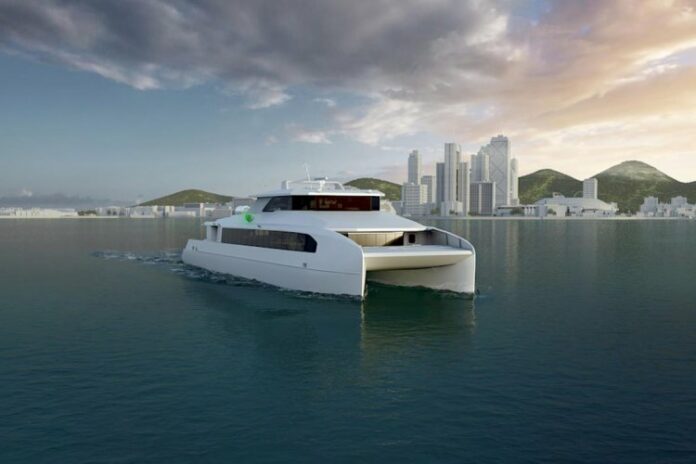
As the first system integrator chosen to support this initiative, ABB will deliver an end-to-end electric power and propulsion solution for the twin-hulled ferry, which is due for delivery in 2022. The 40-meter catamaran ferry will have the capacity to carry up to 100 passengers and five crewmembers and will operate between Busan’s North and South ports, taking about one hour to complete a return journey with an average operating speed of 13 knots (24 km/h). Financial details of the contract were not disclosed.

Busan-based shipbuilder Haemin, which specializes in lightweight environmentally-friendly vessels, and ABB have also signed an agreement to collaborate on further vessel projects in the future.

Juha Koskela, Division President, ABB Marine & Ports, said:

“We are truly proud to have been chosen as technology supplier for the first vessel in South Korea’s clean fleet renewal scheme. Our agreement with Haemin represents a major advance in the local market, supporting South Korea’s plans for sustainable shipping, as part of our strategy for reducing global vessel emissions. Sustainability is a key part of the value that we create for all of our stakeholders and the new partnership with Haemin is an example of how we enable a low-carbon society and help preserve resources.”

Hyeong-seok Oh, CEO, Haemin Heavy Industries Co., Ltd., said:

“Being commissioned to build the first ever fully electric vessel for the South Korean market is a great honor. We are looking forward to working with ABB, whose proven technologies and long presence in South Korea are a key part of this landmark project.”

The ferry will be powered by two 1,068-kWh battery packs, which will provide a clean and flexible energy source for the ferry’s journeys. The batteries will provide enough power for the ferry to complete up to four return journeys before charging from shore during the vessel’s overnight stops. ABB’s Onboard DC Grid™ power distribution system will ensure that the battery output is delivered to the vessel’s subsystems in the most optimal way, while ABB’s Power and Energy Management System (PEMS™) will control the overall power distribution, increase fault tolerance and provide a high degree of reliability.

Once in operation, the ferry will be remotely monitored and supported by experts from ABB’s global network of ABB Ability™ Collaborative Operations Centers. Remote support and connectivity, together with advanced data analytics enabled by the ABB Ability™ Remote Diagnostics System, will further enhance the vessel’s operational safety and ensure optimal performance, while helping to promptly detect and correct faults on board.

The global ferry industry, which, according to trade association Interferry, is responsible for transporting over 2 billion passengers annually is under pressure to reduce its carbon footprint. ABB’s electric propulsion technology will mean Busan Port Authority’s new ferry immediately achieves the International Maritime Organization’s global target to cut annual emissions by at least 50 percent by 2050 from 2008 levels.

Electrification is widely considered as one of the key solutions for reducing ferry emissions worldwide. According to data from the Maritime Battery Forum, over 130 battery-powered ferries are in operation, with more than 90 on order. ABB is well advanced in ferry electrification, supporting leading ferry operators such as P&O Ferries, Washington State Ferries and others in their advances for achieving sustainable operations.

Zero-emission e5 tanker to get Corvus battery

0

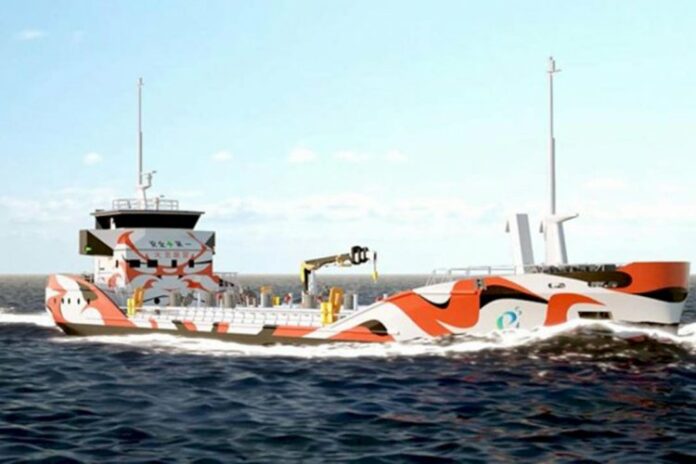
Kawasaki Heavy Industries selects Corvus Orca ESS for battery-powered propulsion system on board all-electric Asahi Tanker vessel

Corvus Energy has announced that Kawasaki Heavy Industries has selected Corvus Energy to supply the energy storage system (ESS) for the first zero-emissions electric “e5 tanker” currently under construction for Asahi Tanker Co., Ltd. of Tokyo, Japan.

The highly publicized battery-powered vessel was designed by e5 Lab Inc., a consortium of leading Japanese shipping and maritime services companies, including Asahi Tanker Co., Ltd., set up to build infrastructure services focused on electrically powered vessels. The vessel for Asahi Tanker is the first of two all-electric vessels to be built from the e5 Lab initiative and is expected to go into service in bunkering operations in Tokyo Bay by 2022. The ships will be built by KOA Industry Co., Ltd. and Imura Shipyard Co., Ltd. in Japan.

Geir Bjørkeli, CEO of Corvus Energy, says:

“Japan is an important market for Corvus Energy and a big part of our future growth strategy. Like Norway, Japan is a maritime nation with a clear path towards a green future. The government has already announced ambitious plans to be free of carbon emissions by 2050, which will require significant decarbonization initiatives in its world-leading shipping industry.”

Kawasaki Heavy Industries (KHI) was awarded the contract for the ship’s propulsion system September of 2020 and will integrate the 3,480 kWh Orca ESS from Corvus Energy to power the vessel.

Ohno Tatsuya of Kawasaki Heavy Industries says:

“Corvus Energy has battery and marine market expertise unlike any other. They have been an outstanding partner in other projects, and we are excited to work with Corvus again on this ground-breaking project.”

Pradeep Datar, Vice President – Asia for Corvus Energy, says:

“To be awarded this contract is a milestone for Corvus Energy as this is such an important project to be part of. KHI has significant expertise in marine propulsion and electrical systems design and this contract shows that we are recognized for our expert knowledge as well as our ability to reliably deliver a high-performance ESS.”

As reported in a statement from Asahi Tanker, which operates 137 vessels, the e5 tanker will achieve zero emissions of CO2, NOx, SOx, and particulates, dramatically reducing environmental impact. In addition, reduced noise and vibration will create a more comfortable work environment for the crew members and limit noise pollution in the bay and its surroundings. Further, the vessel will make its battery power available to emergency services in the case of a natural disaster in Tokyo. This idea was originally proposed by e5 Lab and Asahi Tanker.