-10.3 C
New York
Home Blog Page 669

Crowley, Greenbrier launch and christen new fuel barge for Alaska

0

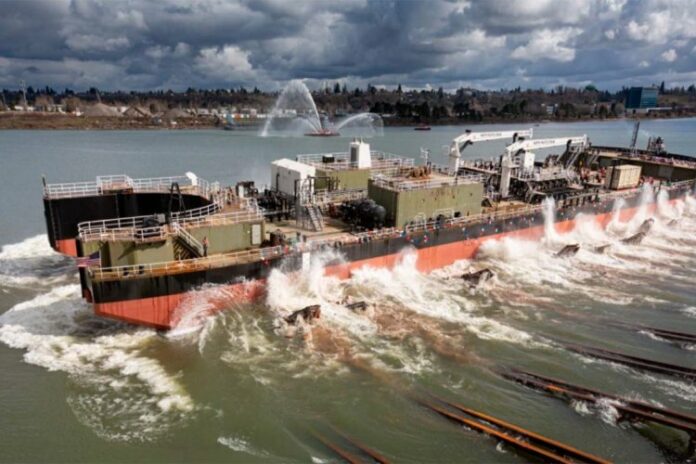
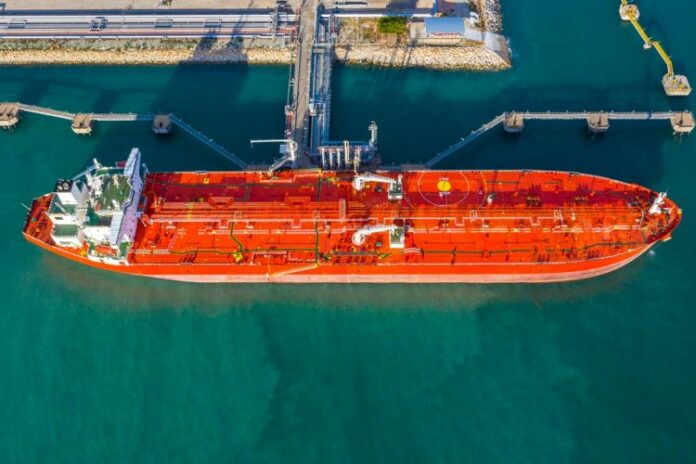
Crowley achieved a significant milestone in its 55,000-barrel articulated tug-barge (ATB) new-build project with the launch and christening at Greenbrier Marine of Qamun, a double-hulled petroleum barge specifically designed for the Alaska fuels market.

The barge will be paired with the tug Aurora, which has been launched and is nearing completion at Master Boat Builders Inc., in Coden, Ala. Delivery to Crowley is expected in April 2021.

Qamun’s construction continues a Crowley-Greenbrier relationship that has produced 10 previous, heavy deck-strength barges since 2007 to support offshore energy and other industries.

Crowley Engineering Services provided on-site construction management using a design powered by Jensen Maritime, its recently integrated naval architecture and marine engineering firm. The ATB was specifically designed to meet Ice Class and Polar Code requirements to operate safely and effectively in Western Alaska year-round. It features protections for the environment using energy efficient, lower emission engines and a first-of-its-kind lightering helmet to support safe and fast load rates. Its shallow draft will meet the fuel needs of Western Alaska, which depends on maneuverable and functional vessels for reliable supplying.

The barge and tug are compliant with the Jones Act, a law requiring any vessel that ships goods between U.S. ports to be manufactured in the United States, and American operated. 

Bakker Sliedrecht and RH Marine upgrade module carrier BigRoll Bering with DP2 system

0

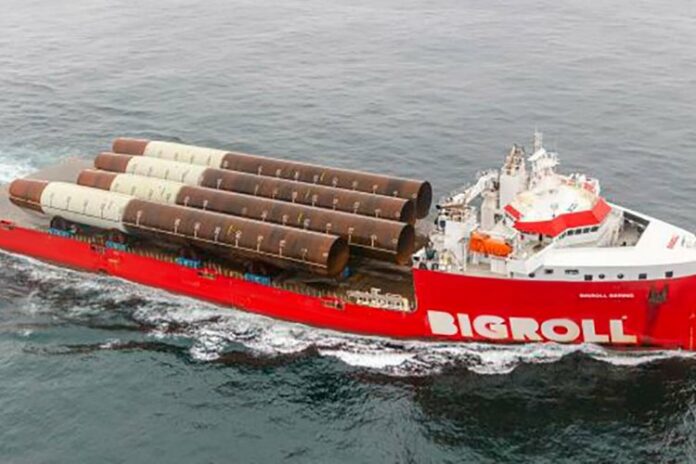
Bakker Sliedrecht and RH Marine will upgrade Roll Group’s ice class vessel BigRoll Bering with a Dynamic Positioning 2 system (DP2). 

This allows the 173 meter long module carrier to better maintain its position during loading and unloading. It also it increases the deployability of the vessel for more complex transports, where a DP2 system is mandatory.

Bakker Sliedrecht has been asked to upgrade the vessel with a DP2 system. RH Marine supplies the in-house developed DP2 system, which includes the computers, screens, control panels, joysticks and the DP software. In addition, the wind sensors, motion sensors and Differential Global Positioning Systems are also part of the delivery.

Bakker Sliedrecht supplies the switch boxes, cables for communication and power supplies, installs and commissions the system. Every component is duplicated according to classification, so that in the event of a single error in the system the ship can remain its position. 

System Architect Gerrit van Pelt of Bakker Sliedrecht and Sales Manager Products & Solutions Peter Copier from RH Marine, say:

“The DP-system improves the comfort of the vessel’s control. The captain or helmsman can stop the ship at the push of a button. Because the DP system is DP2-class certified, it can also be used for complex jobs such as transporting foundations for wind turbines at sea, for which this classification is required.” 

The cooperation between the two Pon-companies – with Bakker Sliedrecht acting as main contractor – offers various benefits. 

Van Pelt says:

“The lines of communication are shorter. For a client like the Roll Group it is easier to have one primary contact and to be approached by one party. In this project Bakker Sliedrecht and RH Marine are each contributing with their own expertise and complement each other.” 

Copiër says:

“Normally we have a lead time of 24 weeks for the installation of a new DP2 system, but by scaling up, our flexibility and working closely with Bakker Sliedrecht, we can complete it in thirteen weeks.”

Bakker Sliedrecht participated as a system integrator in the construction of the BigRoll Bering and its three sister vessels BigRoll Beaufort, by COSCO Dalian Shipyards in China in 2016 and 2017.

The system integrator supplied, assembled and commissioned the electrical systems on-board. Bakker Sliedrecht also participated in the design of the innovative propulsion system for the Module Carrier vessels. The thrusters are installed in such a way that they can operate independently. The design prevents all systems from failing simultaneously. There is also a torque option, which ensures lower fuel consumption and thereby reduces operating costs.

The BigRoll Bering is specially designed to transport heavy and oversized objects for onshore and offshore projects. Roll Group is active in combined land and sea projects for engineered heavy transport for all markets including the renewable and Oil & Gas market  Due to the high ice classed certification, the vessel can be deployed in the most remote and inaccessible areas on the planet.

MAN Energy Solutions to provide services for Greece’s first LNG truck-loading pilot station

0

Greek Construction Company, TERNA S.A., a 100% subsidiary of the GEK TERNA Group, has awarded MAN Energy Solutions the contract for the engineering of, and supplying services to, an LNG truck-loading infrastructure project. 

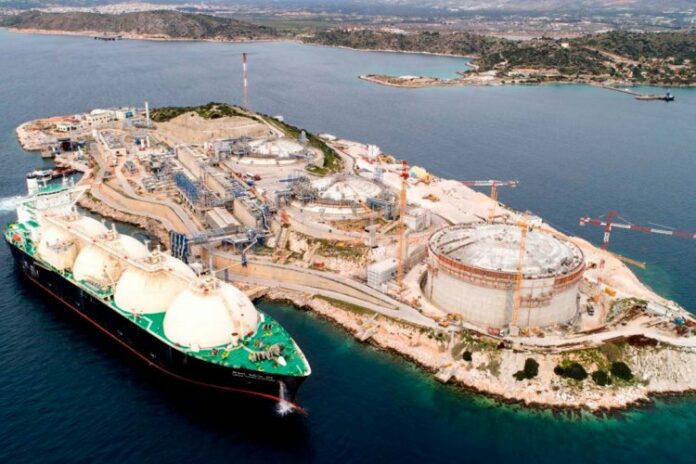
The pilot station is part of the Hellenic Gas Transmission System Operator (DESFA) development programme for the Revithoussa LNG Cryogenic Facilities Terminal at the Gulf of Megara, west of Athens. The terminal has a storage capacity of 225,000 m3 and is a strategical milestone for Greece, providing security of energy supply, operational flexibility in the transmission system, and increased capability to meet peak gas-demand.

Louise Andersson, Head of MAN Cryo, MAN Energy Solutions’ cryogenic division, said:

“We will deliver a state-of-the-art, fully-engineered, logistical infrastructure for managing the downstream supply of LNG via trucks to clients.”

Thanassis Papaioannou, Head of Turbomachinery and Power Plants of MAN Energy Solutions in Greece, noted:

“We are pleased to bring our cryogenic capabilities to DESFA by joining forces with TERNA, one of the leading construction companies in the country. The implementation of this project will create new growth opportunities in areas where there is no existing gas network.”

Carsten Dommermuth, Senior Manager Business Development at MAN Energy Solutions, referred to the importance of this kind of LNG hub:

“With the availability of central storage facilities for liquefied methane, natural gas now becomes available – independent of pipelines – to support the decarbonisation of the power industry with the cleanest fossil fuel available to the market. Furthermore, this kind of project is also important in terms of future readiness for the use of clean, green hydrogen.” 

MAN Energy Solutions acts as a global EPC partner covering the entire value chain for LNG-to-Power.

Ship runs aground off Mauritius with fuel aboard

0

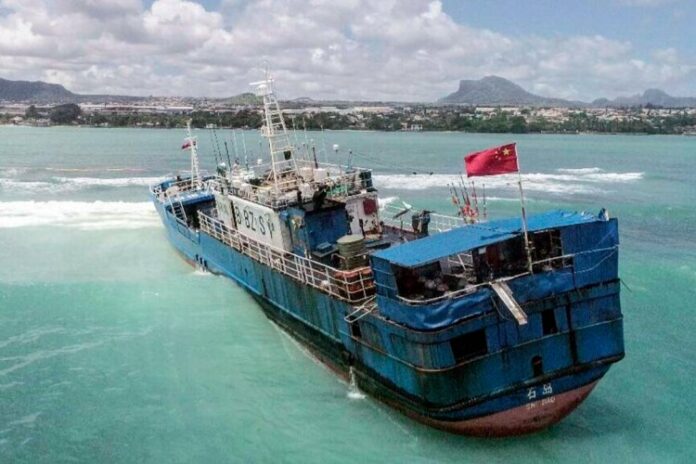
Mauritius deployed its coastguard and armed forces on Monday after a Chinese-flagged trawler containing 130 tonnes of oil ran aground off the Indian Ocean archipelago nation.

It is the second shipwreck in less than a year off Mauritius, after a tanker struck a reef in July and leaked 1,000 tonnes of fuel in the country’s worst environmental disaster.

The captain of the Lurong Yuan Yu issued distress calls late Sunday afternoon and sent up flares after becoming stranded off Pointe-aux-Sables, in the northwest of the main island not far from the capital Port Louis.

Fisheries Minister Sudheer Maudhoo on Monday said divers had found “no leak, no breach” in the hull of the ship and that efforts would be made to safely remove the fuel from the hold.

He said:

“The pumping operation will start tomorrow, and will last four to five days. The authorities will also try to refloat the fishing vessel.”

The trawler carries 130 tonnes of fuel oil and five tonnes of lubricants, according to the authorities.

Traces of oil earlier spotted around the vessel were not “heavy oil” but possibly lubricants, he said. Local residents had also told AFP they saw fuel lapping at the shore.

Floating containment lines have been deployed as a precaution while the coastguard and soldiers have been mobilised.

Maudhoo said an investigation had been launched into the cause of the accident and police had been aboard the stricken vessel and seized documents.

First-ever deployment of a floating energy storage solution in South East Asia

0

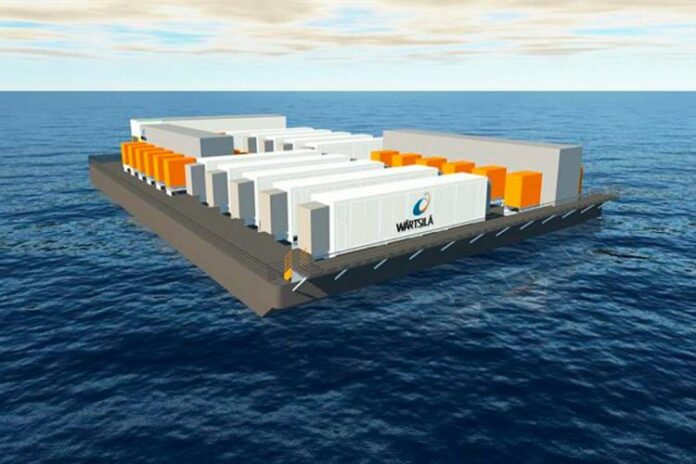
The technology group Wärtsilä’s unique experience in delivering both power barges for electricity production and state-of-the-art energy storage solutions has resulted in a combined contract award. 

Therma Marine Inc. (TMI), a subsidiary of Aboitiz Power Corporation, one of the Philippines’ leading companies involved in power generation, distribution, and retail electricity services, has ordered a barge-mounted 54 MW / 32 MWh energy storage system to be delivered by Wärtsilä on an engineering, procurement, and construction (EPC) basis. The Wärtsilä barge will be placed next to TMI’s existing thermal power barge of a total of 100 MW in the municipality of Maco in the province of Davao de Oro. The order was placed in September 2020. The project will be handled on a fast-track basis, with delivery scheduled to be completed in Q4 2021.

This will be the first ever deployment of a floating energy storage solution in the South East Asia region. It will involve placing ten Wärtsilä GridSolv Max systems, supported by the company’s advanced GEMS energy management platform , aboard a floating barge. The solution will provide flexibility for TMI in their ancillary service contract with the National Grid Corporation of the Philippines.

Emmanuel V. Rubio, Aboitiz Power President and Chief Executive Officer, commented:

“Wärtsilä will meet our urgent needs with this innovative and unique floating energy storage barge. Their ability to deliver this first-of-a-kind solution in less than 12 months is, to say the least, impressive.”

Kari Punnonen, Wärtsilä Energy Business Director, Australasia, added:

“In addition to meeting TMI’s needs, it is important to note that Wärtsilä is the sole EPC provider for this kind of a project. The alternative would be to have one supplier for the barge and another for the energy storage system, which would require a lot of coordination and would undoubtedly slow the final delivery considerably.”

Wärtsilä’s GridSolv Max is an advanced energy storage solution that is designed for streamlined installation and integration, significantly increasing energy density and system reliability to meet customer energy needs while also adequately future-proofing their hardware assets. The innovative and standardised architecture supports both stand-alone energy storage deployments as well as integrated hybrids with thermal or renewable generation assets.

GEMS has become the most-used energy storage software and integration platform, operating globally in over 70 systems. GEMS offers the widest selection of use-case applications and can manage, integrate and synchronise any complex composition of energy assets, including wind, solar, thermal and storage.

The number of Wärtsilä power barge installations globally is 26, with a total power output of 1,500 MW. A floating power barge enables fast supply of electricity to areas with limited infrastructure and is a mobile asset, enabling relocation or trade.

Wärtsilä has a strong presence in South East Asia, with a total installed capacity of more than 9,000 MW, of which 2,000 MW were executed as EPC deliveries, including approximately 300 MW of energy storage.

Verifavia certifies IB’s technology to support environmental regulation compliance

0

IB, an international IT Company specialized in technical management systems and solutions for the maritime industry, has partnered with Verifavia Shipping, the leading independent global provider of carbon emissions verification and IHM services. 

The collaboration ensures shipping companies are supported with a certified process which helps meet the demands of environmental regulations including EU Monitoring Reporting and Verification (EU MRV), the International Maritime Organisation’s Data Collection System (IMO DCS), and Inventory of Hazardous Materials (IHM).

IB’s InfoSHIP® is a web-based software suitable for all vessel types. It brings a high level of fleet control and efficiency to a broad range of technical processes. Verifavia Shipping will certify InfoSHIP Performance for the compliance of shipping emissions regulations, including  EU MRV and  IMO DCS requirements.

InfoSHIP® is designed to apply new technologies as soon as they become available, and to facilitate integration with other systems to ensure an efficient and reliable process. IB and Verifavia Shipping have established a strategic cooperation to support compliance with IHM requirements. By integrating Verifavia Shipping’s “3 Way Plug & Play” IHM maintenance dashboard, shipowners have live access to the IHM maintenance status of the vessel and the system can automatically generate monthly or ad-hoc IHM maintenance reports to demonstrate implementation and compliance with regulations, also ensuring vessels are prepared for PSC inspections.

In accordance with the EU Ship Recycling Regulation and the Hong Kong Convention for the Safe and Environmentally Sound Recycling of Ships, it is mandatory for ships to carry a certified and maintained IHM specifying the location and approximate quantities of hazardous materials – such as asbestos or ozone-depleting substances – onboard. The IHM Part I must be constantly maintained during the operational lifetime of a vessel which can be complicated and time consuming. This means that for all items and equipment installed, modernised or replaced, the IHM must be updated; from a coat of paint or the addition of a single gasket.

Mr. Julien Dufour, CEO of Verifavia Shipping, commented:

“The shipping industry is experiencing extensive and ongoing regulatory demands and needs confidence that its operations are compliant. Our digital system will ensure this is done efficiently and – for IHM – also helps facilitate the renewal survey which is required every five years. Working in partnership to ensure the shipping industry is working in the most efficient and environmentally-responsible way is central to our approach. We look forward to collaborating with IB to develop our leading digital solutions even further.”

Caterina Cerrini, Strategic Partnerships and Business Development Manager at IB, welcomes the new partnership, stating that:

“Verifavia’s expertise combined with our digital InfoSHIP system will ensure our customers have a comprehensive, real-time solution to support ongoing regulatory compliance. The ability to match the IT solutions of IB with Verifavia’s unrivalled knowledge of EU MRV, IMO DCS and IHM regulations propels us full speed ahead towards our common goal of ensuring clients can manage their fleets efficiently, in a simple and reliable way.”

Alfa Laval starts testing two new types of marine fuels

0

To make these non-carbon fuels commercially viable can have a big impact on the marine industry in its strive towards zero carbon shipping.

The International Maritime Organization (IMO) targets a 50 percent reduction of vessel-related greenhouse gas emissions by 2050. To achieve the long-term target of decarbonization, the industry must shift to new fuel types and technologies. The Alfa Laval Test & Training Centre in Aalborg, Denmark is taking a key role in testing new types of fuels to adapt and develop equipment for the vessels’ engine rooms and support the industry’s journey towards decarbonization. The 2800 m2 testing space – already equipped for today’s oil and gas fuels – has been readied for testing biofuels and methanol. The tests will begin during the spring.

Sameer Kalra, President of the Marine Division, says:

“A number of fuel pathways are on the table in the transition towards zero carbon shipping but the knowledge about their impact on marine equipment solutions is limited. We want to extend that knowledge through testing. It is our ambition to develop viable technology solutions in cooperation with other marine players, so that our customers can achieve their climate goals irrespective of the selected fuel pathway.”

Since ships have a lifetime of 20 years or more, zero-emission vessels must begin entering the global fleet by 2030 for a 50 percent reduction to be achieved by 2050. It is predicted that in 2023 the world’s first carbon neutral liner vessel will be launched and that methanol-fuelled vessel will be ready for delivery in two years’ time.

BazePort launches a new service for deep-seea vessels

0

While crew welfare in the form of modern IPTV entertainment is now part of the expected in some maritime segments, this is not the case in a typical tanker, bulk and container vessels.

The slow adoption may have been caused by IPTV installations being considered too complicated and costly for the purpose. 
Now, BazePort is launching a new service that has been bespoke built to the requirements of deep-seea vessels demand. It is established under the name BazePort Seea. 

In the development of BazePort Seea, both the possibility for information and entertainment has been in focus. Vessel owners and operators want a more modern and quicker way to communicate than the printed email on message boards. BazePort Seea allows for cloud publishing of text, pictures and videos. This way crew is updated on safety, training and general information. 

Video-on-demand entertainment on BazePort Seea is like the Netflix experience. But offline and not dependent on using the vessel bandwidth. All major Hollywood studios are represented, as well as some independent ones. BazePort seea includes thousands of hours of content to watch. Also, Baze works with renowned news providers like BBC, CNN, Euronews and TV Patrol. BazePort seea also allows for RSS news and Podcast. 

Seamen working at sea for months at the time are experiencing challenging times. Covid19 is adding to the burden. For shipowners and managers, it is a challenge to create the best possible working and leisure time environment onboard their vessels. An entertainment system with an at-home user experience is a boost for the crew. The included set-top box allows the crew to socialise while watching a movie or the news together on the onboard TV set.

BazePort will launch a bespoke service for the deep-sea fleet. More than 8500 subscribers take the service already. These are users in Offshore, OSV and the Ferry segment operating worldwide, trusting BazePort for their on-demand content delivery of entertainment, information and news services. BazePort IPTV is the platform used to enable on-demand content.

The company behind the BazePort IPTV system, Baze Technology, has extensive experience in supplying its IPTV system to the maritime and offshore community. They added movies and news on-demand content as part of their delivery portfolio already in 2012. BazePort IPTV is approved as content provider by all the major studios and a range of news and live TV providers.

ClassNK releases Guidelines for ROV/AUV

0

Leading classification society ClassNK has released its “Guidelines for ROV/AUV” which summarize the performance and safety requirements for remotely operated underwater vehicles (ROVs) and autonomous underwater vehicles (AUVs) as part of its activities to meet industry needs related to the establishment of safety standards for innovative technologies and third-party certification.

Up until now, ROVs and AUVs have been mainly used for oceanographic surveys and offshore oil and gas field development, but in recent years their utilization as a means for maintaining offshore wind power generation facilities and pipelines has been steadily increasing. Although the utilization of ROVs and AUVs is increasing worldwide, no international standardization of such technologies has yet been implemented, and the utilization of ROVs and AUVs has, for the most part, been limited to certain fields.

With this in mind, in order to contribute to the safe and effective use of ROVs/AUVs, ClassNK developed the guidelines which establish requirements related to the equipment and basic items that are generally required for the operation of these vehicles, as well as precautions and safety measures, based on the knowledge obtained through demonstration experiments with experts and companies making advanced efforts.

The guidelines also explain related terms, classifications, and utilization examples so that they can be used as introductory material on ROVs/AUVs. For implementing specific application cases of ROVs, they include the requirement for ROVs service suppliers as well as the procedures in using at ship surveys such as in-water surveys, internal hull surveys of flooded compartments, and damage verification. Appendices that contains excerpts of relevant rules and the results of demonstration experiments into the application of ROVs to ship surveys are also provided for supplementary purposes.

Recognizing that the utilization of ROVs/AUVs will be expanded in various fields, the society will gather the opinions and feedback of the industry and continue to update the guidelines in order to meet the needs for the safety standards development and third-party certification.

Stena Bulk unveils InfinityMAX concept vessel design

0

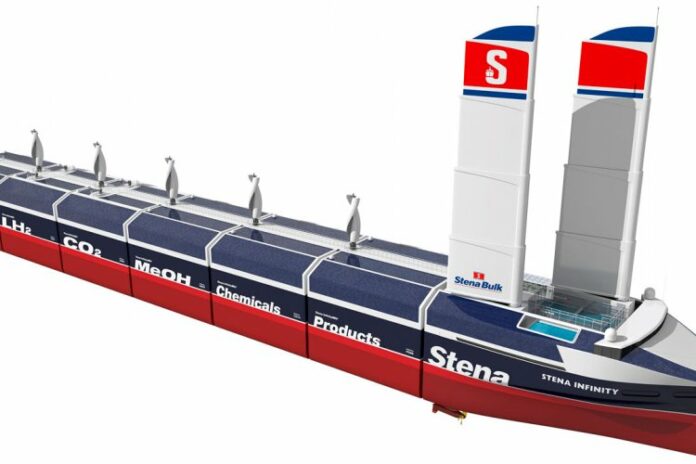
Stena Bulk has unveiled its concept InfinityMAX hybrid bulk carrier design, pushing the boundaries for zero carbon, multi-modal vessel design in shipping.

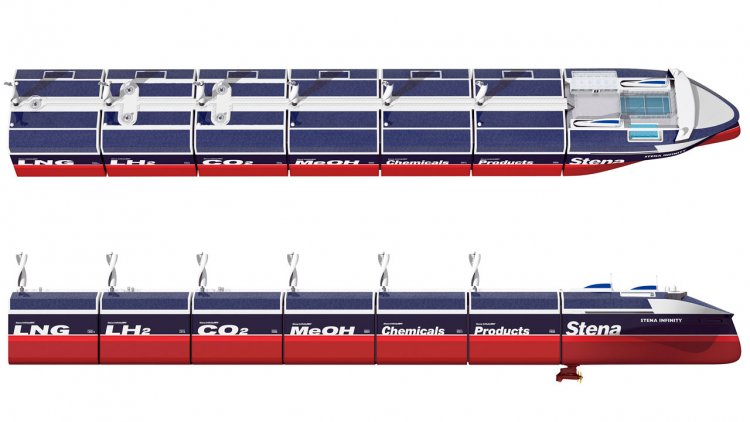
The InfinityMAX concept, which is designed to carry both dry and wet cargoes in modular compartments, is built with several new core principles that, accumulatively, represent a paradigm shift in cargo transportation.

The ultra-flexible, zero emissions design has been created in response to the huge challenges that the global shipping industry must overcome in the coming decades. The design envisions a world in which the shipping industry plays a crucial role in supplying the world with renewable energy, chemicals, materials, and consumables for its never-ending needs.

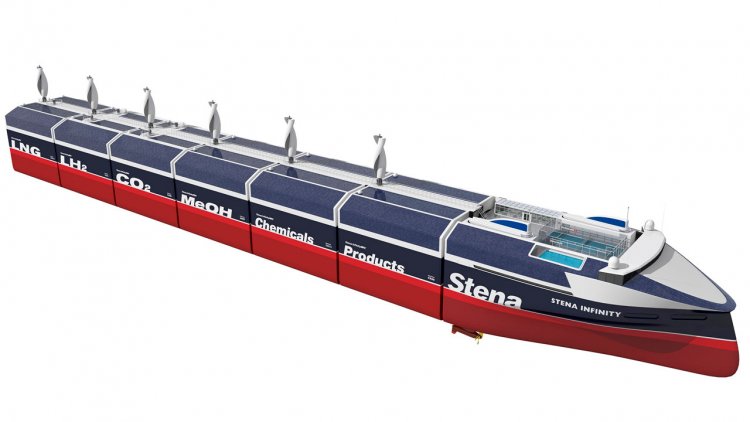
In a proposed advancement that could be considered as impactful as containerisation was for intermodal freight trade, the creation of standardised and modular cargo units that can carry dry bulk, liquid bulk or liquified gas products – such as methane, hydrogen or ammonia – will significantly streamline the process of transporting wet and dry bulk cargoes.

Each of the InfinityMAX’s modular cargo units are designed to be totally self-sufficient in terms of their energy use, with wind turbines and solar panels generating all the electricity needed for internal systems. The modular units have also been designed to be able to be dropped off outside of ports and picked up by tugs, avoiding congestion and reducing call times dramatically. The InfinityMAX concept will use hydrogen as a marine fuel and wind turbines to generate further energy. Collapsible wing sails and a shark skin hull have also been incorporated in the concept design to significantly improve efficiency.
Although the vessels will be crewed for safety and flexibility reasons, Stena Bulk has designed the InfinityMAX concept to be semi-autonomous and meet the future demand of efficient operations without compromising safety. InfinityMAX will also improve crew wellbeing on board, for a sustainable working environment. As a result, InfinityMAX has the potential to change the role of onboard crew, with less hard labour and more focus on monitoring and interaction with operators ashore.

Speaking on the announcement, Erik Hånell, President & CEO, Stena Bulk, said:

“We are extremely proud to unveil our InfinityMAX concept vessel design, which we believe pushes the boundaries for the future of our industry. What we are proposing here is innovative, provocative and would radically reshape the way we think about bulk trade, rationalising two segments with complimentary expertise into one shipping segment that is ready for the challenges of the future.

The application of advanced technologies – including hydrogen fuel and other efficiency measures – means that this is a vessel concept that proves our core philosophy that innovation is key to commercial success, given the challenges that we all face. We will continue to work closely with our innovation partners, leaving no stone unturned to ensure that the right advances happen to make the InfinityMAX concept into a reality.”
In effect, the InfinityMAX drives improved world fleet utilisation and the potential for more standardised supply chains, as well as reduces the unnecessary environmental impact of empty tanks being shipped around the world in search of new cargo.

By 2050, the growing need for transportation of energy from areas with abundant renewable supply to areas with large energy demand – carried as hydrogen, methanol, methane, and ammonia – will be a defining part of international trade. This, combined with the requirement to transport sustainable, edible oils and chemicals, and carbon dioxide from carbon capture facilities, as well as bulk commodities, requires a vessel design that is up to the challenge of a radically reformed global economy.

With the right level of matured technologies, Stena Bulk believes that an InfinityMAX vessel could come into service between 2030 and 2035. To achieve this, a strengthened and sustained collaborative spirit between industry and technology leaders is a necessity in the coming years.