-10.3 C
New York
Home Blog Page 670

marineworks makes its mark as first Korean company to join IoS-OP

0

Korea-based maritime solution provider “marineworks” has joined IoS Open Platform (IoS-OP), the ship IoT data sharing platform promoted by Ship Data Center Co., Ltd.(ShipDC).

As the first Korean company to join the initiative, marineworks works on not only the transmission and utilization of the ship operation data in IoS-OP but also contribution to raise the awareness to IoS-OP.

IoS-OP is a universal platform that enables the sharing of ship operation data among shipbuilders, manufacturers, and related service providers without compromising profits of data providers. The platform consists of a data center for collecting and providing data, and the IoS-OP Terms of Use which are the rules on data distribution agreed on by the industry. With marineworks, the number of organizations in the member association “IoS-OP Consortium” has reached 61.

marineworks is a maritime ICT company in Korea, which has provided smart ship solutions that monitor, analyse, and convert the ship’s condition in real-time to determine and visualise the ship’s operating environment and risk level for safe and efficient operation of the ship.

The long journey of women to Antarctica: the Ukrainian experience

0

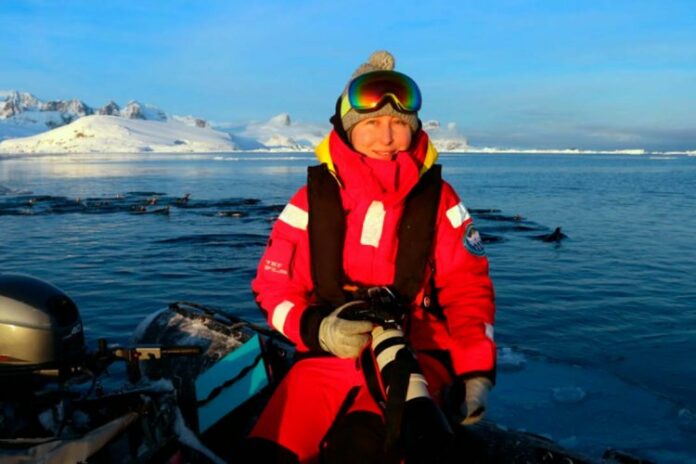
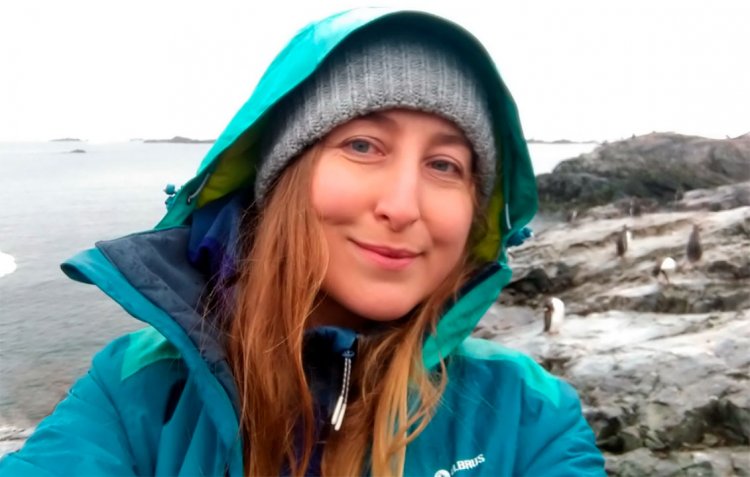
Ukrainian biologist Oksana Savenko studies a rather narrow group of marine animals – cetaceans. She has many years of experience working with whales and seals in the Far East. In Ukraine, she studies two species of dolphins and harbour porpoises that live in the Black Sea. Also, there is an opportunity to study cetaceans in Antarctica, at the Ukrainian Antarctic Akademik Vernadsky station. But Oksana was able to take advantage of this opportunity only recently. She became the first woman in a very long time to spend at the station not only summer season but also the winter one.

We asked Oksana Savenko, Research Scientist, to answer some of our questions and express her views on the cooperation of men and women at the Ukrainian Polar Station. Her direct speech is below.
Men’s arguments against the presence of women at the station

– Working in the polar latitudes was my childhood dream, and now it is also a great opportunity to be realized professionally. I got to the Vernadsky station as part of the 24th scientific expedition in 2019-2020. In total, I spent 15 months there. Until now, no woman has worked here in the winter for the past 20 years.

In fact, women really want to work there but feel some resistance from men. It seems to me that some men have prejudices about this. For example, they believe that women will make men quarrel with each other. The first stereotype: women will definitely get pregnant there, and men will betray their wives. Generally, women go to the station just to find a partner, not to work. Allegedly because of this reason wives will not let their husbands go to the station for a long time. Several men told me: “Because of you I will never go to the station again as my wife will be against such trips”. So, there is a question of trust in the relationship: it is easier for a wife to let her husband go for a year if there are only men in the team.
Another point is the general attitude of society to the polar explorers. For a very long time, they were thought of as real heroes who do incredible things. And it turns out that a woman can do the same! All the pathos that existed around the polar explorers disappears. That is, men lose the opportunity to be special, unique in the eyes of others. Even journalists now pay more attention to women than to men. Plus, the issue of competition is added to this, because now it will be more difficult to get to the station, there are more candidates.

Of course, not everyone admits this openly, but in reality, it is felt: men are trying to protect this area from women. Polar explorers always let new people into their team with some caution. And now women are also applying for these places! Some men believe that with our appearance, their brotherhood is cracking at the seams. One colleague said that the director of the UAC does “gender experiments”. Another one said quite seriously in an interview with a magazine: “I will not be able to go to the toilet in my underpants now.” And the man was not ashamed to say so! He seriously thinks like that, this is his position. Others are also confused by the fact that now they do not seem to be able to swear dirty in the presence of women. For them, women are continuous restrictions. But, in my opinion, you can do everything you want, just let women work!
Working in Antarctica: are there difficulties for women?

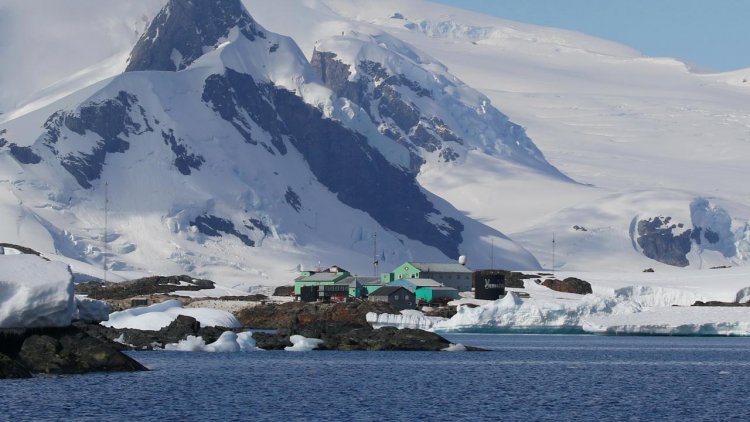
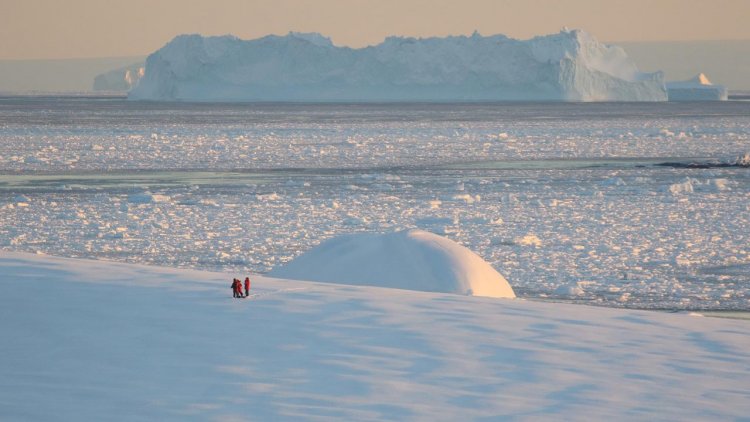
– In fact, the idea that in Antarctica extremely difficult natural conditions is a myth. At least, the Akademik Vernadsky station is located almost in the “resort” area. It’s not so cold there: in summer it’s about -2ºC…+2ºC, in winter -15ºC, sometimes it can reach -25ºC, and the average temperature is -5ºC…-10ºC. It is a completely normal winter that we in Ukraine can only dream of.

The station has quite comfortable conditions. The base is a bit old-school but cozy, very comfortable and warm. There are all the conditions to both work and enjoy life. There is a real paradise for a researcher and a scientist: do your job well – and the whole system will work as a coordinated mechanism.
Some men worry that women at the station will not be able to do all the physical work (such as shoveling snow) and that men will then have to redo all the work. But it seems to me that shoveling snow is great fitness and pleasure. I may be slower than men, but I will do it anyway. Especially since I’m physically quite strong.

Honestly, men may have completely opposite positions on this issue. Once we were unloading a ship and I was carrying bags of potatoes. Some men stopped me and forbade me to lift weights. At the same time, when other girls helped the cook to pack things and did not so difficult physical work, the same men said that the girls are lazy. That is, whatever you do here – everything will be wrong. On the other hand, some men support women colleagues in their desire to work at the station and gradually the men at the station get used to the presence of women and their mood change.
Women at polar stations of other countries

– It was interesting for me to watch how colleagues from other stations react to the appearance of women at the Vernadsky station. After all, women have been working at them for a long time, and the Ukrainian base has long remained a purely male cell. Foreign colleagues constantly joked about this topic.

My first trip to the Akademik Vernadsky station took place during the 23rd expedition: I spent only two weeks in Antarctica, in the summer season. I was the only woman in the team of 36 people but first I got to the American Palmer Station, where I spent a week. The people who had been working there for a long time, for 20 years, were extremely surprised: “Are you going to the Vernadsky station? Finally!” There was a real euphoria on their faces and they encouraged me: “Come on! Do it!”
The fact is that the Americans at that time had a woman in charge of the station, and in general the head of all polar programs was also a woman. That is, for them it has long been the norm. My appearance then caused a great resonance among American colleagues. It became clear to them that we are developing, becoming more modern.

There is another important detail. When I worked with the Americans during Far East international expeditions, I noticed that women there never allow themselves to rely on men. Even if some equipment needs to be repaired, they will take instructions and try to fix the problem.

Usually, we don’t even try to do that, our Ukrainian girls have weaker technical training. It has traditionally happened in Ukraine that our women are less involved, for example, in electricity or mechanics. And in this direction, we need to develop.

However, the station has trained technicians who are in charge of the equipment and many other tasks that can be evenly distributed between men and women. This work may be more routine, but it is also important. Therefore, we cannot say that our women sit on men’s necks and do nothing.
The first results of women’s work at the station

– In recent years, scientific research has intensified at our station. This is especially true of biology. Previously, the Akademik Vernadsky base was traditionally more focused on meteorology and geophysics, but now biology is developing very well in the world – and we are catching up with this unit.

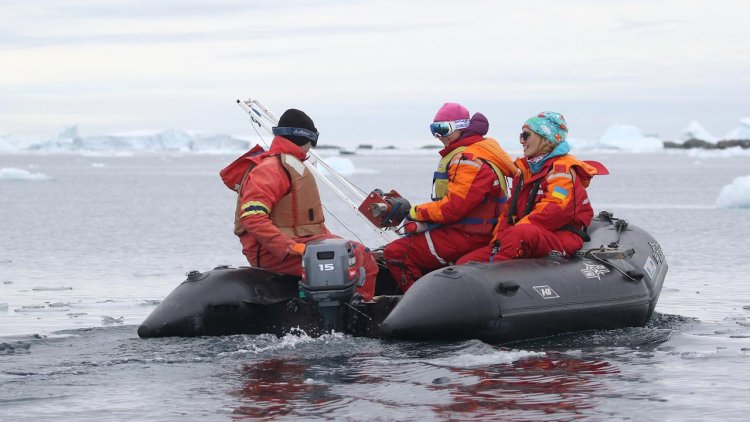
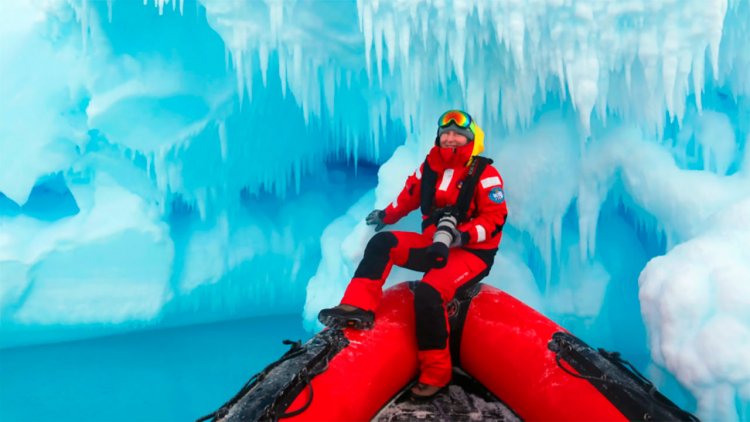
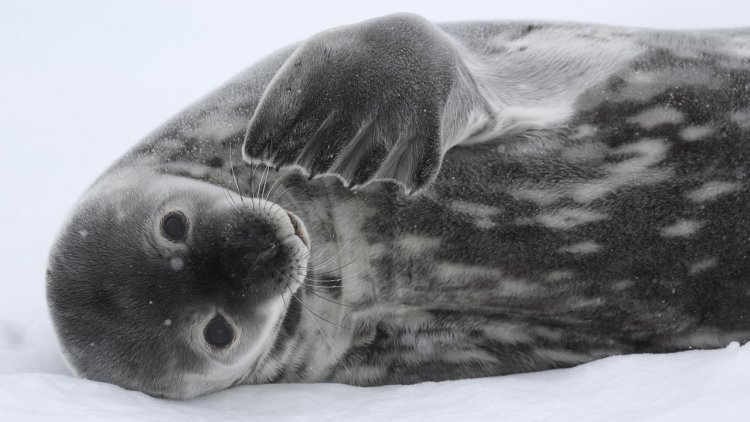
In particular, as a marine biologist, I developed and implemented a marine mammal study program at the station. Now our base will explore whales and seals on an ongoing basis. This is extremely important because the Vernadsky station is open all year round. There are not many such permanent observatories in Antarctica today. So our data will be extremely important for understanding the overall situation.

Besides, I constantly deal with Americans who work at the nearby Palmer Station. They started researching whales a few years earlier. And we agreed with them that we would synchronize our research protocols and programs, and exchange data. In this way, we will cover a larger area. There is much more that can be done together. The more observation points there exist, the more qualitative results we will get.
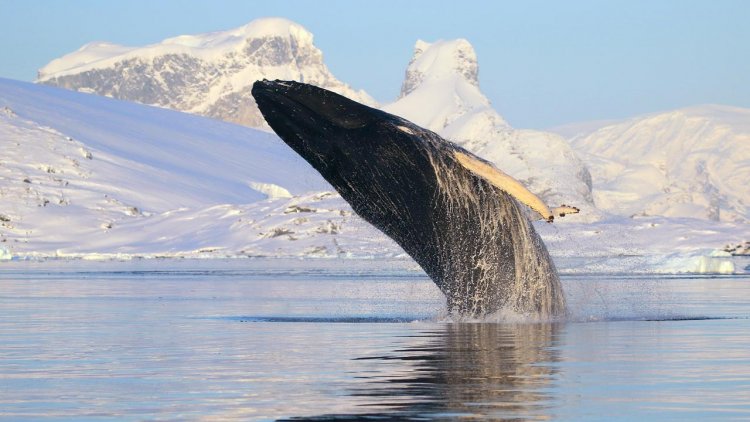
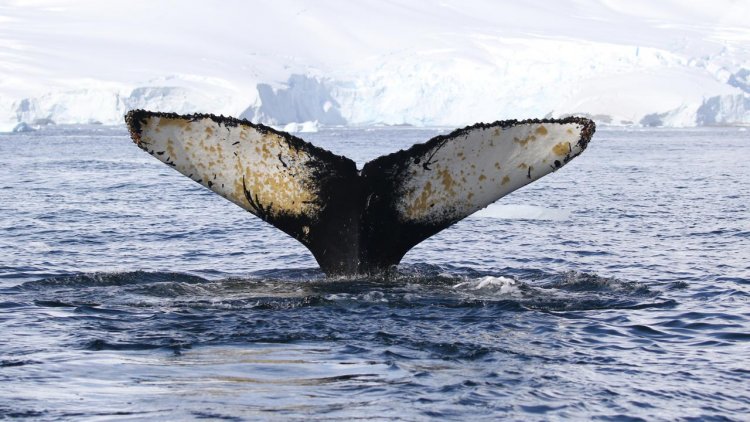
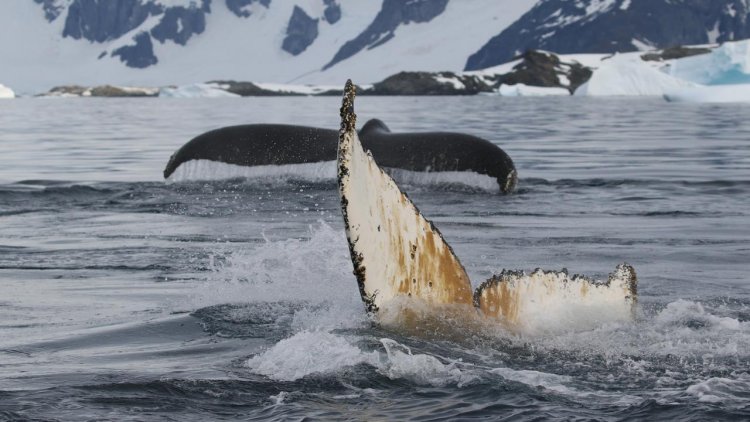
One of the important areas of our research is whale identification. After all, each mammal has its own characteristics – in the colour patterns of the tails (humpback whales), the shape of the dorsal fins (in orcas) and so on. We are often helped in this by tourists and volunteers who send us their photos of animals. So, we can track the movement of mammals. There is even a whole line of business – citizen science, and it gives great results. For example, those whales that I photographed at the Vernadsky base, I have already followed the photo in other regions of the world in different years.

Why is this scientific work so valuable? The fact is that whales play an important role in the formation of the marine ecosystem and they are indicators of serious changes in the environment. And if any bad processes are observed in the whale population (for example, population decline), it will be a sign that the whole ecosystem is under threat. That is why I am very glad that I was able to start a research program at the Ukrainian Antarctic Station.

If you have qualitative photos of marine mammals that you managed to take during tourist trips, you can send them to Oksana Savenko by email (o.v.savenko@gmail.com) or submit them to the Happywhale website (happywhale.com). In this way, you will contribute to important research.

by Iryna Umanets 
Maersk Drilling secures one-well contract to reactivate Maersk Resolute

0

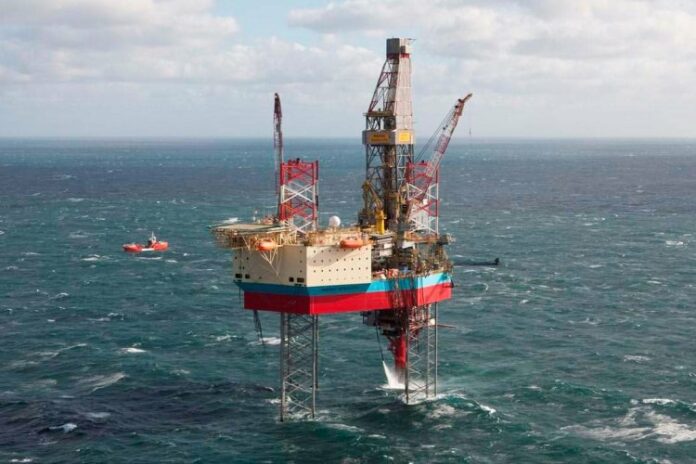
Maersk Drilling has been awarded a one-well contract by Petrogas E&P Netherlands B.V. which will employ the harsh-environment jack-up rig Maersk Resolute to perform well maintenance and drill a side-track of the A9 well at the P9 Horizon field in the Dutch North Sea.

The contract is expected to commence in April 2021, with an estimated duration of 45 days. The contract value is approximately USD 4.5m.

Prior to commencement of the contract, Maersk Resolute will be equipped with a high-efficiency Selective Catalytic Reduction (SCR) system which uses ammonia injection to convert NOx into harmless water and nitrogen, expectedly reducing NOx emissions by up to 98%. The design will include an advanced control interface between engines and SCR units.

COO Morten Kelstrup of Maersk Drilling says:

“We’re happy to add this contract for Petrogas which will bring Maersk Resolute back to work on an extreme extended reach well at P9 Horizon which the rig originally completed in the autumn of 2019. Operations in the Dutch North Sea come with a strict focus on protecting the environment, and we fully support this as part of our ambition of providing responsible drilling.”

Maersk Resolute is a 350ft, Gusto-engineered MSC CJ50 high-efficiency jack-up rig which was delivered in 2008. It is currently warm-stacked in Esbjerg, Denmark after completing its latest campaign offshore the Netherlands in December 2019. Following the completion of the contract with Petrogas E&P Netherlands B.V., the rig will move on to commence the previously announced two-well contract for Dana Petroleum Netherlands B.V.

AIDA Cruises extends its Canary Island cruise season until middle of May 2021

0

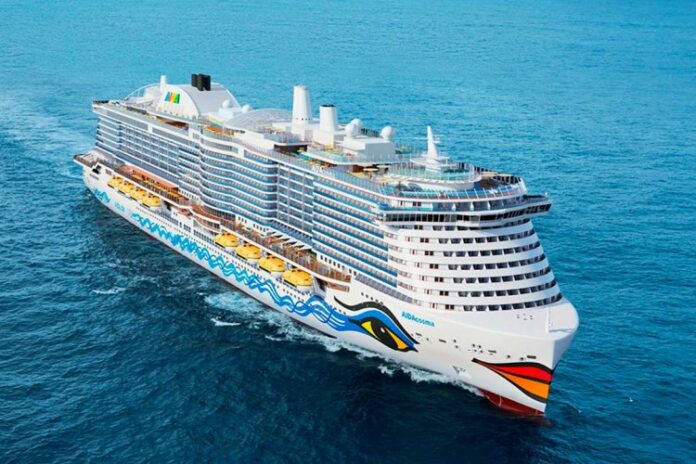
AIDA Cruises has announced it is extending its cruise season around the Canary Islands with AIDAperla until the middle of May 2021. The start and destination port of the seven-day voyages is Las Palmas, Gran Canaria, Spain. 

AIDA Cruises has implemented a comprehensive set of enhanced health and safety protocols for guests and crew members utilized on several AIDA cruises in fall 2020. In recent months, the islands of “eternal spring” have been a holiday destination in Europe with consistently low incidence rates. As a result of the Spanish government’s regulations for safe travel, which coincide with AIDA’s enhanced health and safety protocols, the cruise line’s guests have been able to enjoy relaxing holidays in the Canary Islands.

The enhanced health and safety protocols — tested by SGS Institut Fresenius and confirmed by the classification society DNV GL — includes a mandatory polymerase chain reaction (PCR) test for detecting viruses and bacteria before traveling, as well as regular health checks, extensive distance and hygiene rules, medical care including test capacities on board and other measures.

Cruise vacations in other AIDA destinations are currently not possible. However, with the extension of its cruise season around the Canary Islands with AIDAperla, AIDA Cruises will be able to offer all guests an attractive holiday option. This applies to guests who originally booked a cruise in the Mediterranean on AIDAstella with departure dates from March 20 up to and including May 11, 2021; on AIDAperla with departure dates up to and including May 14, 2021; on AIDAblu between April 04 up to and including April 25, 2021; and on AIDAmar between March 21 up to and including April 18, 2021.  

The same applies to all guests who were originally scheduled to depart with AIDAsol from Hamburg and Rotterdam to Northern Europe and Norway between March 20 and April 3, 2021, or with AIDAluna from Hamburg on March 31 and April 04, 2021.

The positioning cruises with AIDAmira scheduled to depart on April 16, 2021, and with AIDAvita on April 20, 2021, have to be canceled as well.

Port of Liverpool welcomed a further arrival of five CRMG cranes

0

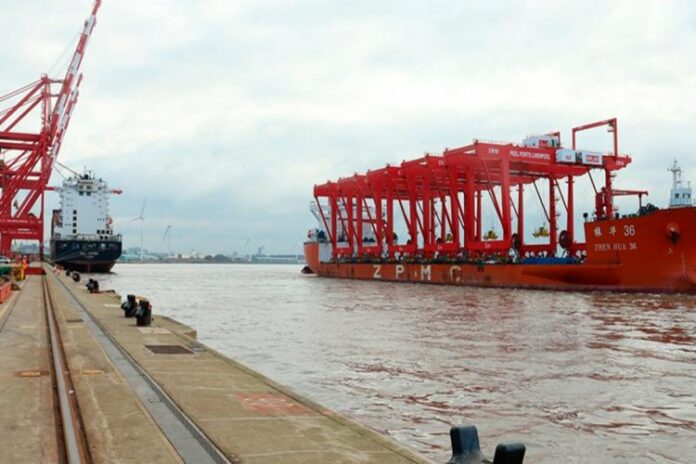
The Port of Liverpool has welcomed a further arrival of five cantilever rail-mounted gantry (CRMG) cranes as part of the next phase of growth at Liverpool2, the port’s deep-water container terminal.

Produced by leading Chinese manufacturer, Zhenhua Heavy Industries Co (ZPMC), the five new cranes are the second of two deliveries in 2021, which will complete the set of 22 CRMG cranes operating as part of the £400 million Liverpool2 project and will provide additional capacity for growing volumes of cargo.

Their arrival coincides with the Liverpool City Region’s successful application for freeport status, which will create a further opportunity to position the area at the forefront of the UK’s future global trading relationships.

Announced by the Government, a free trade zone for the Liverpool City Region will contribute around £850m GVA and create 14,000 jobs, as well as leading solutions to meet local Net Zero Carbon targets for 2040.

The bid, submitted last month to government, enjoyed widespread support from the private sector and was supported and formally endorsed by the Liverpool City Region LEP building on the area’s maritime history and unique position as a Western-facing port with established Transatlantic and Irish Sea trade links.

David Huck, Managing Director, Group Ports said:

“While we are only one of the partners in this public and private sector joint initiative, the Port of Liverpool is clearly the largest global gateway to the new regional freeport. How we see our role is helping with wider city region to achieve the greatest possible benefit from its freeport status.

“The £400m investment we have made on the Liverpool2 container terminal is a huge enabler. It’s the combination of the outstanding facilities here and the freeport status for the region that will really make the difference.

“The arrival of the last batch of CRMG cranes at the Port of Liverpool this week, marks a significant milestone in the next phase of growth at Liverpool2 and reflects the dynamism and strength of our business and skilled workforce.”

Peel Ports Group, with its partner global terminal business, Terminal Investment Limited Sarl, is continuing to develop the Liverpool2 terminal to further increase capabilities and support increased demand.

Once completed, Liverpool2 will be capable of handling the largest container ships in the world, whilst supporting the UK haulage sector via the very latest landside automated gates and vehicle booking systems.

Work on this second phase of the landside project is expected to be fully completed in the summer 2021 and will be supported by the creation of more than 150 new skilled jobs in Merseyside this year.

NKT signs contract covering offshore power cable systems in Denmark

0

With a long-term frame agreement on maintenance and repair operation of on- and offshore power cables, NKT continues the close collaboration with Danish grid operator Energinet.

As the world moves towards green energy, the uptime of power cable connections become increasingly important to ensure efficient usage of the renewable energy produces. With a long-term frame agreement, NKT continues to support the Danish grid operator Energinet in ensuring the high transmission security in Denmark while efficiently integrating renewable energy in the national power grid. The agreement runs for eight years and includes services and repairs of XLPE, mass impregnated (MI) and oil filled power cable systems with voltage levels of 20­-525 kV.

Axel Barnekow-Widmark, Executive Vice President and Head of Service & Installation at NKT, says:

“We are happy to continue our collaboration with Energinet and support the green transformation of Denmark. With the agreements, we are well prepared to ensure Energinet with ongoing grid maintenance and fast response in case of power cable damages. With this long-term commitment, we once again demonstrate our leading market position as cable service provider for our own as well as third party cables.”

Within the scope of the agreement, NKT will ensure repair preparedness, including inspection and maintenance of spare parts, on- and offshore cable repair and jointing work as well as engineering.

University College Cork joins €3.3m EU wave energy research project

0

MaREI, the SFI Research Centre for Energy, Climate and Marine hosted by University College Cork has joined a new collaborative research and innovation project that will develop and demonstrate a next generation testing approach for Wave Energy Converters (WECs).

IMPACT (Innovative Methods for Wave Energy Pathways Acceleration through Novel Criteria and Test Rigs) aims to accelerate testing device development and reduce the technology cost as part of a global advancement in wave energy converter technologies. The three-year €3.3m project is funded by the European Union’s Horizon 2020 research and innovation programme.

In the IMPACT Project, MaREI will review the critical systems, components, failures and reliability of relevant WECs and will undertake Failure Mode Effects and Criticality Analysis (FMECA). The work will bring inputs from operation and maintenance models for wave energy technologies and will develop a quantitative model for studying the techno-economic aspects related to the wave energy sector.

In addition, an assessment of the potential positive and negative environmental effects from single devices to arrays of selected WEC types will be undertaken. This will help inform environmental assessment and consenting processes for WECs and subsystems of the test rigs.

If the challenging climate goals of the Paris Agreement are to be met, substantial investment in renewable energy technology is required now in order to make a difference. Wave and tidal energy is one of the last great opportunities for development of a significantly new renewable energy industry.

Wave energy has the theoretical potential to meet the world’s entire energy demand. The long-term vision of the International Renewable Energy Agency is to have a worldwide installed capacity of 337 GW by 2050, but the installed capacity in 2019 was just 531 MW.

European Energy Forum estimates conclude that wave energy could provide 10% of Europe’s power generation by 2050. However, radically different and slow development of present technologies limit that potential.

The Joint Research Center (JRC) of the European Commission (EC) identified cost reduction and reliability as the main challenges for the wave energy sector to achieve competitive electricity costs.

Port of Tallinn now consumes only green electricity produced in Estonia

0

According to the agreement, Eesti Energia will supply Port of Tallinn with 10 GWh of renewable electricity during 2021 for the port’s own use. This leaves a total of almost 7,000 tons of CO2 unreleased in the air per year.

According to Ellen Kaasik, Head of the Quality and Environmental Management Department at Port of Tallinn, the port has consistently contributed to its business and development in order to reduce the negative impact of its activities on the environment. 

Kaasik noted:

“Energy efficiency and greater use of renewable energy sources are an important step in reducing the port’s ecological footprint and achieving climate neutrality.”

Dajana Tiitsaar, Estonian Market Manager at Eesti Energia, is pleased to see that more and more large electricity consumers are deciding in favour of renewable energy.

Tiitsaar said:

“Port of Tallinn is a progressive and responsible company, which is an example for many major companies with its consistent activities. We are pleased to see that they have taken the next step towards a cleaner future.” 

According to Tiitsaar, Eesti Energia’s customers are making more and more environmentally friendly choices: from choosing a renewable energy package to solar, heating and electric car charging solutions.

Last year, Eesti Energia built nearly 300 solar power plants with a total capacity of 8 MW for its customers. 2,500 customers as small producers are now selling electricity produced in their own homes or companies to Eesti Energia.

In addition, every third new customer chooses a green electricity package and thus helps to accelerate the development of renewable energy. Almost 55,000 customers of Eesti Energia already have a renewable electricity package.

Eesti Energia produced 1.5 TWh of renewable electricity in 2020, accounting for 40% of its total electricity production. Eesti Energia’s CO2 emissions have fallen threefold since 2018.

Port of Tallinn has taken great steps in recent years to move towards a more sustainable living environment.

Ellen Kaasik pointed out that last year, the first Estonian ABB shore power equipment was installed on the Old City Harbour quay as part of a unique project, the introduction of which brought cleaner air and less noise to the Old City Harbour and City of Tallinn, thus reducing CO2 emissions per passenger ship by 100 tons in a month.

Last September, Tõll, rebuilt into Estonia’s first hybrid passenger ship, started serving passengers on the Virtsu-Kuivastu route. Its battery banks allow it to run partly on electricity, thus reducing the amount of diesel fuel, air pollution and noise. TS Laevad plans to introduce hybrid technology also on other newer ferries in the company’s fleet.

CrossWind and TenneT sign agreements for offshore grid connection

0

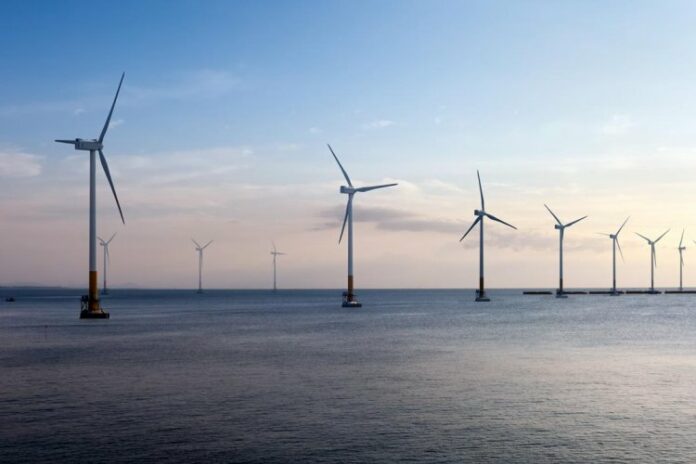
TSO TenneT and wind farm developer CrossWind, a consortium of Shell and Eneco, have signed agreements for the construction of the offshore grid connection for the Hollandse Kust (noord) wind farm, which is being built some 18.5 kilometres off the Dutch coast at Egmond aan Zee.

The signed agreements concern the realisation, connection and transmission of power between the wind farm of CrossWind and the platform of TenneT. The wind farm and the grid connection are scheduled to be operational in 2023, enabling CrossWind to supply wind energy equivalent to the consumption of more than 1 million Dutch households through TenneT’s offshore grid. This is an important next step in the energy transition.

Tjalling de Bruin, CEO of CrossWind:

“These agreements with TenneT mark an important milestone in this project. We have a tight schedule to get this offshore wind farm ready on time and supplying clean electricity in 2023. Moreover, we want to apply five innovations in the wind farm to learn how we can also supply electricity when there is no wind. Because of the ambitious planning and these innovations, close cooperation with TenneT is essential.”

Marco Kuijpers, Director of Offshore Projects at TenneT, says:

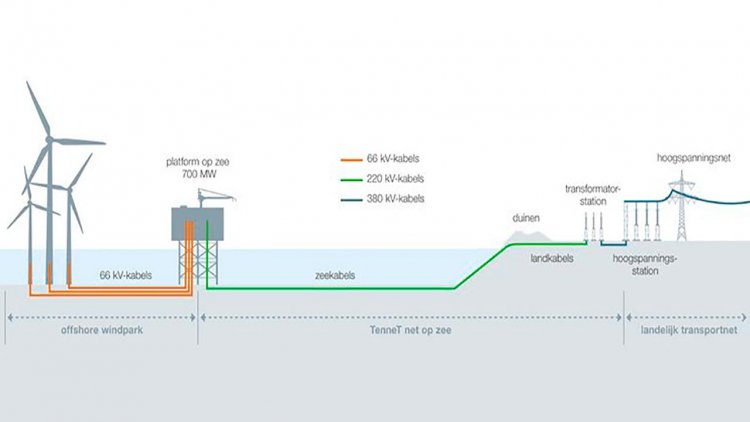
“The development of the Dutch offshore grid is in full swing. Hollandse Kust (north) is the third wind area for which we will develop a 700 MW standardised AC connection. Until 2030 we will connect at least 9.6 GW of offshore wind energy to the Dutch high-voltage grid. We delivered Borssele Alpha and Borssele Beta in 2019 and 2020 respectively, in good cooperation with Ørsted and the Blauwwind consortium, safely, within budget and on schedule. We look forward to working with Crosswind.”

The agreement signed by CrossWind and TenneT formalises the connection of the offshore wind farm to the Dutch electricity grid. The agreement covers liabilities during the construction and operational phase, the technical aspects of the grid connection and applicable technical standards, and the requirements in terms of compliance with laws and regulations.

The wind farm Hollandse Kust (north) will have an installed capacity of 759 Megawatt. The generated power will be transported through the offshore grid. This offshore grid is the total grid connection from the offshore wind farm Hollandse Kust (north) until the high-voltage substation in Beverwijk. The wind energy will then be transported to the energy consumers via the national high-voltage grid.

bremenports: Seven projects for a climate-neutral port

0

“H2Bx.MariTransGate” stands for one of the most ambitious projects to promote climate protection and the transition to green transport in the Federal Land of Bremen. 

As part of a nationwide competition, bremenports has now submitted a comprehensive “IPCEI Expression of Interest” in cooperation with Bremerhaven Economic Development Company BIS. 

bremenports Managing Director Robert Howe explains:

“On submitting this application, we plan to make Bremerhaven a flagship test area for hydrogen technologies in the maritime transport sector. The important thing about this is that the seven individual projects presented in the overall application are all closely interlinked. The 180-page project outline covers the production of green hydrogen from renewable energy sources, specific fields of application in Bremerhaven as an international transport node, as well as the import of hydrogen. It is hoped that these projects will generate important impetus for the promotion of hydrogen technologies in port operations as part of the transport sector.”

The competition was organised by the Federal Ministry for Economic Affairs and Energy, the Federal Ministry for Digital Infrastructure and Transport, and the Federal Ministry of the Environment. Funding is available for projects which are suitable for generating important impetus for implementation of the national hydrogen strategy.

IPCEI stands for “Important Project of Common European Interest”, i.e. key transnational projects which play an important role for growth, employment and competitiveness of the European industry and economy with the help of government funding. IPCEI projects are intended to promote the strategic goals of the European Union (EU) and create positive effects in the entire EU.

Robert Howe states:

“By opting for a broad base for our funding application, we are confident that Bremerhaven, as a European seaport and national trimodal transport hub, can contribute to the hydrogen strategies that are currently being drawn up on a European, national and local level.”

To achieve this aim, additional renewable energy is to be generated at the ports and used to supply a “port electrolyser”, which will produce hydrogen and thus promote the integration of renewable energy in the overall energy supply for this area. The green hydrogen that is generated will be used to power port and transport applications, such as mobile power packs, ship engines, shunting locomotives, trucks and, at a later stage, handling equipment.

It is already evident that the demand for hydrogen and its derivatives will increase over the medium term: the transition to hydrogen in Bremen’s steel producing industry is a clear indicator of this trend. Another central element in preparing for this change will be to establish import and distribution structures and to integrate carbon capture and carbon transport chains at the port.

The consortium headed by bremenports and BIS would welcome the support and participation of other project partners for the next planning phases and subsequent implementation. It is hoped that this process will receive targeted support from the German federal government, the governments of the individual German Laender and the EU.

Nils Schnorrenberger, Managing Director of BIS says:

“The “Green Hydrogen for Bremerhaven” project is being conducted by highly respected research partners and has already received funding of 20 million euros from Lower Saxony and the European Union (ERDF). This project is the first step towards establishing a hydrogen competence centre in Bremerhaven. The next module in this strategy is the project for which we have now applied for funding, the Test Area for Hydrogen Technologies, and is intended to generate important new impetus for further hydrogen projects. The close cooperation between the project partners to set up a common competence centre in Bremerhaven is the right approach and also brings Bremerhaven to the attention of business enterprises from other areas.”