0.7 C
New York
Home Blog Page 66

Damen and Alfa Laval join forces to accelerate shipping decarbonisation

0

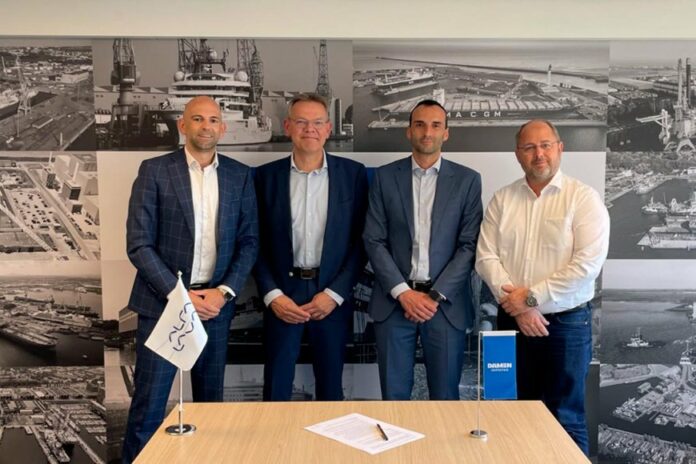
The partnership brings together two key players committed to supporting shipowners in their transition to lower-carbon operations.

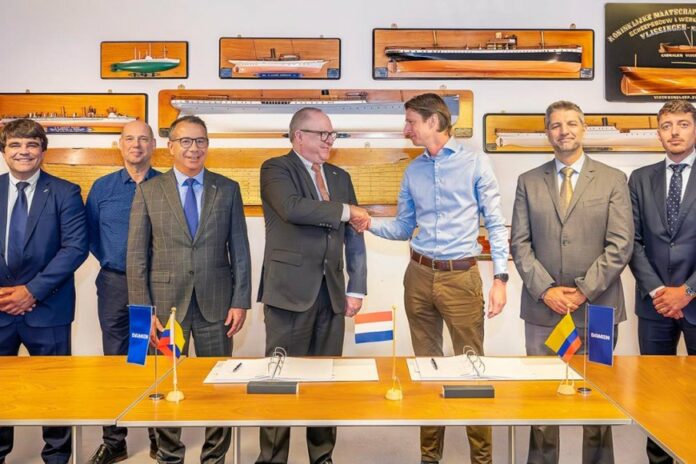
The collaboration focuses on identifying opportunities for sustainability improvements during the quotation and project phases of ship maintenance and refit. By combining Damen’s experience in these areas with Alfa Laval’s innovative energy-saving technologies, the companies aim to make decarbonisation upgrades a natural part of regular drydockings.

“Together, we can help owners take real steps towards IMO and EU sustainability targets,” says Michele Rivella, Sales Manager Sustainability at Damen Shiprepair Rotterdam. “By integrating Alfa Laval’s solutions into our existing workflow, we create a smooth, efficient path for clients to make meaningful changes – without needing extra downtime.”

The cooperation also includes joint customer visits and shared events, such as a planned sustainability-focused day during Alfa Laval Marine Days in September later this year. Both companies share a significant portion of their customer base, creating a solid foundation for impactful results.

“Sustainability is at the core of our business, and Alfa Laval is developing solutions that support our customers in navigating the shift to net zero,” says Leo Peters, Manager Sustainability at Alfa Laval Benelux.

“This partnership allows us to deliver a suite of innovative solutions and technologies to help shipowners reduce emissions, adopt energy-saving measures, and meet environmental requirements – all through a trusted shipyard partner that shares our commitment to sustainable progress,” says David van Luijtelaar, Head of Marine Division Benelux.

The collaboration underlines Damen’s broader goal of becoming the most sustainable maritime solutions provider in the world. By working closely with clients and partners, Damen continues to deliver practical answers to the industry’s greatest challenges.

Höegh Evi signs FSRU charter with EGAS

0

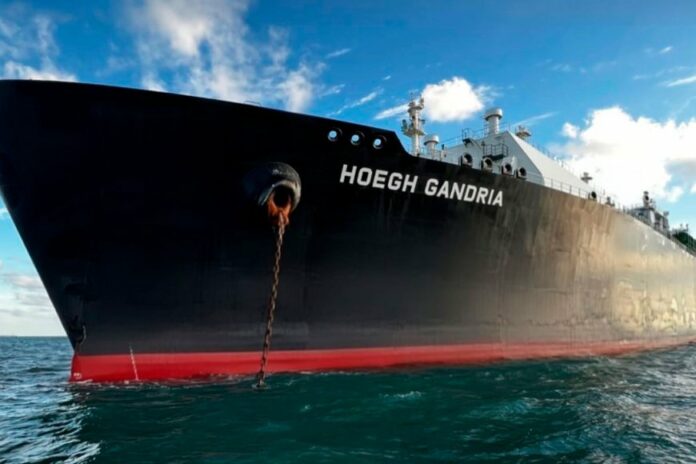
The FSRU Hoegh Gandria will be deployed in Q4 2026 to the Port of Sumed and will supply up to 1,000 mmscf/day of peak LNG regasification capacity, making it a critical part of Egypt’s diversified and flexible energy infrastructure.

“Höegh Evi is proud of our longstanding role as a trusted energy infrastructure partner to Egypt and we are excited to begin the conversion of Hoegh Gandria to a floating import terminal, highlighting the unique flexibility of marine infrastructure. We look forward to building on the successful long relationship we have with EGAS and supporting the growth of Egypt’s diversified energy system,” said Erik Nyheim, President and CEO of Höegh Evi.

To accelerate the FSRU employment, Höegh Evi will convert the LNG carrier Hoegh Gandria to a floating regasification and import terminal (FSRU). The conversion project will begin immediately, to ensure the timely delivery of the FSRU.

Hoegh Gandria was purchased in February 2023 with the intention of conversion from an LNG carrier to a high-capacity FSRU for long-term deployment. Executing the conversion reinforces the company’s strategy to leverage the flexibility and high-performance capabilities of marine infrastructure.

The FSRU Hoegh Gandria will replace the Hoegh Galleon, which was deployed to Egypt in July 2024, on an interim charter from AIE and Höegh Evi. The Galleon will remain in Egypt for up to an additional year before deployment to the LNG terminal in Port Kembla, Australia in 2027.

Fugro selected for pioneering USV seabed mapping initiative in Norway

0

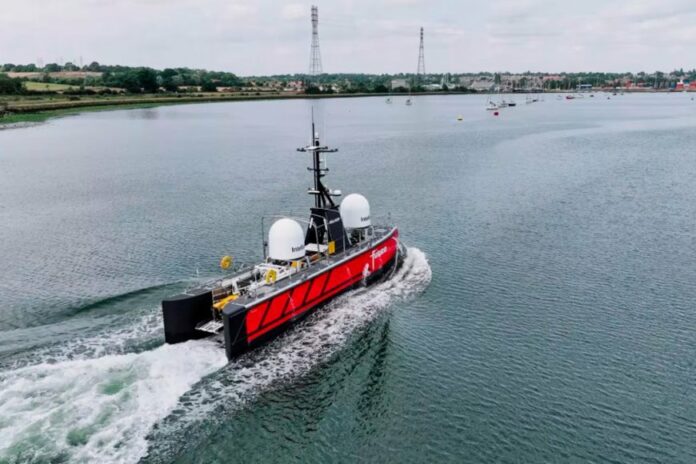
For the first time in its history, MAREANO will use uncrewed surface vessel (USV) technology to acquire the data, with Fugro deploying its new 18 m Blue Eclipse® USV for the initiative. This innovative approach aims to advance the move towards lower carbon emissions in seabed mapping while ensuring high-quality data acquisition for the responsible management and preservation of Norway’s marine resources.

The Blue Eclipse®, the largest USV in Fugro’s fleet, will survey over 675 km² region in the North Sea, with water depths ranging from 90 to 250 metres. Equipped with advanced high-resolution, high-density multibeam echo sounders and sub-bottom data acquisition systems, the USV will gather comprehensive datasets, including bathymetry, water column data, acoustic backscatter data, and sub-bottom profiler data to understand the seabed’s topography and geology.

A key advantage of using the Blue Eclipse® is its significantly reduced fuel consumption – up to 90 % less than traditional survey vessels – directly contributing to more sustainable operations. Controlled remotely from Fugro’s remote operations centre in Aberdeen, the USV’s long endurance and real-time data transfer capabilities will ensure efficient operations and reduce potential delays in the challenging North Sea environment, factors crucial for the success of the MAREANO programme.

Helge Welde, Chief Engineer at the Norwegian Mapping Authority, Hydrographic Service said: “The MAREANO programme wants to accelerate the shift towards lower carbon emissions in seabed mapping. Use of USVs is one way to achieve this goal. Experiences from this year’s seabed mapping with USV technology will give us direction for opportunities in future surveys.”

Nick Simmons, Fugro’s USV Services Director said: “This award marks a significant milestone for Fugro and the commercial debut of our advanced Blue Eclipse® USV. The NHS’s decision, following a thorough evaluation process, highlights our technical capabilities, operational strategy, and commitment to knowledge sharing. We are confident that the Blue Eclipse® and our expert team will deliver high-quality results for this important environmental mapping programme.”

Fugro has a well-established history of supporting the MAREANO programme since 2006, having acquired over 147,000 km² of data to date. 

DeepOcean picks up uncrewed vessel for remote-controlled subsea work

0

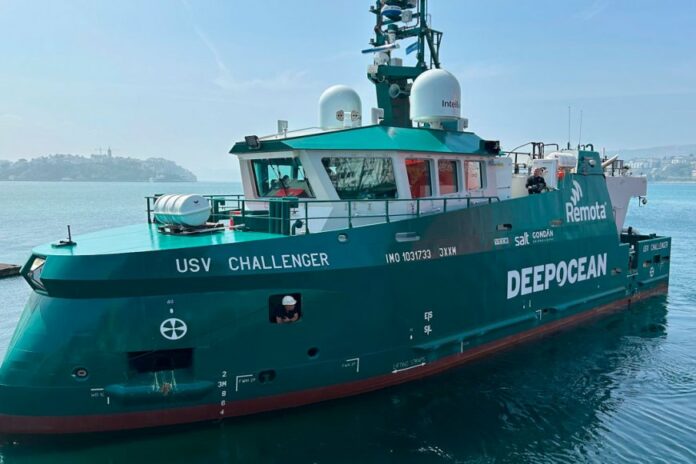
DeepOcean’s subsea base at Killingøy, Haugesund. Here it will test its innovative launch and recovery system for the onboard ROV, and get maritime authority approval for its remote operating capabilities before entering a long-term charter agreement with DeepOcean.

The owner of the vessel is USV AS, which is a joint venture company established by Solstad Offshore, Østensjø Rederi and DeepOcean. The company’s main purpose is to invest and own uncrewed vessels.

The USV Challenger will be remotely controlled from shore and will be equipped with multiple autonomous features. It can operate and endure remotely in severe weather conditions.

During operations, both the USV maritime crew and ROV operators will be co-located in the same remote operating centre (ROC) at Killingøy, near Haugesund.

“Needless to say, the USV is fully capable of deploying offshore and conducting subsea operations independently. However, it can also serve as a highly cost-effective supplement to larger subsea vessels. Rather than mobilizing large vessels for every offshore task, operators can leverage the USV and its onboard ROV for parts of subsea installation, survey, or IMR scope. By reducing the need for repeated transits of larger vessels, the USV offers significant cost savings. The value proposition is clear – the USV represents a more economical and efficient alternative for a wide range of offshore operations,” says Øyvind Mikaelsen, CEO of DeepOcean.

The USV Challenger will be equipped with a fully electric work class ROV with hydraulic capabilities that is capable of operating down to 1,500 metres water depth, plus a sizeable tool package that will allow the ROV to perform a wide range of subsea operations.

The ROV is outfitted with survey sensors for pipeline survey, seabed mapping and annual inspection work including measurements and cleaning operations. It can also interface a fly-out ROV to offer visual inspection support for a larger host ROV in busy, congested and high-risk operating environments. The ROV can also perform 3D scanning of the subsea assets.

To facilitate highly efficient subsea inspection work, the ROV has been outfitted with the same software as DeepOcean’s autonomous inspection drone (AID). This allows the ROV to perform pre-programmed inspections of subsea assets. A key enabler for this is DeepOcean’s proprietary digital twin platform where a model of the ROV is controlled. In seabed areas with low visibility, the ROV operator can instead fly and operate the ROV in the digital twin.

The ROV can also perform maintenance and repair work subsea, including light lifting operations, as it is equipped with powerful thrusters and has a through-frame lifting capacity. The ROV can open hatches on subsea templates, conduct repair work, use torque tools on subsea equipment, or run cleaning tools and conduct leak measurement work. It can also connect and disconnect flying leads, perform general commissioning support on subsea equipment, and provide touchdown support for cable-laying operations.  

“The USV provides a highly cost-efficient transport and launch platform for the ROV, and the well-equipped ROV enables efficient subsea operations. We expect that this combination will provide substantial cost benefits for operators of subsea equipment in both the oil and gas and renewable energy industries,” adds Øyvind Mikaelsen.

To increase its workable weather window, the USV is equipped with a novel launch and recovery system (LARS) that has been designed by DeepOcean. The LARS consists of an electrical winch, a sheave wheel trolley, kicker and rear hatch.

Launch and recovery of the ROV is conducted over the stern of the USV. When launching, the ROV is simply pushed in, while the USV moves forward. When recovering, the ROV is pulled in like a trawl, while the boat moves forward.

The USV is also equipped with a gyro stabilizer that reduces vessel movements during launch and recovery operations. The combination of the unique LARS and the USV’s other features, will allow DeepOcean to launch and recover the onboard ROV in significant wave heights.

DeepOcean and operator Aker BP have agreed to pioneer the use of the USV for subsea inspection, maintenance and repair (IMR) and survey work. Aker BP and DeepOcean already cooperate under a frame agreement for subsea IMR and survey work, and Aker BP has contributed to the development of the USV. The two companies share a long-term ambition to move 30 percent of IMR work from traditional vessels to USVs.  

DeepOcean is also in dialogue with other Norwegian Continental Shelf (NCS) operators regarding utilizing the USV for demonstration projects. Vår Energi is among the participants in a project to demonstrate the USV’s operability and capabilities in 2025. The vessel will spend the next 4-5 months in Haugesund to undergo various installation work and conduct an inshore test period.

“We are experiencing strong interest from operators who recognize the cost and environmental advantages of integrating the USV as part of their subsea operations,” concludes Øyvind Mikaelsen.

South Korea set to unveil the largest liquefied hydrogen transport vessel by 2027

0

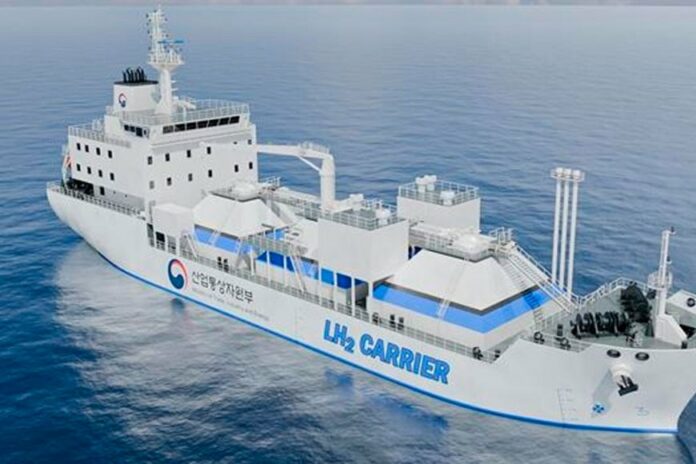
On the 9th, the Ministry of Trade, Industry and Energy formed a joint public-private promotion team for liquefied hydrogen carriers and held a launching ceremony at BEXCO, Busan. 

Liquefied hydrogen carriers are considered future ship items that will succeed liquefied natural gas (LNG) ships, which Korea has a technological advantage. The technical difficulty is very high and the added value is also great.

The International Energy Agency (IEA) predicts that by 2050, there will be more than 200 liquefied hydrogen carriers. This is based on the prediction that 500 million tons (t) of hydrogen will be produced and used worldwide by 2050.

Noh Gil-tae, a senior researcher at the Korea Register of Shipping (KR), said, “Liquid hydrogen carriers are expected to be used as a long-term means of transporting hydrogen after 2030 given that cryogenic cargo ship technology or equipment is still under development and large-scale liquefaction plants are needed at the production site.”

As the market for liquefied hydrogen carriers is expected to grow, major countries have also jumped into the development of carriers. Representatively, Kawasaki Heavy Industries, Japan, built the world’s first liquefied hydrogen carrier, Suiso Frontier, and transported liquefied hydrogen from Australia.

The Ministry of Industry also announced a strategy to lead the super gap of liquefied hydrogen carriers last year and began developing carriers in earnest. At that time, three strategies were put forward: securing core materials, parts, and equipment source technologies, demonstration and enlargement, and establishing a public-private cooperation system. The Ministry of Industry plans to provide a total of 55.5 billion won this year and build the world’s largest demonstration ship by 2027.

To this end, the government launched a promotion team consisting of top experts in domestic liquefied hydrogen carriers, including the three shipbuilding companies, universities, and researchers. The Ministry of Industry plans to create a cooperative ecosystem such as linkage and cooperation between R&D tasks, cooperation in building demonstration ships, and establishing a supply chain for liquefied hydrogen equipment. Currently, 43 R&D projects involving 101 organizations are underway at the same time in the development of liquefied hydrogen carriers. As such, the role of governance that can organically link and cooperate with tasks is important.

An official from the Ministry of Industry said, “Liquid hydrogen carriers are an area with high technology difficulty and very high risk of early technology development, and the government’s role as a pick-up water for K-Chosun’s new food preoccupation is important. We will reorganize related laws and systems so that the technology we have developed can become a global standard and actively support to secure technology for large-scale liquefied hydrogen carriers early.”

Source: mk.co.kr

Sharks and rays found living around Dutch wind farms

0

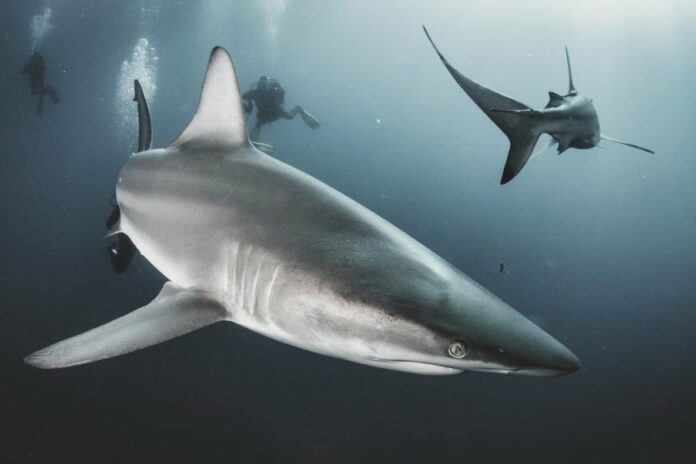
Researchers at Wageningen University have detected several shark and ray species in and around Dutch wind farms via traces of DNA in seawater, and say the energy developments may help protect marine life as well as produce energy.

The findings, published in the journal Ocean and Coastal Management, mark the first time Wageningen scientists have confirmed the active presence of rays and sharks through environmental DNA (eDNA) in seawater.

This is is genetic material left by organisms in their surroundings and allows scientists to identify species that have passed through an area without the need for physical capture.

“We’re trying to understand whether these animals are actually using the wind farms as habitat, or whether they’re being displaced by them,” said PhD researcher Annemiek Hermans.

Five different shark and ray species were detected in four offshore wind farms. The thornback ray (Raja clavata) was the most frequently observed species, found year-round at three of the sites.

Basking sharks (Cetorhinus maximus), a migratory species that feeds on plankton and can grow up to eight metres long, were detected during winter in Hollandse Kust Zuid.

Other species identified include the starry smooth-hound (Mustelus asterias) and the blonde ray (Raja brachyura), both observed across multiple seasons and locations.

Trawling and other forms of seabed-disturbing fishing are prohibited within offshore wind farms, allowing marine ecosystems to recover. Researchers believe these more stable habitats could benefit vulnerable species such as sharks and rays.

“We must tread carefully,” Hermans said. “If we start allowing bottom trawling in these areas, we risk losing the very protection these zones may offer.”

The research is part of a wider project to investigate whether electromagnetic fields from subsea power cables in offshore wind farms affect shark and ray behaviour, as these species rely on electro-sensory perception for hunting and navigation.

Source: dutchnews

Bollinger teams up with Edison Chouest Offshore to deliver ‘next-generation’ icebreakers

0

Bollinger Shipyards and Edison Chouest Offshore (ECO) have announced the formation of a strategic partnership called United Shipbuilding Alliance (USA).

USA recently responded to the U.S. Coast Guard’s April 11th Request for Information titled, “Arctic Security Cutter (ASC): Icebreaking Capable Vessels or Vessel Designs that are Ready for Construction,” outlining the utilization of a commercial vessel for national security purposes acquisition process that spans 33 months from contract award to delivery.

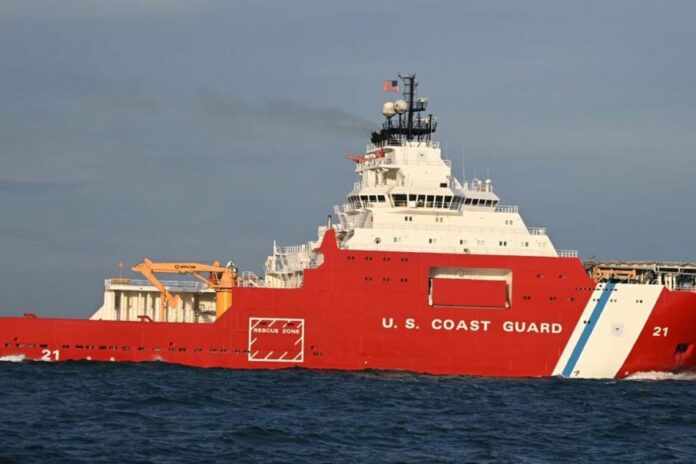
The viability and effectiveness of commercial vessel construction for national security purposes have been firmly demonstrated through the recent acquisition of the USCGC STORIS (WAGB-21) [ex – M/V AIVIQ]. The STORIS is an American-built icebreaker designed for Arctic conditions and delivered in under three years.

The proposed commercial acquisition method will save U.S. taxpayers more than 40% by reducing and eliminating excess program bloat, government vendor source selection mandates, and redundant bureaucratic reporting mandates. The streamlined approach enables agile execution, smart vendor selection, and the flexibility to shift work across multiple facilities, ensuring projects stay on schedule, minimize disruption, and remain on budget. Programs benefit from stable, contract-driven workforces and flexible timelines, with the ability to shift work across multiple facilities to stay on schedule and control costs. In contrast, government acquisition often suffers from regulatory delays, rigid change management, and increased costs.

“If the mission demands speed, efficiency, and innovation, the answer is clear, let American industry lead,” said Ben Bordelon, President and CEO of Bollinger Shipyards. “The formation of the United Shipbuilding Alliance comes at a pivotal moment and answers President Trump’s call to action in making American Shipbuilding Great Again. I am excited by President Trump’s efforts to reinvigorate America’s shipyards. Through his leadership, he has reignited demand, sparked competition, and challenged American industry to rise to the occasion with urgency and creativity.”

“The creation of the United Shipbuilding Alliance represents a significant evolution in America’s capacity to rapidly address urgent Arctic operational requirements,” said Gary Chouest, President and CEO of Edison Chouest Offshore. “Our collaboration underscores a dedicated commitment to ensuring America retains a decisive edge in maritime capabilities and enhancing national security within the increasingly strategic Arctic region.”

USA will leverage the combined 144 years of expertise and capacity of Bollinger and ECO’s 6,000-plus skilled American workers across their 33 operational shipyards and fabrication facilities across the Gulf of America to rapidly design, build, and deliver icebreakers for commercial and government customers. Between the two American companies, they have built and delivered four icebreakers in the last three decades, and Bollinger is currently constructing the Polar Security Cutter (PSC) program for the U.S. Coast Guard.

Damen Naval signs contract with EID for Integrated Communications System

0

Damen Naval has signed a contract with Portuguese defence technology company EID S.A. for the delivery of the Integrated Communications Control System (ICCS) for the PES (Plataforma Estratégica de Superficie) frigate to be built in Colombia. 

EID, part of the UK-listed Cohort plc group, is a trusted Damen partner, with recent collaboration on the Portuguese Navy’s Multi-Purpose Vessel (MPV), which forms part of Damen’s Support Ship range. 

This PES frigate project is a strategic collaboration between Damen Naval and Colombian shipbuilder COTECMAR. The programme represents a major step forward in strengthening regional maritime defence capabilities and empowering Colombia’s local industry. In line with this, EID will work closely with Colombian stakeholders to support knowledge transfer and long-term technical cooperation.

“Partnering with proven, innovative suppliers like EID supports our commitment to delivering cutting-edge capability,” said Jasper Oreel, Damen Naval Project Director. “This is another example of how we bring global expertise with local impact.”

“We are very proud at EID to have been chosen by Damen to supply for the Colombian PES Frigate programme our state-of-the-art OceaNEX C4I solution that unites into a single platform EID’s proven Integrated Communication System with our ship network technology,” said Martin Bennett, EID’s Chief Executive. “This is particularly exciting, working with Damen on their Sigma Class Frigate and enabling new technology partnerships with our partners and stakeholders in Colombia”.

The PES frigate is scheduled for delivery to the Colombian Navy in 2030. 

thyssenkrupp receives order extension for two additional submarines from Singapore

0

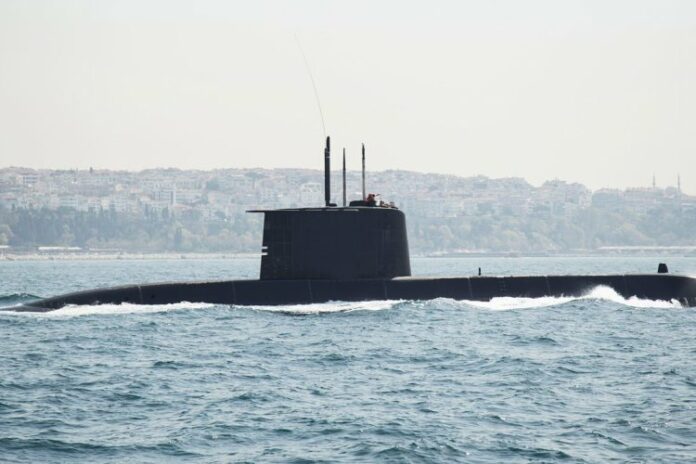
On May 7, thyssenkrupp Marine Systems and Singapore’s Defence Science and Technology Agency (DSTA) signed a contract for the construction of two additional Type 218SG submarines.

This order further increases thyssenkrupp Marine Systems’ record order book, which currently stands at around €16 billion. The positive market development in the marine sector also continues.

Oliver Burkhard, CEO of thyssenkrupp Marine Systems, emphasizes: “The order expansion underscores the generally positive market situation in naval shipbuilding and gives us the opportunity to further expand our very well-filled order book. We are also proud that Singapore has once again placed its trust in us, as our partnership goes far beyond the production of submarines. We feel deeply connected to the country and contribute to the security and defense capabilities of our customer’s country with our products.”

According to thyssenkrupp Marine Systems, the order extension can be handled within existing capacities in Germany, despite high capacity utilization until the 2040s. In December 2024, the company received major orders worth billions, including four additional Type 212CD submarines for the German Navy, the new Polarstern research icebreaker, and funding for the project launch of the new F127 frigate generation.

thyssenkrupp Marine Systems is also focusing on the highest technical requirements for the order extension from Singapore. The design of the Type 218SG submarine is designed to minimize its signature. The air-independent propulsion system also enables the boats to remain underwater for longer periods. Following the “Invincible”, “Impeccable”, “Illustrious”, and “Inimitable”, a total of six submarines will now be built for Singapore.

LR OneOcean powers fuel and emissions savings for TotalEnergies

0

TotalEnergies has adopted LR OneOcean’s Route Optimisation solution, which combines expert master mariner oversight with sophisticated machine learning fuel modelling and hull analysis capabilities.  

The Route Optimisation solution harnesses the power of both the Lloyd’s Register OneOcean Platform and its Vessel Operations team to grant unparalleled visibility into the performance of each vessel. The solution collects and analyses high-frequency vessel data and noon-reported data to create accurate fuel consumption models. By combining these models with accurate insights of route optimisation from the Vessel Operation team, the system can precisely simulate and improve fuel efficiency for any given voyage. These insights help TotalEnergies make better operational decisions, leading to fuel savings and reduced emissions across its fleet. 

Initial results demonstrate significant benefits. In a trial of the Route Optimisation solution prior to full adoption, TotalEnergies has saved 725 metric tonnes of fuel and 2256 metric tonnes of CO2 emissions across its fleet to date. 

Jeff Mattick, Customer Success Director for LR OneOcean, said:

“LR OneOcean, an industry leader of route optimisation and machine learning technology, has delivered significant benefits to our customers for over a decade by continuously innovating to bring value to our customers. We are pleased to welcome TotalEnergies to our family and look forward to optimising commercial outcomes, improving reliability, and reducing emissions with our advanced technology.” 

Sebastien Roche, General Manager Shipping Performance and Innovation of TotalEnergies, said:

“We are thrilled to integrate LR OneOcean route optimisation to enhance our chartered fleet’s voyage. This technology, combined with 24/7 advisory support, immediately and sustainably reduces fuel consumption and emissions, minimising the environmental footprint of our shipping activities. LR OneOcean’s close collaboration with shipping operators and crew ensures seamless adoption.”