0.5 C
New York
Home Blog Page 65

Damen Maaskant delivers scampi trawler to Sanford following arrival in New Zealand

0

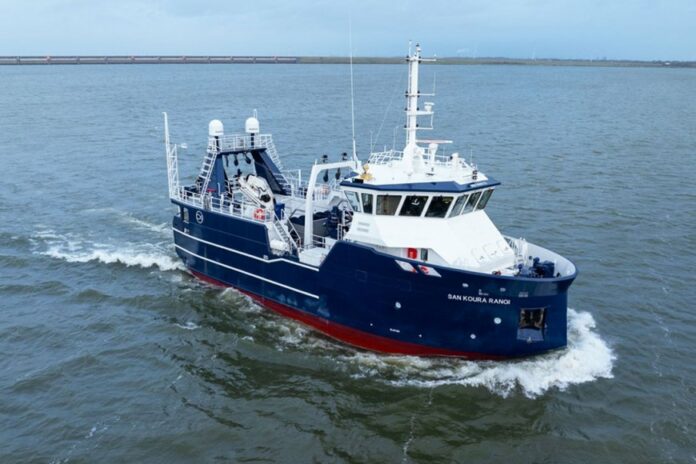
The 32.4-metre vessel has safely arrived in New Zealand, where the official handover will take place and the vessel will soon begin operations in the Southern Ocean.

Based on Damen’s SeaFisher 3210 design, the San Koura Rangi was developed through close collaboration between Damen and Sanford. Throughout the process, both teams maintained open, regular and constructive contact, resulting in a highly tailored vessel that incorporates all of Sanford’s specific requirements within a compact and efficient design.

The trawler features a diesel-electric propulsion system to reduce emissions, and a power management system to minimise the running engines. Stepping on board, it’s clear that every aspect of the vessel has been thoughtfully considered. 

Special attention was given to creating a homely atmosphere onboard, to cater for crew members spending extended periods at sea. The interior has been carefully designed to be welcoming and comfortable for the crew. Furthermore, the large bridge windows provide the skipper with outstanding all-around visibility and abundant natural light, enhancing both safety and comfort. 

Damen has also delivered an innovative and compact full electric winch system that regenerates power when paying out the trawl winches. The processing area has been functionally optimised to streamline onboard procedures while maintaining strict hygiene standards with a-state-of-art freezer system for optimal catch preservation. 
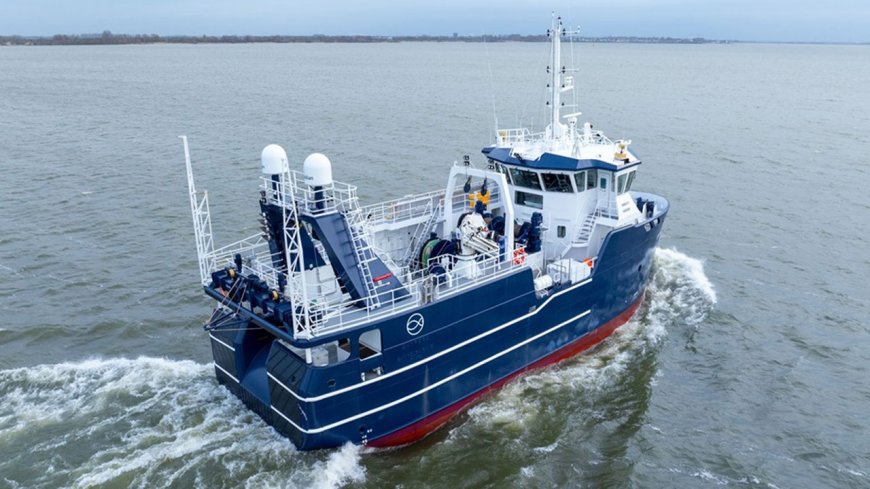
Onboard processing has been developed to meet New Zealand’s strict hygiene requirements, ensuring optimal food safety and responsible working conditions for the crew.

“This vessel is a major step forward in our ambition to reduce the carbon footprint of our operations at sea,” said Elliot Kendrick, Project Manager for Sanford. “Together with Damen, we’ve developed a vessel that reflects our shared values of sustainability, innovation, and craftsmanship.”

Ambassador visit in December, technical acceptance in February
On 6 December 2024, Susannah Gordon, New Zealand’s Ambassador to the Netherlands, visited Damen Maaskant. During her visit, she was given a tour of the San Koura Rangi, then under construction, and learned more about the cooperation between Damen and Sanford.

Following the vessel’s successful seatrials, the technical acceptance took place in February 2025. “We are truly grateful to Sanford for placing their trust in Damen,” said Pim Schuurman, Damen’s Regional Sales Director for New Zealand. “The collaboration has been not only productive, but very rewarding. This vessel represents a joint achievement in sustainable innovation.”

The hull of the vessel was launched earlier in Gdańsk, Poland, and transported to Damen Maaskant’s yard in Stellendam, the Netherlands for outfitting and final completion. With its arrival in New Zealand, the San Koura Rangi is ready to join Sanford’s fleet.

New data highlights lack of gender diversity in maritime

0

The report presents data on the proportion and distribution of women working in the maritime sector from IMO Member States and the private sector.

The results are based on an analysis of a larger number of women working in maritime across the public and private sectors: 176,820 women in 2024 compared to 151,979 in 2021. In particular, there was a substantial increase in the number of Member States participating. However, the latest dataset shows that women account for just under 19% of the total workforce sampled, compared to a share of 26% in the catchment group reported in 2021.

Of the sample group, women account for 19% of the workforce of national maritime authorities in Member States, and only 16% of the surveyed private sector workforce (excluding seafarers). At sea, women remain vastly underrepresented, accounting for just 1% of the total number of seafarers employed by surveyed organisations.

Arsenio Dominguez, Secretary-General, IMO, said: “The second IMO-WISTA Women in Maritime Survey provides valuable insights into the sector’s progress since the baseline dataset gathered in the 2021 survey. Greater participation in the survey from Member States and industry is a welcome indication of growing engagement with gender matters.

“However, there is some way to go. Female representation is still disproportionately low, and women represent a small fraction of the seagoing workforce, highlighting the urgent need for continued commitment and action. We must redouble our efforts to foster a truly diverse and inclusive maritime industry.”

Providing insights into leadership, workforce participation, policies and education in both the public and private sectors, the report highlights significant variances between activities. Greater female representation was found in emerging sectors such as Environmental, Social and Governance (ESG) and decarbonisation services, while others, such as bunkering and legal services, recorded a decline.

Elpi Petraki, President, WISTA International, said: “The Women in Maritime Survey was designed to deliver real data on the state of gender diversity in maritime and offer guidance on the areas that require more attention. The intention is to inspire change and act as a collective call to action.

“Attracting, retaining and promoting women – both on land and at sea – remains a priority moving forward. However, the new data also shows how opportunities across the industry continue to be limited for women due to barriers such as gender stereotyping, workplace safety concerns, a lack of family friendly policies and the ongoing gender pay gap.”

The report provides detailed recommendations on how Member States and industry can contribute to improving gender diversity in maritime, by enhancing recruitment and retention initiatives, expanding mentorship and leadership development programmes, strengthening policy implementation and guaranteeing safe and supportive working environments.

As part of the commitment from the IMO and WISTA International to enhance gender diversity within the maritime sector, the survey and its findings contribute to the implementation of the fifth United Nation’s Sustainable Development Goal (UNSDG5) – to achieve gender quality and empower all women and girls – by providing comparable data to support the development of programmes and policies to encourage female participation within the maritime industry.

Defence Intelligence of Ukraine presents Magura W6P reconnaissance naval drone

0

Militarnyi’s correspondent reported the details about the new unmanned system from a closed presentation by the Defence Intelligence of Ukraine.

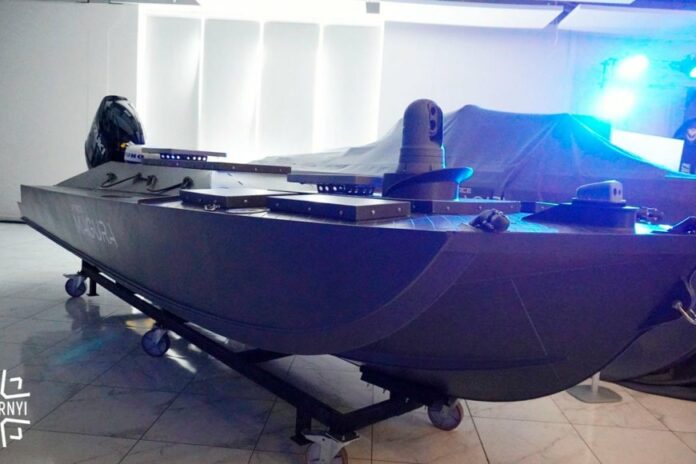
The Magura W6P is designed for reconnaissance and patrol missions at sea, as well as cargo delivery. According to the developers, it can no longer be used for strike operations as a kamikaze drone, although the display model still retains contact fuses in the nose section.

The new model of the naval drone is essentially a trimaran, meaning a vessel with two additional hulls, also known as outriggers. This design makes the vessel more stable in the water and reduces lateral rolling during movement or rough seas.

With a comparable weight to the Magura V5, the new design allowed the deck to be expanded to 2 meters, which can be effectively used as a platform for mounted equipment, including launch containers for strike FPV drones. When fully loaded, the Magura W6P weighs 1,900 kilograms, of which 400 kg is allocated for payload.

Unlike other models in the family, this drone is powered by a Suzuki DF200 outboard motor with 200 horsepower, which enables the vessel to cruise at a speed of 21 knots and reach a maximum speed of 36 knots. This is slower than the Magura V5, which can reach speeds of up to 50 knots when fully loaded, but the operational range has increased — the operational zone has been expanded from 800 to 1,000 km.

It is claimed that the drone is equipped with an automatic target tracking system, which could play an important role in enabling autonomous patrols of maritime areas.

For reconnaissance, the drone is equipped with a gyro-stabilized optical station with both daytime and thermal imaging channels, as well as an onboard shipborne radar system from Furuno.

The onboard radar visually resembles the dome-shaped radars of the DRS4D series, which can detect ships at a range of 20-30 kilometers, and large vessels such as tankers up to 60 kilometers. Small boats and vessels can be detected by this radar within a radius of about 7 kilometers. However, given the low height of the antenna placement, these parameters may be less effective.

It is likely that the drone’s arsenal will also include other sensors for maritime situational awareness. In particular, the Magura V7 drone, presented on the same day, is equipped with an acoustic monitoring system.

Like other drones in the family, the Magura W6P uses a multi-channel satellite communication system, making it resistant to interference from enemy electronic warfare systems.

Militarnyi previously reported that the Navy, together with developers of maritime drones, is working on creating forces and means to protect Ukrainian maritime areas from the threat of maritime drones.

The plan is for specialized surface drones to become one of the key components in defending Ukraine’s maritime areas, focusing on patrolling, searching for, and eliminating threats. The Magura W6P may be integrated into this system as a reconnaissance component.

Source: Militarnyi 

Scarborough FPU’s topsides and hull come together in major engineering feat

0

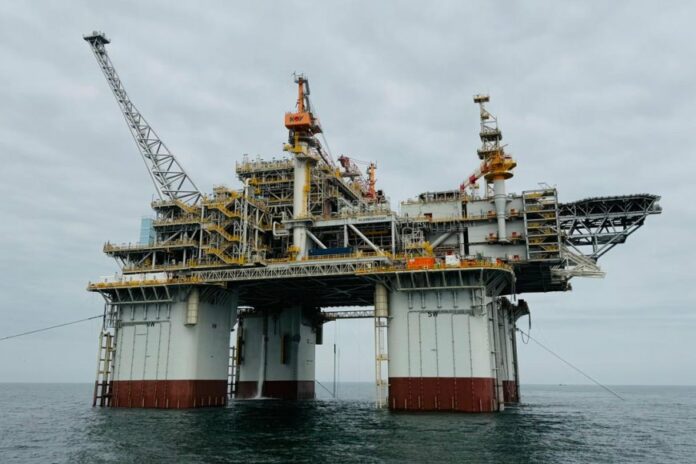
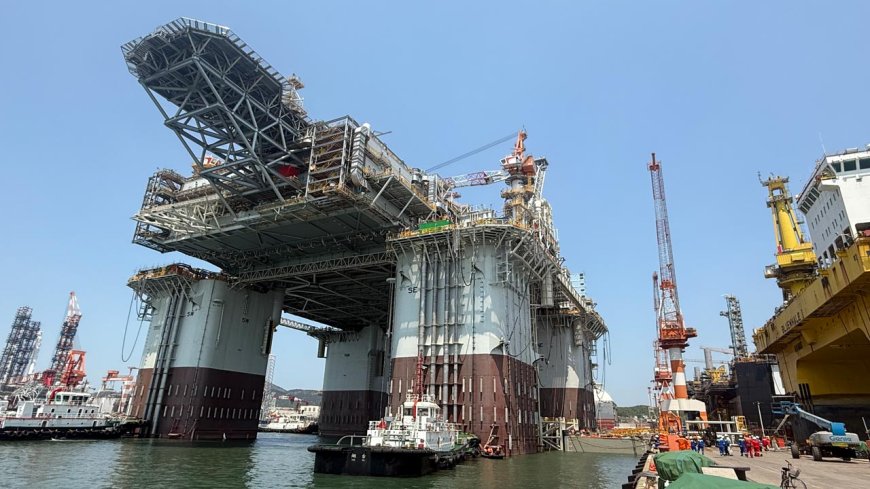
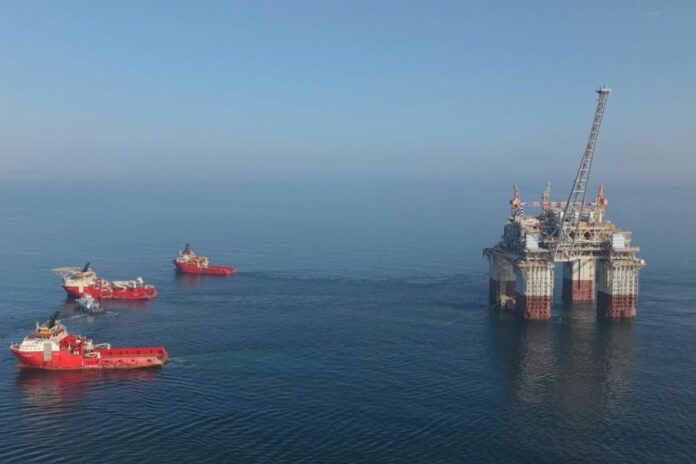
Constructed separately at two different fabrication yards in China, the joining of the two mega-structures is a significant step forward for the Scarborough Energy Project as it progresses towards first LNG cargo, targeted for the second half of 2026.

The floatover required precise planning and extensive collaboration by all stakeholders. Teams from Woodside, McDermott, QMW and COSCO worked closely on the fabrication of the structures and on safely and successfully bringing them together.

Woodside Executive Vice President & Chief Operating Officer Australia Liz Westcott highlighted what it meant for Woodside and the Scarborough Energy Project, which is now over 82% complete.

“The floatover of the FPU is an engineering marvel and builds on the safe and successful fabrication of the topsides and hull.

“Manoeuvring two structures that each weigh more than 30,000 tonnes at sea is an exceptionally complex operation.

“I am proud of the Woodside and McDermott teams for the safe delivery of the FPU to the integration yard and the completion of this chapter of work. The FPU is a critical piece of infrastructure for this world-class project which continues to be delivered to the highest standard.”

The remaining integration work for the FPU will continue at the fabrication yard in Yantai before sailaway to Australia.

Once complete the FPU will be moored 375km off the coast of Karratha, Western Australia. The Scarborough Energy Project is set to produce up to 8 million tonnes of LNG per year and contribute up to 225 terajoules a day of domestic gas supply into the Western Australian market. 

Damen delivers a new ASD Tug to the Lithuanian Navy to strengthen its position

0

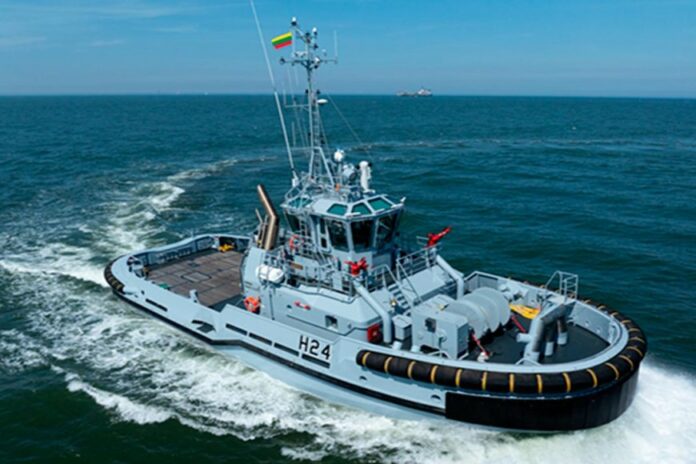
On Monday the 12th of May, just nine months after the contract was signed, the christening ceremony took place of the Lithuanian Navy’s new multi-role tug at the Klaipėda Cruise Ship Terminal. 

Built and delivered by the Damen Shipyards Group, the Damen ASD Tug 3010 ICE is a well-proven class especially designed and equipped for operations in icy waters. 

Named Lokys, and designated H-24, the delivery of the vessel marks a milestone as the nation upgrades its maritime capabilities. Measuring 30 metres in length, it has a bollard pull of almost 60 tonnes and a maximum speed of more than 13 knots. Its large working deck will also enable it to support the navy across the region in a wide range of operations.

The ceremony was attended by distinguished Lithuanian guests, including Vice-Minister of National Defence Karolis Aleksa; General Raimundas Vaikšnoras; Fleet Admiral Giedrius Premeneckas and Mayor of Klaipėda Mr Arvydas Vaitkus. Mrs Ilona Vaitkienė, spouse of the mayor, had the honour of being the godmother of Lokys.

During the ceremony Vice-Minister of National Defence Karolis Aleksa stated: “The geographical location of the Port of Klaipėda and its significance, both economically and in terms of national security, are immense. Therefore, we must dedicate the necessary attention and resources to the Lithuanian Armed Forces. We clearly see and understand the threats, which is why we are developing – and will continue to develop – our maritime capabilities. The newly built addition of the H24 multi-role tug is just one example of this.”

The procurement of Lokys will significantly contribute to the Lithuanian Navy’s capability to perform various tasks. These will include a wide range of missions related to host nation support for visiting allied ships, ensuring port security and supporting the execution of tasks by the naval fleet and other units in the Armed Forces.

“It was a great honour for us to deliver the Lokys to the Lithuanian Defence Materiel Agency on time and fully operational,” said Vadim Akimov, Damen Sales Director. “We take great pride in serving the needs of our naval partners around the world and we hope that this project will mark the beginning of a strong partnership for many years to come.”

NYK Group’s first methanol-fueled bulk carrier delivered

0

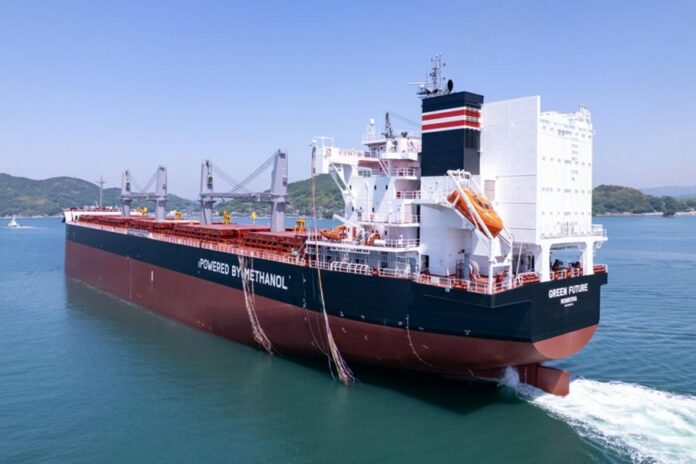
On May 13, a methanol dual-fuel bulk carrier chartered by NYK Bulk & Projects Carriers Ltd., an NYK Group company, from KAMBARA KISEN Co., Ltd. was delivered at the TSUNEISHI Factory of TSUNEISHI SHIPBUILDING Co., Ltd., and a naming and delivery ceremony was held. 

At the ceremony, Yuko Tsutsui, Managing Executive Officer and Chief Executive of Sustainability & Transformation Headquarters of NYK, named the vessel “Green Future.”

This vessel is the first bulk carrier in the NYK Group to be equipped with a dual-fuel engine that uses methanol and fuel oil. Methanol has a lower environmental impact than fuel oil, and by using bio-methanol and e-methanol produced using hydrogen derived from renewable energy sources and recovered carbon dioxide, the vessel achieves significant reductions in greenhouse gas emissions.

Vessel Particulars

  • LOA: 199.99 m
  • Breadth: 32.25 m
  • Depth: 19.15 m
  • Deadweight: approx. 65,700 metric tons
  • Capacity: approx. 81,500 m3
  • Draft: 13.8 m

Hafnia, Guangzhou Shipyard, Anemoi and DNV collaboration to develop rotor sails for MR tankers

0

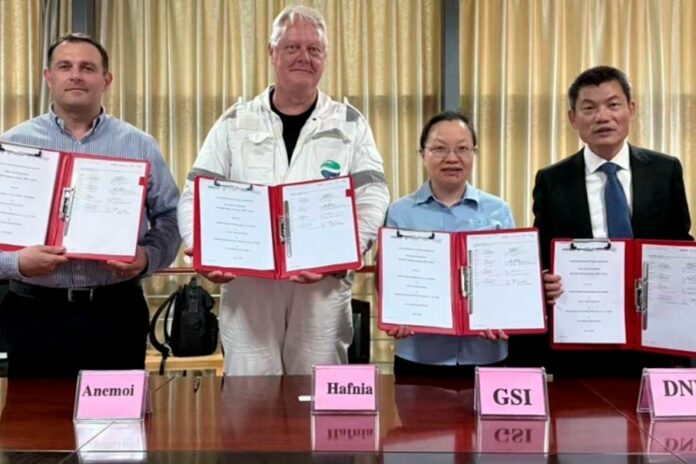
Anemoi Marine Technologies Ltd has announced that it is collaborating with Hafnia Limited, Guangzhou Shipyard International (GSI), and DNV to develop the integration design of Rotor Sails suitable for installation on 50,000 dwt Medium-Range (MR) tanker vessels.

The companies signed a Joint Development Project (JDP) in April 2025 to develop a new generation of efficient and environmentally friendly Rotor Sail vessel designs to increase the efficiency of MR tankers within the wider global fleet.

As part of the project, Anemoi and Hafnia will undertake several engineering studies to establish specifications related to how Rotor Sails can be safely and efficiently installed on the deck of MR tankers, alongside additional electrical and control system layouts for these vessels. In addition, the studies will include calculations to examine how Rotor Sails can improve the Energy Efficiency Design Index (EEDI) and Energy Efficiency Existing Ship Index (EEXI) values of existing and future MR tankers.

GSI will apply its naval architecture and marine engineering principles to develop essential technical documentation for the new Rotor Sail’s design integration, while DNV will undertake an Approval in Principle (AiP) assessment to ensure that the design is feasible and verifies that no significant obstacles exist to prevent the design from being realized based on current and foreseeable regulatory and class requirements.

“Participating in this joint development project allows us to collaborate with industry partners to unlock the full potential of Rotor Sails on MR Tankers. It supports Hafnia’s decarbonisation strategy to assess and embrace the potential of innovative technologies to improve fuel efficiency and reduce vessel emissions,” shared Jesper Kristiansen, Hafnia’s General Manager Technical.

“WAPS, like Rotor Sails, are spreading throughout the industry, enabled by new materials, data and software, and evolving rules and regulations. Across all segments, we still have room to improve vessel energy efficiency and WAPS have emerged as one of the most attractive tools for shipping to make immediate, impactful gains in this area. DNV is very pleased to be part of this forward-looking group, and build on a cooperation with Anemoi, Hafnia and GSI that is driving shipping’s journey towards a more sustainable future,” said Mr Shao Guang Chi, Station Manager of Guangzhou Station at DNV Maritime.

“With new regulations driving the need for lower emissions, the time is right to adopt highly efficient ship designs. Integrating Rotor Sails into MR tankers is a necessary step, and together with our partners, we’re committed to delivering vessels that meet both environmental and commercial demands,” said Deputy Chief Engineer, Huang Jun of Guangzhou Shipyard International (GSI).

“There is growing interest within the tanker sector for novel technology that can help reduce the carbon footprint of their vessels and increase their value, particularly as the MR tanker fleet is expected to grow in the coming years. Our partnership with Hafnia, alongside GSI and DNV, will ensure a new generation of MR tankers that utilises Rotor Sails to improve their efficiency and sustainability credentials hits the water in the not-too-distant future,” said Nick Contopoulos, Chief Production and Partnerships Officer of Anemoi. 

Rotor Sails, also known as ‘Flettner Rotors’, are vertical cylinders that harness the renewable power of the wind to provide additional forward thrust and improve the energy efficiency of the vessel. 

Woodside and Aramco sign collaboration agreement

0

Woodside Energy Ltd (Woodside) and Aramco entered into a non-binding collaboration agreement to explore global opportunities, including Aramco’s potential acquisition of an equity interest in and LNG offtake from the Louisiana LNG project. Additionally, both companies are exploring opportunities for a potential collaboration in lower-carbon ammonia.

Woodside CEO Meg O’Neill welcomed the collaboration agreement.

“We are excited to explore new opportunities with Aramco. This collaboration aligns with Woodside’s strategic vision to build a diverse and resilient global portfolio. It leverages our growing relationship with one of the world’s leading integrated energy and chemicals companies, to explore new opportunities which deliver value for both parties.

“It is also another demonstration of the ongoing interest Louisiana LNG is generating among high-quality potential investors, following our recent agreement with Stonepeak to acquire a 40% interest in the project’s infrastructure holding company.”

The collaboration agreement was signed in Riyadh at the Saudi-US Investment Forum attended by Saudi Arabian Crown Prince and Prime Minister Mohammed bin Salman and US President Donald Trump.

Woodside announced a final investment decision to develop the three-train, 16.5 million tonnes per annum Louisiana LNG development on 29 April 2025. Woodside is targeting first LNG in 2029.

McDermott advances Scarborough EPCIC with successful FPU floatover

0

The contract, awarded in 2021, followed the successful delivery of front-end engineering design for the Scarborough Energy Project’s FPU and includes engineering, procurement, construction, installation and commissioning (EPCIC) services.

McDermott is delivering design, fabrication, integration, transportation and installation of an approximately 30,000-metric-ton topside and 37,000-metric-ton hull structure, making it the largest floating production facility the company has ever designed and built, and one of the largest semi-submersible production platforms built in offshore history. 

Topsides fabrication was completed at McDermott’s joint venture yard, Qingdao McDermott Wuchuan (QMW), in Qingdao, China, while the hull was constructed by COSCO in its Qidong shipyard, also in China. The topsides have six deck levels; 169 core equipment units, including three gas turbine-driven export gas compressors and three main generators with waste heat recovery systems; more than 50,000 meters of piping; one million meters of cabling; 568 integrated subsystems and a battery energy storage system, supporting operational emissions reduction.

Earlier this month, both structures were transported offshore, and the topsides installed onto the hull via floatover off the coast of Dalian, China.

Following the successful floatover, the FPU arrived at CIMC’s Raffles yard in Yantai, China, for final integration works. From there, it is expected to sail away to Western Australia, where it will be moored at the Scarborough gas field approximately 375 kilometers offshore from the Burrup Peninsula.

MacGregor to deliver electric cargo cranes for Vertom’s multipurpose vessels built in India

0

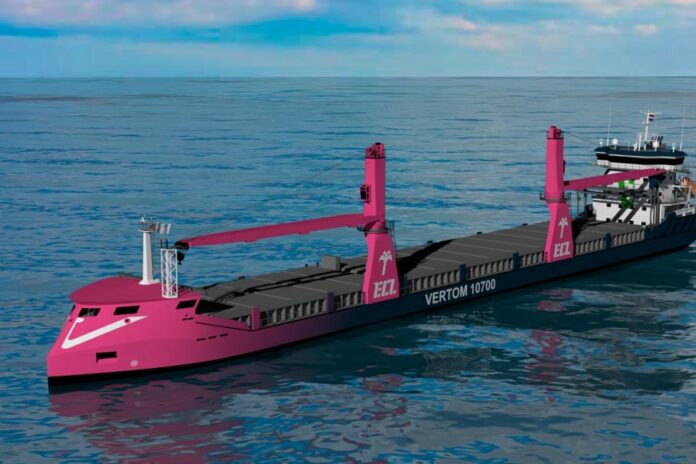
This order represents MacGregor’s first electric crane delivery for vessels, which will be built in India, marking a significant milestone in expanding sustainable solutions to emerging markets.

The vessels will be constructed at Chowgule Shipyard in India, and the order has been facilitated in close cooperation with VARYA Tech Pvt Ltd., MacGregor’s local sales partner.

Deliveries are scheduled to begin in 2026. Each vessel will be equipped with 2 x SWL 80t – 18m fully electric cargo cranes and this order is booked in Q2 2025.

This collaboration highlights the commitment of MacGregor, the Vertom Group, and Chowgule Shipyard to advance sustainable operations by integrating energy-efficient, electric cargo handling solutions into the fleet. The fully electric cranes are designed to enhance safety, reliability, and operational efficiency while reducing environmental impact compared to traditional hydraulic systems.

“We are pleased to partner with MacGregor on this important step forward in the electrification of our fleet,” says Rolf van Leeuwen, Newbuilding Superintendent, Vertom. “These electric cranes support our commitment to safer and more sustainable operations and reflect our ambition to lead by example in responsible shipping.”

“We chose MacGregor Cranes for this project due to advanced VFD electric crane technology and experience of MacGregor in delivering successful projects to Indian shipyards,” says Shrikant Itagi, Director Projects, Chowgule Shipbuilding Yard.

“We are pleased to partner with Vertom in bringing next-generation electric crane technology to their fleet,” says Magnus Sjöberg, Senior Vice President, Equipment and Solutions Division, MacGregor. “This order demonstrates our ability to meet the evolving demands of the shipping industry with efficient and environmentally responsible solutions.”