0.7 C
New York
Home Blog Page 67

Danelec joins GTT to accelerate the development of its maritime safety

0

The management team of Danelec will join GTT as part of the leadership of the combined Digital division, ensuring continuity while supporting the acceleration of growth. 

GTT is a French technology and engineering company, and the world leader in the design of cryogenic containment systems for the maritime transportation and storage of LNG. 

GTT operates in three key sectors: high performance liquefied gas containment systems, smart shipping software & services, and the development of low-carbon technological solutions. 

This acquisition fully aligns with GTT’s development strategy in the digital field and marks an important milestone for the Group. In a fast-growing maritime digital market, this acquisition firmly consolidates the Group’s leadership, while creating value for shareholders.

Over the long term, the integration of Danelec into GTT’s Digital division is expected to unlock substantial synergies by combining the complementary technologies and offerings of Danelec, Ascenz Marorka, and VPS. With a strengthened installed base of approximately 17,000 vessels, the Group is ideally positioned to expand its global footprint and enhance its data-driven services for shipowners and operators.

Danelec has undergone a remarkable transformation during the past five years establishing a leading position as a global provider of digital solutions to the maritime industry. Since its acquisition by the European private equity firm, Verdane, in 2020, Danelec has increased revenue by nearly 250%, scaled its installed base by more than 180%, and expanded its technological capabilities through strategic acquisitions.

Through the acquisitions of Kyma (Norway), a pioneer in digital ship performance monitoring; Nautilus Labs (US), a SaaS-based leader in AI-driven vessel and voyage optimization; and MacGregor’s (Germany) VDR business, Danelec has transformed into an end-to-end maritime data and analytics platform. These acquisitions have broadened its capabilities, expanded its global footprint and positioned the company to take a leading role in leveraging high-frequency, high-quality data to drive digitalization and efficiency across the maritime industry.

Today, Danelec’s installed base counts more than 15,500 vessels worldwide, having captured more than 1.5 trillion onboard data points in 2024 alone. This deep foundation of onboard expertise – spanning safety, performance and vessel data collection – uniquely positions Danelec to join GTT to navigate the next phase of maritime sustainability.

World’s first biomethanol-powered CTV delivered

0

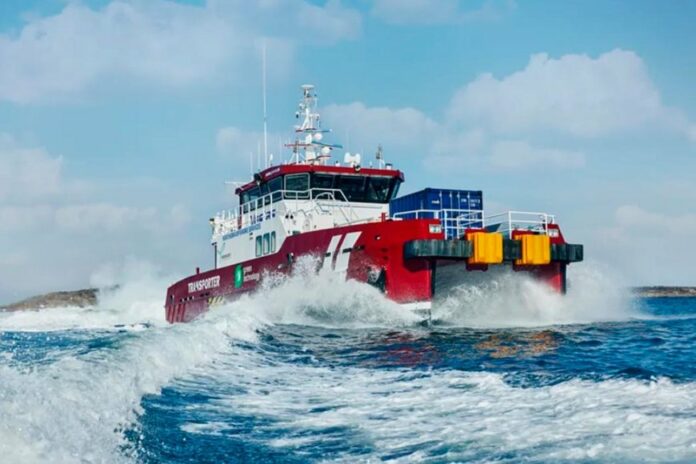
Northern Offshore Services (N-O-S), a subsidiary of Northern Offshore Group (NOG), an NYK Group company that operates crew transfer vessels in the global offshore wind industry, has completed the world’s first biomethanol-powered crew transfer vessel (CTV). 

Designed and developed by N-O-S, the vessel has been named “Transporter.” It is a conversion of a smaller A-class CTV.

The new CTV is equipped with a methanol engine. For fuel, N-O-S plans to use only biomethanol, a clean, renewable fuel derived from sustainable biomass. This pioneering innovation underscores N-O-S’s commitment to driving the transition to emission-reducing technologies and advancing the industry’s decarbonisation efforts.

Comment, David Kristensson, CEO, NOG: “We now operate the world’s first single-fuel biomethanol crew transfer vessel. We are improving our fleet’s sustainability and setting a new standard for the maritime industry. Biomethanol represents a powerful alternative to conventional fuels, and we are proud to lead the way.”

Vessel details:

  • Seats: 24
  • Length: 25.35 m
  • Beam: 7.6 m
  • Forward deck area: 70 m2
  • Aft deck area: 30 m2

NxtPort, Port of Antwerp-Bruges and The Way Forward launch Inbound Release Platform

0

Inbound Release Platform (IRP) has been operating since 1 April 2025.

This innovative solution, which was developed by Port of Antwerp-Bruges and its subsidiary NxtPort in collaboration with The Way Forward and Belgian Customs, is helping the port community implement the new European customs legislation for inbound cargo flows. Thanks to IRP, the digital processing of import, transhipment and transit in all Belgian seaports is becoming faster, safer and more transparent.

To comply with European requirements, Belgian Customs must fully transition to the new PN/TS system for the digital registration and control of goods entering the European Union. This will be accompanied by some major changes for the logistics sector: processes are about to become more complex and will require a variety of data to be shared in an accurate and timely way.

At the request of the port community, NxtPort therefore developed IRP – a smart link between the customs authorities and shipping agents, terminal operators, customs agents and logistics service providers. Using the platform, relevant data can be delivered and accessed centrally, while paying maximum attention to data security.

IRP is available in all Belgian seaports and supports the importation, transhipment and transit of all cargo flows (breakbulk, bulk, containers, ferry and RoRo). The platform increases data transparency, simplifies compliance with the customs legislation and speeds up logistics processes. For example, shipping agents will share their cargo lists automatically from now on; terminal operators will optimise their cargo handling. Customs agents and logistics service providers can also obtain a clearer view of the status of their shipments more rapidly using the Import Consignment API. IRP provides companies with a full-service solution by connecting all of the links to each other.

Geert Maes, Transition Manager, NxtPort: “Since IRP was launched on 1 April, the roll-out has been taking place as part of a controlled and phased process, in close cooperation with several early movers in Zeebrugge, Antwerpen and Gent (MSC Belgium, Grimaldi Belgium, CSP Zeebrugge Terminal, Antwerp Euroterminal, Stukwerkers and De Baerdemaecker. Through incremental testing involving increasing volumes and complexity, the processes are being carefully validated and, where necessary, refined in the production environment. This pragmatic approach also gives Customs the necessary space to get used to the system and will prevent disruptions in the flow of goods. Today, almost 100% of the shipping agents and terminal operators in Belgium are involved and the commitment that exists on the logistics side is also growing: 60 to 70 customs agents and logistics service providers have already begun the onboarding process of their own accord.”

Damen completes green retrofit project for BAM Shipping

0

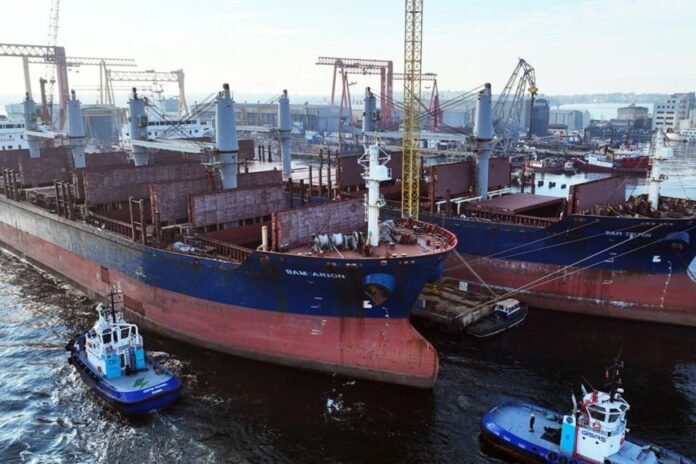
Damen Shipyards Group, together with partners including Atal Solutions has completed its retrofit of four bulk carriers for BAM Shipping. 

The retrofit is the first time that all of the various solutions have been used in a single retrofit project. In aiming to reduce fuel consumption, the project has maintained five main focal points: resistance in the water, optimising power usage, enhancing propulsion, cutting emissions and lubrication systems. 

Initially, the plan was to install solutions including the Damen Air Cavity System (DACS) marine lubrication system, the Damen Triton IoT solution, low friction anti-fouling paint, variable frequency drives, shore power connectivity, LED lamps, a wake equalising pre- and post swirl duct, CO2 capture systems and DEX QM lubrication technology. 

Collectively, the project partners anticipated that these measures would reduce fuel consumption by 20-25%, with a reduction in emissions of around 90%. However, during the project, the scope was broadened yet further with the inclusion of four more efficiency boosting solutions. 

These were the inclusion of fuel additives, oil lubricant additives, a Hempel propeller coating, and use of nano EFX. This spray solution is applied to the engine’s air intake, ionizing humidity and ensuring optimal fuel combustion, minimising consumption, emissions and carbon deposits. 

In the coming weeks, the vessels will be verified by classification society RINA, at which point the total volume of fuel savings will be confirmed. However, two of the vessels have already been in operation following the initial retrofit measures and show signs of meeting their anticipated efficiency goals. The fuel savings will additionally reduce the vessels’ OPEX considerably.  

The project prepares the four bulk carriers for operations in compliance with recent regulations including Carbon Intensity Indicator (CII), and Energy Efficiency Existing Ship Index (EEXI). The work undertaken will also extend the lifetime of the vessels by an expected twelve years. 

While Damen performed the retrofit of the vessels, Atal Solutions arranged the 123.7 million USD funding for the project. Atal provided a supplier’s credit amounting to 105.2 million USD, requiring the vessel owners to provide just 15% equity, and having a 12 year repayment period with competitive interest rates.

Damen Business Development Manager Rutger van Dam said, “This has been a very exciting project. What we have done here, with the integration of so many different solutions to achieve a combined result, is unprecedented. Of course, there have been challenges along the way, but the outcome has been successful and just goes to show that, with the right people, and the right mindset, you can go a long way. The lessons we have learned on this project will be invaluable as we continue to work towards our goal to become the most sustainable maritime solutions provider.”

Edwin Sieswerda CEO/Founder of Atal Solutions said, “We are very pleased with the preliminary results of this project, and are looking forward to the class verification in the coming weeks. At that point, we will gain a clear picture of how significant the fuel savings resulting from these measures have been. Judging by the performance of the vessels operating already, we expect a positive result. This is in no small part due to Damen’s approach. On a number of occasions during the retrofit we approached Damen with new ideas and suggestions. Each time, they listened to what we had to say and found a way to make it happen. 

“At the current time, there are so many unknowns surrounding the maritime energy transition. If we are to succeed in preparing our industry for a cleaner, more sustainable future,  an openness to ideas and flexibility such as that shown by Damen will be of vital importance.”

Fugro to extend geotechnical surveys for Dogger Bank South offshore wind farms

0

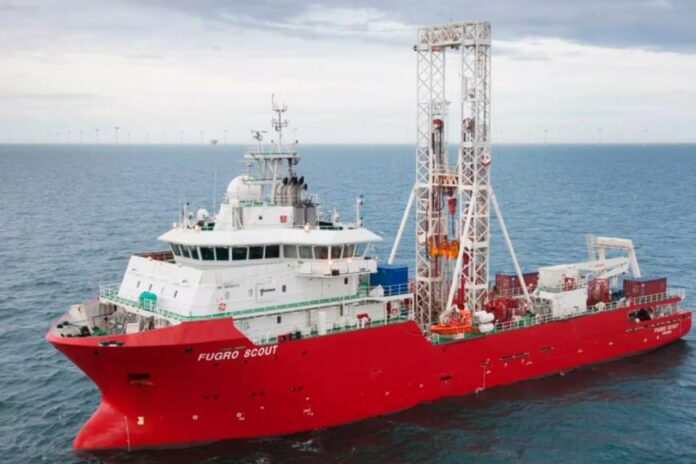
Fugro has been awarded a contract to perform comprehensive geotechnical surveys for the eastern array of the Dogger Bank South (DBS) offshore wind farms, a major initiative led by RWE and Masdar to develop one of the UK’s most powerful offshore wind energy projects. 

The detailed investigations will provide data on subsurface conditions at planned wind turbine locations, inter-array cable routes, and platform foundations, directly informing the safe and efficient design of the wind farms.

Starting in mid-May, Fugro will mobilise multiple geotechnical vessels to carry out the fieldwork 122 km off the northeast coast of England. This will include a range of techniques such as cone penetration tests (CPTs), vibrocores, and sampling boreholes. To ensure robust and rapid collection of deep seabed data, Fugro will use its advanced SEACALF® MkV Deep Drive® system. This technology enhances the efficiency and reliability of seabed investigations, contributing to faster project delivery and reduced environmental impact.

The project will also use VirGeo®, a collaborative cloud-based Geo-data platform, to centralise project information and streamline data delivery to all stakeholders.

Colin McAllister, Development Project Lead for DBS offshore wind farms, stated: “This year’s site investigation at the eastern array builds upon similar work completed at the western array in 2024. The level of detail obtained from these surveys is crucial in developing the most effective foundation designs for each location. The DBS projects are critical infrastructure projects and have the potential to supply 3 million homes with 3 GW of offshore wind generation capacity, supporting the UK Government’s clean power ambitions.”

John ten Hoope, Fugro’s Regional Business Line Director for Marine Site Characterisation in Europe and Africa, commented: “We are proud to continue our work on the Dogger Bank South offshore wind farms. Our detailed geotechnical investigations will provide a comprehensive understanding of the seabed conditions, crucial for the project’s success. This ongoing collaboration underscores the trust RWE and Masdar place in our capabilities and highlights our commitment to advancing these significant renewable energy projects.”

This contract builds on previous work Fugro has completed for the DBS offshore wind farm including preliminary geophysical and geotechnical investigations, a shallow geotechnical survey on the export cable route, and a detailed geotechnical investigation of DBS west.

Seawolf surface drone unveiled at Defence24 Days in Poland

0

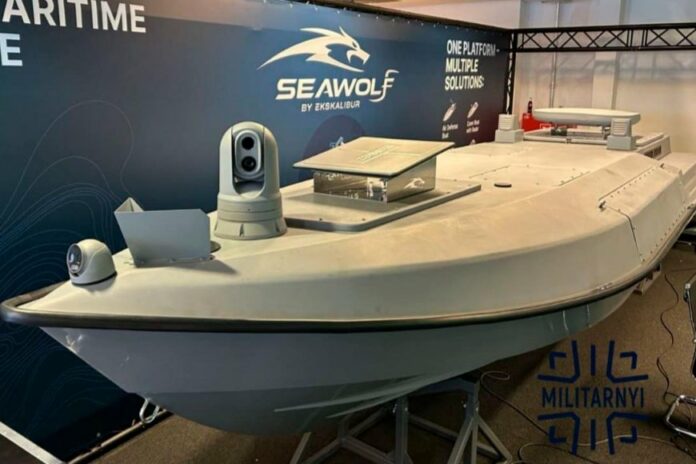
According to a Militarnyi’s correspondent, the Seawolf incorporates solutions drawn from Ukraine’s real-world experience in modern naval warfare, offering proven effectiveness and reliable performance.

The company Ekskalibur, which manufactures this versatile platform, stated that it can be quickly configured for various combat or surveillance missions without altering its core components.

Key technical specifications of the Seawolf in its basic version:

  • Length: 7.5 m
  • Width: 2.2 m
  • Height (hull): 0.52 m
  • Engine: 270-horsepower diesel
  • Range: 1600+ km
  • Payload capacity: up to 1650 kg
  • Combat load: up to 450 kg
  • Fuel capacity: 1400 liters
  • Weight (approx.): 950 kg

This surface platform can serve as the basis for various types of drones, including:

  • Seawolf R – an air defense boat
  • Seawolf MG – a support boat
  • Seawolf MGR – a support boat equipped with radar
  • Seawolf EW – an electronic warfare boat
  • Seawolf M – a minelayer
  • Seawolf D – a transport drone

There is also an enlarged 9.5-meter version of the Seawolf, which can be simultaneously equipped with four AIM-9 air defense missiles, a module with an M2 12.7mm machine gun, FPV drones, or a launcher for guided munitions.

It has a payload capacity of 4,000 kg and a range of 1,500 km. According to the developer, this surface drone is suitable for border protection, surveillance, and combined tactical missions.

The Seawolf is designed for asymmetric naval warfare, outperforming traditional vessels in terms of mobility, cost-efficiency, and low detectability.

“Seawolf is a versatile unmanned surface platform engineered to deliver maximum adaptability in modern naval operations,” the developers stated. “Its modular hull design enables seamless integration of a wide range of mission-specific payloads, while maintaining core structural and technical components, streamlining both deployment time and operational costs.”

The platform’s specially designed deck allows for the secure installation of primary and auxiliary systems tailored to customer requirements.

“Meanwhile, key structural and technical elements, including the hull, engine, propulsion system, communications suite, optical sensors, and control system, remain unchanged. This standardized architecture significantly reduces adaptation time and minimizes lifecycle and maintenance costs for the end user,” the developers noted.

Source: Militarnyi

Wärtsilä launches carbon capture solution to shipping market

0

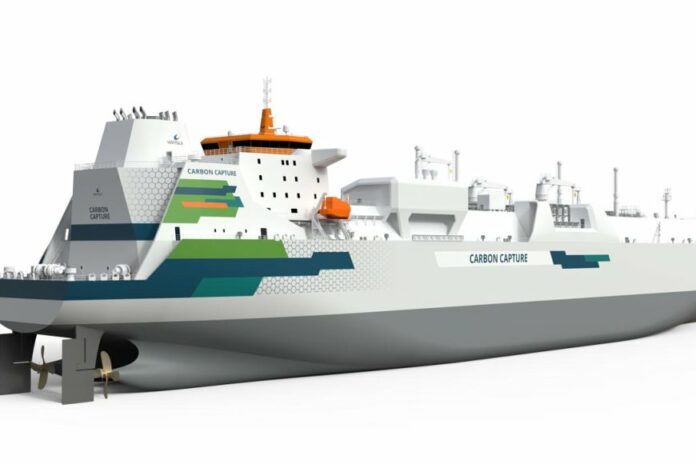
Technology group Wärtsilä has announced that its carbon capture solution (CCS) is now commercially available to the global maritime industry. 

The ability to capture CO2 from ship exhaust systems will have a major impact on the industry’s efforts to reduce GHG emissions, taking into account the International Maritime Organization’s (IMO) 2050 reduction target.

Håkan Agnevall, President and CEO of Wärtsilä comments: “CCS is a game-changer for the maritime industry, and we are already seeing huge interest in the market for this solution. Ahead of shipping’s net-zero targets, this new technology complements the industry’s ongoing efforts to dramatically reduce emissions from vessels and prevent stranded assets.”

The launch follows the successful installation of the world’s first comprehensive, full-scale solution onboard Solvang ASA’s Clipper Eris, where the technology captures emissions from all exhaust gas sources. Earlier this year, Wärtsilä installed its CCS technology onboard the 21,000 m3 ethylene carrier for full scale testing and optimisation. The solution, which has been in operation since the Clipper Eris set sail from Singapore in February 2025, will support Solvang ASA’s commitment to reducing carbon emissions and promoting sustainable maritime operations.

Solvang’s Clipper Eris ship was already equipped with a broad range of Wärtsilä products, including exhaust scrubbers, making it an ideal candidate for the project. Separately, for newbuild vessels currently under construction, Solvang has worked closely with Wärtsilä, and other partners, to ensure these ships are CCS-ready. This includes CCS-ready scrubber systems, as the engines will operate on HFO, as well as necessary space reservation and utility requirements.

“While the shipping sector continues to explore options for lessening its environmental impact, CCS provides a significant shortcut for achieving meaningful sustainability,” says Edvin Endresen, CEO of Solvang ASA. “Solvang has been at the forefront of advocating for, and adapting to, new technologies such as CCS for our deep-sea fleet. As one of the more promising solutions for marine decarbonisation, it was important for us to team up with an experienced and trusted partner such as Wärtsilä and we are excited at the potential its CCS offering will bring to our business.”

Wärtsilä has been actively developing this technology since 2019 and currently operates a research centre and test facility in Moss, Norway capturing 10 tonnes of CO2 per day from a Wärtsilä marine engine. These tests, which are now supported by the full scale-installation onboard Clipper Eris, have proven that the new CCS has the capability to reduce a vessel’s CO2 emissions by up to 70 percent. Wärtsilä also estimates its CCS would have a carbon capture cost of Eur50-Eur70/mtCO2 ($54-$76/mtCO2), inclusive of capital and operating costs.

Agnevall continues, “Collaboration has been key here. To achieve this significant advance in maritime emissions control it is important to be able to cooperate with like-minded partners such as Solvang ASA. We congratulate them for their vision and support in bringing CCS to their fleet.”

Damen delivers second CSD 600 in record time from stock

0

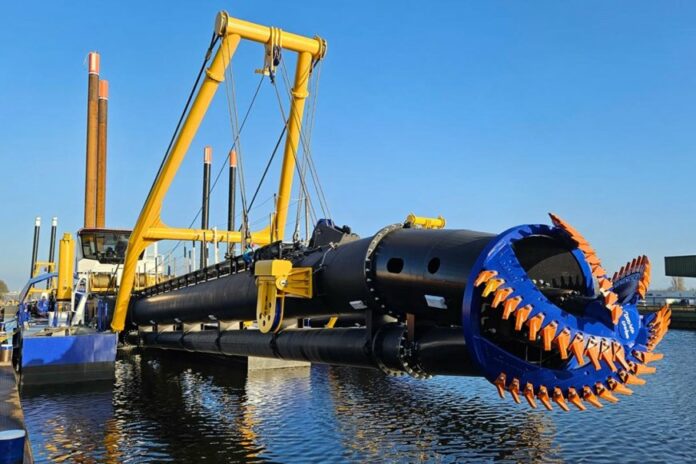
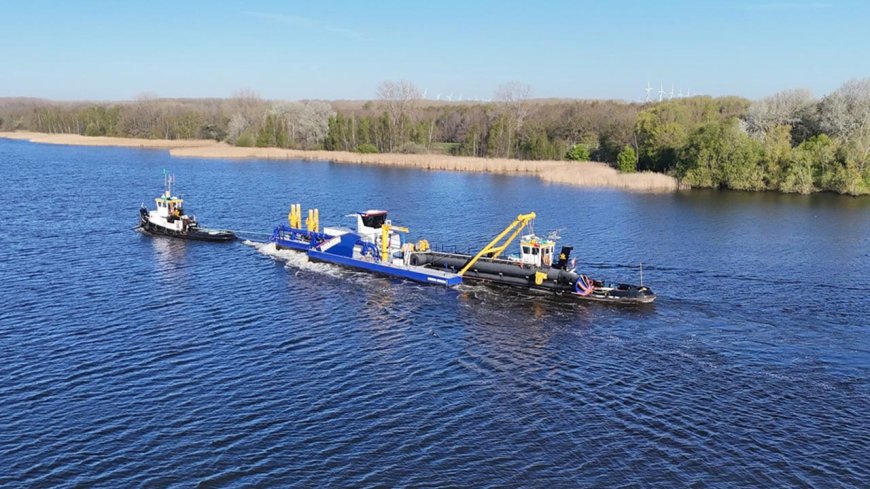
The CSD was available from stock, ensuring a short delivery time. The customised dredger will be delivered to an Asian customer, complete with a crew training programme on location.

The CSD 600, the first type of the new generation of Damen dredgers, is a standard stationary dredger designed for optimal performance and efficiency. The reliable and robust dredger has a 600 mm dredge pipe diameter, and dredges up to -16 metres. With its 250 kilowatts cutter power it enhances the owner’s dredging capabilities, removing compacted and hardened soils. The powerful dredger, which is designed for single handed operations, is designed for fuel efficiency and has 1980 kW of power installed.

The advanced dredger is equipped with the latest technology to ensure high productivity and reliability in various dredging operations. “The delivery of this unit marks a significant step for the owner,” Damen Sales Manager Inge Hoogenboezem says. “The fleet expansion with cutting-edge dredging equipment will allow them to efficiently execute a river maintenance dredging project. We are pleased that our stock CS D600-dredger meets their tight planning.”

This milestone underscores Damen’s commitment to providing state-of-the-art dredging solutions to meet the demands of the industry. The high performance dismountable dredger is easy transportable to all corners of the globe and is designed to last for years to come.

The future of marine operations: Robots that organize themselves

0

Imagine AI-controlled robots that organize themselves into different groups, or across groups – and that reorganize themselves and make new plans when needed. This kind of flexibility can enable robots to effectively solve different types of tasks as a team.

Command, control, communication and analysis are done in a network to carry out missions determined by human operators. And the tasks they perform are far beyond what individual robots can achieve.

A paradigm shift

Autonomous robotic organizations (ARO) can also solve tasks far beyond what traditional robotic systems can deliver. They will be able to respond with an agility that allows them to adapt to changes in assignments and needs. ARO will make it possible for robots to reach new levels of independence.

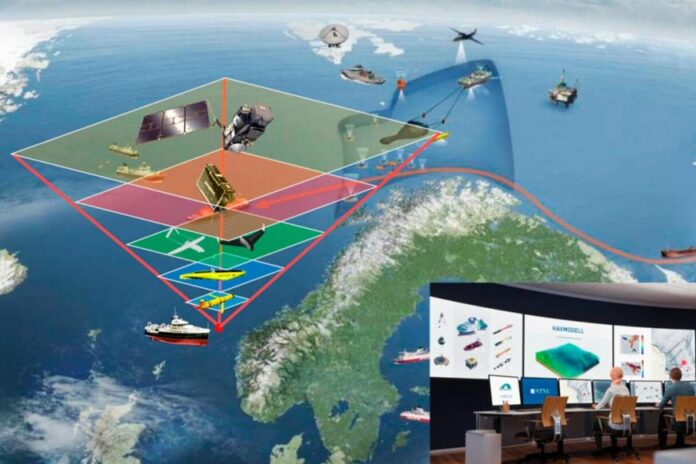
By combining and integrating capabilities from different platforms like autonomous underwater robots (AUVs), uncrewed surface vehicles (USVs), uncrewed aerial vehicles (UAVs) and small satellites with customised payloads – we believe that ocean and  offshore industries are facing a paradigm shift.

This shift will apply to everything from data harvesting and inspection, to maintenance and repair (IMR), as well as security and defence.

To achieve these advancements, AROs must be equipped with sophisticated cooperative skills, advanced control capabilities, and resilience both as individuals and as heterogeneous robot teams. These teams will operate seamlessly across space, air, sea surface, and underwater environments.

Tested in Svalbard

In 2022, what is known as the observation pyramid, with a research satellite included, was tested for the first time in Svalbard.  This is where researchers use small satellites, subsea robots and everything in between to make simultaneous observations and measurements.

Previously there had been several successful tests with various combinations of underwater robots, surface vessels and aircraft carried out in collaboration with national and international partners.

The list of participants is long: Equinor, the energy company; FFI, the Norwegian Defence Research Establishment; SINTEF, Scandinavia’s largest independent research institute; UiT, the Arctic University of Norway; UNIS, the University Centre in Svalbard; NORCE Norwegian Research Institute; NIVA, the Norwegian Institute for Water Research and NGU, the Geologic Survey of Norway and others have been closely involved in the research.

But the launch of NTNU’s first research satellite in 2022, made this observational pyramid complete.

The observation pyramid is based on the use of different robot platforms to focus on the same time and place to survey an ocean area: Autonomous underwater robots, an uncrewed surface vessel, an autonomous flying drone and NTNU’s research satellite that collects ocean data were in operation.
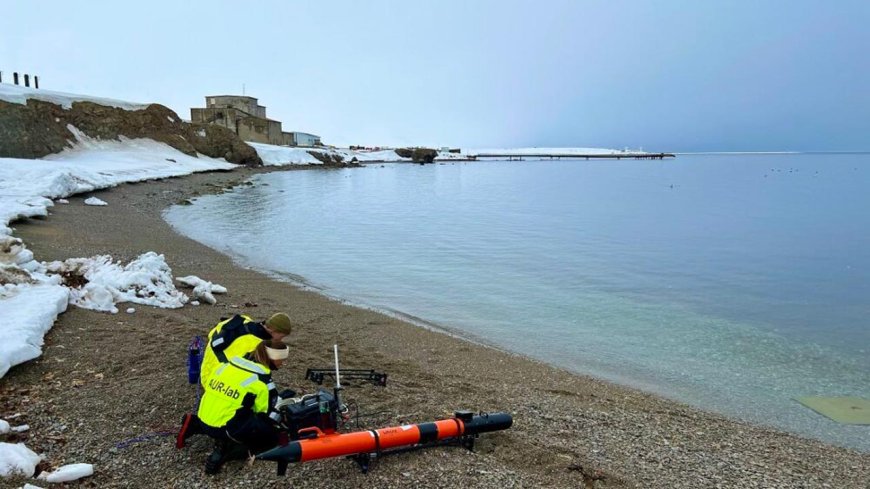
An autonomous underwater robot is being prepared in Kongsfjorden in Svalbard. The robot investigated an area with SilCam, a camera that films microscopic details in the water. SilCam was developed at SINTEF Ocean. Photo: Live Oftedahl, NTNU

The observation pyramid operates from below sea level and all the way out into space, but all the platforms have the same goal. The goal of the operation in Svalbard was to map the spring bloom of algae in Kongsfjorden.

Now the researchers are taking a step further.

Faster, cheaper and more efficient

We are seeing a shift from operations with only a few platforms, or swarms operating together, to what we call a system of systems (SoS). It’s a new way of organizing work tasks.

Combining coordinated use of various existing sensor platforms for fast and efficient execution of tasks is more future-oriented than spending a lot of time and money on tailoring individual resources with complex capacities.

Interaction means that different robot platforms in an ARO can do things that each individual robot would not be able to do alone.

Autonomous robot organizations will contribute to reduced costs, more efficient missions, faster response, better quality and higher system robustness.

Autonomous robotic organizations will be able to make observations over large ocean areas at a fraction of the cost compared to traditional vessel-based systems.

They will have advanced collaboration skills, control capacity and robustness – both as individual robots and as a total system composed of different robot teams operating in space, in the air, on the sea surface and underwater.

Two decades of field work

The work is based on years of research in collaboration between NTNU, Equinor and the University of Porto, together with leading research partners in Europe and the US.

We have more than two decades of experience in creating and deploying command and control systems for unmanned operations in the Atlantic, Arctic, Pacific, as well as the Mediterranean and Adriatic Seas.

For NTNU, this is a result of the innovation in cross-cutting research centres such as NTNU AMOS, NTNU VISTA CAROS, SFI HARVEST and several other related projects, where we use parts of or the entire observation pyramid.

We sought to take risks, push boundaries, be groundbreaking, transcend barriers with an interdisciplinary approach, and go to places we have never been before, into the unknown.

In Norway, Equinor is a driving force for this technology along with research communities at NTNU and other groups that work with environmental mapping, monitoring and inspection, operation and maintenance of offshore installations.

In Portugal, Professor João Sousa is in the driver’s seat for several major programmes in marine research and security under the auspices of NATO.

The goal is to develop the autonomous robot organizations of the future that make it possible to scale up and support technological development for a safer society.

Aiming high

The findings are supported by research projects, industrial innovations, and field work for both marine research and industrial applications.

In this ambitious endeavour, we aimed high. We sought to take risks, push boundaries, be groundbreaking, transcend barriers with an interdisciplinary approach, and go to places we have never been before, into the unknown.

Equinor has already implemented several robotic solutions into their offshore operations in mapping and monitoring ocean ecosystems and for inspection of offshore infrastructure.

AROs should deliver significant benefits to users including reduced cost, enhanced mission effectiveness, faster response times, improved quality, as well as improved system resilience. Although the current focus is on marine operations, we foresee that AROs, once implemented, could revolutionize a broader array of applications in society.

This Viewpoint is based on the authors’ publication in Science Robotics, March 2025 where they present a vision for autonomous robotic organizations (ARO) that transcend human capabilities.

Source: norwegianscitechnews

Baseblue successfully executes LNG ship-to-ship bunkering operation in the Caribbean

0

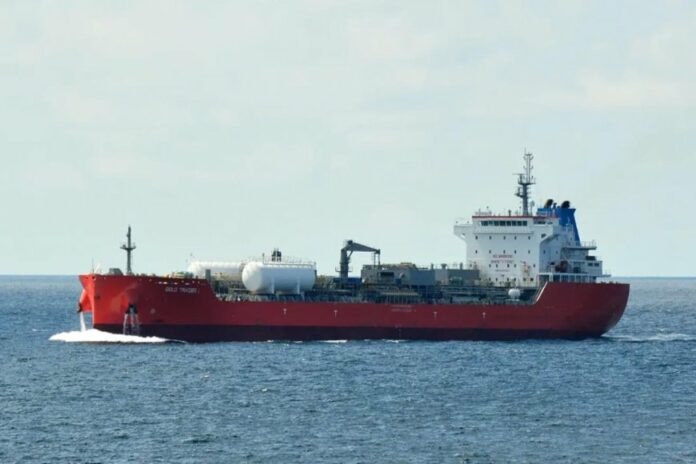
The operation involved the seamless transfer of approximately 8,800 MMBtu of LNG to the GOLD TRADER vessel off the coast of Portland, Jamaica. 

This bunkering event also included a cooldown of the receiving vessel – a key technical step to enable LNG bunkering, requiring rigorous safety procedures and pre-operation compatibility planning.

Historically active in LNG bunkering operations across Asia and Europe, this marks the company’s first such supply in the Caribbean, broadening its footprint in the Americas.

Dionysis Diamantopoulos, Head of Alternative Fuels, Baseblue, commented: “We are extremely proud to have safely and successfully completed this LNG supply in a new region for Baseblue. While the operation was not unprecedented, it represents an important step in our efforts to provide flexible and reliable LNG solutions to clients across more locations.”

Vaibhaav Srinath Dev, Key Accounts Manager at Baseblue, added: “This was a milestone for us –  not only for Baseblue but for the wider group’s LNG efforts in the Americas. The operation required a high level of planning and coordination with vessel owners, suppliers, and technical teams. It also serves as a strong relationship builder with key industry partners in the region.”