-5.1 C
New York
Home Blog Page 656

Wan Hai Lines confirmed orders for 5 new vessels

0

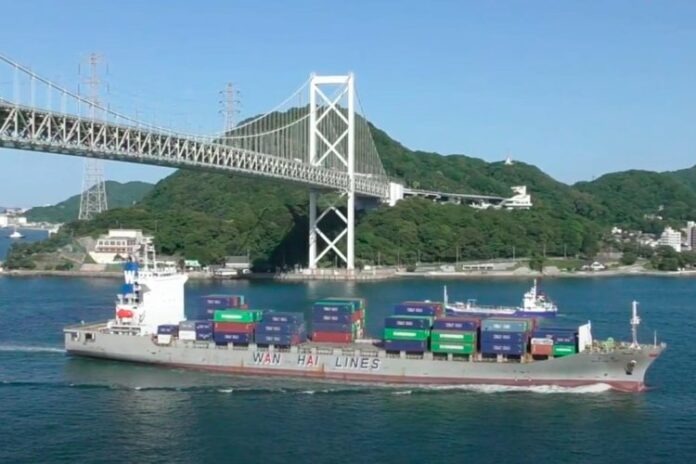
As part of the company’s fleet improvement plan, Wan Hai Lines has confirmed an order of 5 container vessels with HHI (Hyundai Heavy Industries).

The contract signing ceremony was held at Wan Hai Lines’ Taipei headquarter on 25th March 2021.

The contract includes five (5) 13,200Teu container vessels with HHI. These new vessel types will start taking delivery in first quarter of 2023 respectively.

Currently, Wan Hai Lines operates a fleet of 74 owned vessels and 57 chartered vessels. This new shipbuilding contract is the company’s latest fleet renewal plan, so as to ensure that the company’s vessel fleet is able to maintain competitive and support continuous market development. Eventually, the company hopes to deliver better service quality to its customers by more efficient vessel fleet.

Suez Canal: How the incident with EVER GIVEN will impact on LNG Transit

0

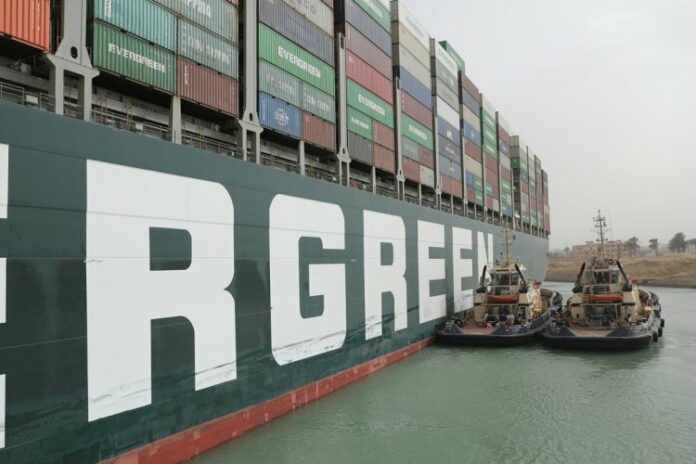
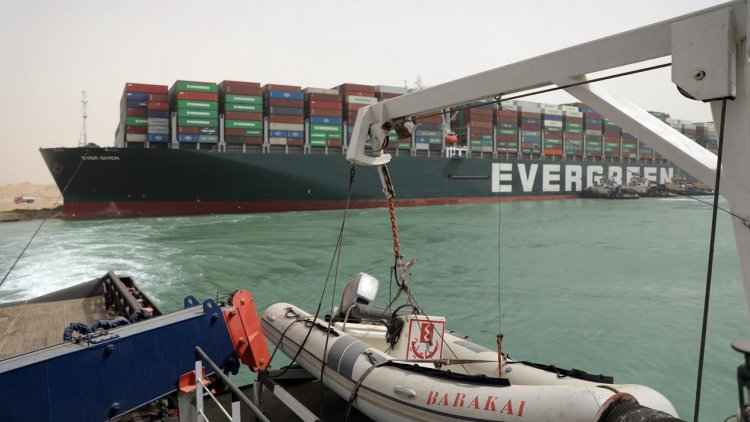
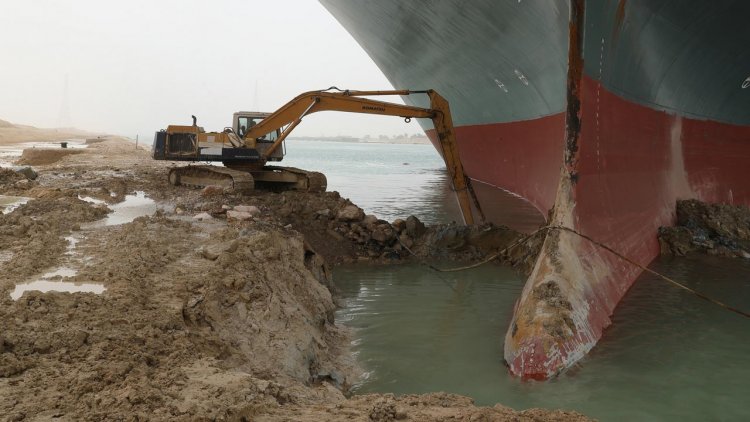
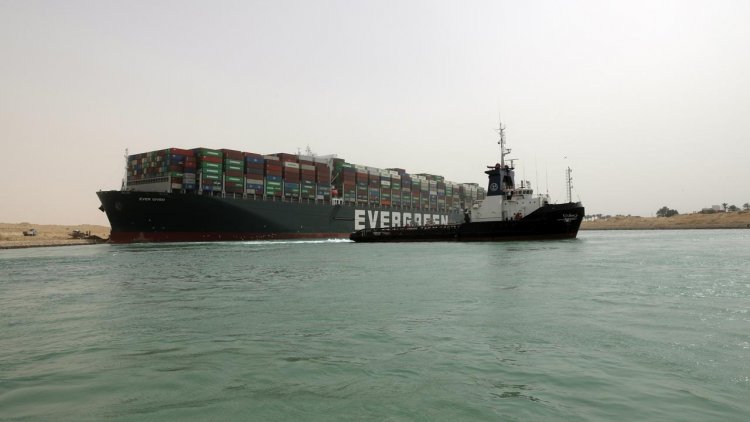
Admiral Osama Rabie, Chairman and Managing Director of the Suez Canal Authority has announced on Thursday March 25th, 2021, that navigation through the Suez Canal is temporarily suspended until the floatation works of the large Panamanian container vessel EVER GIVEN; that ran aground at the 151 km area (Canal Marking), are complete.

His Excellency has declared that witnessed the transit of 13 vessels from Port Said, among the Northern convoy, that were expected to continue their transit through the Canal according to projections on the time of completion of the floatation works of the grounding vessel. However, an alternative scenario had to be adopted; which entailed those vessels dropping anchor in the Bitter Lakes waiting area, until navigation can be fully resumed after the floatation of the vessels.

The floatation efforts included towing and pushing the grounding vessel using 8 large tugboats; largest of which is BARAKA 1 with a towing power of 160 tons.

Evergreen has urged the shipowner to investigate the cause of this accident, and work closely with Suez Canal Authority and related agencies to refloat the stranded ship as soon as possible. 

Wood Mackenzie principal analyst Lucas Schmitt says about the congestion at the Suez Canal and impact on LNG:

“At least 15 ships initially due to transit the Canal on the same day were forced to wait at anchorages. More have arrived since, creating a build-up of vessels close to the Northern and Southern entrances and within the Canal itself.

“The impact of this disruption on the LNG market will be limited if the disruption is solved within a day or two. Only a handful of LNG cargoes were in the close vicinity of the Suez Canal when the incident started. At this stage, we don’t expect major bottlenecks, unless the situation drags on.

“The Suez Canal is a key channel for LNG ships – with around 8% of global LNG trade going through. So far in March 2021 a handful of cargoes have been transiting each day in both directions (until the disruption).”

The impact could be greater if the disruption lasts longer, as the recent delays at the Panama Canal illustrated. However, the timing of this incident means it will have less impact on prices than that of the Panama since we’re entering the shoulder season for the LNG market.”

Charter rates are currently low – around 30 k$/d – but could tighten up (reflecting the additional tonne-mile needed to bypass the canal) if the disruption lasts. Shipping optimisation might be complicated, particularly for ships already within the Mediterranean and Red Sea. Further delays would impact both loading and discharge schedules and disrupt some flows, mostly to the European market.”

FlexFueler 002 makes LNG bunkering available throughout Port of Antwerp

0

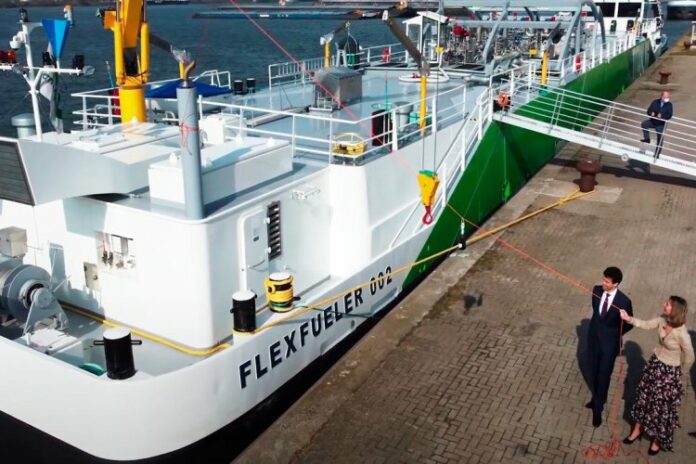
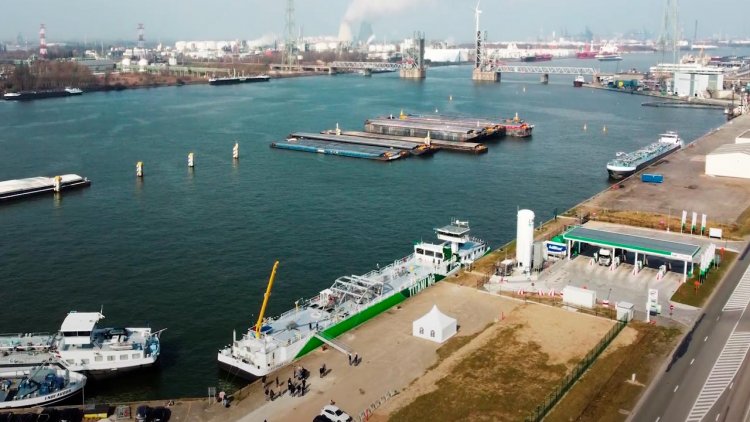
Port of Antwerp, Fluxys, and Titan LNG have celebrated the christening of a new LNG bunker barge; the FlexFueler 002. Owned by gas infrastructure group, Fluxys and leading physical supplier of LNG, Titan LNG, the FlexFueler 002 makes LNG as a marine fuel widely available to vessels bunkering in the port.

The FlexFueler 002 operates from its base at quay 526/528 and supplies LNG throughout the port and Western Scheldt. It is the third vessel to join Titan LNG’s expanding infrastructure in the Amsterdam-Rotterdam-Antwerp (ARA) region, operating in addition to the FlexFueler 001 and the Green Zeebrugge.

The demand for LNG is growing as its role in shipping’s energy transition is increasingly recognised. LNG reduces SOx and particulate emissions to negligible amounts, NOx by approximately 85%, and achieves significant GHG reductions. It also creates a pathway to decarbonisation through the introduction of bio- and synthetic-LNG, which both use the same infrastructure and engine technology. 

Liquid biogas – from organic waste – and liquid synthetic methane – from green hydrogen and captured CO2 – are scalable solutions for the maritime sector, and the expanding LNG infrastructure in Port of Antwerp is fully future-proofed and able to supply carbon-neutral LNG.

Jacques Vandermeiren, CEO, Port of Antwerp commented:

“As the fifth largest bunkering port in the world, we are committed to playing a pioneering role in the integration of low- and zero-carbon fuels to the bunker market. The arrival of the FlexFueler 002 marks an important landmark in the transition to a multi fuel port. LNG as a marine fuel is now available throughout the port, enabling us to further facilitate the energy transition of shipping in the port, as well as the region of Antwerp.”

Pascal de Buck, CEO, Fluxys:

“Working with the Port of Antwerp and Titan LNG, we are proud to provide an important logistical link enabling more shipowners to choose LNG as an alternative marine fuel. The new barge and our other LNG bunkering facilities in the port also have the advantage of being able to provide carbon-neutral LNG options with no additional investment required for shipowners.”

Ronald van Selm, CTO, Titan LNG:

“The FlexFueler 002 is the third bunker vessel to join Titan’s fleet, providing LNG as a marine fuel across the ARA region. We expect to have the largest network of LNG bunkering vessels in Europe by 2025 and will continue to work with our partners, both in Europe and around the world, to ensure that shipowners are able to start the journey towards a zero-carbon future today.”

The FlexFueler 002 provides flexible LNG bunkering, giving LNG fuelled vessels the option to bunker while loading or unloading cargo. It supports Port of Antwerp’s commitment to developing a multi fuel port, as well as improving local air quality.

Silverstream completes trials of Silverstream® System on Grimaldi Group’s Eco Valencia ro-ro

0

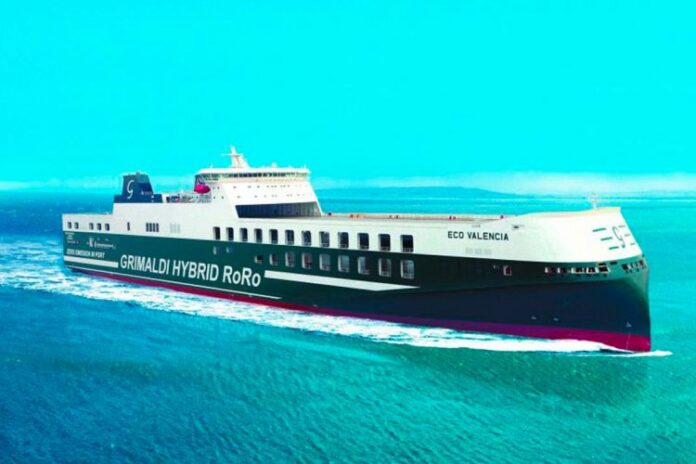
Silverstream Technologies has announced that its pioneering air lubrication system, the Silverstream® System, has demonstrated significant fuel and emissions savings during testing on Grimaldi Group’s newbuild ro-ro vessel Eco Valencia.Savings figures of 5.1% have been measured during initial performance testing, which has taken place continuously since the Eco Valencia entered service in the Mediterranean.

During this process, the Silverstream® System was comprehensively tested at various vessel speeds and in a range of sea states, to calculate and prove fuel and emissions savings.

The technology, which produces a thin layer of micro-bubbles over the flat bottom of the hull, is an integral part of the new vessel’s portfolio of emissions and fuel reduction measures. Air lubrication reduces the frictional resistance between the water and the hull, improving operational and environmental efficiencies.

Eco Valencia is the first of 9 Grimaldi Green 5th Generation (GG5G) designs to be installed with the technology. Four vessels with the System onboard have already been built at China Merchants Group Limited’s Jinling Shipyard: Eco Valencia, Eco Barcelona, Eco Livorno and Eco Savona.

Speaking on the trial completion and the savings figure, Noah Silberschmidt, CEO, Silverstream Technologies, said:

“We are delighted to have reached this latest milestone in our continued partnership with Grimaldi Group. The recorded savings figure of 5.1% exceeded initial predictions and shows that Grimaldi’s vision to install our air lubrication technology as a fuel and emissions reduction solution has paid off.

“We would like to thank Grimaldi for their continued confidence in the Silverstream® System. We are proud that our technology plays a central role in these pioneering environmentally friendly ship designs. We look forward to testing further Systems on the GG5G fleet, starting with Eco Barcelona, in the coming weeks.”

Silberschmidt added:

“We are particularly pleased to have been able to complete this trial despite the obvious challenges to international travel and supply chains posed by the COVID-19 pandemic. This is testament to the commitment and skills of our team at Silverstream and the strength of our partners, all of which have been vital to ensuring we can continue to support shipowners with their sustainability ambitions.

“All of this takes place against the backdrop of impending vessel efficiency requirements, such as the IMO’s proposed Energy Efficiency Existing Ship Index (EEXI), which further amplifies the central role that clean technologies must have within shipping’s decarbonisation pathway. We are proud to support progressive owners and operators like Grimaldi in future-proofing themselves against new requirements.”

Alberto Portolano, Project Manager of AirLub Design and Integration, Grimaldi Group said:

“The successful trial of the Silverstream® System and the CO2 reduction that it generates is an important step in Grimaldi Group’s aim to lead on shipping sustainability. The trials conducted with the ship in fully loaded service showed the air bubbles covering the entire hull bottom. We are looking forward to continuing to work closely with Silverstream to benefit from their technology on more of our market-leading ro-ro vessels.”

The GG5G ro-ro carriers are some of the most advanced ship designs currently on the market. The hybrid propulsion system helps them produce zero emissions in port, and the addition of clean technologies, like the Silverstream® System, further positions them as the eco-ships of the future.

As well as the 9 vessels contracted to be built for Grimaldi Group with the Silverstream® System installed, Silverstream is also installing Systems on Grimaldi Group subsidiary Finnlines’ 3 newbuild GG5G ro-ro vessels and 2 newly ordered ro-pax vessels.

PETRONAS becomes world’s first to produce LNG from two floating facilities

0

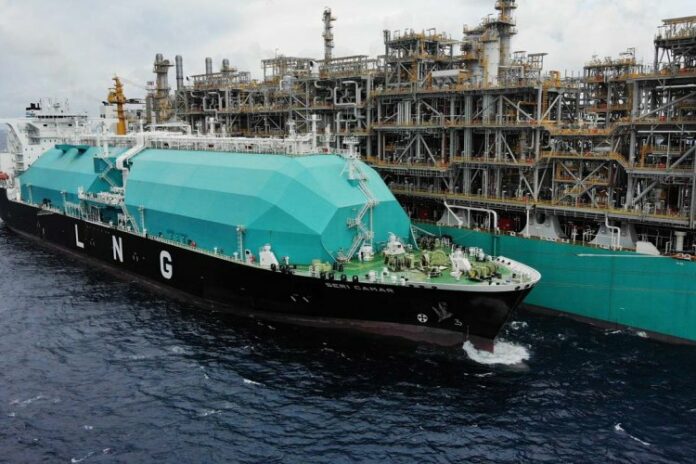
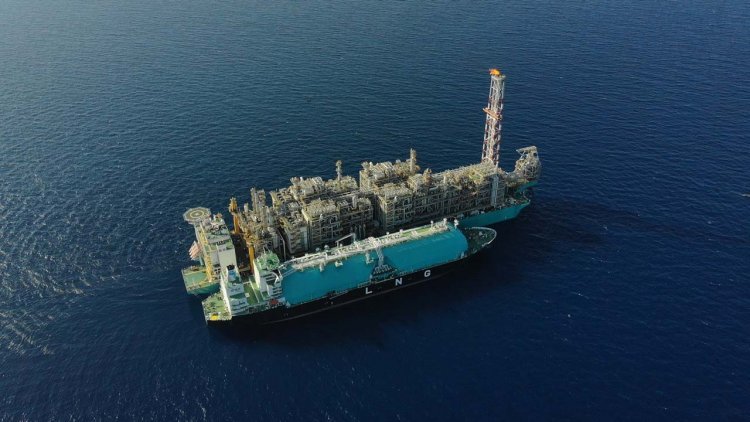
PETRONAS has become the first global energy company to produce liquefied natural gas (LNG) from two floating facilities following the first cargo delivery by PETRONAS Floating LNG DUA (PFLNG DUA) on 24 March 2021.

PFLNG DUA has a production capacity of 1.5 million tonnes of LNG per year and operating at the water depth of 1,300 metres. The floater facility is currently located at Block H Rotan gas field located 140 kilometres offshore Sabah. This milestone confirms the viability of PETRONAS’ push in unlocking stranded and deep-water gas fields with floating LNG (FLNG) solutions that are more sustainable and economical compared with conventional solutions. 

PETRONAS President and Group Chief Executive Officer, Tengku Muhammad Taufik said:

“PETRONAS is proud of this significant milestone from our second floating LNG facility. PFLNG DUA’s first cargo demonstrates our commitment to continue our pioneering efforts in providing more sustainable solutions to harness further value from LNG production through technological advancements. Similar to our flagship floating facility, PFLNG DUA’s mobility will allow us to unlock even more marginal and stranded gas fields in the future, providing PETRONAS with new and sustainable sources of LNG to meet the growing demand for cleaner energy.”

With PFLNG DUA’s first cargo delivery, PETRONAS continues to extend its leadership in FLNG technologies, having introduced PFLNG SATU – the world’s first operational floating LNG – in 2016. PFLNG SATU also completed the world’s first FLNG relocation when it was deployed in March 2019 to Sabah’s Kebabangan gas field from the Kanowit gas field in Sarawak. 

Total to supply MSC Cruises’ upcoming LNG-powered cruise ships in Marseille

0

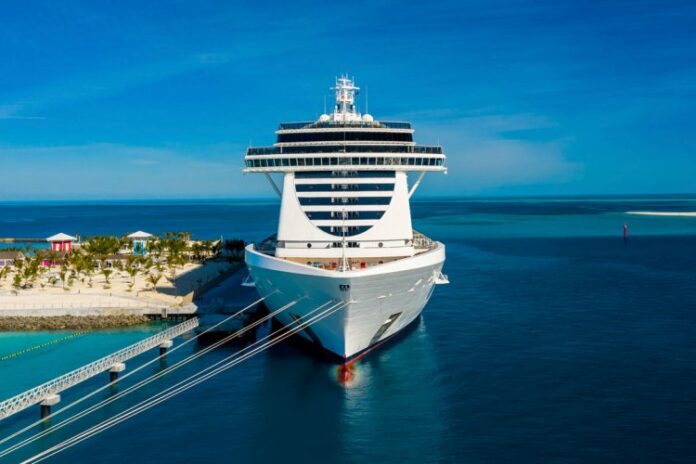
Total and MSC Cruises officialised today a supply agreement for approximately 45,000 tons per year of Liquefied Natural Gas (LNG) to MSC Cruises’ upcoming LNG-powered cruise ships to make calls in the port of Marseille (France).

This agreement underlines a strong collaborative action across the French maritime industry and the excellence of its value chain, from shipbuilding to the supply of cleaner marine fuels, and the involvement of local port authorities to enable the vessels’ safe operatorship.

Pierfrancesco Vago, MSC Cruises’ Executive Chairman, said:

“This agreement represents a further step in our ongoing journey towards continuously reducing our environmental footprint, for which LNG is currently a crucial component. As we prepare to launch our first of three upcoming LNG-powered cruise ships in 2022, through this key agreement Marseille will become our hub in the Mediterranean for the refuelling of our latest-generation and most environmentally advanced ships.”

Alexis Vovk, President, Marketing & Services at Total, declared:

“We are proud to be developing the first LNG bunker supply chain in France, at the port of Marseille-Fos, together with shipping industry leaders such as MSC Cruises with whom we nurture a long-lasting partnership worldwide in the field of bunkering services. Total will continue to step up investments in LNG bunkering to ultimately reach its target of serving more than 10% of the global market. By doing so, we will continue to accompany the energy transition of the shipping industry and the reduction of carbon emissions of our customers, in line with our Climate ambition to get to Net Zero by 2050, together with society.”

The signature of this agreement has been placed under the high patronage of Annick Girardin, French Minister for Marine Affairs. It benefits from the direct support of the Minister, who has declared:

“I welcome this agreement between MSC Cruises and Total. This is a strong commitment to the environment, which demonstrates that when major economic players commit to the ecological transition, they can access new levers for economic development. This is also what maritime France is all about! This agreement also illustrates France’s full potential for competitiveness and attractiveness. In line with the Fontenoy maritime forum, I wish that these links between shipowners, energy companies, ports and shipyards will continue to develop, in line with the sustainable development goals.”

Used as a marine fuel, LNG sharply reduces emissions from ships, resulting in a significant improvement in air quality, particularly for communities in coastal areas and port cities. This agreement therefore impacts positively not only the city where LNG bunkering will take place, Marseille, but also all the ports where the cruise ships will make their future call around the Mediterranean Sea.

MSC Cruises’ LNG powered vessels will be amongst the most technologically advanced cruise ships in the world, bringing a range of environmental innovations to the market. Chief amongst these is a 50-kilowatt, LNG-powered solid oxide fuel cell technology project that offers a potential to further reduce significantly greenhouse gas emissions compared to a conventional LNG engine.

Total will bunker MSC Cruises’ LNG-powered cruise ships sailing on Mediterranean routes by ship-to-ship transfer, using its second LNG bunker vessel currently under construction. This vessel will meet the highest technical and environmental standards, using LNG herself as propulsion fuel and integrating a complete re-liquefaction of the boil-off gas.

By 2022, Total will operate two 18,600-m³ LNG bunkering vessels in Rotterdam and Marseille and share the use of a third bunker vessel in Singapore. In February 2021, the Company also received a license from the Maritime & Port Authority of Singapore (MPA) to supply LNG in the Port of Singapore from 2022.

Enel X and Fincantieri commit to the energy transition for maritime transport in Italy

0

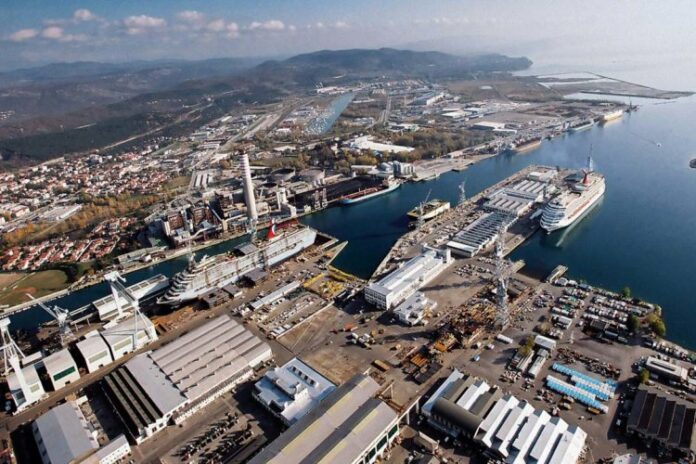
Enel X and Fincantieri have signed a letter of intent to work together on building and running next-generation port infrastructure with a low environmental impact and developing electricity-powered solutions for ground logistics services.

In its first stage dedicated to projects with a national scope, the agreement specifically pertains to: cold ironing, which refers to providing a shoreside power source to docked ships; management and optimization of energy exchanges in new infrastructure; electricity storage and production systems that use renewable sources and fuel cells. The partnership will also ensure that initiatives rolled out in Italy can be replicated in other countries, such as Spain, Portugal and Greece. The letter of intent might be subject to future binding agreements that the parties will define in compliance with the applicable normative and regulatory profiles, including those relating to transactions between related parties.

The collaboration between Enel X, Enel’s global business line, and Fincantieri, one of the world’s largest ship builders, will energize the implementation of electricity-based solutions and decarbonization at ports. A growing number of ports and docks in Italy, and subsequently in other European countries, will offer cold ironing. This initiative will lead to the creation of a far-reaching European cold ironing network.

Eliano Russo, Head of e-Industries at Enel X, said:

“Maritime transport accounts for a significant portion of greenhouse gas emissions. It is estimated that CO2 emissions from the maritime sector amount to 940 million tons every year, or 2.5% of global greenhouse gas emissions. Enel and Fincantieri are joining forces to promote the decarbonization of powering docked ships. Ninety per cent of Europe’s ports are located in metropolitan areas, and public opinion in many cities has decried the pollution, noise and vibrations caused by the engines of docked ships. Development of cold ironing infrastructure will prevent this, as docked ships will have an electrical connection onshore. Today, digitalization, sustainability and innovation allow us to offer smart, efficient technologies that will reboot Europe’s port and maritime sectors”.

Laura Luigia Martini, CEO Business Advisor and Executive Vice President of Corporate Business Development for Fincantieri noted:

“Developing smart, integrated infrastructures and safeguarding the region would catapult the national port system to a new level characterized by sustainability principles. Through the agreements with Enel X, we will make our skill set available to a highly innovative program, laying the foundation for an authentically digital and green transition that will reverberate throughout Italy’s maritime economy, and beyond”.

MAN Energy Solutions to supply the main engines for two newbuilding live-fish carriers

0

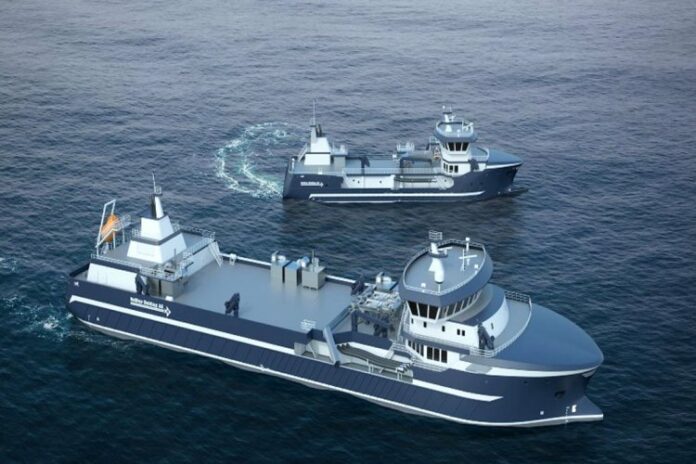
MAN Energy Solutions has won the order to supply the main engines for two newbuilding live-fish carriers, currently under construction at the Cemre shipyard in Turkey.

The first – a 2,200 cubic-metre vessel for Seivåg Shipping AS – will be powered by 2 × MAN 12V175D-MEM Tier III engines, while the second – an 8,000 cubic-metre vessel for Mowistar AS – will be powered by 4 × MAN 12V175D-MEM Tier III engines. This latter carrier, with a deadweight of ~12,000 tonnes, will be the largest battery-hybrid live-fish carrier of its kind in the world.

Both customers are subsidiaries of Seistar AS from Torangsvåg, Norway.

Norwegian outfit, Salt Ship Design AS, has designed both vessels, which feature several, new design solutions with a strong focus on hygiene, environment and quality, including batteries for energy storage and circular fish tanks.

All engines will come with MAN turbochargers as well as MAN’s SaCoS engine control and safety system. Every engine will also feature MAN’s proprietary SCR (Selective Catalytic Reduction) closed-loop, temperature-controlled system that remains active over the entire load range, delivering low urea consumption and low emissions.

Ben Andres, Head of High-Speed Sales, MAN Energy Solutions said:

“This is an important order that marks our entry into an exciting market. The aquaculture and fisheries market is currently experiencing significant growth and to make our début by powering such a remarkable vessel – the world’s largest live-fish carrier – is very pleasing. Norway has a high focus on emissions, particularly NOx and CO2, and the eco-friendliness of the MAN 175D and its SCR system prepares the vessels well for the impending IMO 2030 deadline.”

MAN Energy Solutions has developed the MAN 175D engine range to supplement and complete its product portfolio in the maritime sector. In three variants of 12, 16 and 20 cylinders, the engine is available with an output ranging from 1,500 to 4,400 kilowatts. This maximum output makes the engine the most powerful high-speed engine in the market.

The MAN 175D is a high-performance engine that delivers increased uptime and low lifecycle costs. The engine’s state-of-the-art, optimised combustion delivers low emissions and an optimal fuel-consumption.   

It has been designed from the outset to comply with contemporary, as well as future, exhaust-gas-emission requirements and its ultra-compact, flexible SCR system enables vessel designers to optimise space on board.

NAPA, MOL, and ClassNK agree to joint further development for a navigational risk monitoring system

0

NAPA, the leading maritime software, service and data analysis provider, alongside leading classification society, ClassNK, and Mitsui O.S.K. Lines, Ltd. (MOL), has announced that the software they have been collaborating on to intelligently monitor and mitigate grounding risks has been verified as successful in its proof-of-concept stage. Following the proof-of-concept stage, MOL, NAPA and ClassNK have agreed to the joint further development for a comprehensive navigational risk monitoring system.

The grounding risk monitoring system, which is based on ship performance monitoring and voyage planning platform, NAPA Fleet Intelligence, combines many data sources, such as position data, sea depth and navigational charts, to provide a robust and accurate fleet-wide platform to reduce grounding risk. The system also provides carefully calculated alerts and notifications to crew onboard, as well as those onshore if vessels operate in a high-risk way, strengthening ship-shore connectivity and enhancing response time.

The development of the vessel grounding risk monitoring system could help reduce future grounding incidents and increase the shipping industry’s safety standards.

In the proof-of-concept stage, in collaboration with MOL, NAPA tested algorithms and warning mechanisms by using them to analyse historical vessel movements, proving that the system would have been able to mitigate against any past incidents in this sample.

The project also saw ClassNK apply their expertise throughout the entire process, while NAPA applied its big data expertise with MOL during the proof-of-concept phase. All parties played an important role in evaluating the concept in practice, distinguishing an effective, easily implementable, affordable grounding risk monitoring software solution for fleet-wide application.

Based on the results of the proof of concept, an integrated risk monitoring system for operation, including monitoring of stranding, is also being developed. The new system will monitor risk factors such as the formation of volatile or unpredictable weather on a vessel’s given route. Additional technologies to monitor risk while anchored or moored are also currently being developed.

Commenting on the collaboration, Naoki Mizutani, Managing Director at NAPA Japan, said:

“The development of this software marks a new frontier in the intelligent application of big data in reducing grounding out at sea and other navigational risks. The success of the proof of concept with our valued partners, MOL and ClassNK, reinforces the value of big data analysis in enabling more informed decision making to increase safety and efficiency.”

Satoshi Fujii, General Manager of MOL’s Smart Shipping Division, said:

“We are very pleased with the results of the proof-of-concept stage of the vessel grounding risk monitoring software, in collaboration with NAPA and ClassNK. With the proof-of-concept stage having been made possible within a limited time frame, re-affirming both NAPA’s and ClassNK’s technical capabilities as a result of an effective and practical monitoring system – we are looking forward to developing and implementing this system to our vessels in order to ensure the safety of our fleet.”

Dr. Toshiro Arima, Corporate Officer and General Manager of Digital Transformation Center at ClassNK also commented:

“Collaboration is key to enhancing safety and increasing efficiencies. With that being said, we are glad we have combined our diverse expertise to extensive operational data for the successful creation of a fleet-wide solution to reduce vessel grounding risk. Following the contribution by our expertise to the proof-of-concept, we hope to continue being involved in the system also from the standpoint of verifying its function and effectiveness.”

Vaarst to drive the future of marine robotics through data focus

0

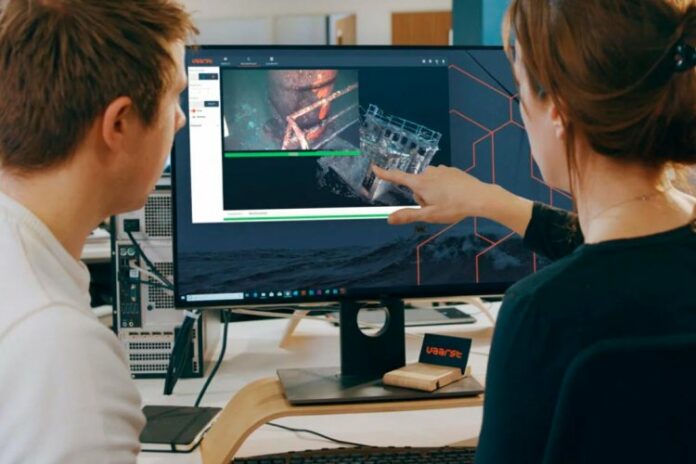
Vaarst, a technology spin-off from leading subsea robotic and hydrographic survey company Rovco, was formally launched today with the goal of revolutionising the offshore robotics sector – leveraging intelligent data flows for smart asset management and creating an energy-efficient and more sustainable future.

The business aims to accelerate advancement in ocean robotics, giving marine and subsea providers access to next-generation technology that will enable them to deliver AI-driven autonomous robotic work at scale.

Vaarst will target the energy and marine sectors through its innovative technologies, such as  SubSLAM X2 – an intelligent data collection system that delivers robotic spatial awareness and live 3D point clouds to any device in the world, without costly positioning systems, thereby saving many project days. This, combined with the company’s machine learning and autonomy expertise will then provide the very best in efficient data collection and AI interpretation.

The new spinout company, Vaarst, is predicting immediate 2021 revenues over £1m rising to £20m+ rapidly in the next few years.

Vaarst CEO and Founder, Brian Allen, said:

“Autonomous robotics are the key to reducing the cost of offshore operations. At the same time, digitalisation of field assets is essential as the industry evolves, marrying these two concepts is needed to realise the real benefit of modern tech. It’s the data that has to drive the vehicles. Vaarst is committed to unlocking the potential of offshore robotics for all.

We’re tremendously excited about the future, and really delivering our customers’ digital and robotic ambitions.”

Vaarst will operate globally, with headquarters in Bristol, and has 29 employees with plans to grow to 70+ by end of 2022. The company is a technology spin-off of Rovco which was founded in 2015 and has invested heavily in real-time artificial intelligence-based 3D vision and autonomy systems. Future plans will see Vaarst take its offering to the wider industrial robotics global markets in sectors such as mining, construction, farming and land survey.