-8.2 C
New York
Home Blog Page 657

Dogger Bank Wind Farm unveils design for Maintenance Base at the Port of Tyne

0

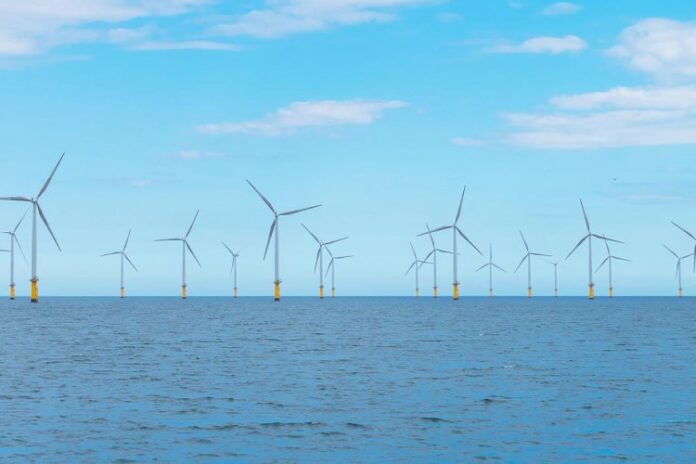
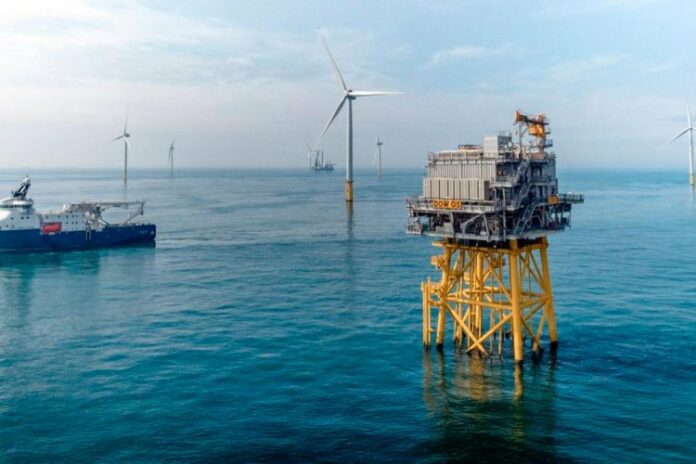
The developers of the Dogger Bank Wind Farm have revealed the design for the multi-million pound Operations and Maintenance (O&M) Base, that will serve the world’s biggest offshore wind farm.

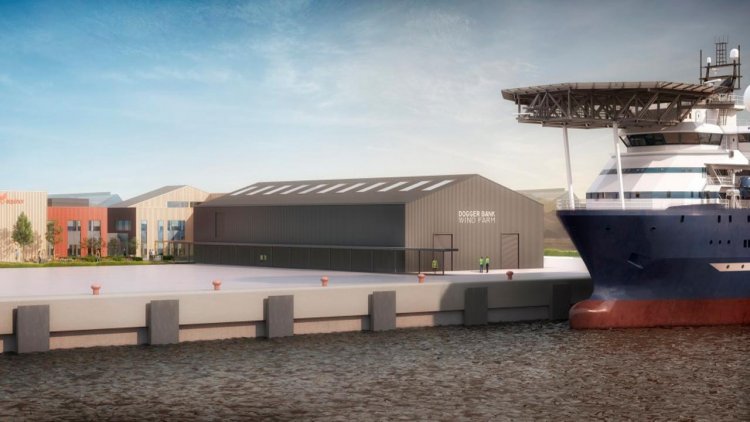
Subject to planning approval, the base will be constructed in the Port of Tyne. It will serve as the main hub for operating the wind farm which when complete will be capable of providing around 5% of the UK’s electricity demand.

SSE Renewables is leading on construction of the wind farm and Equinor will operate the wind farm for its lifetime of up to 35 years, creating over 200 direct jobs in the North East of England.

Some roles will be based onshore, such as planners, engineers and management, whilst other roles such as wind turbine technicians will be based offshore at the wind farm itself, living for two weeks at a time on a vessel over 130km out to sea. The main recruitment activity is expected from 2022.

Working with international design practice Ryder Architecture, headquartered in Newcastle, Equinor has designed the O&M Base to be built using environmentally friendly materials. EV chargers, solar panels and efficient heating systems have been included to ensure the facility has a low carbon impact.

As well as offices for those based onshore and a warehouse to store spare parts for the wind farm, the design includes development of a new quay suitable for the state-of-the-art Service Operations Vessels (SOVs) that provide accommodation, and transport for technicians to and from the wind farm. The vessels will come to the port approximately twice a month for resupply and crew change.
Halfdan Brustad, vice president for Dogger Bank at Equinor, said:

“Dogger Bank is set to have a huge impact in the North East of England. On top of the hundreds of direct jobs the project creates, opportunities from the project will reach many others in the region from industry suppliers to catering companies.

“Over the last month investment for a new manufacturing facility in Teesside has been announced, set to provide the 107m turbine blades to Dogger Bank, and the contract for our three operations vessels has been awarded to a Scottish company, creating further jobs in Scotland and the North East.

“We specifically chose a local firm, Ryder, to work closely with in designing this flagship facility, and have ensured it is both environmentally sustainable and future-fit in order to attract the best local talents to join our team. We share the final designs with pride and can’t wait to get started!” 

The plans for the O&M facility have been submitted to South Tyneside Council for a planning application. The construction contractor will be appointed in the coming months.

Dogger Bank is being built in three equal phases of 1.2 gigawatts (GW) each. The first two phases, Dogger Bank A and B, are a joint venture between Equinor (40%) SSE Renewables (40%) and Eni (20%). The third phase, Dogger Bank C, is being developed on a different timescale and is owned by Equinor (50%) and SSE Renewables (50%).
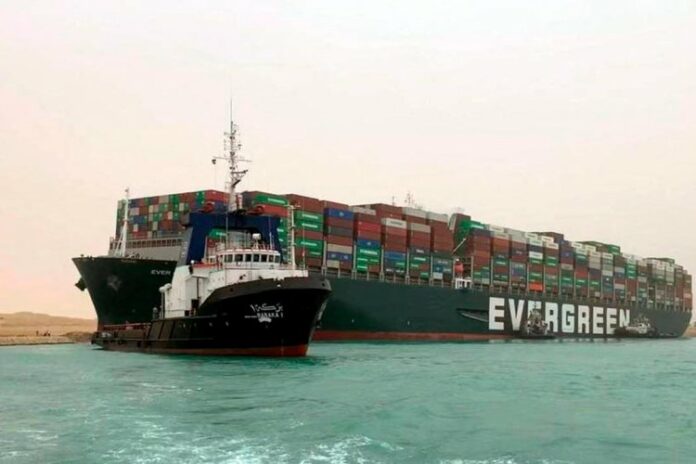
Suez Canal: Oil prices rose by about $2 per barrel on the news of the blockage

0

Wood Mackenzie principal analyst Mark Williams said:

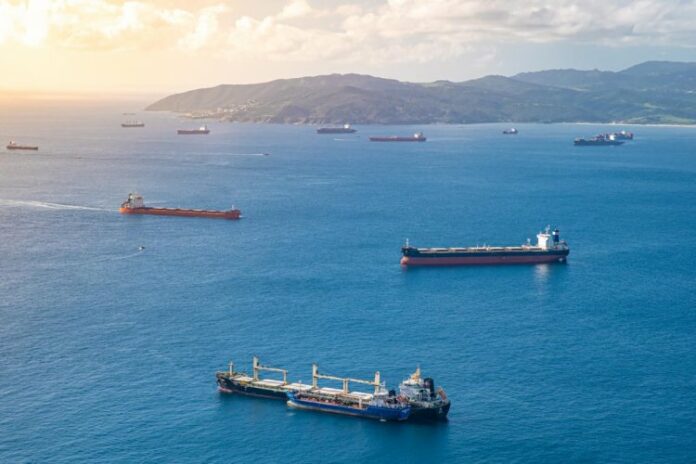
“According to Wood Mackenzie VesselTracker, the largest impact is on container shipping, but we estimate that there are a total of 16 laden crude and product oil tankers which are expected to transit the canal delayed by the incident, amounting to 870Kt of crude and 670kt of clean products.  

These ships are currently in the canal itself or waiting at either the North entrance to the Suez Canal (Port Said Anchorage and Great Bitter Lake Anchorage) or at the Southern Suez Anchorage. There are several vessels which are located to the south of the canal entrance which we believe are scheduled to discharge at various southern Suez ports. Our data suggests that there have been no cargoes diverted to alternative routes such as around the Cape of Good Hope.” 

Wood Mackenzie vice president Ann-Louise Hittle added:

“Oil prices rose by about $2 per barrel on the news of the blockage, but stocks of both crude and products are high in the Atlantic basin. A few days of delays in crude or product travelling through the Suez Canal to the west (Europe/Americas) should not have a prolonged impact on the Atlantic basin market. After the canal reopens, the crude market will shift focus towards the April 1 OPEC+ meeting to determine production levels for May.”

Williams continued:

“If the blockage is prolonged, given the weakness in European demand for middle distillates and low refinery utilisation rates, oil product trade flows from Europe/Mediterranean to East of Suez will suffer a greater impact, reducing availability of naphtha, petrochemical feedstocks and fuel oil to Asia. This would be supportive for Asia product prices and widen the West-East arb in the near term.

The Sumed pipeline between the Red Sea and the Mediterranean is used to divert Middle East crude oil flows to Europe around the Suez Canal, so we expect minimal impact on such flows. Russian Black Sea crude exports beyond the Mediterranean will be limited by the blockage of the Suez Canal, so will need to be processed within by Mediterranean refiners.” 

James Fisher plans to add two LNG dual-fuel tankers

0

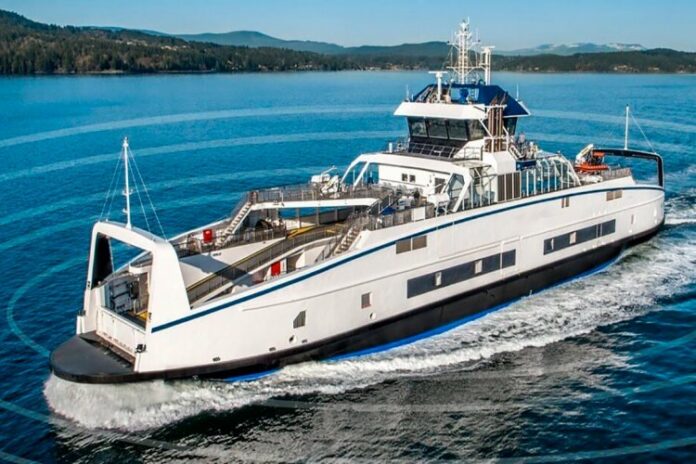
The vessels will be traded by James Fisher Everard (JFE) alongside its’ existing fleet and are the first clean product tankers of this size to incorporate this emissions-reducing propulsion technology.

With the ability to run on both conventional fuel and LNG, the two vessels will also incorporate innovations in design and construction technology to further enhance hydrodynamic performance, to provide improvement in operational efficiency and reduction in greenhouse gas  emissions.

This commitment to supporting both the environmental goals of its’ customers and the sustainability goals of James Fisher also allows JFE to contribute to the International Maritime Organisation’s (IMO) commitment to structural GHG reductions.

A study on the impact on use of LNG as a marine propulsion fuel by the Society for Gas as a Marine Fuel, predicted that a reduction in carbon emissions of up to 21% is possible over the entire vessel lifecycle compared with existing marine fuels and leads to significant improvement in local air quality through the reduction of other atmospheric pollutants.

James Fisher has a long history, spanning more than 170 years, of pioneering innovations in the marine industry, having first adopted steam over sail in 1833, and subsequently motor propulsion during the early 20th Century. The first adoption of LNG as a cleaner alternative to conventional oil based propulsion fuels in this class of vessel continues the entrepreneurial spirit of James Fisher, and demonstrates the company’s commitment to its stakeholders and the environment.

Commenting on the addition of LNG dual-fuel capability to the tankship fleet, Eoghan O’Lionaird, Chief Executive Officer James Fisher, said:

“I’m very proud that JFE is taking action now to support our customers, the maritime industry and the group in achieving our collective sustainability goals. James Fisher is committed to protecting the environment, both in terms of our operational footprint and the nature of the activities we undertake. The adoption of LNG dual fuel propulsion vessels is evidence that we are proactively aligning our business choices with customer and environmental needs and demonstrably applying our company values.”

The vessels, specifically designed for ports with restricted access around the coastline of Northern Europe, will enable JFE to better service existing long-term contracts, while the IMO II notation will provide greater flexibility to respond to market demand.

Bourbon to install TetraSpar floating wind turbine

0

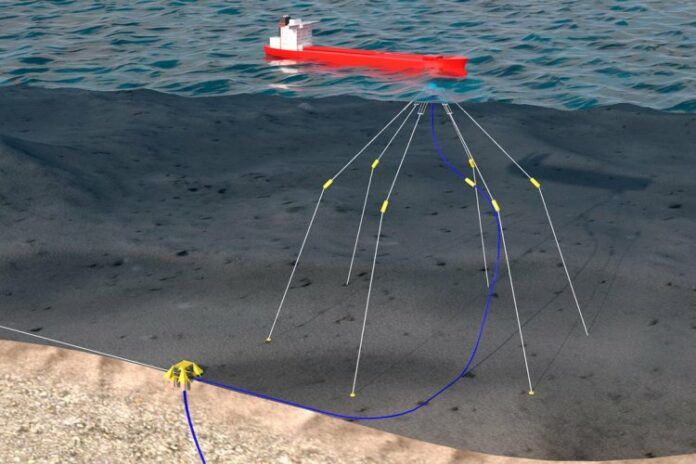
As part of its partnership with TetraSpar Demonstrator ApS, Bourbon Subsea Services will manage the transportation and installation of the 3,6 MW Floating Wind Turbine prototype. This new turnkey stage includes project management, engineering, installation and offshore execution from assembly port in Denmark until hook up and Inter Array Cable installation on Metcenter Test site in Norway this summer.

This is the fifth floating wind turbine project Bourbon Subsea Services has been awarded since the company decided to develop its activities towards renewable energy in 2011. This demonstrates, Bourbon Subsea Services’ expertise in the construction of Floating Wind Turbines (FWT) offshore farms and its ability to propose innovative solutions to achieve new complex technical challenges while maintaining low cost.

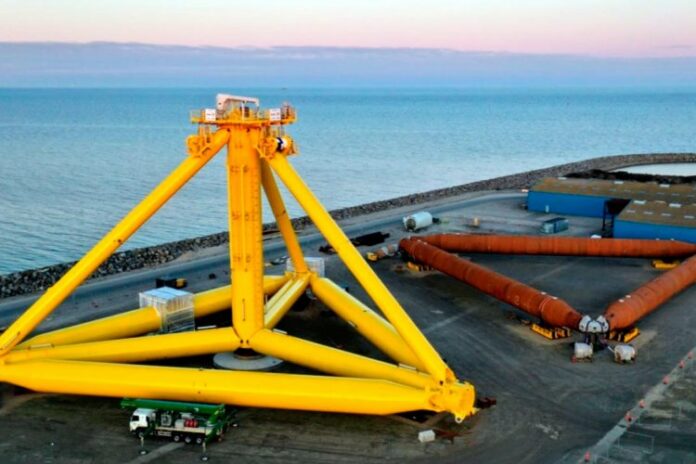
The TetraSpar FWT is particularly innovative in comparison with the other prototypes already installed worldwide. The defining feature of the TetraSpar foundation concept is the modular “building block” arrangement: each foundation is assembled from tubular steel modules, most of which are common to all configurations. Manufacturing takes place in factories using industrialized methods, and their assembly near the site as well as towing are measured in days or weeks, instead of months. Another particularity of TetraSpar Demonstrator is its stability provided by a keel deployed 50m below the floater. This keel deployment is the main challenge for the offshore installation. Bourbon Subsea Services will deploy innovative methodology to connect this keel to the floater in port and later on once offshore, to lower it safely and efficiently.

Henrik Stiesdal, Chairman of the board of directors of TetraSpar Demonstrator ApS:

“We have been very pleased to work with Bourbon Subsea Services during the first phases of the project. Bourbon Subsea Services bring valuable experience from floating wind execution to the team, and all the partners welcome their continued contribution as we move forward to the exciting next phases of the project.”

Patrick Belenfant, CEO of Bourbon Subsea Services, says:

“We are particularly honoured to have reached this final phase of the TetraSpar Demonstrator project. This is the result of a long-term team collaboration between Bourbon Subsea Services and TetraSpar Demonstrator APS. It demonstrates our capacity to deliver safe and innovative solution in a highly cost constrained environment. We look forward to supporting TetraSpar Demonstrator ApS and its partners in successfully delivering this installation.”

Fourth IMO greenhouse gas emissions study – highlights published

0

This study is the first iteration since the adoption of the Initial IMO Strategy on Reduction of greenhouse gas (GHG) Emissions from Ships in 2018, under which IMO Member States have pledged to cut GHG emissions from international shipping and to phase them out as soon as possible.  

The study estimates that total shipping emitted 1,056 million tonnes of CO2 in 2018, accounting for about 2.89% of the total global anthropogenic CO2 emissions for that year. Under a new voyage-based allocation method, the share of international shipping represented 740 million tonnes of CO2 in 2018.  

According to a range of plausible long-term economic and energy business-as-usual scenarios, shipping emissions could represent 90-130% of 2008 emissions by 2050. 

For the first time, the study includes estimates of carbon intensity. Overall carbon intensity has improved between 2012 and 2018 for international shipping as a whole, as well as for most ship types. The overall carbon intensity, as an average across international shipping, was between 21 and 29% better than in 2008. 

IMO has been actively engaged in a global approach to further enhance ship’s energy efficiency and develop measures to reduce GHG emissions from ships, as well as provide technical cooperation and capacity-building activities. 

The full study will be published later.  

DNV issues Statement of Feasibility for Seaplace’s CROWN Spar offshore floating wind platform

0

DNV has issued a Statement of Feasibility to the Spanish ship design and offshore engineering company Seaplace for its CROWN Spar offshore wind floating platform concept. DNV’s Statement of Feasibility verifies new concepts and opens the door to innovative platform designs with a potential to further reduce the costs of offshore floating wind.

Floating wind power generates electricity via wind turbines mounted on floating platforms rather than fixed to the seabed. With its ability to operate in deeper waters, floating wind power has the potential to bring affordable, low-carbon electricity to much more of the world’s population. Consequently, DNV predicts in its latest floating wind report that the technology will grow from 100 MW today to over 250 GW by 2050, driven by dramatic reductions in the levelized cost of energy (LCoE).

Kim Sandgaard-Mørk, Executive Vice President for Renewables Certification at DNV, said:

“Seaplace’s CROWN spar platform is a novel concept with potential to reduce the cost of floating wind generation. Such innovation is essential for the future growth of floating wind, but innovation always brings uncertainty. By achieving the Statement of Feasibility, Seaplace has shown to potential partners that the CROWN spar concept is a promising candidate for further development with a realistic chance of a return on investment.”

Santiago de Guzmán, Director of Offshore projects at Seaplace, said:

“Independent verification by a partner with DNV’s track record in renewable energy will help us build wider confidence in our new CROWN spar platform concept. In addition, thanks to its wide-ranging technical expertise, DNV could provide us with recommendations for subsequent stages of the project that will help us further develop the concept towards particular applications.”

With its reduced draft length compared to traditional spar-type floating platforms, Seaplace’s CROWN spar concept is designed to reduce both the capital (CAPEX) and operation expenditure (OPEX) for floating wind by simplifying the manufacture and installation of platforms, with a design for manufacturing approach and a good life cycle performance.

As a key early milestone in the platform’s development, DNV was contracted to verify the concept for loads analysis, structural design, stability and global motion analysis (seakeeping and station-keeping).The verification was carried out towards requirements given in the DNVGL-ST-0119 standard for floating wind turbine structures and resulted in a Statement of Feasibility, with no non-conformities found.

OneOcean announces the next-generation of its Voyage Planning platform

0

The new release represents the future of voyage planning where technology enables a holistic approach to improved decision-making

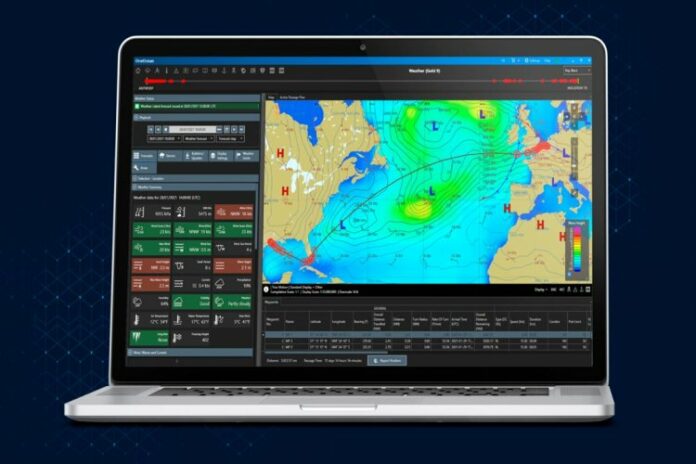
OneOcean has announced the launch of the new and improved OneOcean platform. The platform has received a thorough remodelling to provide the next generation of voyage planning and compliance.

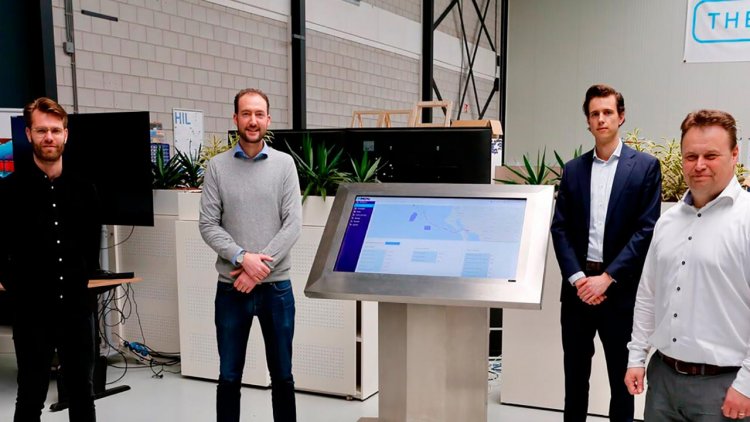
Four all-important characteristics of the new software offer customers a more robust and personalised experience. These focus on visually integrating data for better decision-making, structuring processes through a fully digital workflow, enhancing decision-making through AI and reducing risk through customisation.

The brand-new platform leverages all the maritime data it has gathered to power a truly intuitive, AI-based voyage planning solution. Its interface has also been conceived to make the platform even easier to use and aspects of a compliant voyage plan are now visible on a single screen. This means officers no longer need to jump back and forth between modules to make changes to a plan.

Decision-makers can now collaborate and see all sections of a voyage plan, allowing them to quickly understand the risks and operations of the upcoming voyage. By unifying workflows, OneOcean now also enables full, end-to-end passage planning, incorporating route generation, weather evaluation, environmental compliance, safety checks, optimisations and scenario evaluation.

OneOcean constantly collaborated with customers during its development to create a solution that was able to meet the needs of users both onboard and ashore. By using defined focal areas and customer partnerships, OneOcean’s portfolio is continuing to grow and create an innovative solution which connects ships and shore-side teams.  

Martin Taylor, CEO of OneOcean Group, says:

“Our customers have given feedback that they value an intelligent voyage planning solution, one that can take even more variables into account to generate a passage plan that is accurate, dynamic and configured to meet the unique needs of their company and the specifications of each vessel. This solution will provide a big picture view supporting effective decision-making to deliver significant benefits to users both ashore and onboard.”

Floating hydro paired with battery will unlock a new green energy asset

0

An ambitious new project, officially announced today, will demonstrate unique vertical axis tidal turbines in Strangford narrows, Northern Ireland. By pairing battery storage technology with efficient hydrokinetic turbines, the project aims to unlock a largely untapped renewable energy resource and subsequent huge market opportunity where just 1% market share is valued at €3.84 billion.  

The project consortium being led by Queen’s University Belfast, brings together 3 key industry partners; GKinetic Energy who have developed the hydrokinetic turbines, Grant’s Electrical Services (GES) who will lead the development of a battery solution and The Electric Storage Company (TESC), experts in maximising the value of final power delivery and sale of electricity to end users. 

The project valued at a total of £490,143 has been supported by the Centre for Advanced Sustainable Energy. CASE is funded through Invest NI’s Competence Centre Programme and aims to transform the sustainable energy sector through business research.

Sam McCloskey, CASE Director:

“CASE is delighted to support this tidal energy project and the associated G-Kinetic device testing, led by Queen’s University Belfast in Strangford Lough,Northern Ireland. VATTS involves the integration of the tidal energy device with energy storage technology from GES and increased flexibility of power delivery from the Electric Storage Company. Innovation in renewable energy system integration is vital for the long-term decarbonisation of energy. CASE continues to support projects such as this in marine renewables, along with others in energy systems and bio-energy. To date we have funded c.£2m of marine renewable energy research, in support of the Northern Ireland economy.”

‘VATTS’ kicked off on 1st March 2021 and runs for 24 months. Two 10kW HydroKinetic turbines will be deployed in Strangford Lough with the aim of bringing this technology to market and develop the Northern Ireland supply chain in tidal technology. 

Dr Vicky Kell, Invest NI’s Director of Innovation, Research & Development said:

 “VATTS is a great example of a collaborative project within Invest NI’s Competence Centre Programme which we developed with the aim of supporting businesses to accelerate new innovations which can drive business growth. In an era where renewable energy is centre stage, VATTS will foster strong collaborations between Northern Ireland companies to enable the development of commercial products around tidal energy harvesting, battery storage and much more. It will also showcase internationally the marine tidal energy research capabilities within Queen’s University Belfast and Strangford Lough as a key research and demonstration site.”

Dr Carwyn Frost, Lecturer in Marine Research Group at Queen’s University Belfast: 

“The CASE funded VATTS project will harvest the kinetic energy available at the Strangford Lough Tidal Test Site to produce baseload electrical energy at community scale. Commercial success in this sector requires further research and enhanced resource assessment standards are required for floating tidal energy technologies. VATTS will achieve this by developing on the latest standards to validate the Annual Energy Predictions (AEP) for floating tidal energy technology with the actual energy production from the commercial demonstration.

This project shows a collaborative commitment to the blue economy and net-zero agenda on the island of Ireland. Commercial led research is a core part of the Marine Research Group at Queen’s, and the Strangford Lough Tidal Test Site is an ideal incubator and proving ground for floating tidal energy technology.”

The project will explore ways to tie together the latest energy storage technologies and end user demand profiles, developing a framework for specifying an integrated system to provide an affordable, zero carbon alternative for baseload electricity directly to end users. 

A hydrokinetic turbine with integrated energy storage could harvest energy at a site and return to a port or connection point to deliver to the network in an adaptable manner, e.g. deliver to a variety of remote users such as the marine aquaculture sector or offshore charging stations. 

Roisin Mc Cormack, COO & Co-Founder at GKinetic Energy had the following to say:

“Our 10kW offering can be deployed and operational within a day, being simply towed out and moored in place just like a boat. We offer a fast, flexible, low impact floating solution that enables people to generate clean, predictable energy from their nearby rivers, canals, estuaries or tidal streams. However, a key market blocker for us is the delivery of the power to end users in a similar fast and flexible way. Traditional subsea cables are not always feasible and, depending on the deployment site, can be expensive. The VATTS project is a really exciting opportunity for us to look at using leading energy storage technologies as an alternative for power delivery and this could accelerate market rollout of tidal energy solutions.” 

A battery option for power transmission will offer a unique, mobile, low-cost solution that opens up excellent commercial opportunities and accelerates market uptake for tidal technology within Northern Ireland, Ireland and further afield. It is anticipated that by removing the need for a cable shore connection the costs, complexity and environmental concerns are all immediately reduced. GES will lead the power transmission tasks and specification of the battery solution.

Deployment of the two turbines is scheduled for later this year. 

Baker Hughes and Horisont Energi sign MoU for Carbon Storage Project

0

Baker Hughes and Horisont Energi AS have signed a memorandum of understanding (MoU) for the Polaris carbon storage project off the northern coast of Norway.

Under the agreement, the two companies will explore the development and integration of technologies to minimize the carbon footprint, cost and delivery time of carbon capture, transport and storage (CCTS). This agreement further reinforces Baker Hughes’ and Horisont Energi’s own commitments to decarbonizing the energy industry.

Horisont Energi’s Polaris offshore carbon storage facility is part of its “Barents Blue” project, which is the first global and full-scale carbon neutral “blue” ammonia production plant. The Polaris project is expected to have a total carbon storage capacity in excess of 100 million tons, which is equivalent to twice Norway’s annual greenhouse gas emissions. Currently at the concept phase, the facility is expected to enter the construction phase in the second half of 2022. As part of its overall goals, Polaris aims to have the lowest carbon storage cost globally, paving the way for profitable CCTS facilities that are not reliant on government support schemes.

Bjørgulf Haukelidsæter Eidesen, CEO of Horisont Energi, said:

“The global carbon technology market is emerging for carbon storage and utilization. With Baker Hughes, we will scale solutions across the carbon value chain to accelerate the decarbonization of the energy industry. Our complementary competencies allow for a strategic partnership for scalable, energy-efficient and flexible technology solutions.”

Uwem Ukpong, executive vice president of regions, alliances and enterprise sales at Baker Hughes, said:

“Baker Hughes has a broad and established portfolio of CCTS technology and proven expertise in executing some of the North Sea’s most complex offshore projects. We are proud to be partnering with Horisont Energi for new energy frontiers, taking the Polaris carbon storage project from concept to reality.”

In addition to collaborating for the Polaris offshore carbon storage facility, Baker Hughes and Horisont Energi will also work together to develop processes and technologies across the carbon capture value chain, including:

  • Reduction of carbon footprint in the well construction and subsea segments.
  • High-efficiency turbomachinery technology including compressors and turbines for syngas, steam, CO2 and air.
  • Low- to zero-emissions power and heat generation for clean ammonia plants.
  • Development of pre-front-end engineering and design (FEED) and FEED activities to prepare for project execution of offshore carbon storage assets.
  • Life-of-field service model for the life cycle of carbon storage projects, including site selection, drilling, and power to subsea infrastructure.

Damen teams up with MO4 to support sustainable energy production offshore

0

This strategic alliance pairs Damen’s Triton monitoring platform with MO4 motion forecasting knowledge, offering data analytic based services. Vessel operation will become more effective and safety levels will increase at the same time.

Offshore wind farm operators frequently require crew transfer vessel operators to demonstrate and secure their ability to provide safe transfers. Reports are required which include data on such things as impact-force measurement on vessel landing, push force recovery during transfer and vertical slip measurements. Relevant wave and weather information are added to give a clear impression of the performance of both vessel and crew in daily operation. Furthermore forecasting services for vessels’ motions are increasingly relevant to realise safe and efficient crew transfers.

MO4 and Damen saw the opportunity to integrate the motion forecasting service with the Triton platform resulting in a single, secured, vessel connection supporting premier league motion based applications. The idea was to harvest the operational data via Damen Triton – Damen’s award winning connected vessel platform – in order to feed MO4’s analysis.

Toine Cleophas, manager programs at Damen and responsible for the development of Triton, explains:

“MO4 is a provider of high quality solutions on motion prediction in wind and offshore applications. The collaboration between our companies forms a part of Damen’s Smart Ship programme and will increase customer value by supporting a more digitalised Damen portfolio.”

Damen Triton is a remote monitoring and operational insight tool, a connected, collaborative IoT platform that collects data from multiple sensors located around the vessel. This data offers vessel operators the opportunity, for example, to monitor and optimise performance of their vessel from a remote location. The Triton system ensures a safe and secure data transfer as a result of smart digital integration on board, combined with high cyber security features.

Mark Paalvast, Co-Founder of MO4, adds:

“We have high expectations from our collaboration with Damen as we see that they too are frontrunners in digitalisation. As a team we will be able to combine Damen’s long-standing experience with MO4’s innovative technologies. Within this, the Triton system will serve as a reliable basis for gathering and distribution of all data, allowing our analytics software to provide top tier output. This will lead to increased insight and better performance. We often say ‘without data, it’s just another opinion’.”

All offshore operations are in some way limited by weather and waves. At certain thresholds the vessels experience too much dynamics to either safely operate or to have people on deck. Knowing such limitations a number of days in advance is highly advantageous. MO4 motion prediction services allows for much better planning and use of the asset.

Decisions related to seeking shelter or to continue operations are now straightforward and no longer include excessive conservatism. For the motion forecasting service MO4 has set-up a vessel specific digital twin, taking into consideration all these parameters automatically. These digital twins consider parameters such as the dynamic positioning (DP) system, maximum thrust, vessel motions in waves, wind and swell sea, and much more.

Roderick Buijs, Damen regional service manager said:

“It is great to see that we can build our market propositions based on the connectivity of vessels enabled by Triton through partnering with experts in the field for niche-analyses that generate direct value to our customer. This alliance leads to better solutions for our clients at more competitive rates, whilst both contributing to Damen’s digitalisation ambition and encouraging the production of sustainable energy.”