0.5 C
New York
Home Blog Page 64

New oil discovery in the Norwegian Sea

0

Preliminary calculations of the size of the discovery made in the Garn Formation are between 0.48 and 1.11 million standard cubic metres (Sm3) of recoverable oil equivalent (o.e). This corresponds to 3-7 million barrels of recoverable o.e.

A minor discovery was also made in the Early Cretaceous; the size of this discovery is estimated at 0.16-0.32 million standard cubic metres (Sm3) of recoverable o.e. This corresponds to 1-2 million barrels of recoverable o.e.

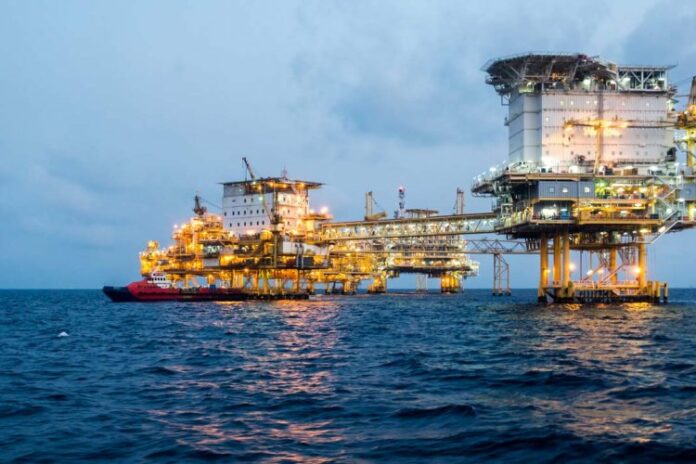
Wells 6507/5-13 S and A were drilled 6 kilometres southwest of the floating production and storage vessel Skarv FPSO in production licence 212, which is part of the Skarv Unit.

6507/5-13 S and A are the ninth and tenth exploration wells in production licence 212, which was awarded in 1996.

The wells were drilled by the Scarabeo 8 exploration rig.

The licensees will consider the discovery in the Garn Formation for a potential tie-back to the Skarv FPSO.

The objective of well 6507/5-13 S was to prove petroleum in reservoir rocks in the Fangst and Båt groups. The well also aimed to confirm the reservoir quality and delineate a potential discovery.

The well encountered a 14-metre oil column in the Garn Formation in 43 metres of sandstone with moderate reservoir quality. The oil/water contact was encountered at 3702 metres below sea level. The other formations in the Fangst and Båt groups were aquiferous.

Well 6507/5-13 S encountered hydrocarbons from the Early Cretaceous (Apt/Alba) in multiple sandstone layers with moderate reservoir quality. The oil/water contact was estimated at 3414 metres below sea level.

Well 6507/5-13 A was drilled to delineate the discovery in the Early Cretaceous. The well proved a reservoir of moderate quality. The reservoir was saturated with water.

The wells were not formation-tested, but extensive volumes of data and samples were collected.

Wildcat well 6507/5-13 S was drilled to a measured depth of 4022 metres and a vertical depth of 3998 metres below sea level. It was terminated in the Åre Formation.

Well 6507/5-13 S was drilled to a measured depth of 3607 metres and a vertical depth of 3465 metres below sea level. The well was terminated in the Melke Formation.

Water depth at the site is 383 metres. The wells have been permanently plugged and abandoned.

Satellites help NOC track tidal change for safer navigation

0

Scientists at the UK’s National Oceanography Centre (NOC) in Liverpool have used satellite data to create a unique insight into the iconic Mersey River that will help port operators be smarter about managing complex navigation channels. 

The project, run in partnership with the Channel Coastal Observatory (CCO) and Peel Ports Group, means port operators could now pre-empt sand or mud moving and blocking their navigation channels, reducing larger remediation works. 

Maintaining rivers like the Mersey, which handles more than 60 million tonnes of freight a year through Peel Ports Group, is important for safe and efficient port operations.

But it can be expensive and difficult to monitor an estuary of this size regularly enough to keep up with the continual changes in sandbank and channel positions using the standard survey methods that use survey boats or light aircraft.

Russell Bird, Deputy Group Harbour Master (Hydrographic and Dredging), at Peel Ports Group, said: “Through this project we’ve been given new, fresh insights into parts of the River Mersey. 

“Gaining an understanding of these areas is helping us to enhance the way we manage navigational safety and dredging strategies. The findings that NOC has achieved has showed us the potential to manage significant changes in the river more proactively.”

The project analysed data from optical and radar satellite images combined with information from the Gladstone Tide Gauge, which sits within the Old Lock Keeper’s Office at the entrance to Gladstone Dock, in Liverpool. 

These were further combined with fine scale water level data from the new Surface Water and Ocean Topography (SWOT) satellite, launched in December 2023 that enabled more precise estimates of tidal water levels right across the estuary.

The analysis enabled the team to map changes in the riverbed from 2018 to 2023. These maps then provide a clearer picture of how the river is evolving, helping experts plan dredging operations more effectively and avoid unnecessary costs.

Lydia Green, Head of Business Engagement at UK Space Agency said: “A key aim of the Unlocking Space for Business programme is to support businesses to benefit from the use of satellite solutions by addressing key sector challenges. NOC’s project is a great example of how satellite data can be used to deliver operational efficiencies within UK ports and gives the organisation a competitive edge with new insights into coastal areas.”

Christine Sams, one of the project leads at NOC at the time, said, “This project shows how cutting-edge satellite technology can help us understand the physical changes happening in dynamic environments like the River Mersey. It’s an exciting step forward for managing coastal areas like Liverpool and beyond.”

Dr Paul Bell, co-lead on the project, explains, “The phenomenal advances in the capabilities of the latest satellites are fuelling a revolution in our ability to observe complex and dynamic areas like the Mersey Estuary on a regular basis. 

“We are combining these new satellite capabilities with cutting edge algorithms developed at the NOC that distil this huge volume of data into 3D maps of the estuary that we can turn into movies showing how the sandbanks and channels move around.” 

Lloyd’s Register Advisory verifies the performance of Anemoi Rotor Sails

0

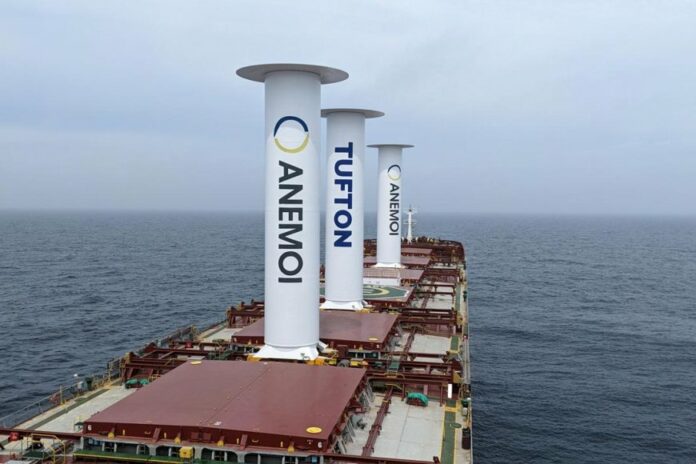
In a Statement of Fact, Lloyd’s Register Advisory confirmed the methodology Anemoi used for calculating fuel and emissions savings from the three 24 meters high Rotor Sails installed on TR Lady – a Kamsarmax bulk carrier owned in funds managed by Tufton Investment Management Ltd (“Tufton”) and chartered by Cargill. 

The extensive dataset establishes a reliable and repeatable benchmark for wind-assisted propulsion performance under a broad range of real-world conditions.

During the testing period, TR Lady sailed the Indian Ocean, South Atlantic, North and South Pacific, Southern Ocean and rounded both the Cape of Good Hope and Cape Horn, along with some of the busiest shipping routes, including the Strait of Malacca. Data from eight consecutive Laden and Ballast legs were analysed to provide a long-term average of the fuel and emissions savings. The average net savings across this period calculated from the verified performance model were 1.9 tonnes of fuel per day and 7.0 tonnes of CO2 per day (well-to-wake). This equates to an average of 9.1% net propulsion fuel and emissions savings.

The achieved average savings align closely with Anemoi’s predicted 10% savings, making this a very positive result. Additionally, since TR Lady does not follow a fixed route, the results varied from voyage to voyage depending on the route taken and the wind conditions encountered. For example, on a 22-day voyage across the North Pacific, average route savings of 21% net propulsion fuel reduction were calculated from the verified performance model. That said, it is especially important to Anemoi to share the full, transparent picture in the first instance, rather than focusing solely on one particularly favourable route, to provide a more relevant measure of long-term performance.

Lloyd’s Register Advisory confirmed that the findings of this study validate Anemoi’s approach as a reliable method for calculating Rotor Sail performance. The Statement of Fact concluded that “there is close agreement between the predicted thrust coefficient trends and the measured values”.  Dr Dogan Uzun, Ship Performance Consultant at Lloyd’s Register Advisory and project manager of the assessment, said, “We have independently verified Anemoi’s methodology to calculate thrust power and predict fuel consumption, confirming its accuracy when ship-specific coefficients are correctly applied and kept up to date. Our assessment, drawing on high-frequency operational data and CFD analyses for rotor sail-equipped vessels, highlights the value of detailed, vessel-specific modelling. The findings show that wind-assisted propulsion, when supported by robust data and transparent methods, can significantly reduce uncertainty and contribute meaningfully to emissions reduction in commercial shipping.”

TR Lady, an 82k DWT Kamsarmax, was installed in June 2023 with three Anemoi Rotor Sails, 5m in diameter and 24m in height – a shorter height and a lower aspect ratio compared to Anemoi’s standard products to suit air draft requirements. Anemoi has also confirmed that testing is currently underway on several vessel installations featuring its larger Rotor Sails, measuring 35m in height, which, thanks to their higher aspect ratios, are expected to achieve even higher performance results.

Clare Urmston, CEO of Anemoi Marine Technologies, said, “This independent verification is a crucial step in building trust across the industry. Lloyd’s Register Advisory’s rigorous and transparent approach gives shipowners and operators the confidence that our technology delivers measured fuel savings and emissions reductions in line with expectations. At Anemoi, we believe that credibility is earned through data, openness and accountability, and this verification underpins our commitment to setting a new standard as emerging technologies like wind propulsion pave the way in clean maritime innovation.”

“Verifying the performance of Rotor Sails has been a key objective of this project for Tufton. The latest fuel consumption calculations, following the methodology independently verified by Lloyd’s Register Advisory, closely match our original expectations. We are excited by the results, which not only confirm the technology’s effectiveness but also the strong operational and environmental benefits we anticipated,” shared Nicolas Tirogalas, Chief Investment Officer and President of Tufton. 

Chris Hughes, Decarbonisation Specialist of Cargill, said, “Building up an accurate understanding of the real-world, on-ship performance of technologies is a key piece in the wind assist propulsion puzzle.  By combining the data from more than 167 rotor on/off tests that were conducted by the TR Lady, together with the independent verification from LR, Anemoi installed confidence in the accuracy of their analysis.  We have already used the results of this study to fine-tune our weather routing digital twins for TR Lady; and it will also help inform future decisions on deploying wind assist across our fleet.”

Wärtsilä supplies cargo handling systems for two VLAC vessels for Korean shipyard

0

Wärtsilä Gas Solutions, part of technology group Wärtsilä, will supply the cargo handling systems for two very large Ammonia Carrier (VLAC) vessels being built at the Hanwha Ocean shipyard in Korea.

The 88,000 m3 capacity vessels have been ordered by a Japanese ship owner. This latest order, which was booked by Wärtsilä in Q2 2025, further strengthens the company’s established leading position as a supplier of cargo handling systems.

“We have good experience with Wärtsilä’s cargo handling systems. Their support and quick reaction to our needs have always been much appreciated, and their systems are perfectly designed for these two VLACs,” says Mr. Lee, Leader of Basic Design Team, Hanwha Ocean Co.

VLACs are essentially Very Large Gas Carriers but designed to carry full cargoes of ammonia. Since ammonia has a high specific gravity, VLAC cargo tanks and hulls need to be reinforced, and the vessels will have a deeper draught when fully loaded.

“Enabling decarbonised shipping operations is at the core of our strategy. This contract is an additional proof point for continuous successful strategy implementation, while reinforcing our strong partnership with Hanwha,” comments Patrick Ha, Sales Manager, Wärtsilä Gas Solutions.

The Wärtsilä equipment is scheduled for delivery to the yard commencing in Q4 2025.
 

Port of Antwerp-Bruges launches the Volta 1: Europe’s first electric tugboat

0

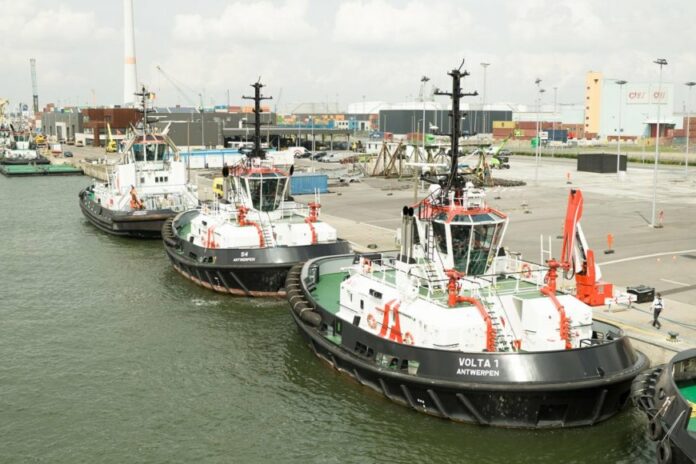
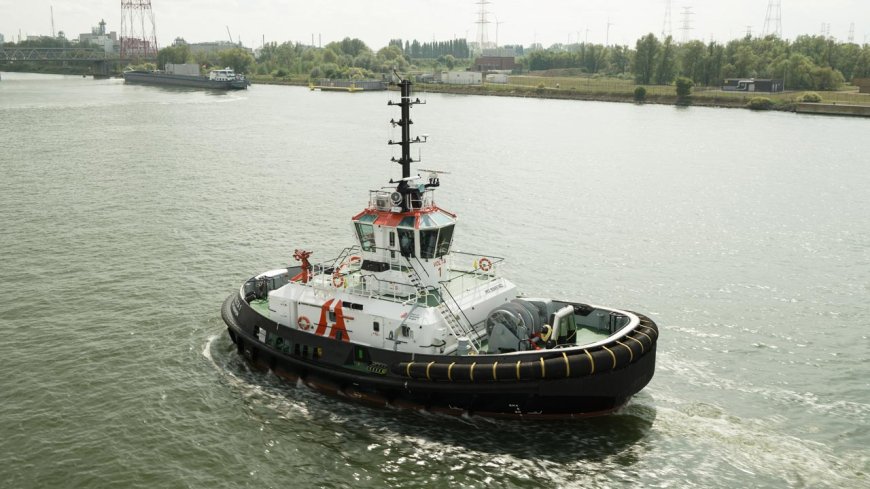
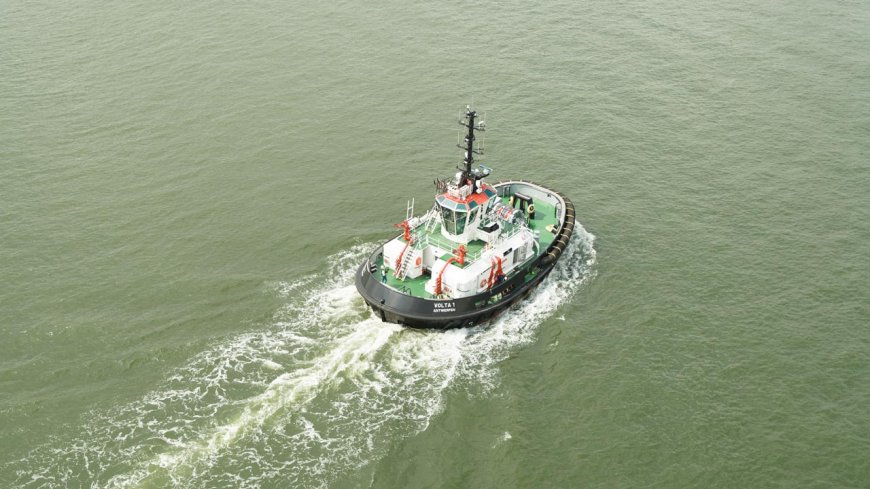
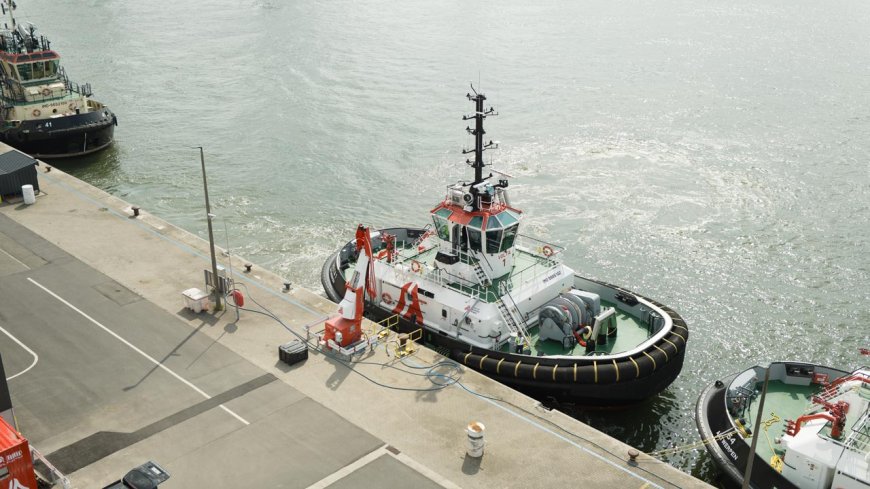
The Volta 1 is a Reversed Stern Drive (RSD) tugboat designed on a double bow principle and equipped with a patented Twin Fin skeg for optimal stability and manoeuvrability.

 As a result, it can be used flexibly as a front and back tugboat. With its battery capacity of 2,782 MWh, recharged in as little as two hours via a powerful 1.5 MW charging station, the Volta 1 is completely emission-free and can cruise for up to 12 hours. Its towing power of 70 tons guarantees the same performance as a traditional diesel tug boat.

The Volta 1 is part of a broader renewal of the tug-boat fleet. Together with five energy-efficient RSD tugs, also commissioned today, this replaces older vessels. The tug service, responsible for nearly 85% of port-related CO₂ emissions, is thus undergoing a profound greening. Port of Antwerp-Bruges systematically strives to integrate the most environmentally friendly technologies, as part of its ambition to be climate neutral by 2050.

As the fifth-largest bunker port in the world, Port of Antwerp-Bruges also aims to become a full-fledged multi-fuel port. It therefore wants to offer low-carbon alternatives in addition to bio- and conventional fuels. Over the past year and a half, the port introduced the world’s first hydrogen and methanol-powered tugs. By testing these technologies side by side in the field, Port of Antwerp-Bruges can determine which solution scores best in terms of emissions, cost, autonomy and performance. In doing so, it anchors its role as a pioneer in the international energy transition and hopes to inspire other ports and sectors to take action.

The partnership with Damen Shipyards Group plays a key role in this transition. Damen, which built the world’s first electric tugboat in 2022 in Auckland, New Zealand, began construction of the six RSD tugs for Port of Antwerp-Bruges in 2023 in Vietnam. After a journey of more than 10,000 kilometres, the ships arrived in Antwerp in November 2024. There they were prepared for operational deployment, including a technical start-up, crew training and installation of charging infrastructure. The official launch of the Volta 1 is the culmination of this journey.

Jacques Vandermeiren, CEO Port of Antwerp-Bruges: “The Volta 1 is a powerful example of our strategy to actively integrate sustainable technology into our operations. As a global port, we are taking our responsibility to pull the maritime sector into the energy transition. The Volta 1, together with the Hydrotug, Methatug and RSD tugs, represents a tangible step towards a climate-neutral port by 2050.”

Johan Klaps, Vice Mayor for the Port and Economy City of Antwerp / President of the board Port of Antwerp-Bruges: “Achieving this European first in the year when we are also celebrating 150 years of tug service makes it both symbolic and historic. It shows how our port and region continue to invest in sustainable innovation. Even in challenging times, we resolutely choose the future and take a leadership role.”

Vincent Maes, Sales Manager Benelux Damen: “We are delighted and very honoured to have been able to deliver the latest additions to the Port of Antwerp-Bruges tug fleet: five brand new and efficient diesel tugs equipped with after-treatment systems and an innovative electric tug, all of type RSD2513. This delivery is perfectly in line with our ongoing commitment to better ships and technological progress. We are delighted that this allows us to contribute to achieving the port’s ambitious sustainability targets.”

Specifications of the Volta 1

  • 24.73 metres long, 13.13 metres wide and a depth of 6.5 metres
  • Weight of 607 tons
  • Towing power of 70 tons
  • Speed of 12 knots
  • 2,782 MWh lithium-titanium-oxide (LTO) batteries charged in 2 hours (12 hours of sailing capacity)
  • 1.5 MW charging station

Estonia grants key licence for offshore wind

0

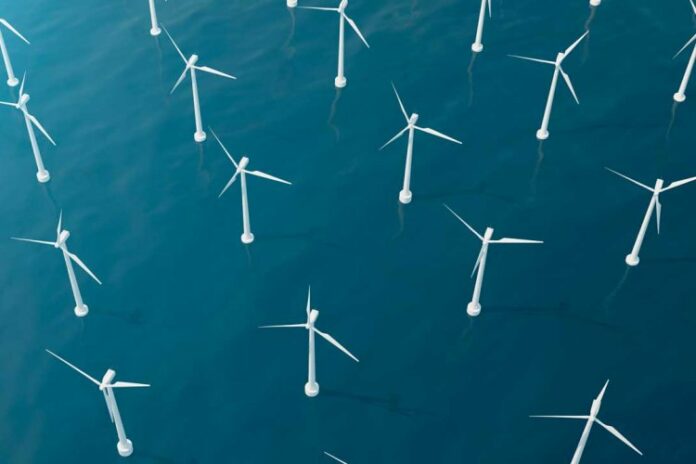
Saare Wind Energy is planning to build a wind farm with a capacity of up to 1.4GW off the island of Saaremaa.

The superficies licence from the government gives the company the right to occupy and use the seabed for the construction of the wind farm and its associated infrastructure.

The licence is an important milestone in the development process but Saare Wind Energy must still apply for and receive a construction permit before building work can begin.

“This is the first building permit in the history of Estonian offshore wind farms – it is an important step towards the production of clean energy,” said Jaanus Uiga, Deputy Secretary General for Energy and Mineral Resources at the Ministry of Climate Change.

The offshore wind farm will consist of up to 100 wind turbines, located at least 11km from the west coast of Saaremaa, and could start producing electricity in the early 2030s.

The superficies licence, which is valid for 50 years, gives Saare Wind Energy the right to occupy and use a defined area of Estonia’s maritime territory, including the seabed, for the development of the project.

As a next step, the company will be able to apply for a construction permit from the Consumer Protection and Technical Regulatory Authority and an environmental permit for the special use of water from the Environmental Board.

Saare Wind Energy must apply for a construction permit within two years of the issuance of the superficies licence, the validity period of which is generally five years, and finally also a permit for use.

In addition to the Saare Wind Energy plan, the government has initiated proceedings for building permits for 11 other offshore wind farms.

Source: renews

Researchers develop new method for tracking ocean carbon from space

0

MBARI researchers and collaborators from Florida State University have developed a new method for analyzing satellite data to better predict the export of carbon. The team recently published their findings in the journal Geophysical Research Letters.

“We urgently need tools to monitor the ocean-carbon connection on a global scale. By leveraging diverse sets of data, we’ve identified a new path forward to improve carbon export estimates from space,” said Monique Messié, a senior research specialist who leads MBARI’s Data Integration and Interdisciplinary Oceanography Team and was lead author on the recent study.

The ocean and its inhabitants are critical parts of Earth’s carbon cycle. Carbon dioxide dissolves into the ocean, and marine life converts it into organic material that later sinks into the deep sea. Together, these processes can lock away, or sequester, carbon from the atmosphere in the ocean’s depths, a process known as carbon export.

Direct measurements of carbon export are scarce, so scientists have to rely on models and satellite data to understand large-scale patterns in the ocean-carbon connection. Tiny plant-like phytoplankton in the ocean’s surface waters convert carbon dioxide into organic carbon via photosynthesis. Scientists can use satellite ocean color data to estimate phytoplankton productivity. However, existing satellite-based models often do not capture what happens below the ocean’s surface.

Coastal upwelling in the California Current—a cool, nutrient-rich current running from British Columbia to Baja California—creates a boom of productivity. Ocean currents can carry phytoplankton hundreds of kilometers offshore. Marine life consumes phytoplankton, transporting carbon through the food web as food and waste. Dead phytoplankton and carbon-rich waste ultimately sink to the depths below, part of a biological pump that can lock carbon away in the deep sea for thousands of years.

MBARI’s Data Integration and Interdisciplinary Oceanography Team works to understand ocean processes by leveraging diverse datasets from various disciplines, from physics to ecosystems.
The team is particularly interested in addressing which processes drive patterns of biological communities throughout the water column over time. These relationships are especially challenging to decipher because they are not always direct. For example, because plankton are displaced by currents, what we observe in one location may be the result of past conditions tens of kilometers away.

The Data Integration and Interdisciplinary Oceanography Team develops models to untangle these effects and uncover which processes drive biological communities, describe how they occur, and quantify their impact.

MBARI has deployed a suite of advanced technologies at Station M, a research site offshore of Central California, to monitor the abyssal seafloor. The trove of data from this long-term observatory has helped researchers understand how carbon is cycled from the surface to the deep sea.

MBARI researchers and collaborators had previously observed pulses of carbon to the deep seafloor that could not be explained by existing satellite-based algorithms of carbon export. Those algorithms model ocean physics and biogeochemistry, but do not consider the lag in both time and space between phytoplankton productivity at the surface and carbon export to the deep sea.

Messié and a team of MBARI researchers and collaborators sought to identify a new avenue to improve estimates of carbon export. The team developed a Lagrangian growth-advection satellite-derived model that maps plankton succession and export onto surface oceanic circulation following coastal upwelling. The model was initially designed to track biological hotspots where marine life congregates.

Instead of relying on ocean color data to estimate carbon export, this new approach incorporates the offsets between production and export, the role of zooplankton, and advection of plankton blooms by ocean currents. This method performed as well as models that rely on ocean color or long-term monitoring of carbon raining down on the abyssal seafloor.

The team’s success demonstrates that export can be well represented from space without ocean color, using a plankton model and satellite-derived tracks of oceanic currents. These results provide new insights into what controls carbon export, how to represent it from space, and its spatiotemporal patterns in a productive oceanic region.

MBARI’s Data Integration and Interdisciplinary Oceanography Team will leverage this new model to better understand how deep-sea carbon fluxes are connected to surface processes.

Next year, incoming MBARI Postdoctoral Fellow Théo Picard will work with Messié to explore what mechanisms drive the unexplained intense pulses observed in MBARI’s long-term monitoring at Station M. In addition to refining the Lagrangian growth-advection model of surface carbon export, Picard will use machine learning to build upon previous analyses to estimate surface area catchment at Station M and work with MBARI’s Carbon Flux Ecology Team to investigate the role of biological community composition.

“A complex web of physical and biological factors influence the oceanic carbon cycle. Using satellite data about winds and currents shows promise for estimating ocean carbon export, offering a complementary perspective to models that use ocean color visible from space. We hope the marine research community can build upon our work to better represent complex oceanographic processes from satellite data,” said Messié.

NORDEN inks logistics project in Australia

0

NORDEN has signed its first port logistics project in Australia with existing dry cargo freight customer, the Australian developer and operator of iron ore mining projects, Kimberley Metals Group (KMG), further expanding the partnership.

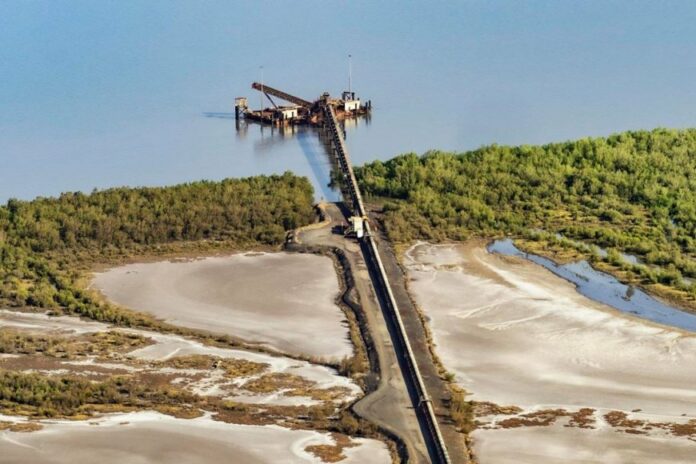
With the new project – situated in the port of Wyndham in Western Australia – NORDEN will provide additional assets for the existing transshipment operation, loading iron ore from the port onto barges and on to the ocean-going vessels.

“We are excited to continue the growth of NORDEN’s logistics activities by entering into an agreement with KMG, taking our existing partnership to a new level by combining our freight services with our expertise within logistics to optimise KMG’s entire port-to-port supply chain,” says Anne Jensen, COO at NORDEN. 

The contract also entails a fixed-term charter arrangement with an option to extend. The first barge is expected to launch in July this year.

With this entry point in the Australian logistics market, NORDEN continues to identify and evaluate opportunities to further grow its integrated logistics and freight solutions among current and existing customers in Australia.  

“The new agreement is a natural next step on NORDEN’s strategic journey within logistics, servicing customers on a deeper level and becoming even more relevant to them, continuously using the strong synergies across NORDEN’s integrated freight solutions,” Anne Jensen concludes. 

UK Dredging celebrates the naming of latest vessel to join its fleet

0

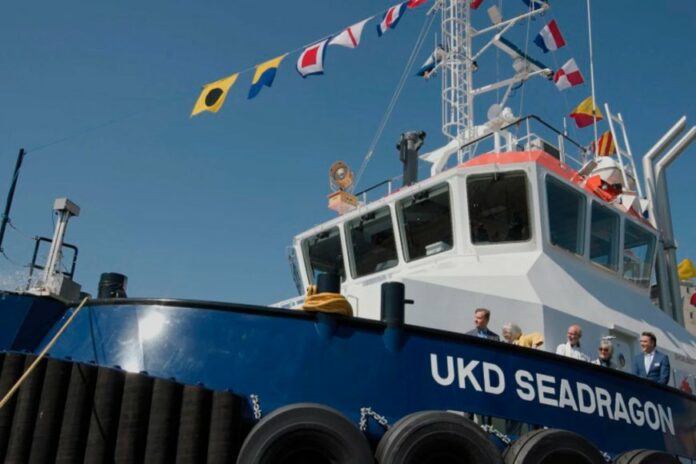
UK Dredging (UKD) has hosted the official naming ceremony for the UKD Seadragon, a state-of-the-art Shoalbuster 2711 Water Injection Dredger (WID), and the latest addition to UKD’s fleet, on Wednesday 15 May 2025.

In the ceremony, which took place in Cardiff’s Roath Basin, UKD and ABP colleagues were joined by the vessel’s Godmother, Rhian Lewis, the Mission to Seafarer’s and shipbuilders, Damen, to name and bless the UKD Seadragon.

Mark Pearson, UKD General Manager said: “It was a proud day for ABP, for UK Dredging, and for everyone involved in bringing the UKD Seadragon to life. The Seadragon has been built to schedule, to budget, and to the highest of standards, and we’re very proud and grateful for this achievement.”

Joppe Neijens, Sales Manager Dredging, Damen Shipyards, also delivered a speech, highlighting the strong partnership and collaborative efforts that made the UKD Seadragon a reality. “As shipbuilder, we are honoured to have built the UKD Seadragon. This dredger is the result of very close cooperation between both parties and represents the first of a new generation of efficient and innovation water injection dredgers”.

The UKD Seadragon introduces an innovative approach to water injection dredging, offering exceptional efficiency and flexibility. The vessel features a cutting-edge diesel-electric propulsion and power management system, optimising engine efficiency and significantly reducing emissions. This innovation supports ABP’s journey toward achieving net-zero emissions.

The UKD Seadragon is equipped with a next-generation, fully electric Damen E-DOP450 dredge pump, delivering an impressive capacity of 4,000m³/h, ensuring maximum efficiency and minimal operating costs. The vessel also includes an A-frame for added versatility, allowing the WID Skid to be securely stored on the vessel’s aft deck when not in use.

The UKD Seadragon is the first commercial vessel to be registered in Cardiff in six years. As the newest addition to the fleet, she underscores UKD’s commitment to maintaining its position as the leading provider of dredging services in the UK.

Port of Cromarty Firth awards £1.5m Phase 5 pre-construction contract to RJ McLeod

0

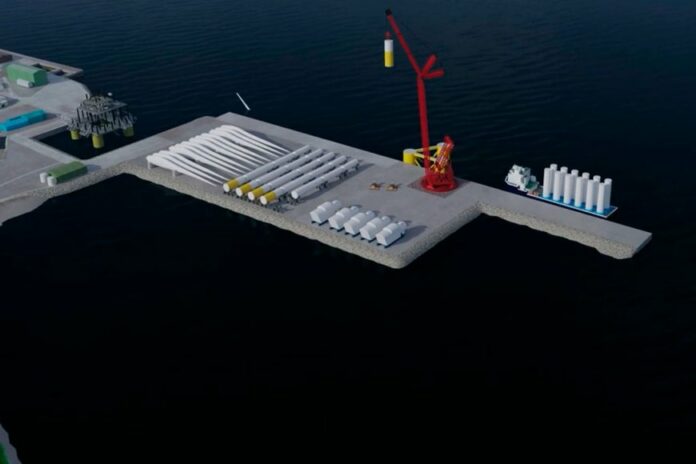
Port of Cromarty Firth has awarded a £1.5 million contract to RJ McLeod to carry out all required pre-construction work in readiness for the construction stage of its £111 million Phase 5 expansion that will expand the size of the Port’s current 9Ha Quay West facility and provide the critical facilities needed in Scotland for the rapid development of new North Sea fixed bottom and floating offshore windfarms.

One of Scotland’s leading civil engineering contractors, RJ McLeod, will be tasked with undertaking detailed design and producing a construction programme and plan, as well as planning the procurement of critical materials. The company was selected using SCAPE Scotland’s Utilities Works and Services Framework. The pre-construction stage is due to be finalised in the summer, with construction then due to commence in the autumn.

RJ McLeod, headquartered in Glasgow, has a 70-year history of delivering complex engineering solutions to clients the length and breadth of Scotland, including developing the nation’s coastal infrastructure – sea defence works, breakwaters, causeways, harbours and linkspans. Recent successful projects include improving the harbour area and main street in Ullapool, which won the Best Overall Project category at the Scottish Civil Engineering Awards.

The awarding of the contract comes after the UK Government’s Department for Energy Security and Net Zero confirmed the award of £55.7 million of Floating Offshore Wind Manufacturing Investment Scheme (FLOWMIS) funding to the Port to create a custom-designed Floating Offshore Wind Integration and Precommissioning facility, paving the way for it to negotiate further match-funding from private investors.

The expansion project is expected to create 170-320 jobs in the construction phase. When complete, it will provide the larger facilities needed for the integration, precommissioning and operational support to floating offshore wind – a vital component of regional jobs and growth, national energy security (and reduction of energy bills), and to Scotland and the UK achieving their Net Zero obligations.

The Port has been highlighted in industry reports as the most logical location for a strategic national floating offshore wind hub. This is due to its location, experienced supply chain and deep, sheltered waters which can accommodate the large vessels required to deliver the substantial components and floating technology such as towers, blades, steel and concrete foundations needed for offshore wind.

Alex Campbell, Port of Cromarty Firth Chief Executive, said: “The Port is delighted to award the pre-construction contract to Scottish company RJ McLeod. The award recognises the company’s long and successful track record in delivering projects of huge significance to the area in which they are built. Everyone at the Port is looking forward to working with RJ McLeod on Phase 5, our most ambitious expansion project yet.

“This contract has also gone ahead thanks to the FLOWMIS funding recently confirmed by the UK Government. They recognised how Phase 5 is vital to provide the necessary integration and precommissioning facilities to act as a catalyst to deliver economic growth and jobs by ensuring the manufacture, assembly and many other services required for floating offshore wind projects happens in the UK. It will unlock investment in Invergordon and at other ports across the Inverness and Cromarty Firth Green Freeport.”

Hamish Seaton, North Director at RJ McLeod, said: “Our North Office is located less than 15 miles from the port and has a long and successful history of delivering large projects of significant size and ambition such as this. This project will provide us with the opportunity to deliver a boost to the local economy, not only in terms of employment with a local Highland contractor, but also in terms of the extensive and valuable local supply chain of goods and services.”

Energy Minister Michael Shanks said: “Our £55m investment in Cromarty Firth will help it develop into one of the first UK ports able to deploy floating offshore wind turbines at scale. It’s fantastic to see progress today in rolling out the next stage of this project that will support rapid expansion of new offshore wind in the North Sea.

“This facility shows how Scotland is reaping the benefits of our clean power mission, and helping to deliver on our Plan for Change by driving growth and creating good, skilled jobs.”