-6.8 C
New York
Home Blog Page 639

ABS and Verifavia partner to deliver IHM solution to maritime industry

0

ABSG Consulting Inc. has partnered with Verifavia Shipping, the leading independent global provider of carbon emissions verification and Inventory of Hazardous Materials (IHM) services, to offer a turnkey solution for IHM compliance that supports continuous monitoring and annual maintenance of the inventory of hazardous materials onboard vessels. 

Verifavia’s IHM Maintenance Dashboard supports efficient and continuous maintenance of IHM reports. The digital system ensures the IHM can be updated accurately, effectively and in real-time to comply with the EU Ship Recycling Regulation (EU SRR), as well as its ongoing maintenance requirements.

Brian Weaver, Vice President of Risk and Reliability at ABS Consulting, says:

“Our consultants work closely with clients to form a complete plan to demonstrate IHM compliance. Sustaining the plan for annual IHM reporting requires critical follow-up on asset purchases to verify all hazardous materials are being tracked appropriately. Verifavia maintains all the follow-up so the client doesn’t have to. Our partnership with Verifavia gives our clients the confidence and ability to successfully maintain the plan over time.”

Verifavia’s online 3 Way “Plug and Play” IHM Maintenance platform is one of the industry’s first, providing shipowners, superintendents, vessels and even Port State Control (PSC) and Class with live access to the IHM maintenance status of the vessel. The platform can be connected to any procurement system, as well as the suppliers’ data systems where the data is automatically and continuously updated. The platform can automatically generate monthly or ad-hoc IHM maintenance reports to demonstrate implementation and compliance with regulations and greatly enhances vessel preparation for PSC inspections.

Yuvraj Thakur, VP Commercial Verifavia Shipping, says:

“Our dashboard is maintained by one of world’s largest in-house team of hazmat experts who are all marine engineers or naval architects with expertise in PSC, International Maritime Organization (IMO) and EMSA regulations. We are excited to work with the risk experts at ABS Consulting to confirm their clients’ IHM plans are updated and have a live view of what is onboard with just a click of a few buttons.” 
Underwater robot reveals how Thwaites Glacier is melting

0

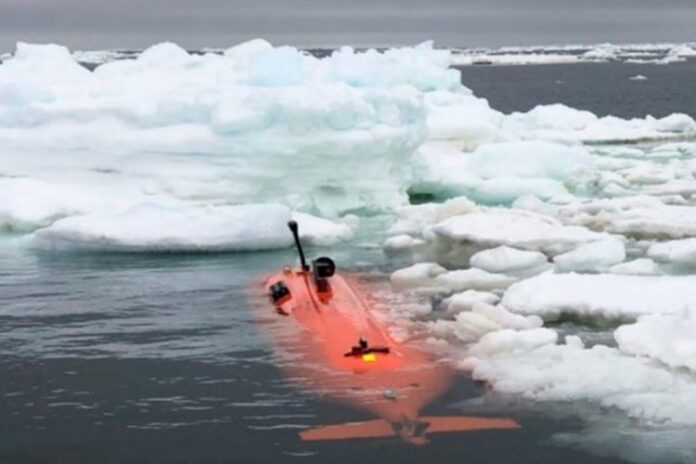
Findings reveal that the supply of warm water to the glacier is larger than previously thought, triggering concerns of faster melting and accelerating ice flow. The findings are part of the International Thwaites Glacier Collaboration (ITGC) and are published this month (10 April 2021) in the journal Science Advances.

An autonomous submarine called Ran was deployed under Thwaites glacier in 2019. The submersible measured the strength, temperature, salinity and oxygen content of the ocean currents that penetrate under the glacier.

Lead author Professor Anna Wåhlin, Professor of Oceanography at the University of Gothenburg, says:

“These were the first measurements ever performed beneath the ice front of Thwaites glacier. Global sea level is affected by how much ice there is on land, and the biggest uncertainty in the forecasts is the future evolution of the West Antarctic Ice Sheet”.

Professor Karen Heywood of the University of East Anglia, a Principal Investigator on the TARSAN project of the International Thwaites Glacier Collaboration (ITGC), says:

“This was Ran’s first venture to polar regions and her exploration of the waters under the ice shelf was much more successful than we had dared to hope.  We plan to build on these exciting findings with further missions under the ice next year.”

The ice sheet in West Antarctica accounts for about ten percent of the current rate of sea-level rise; but ice in West Antarctica holds the most potential for increasing that rate because the fastest changes are taking place at Thwaites Glacier. Due to its location and shape, Thwaites is particularly sensitive to warm and salty ocean currents that are accessing beneath.

The results have been used to map the ocean currents underneath the floating part of the glacier. One exciting result is the team discovered there is a deep connection to the east through which deep water flows from Pine Island Bay, a connection that was previously thought to be blocked by an underwater ridge.

The team also measured the heat transport in one of the three channels that lead warm water towards Thwaites Glacier from the north.

Dr Alastair Graham, from the University of Southern Florida, says:

“The channels for warm water to access and attack Thwaites weren’t known to us before the research. Using sonars on the ship, nested with very high-resolution ocean mapping from Ran, we were able to find that there are distinct paths that water takes in and out of the ice shelf cavity, influenced by the geometry of the ocean floor.”

The researchers also noted that large amounts of meltwater flowed north away from the front of the glacier. Variations in salinity, temperature and oxygen content indicate that the area under the glacier is a previously unknown active area where different water masses meet and mix with each other, which is important for understanding the melting processes at the base of the ice.

The observations show warm water approaching from all sides on pinning points, critical locations where the ice is connected to the seabed and give stability to the ice shelf.  Melting around these pinning points may lead to instability and retreat of the ice shelf and, subsequently, the upstream glacier flowing off the land.

Dr Rob Larter, a geophysicist from British Antarctic Survey, who’s a Principal Investigator on the THOR project of ITGC, was Chief Scientist on the science cruise to Thwaites Glacier in early 2019. He says:

“This work highlights that how and where warm water impacts Thwaites Glacier is influenced by the shape of the sea floor and the ice-shelf base as well as the properties of the water itself. The successful integration of new sea-floor survey data and observations of water properties from the Ran missions shows the benefits of the multidisciplinary ethos within the International Thwaites Glacier Collaboration.”

Lead author Professor Wåhlin concludes:

“The good news is that we are now, for the first time, collecting data that will enable us to model the dynamics of Thwaites glacier. This data will help us better calculate ice melting in the future. With the help of new technology, we can improve the models and reduce the great uncertainty that now prevails around global sea level variations.”

Nautilus Labs and Datum Electronics announce partnership

0

Leveraging the data provided by hardware leaders like Datum, Nautilus builds vessel-specific, machine learning-based performance models to reduce fuel consumption, emissions, and maintenance spend.

By unifying stakeholders around a single set of real-time vessel performance data, Nautilus Platform promotes cross-organizational transparency and accountability while providing industry leading fleet optimization and predictive decision support.

Matt Heider, CEO at Nautilus, said:

“The partnership with Datum Electronics is another big step for Nautilus and demonstrates our ability to interoperate with data from any hardware solution. Our core belief is that collaboration is key to driving innovation. This partnership helps increase access to the high frequency data that powers our leading predictive decision support platform. Datum’s solution is best-in-class in terms of interoperability, as it can be easily fitted on any vessel, and then refitted on a new vessel when the current charter contract ends. Moreover, its accurate thrust data empowers our clients to differentiate hull from propeller fouling precisely in a way that traditional noon data analysis can’t — resulting in optimized maintenance timing.”

UK-based Datum Electronics offers maritime sensors and meters to collect high frequency data. Being the only fully modular shaft power meter on the market, Datum’s system can be moved from vessel to vessel even when there is a difference in shaft diameter. This truly makes it the only re-usable and fully recyclable ship torque meter. The modularity is combined with state of the art electronics for high resolution & very accurate measurement of Torque, Thrust, RPM & Power.

James Lees, Managing Director at Datum Electronics, commented:

“We’re excited to partner with Nautilus as a leading maritime performance optimization solution. Together we’re able to offer a best-in-class solution that empowers shoreside teams with predictive decision support and proactive alerting based on real-time vessel data. We’re looking forward to a partnership of two solutions that will drive carbon neutrality in shipping.”

Robert Allan Ltd. designs new electric pushboats for Hidrovias do Brasil S.A.

0

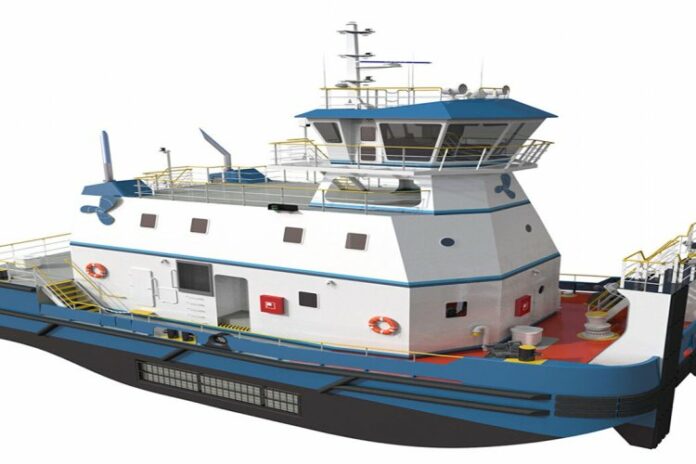
A new fleet of innovative diesel/battery electric pushboats for Hidrovias do Brasil S.A., a leading South American logistics operator, have recently begun construction in Belov Engenharia Shipyard, in Salvador, Brazil, to a design from Robert Allan Ltd. of Vancouver, BC, Canada.

The vessels will provide terminal assistance on the Amazon River system, with delivery of the first vessel in 2022.

These pushboats are expected to be the world’s first battery electric shallow draft pushboats when they begin operating in the Amazon River system.

These interesting new vessels are of the RApide 2000-E design, fitted with a DC grid diesel-battery electric propulsion system, two diesel generators, two L-Drives and a large battery bank (600 kWh initial installation, with capability to scale up to 1800 kWh). The pushboat is equipped with two L-Drive units, each with an input power of 350 kW. The propulsion system is diesel-electric to improve efficiency when operating in lower power modes. The vessel is certified as an inland navigating vessel by DNV.

The particulars of the RApide 2000-E are as follows:

  • Length overall: 20.4 m
  • Beam, moulded: 10.0 m
  • Depth, moulded: 3.2 m
  • Minimum operating draft: 2.2 m
  • Normal operating draft: 2.5 m

SeaCube selects Carrier Lynx Fleet solution for 2,000 refrigerated containers

0

As a result, SeaCube will be the first intermodal equipment leasing company to incorporate Carrier’s Lynx™ Fleet solution into its fleet with an initial deployment of 2,000 PrimeLINE™ refrigerated container units. Carrier Transicold is a part of Carrier Global Corporation, the leading global provider of healthy, safe and sustainable building and cold chain solutions.

The Lynx Fleet solution includes proprietary technology that monitors reefer unit performance and provides early warning actionable diagnostics and predictive analytics down to the level of the machine’s components. The Carrier Lynx Fleet system will provide much more detailed machine performance analysis capabilities compared to other telematics platforms on the market by using integrated sensor machine data feeds.

This digital engagement between SeaCube, a global leader in refrigerated equipment leasing and Carrier Transicold, will drive greater flexibility and data-rich intelligence reporting across the cold chain.

SeaCube describes itself as a technology thought leader in the industry and has a longer-term goal of offering telematics as a standard for leased refrigerated container units. The addition of Lynx Fleet allows for a data-driven leasing model, which leverages data and analytics on equipment health to extend asset life and optimize asset performance, which is another pioneering approach in this space.

Bob Sappio, CEO of SeaCube, said:

“This is an exciting step forward for SeaCube as we move toward realizing our vision of telematics as a standard within our reefer fleet. We are confident that the Lynx Fleet offerings will help drive improvements in our own operating metrics and resonate with our customers to help them achieve optimal reefer performance and act on data-driven insights.”

Lynx Fleet will offer prognostics and data analytics with features that provide differentiation such as:

  • Improved fleet uptime through unit health analytics and prognostics using Carrier-unique features with proprietary technology including machine sensor protocols.
  • Reduced operational costs and maintenance & repair expenses as result of optimizing performance with preventative maintenance platform features.
  • Incremental value through lower cargo spoilage and possible reduced insurance costs.

Kartik Kumar, Vice President and General Manager, Global Container Refrigeration, Carrier, said:

“We are confident that Lynx Fleet will enhance connectivity across the cold chain, increasing visibility, providing predictive analytics and driving faster data-driven decisions.”

The Lynx digital platform applies advanced internet of things (IoT) analytics, machine learning and various big data technologies to connect the cold chain in the cloud, automate key processes, and deliver real-time visibility and insights throughout the cargo’s journey.

Wärtsilä seeks breakthrough in clean propulsion as part of Finnish consortium

0

The technology group Wärtsilä is participating in a consortium of Finnish research organisations and leading companies researching means for developing radical new solutions for clean and efficient marine and off-road transport. The project is expected to run until spring 2023, and has been granted funding of EUR 7.9 million by Business Finland, the Finnish Government’s organisation for innovation funding and trade, travel and investment promotion.

Led by the University of Vaasa, the Clean Propulsion Technologies project addresses tightening emissions legislation and ways by which new technologies can be employed to create sustainable propulsion solutions. Wärtsilä’s depth of experience and technical know-how in propulsion systems will play a central role, in particular in establishing a technology roadmap for directing future R&D efforts.

The most significant technological aspects of the anticipated project outcome are a ground-breaking medium-speed engine working in fuel-flexible Reactivity Controlled Compression Ignition (RCCI) mode, the further development of dual-fuel engine technology to enable a drastic reduction in methane emissions at low and partial load, selective catalytic reduction (SCR) control technology improvements, and the development of machine learning control technology for greater accuracy in engine automation and control. The research will further focus on developments in advanced after-treatment measures aimed at lowering greenhouse gas emissions by at least 20 percent. Designing and implementing an optimal predictive powertrain control architecture for hybrid propulsion is also on the agenda.

Maciej Mikulski, Associate Professor from the University of Vaasa, says:

“The common goal is to secure the Finnish powertrain industry’s position as a global technology leader by creating a common vision and sustainable business solutions. Wärtsilä is a leading powertrain equipment manufacturer and their expertise, supported and strengthened by that of the other project partners, will play an important role in tackling growing global competition.”

Juha Kytölä, Director, R&D and Engineering, Wärtsilä Marine Power, says:

“A decarbonised future is essential for the marine industry, and Wärtsilä is an established thought leader as we work towards this target. This project will help us in this by developing concepts, together with other technology leaders, that will make propulsion even more sustainable than it is today.”

The Clean Propulsion Technologies project will promote efforts to develop highly promising, innovative powertrain technologies for new products. These developments will be aimed at ensuring compliance with emission and greenhouse gas regulations in the marine and off-road transport segments by 2035. In the longer-term, the goal is to develop a technological roadmap for compliance with the IMO’s greenhouse gas emissions reduction target by 2050.

In addition to the University of Vaasa and Wärtsilä, the other project partners are Aalto University, Åbo Akademi University, Tampere University, VTT Research Centre of Finland, Lappeenranta-Lahti University of Technology, AGCO Power, Meyer Turku, Napa, Dinex Finland, Geyser Batteries, Proventia, Bosch Rexroth, and APUGenius.

Extending Valhall’s lifetime with well plugging

0

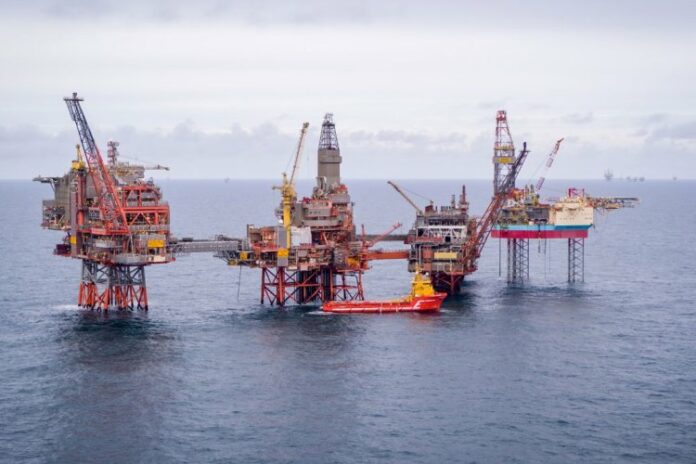
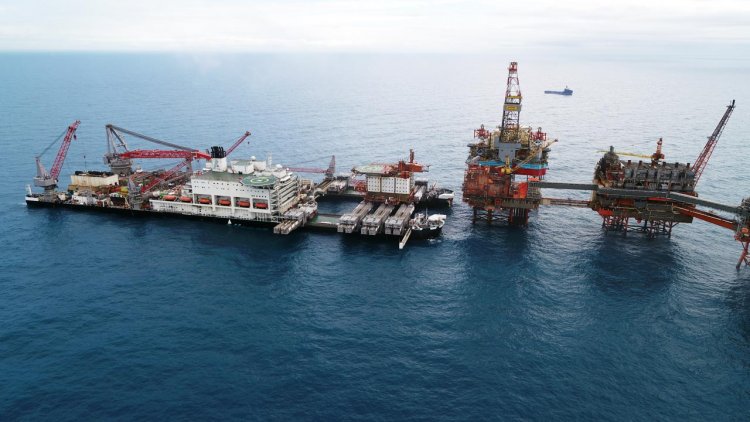
Plugging of wells at the Valhall field centre has been completed six years earlier and more than five billion Norwegian kroner cheaper than originally planned. The work has also been delivered without serious incidents. 

The Maersk Invincible drilling rig left the Valhall field centre last week. That marked the end of several years of plugging operations on the field. A total of 30 old wells from the original drilling platform (DP) have been plugged over the course of three campaigns since 2014.

Aker BP is operator and Pandion partner in Valhall. First oil flowed from the field in 1982. Since then, over a billion barrels of oil equivalent have been produced from the area – more than three times as much as expected at start-up.

Ole Johan Molvig, Valhall Asset Manager, said:

“Plugging wells from the shutdown drilling platform is an important part of the Valhall modernisation. There are considerable remaining resources in the Valhall area, and our vision is to produce from the field up to 2050. We will maximise value creation from the area through new wells, flank developments and new technology.”

The original QP accommodation platform was removed in the summer of 2019. Over the course of the next few years, the original drilling platform and process platform will also be removed from the field centre. The original Hod wellhead platform, south of the Valhall field, will also be removed and replaced with a new.

The first plugging campaign in 2014-2016 was conducted by the Maersk Reacher rig. Maersk Invincible carried out the last two campaigns in 2017-2018 and in 2020-2021.

Originally Aker BP estimated the operational time of the plugging campaigns to 10 years at a cost of NOK 15.5 billion. The work was completed in 4 years and at a cost of NOK 10.1 billion.

Tommy Sigmundstad, SVP Drilling and Wells in Aker BP, said:

“The work to plug the wells has been a success through three major campaigns. The plugging has been carried out safely and efficiently. We have an unrelenting focus on improvement, and that has paid off in shorter operation times and reduced costs. Our alliance partner Maersk Drilling has been a key factor in all the campaigns.”

The last plugging campaign on Valhall was delivered by the jack-up rig alliance between Maersk Drilling, Halliburton and Aker BP from September to March.

The original plan was to spend 72 hours per well to plug the top well section. During this winter, the alliance reduced this to as little as 33 hours. Overall, the alliance has delivered the entire scope of work more than two months faster than planned. Because of this, the Valhall asset team was able to rapidly mature a decision on new wells on Valhall Flank North, which means more work for the alliance.

Penta-Ocean and DEME establish JV to develop Japan’s offshore wind industry

0

In Japan, aiming for the achievement of carbon neutrality by 2050, the Japanese government has set targets for the development of 10 GW of offshore wind power by 2030 and 30-45 GW by 2040.

In accordance with Act of Promoting Utilisation of Sea Areas for Renewable Energies, the public tender for the selection of developers has begun in the 1st round promotion zones in the general sea area, and the clarification of the government’s target is expected to accelerate the construction of offshore wind farms.

In March 2020, Penta-Ocean and DEME Offshore signed a memorandum of understanding to collaborate in the field of offshore wind power construction in Japan, and have been promoting technological exchanges. The two companies have agreed to establish a joint venture company by June this year. The investment ratio will be 51% by Penta-Ocean and 49% by DEME Offshore.

The new company will own a foreign-flagged offshore installation vessel upgraded to the one equipped with a 1,600t lifting capacity crane, which will be changed to a Japanese-flagged vessel by the spring of 2025. As a result, Penta-Ocean will own three offshore installation vessels, including CP-8001, a vessel equipped with an 800t crane completed in 2019, and CP-16001, a vessel equipped with a 1,600t crane that is currently under construction jointly with Kajima Corporation and Yorigami Maritime Construction Co., Ltd.

Niels van Berlaer, Business Unit Director Asia-Pacific DEME Offshore, comments:

“These complex conditions often mean that drilling expertise is necessary at offshore wind farm locations. But both companies have these skills in-house, given their dredging activities. By bringing these two leading companies together, we believe we can make a significant contribution to the long-term development of the offshore wind sector in Japan. Demonstrating our confidence in the vast potential of the Japanese market, and our willingness to support the sector, we are also considering bringing DEME Offshore equipment into Japan.”

Tetsunori Ohshimo, Senior Managing Executive Officer, Head of Offshore Wind Farm Business Division Group, Penta-Ocean, emphasises:

“The new JV company will be a leading specialised offshore marine engineering contractor in Japan, combining our extensive experience and advanced technologies both in Europe and Japan. I am confident that the collaboration between the two companies will contribute greatly to the construction of offshore wind farms and we have the capabilities needed to tackle Japan’s challenging metocean and seismic conditions, as well as the complex seabed conditions.”

European TSOS launch Eurobar initiative for standardised offshore grids

0

Offshore power grids that link wind farms and several countries belong to the future. The KF – CGS between Germany and Denmark with the Baltic 1 and 2 wind farms is a blueprint for such developments.

Seven European transmission system operators have signed a Memorandum of Understanding for the launch of Eurobar, an initiative for interconnecting offshore wind platforms across Europe. The aim of Eurobar is to efficiently and securely integrate offshore wind power into the European power grid, starting from current regulation and projects (e.g. point-to-point connections) and prospectively evolving to an interlinked offshore network or “busbar alike system”. The concept is modular and is designed to be implemented autonomously by international partners. In that regard, striving for international standardisation of interfaces and technology is key.

Offshore wind energy plays a key role in the European Union’s striving for climate neutrality. The EU Commission projects an installed capacity of up to 300 GW of installed wind power by 2050 in order to reach the climate goal of the Paris agreement. European TSOs have already shown a shared commitment for a sustainable and reliable integration of offshore wind energy. The Eurobar initiative gives additional proof of this commitment.

Marco Nix, CFO of 50Hertz and responsible for offshore activities:

“Our completed Combined Grid Solution – Krieger Flak project together with Energinet, which involves three offshore wind farms and two countries, points the right way. We want to build on this and jointly implement the Bornholm Energy Island project if it is economically and technically feasible. This would then be the second electricity hub in the Baltic Sea and a blueprint for electricity grids at sea.”

Eurobar aims to support Europe and its TSOs in the secure and efficient connection of offshore wind farms by striving for standardisation of interfaces and technology, reducing the environmental impact as well as interconnecting offshore wind clusters. Thus, the Eurobar initiative’s mission is to develop and implement a joint approach for offshore infrastructure systems connecting the future offshore capacities to Europe’s transmission system. Moreover, it follows the idea that interfaces will be standardised for the upcoming generation of offshore connection technologies, making them “offshore grid ready”. 

The parties highlight that these measures can be taken step-by-step and will be implemented when economically sound and technically needed.

EUROBAR PARTNER:

  • 50Hertz Transmission GmbH, Germany
  • Affärsverket svenska kraftnät (Svenska Kraftnät), Sweden
  • Amprion GmbH, Germany
  • RED ELÉCTRICA DE ESPAÑA, Spain
  • Réseau de Transport d’Electricité (RTE), France
  • Statnett SF, Norway
  • Terna – Rete Elettrica Nazionale Società per Azioni S.p.A. (Terna S.p.A.), Italy

Port of Antwerp expands its fleet with energy-efficient tugs

0

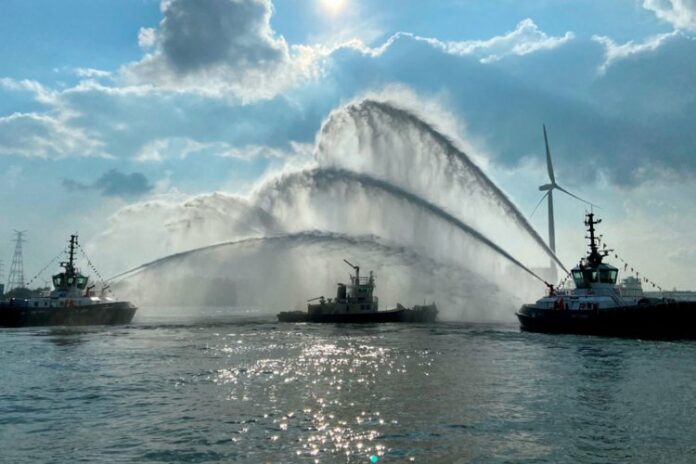
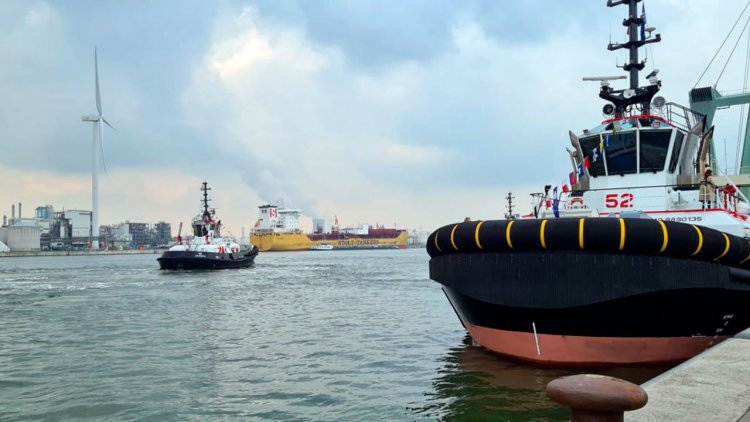
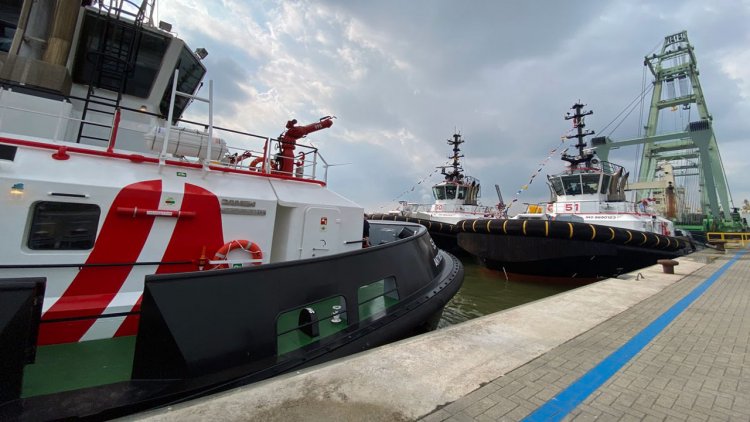
This expansion forms part of the renewal and greening of the fleet, in which Port of Antwerp is focusing on the introduction of sustainable and energy-efficient vessels.

In 2020, 14,000 seagoing vessels and 57,000 inland navigation craft called at the port of Antwerp. To guide all those vessels safely and smoothly from the locks to their moorings and vice versa, Port of Antwerp carries out 19,000 towing operations behind the locks every year, both on the right and the left bank. In order to bring all those towage tasks to a successful conclusion, Port of Antwerp has 18 operational tugs and 250 colleagues on standby 24/7, 365 days of the year.

In September 2020, Port of Antwerp purchased its first RSD tug from Multraship NV and this was followed by the purchase of two additional vessels. RSD stands for Reversed Stern Drive and means that the tug was designed according to the double-bow principle. This allows it to be used dynamically as a front and rear tug. What is more, the tug is more energy-efficient thanks to its specific design and is equipped with a nitrogen oxide filter to comply with IMO Tier III regulations. The new tugs were designed by the shipbuilder Damen.

 
In order to prepare the crew and technical staff for the arrival of these new vessels, they received intensive training lasting several months. That training consisted of a nautical part concerning learning to sail with rudder propellers and a technical part concerning knowledge of ship systems on board, maintenance and troubleshooting. This intensive and sustainable training was internally driven and externally facilitated by Multraship NV and Damen.

Port of Antwerp manages a fleet of 32 vessels, consisting of tugs, dredgers and support vessels. This fleet is responsible for almost 85% of Port of Antwerp’s total CO2 emissions. In order to minimise that impact, a multi-year project to renew, green and optimise the fleet was set in motion. In addition to purchasing new tugs, the company is also looking at data in order to improve its processes. One of the ways it is doing this is by collaborating with partners such as Optiport, which developed a tool to optimise the planning of towage tasks, and Cognauship, which will work on the consumption of Port of Antwerp’s own tugs.

Jacques Vandermeiren, CEO Port of Antwerp:

“Port of Antwerp aims to be a climate neutral port by 2050. In our role as operator we are investing in this energy transition. The purchase of these vessels is part of the renewal and greening of our fleet, in which we focus on sustainable and energy-efficient vessels.”

Rob Smeets, Chief Operations Officer Port of Antwerp:

“Over the past few years, a lot has changed and a lot of hard work has gone into our operational department. The launch of Vessel Traffic Services (VTS), new tugboats, soon to be hybrid enforcement vessels, … These are all strong achievements that we have been able to realise thanks to the commitment and enthusiasm of all our colleagues.”

Port Alderman Annick De Ridder:

“By expanding our fleet, we are continuing our efforts to ensure that our services are operational 100% of the time, while seeking to pave the way towards sustainable shipping. As the Port of Antwerp, we are setting a good example by taking a major step towards making our own tugs greener. In the near future, we will also experiment with tugs powered by renewable methanol and hydrogen.”