-6.8 C
New York
Home Blog Page 640

Crowley completes first U.S. design for fully electric tug

0

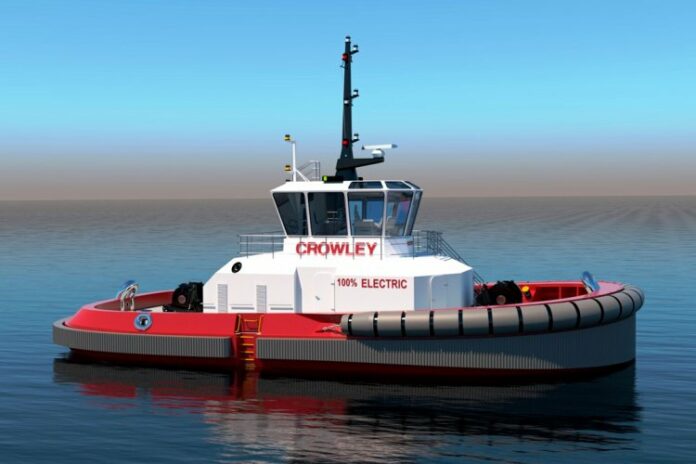
Crowley Engineering Services has completed the design of the first fully electric U.S. tugboat with autonomous technology — providing operators a sustainable and high-performing solution for ship assist and harbor services in any port.

The Crowley design, powered by the expertise of recently integrated subsidiary Jensen Maritime, leverages a large electric battery system and power saving technology to operate in a fully electric mode while producing zero air emissions or greenhouse gases. The 82-foot tug will provide 70 short tons of bollard pull, featuring an Azimuthing drive propulsion system with two 1,800 kW motors and a 6 MWh battery.

The design also supports fully customizable features to meet the vessel design requirements with the future in mind. The platform design can be adjusted for alternate power capacities suitable for a standard hybrid framework if desired. The fully modular batteries allow for upgrades as electric technology changes. In addition, Crowley has developed an onshore charging station to fully support charging and reliable performance at the home port.

Ray Martus, vice president, Crowley Engineering Services, said:

“Crowley’s design provides operators the tugboat solution to continue serving ships quickly and powerfully, while reducing their environmental impact by eliminating a carbon footprint. This new design sets the standard for innovation by showing that sustainability and power can work together seamlessly in our maritime industries.”

With no exhaust stack, the tug has 360 degrees of visibility from the pilot’s station, allowing the operator to see without obstruction. The electric tug has also been designed for future autonomous operation to increase the safety and efficiency of the operation including integrated automation and control systems. The intelligent maneuvering and control system offers more efficient vessel operations and allows masters to focus holistically on the overall control and positioning of the vessel in increasingly busy harbors.
DEME orders seventh Alewijnse AIViVi digitalisation solution in two years

0

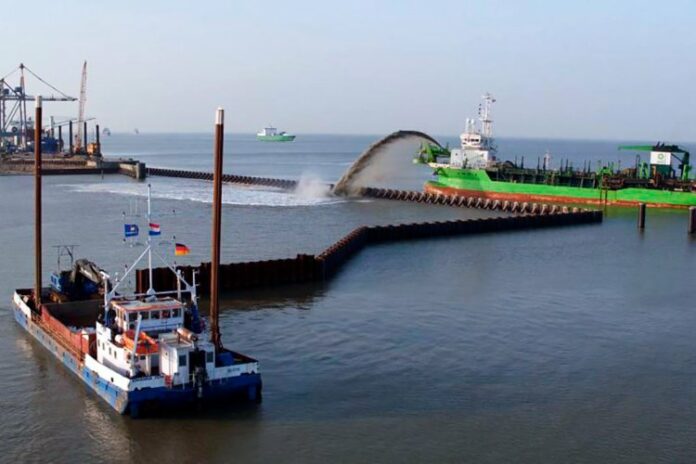
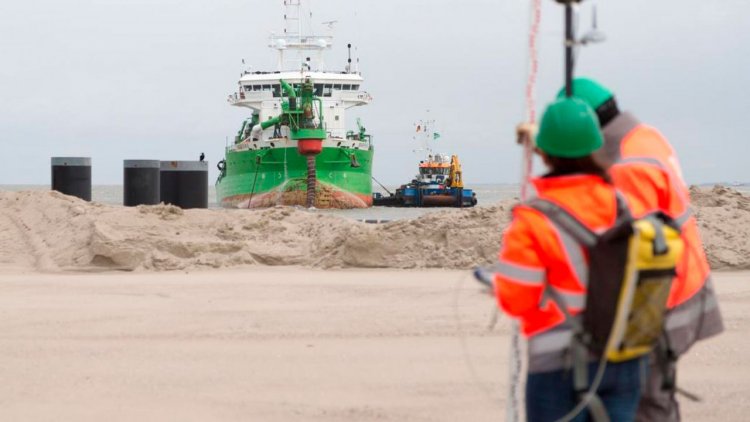
Alewijnse and DEME Group have signed their seventh contract in just two years for the supply and installation of an Alewijnse virtualisation and visualisation (AlViVi) platform, on board another DEME trailing suction hopper dredger.

DEME and Alewijnse have to date successfully completed over twenty such projects over the past five years.

AlViVi is an innovative control system jointly developed by Alewijnse and DEME to enable the faster and more efficient development and maintenance of IT systems on board vessels and offshore installations. The solution is based on a central, redundant server system that virtualisates all dredging process-related data. The result is that the data generated by the systems centralised within AIViVi can be visualised and manipulated from any connected screen onboard the ship. This means that the innovative platform replaces around 75% of the computers, keyboards, video and mouse (KVM) hardware and significantly reduces the cabling requirements.

The AIViVi digitalisation solution is already up and running on six trailing suction hopper dredgers in the fleet of the DEME Group. 

Alewijnse and DEME Group have been working together intensively since 2015 on automation and electrical installation solutions for DEME’s dredging fleet. Alewijnse closed the contract for this latest order due to its proven high quality of service, expertise and performance combined with previous successful implementation of the technology on other DEME dredgers and offshore vessels. 

Previously projects include the PLC refit and development of dredge application solutions on board the TSHDs Nile River, Lange Wapper and Uilenspiegel; as well as a new alarm and monitoring system on board the Nile River and an upgrade of the ADLS and ASTS dredging systems on board the TSHD Mellina.

DEME and Alewijnse also work closely on solutions for offshore (wind) vessels. Joint projects have included the supply and installation of an innovative and intuitive vessel management system for the helicopter deck of jack-up vessel Apollo, the electrical outfitting of the cable-layer Living Stone and the development of two advanced QA Bolt Tension Logging systems for the installation of wind turbines.

BV conducts successful proof of concept for corrosion detection powered by AI

0

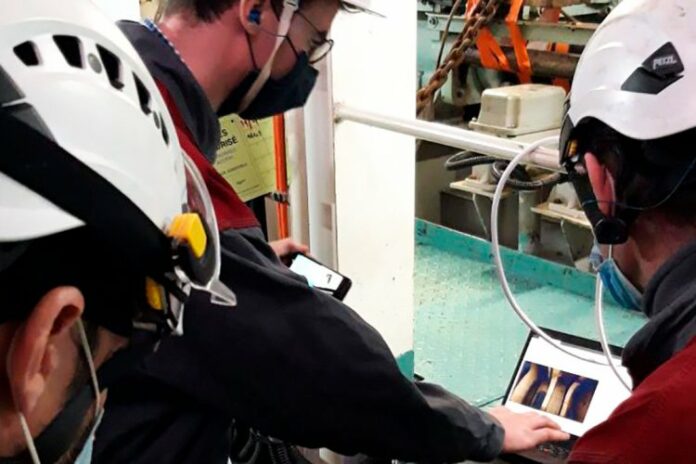
Bureau Veritas (BV) has successfully proven the value of deploying its artificial intelligence (AI) solution for corrosion detection during a hull inspection of a water ballast tank on a bulk carrier by an aerial drone. The test was conducted in partnership with the RIT operator, MaDfly Marine Drone Services, in Dunkirk (France).

Bureau Veritas successfully tested the use of the AI solution in real survey conditions. During the hull inspection, Bureau Veritas confirmed the value of the solution to support the decision of the surveyor during his general visual inspection and close-up survey of the hull in a number of important ways:

  • Real-time information: capacity of the application to provide results on the video in real-time
  • Offline: capacity of the application to run offline without any connection to internet
  • Real survey conditions: capacity of the application to be deployed on the field with the computing capacity of a normal computer

Corrosion represents one of the largest through-life cost component of ships. Ship owners and operators recognize that combating corrosion significantly impacts the vessels’ reliability, availability and through-life costs. Through periodic surveys, Classification surveyors assess the severity of the corrosion on hull structure and monitor its evolution during the entire lifecycle of the asset to decide when some steel needs to be replaced in order to maintain the structural integrity of the hull.

This Proof of Concept is a first step for Bureau Veritas to enable the ship-owners and ship-managers to anticipate the necessary repairs. Moving forward, BV will further improve the solution and include new functionalities leveraging its surveyor’s experience and data collected from digital technologies such as Remote Inspection Techniques.

With a more holistic perspective, this development is a continuation of BV’s Digital Classification program that aims to transform its Classification operating model through 3D Classification, Remote & Augmented surveys and Predicted and optimized survey schemes.

Laurent Blanc, Senior Vice President Technical & Operations Bureau Veritas Marine & Offshore, said:

“Digitalization is changing our daily lives and the usage of AI in the shipping industry can make a real difference, helping the industry to be more effective with improved inspection standards and maintenance techniques. The ambition for Bureau Veritas is to develop an end-to-end solution that will support ship-owners and ship-managers in anticipating repairs and better maintaining the hull condition of the ship. It will also support BV’s team of surveyors by building their collective experience and knowledge around corrosion detection underpinned by AI solutions.”

Alfa Laval starts testing methanol fuel cell systems for sustainable marine power supply

0

Alfa Laval will start testing an innovative marine fuel cell system in corporation with Blue World Technologies and some major players in the marine industry. Testing will take place at the Alfa Laval Test & Training Centre in Denmark. It will use methanol as fuel and explore the technology’s potential as a source of marine fossil-free auxiliary power systems. The goal is to contribute to the industry’s transition towards decarbonatization.

The International Maritime Organization (IMO) targets a 50 percent reduction of vessel-related greenhouse gas emissions by 2050. To meet the long-term target of decarbonization, the industry must shift towards new fuel types and technologies.

The project is a joint effort between Alfa Laval and the fuel cell maker Blue World Technologies, together with DFDS, Maersk Drilling and Hafnia. The aim is to develop, test and verify a highly efficient fuel cell solution that would give marine vessels a realistic alternative to combustion-based auxiliary power in the near future. The fuel cell system will use renewable, carbon-neutral methanol as fuel, enabling clean operations with very limited emissions. Methanol is one of the most promising fossil-free fuels available. The test period is expected to be completed within one year.

Sameer Kalra, President of the Marine Division, says:

”We believe that fuel cell systems will have a larger role to play in the future X-to-Power landscape. However, there are a number of potential fuel (X) pathways, so we need to have a broad perspective on this area. This collaboration includes major partners who each bring in unique expertise, and is another example of Alfa Laval’s commitment to develop viable and sustainable X-to-Power solutions for our customers.“

Equinor: Welding quality of Johan Castberg hull

0

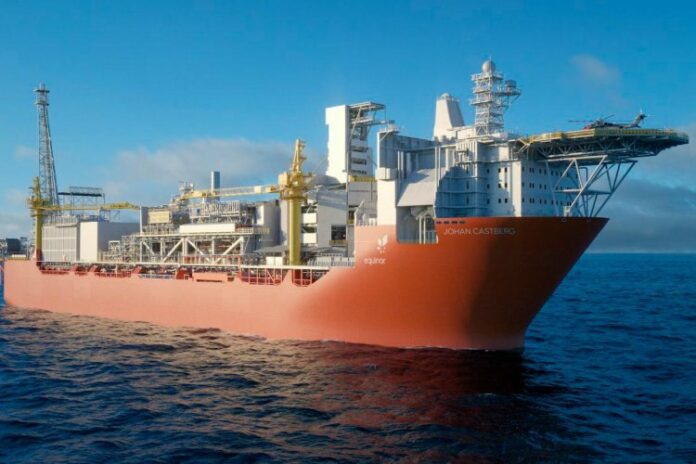
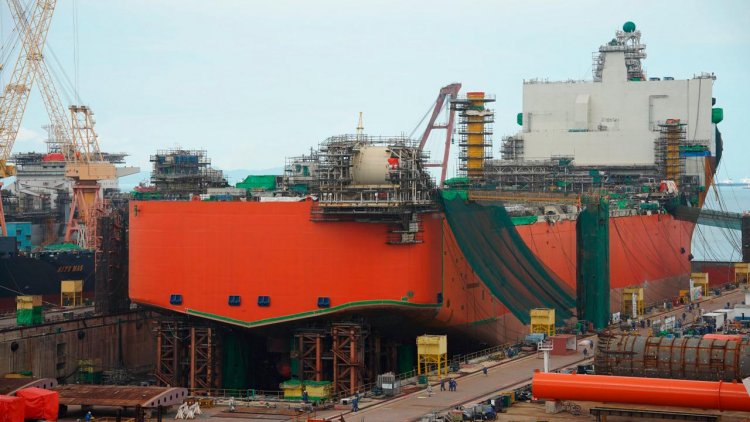
An in-house investigation team from Equinor has studied the deviation in quality of welding and inspection of the Johan Castberg production vessel currently under construction at the Sembcorp Marine yard in Singapore. Extensive work is being carried out to quality assure and cross-check welds and repair welding defects, to ensure that the vessel meets applicable safety and integrity requirements before leaving the yard.

During construction of the hull for the Johan Castberg production vessel at Sembcorp Marine in Singapore, Equinor has revealed quality deviations regarding both welding and welding inspection.

Geir Tungesvik, Equinor’s senior vice president for project development, says:

“Safety is Equinor’s top priority. We are currently carrying out extensive cross-checking and repair of welds to ensure that the Johan Castberg production vessel meets the safety and integrity requirements. When Johan Castberg comes on stream, there should be no doubt that the vessel is safe.”

The yard is responsible for correcting all deviations in quality and costs related to repair of welding defects are covered by Sembcorp Marine, according to the contract. The cross-checks and improvements are almost completed and are followed up closely by Equinor.

Tungesvik says:

“To ensure learning and avoid similar situations in other projects or at other yards, we have carried out a thorough investigation.”

The investigation team did not find any single event which can have been a direct cause for the welding quality issues, but have pointed out causal factors considered as having had an impact:

  • Contractor (SCM) failed to provide sufficient competent welders and welding inspectors for execution of the scope and did not sufficiently comply with processes and work routines for execution and follow up of welding and inspection activities.
  • Equinor has not sufficiently complied with its own work processes and procedures for risk management, construction management and follow-up at the construction site.
  • Even if Equinor’s follow-up team found signs of poor quality at an early stage, the extent and degree of seriousness were not understood. Sufficient measures were therefore not implemented.
  • Equinor’s follow-up team has not had enough personnel with experience and expertise in welding and welding control and has not utilized the company’s technical expertise in these areas early enough.

The investigation team has studied the causes of the deviations in welding quality in the period from January 2017 to October 2019. Based on this work the team recommends Equinor to improve:

  • the prequalification process for new suppliers
  • the practice for follow-up at construction sites, including risk management
  • the recruitment process for follow-up teams and team composition

When Equinor in the summer of 2019 cross-checked Sembcorp’s ultrasonic inspection of welds in the moonpool area of the hull by using own personnel, they discovered a higher failure rate than reported. It was then decided to cross-check all assembly welds. Unusually high failure rates in fabrication welds were revealed later.

Tungesvik says:

“We have therefore reassessed all structural welds on the hull. This is a very demanding job as the hull has already been built, however safety comes first. The vessel must meet the requirements incorporated in the plan for development and operation (PDO) and obtain a DNV class certificate before sailing to the field.”

A reassessment of all structural welds has been made and extensive cross-checking is being carried out by use of non-destructive testing (NDT), including ultrasound.

Tungesvik says:

“Equinor should have discovered the extent of welding defects earlier, however the hull is still in dock, allowing us to repair the defects before it is launched.”

The hull for the Johan Castberg production vessel is scheduled to be transported to Stord on board the Boka Vanguard heavy-lift vessel late 2021, however the Covid-19 pandemic still adds uncertainty to all schedules.

Wärtsilä navigation systems for 10 LNG gas carriers in Arctic operations

0

Wärtsilä Voyage has signed a contract to deliver the latest technology in radio and integrated navigation systems for ten icebreaking LNG-fueled tankers to be constructed for the Arctic LNG-2 project.

The order was placed in January 2021 and is now in process of execution, in partnership with Samsung Heavy Industries Co. Ltd shipyard. The new contract is an extension of the announcement made last summer, where Wärtsilä Voyage equipped five LNG carriers with integrated bridge systems under the same project.

The additional ten carriers would, therefore, be fitted with the same solutions: Wärtsilä Navi-Radar, Navi-Sailor and Navi-Conning.

The vessels will operate between the Yamal Peninsula in northwest Siberia, Russia and the main European Union ports. The crew is expected to face some of the most challenging weather conditions. 

Alex Van Knotsenborg, Director Global Sales, Wärtsilä Voyage, said:

“We will, therefore, be placing two bridges in the vessels’ superstructure, with one of them turned 180 degrees from the conventional position. This peculiar design will allow icebreakers to move both forward and aft, thus ensuring safe navigation under adverse Arctic climate conditions.”

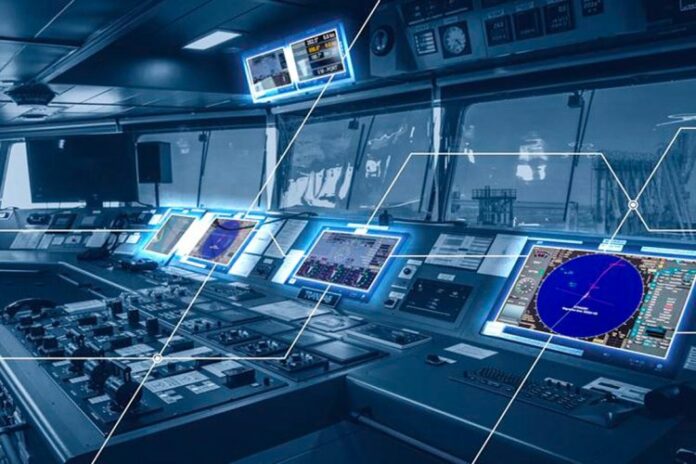
The contract includes the installation of a multifunction display system consisting of 12 workstations with a full set of applications, including an Electronic Chart Display and Information System (ECDIS), radar, conning navigation information display system, Bridge Alert Management System (BAMS), and Wärtsilä Navi-Planner for advanced route planning. The scope of Wärtsilä solutions also includes IRIDIUM satellite communication systems. The workstations are fully integrated into a unified system, which allows the main operational functions to be duplicated, thereby improving the safety of ice navigation. 

All the navigational systems to be installed come integration-ready with the Wärtsilä Voyage’s flagship Fleet Operations Solution — an industry-first cutting-edge technology that improves ship-to-shore synergies and operational efficiencies by integrating previously fragmented navigational services under one platform.

All the equipment installed onboard is fully compliant with the requirements of the Russian Maritime Register of Shipping (RS) and Bureau Veritas (BV). It is designed and tested to operate all year round in heavy Arctic conditions at temperatures down to 52°C below zero. The installation of the equipment is scheduled for 2022-2024.

The Arctic LNG-2 project is dedicated to the production, storage and shipment of liquefied natural gas (LNG) and gas condensate from the Salmanovsky gas field of the Gydan Peninsula. The project involves the construction of three LNG production lines with a capacity of 6.6 million tons per year, as well as stable gas condensate. The total capacity of three lines is projected to be 19.8 million tons of LNG per year. 

Since its inception in 1974, Samsung Heavy Industries Co. has successfully completed many of the world’s largest shipbuilding and offshore engineering, procurement, construction projects for polar regions. Amongst others, it has developed and built the world’s first Arctic shuttle tanker, Liquefied Natural Gas Floating Production Storage and Offloading units (LNG FPSOs), developed and constructed various Arctic icebreakers and container ships.

Nokia, Edzcom deploy 5G SA private wireless network to support Konecranes’ advanced R&D work

0

Nokia and Edzcom today announced that they will jointly deliver a 5G standalone (SA) private wireless network for Konecranes at its Hyvinkää smart factory in Finland.

Edzcom will deploy a private wireless and application platform based on the Nokia Digital Automation Cloud (DAC). The 5G network will enable Konecranes to research and develop digitalized factory and port solutions that leverage 5G’s high bandwidth and low latency for increased productivity, improved efficiency, and enhanced safety.

Juha Pankakoski, Executive Vice President for Technologies, Konecranes, said:

“Factories and ports are increasingly becoming digitalized and automated, and machine-to-machine communication is on the rise, creating an ecosystem of connected devices. Konecranes has been an industry leader in this development, and partnering with Nokia and Edzcom helps us extend that digitalization and technology leadership.

“Establishing a private 5G network in our Hyvinkää smart factory, with its low latency, high bandwidth and greater reliability, gives us the chance to accelerate automation even further, improving efficiency and opening up new use cases that can benefit both Konecranes and its customers.”

The 5G network will support trials across Konecranes’ Hyvinkää operations, incorporating its smart factory, research and development facilities, and test cranes. One use case example is the deployment of high-resolution wireless cameras to improve load handling safety, site security and operational integrity.

Stephan Litjens, Vice President Enterprise Solutions, Nokia Cloud and Network Services, said:

“Konecranes has been at the forefront of private wireless, introducing private LTE with Nokia and Edzcom four years ago to develop innovative solutions for its Lifting Businesses. By now deploying 5G to explore and develop its potential in factories and ports, Konecranes underscores its pioneering position in leveraging digitalization to enhance productivity and safety.”

Mikko Uusitalo, Managing Director, Edzcom, said:

“This project is a great showcase for smooth evolution to 5G private networking, with tight cooperation between Konecranes, Edzcom and Nokia. 5G will enable Konecranes to ensure greater capacity and high performance for its most ambitious digitalization strategies. We are excited to see how Konecranes will continue to innovate, and employ edge connectivity to boost operational efficiency and new solution development.”

Edzcom is experienced in designing, building, and operating private wireless network solutions in different locations and is supporting Konecranes on its journey deploying 5G. The European market leader in edge connectivity solutions, Edzcom understands the requirements for private networks involved when the aim is to accelerate automation smoothly even further. The reliability of the wireless network is business critical. Effective connections are needed when creating a platform for ecosystem of connected devices and innovating for future.

Nokia DAC is an application platform capable of providing high-bandwidth, low-latency, hyper-fast private networking, and local edge computing. Compact and easy to deploy, Nokia DAC comprises network and user equipment, a cloud-based operation monitoring system and industrial connectors that ease standard and industry-specific protocol connectivity. It also features a catalog of applications, that seamlessly integrates ruggedized routers, handhelds, and other wireless devices.

Nokia has deployed mission-critical networks to over 1,550 leading customers in the transport, energy, large enterprise, manufacturing, webscale and public sector segments around the globe. Nokia has pioneered the private wireless space and is the worldwide leader with over 260 large enterprise customer deployments, of which more than 40 incorporate 5G.

Incat Crowther to design a 53m catamaran passenger ferry for Azam Marine

0

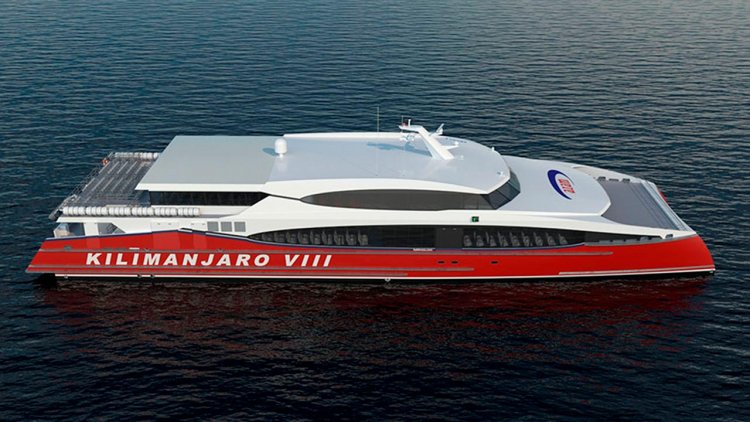
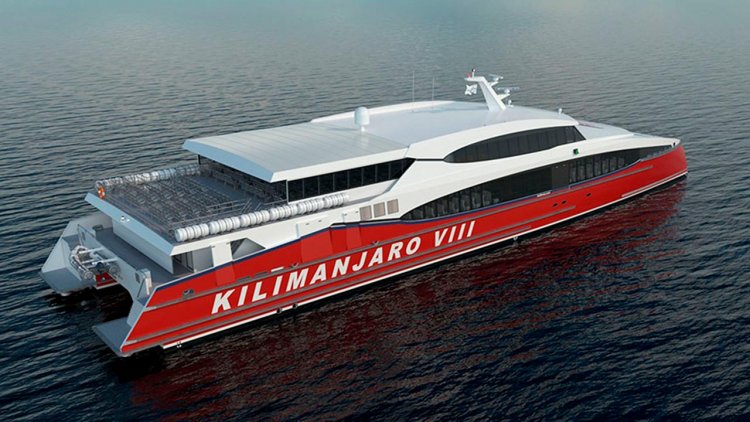
Incat Crowther has announced a contract to design a 53m Catamaran Passenger Ferry for Azam Marine of Tanzania, Africa, to be named Kilimanjaro VIII.

Kilimanjaro VIII will continue the use of the operator’s trademark parallel boarding system, whereby five ramps per side load passenger and cargo in segregated flows. VIP and Royal Class passengers board into a discreet stair tower directly to the upper deck cabin, whilst economy passengers load separately aft and midships. The fifth ramp is dedicated to luggage trolley movements.This well-proven boarding system ensures passenger classes and luggage trolleys remain separated, reducing turnaround time and improving safety, whilst providing exclusivity for premium passengers.

The new design will seat 340 passengers in its main deck economy cabin whilst the mid-deck cabin seats 36 VIP passengers and 12 Royal Class passengers in full lie-flat seats. The remainder of the mid-deck seats 266 economy passengers.

The luggage room houses up to 10 tonnes of luggage and cargo, whilst IMO HSC code-compliant stability enhances her safety credentials.

Kilimanjaro VIII will feature a modern evolution of the fleet’s style, with an edginess to her lines and a long, sleek profile. Combined with the introduction of a reverse-bow hull configuration, the vessel offers passengers a state-of-the-art ride.

The vessel will be powered by a pair of Cummins QSK95-M main engines. These will be rated to deliver more power to carry the increased payload over Kilimanjaro VII, which was the first fast passenger vessel to utilize this configuration. The large twin engine solution is an effective way of providing more speed and low fuel burn whilst avoiding the through-life cost and complexity of a four-engine power train. Engine room accessibility is improved over a four-engine arrangement, and maintenance and operational requirements are reduced. Additional dividends are realized in the routing and a reduction in the duplicity of systems.

Kilimanjaro VIII will be the 11th Incat Crowther-designed vessel for the operator and the 8th built by Tasmanian builder Richardson Devine Marine. Not only is the newbuild a sign of increased post-COVID confidence in the passenger market, it’s an ongoing demonstration of Azam’s confidence in the designer and builder.

Gulf of Guinea remains world’s piracy hotspot in 2021, according to IMB’s latest figures

0

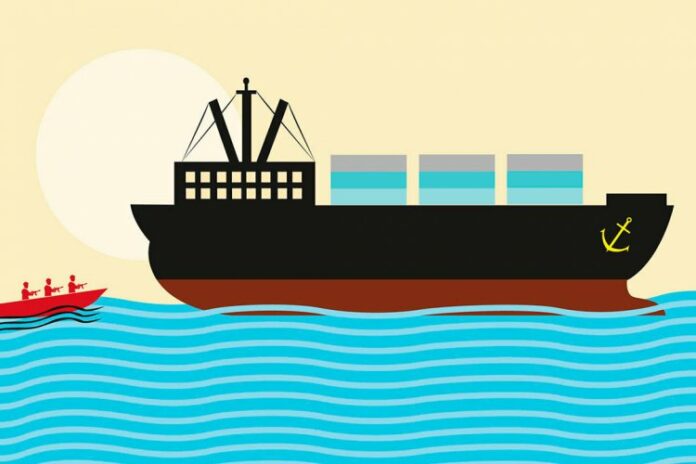
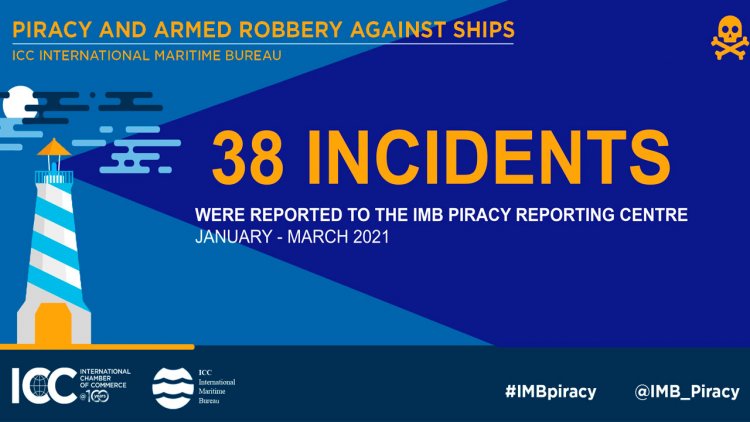
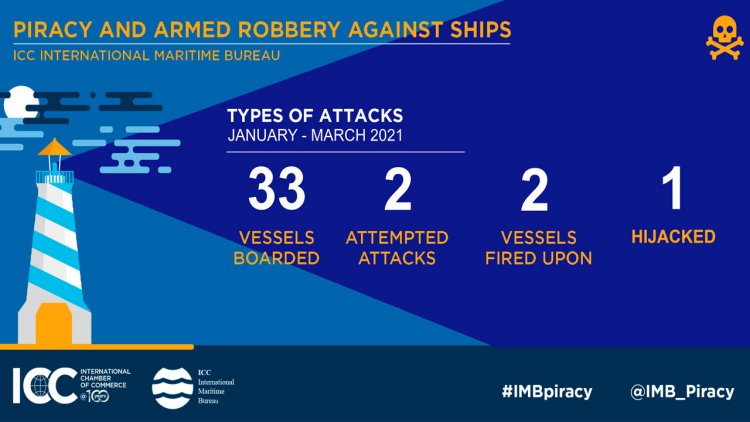
IMB’s latest global piracy report records 38 incidents since the start of 2021 – compared with 47 incidents during the same period last year. In the first three months of 2021, the IMB Piracy Reporting Centre (PRC) reported 33 vessels boarded, two attempted attacks, two vessels fired upon, and one vessel hijacked.

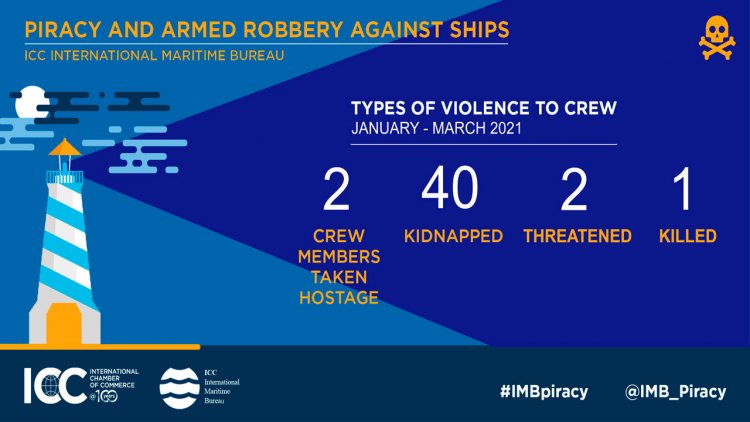
Despite a drop in the number of reported piracy incidents for Q1 2021, violence against crew is on the rise in comparison to previous years. Since the start of 2021, 40 crew have been kidnapped compared to 22 crew in Q1 2020. A crew member was also killed in Q1 2021.

The Gulf of Guinea continues to be particularly dangerous for seafarers with 43% of all reported piracy incidents occurring in the region. In addition, the region accounted for all 40 kidnapped crew incidents, as well as the sole crew fatality, according to IMB.

IMB Director Michael Howlett warns:

“Pirates operating within the Gulf of Guinea are well-equipped to attack further away from shorelines and are unafraid to take violent action against innocent crews. It’s critical that seafarers remain cautious and vigilant when travelling in nearby waters and report all incidents to the Regional Authorities and the IMB PRC. Only improved knowledge sharing channels and increased collaboration between maritime response authorities will reduce the risk to seafarers in the region.”

The furthest recorded kidnapping occurred on 11 March 2021 when pirates kidnapped 15 crew from a Maltese flagged Chemical Tanker, 212nm south of Cotonou, Benin. In another incident, a fishing vessel hijacked on 8 February 2021 was used by pirates as a mother vessel to facilitate other attacks. 

The IMB PRC commends the Coastal response agencies and independent international navies tasked in the Region for actively responding to reported incidents and encourages their continued efforts in making the GoG waters safer for the seafarers.

 During the first three months of 2021, there was only one incident of reported piracy around Somalia. A bulk carrier reported a skiff with armed persons and a ladder approaching it while underway in the Gulf of Aden. The onboard armed security team fired warning shots resulting in the skiff moving away.

Despite the decline of piracy incidents around Somalia and neighbouring waters, the IMB PRC encourages vessels to implement BMP5 recommended practices while transiting these waters as Somali pirates continue to possess the capacity to carry out attacks.

ICC Secretary General John W.H. Denton AO said:

“Seafarers are in many respects the unsung heroes of our global economy. Governments, businesses, and maritime response agencies must take appropriate measures to protect the lives and livelihoods of crew, so that we can ensure the uninterrupted free flow of goods throughout international supply chains.”

Ocean Infinity and Gregg Drilling announce joint venture

0

Marine robotics company Ocean Infinity and geotechnical drilling experts Gregg Drilling, a subsidiary of Alaska Native Corporation Sealaska, have formed a Joint Venture (JV) to provide geotechnical services to offshore markets in traditional and renewable energy field developments and cables.

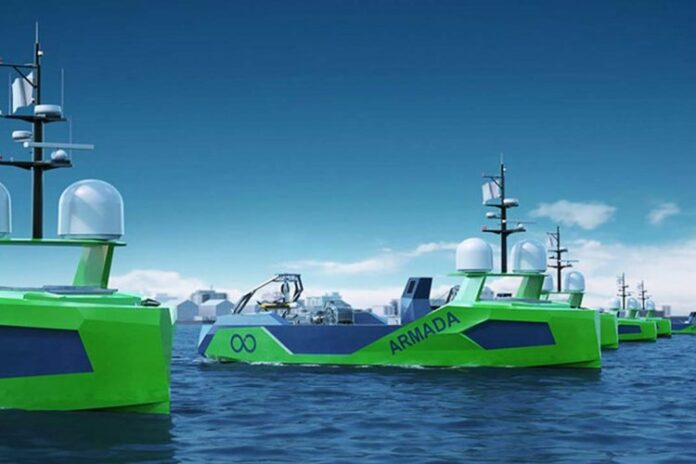
The JV combines the expertise and assets of the two companies and will see Gregg Drilling mobilise its seabed drills onto the Armada fleet of uncrewed and optionally crewed vessels ranging from 21m-78m in size.

Pairing Gregg’s deep-water geotechnical drilling capability with Ocean Infinity’s Armada geophysical fleet, and recently enhanced data analytics capabilities following the acquisition of MMT, will expand capabilities for both companies to complete offshore investigations globally. The JV will enable more sustainable underwater development, including geotechnical data collection, needed to support offshore wind anchor and foundation design.

Oliver Plunkett, Ocean Infinity’s CEO, said:

“Partnering with Gregg Drilling to further expand the capabilities of our Armada fleet of vessels will enable us to provide full-service solutions to customers spanning geophysical and geotechnical tasks.”

“Gregg Drilling and its parent company Sealaska share our vision for reducing the environmental impact of offshore activities. This agreement marks another step on our journey to transform marine operations, and we are excited to be doing so in partnership with another innovative team that shares our passion for sustainability.”

John Gregg, President of Gregg Drilling, said:

“We are pleased to partner with Ocean Infinity to provide an industry-leading geotechnical offering. Ocean Infinity’s Armada fleet has revolutionised the outlook for marine operations through its uncrewed capability and its unmatched focus on sustainability. We look forward to working together to best use the expertise of both companies.”

Sealaska is an Alaska Native regional corporation for Southeast Alaska formed under federal law in 1971. With more than 23,000 shareholders of Tlingit, Haida and Tsimshian background, its purpose is to strengthen its people, culture and homelands. Sealaska invests in and operates businesses that improve the health of our oceans, maintain healthy homelands in Southeast Alaska, and benefit shareholder communities.