-8 C
New York
Home Blog Page 638

Sanmar delivers second powerful modern tug to Canadian operator

0

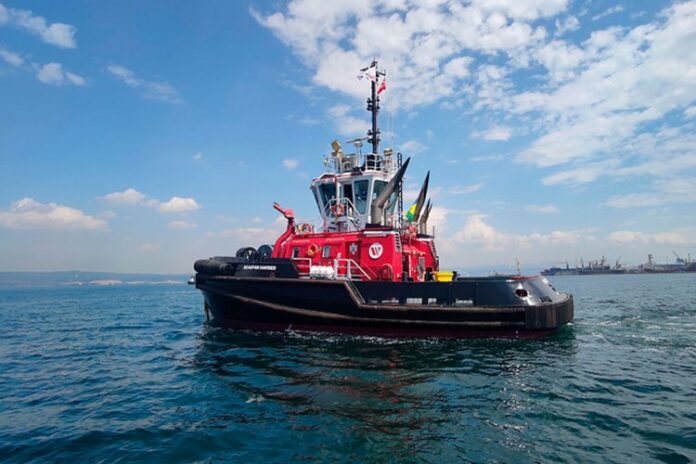
Built in 2016 at Sanmar Shipyards Altinova, Bogacay XI has been renamed Seaspan Harrier by its new owners and left Turkey for its new home on Canada’s west coast on 15 April. Seaspan acquired the tug’s sister vessel Bogacay Vlll, which it renamed Seaspan Raptor, towards the end of 2020.

Like its sister, Seaspan Raptor which was built in 2015, was initially operated by Sanmar in its own fleet. Also like its sister, it is making the 12,500 nautical mile journey from Turkey to Vancouver under its own steam.

Measuring 24.4m x 11.25m x 5.7m, the 312gt Seaspan Harrier and Seaspan Raptor are twin Z-drive, diesel powered tugs based on the exclusive-to-Sanmar RAmparts 2400 SX design from renowned Canadian naval architects Robert Allan Ltd.

Acclaimed for their manoeuvring ability, sea-keeping and stability performance, the Bogacay class tugs from Sanmar are designed for maximum efficiency in the performance of ship-handling duties for sea going ships.

Powered by two 2,240kW MTU engines and Kongsberg Z-drives, the high-performance tugs can achieve an impressive 75 tonnes of bollard pull and have a top speed of 13 knots. A fire-fighting pump driven through clutched flexible coupling on the front of the dedicated CAT C32 diesel has a capacity of 2,700m3/hour.

Special care has been taken with soundproofing throughout the vessels to improve crew comfort in a safe working environment. The captain and chief engineer’s cabins are above deck along with a mess/lounge and galley, WC and shower. Below deck are two double cabins, WC with shower and a laundry. High standards of comfort and quality throughout include teak imitating IMO-approved floor material. All accommodation space is heated, vented and air-conditioned. Seaspan Harrier and Seaspan Raptor are classed: ABS, +ABCU, +A1, +AMS, Towing Vessel, UWILD, QR.

Ruchan Civgin, Commercial Director of Sanmar, said:

“These are impressive tugboats in terms of performance and efficiency. They benefit from extremely high standards of design, build and outfitting. We are delighted that our friends at Seaspan, who we have had a good business relationship for many years, have added these powerful modern tugboats to their fleet. It is always gratifying when a client comes back for more.”

The Canadian operator has also previously bought the powerful 70 tonnes bollard pull ASD tugs Seaspan Kestral, Seaspan Osprey (2012), Seaspan Eagle (2011) and Seaspan Raven (2010) from Sanmar.
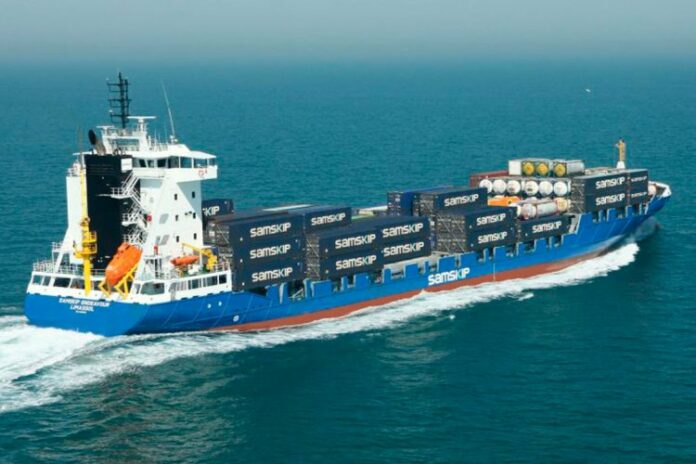
Samskip extends green marine fuels initiative in new commitment with GoodShipping

0

Samskip extends green marine fuels initiative in new commercial commitment with GoodShipping to lower carbon footprint

Global multimodal logistics company Samskip has increased its commitment to greener shipping through a new formal agreement with sustainable cargo initiative GoodShipping to run part of its fleet on marine biofuels and significantly reduce carbon footprint. The initial usage of biofuels will enable a CO2-reduction of up to 45%, with plans to scale up to a CO2-reduction of up to 80% for any given voyage later in 2021. This initiative underlines the company’s longstanding dedication to take a leading role in reducing CO2 emission within the sea freight industry. 

The Samskip Endeavour, an 800TEU capacity containership which normally runs on traditional fuels, had the honour to kick-off the partnership by using sustainable biofuels in its recent sailings. By bunkering sustainable biofuels, Samskip enables cargo owners to reduce their ocean carbon footprint significantly in their supply chains.

Two years ago, it was also the Samskip Endeavour that was the first ever vessel to be biofuel-bunkered through the GoodShipping initiative, demonstrating the viability of biofuels as a marine alternative to fossil fuels. Made from sustainable waste streams, the fossil-free bio-residual fuel equivalent product has proved to be a successful substitute for conventional marine fuels as part of the vessel’s operations between the Netherlands and Ireland.

Under the renewed agreement, also in partnership with GoodShipping, biofuels supplier GoodFuels is supporting Samskip’s plan to rapidly extend the use of biofuels on more of its vessels this year. GoodFuels’ second-generation sustainable biofuels consist of certified feedstock, labelled as waste or residue. There are no land-use issues, no competition with food production or deforestation during the production process.

Ásbjörn Gíslason, CCO and Deputy CEO at Samskip, says:

“Sustainability runs through Samskip as a core value from every perspective. Therefore, we take great pride in and welcome the collaboration with GoodShipping to strengthen our deep partnership, becoming one of their fulfilment and innovation partners. We always aim to build a better future and to leave a positive footprint on our planet. By playing a forward-thinking and pioneering role in the energy transition, our customers can now benefit from a simple and easy means of decarbonising their cargo streams. We get to pioneer advanced marine biofuels, and the environment benefits from an immediate carbon reduction.”

Katarin van Orshaegen, Commercial Lead at GoodShipping, says:

“This announcement marks yet another important milestone in our journey beyond the fossil default. Reducing fuel emissions and consumption is a vital next step for the maritime transport industry, so we are extremely pleased to have found a stable fulfilment outlet for our sustainable cargo streams with Samskip, deepening a long-term partnership that is helping to change the way our market thinks about future fuels.’’

Fugro awarded Jumbo positioning contract for deepwater Mero 1 offshore Brazil

0

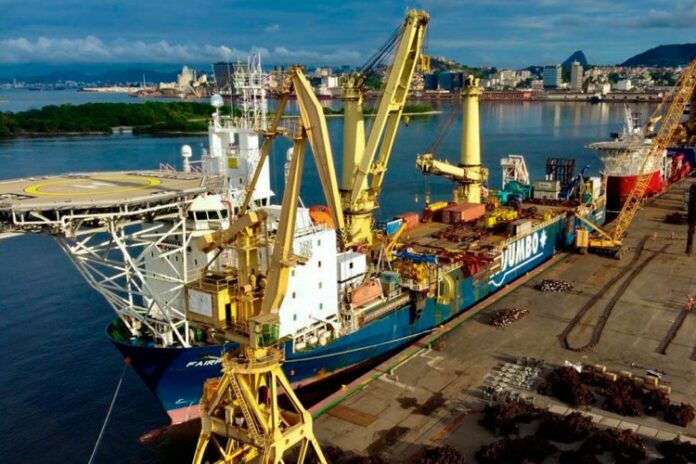
Fugro is providing positioning and construction support services for Jumbo Maritime on the Mero 1 deepwater field development located approximately 180 km off the coast of Rio de Janeiro.

Using their Starfix® Navigation Suite and augmented reality QuickVision® camera system, Fugro is supporting Jumbo in the safe and efficient installation of 35 subsea torpedo piles and 24 mooring lines down to water depths of 1980 m. This critical infrastructure will be used to anchor the Mero 1 floating production unit and associated equipment.

The work is being performed onboard Jumbo’s Fairplayer heavy lift crane vessel and is estimated to last 6 months. In addition to pre- and post-lay surveys of the piles and mooring lines, Fugro’s Starfix and QuickVision solutions will provide real-time positioning for subsea construction and installation activities without needing any hardware mounted on the subsea infrastructure, an approach which reduces risk, increases spatial awareness and streamlines workflows.

Rogerio Carvalho, Country Manager for Fugro in Brazil, said:

“Fugro’s global reach and advanced technology, combined with our resources and experience from the Netherlands and Brazil, were key to securing this contract. Having overcome many challenges in planning the operations for this project amid the constraints caused by Covid-19, we’re excited to now be supporting Jumbo on this important deepwater development.”

Mero field is under a Production Sharing Agreement with the Libra Consortium, which comprises Petrobras as the operator (40 % share), Shell Brasil (20 %), Total (20 %), CNODC (10 %) and CNOOC Limited (10 %). The consortium also includes Pré-Sal Petróleo S.A. (PPSA) as manager of the Production Sharing Contract.

Oil and gas discovery in the Norwegian Sea

0

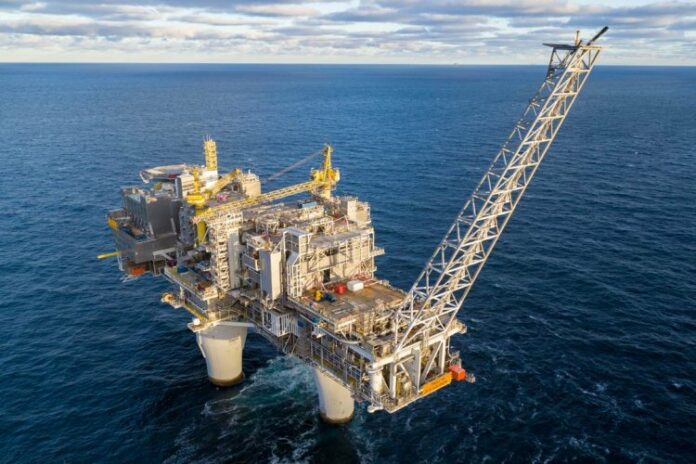
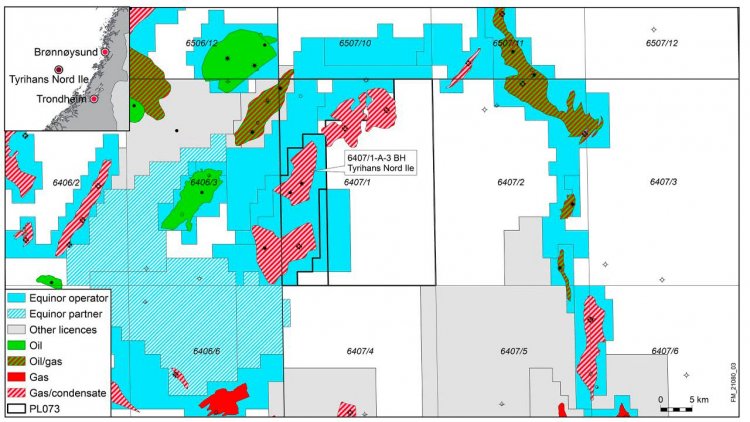
Recoverable resources are so far estimated at between 3.0 and 4.2 million standard cubic metres of recoverable oil equivalent, corresponding to 19 – 26 million barrels of oil equivalent.

Exploration well 6407/1-A-3 BH in production licence 073 was drilled from subsea template A at Tyrihans North. The Tyrihans field is located in the middle of the Norwegian Sea, some 25 kilometres south-east of the Åsgard field and 220 kilometres north-west of Trondheim. The licensees consider the discovery commercial and intend to start production immediately.

Nick Ashton, Equinor’s senior vice president for exploration on the Norwegian continental shelf, says:

“Thanks to the location we are able to put the discovery on stream over the Tyrihans field immediately, which will both ensure good profitability and low CO2 emissions from production.”

The purpose of the well was to prove petroleum in lower-mid Jurassic reservoir rocks (Ile and Tilje formations).

The well struck a gas column of about 43 metres and an oil column of about 15 metres in the Ile formation, including about 76 metres of moderate to good reservoir quality sandstone. In the Tilje formation moderate to good quality water-bearing reservoir was struck.

The well was not formation tested, but data acquisition and sampling took place. This is the sixth exploration well drilled on the Tyrihans field, and the fifth exploration well drilled in production licence 73 awarded in the 5th licensing round in 1982.

The well was drilled to a vertical depth of 3998 metres below the sea level and a measured depth of 5332 metres. The well was completed in the Åre formation from the lower Jurassic period in 288 metres of water.

The pilot will be permanently plugged and abandoned.

Well 6407/1-A-3 BH was drilled by the Transocean Norge drilling rig, which will now continue drilling the producer 6407/1-A-3 CH on the Tyrihans field.

OFCO and Mammoet join forces to deliver turnkey logistical solutions

0

Abu Dhabi Ports’ offshore logistics service provider, Offshore Support and Logistics Services Company (OFCO – Offshore International), has announced the start of a collaboration with Mammoet United Arab Emirates, a branch of the global engineered heavy lifting and transport services company, as part of a newly signed Memorandum of Understanding (MoU) between the two organisations.

The integrated maritime logistics service provider OFCO, will work closely with the heavy lift and transport specialist Mammoet to create a unique integrated package of on and offshore turnkey transport and installation solutions for projects in the GCC.

Captain Maktoum Al Houqani, Chief Corporate Authority Officer and Head of Maritime Cluster, Abu Dhabi Ports, said:

“The newly-announced collaboration between Abu Dhabi Ports’ OFCO and Mammoet marks a critical milestone in Abu Dhabi Ports’ ongoing efforts to foster an integrated logistics ecosystem catering to our commercial and industrial customers’ every need.

“By combining each organisation’s expertise and resources, we can complement each other’s service offering and explore potential operational and logistical synergies, which would allow us to create an integrated, cost-effective solution for the major project market within the GCC and beyond.”

Initially targeting UAE-based projects with future ambitions to venture further into the GCC, OFCO and Mammoet will leverage their respective maritime, engineering, and logistical expertise, together with strategic positioning, infrastructure, and in-house assets, to create a joint value proposition that is both flexible and competitive.

This in turn will not only provide customers with a streamlined, flexible, and cost-effective solution for handling their heavy cargo transport needs but will also enable them to partner with a single service provider, rather than having to rely on several subcontractors to meet their supply chain requirements.

Commenting on the announcement, Paul van Gelder, Chief Executive Officer Mammoet added:

“At Mammoet, we always look for ways to improve the efficiency of projects for our customers. The strategic alliance with OFCO is a testament to that, as our collaboration will reduce the number of interfaces within the logistics chain of projects, enabling the planning and operations to be streamlined, and therefore realising the most efficient and cost-effective approaches.

Mammoet maintains the largest fleet of heavy lifting equipment in the world, and so is well-positioned to scale its service in response to any challenge. We look forward to bringing this enhanced offering to clients in the GCC, as part of this strategic partnership”.

Corvus Energy signs a Joint Venture Agreement with Sumitomo Corporation

0

The Joint Venture will do marketing, sales and after-service for Corvus Energy’s battery systems and fuel cell systems in Asian market, mainly in Japan.

The new company, Sumisho Corvus Energy Co., Ltd., will have a capital of 100 million yen and be owned 50% by Sumitomo Corporation and 50% by Corvus Energy. The headquarters will be in Tokyo.

Geir Bjørkeli, CEO of Corvus Energy, says:

“We are delighted to partner with Sumitomo Corporation. Sumitomo Corporation is one of the world’s largest traders of goods and services across many sectors and, through their operations, they are leading the world’s development and contributing broadly to society.”

Bjørkeli continues:

“The future of shipping is zero emissions of CO2, NOx, SOx and particulates, dramatically reducing environmental impact. Japan is an important market for Corvus Energy and a big part of our future growth strategy. Japan has already announced ambitious plans to become carbon neutral by 2050, and Sumitomo will be a valuable partner bringing zero emission solutions to the Asian market.”

Sumitomo Corporation and Corvus Energy have been conducting market research and sales expansion activities for maritime energy storage systems (ESS) in Japan and Asia since 2019. Sumisho Corvus Energy Co., Ltd. will sell Corvus Energy’s ESS and provide technical support after the delivery. Sumisho Corvus Energy Co., Ltd. will carry out sales activities for not only Japanese coastal vessels, but also ocean-going vessels leveraging the customer network of Sumitomo Corporation cultivated through its vessel trading business and vessel-owning business. The joint venture Sumisho Corvus Energy Co., Ltd. will be effective from April 2021.

MPA inks collaborations with partners to advance decarbonisation efforts in maritime industry

0

The Maritime and Port Authority of Singapore (MPA) will join hands with industry partners under two separate agreements signed today to advance decarbonisation efforts in the maritime industry. 

MPA signs a memorandum of cooperation (MoC) with BW Group, Sembcorp Marine, Eastern Pacific Shipping, Ocean Network Express, Foundation Det Norske Veritas and BHP to establish a fund for a maritime decarbonisation centre to be set up in Singapore. This follows the release of a recommendation by the International Advisory Panel1 on Maritime Decarbonisation (IAP) to set up a maritime decarbonisation centre in Singapore. 

Under the MoC, each private sector partner will contribute S$10 million to support the establishment of the centre, fund maritime-decarbonisation-related research and technology development projects and collaborate with institutes of higher learning and research institutes.  MPA will add S$60 million R&D funding to these contributions, bringing the fund to a total of S$120 million. 

To drive and catalyse maritime decarbonisation efforts, MPA also signed a memorandum of understanding (MoU) with Singapore-headquartered investment company, Temasek, to explore collaborations related to decarbonisation of port operations, development and use of low-carbon and/or alternative marine energy sources and decarbonisation of the other parts of the global and regional maritime supply chain, with Temasek and Temasek Portfolio Companies at the same event today.

Quah Ley Hoon, Chief Executive of MPA, said:

“Maritime decarbonisation is a global challenge requiring a collective responsibility from all stakeholders involved. It is crucial to have strong public-private sector partnerships. We thank like-minded partners that have responded strongly to our call for collaboration. The agreements signed today are two initial steps, which we hope will catalyse a larger, much needed momentum to make international shipping more sustainable.”

Andreas Sohmen-Pao, Chairman, BW Group, said:

“Climate change is a defining challenge of our time, and the only way to tackle this is with cross-border, cross-sector collaboration.  While helping to find solutions for the industry, companies can also help themselves to prepare for the future by being part of this effort.”

Cyril Ducau, Chief Executive Officer, Eastern Pacific Shipping, said:

“Sustainability begins with accountability and maritime leaders have a responsibility to implement emission-lowering solutions available today while simultaneously developing solutions for tomorrow. The formation of a maritime decarbonisation centre is a major milestone, combining forces of both public and private industry players. It proves that the sector is willing to band together and take ownership of environmental preservation for future generations.”

Remi Eriksen, Chief Executive Officer, Foundation Det Norske Veritas and DNV, said:

“Transforming the world energy system is one of the biggest challenges currently confronting society, and shipping must play its part. But doing this cannot be achieved without industry wide collaboration. That is why we have taken the decision to become a founding member of the Singapore decarbonisation centre. We believe the deep expertise behind the Foundation complements Singapore’s status as a world-leading maritime ecosystem for sustainable energy and climate change. Working together, I am confident the Centre will deliver a global impact on decarbonisation while further bolstering the Foundation’s purpose of safeguarding life, property and the environment.” 

Vandita Pant, Chief Commercial Officer, BHP, said:

“The key to navigating the pathway to decarbonisation in the maritime industry is an ecosystem approach with all partners working collaboratively towards the same goal. BHP is proud to sign this Memorandum of Cooperation (MoC), and is committed along with other like-minded companies, to lead the maritime sector towards that goal through the maritime decarbonisation centre.”

Juliet Teo, Head of Transportation and Logistics at Temasek, said:

“Decarbonisation is an important priority for the maritime industry. This MPA-Temasek agreement paves the way for joint efforts aimed at reducing carbon emissions across port operations, maritime supply chains and shipping, including new potential low- or no-carbon fuels for ships. By combining our expertise, experience and global networks, both within and beyond the maritime eco-system, we hope to bring capabilities to this task that will make a difference.”

Data science solutions provider Schlumberger collabs with Equinor

0

Schlumberger and Equinor have announced a strategic project, in collaboration with Microsoft, to deploy the DELFI cognitive E&P environment, with seamless integration to the OSDU Data Platform—the industry’s new data standard. This project aims to accelerate Equinor’s ability to integrate data at scale and improve decision making.

Rajeev Sonthalia, president, Digital & Integration, Schlumberger, said:

“We are pleased to be working with Equinor and Microsoft to facilitate enhanced resource discovery through this first deployment of the newly-released OSDU Data Platform fully integrated with DELFI. This provides a single, unified landscape with seamless access to data that enables the industry to rapidly run AI and data-driven workflows, creating a game-changing increase in efficiency.”

The OSDU-enabled solution will be embedded as a key part of Equinor’s Microsoft Azure enterprise-wide data platform, OMNIA. This will establish consistent data standards across the subsurface to enhance overall decision making.

The strategic project will leverage the DELFI Petrotechnical Suite, the ExplorePlan accelerated exploration planning solution (co-developed between Schlumberger and Equinor), and data science solutions from Schlumberger. These solutions improve collaboration and insights, enabling geoscientists to make informed decisions through enhanced subsurface understanding and prospect de-risking.

Lisa Rebora, senior vice president of Exploration Excellence, Equinor, said:

“We’re excited to champion OSDU as the industry standard platform that integrates our data into the DELFI environment. Our collaboration with Schlumberger in the co-creation of ExplorePlan will enable our geoscientists to draw more insights and generate more ideas and opportunities through access to a wealth of data at their fingertips. In this next important phase during 2021, we will deploy ExplorePlan to our geoscientists, connecting seamlessly to our OSDU-enabled OMNIA data platform.”

Water powered Saab Seaeye Sabertooth autonomous vehicle cuts CO2

0

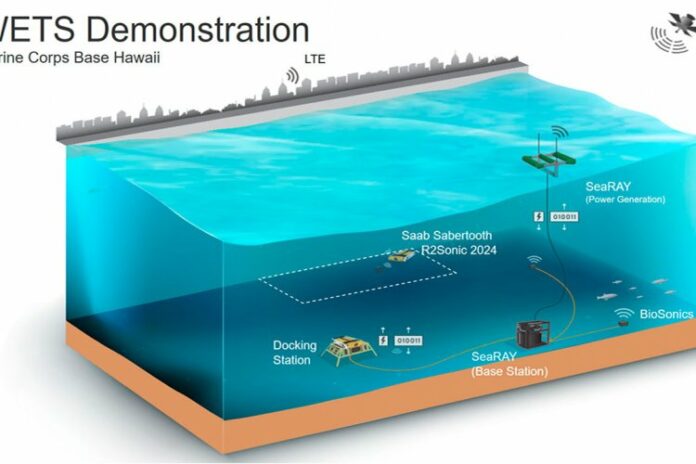
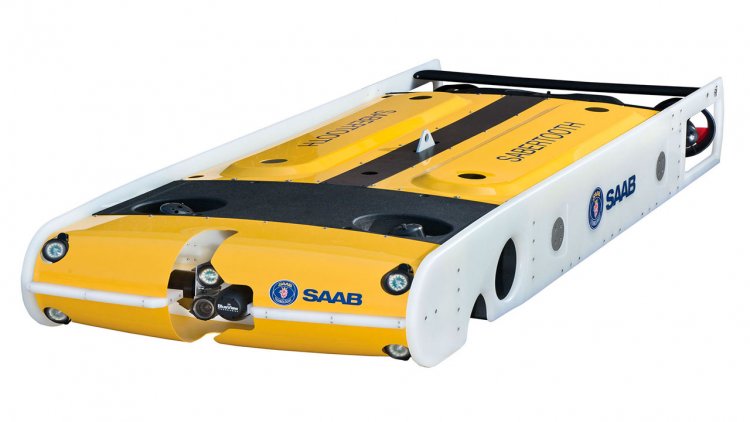
Converted energy from waves powering a Saab Seaeye Sabertooth autonomous vehicle operating in seabed residency mode is a major renewable energy breakthrough. Significant savings in support vessel costs and CO2 emissions will result.

Pioneering the concept is C-Power’s SeaRAY Autonomous Offshore Power System (AOPS), which provides offshore power, energy storage, and real-time data communications for resident marine systems.

Trials of the Sabertooth residency concept will take place at the U.S. Navy’s Wave Energy Test Site (WETS) in Hawaii and last 20 days. The SeaRAY AOPS and other static assets will remain deployed for six months.

The Sabertooth, owned by Hibbard Inshore, and operated on behalf of C-Power, will repeatedly patrol pre-programmed areas to collect data, before returning to an underwater docking station for cloud upload and battery recharge.

Included in the studies will be seabed analysis, fish densities, infrastructure monitoring and water-column data gathering.

Many underwater sectors are seen to benefit from this innovative emission-free concept, including marine science and research, defence and security, aquaculture, and offshore energy.

The trials come in partnership with the U.S. Department of Energy’s Water Power Technologies Office, together with the National Renewable Energy Laboratory and the U.S. Navy.

In particular, testing of the SeaRAY AOPS is included in the Navy’s Coastal Trident 2021 program, which is the largest port and maritime security undertaking in the nation.

For the Navy, the conventional difficulty in conducting underwater infrastructure surveys leaves critical infrastructure vulnerable to sabotage and intelligence gathering threats in this hidden environment. Frequently refreshed high-definition sensor data can alert remote operators to possible intruder activity.

Operating the Sabertooth will demonstrate that subsea residence enables a sustained presence to secure underwater port infrastructure and its ability to support efforts to protect shipping against underwater explosive devices.

For the trials, the Sabertooth will be equipped with an R2Sonic Sonic 2024 multibeam echosounder, 2G Robotics ULS-500 PRO Laser Scanner and camera, and the ASL AZFP 70,120 & 200 kHz Acoustic Zooplankton Fish Profiler.

The success of the multi-role, 3000m rated Saab Seaeye Sabertooth comes from it being the world’s only roaming and hovering system that can operate in both fully autonomous (AUV) and tethered (ROV) modes, enabling fully flexible dual operations from a single platform.

Hibbard will deploy the Sabertooth for other significant projects this year including research at Lake Michigan by the National Oceanic and Atmospheric Administration (NOAA) concerning the invasive zebra mussel that adversely impacts the U.S. Great Lakes Region at a cost of $500million a year.


Maersk Drilling secures four-well intervention contract for Mærsk Developer in Brazil

0

The contract is expected to commence in the first half of 2022, with a firm duration of 110 days. The value of the firm contract is approximately USD 34m, including rig modifications and a mobilisation fee. The contract contains options to add up to 150 days of drilling work at the Patola and Neon fields.

COO Morten Kelstrup of Maersk Drilling says:

“We’re delighted to enter into this contract with a new customer in the form of Karoon which will also see one of our drilling rigs operating offshore Brazil for the first time ever. We’re looking forward to entering this major offshore market and to working closely together with the Karoon team on the safe and efficient delivery of the workover at Baúna and potential development of Patola.”

Karoon Energy’s Chief Executive Officer and Managing Director, Dr Julian Fowles commented that “Karoon is delighted to have signed this important contract and looks forward to working closely with Maersk Drilling”.

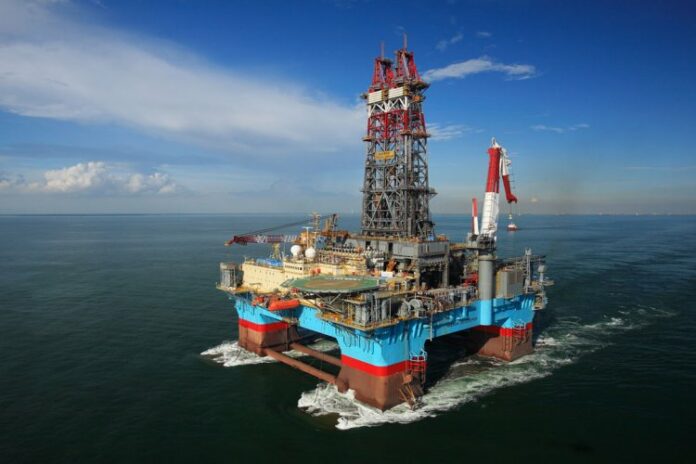
Mærsk Developer is a DSS-21 column-stabilised dynamically positioned semi-submersible rig, able to operate in water depths up to 10,000 ft. It was delivered in 2009 and is currently operating offshore Suriname.