-1 C
New York
Home Blog Page 625

APM Terminals agrees divestment of APM Terminals Rotterdam to Hutchinson Ports

0

APM Terminals (APMT) and Hutchison Ports announce that Hutchison Ports Netherlands B.V., a subsidiary of Hutchison Ports, has signed an agreement to acquire the Rotterdam container terminal APM Terminals Rotterdam (APMTR) from APMT.

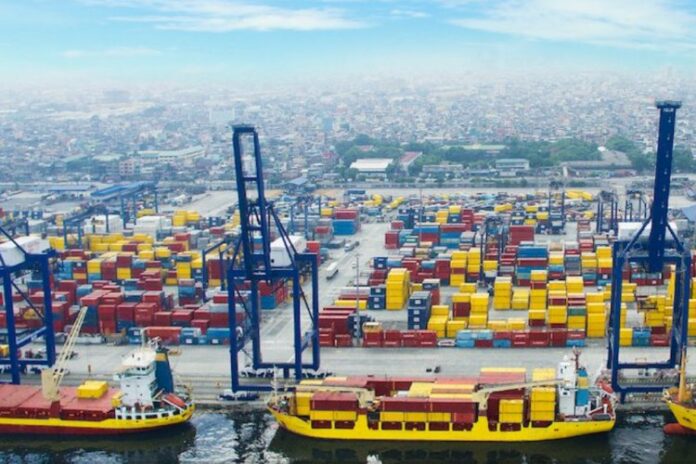
APMTR is located adjacent to Hutchison Ports’ existing ECT Delta terminal in the Maasvlakte area of Europe’s largest port. It has 1,600 metres of deep-water quay serviced by 13 ship-to-shore gantry cranes.

Commenting on the divestment, Rolf Nielsen, Head of Hub Terminals APMT said:

“We are pleased to announce our divestment of APMTR to Hutchison Ports. Over the past eighteen months, the various parties have worked intensively and constructively together with all relevant parties, including APMTR’s works council and trade unions, to complete the transaction. The sale gives APMTR the best possible future with a good security for jobs for its employees.”

Commenting on the acquisition, Clemence Cheng, Managing Director of Hutchison Ports Europe said:

“We are delighted to strengthen further our presence in the Port of Rotterdam. We already handle the majority of containers in the port through ECT’s Delta and Euromax terminals. The addition of APMTR will further enhance our ability to offer a first class and flexible service to our customers.

We will continue to serve Maersk’s existing business at the terminal and will work with the workforce to develop the customer and volume base to meet growing demand.  We have the opportunity to redevelop and enhance the facility in the future and look forward to continuing to grow our business in the port.”
 

PSACC goes digital by implementing SERTICA Fleet Management

0

PSACC has an ambitious growth strategy and to help achieve its targets, the shipping company is implementing SERTICA Fleet Management Software onboard 19 vessels.

Jordan Go, CEO at PSACC tells:

“Today, our procurement flows are 100% paper based and we wish to eliminate manual processes to create more efficient and cost-effective workflows. In SERTICA we can digitalize the entire process from when the vessel sends a requisition to the spare part is received on board.”

SERTICA provides PSACC with an overview of expenses across its suppliers. They can easily track vendors and use supplier scorecards – all from one central system. This allows PSACC to leverage volume to reduce the costs and they can easily analyze how to achieve cost reduction.

PSACC will not only digitalize its procurement flows, but also achieve the synergy of linking procurement, safety and maintenance in the same system.

Rajesh Pillai, Business Development Manager at Logimatic tells:

“Digitalizing maintenance in SERTICA provides PSACC with a complete overview of all maintenance activities across the fleet. This will result in improved performance of the machinery by timely maintenance and reduce downtime.”

Jordan Go, CEO at PSACC concludes:

“I expect that this digital transformation will increase our productivity. The transparency across departments will make it easier for us to manage risks, ensure contract compliance, and achieve greater inventory control.”

AIDA Cruises celebrates opening of Europe’s largest shore power plant in Germany

0

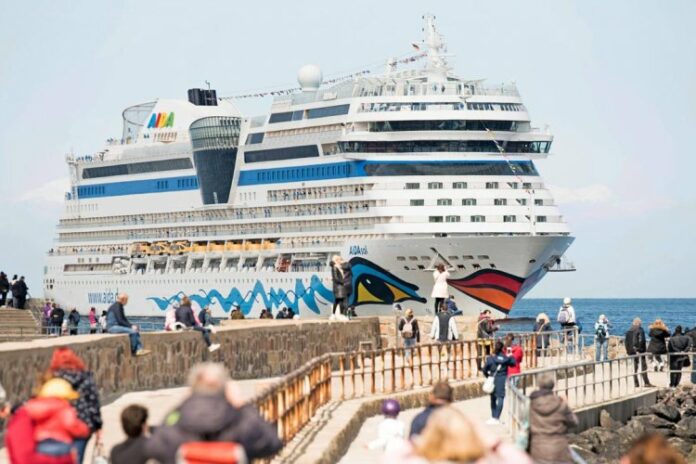
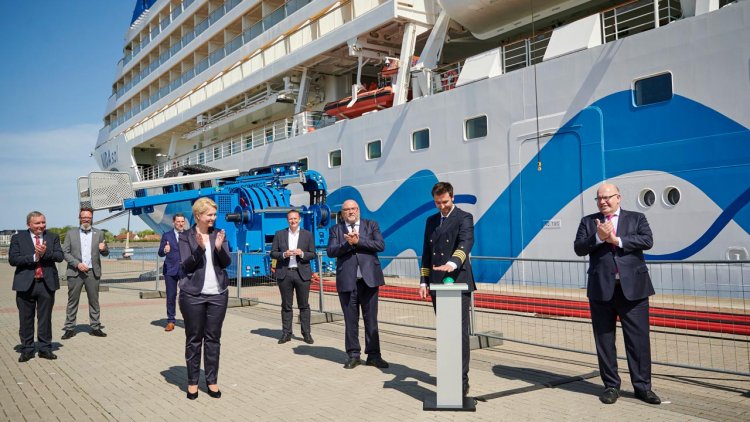
AIDA Cruises, a part of Carnival Corporation & plc, has announced that Europe’s largest shore power plant was officially inaugurated with one of its ships, AIDAsol, in the presence of Federal Minister for Economic Affairs Peter Altmaier, Mecklenburg-Western Pomerania’s Prime Minister Manuela Schwesig and AIDA Cruises President Felix Eichhorn during the 12th German National Maritime Conference.

Establishing a shore power supply for cruise ships in Rostock-Warnemünde, Germany, is the result of a joint agreement between AIDA Cruises, the state government of Mecklenburg-Western Pomerania, the Hanseatic and University City of Rostock and Rostock Port signed in September 2018.

AIDA’s Eichhorn said:

“With our green cruising strategy, we have been investing in a sustainable cruise market for many years. The shore power plant in Rostock-Warnemünde is another important step after the facility in Hamburg on our way to an emission-neutral cruise that we want to achieve with our fleet. I would like to thank the state government of Mecklenburg-Western Pomerania and all partners involved for the good and trusting cooperation. Together, we are sending out an important signal, not just in Germany, but throughout Europe.”

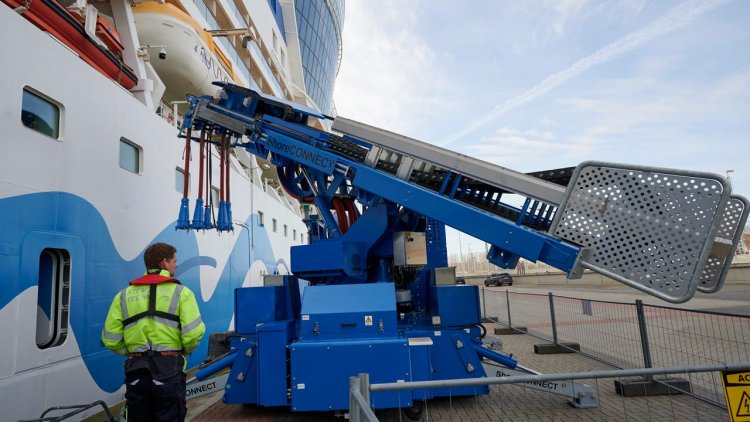
The shore power plant, which was completed in summer 2020, is currently the largest in Europe. With an output of up to 20 megavolt amperes (MVA), two cruise ships can be supplied with electricity at the same time in Warnemünde at berths P7 and P8. In regular passenger operation AIDAsol needs up to 4.5 megawatts per hour (MWh) of electricity.

The use of shore power to supply ships with energy is a decisive step for AIDA Cruises to reduce local emissions to zero during berthing over time, as a cruise ship typically stays in port around 40% of its operating time.

As early as 2004, when the order for the construction of AIDAdiva was placed, and for all other ships put into service the following years, the company considered the use of shore power as an option for environmentally friendly ship operation.

Since 2017, AIDA Cruises has been using Europe’s first shore power plant in Hamburg-Altona with AIDAsol in regular operation. Currently, 10 ships in the AIDA fleet can use shore power where available or are technically prepared for it. The aim is to convert all ships built from 2000 onwards accordingly.

With AIDA Cruises starting a cruise season from Kiel, Germany, on May 22, AIDAsol will also be the first cruise ship to complete the final tests on the newly built shore power plant there. Its construction is the result of a joint initiative by the state government of Schleswig-Holstein, the city and the port of Kiel and AIDA Cruises. AIDAsol is scheduled to arrive in Kiel on the afternoon of May 13.

As part of its green cruising strategy, AIDA Cruises has been investing in a sustainable cruise operation for many years. Further practical steps on the way to the zero emission ship of the future are already in preparation. This year, AIDAnova will receive the first fuel cell to be used on an ocean-going cruise ship. In 2022, the largest battery storage system to date in cruise shipping will go into operation on board an AIDA ship. In addition, the company is already addressing the question of how regenerative fuels can be used on board cruise ships in the future.

Ocean Network Express expands its refrigerated container fleet

0

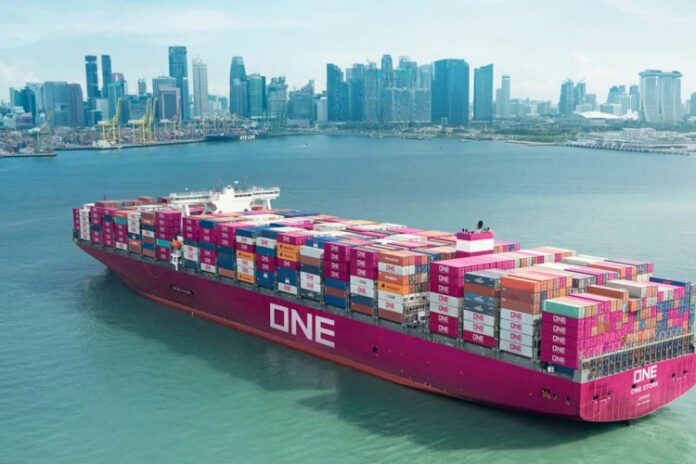
Ocean Network Express (ONE) continues to expand its current refrigerated container (reefer) fleet by adding another 27,500 new units (including 850 units equipped with advanced Controlled Atmosphere (CA) technology) to meet the growing demand for refrigerated cargo around the world. 

This new investment comes on the heels of 5000 units (all 40’HC) invested by ONE in early 2020, which demonstrates its strong commitment to meet the demand for containerized reefer trade.

Despite the challenges triggered by COVID-19, the global refrigerated container trade showed strong resilience in 2020 compared to dry cargo and ONE expects this growth to be maintained in 2021. ONE is currently working towards the application of the latest IoT technology into its fleet of reefer containers which provides real time visibility of critical information such as the temperature and humidity inside the container, thereby enhancing cargo care during the entire voyage.

Hiroki Tsujii, Managing Director, Marketing & Commercial in Ocean Network Express (ONE) commented:

“ONE now has one of the largest and youngest reefer fleet in the world, equipped with the most advanced technologies designed to handle perishable cargo demand. Since inception, ONE has been consistently investing in new reefer containers, which in turn has helped to position ourselves in a strategically important & growing business segment.” 

ONE’s Global Reefer Business Planning team based at ONE’s HQ in Singapore, develops ONE’s global reefer marketing and business strategy through the close monitoring of market demand and the close collaboration with ONE’s regional reefer teams located around the world. ONE’s Reefer technical team is available both on board and on shore providing round the clock assistance and monitoring of its customers’ precious reefer cargo throughout the voyage. 

Global LNG market faces supply deficit from decade-long impact of Mozambique delays

0

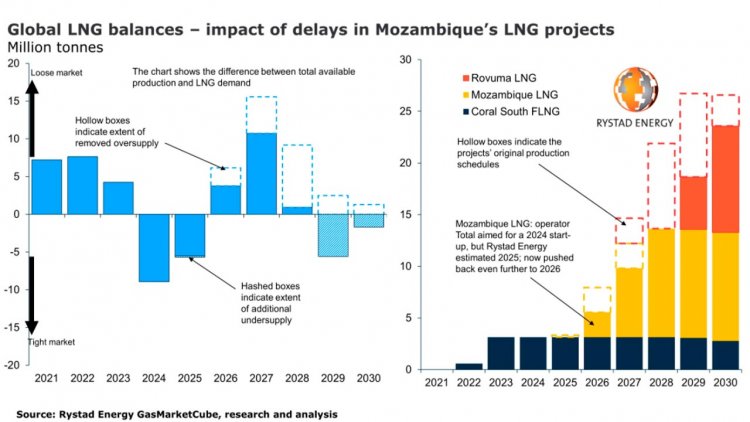
The global liquefied natural gas (LNG) market, which was set to be constantly loose in the second part of this decade, is instead set to get tighter and could even see annual supply deficits as a result of likely delays in the development of LNG projects in Mozambique due to the country’s worsening security situation, a Rystad Energy report reveals.

Mozambique was once poised to catapult into the upper ranks of global LNG producers by the middle of this decade, but Total’s recent force majeure declaration signals indefinite delays on its onshore Mozambique LNG complex. The violent insurgencies also threaten ExxonMobil’s yet-to-be sanctioned Rovuma LNG. Together the two projects represent 28 million tonnes per annum (tpa) of LNG capacity.

The market could see up to 9 million tpa of supply removed between 2026 and 2030, disrupting global balances. Rystad Energy had previously forecasted a largely balanced market in 2026, but now there could be more competition for available volumes that year, leading to an upside risk in prices and higher price volatility.

Similarly, the loose market conditions of 2027-2028 that we had originally forecasted could become more balanced if Rovuma LNG’s 15.2 million tpa of potential capacity is unavailable. Finally, across 2029 and 2030, the market could tighten again and face supply deficits amid an expected surge in global LNG demand, as Rovuma LNG may only reach plateau production after 2030.
Kaushal Ramesh, LNG analyst in Rystad Energy, says:

“The ongoing insurgency in the Cabo Delgado region, while initially seeming manageable, appears to have dented Mozambique’s LNG dreams. We now expect Total’s Mozambique LNG to start production only in 2026, with construction unlikely to resume without demonstrably stronger security arrangements at the Afungi site. Rovuma LNG may be delayed enough to mean it is brought online only around 2029.”

In its updated forecast, which accounts for delays in the two projects in Mozambique, Rystad Energy now expects an oversupply of 4 mtpa in 2026, down from our previous forecast for 6.4 mtpa. The impact of the delays will grow in 2027, causing the expected oversupply to shrink to 11 mtpa from previously forecast 15.9 mtpa. The largest downgrade is for 2028, with oversupply being limited to just 1 mtpa, down from 9.3 mtpa in our previous forecast.

If the expected delays materialize, 2029 will see an LNG supply deficit of 5.6 mpta instead of a previously expected surplus of 2 mtpa. The effect will persist but will start smoothening out from 2030, with an expected supply deficit of 1.7 mtpa instead of a surplus of 1 mtpa.

The delays for both Mozambique LNG and Rovuma LNG is sobering news for LNG buyers and sellers alike. Mozambique has a large, low-cost resource base – making its LNG projects highly competitive – and the country is conveniently located to serve upcoming demand in Asia. 
Mozambique LNG is underpinned by long-term contracts covering more than 85% of its production capacity. Its foundation customers include both end-users and portfolio players. With production now forecasted to commence in 2026, buyers expecting volumes in the tight market years of 2024 and 2025 may need to look for other sources of supply. This is likely to create upward pressure on prices as end-users search for alternative suppliers and portfolio players seek to cover short positions. Those without long-term contract coverage risk having to buy from an increasingly volatile spot market.

From the sellers’ perspective, the force majeure notice (potentially even the existing contract terms) may provide respite from delivery obligations until production has begun. Total may also provide volumes from its global portfolio, but such transactions would add a layer of commercial complexity as the Mozambique LNG SPAs are joint SPAs with other Area 1 concessionaries.             

Although Rovuma LNG’s project timeline is behind Mozambique LNG, its forecasted delay from 2027 to 2029 is likely to have a larger impact on the market as its production is taken off an increasingly balanced market. This could contribute to greater volatility and higher prices towards the end of this decade.

Rystad Energy forecasts a tightening LNG market between now and 2024 as demand continues to grow, driven by new regasification capacity and more gas-power generation, resulting in Asian spot prices reaching $8.5 per MMBtu. With a strong pipeline of liquefaction projects under construction, we previously expected that a new wave of supplies coming into the market around 2025 would create a downward cycle in prices, with the Asian spot price dropping to a level closer to the short-run marginal cost of US LNG of $5.7 per MMBtu in 2027.

However, the potential delay of the Mozambican projects means that now there is an increasing risk of a prolonged period of tightness midway through this decade, and that lower prices could be seen one to two years later than previously expected. As a result, Asian spot prices could remain above $8 per MMBtu in 2025. The downside risk in prices between 2026 and 2029 is also reduced by a better-balanced market – while Rystad Energy still expects prices to decline, there is higher likelihood for them to remain above $6 per MMBtu in 2027.

Archer acquires DeepWell for NOK 177 million

0

Archer has signed an SPA to acquire DeepWell based on an enterprise value of NOK 177 million on a debt and cash free basis. The Transaction is accretive both to Archer’s NIBD / EBITDA ratio and EV / EBITDA ratio. Archer will use existing cash and liquidity reserves to finance the Transaction.

DeepWell is a leading Norwegian well intervention company focused on high-tech based wireline services. The company provides wireline and downhole services to oil companies on the Norwegian Continental Shelf (NCS). Headquartered at Karmøy Norway, DeepWell employed approximately 200 people and had a revenue of NOK 360 million in 2020. DeepWell commands one of the most modern wireline unit fleets on the NCS and holds a strategic long-term contract in the light well intervention market.

Archer’s VP Wireline, Lage Nordby, comment:

“We are pleased to welcome DeepWell’s team of employees to Archer. By strengthening our wireline equipment fleet and organization, increasing our low emission solutions, and continuing our track record for service quality, Archer is well positioned on the Norwegian Continental Shelf.  The acquisition of DeepWell gives us access to equipment and employees needed in order to fulfill our obligations under our recently awarded wireline contracts with Equinor and ConocoPhillips.”

Jan Erik Rugland, COO of Moreld AS and CoB of Deepwell:

“We are pleased to have reached an agreement with Archer securing continued operations on existing contracts and the continued development of DeepWell’s state of the art wireline technology. I want to thank all the employees, both on- and offshore, for their dedication and perfection. This transaction is in line with our strategy to divest capital intensive businesses in order to focus our energy on transition and growth plans.”

Archer’s management will provide further information about the rationale for the Transaction in the scheduled quarterly release call May 12, 2021. 

The closing of the Transaction is expected to be finalized during second quarter 2021 and is subject to customary closing conditions and regulatory approvals.

FueLNG completes Singapore’s first ship-to-ship bunkering of an LNG-fuelled oil tanker

0

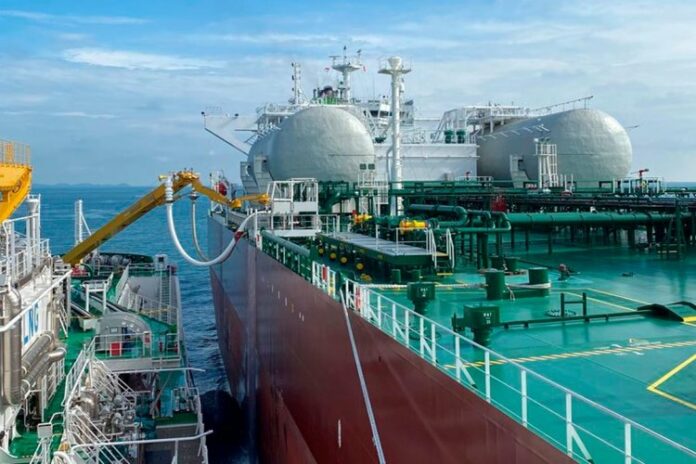
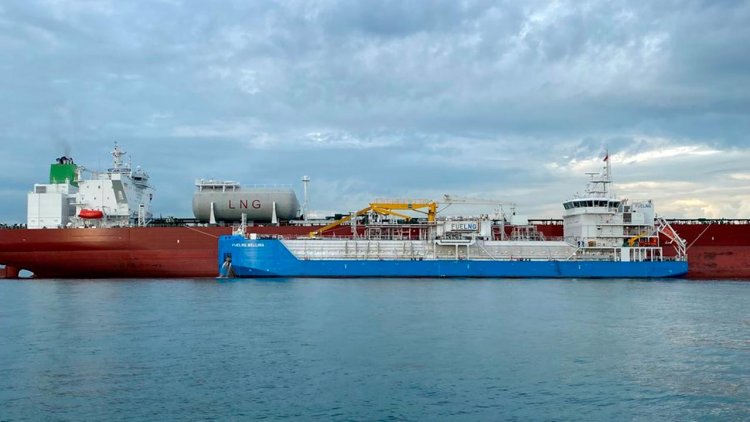
The bunkering operation was carried out by FueLNG Bellina, Singapore’s first Liquefied Natural Gas (LNG) bunkering vessel

FueLNG, together with the Maritime and Port Authority of Singapore (MPA), has completed Singapore’s first bunkering of an LNG-fuelled oil tanker today. FueLNG is a joint venture between Keppel Offshore & Marine Ltd (Keppel O&M) and Shell Eastern Petroleum (Pte) Ltd.

FueLNG successfully completed the gas-up and cool down operation for the LNG-powered oil tanker ‘Pacific Emerald’, including the transfer of 3,000m3 of LNG from FueLNG Bellina, Singapore’s first LNG bunkering vessel, to the tanker.

Pacific Emerald is the first of 10 newbuild Aframax tankers chartered by Shell Tankers Singapore (Private) Limited from Sinokor Petrochemical Co Limited.

FueLNG is committed to promoting the adoption of LNG as a marine fuel and has been working closely with partners including MPA to boost the growth of Singapore as a global LNG bunkering hub.

Ms Quah Ley Hoon, Chief Executive of MPA, said:

“Singapore is pleased to have carried out the first ship-to-ship LNG bunkering for an oil tanker in the Port of Singapore. Today marks another milestone in Singapore’s journey as an LNG bunkering hub. We see increased interest in LNG-fuelled vessels with more of such new vessels on order across various ship types. We look forward to an increase in uptake of LNG as a marine fuel in the Port of Singapore.”

Mr Chris Ong, Chairman of FueLNG and CEO of Keppel O&M, said:

“We are pleased to mark another significant milestone for LNG bunkering in Singapore. There is strong demand for LNG bunkering in Singapore and FueLNG, as a pioneer in this sector, is well-equipped with the experience and technical expertise to provide reliable bunkering solutions for customers. This is in line with Keppel’s Vision 2030 which includes seizing opportunities in LNG. As the industry explores more sustainable marine fuels for the long term, LNG is an important part of the energy transition that enables the Port of Singapore to provide shipowners with the option to reduce vessel emissions today.”

Tahir Faruqui, Director of FueLNG and Head of Shell Downstream LNG, said:

“We are grateful to Keppel and MPA for their support in enabling yet another first for Singapore. Emissions are cumulative, and the shipping sector simply cannot afford inaction. LNG is the lowest emission fuel available at scale in the shipping sector today and has a key role in its decarbonisation journey. Shell is actively investing in building a global LNG bunkering network to support the sector with capabilities to tackle emissions with urgency.  We are also investing in LNG for our own long-term charter fleet to deliver our products like the oil tanker fuelled today.”

This milestone follows the completion of Asia’s first ship-to-containership LNG bunkering operation by FueLNG in March 2021.

The bunkering of the Aframax oil tanker is also a demonstration of the FueLNG Bellina’s versatile capabilities to provide LNG bunker and conduct the gas-up and cool down operation for receiving vessels with different types of cargo tanks such as Type B and GTT membrane tanks.

FueLNG aims to provide a total of about 30 to 50 ship-to-ship LNG bunkering operations in 2021. Besides the Aframax tankers, FueLNG has also lined up bunkering operations for containerships, chemical oil tankers, and bulk carriers.

Currently, LNG is an immediately available fuel solution that can reduce the environmental impact of maritime transport. The use of LNG as a marine fuel reduces greenhouse gas emissions by up to 23% on a well-to-wake basis, compared to current oil-based marine fuels. Vessels that use LNG also emit significantly less of the three main pollutants: 99% less sulphur dioxide, 91% less particulate matter and 92% less nitrogen oxide, compared to oil-based marine fuels.

New generation patrol boat to protect the Great Barrier Reef

0

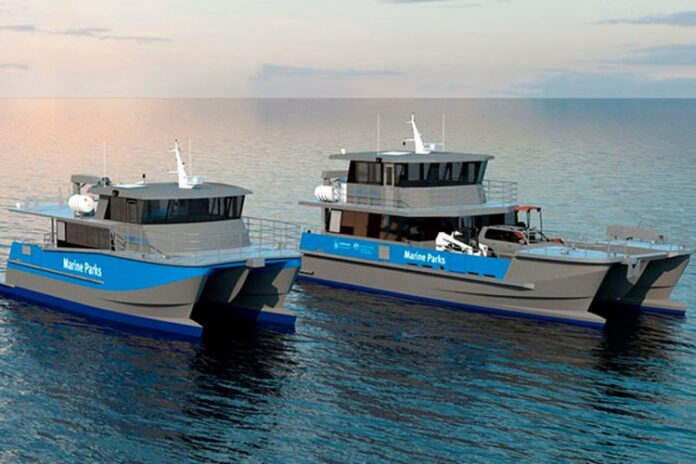
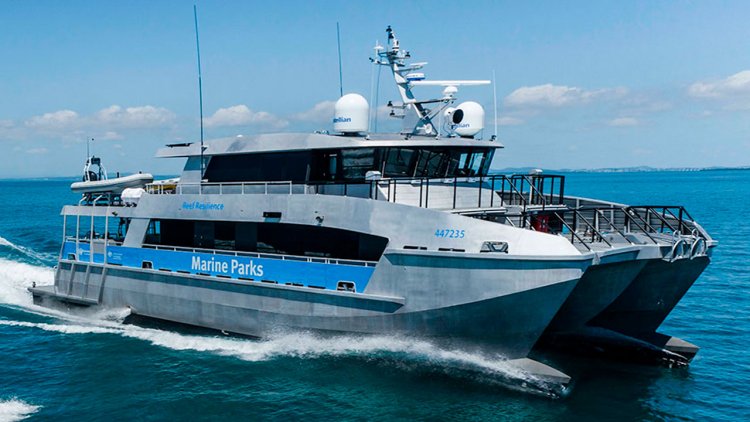
Delivered by Norman R. Wright & Sons, the new generation Incat Crowther 24 patrol boat will join Reef Ranger in protecting the Great Barrier Reef.

Reef Resilience will service the southern region of the Reef from her home port in Gladstone, whilst Reef Ranger will continue to service the northern region from Cairns, meaning the entire reef will now benefit from the capability and operability this class of vessel offers. The vessel’s remit includes compliance monitoring, marine park and island national park management, diving and research operations. The vessel will also operate in remote offshore waters within the Australian EEZ for extended periods of up to 3 months.

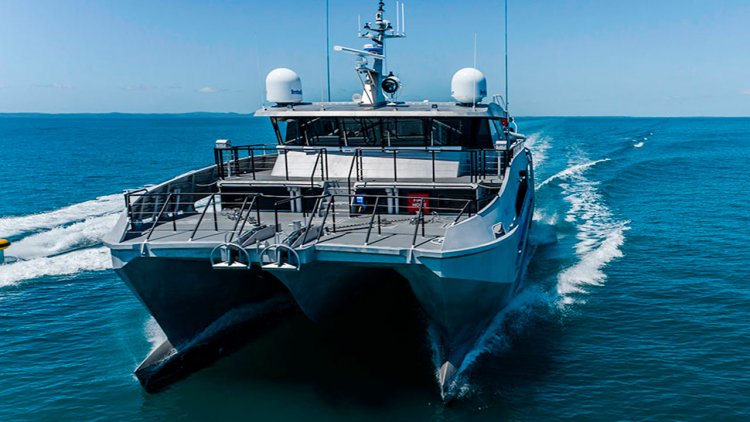
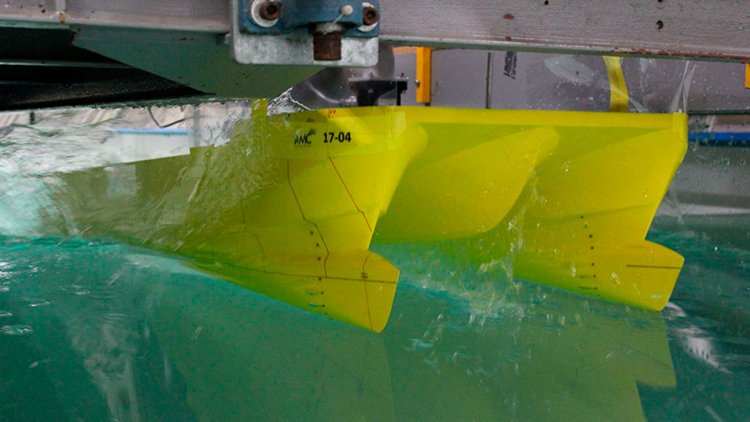
Incat Crowther collaborated with the Department of Environment and Science (DES) to optimise the latest design with a focus on operational efficiency. The most significant enhancement is immediately apparent, with the vessel sporting a new hull form.

Dan Mace, Incat Crowther’s Technical Manager, reports:

“The new hull is designed to handle Queensland conditions up to 200nm from the coast with strong winds and 3 metre significant wave heights. Long transits at 20 knots in these seas can lead to uncomfortable slamming on a vessel of this size, but with this latest hull form we have been able to eliminate this, making a smoother ride and enhanced crew comfort.”

Computational Fluid Dynamics (CFD) was used to optimize the hull, and the performance was independently verified by speed and seakeeping tests at the Australian Maritime College’s (AMC) towing tank facilities. Powered by twin MAN D2862 LE463 main engines, Reef Resilience easily cruises at 20 knots at efficient RPM and impressively low fuel burn. Recent sea trials saw a top speed of 27 knots. Humphree interceptors with auto trim and active ride control are utilised to increase comfort for crew.

Combining the hull performance with the increased internal space afforded by its large beam, Reef Resilience offers capability unparalleled in a vessel of her size.

The vessel is constructed and fitted out to a very high standard by Norman R. Wright & Sons. The fit out focused on the use of lightweight construction techniques to keep the vessel’s weight in check whilst maintaining a robust hull structure.

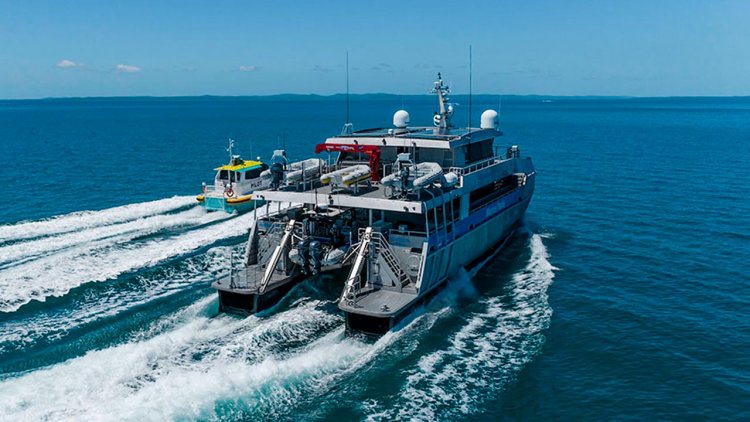
A 6.2m RHIB tender is fitted in a fast launch cradle between the hulls aft, with the ability to launch whilst underway at 6 knots in offshore sea conditions of 3m significant wave height. The upper deck cargo area is rated to 1 t/m2 and designed to accommodate two (2) x 4.4m RHIB tenders and one (1) x 5.5m work barge.Operational flexibility is provided by large transom platforms which allow the tenders to tie-up to the mothership in-between tasks.

Energy efficiency is aided by 6kW of roof-mounted solar panels to maximise the use of available renewable energy and reduce environmental impact.

Reef Resilience is the second Incat Crowther-designed vessel for the Marine Parks fleet. Two more vessels are under construction, a 17m patrol boat and a recently-signed 20m landing craft. Incat Crowther is proud of its collaboration with the Department of Environment and Science and joint contribution to the success of the Great Barrier Reef Field Management Program.

US Navy seizes ‘Russian and Chinese arms’ in the North Arabian Sea

0

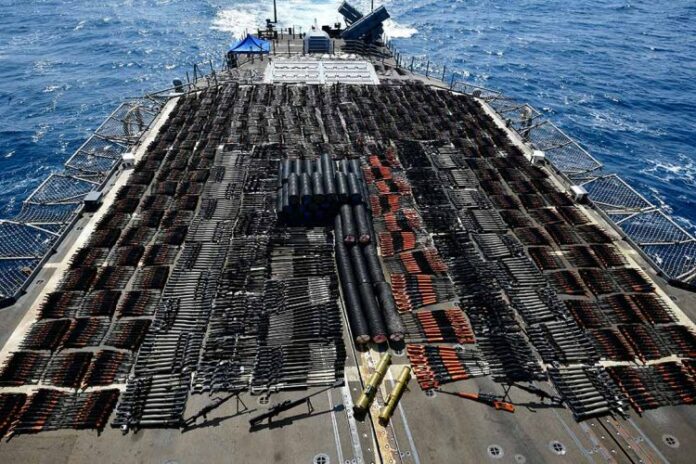
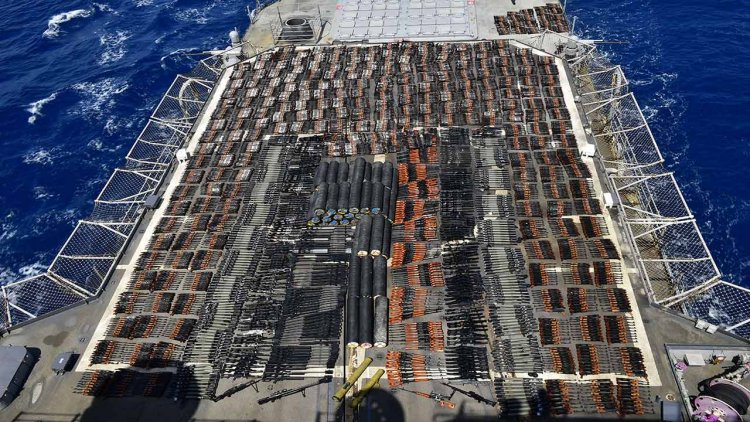
USS Monterey and its embarked U.S. Coast Guard Advanced Interdiction Team (AIT) discovered the illicit cargo during a routine flag verification boarding conducted in international water in accordance with customary international law.

The cache of weapons included dozens of advanced Russian-made anti-tank guided missiles, thousands of Chinese Type 56 assault rifles, and hundreds of PKM machine guns, sniper rifles and rocket-propelled grenades launchers.  Other weapon components included advanced optical sights.  

The original source and intended destination of the materiel is currently under investigation.

The materiel is in U.S. custody awaiting final disposition.

Assessment of the findings will be an interagency effort.

Monterey provided more than 36 hours of over watch and security for its boarding teams and the interdicted vessel throughout the two-day operation.

After all illicit cargo was removed, the dhow was assessed for seaworthiness, and after questioning, its crew was provided food and water before being released.

Angola: Total starts production from Zinia Phase 2

0

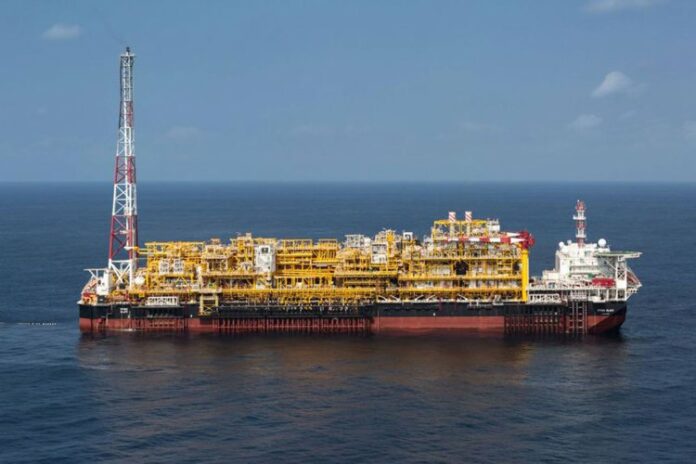
Total, operator of Block 17 in Angola, together with the Angolan National Oil, Gas and Biofuels Agency, announce the start of production from Zinia Phase 2 short-cycle project, connected to existing Pazflor’s FPSO (Floating Production, Storage and Offloading unit).

The project includes the drilling of nine wells and is expected to reach a production of 40,000 barrels of oil per day by mid-2022. 

The development of this project was carried out according to schedule and for a CAPEX more than 10% below budget, representing a saving of 150 million dollars. It involved more than 3 million manhours of work, of which 2 million were performed in Angola, without any incident. 

Nicolas Terraz, President Africa, Exploration and Production at Total, said:

“The successful start-up of this project, despite the challenges that have arisen as a result of the pandemic, demonstrates Total’s commitment to ensure a sustainable output on Block 17, for which the production license was recently extended until 2045. Zinia Phase 2 project reflects the quality of short cycle projects in Angola with high return on investment.”

Paulino Jerónimo, CEO of the National Oil, Gas and Biofuels Agency, commented as follows:

“Zinia Phase 2 is a key project for Angola that comes at the right time to sustain the production of the country. We welcome our collaboration with Total in Angola, that keeps investing with its partners in the development of the country oil resources”.

Block 17 is operated by Total with a 38% stake, alongside with Equinor (22.16%), ExxonMobil (19%), BP Exploration Angola Ltd (15.84%) and Sonangol P&P (5%). The contractor group operates four FPSOs in the main production areas of the block, namely Girassol, Dalia, Pazflor and CLOV.