2.1 C
New York
Home Blog Page 626

PIONEERS consortium takes lead in greening of European ports

0

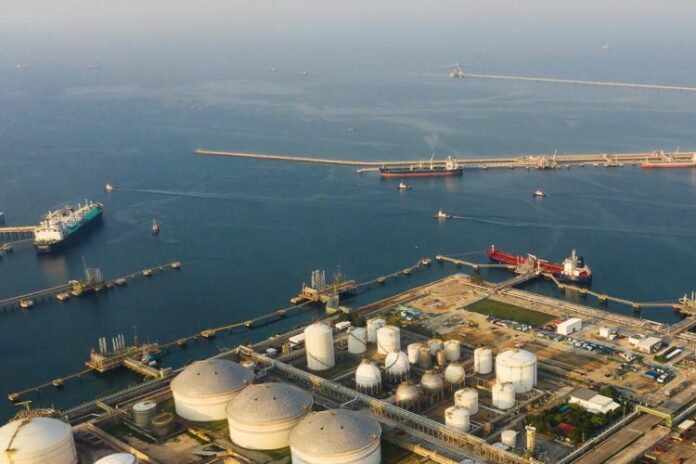
The PIONEERS consortium representing leading ports, terminal- and transport operators, forwarders, knowledge institutes, technology developers, innovators and public entities will showcase concrete solutions reducing GHG emissions in ports while safeguarding their competitiveness. The project has a timeframe of 5 years starting at the end of 2021.

PIONEERS is a highly ambitious project, rethinking all aspects of port operations ranging from terminal operations, concession agreements, mobility, connectivity, fuels to models for cooperation and production, storage and use of energy. The PIONEERS consortium convinced evaluators with a variety of 19 ambitious demonstrators in the field of clean energy production and supply, sustainable port design, modal shift and flows optimization, and digital transformation.

The actions include renewable energy generation and deployment of electric, hydrogen and methanol vehicles; building and heating networks retrofit for energy efficiency; implementation of circular economy approaches in infrastructure works; automation; and deployment of digital platforms to promote modal shift and ensure optimised vehicle, vessel and container movements.

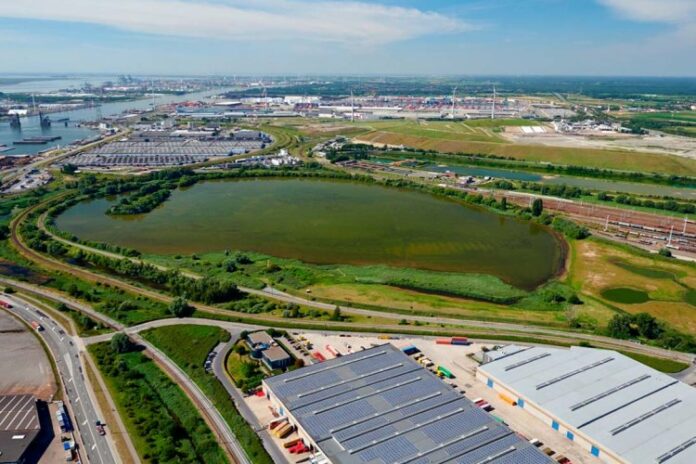
Port of Antwerp will function as lighthouse port, hosting the majority of demonstrators and showcasing a real life Green Port. The ports of Barcelona, Constanta and Venlo, as fellow ports, will play an active role in maximising the transferability of the solutions and are engaged to implement the best practices from the project.    

Committed to becoming a carbon neutral port in 2050, Port of Antwerp is convinced that greening ports will only be possible through partnerships and active dialogue with a wide stakeholder network. The coming years will be crucial to get all stakeholders on board and roll out innovative solutions. PIONEERS is the perfect opportunity to facilitate exactly this and ensure maximum transferability of innovations.

Jacques Vandermeiren, CEO Port of Antwerp:

‘Port of Antwerp aims to be the first world port that reconciles economy, people and climate. In order to be climate-neutral by 2050, we need to act now. PIONEERS proves how ambitious Port of Antwerp is in pioneering together with a wide stakeholder network to achieve our goal.’

Annick De Ridder, Vice mayor:

“This is an important milestone for Port of Antwerp and the entire port community which shows we are on the track with our ambitions. We want to use this financial leverage to strengthen the further greening and sustainability of the port platform and to position our port as the ultimate Green Port of Europe.”
Island Offshore wins DanTysk vessel contract

0

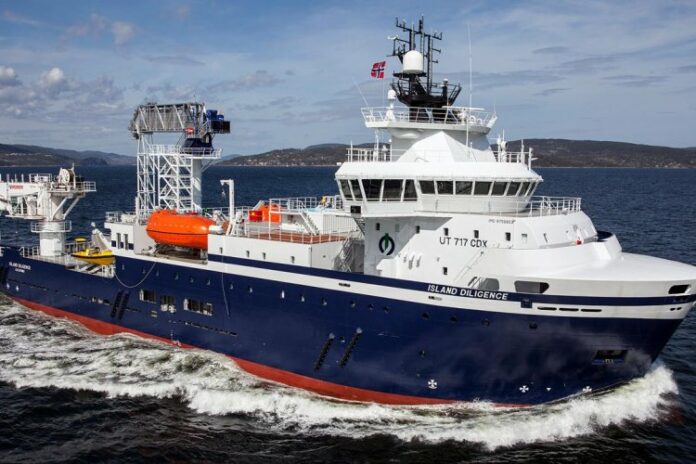
Island Diligence will provide accommodation and transfer of technicians via the vessel’s gangway solution, to the wind turbines at DanTysk and Sandbank Offshore Wind Farms (A Joint Venture between Stadtwerke München and Vattenfall “JV”). 

The wind farms are located within the German Exclusive economic zone (“EZZ”) outside Esbjerg, and the vessel started operations from this port in early May. The contract is a 4-months firm agreement plus options and is securing work for the vessel at least until end August. Island Offshore is very pleased to have been selected as partner for the JV.

DanTysk Offshore Wind Farm consist of 80 wind turbines and is located within the German EEZ 80 km from Esbjerg. It has been in operation since 2014 and produces approximately 288MW of energy.

Sandbank Offshore Wind Farm is located approximately 20km from the DanTysk OWF, have been in operation since 2017 and consist of 72 wind turbines that is also producing approximately 288MW of energy.

Foss advances the industry with first commercially funded, autonomous harbor tug

0

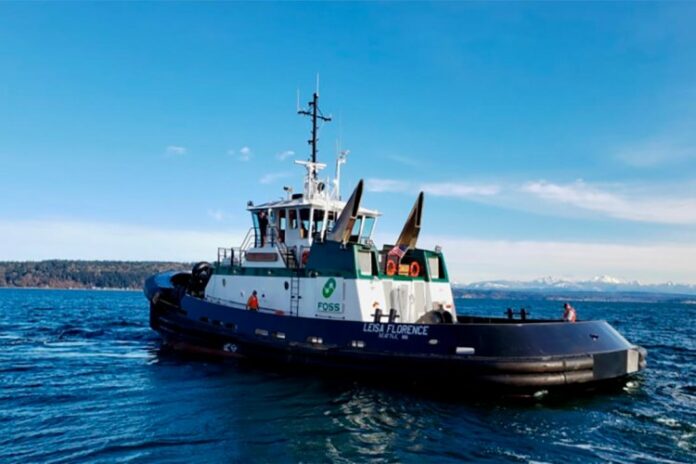
Foss Maritime, a maritime transportation and logistics provider based in Seattle, has selected Sea Machines Robotics’ SM300 autonomous-command and -control system for use aboard its tugboat Rachael Allen, the fourth of several new ASD-90 tugs under construction at Nichols Brothers Boat Builders, in Freeland, Wash.

Delivering in May 2021, the newly built 90-ton bollard pull Rachael Allen will be the first U.S.-Flag harbor tug to integrate autonomous systems in real-world commercial operations. The project also marks Sea Machines’ first installation of an autonomy system on a vessel over 5,000hp. Once delivered, the tugboat will be deployed to Foss Maritime in California, where it will provide tanker escort and ship assists for Foss Maritime’s customers.

Across all industries, autonomous technologies streamline manual, repetitive and tedious tasks, allowing personnel to focus on higher-level operations with reduced risk. Specific SM300 capabilities include transit autonomy, as well as remote access of the tugboat’s on-board machinery – a feature that allows personnel to manage and support operations from anywhere on board the vessel or from shore. Navigation obstacle detection and avoidance capabilities come standard with the SM300, further reducing risk for crew during at-sea operations.

While the Rachael Allen will be delivered with the SM300 and supporting hardware fully integrated into the vessel, the capability of the technology will be activated in stepped phases over the course of six to nine months to ensure full visibility and acceptance from all operational stakeholders.

Capitalizing on Sea Machines’ remote command and control capabilities, Foss will use their existing Fleet Monitoring Center personnel to monitor the tugboat’s systems and operating domain via streaming video and sensor data. By having an extra set of eyes and hands with access to vessel command and control, the Sea Machines system allows Foss and the crew of the Rachael Allen to maximize productive time, safety and crew welfare.

Sea Machines’ Michael G. Johnson, founder and CEO, said:

“We are pleased that Foss is leveraging Sea Machines’ proven autonomy systems on their newest boat for routine harbor operations. And while our space has seen a number of government-innovation backed prototype initiatives for autonomous tugs in Europe, Japan and Singapore, it’s notable that Foss is launching the first commercially funded project in U.S. waters. Our technology has been in use aboard commercial vessels around the world for nearly three years and is backed up by thousands of hours of testing and validation. This is yet another real-world example of how Sea Machines autonomy is reshaping the way work is being done by vessel crews on the water.”

This collaboration is not the first for the two companies. In 2020, Sea Machines and Foss teamed up in support of the company’s multi-year Other Transaction (OT) agreement by the U.S. Department of Defense (DOD)’s Defense Innovation Unit (DIU). During an October DIU demonstration in Tacoma, Sea Machines and Foss outfitted a remotely commanded deck barge to land helicopters and host a scaled fueling station for aircraft, surface vessels and shore replenishment. Using the SM300, shoreside operators had remote situational awareness and were able to demonstrate the capabilities of remote command and control of the vessel, her operating systems and flight deck in a live marine environment.

Rachael Allen is outfitted with two MTU Tier 4 engines, producing 6,866 horsepower – enough to escort the largest tankers and container ships calling the U.S. West Coast ports that it will serve. Towing equipment consists of a Markey DEPGF-52R winch with 750 feet of 10-inch synthetic line on the bow and a Markey DEPC-32 stern winch with 250 feet of 6.5-inch circumference line on the stern.

EPS and Rio Tinto ink dual fuel LNG charter

0

Singapore-based tonnage provider Eastern Pacific Shipping (EPS) announces it has entered into an agreement with leading mining and metal producer Rio Tinto for three LNG dual-fuelled Newcastlemax vessels, with an option for three more. 

The 210,000 DWT ships will be built at New Times Shipbuilding and are scheduled for delivery starting from the second half of 2023. 

LNG is a major component of EPS’ ESG Policy as it is a readily available and proven way to reduce greenhouse gas emissions. Over the past few years, EPS has developed deep expertise and knowledge in the cleaner alternative fuel. 

EPS CEO Cyril Ducau says:

“This partnership between EPS and Rio Tinto is another important step forward for industry-wide decarbonisation. We need like-minded companies to come together and use transitional fuels, like LNG, to get there. I am inspired by this partnership because it fulfills our sustainability ambitions and sends a clear signal that greener shipping is possible today.”

By incorporating LNG, Rio Tinto looks to reduce its carbon footprint.

Ashley Howard, Chief Financial and Operating Officer, Commercial, said:

“We are delighted to include LNG dual-fuel shipping into our future fleet. This keeps Rio consistent with industry best practice and will provide additional opportunity to meet our emissions reduction goals and overall value management performance.”


Samskip adds 1100 new containers to its fleet

0

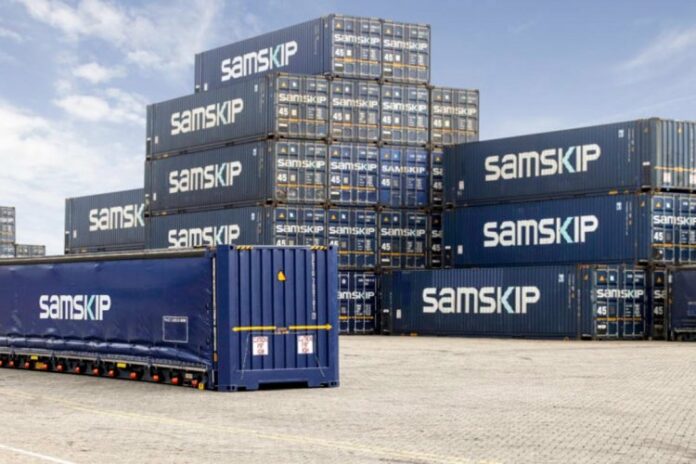
Over the past months, Samskip added 900 brand new 45ft high cube pallet wide containers, 100 45ft high cube reefer containers, and 100 40ft high cube reefer containers to its fleet, further enhancing its capability to ship high value, temperature-controlled and perishable goods across the European markets and the rest of the world.

Equipped with the most advanced cooling and freezing functionalities, the reefer containers arrived over the course of the last couple of months at the Rotterdam Shortsea Terminal, after being manufactured in China.

These next-generation reefers offer a flat composite inner lining and thus are lighter and stronger allowing a smoother (un)loading process. Each unit includes a state-of-the-art generator set, designed specifically for long-distance transportation of deep-frozen, frozen, chilled, or heated cargo in a temperature range of -30°C to +30°C.

Viðar Örn Traustason, Head of Equipment at Samskip, says:

‘’The newly added containers in our fleet enable us to serve the bigger clientele with new and fresh stock. In recent months we experienced a large demand for new containers to keep up with our customers’ logistical needs. With this investment, we aim to serve our customers with enhanced quality assurance which will help us boost while going forward. Especially on our recently launched lane between Poland and Amsterdam, exemplifying our business strategy to help us expand our network and offer better solutions and services to our customers and communities.’’

In total, Samskip has over 17,000 containers at its disposal.

Damen awarded contract by Engage Marine for three ASD Tugs 3212

0

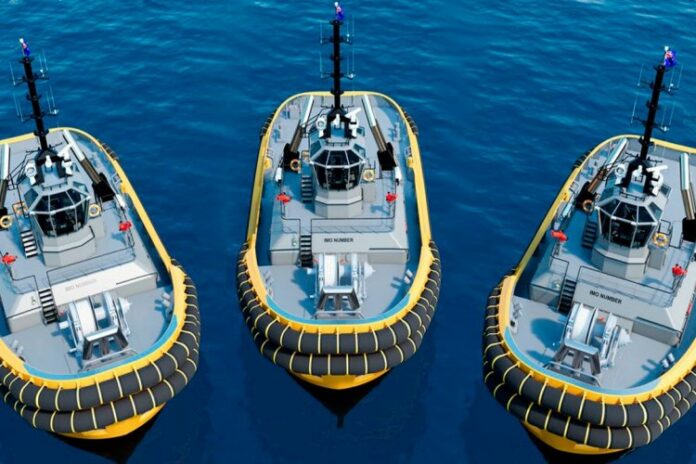
Damen Shipyards Group has been awarded a contract by Australia-based Engage Marine for the delivery of three ASD Tug 3212. 

The vessels in the series combine proven technologies with cutting edge innovation to take an evolutionary step forwards in terms of safety, sustainability, reliability and efficiency.

Engage Marine will operate the three tugs to provide towage services for the Port of Abbot Point. The company has recently been awarded a Non-Exclusive Towage Licence by North Queensland Bulk Ports Corporation.

The ASD Tug 3212 will bring to the contract excellent seakeeping behaviour, superb manoeuvrability and outstanding towing characteristics – with 85 tonnes bollard pull.

As a vessel from Damen’s standardised portfolio, the shipbuilder constructs the ASD Tug 3212 for stock in order to facilitate rapid delivery. As a result, Damen will deliver the three tugs to Engage Marine in Q3 this year.

Damen sales manager Asia Pacific Sjoerd de Bruin said:

“We’re both pleased and honoured to be delivering these three state-of-the-art vessels to Engage Marine. The discussions between our two organisations have been smooth, professional and very constructive and I am looking forward to developing our relationship over the coming months.”

Engage Marine Chief Executive Officer, Mark Malone, said:

“We selected Damen as they are a world class tug builder and the ASD 3212 vessels are a proven design, well suited to the prevailing conditions of this operation. Damen’s ability to deliver on time, high quality assets with dedicated support during the build, delivery process and locally, once in operation, give us confidence in reliability from the start. The design promotes crew comfort, operational capability and energy efficiencies, all high on Engage Marine’s list of providing sustainable towage services. A modular approach to IMO tier III NOx requirements also means we can deliver on environmental commitments well into the future.”

Holland America Line’s new Rotterdam successfully sails through sea trials in Italy

0

It was smooth seas and fair winds for Holland America Line’s newest ship, Rotterdam, which returned in the evening of May 6 to Fincantieri’s Marghera (Venice) shipyard in Italy, after successfully completing two sets of sea trials off the country’s Adriatic coast.

Rotterdam left Marghera April 25 and performed the preliminary sea trials over two days before going into dry dock at Fincantieri’s Trieste shipyard where standard pre-delivery hull maintenance and painting were performed. The ship started its official sea trials on May 3, returning to Marghera May 6, where the final steps in the construction process will be completed. Rotterdam is scheduled for delivery July 30.

Gus Antorcha, president of Holland America Line, said:

“The successful completion of sea trials gives us great confidence as we head into the final weeks of outfitting for Rotterdam and prepare for delivery of this historic ship. Construction of Rotterdam has continued through the global challenges of the past year with Fincantieri maintaining the highest level of dedication to staying on schedule. Congratulations to everyone involved for completing this significant milestone.”

During sea trials, Rotterdam underwent a series of rigorous performance tests on the ship’s systems, machinery and engines. Captain Werner Timmers, Staff Captain Kevin Beirnaert, acting Chief Engineer Stefan Dullaert and other members of Rotterdam’s designated senior bridge and engineering teams participated in testing the ship’s maneuvering characteristics and safety systems in collaboration with the shipyard’s team of naval architects, engineers and builders.

First ship headed towards the energy island in the North Sea

0

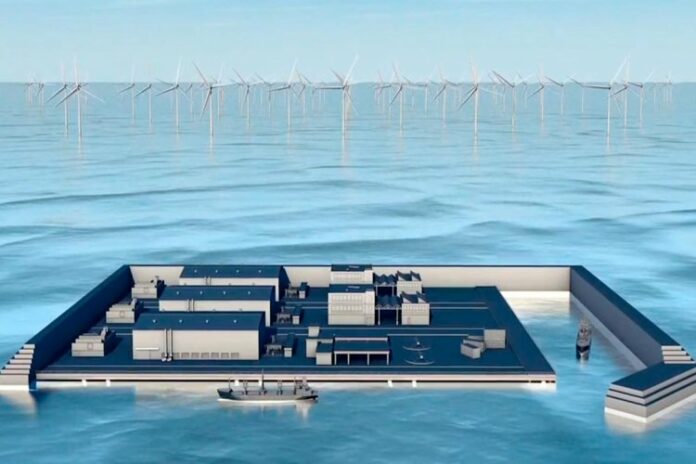
The first ship has set out into the North Sea to map the seabed. The mapping will ensure that the construction of the future energy island and the hundreds of wind turbines can take place in a technically sustainable way – and takes the widest possible account of nature and the environment in the area.

In the film about the first trip to the future energy island in the North Sea you can follow the preparations on board the ship, Relume, just as you can get a little insight into how sea surveys are performed. And you can enjoy the historic departure of the ship into the morning sun. 

Aboard the ship is divers and marine survey experts from the Swedish-based MMT. Later, ships will join from the Dutch-based Fugro, and together they will examine the seabed 100 meters into the ground across a 1000 km2 area below the future energy island in the North Sea and its many offshore wind farms. Later in the spring, similar ships will begin surveys of the seabed at the future wind turbines off the energy island at Bornholm.

The seabed surveys that have just been initiated make up the starting point for further investigations – and if you are interested in the energy islands as well as the important considerations around nature and environment, please follow our special theme page in the link below and our social media activities.

Seaspan Shipyards to build Polar Icebreaker for Canadian Coast Guard

0

As part of the National Shipbuilding Strategy (NSS), the Government of Canada has announced that Seaspan Shipyards (Seaspan) will design and build a Polar Icebreaker, the flagship of the Canadian Coast Guard’s icebreaking fleet.

The new ship construction program, which will sustain approximately 1,400 jobs at Seaspan’s Vancouver shipyard and 1,400 additional jobs in the marine industry across the country, is welcome and timely news for Seaspan employees and its cross-Canada supply chain. Work on the program is set to begin immediately upon the award of a contract.

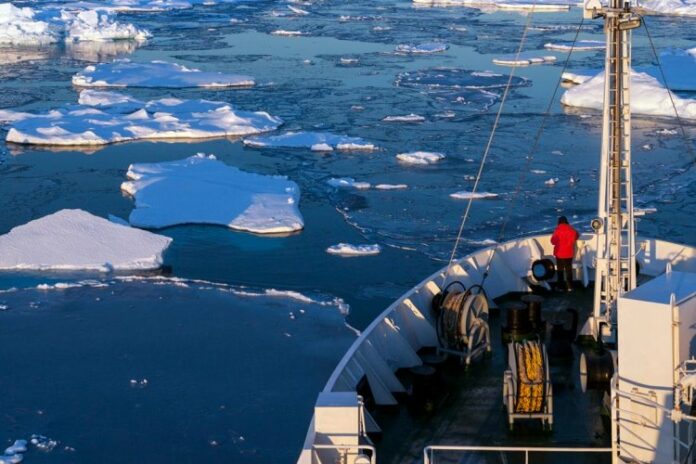
With Canada’s current largest icebreaker, CCGS Louis S. St-Laurent, due to retire at the end of the decade after 60 years of service, there is an urgent need to begin work on the multi-year replacement program. The new icebreaker will be the largest ship in the Coast Guard fleet and will play a critical role in enabling the Canadian Coast Guard to patrol and protect 243,000 km of coastline – the longest national coastline in the world. Nearly 70% of that coastline is in the Arctic, a region of increasing interest from other countries and a growing national priority for Canada. The multi-mission ship will also provide vital resupply to Arctic communities, support Arctic science, help ensure the free flow of trade and safe commercial shipping, and conduct search and rescue and environmental response.

Seaspan is set to work with Canada’s marine industry leaders, including Genoa Design International in Newfoundland and Labrador and Heddle Shipyards in Ontario, along with hundreds of small and medium Canadian companies. Bringing to bear a cross-Canada approach, the Polar Icebreaker program is expected to grow Canadian businesses, tap into talent and capability across the country, and create and sustain good jobs.

In line with the economic and industrial development objectives of the NSS to build and strengthen Canada’s marine sector, a recent study has indicated that for every dollar spent on the NSS at Seaspan, a dollar is added to Canada’s GDP.

The icebreaker, Seaspan’s fourth class of NSS vessel, will be constructed at the company’s Vancouver shipyard, a high-capacity multi-program yard that is one of the most modern and efficient in North America and was purpose-built to deliver Canada’s largest and most complex ships. The Polar Icebreaker will be built concurrently with the second Joint Support Ship for the Royal Canadian Navy, the largest naval vessel by length ever to be built in Canada, and the largest and most advanced ocean science research ship for the Canadian Coast Guard.

The Honourable Bernadette Jordan, Minister of Fisheries, Oceans and the Canadian Coast Guard, said:

“The new Polar icebreakers will be a game-changer for Canada’s marine industry–both in their construction and the difference that a stronger presence in the Arctic will make. Built by Canadian shipyards, these vessels will enable the coast guard to conduct critical science, supply and other missions in our Arctic region year-round. Under the National Ship Building Strategy, we’re putting thousands of Canadians to work building a fleet that will serve those communities for decades.”

Quick facts

  • Canada’s Coast Guard currently has 18 icebreakers of varying sizes and capability, which is the second largest icebreaking fleet in the world. The largest is the CCGS Louis S. St-Laurent, which will continue to operate through the next decade.
  • In 2019, the Government of Canada announced an investment for the renewal of the Canadian Coast Guard fleet with funding of $15.7 billion for up to 18 new large ships, additional funding for up to six Program icebreakers, as well as investments of over $2 billion in vessel life extension, refit, and maintenance work for the existing fleet.
  • To date, three Offshore Fisheries Science Vessels (OFSV) and 18 small vessels have been delivered to the Canadian Coast Guard under the National Shipbuilding Strategy along with two refitted Medium interim icebreakers.

AIDA Cruises extends Canary Islands season through July

0

The new voyages depart from Las Palmas, Gran Canaria on June 12, 19 and 26, 2021. 

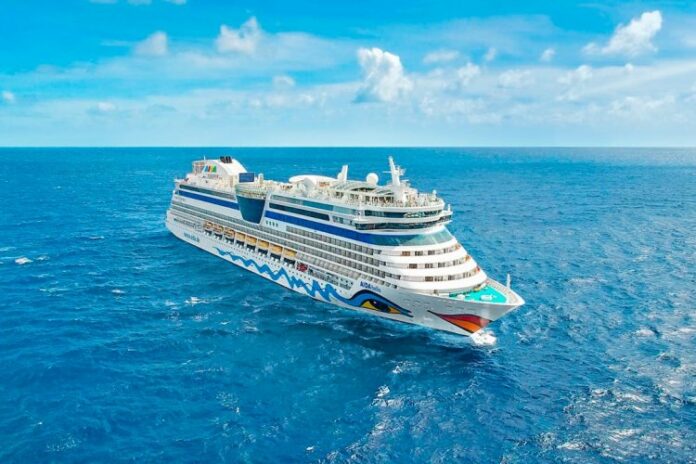
Currently, AIDAperla is successfully sailing on 7- and 14-day voyages around the Canary Islands. For many months, the Canary Islands have been one of the few vacation destinations in Europe with consistently low incidence levels. Thanks to the Spanish government’s regulations for safe travel, which coincide with AIDA’s enhanced health and safety protocols, many AIDA guests have been able to enjoy relaxing holidays in the Canary Islands.

With AIDAblu starting on Greek cruises on May 23, 2021, and AIDAsol starting on May 22, 2021 in Germany, AIDA is able to offer its guests even more exciting destinations for their holiday.

Unfortunately, cruises in other destinations are not possible at the moment. Therefore, all other cruises with a departure date between May 18 and June 10, 2021, have to be cancelled.

AIDA offers affected guests to rebook to one of the Canary Islands, Greek voyages or cruises from Germany as well as a later voyage from AIDA’s diverse offer.

With a testing strategy for guests and crew members already utilized on several cruises, it is AIDA’s top priority for all guests to enjoy their vacation safely. The enhanced health and safety protocols — tested by SGS Institut Fresenius and confirmed by the classification society DNV — includes a mandatory polymerase chain reaction (PCR) test for detecting viruses and bacteria before traveling, as well as regular health checks, social distance and hygiene rules, medical care including test capacities on board and other measures.