-1 C
New York
Home Blog Page 624

Evac´s marine growth prevention ensuring efficiency on new Polish Navy tugs

0

A new series of Polish Navy tugs has been installed with Evac´s marine growth prevention systems to ensure engine cooling system efficiency and reduce maintenance costs throughout their operational lives.

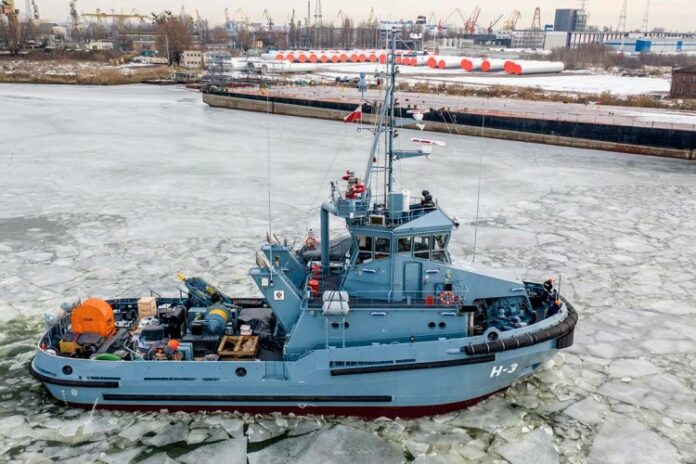
Evac has supplied marine growth prevention systems (MGPS) to protect Blokland box coolers which have been installed on a series of six tugs for the Polish Navy, built by Remontowa Shipbuilding in Gdansk.

The final tug, H -13 Przemko, was undergoing harbour acceptance tests in April following the delivery of the fifth vessel, H-3 Leszko, in February.

The tugs have been built as part of the Polish Navy’s B860 programme and are designed for towing ships as well as activities related to technical evacuation, support of rescue operations and the neutralisation of pollution along the Polish coast. As ice class vessels they will be able to operate in severe ice conditions in conjunction with icebreakers.

Evac has supplied seachest mounted Cathelco MGPS systems which protect box coolers made by Blokland Non Ferro against the formation of marine growth. Commissioning of the latest systems was undertaken by engineers from Marine Center, Evac’s agent in Gdansk.

Bram Fase, Sales Manager of Blokland Non Ferro, said:

“The system has a long record of effectiveness in preventing marine growth on the heat transfer tubes of box coolers. From the customer’s point of view, this helps to achieve the aim of greater sustainability by improving fuel economy and reducing the need for unscheduled maintenance.”

The MGPS system consists of pairs and copper and aluminium anodes which are mounted in the seachests and fed with an electrical current. In operation, the copper anodes produce ions which are carried by the flow of seawater and create an environment where the larvae of barnacles and mussels do not settle or grow. 

The concentrations of copper are around two parts per billion and have no effect on the wider marine environment after discharge. 

Garry Churm, Lead Project Engineer from Cathelco, an Evac Group company which coordinated the contract, said:

“Marine growth in box coolers and seawater pipework can be costly and time consuming to remove, but through the protection provided by the MGPS systems these maintenance costs are eliminated whilst ensuring that the box coolers operate with optimum effectiveness.”

Cathelco have worked in partnership with Blokland Non-Ferro, the Dutch manufacturers of box coolers to develop systems which overcome the problem of bio-fouling. This has encompassed the design of integral MGPS systems for box coolers as well as those served by seachest anode installations.
GE and Toshiba announce partnership agreement on Offshore Wind in Japan

0

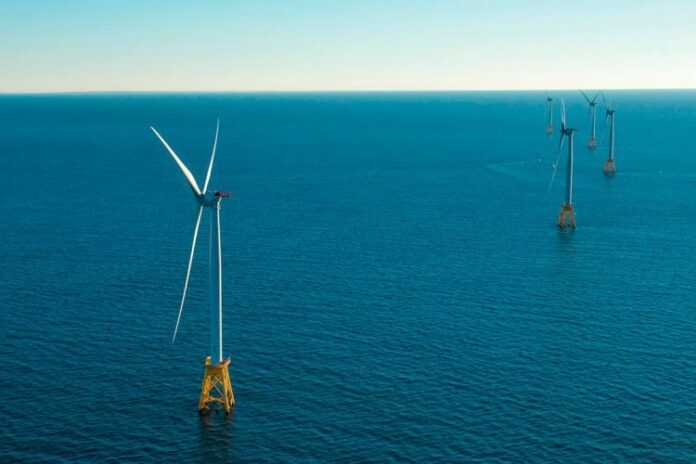
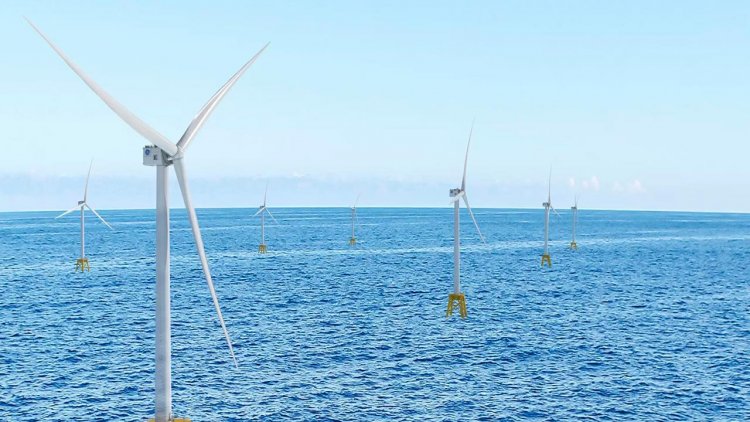
GE Renewable Energy and Toshiba Energy Systems and Solutions Corporation today announced that they have signed a strategic partnership agreement to localize critical phases of the manufacturing process of GE’s Haliade-X offshore wind turbine and to support its commercialization in the country. 

Based on the long-lasting relationship between GE and Toshiba in Japan and beyond, this strategic agreement will help GE’s offshore wind technology to be more competitive in upcoming auctions in Japan. Financial terms and specific details were not disclosed. The two companies said that they will leverage their collective technology, manufacturing facilities and skills, construction, operation, and maintenance expertise as part of the agreement.

GE Renewable Energy and Toshiba are well positioned to contribute to and benefit from the success of offshore wind in Japan. Toshiba brings local manufacturing capabilities, a highly skilled workforce, strong energy domain expertise including in wind power, and an in-depth knowledge of the Japanese offshore market. GE has the most powerful offshore wind turbine in operation, the engineering and project management experience needed to support complex offshore wind projects, and extensive experience in Japan.

As part of the strategic partnership, GE will provide the Haliade-X technology, provide parts and components for nacelle assembly, and support Toshiba in jointly developing a local supply chain as well as completing assembly of the nacelles with best-in-class quality standards. Toshiba will assemble, warehouse, transport Haliade-X nacelles, provide preventative maintenance services and have critical sales and commercial responsibilities for the Japanese market.

John Lavelle, President & CEO, Offshore Wind at GE Renewable Energy, said:

“GE and Toshiba have known each other for decades and have proven their successful collaboration through numerous partnerships. Toshiba is the strategic partner to help us bring the benefits of offshore wind to Japan. Their local manufacturing capabilities, experience in the energy sector, and outstanding reputation in the market make them an invaluable strategic partner. Together, we are well positioned to support Japan’s ambitions to be a leader in renewable energy and offshore wind in particular.”

Mamoru Hatazawa, President & CEO of Toshiba Energy Systems and Solutions Corporation, said:

“We are pleased to announce this partnership with GE. As a long-lasting business partner of GE for decades on power systems businesses, Toshiba is best suited to support GE to create another global leader in offshore wind market. GE’s Haliade-X is the most powerful offshore wind turbine built and helps to make offshore wind a more cost-effective and competitive source of clean energy. Through this strategic alliance, Toshiba will actively participate in offshore wind projects by supplying reliable products and contribute to the spread of renewable energy in Japan.”

As part of its green growth strategy for becoming carbon neutral by 2050 the Japanese government plans to award 10 GW of offshore wind capacity by 2030 with tenders of 1 GW per year. The plan’s calls for installing 30 to 45 GW of offshore wind turbines, including floating offshore wind turbines, by 2040 in part through the development of a competitive domestic supply chain.

GE has a long history, over 100 years, serving the Japanese market across several GE businesses, including Aviation, Healthcare, Power, and Renewable Energy. Toshiba has the manufacturing know-how of large-capacity generators cultivated for nuclear power and thermal power generation, construction experience, maintenance know-how for onshore wind power, and advanced wind resource analysis technology.

DMC special contribution for new tanker for Stolt and BASF

0

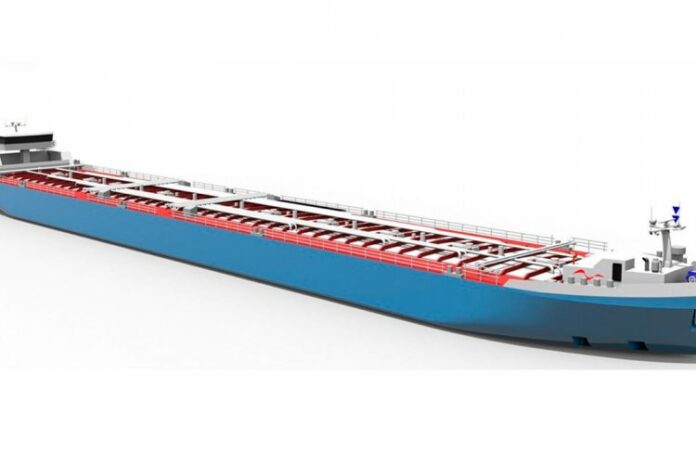
Damen Marine Components (DMC) is making a special contribution to the innovative inland waterway tanker that is being built for BASF and Stolt Tankers. 

The tanker has a lightweight shallow water design, allowing the vessel to remain operational, even at very shallow water levels. The hull form is equipped with three manoeuvring systems. The outer systems consist of a Van der Velden® Three-rudder system with a Van der Velden® FLEX Tunnel in front, both on the left and right. These flexible tunnels are integrated into the hull and can be deployed and retracted at any time. When deployed, they optimise the water flow to the propellers. If the water depth is sufficient, the tunnels are superfluous and they will be retracted. The centre manoeuvring system has a single rudder to improve course stability. DMC also supplies custom-made control and steering systems.

The shallow water ship will be fitted with a total of seven rudders, which is unique. Leo van Zon, Area Sales Manager of DMC:

“The design has shown that the outer drive trains have to do their job with a small propeller diameter at shallow draught. DMC has chosen a solution for this in which the original Van der Velden® Three-rudder system compensates for the lack of rudder surface at this small propeller diameter that is offered with a normal propeller size drive and rudder system. The seven rudders in combination with the FLEX Tunnels make it a unique ship.”

The ship design was conceived and developed on behalf of BASF by DST Duisburg, the inland shipping research institute that also developed the FLEX Tunnel System with DMC. Shipping company Stolt Tankers, one of the largest chemical carriers in the world, will be the owner of the vessel and operate it exclusively for BASF. Stolt has asked project developer Mercurius Shipping Group to build the ship. The tanker is planned to be commissioned by the end of 2022.

The new tanker has a high carrying capacity and with a length of 135 meters and a width of 17.5 metres, it will be considerably larger than most other tankers on the River Rhine. The ship will be fitted with ten stainless steel cargo tanks for the transport of chemicals and be powered by three electric motors.

The development of this innovative design was prompted by the shallow draught on the Rhine at the end of 2018, which compromised the supply of raw materials to BASF in Ludwigshafen. 

Maickel Uijtewaal, general manager of inland shipping at Stolt Tankers, says:

“The predictions are that water levels will become increasingly erratic. All this is in response to expected shallow water levels in the future. It’s fantastic to be able to realise such a unique project together.”

Kongsberg wins contract to supply green solutions for three Hurtigruten vessels

0

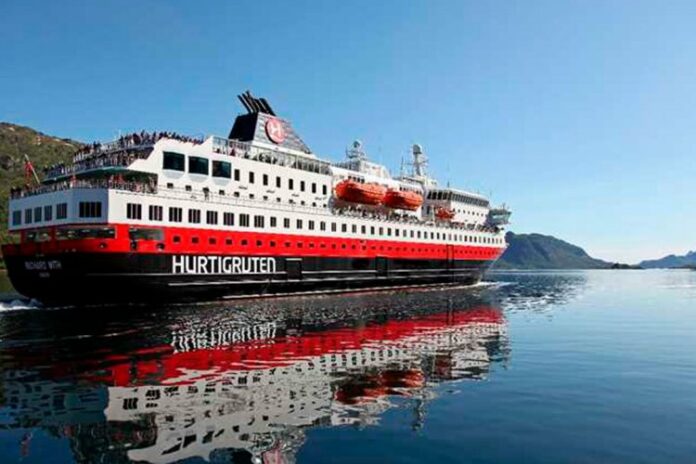
Kongsberg Maritime (KM) has announced the signing of a contract to upgrade three Hurtigruten Norwegian Coastal Express passenger vessels with comprehensive equipment packages for hybrid operation. 

The company aims to cut CO2 emissions from their operation along the coast of Norway by at least 25 percent. KM will collaborate closely with Norwegian shipyard Myklebust Verft on the refit.

At the core of the extensive upgrades, each vessel will be fitted with two SAVe Energy 1,120kWh lithium-ion Energy Storage systems, controlled via Kongsberg Maritime’s SAVe CUBE integrated drive switchboard. This single cabinet solution includes all frequency converters, drives and DC switching equipment necessary for the hybrid system, controlling all connected thrusters, saving space and simplifying cooling and installation.

President Egil Haugsdal of Kongsberg Maritime, says:

“This is one of the largest environmental vessel upgrade projects to be undertaken in Europe. For us, it’s rewarding to work with a company that shares our ambitious approach to technology and environmental issues. These green upgrades of Hurtigruten Norwegian Coastal Express ships represent a forward-looking, sustainable choice for their existing fleet.”

Two new, energy-efficient Bergen B33:45V diesel engines will propel each vessel, equipped with Selective Catalytic Reduction (SCR) to ensure optimal emissions control and compliance with IMO Tier III regulations, and fully compatible with KONGSBERG’s digital management solutions, including health monitoring. The delivery scope also encompasses reblading of the main propellers, new thruster motors, AC switching, safety and telegraph systems, in addition to full system integration and commissioning.

Shaft generators on the engines will supply electrical power, managed by a custom installation of the K-Chief 700 Power Management system. Data from onboard sensors will be collated and shared via the K-IMS (Information Management System) application and analysed using Vessel Insight. 

Geir Oscar Løseth, General Manager Sales, Advanced Offerings at KM, explains:

“Green shipping requires a holistic way of thinking. Optimal operation depends on many solutions working together to ensure that fuel consumption remains low. Every aspect of this project – from the equipment chosen to how it is integrated, installed and used – is equally important to achieving the final result.”

Hurtigruten Norwegian Coastal Express is part of Hurtigruten Group, the world’s leading adventure travel group, which also includes Hurtigruten Expeditions, the world’s largest expedition cruise line. 

Daniel Skjeldam, CEO of Hurtigruten Group, said:

“Our goal is to operate all our ships and all our cruises completely emission-free. While we get a step closer day-by-day, we cannot sit idle and wait for the technology to be in place. We are working closely with our partners, such as the competent team at Kongsberg Maritime, to drive change and move boundaries, while at the same time utilising the best solutions already available today.” 

The first vessel to undergo an upgrade is MS Richard With. Inge-Jonny Hide, General Manager, Myklebust Verft, says:

“We are honoured to be chosen by Kongsberg Maritime as a partner in this project. In addition to building state-of-the-art new vessels, it’s important for us to receive orders for upgrades and retrofits than can prolong a ship’s lifetime in compliance with the new environmental regulations.”

Scorpio Shipmanagement upgrades its fleet with Marlink’s network solution

0

Marlink and Scorpio Shipmanagement have signed an agreement to upgrade the hybrid VSAT network solution on all vessels in its fleet, with additional bandwidth to enable new data, applications and reporting.

The service extension will provide Scorpio with higher bandwidth services to meet an increasing level of business need for higher data rates and usage volumes. Scorpio’s global fleet of about 150 vessels will be able to satisfy current and future requirements from charterers and regulators, while also providing cost-efficient crew communications.

The Scorpio fleet features Marlink’s smart hybrid network combining Ku, Ka-band VSAT with global coverage for voice and data services, L-Band back-up and global 4G connectivity, bundled with security and optimisation tools. The agreement also includes equipment upgrades for new satellite access platforms to deliver best-in-class services on a global basis.

Ship operators are increasingly looking to future-proof their connectivity to meet their digital ambitions, which include the use of collaborative cloud-based software and applications. With crew welfare and retention at its core, Scorpio will enable a new level of remote access to ship systems and provide crew connectivity with a high level of security.

Paolo Magonio, Group Procurement Manager, Scorpio Shipmanagement, says:

“Marlink’s hybrid network solution enables Scorpio Shipmanagement to gain the benefits of digitalisation means having the connectivity to support our business now and give us room to grow as demands for higher performance, greater efficiency while providing our crew with enhanced capabilities to stay closer with their beloved.”

Tore Morten Olsen, President, Maritime, Marlink, says:

“In talking with our customers we find them increasingly looking at new technologies and new applications as standard; they want to use the same collaborative tools as we do ashore to communicate, access documents and data easily. We make this possible by integrating and delivering complex hybrid connectivity and digital solutions as a managed service to further enable digitalisation in maritime.”

ABS completes decarbonization and digitalization JDP with HHI and HGS

0

ABS, Hyundai Heavy Industries (HHI) and Hyundai Global Service (HGS) have completed a landmark joint development project (JDP) exploring decarbonization and digitalization in the marine and offshore industries.

The project covered simulation and modeling of carbon footprints of a vessel incorporating energy efficiency technologies, LNG bunkering analysis and smart technologies.

The JDP included detailed simulation and modeling of the carbon footprint of a Very Large Crude Carrier, analyzing carbon emissions and giving insight into optimized energy efficiency technologies. A detailed study was completed on the available LNG bunkering options. Finally, ABS issued Approval in Principle (AIP) to HGS Hi4S (Hyundai Intelligent Smart Solution Service System), following a review of the onshore service, which provides AI fleet monitoring and performance analysis.  This approval sets the framework to leverage data and data analytics through the HGS Hi4S platform.

Patrick Ryan, ABS Senior Vice President, Global Engineering and Technology, said:

“ABS, HHI and HGS are together shaping the future of the marine and offshore industries with a series of trailblazing projects that will deliver practical benefits for operators and advance the sustainability of shipping.  To achieve the IMO’s ambitious sustainability goals, a broad focus across decarbonization and digitalization is required. This project combines these essential elements.”

Won-ho Joo, Senior Executive Vice President and CTO of HHI, said:

“HHI group is consistently studying options to reduce GHG emissions in the maritime industry beyond environmental regulations. Although our vessels fully comply with the IMO’s environmental regulations before 2050, with LNG dual-fuel propulsion systems, including various originally developed energy-saving devices, this joint study will reinforce our competitiveness.”

Kyoungsoo Ahn, Director of HGS, said:

“We are pleased our Hi4S, smart technology platform has received initial approval from ABS. We have started our journey but there is still a long way to go, and we will continue to collaborate with ABS to lead the digital market in the ship building and shipping industry.

“We hope that our efforts will serve as a starting point for the future era of the digital transformation of the data ecosystem of the shipping industry.”

Port of Amsterdam installs new smart shore power cabinets

0

This will happen to all cabinets in the port area within the ring (A10) of Amsterdam.

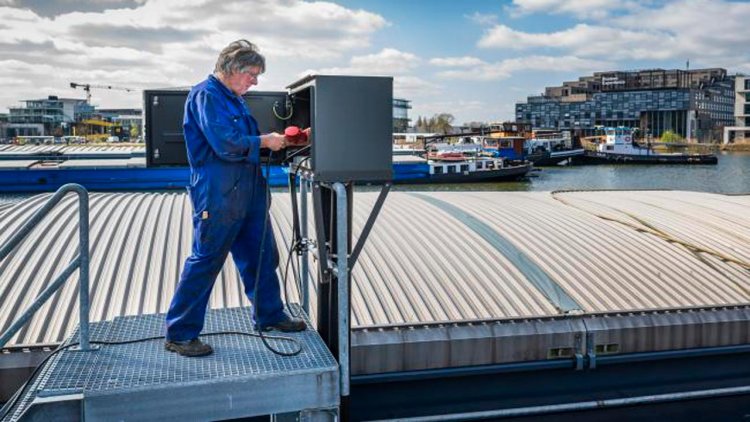
The new shore power cabinets are a lot smarter and easier to use than their predecessors. For example, you can operate them using a Park-line app, in which you indicate how much power you need. After entering a code, you plug in the box and have access to shore power. The app measures consumption very accurately, so that afterwards you always pay for the exact amount of power used. Payment is also made via the app.

Engineers can also repair any faults faster. The smart boxes detect problems immediately. For instance, they register whether there is a secure connection and what the power consumption is. If there is a problem, the boxes signal the engineers. They can then immediately see which shore power box is causing the problem. The cabinets can also be controlled remotely, for example by resetting the earth leakage switch. This means that the engineers no longer have to be at the site every time there is a malfunction, which saves a lot of time and annoyance.

Steve Faerber, head of Asset Management and Projects, says:

“However, these were not the main reasons for choosing the new shore-based power. The ambition of Port of Amsterdam is to encourage and facilitate clean shipping in order to create a sustainable port. The new shore power cabinets fit perfectly into this strategy. They reduce CO2 emissions because ships no longer need to use generators. The cabinets also produce green electricity. In addition, they reduce the noise and odour nuisance for local residents.”

But it will be a while before the new shore-based power units are available everywhere. Steve says:

“The contractor is currently building the first units. We will test the first cabinet in two months’ time. If this test goes well, we will install the cabinet on site and carry out a second test. If this test also goes well, we will roll out the cabinets throughout the port. The plan is for the new shore power cabinets to be installed everywhere within the ring road by the end of this year.”

ABB software to enable energy savings and performance gains for Tallink’s ferry MyStar

0

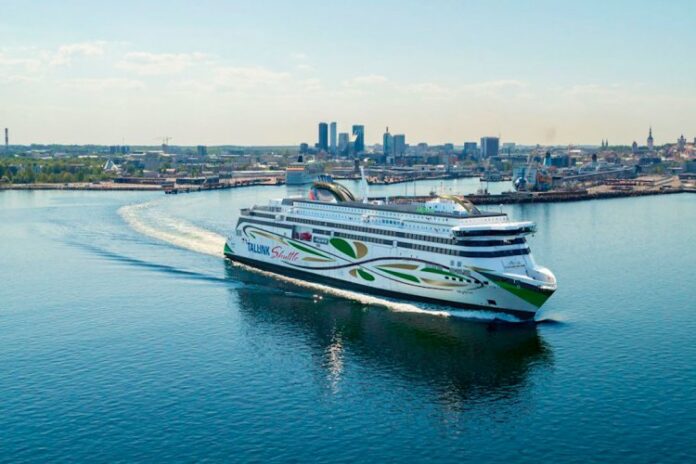
MyStar, due for delivery from the Finnish Rauma Marine Constructions shipyard in 2022, will be deployed by the leading Estonian ferry operator Tallink on the 80-km trans-Baltic route between Tallinn, Estonia, and Helsinki, Finland.

OCTOPUS optimization software will collect and transfer operational data from the vessel’s onboard systems to the ABB AbilityTM Marine Fleet Portal – a solution that provides remote monitoring and a detailed performance analysis. Based on these insights, OCTOPUS offers operational advice, empowering the shipboard personnel to make informed decisions about the way the ferry is operated and optimize its performance.

Collecting and analyzing data through OCTOPUS has helped identify fuel savings potential for the two existing Tallink vessels – Megastar and Star. On the Megastar, adjustments to the vessel maneuvering in Tallinn and Helsinki saved 5 percent of the energy consumed during maneuvering in one port and up to 13 percent in the other. Meanwhile, according to OCTOPUS, improved auxiliary engine management on the Star cut annual auxiliary engine fuel consumption by close to 4 percent.

Successful use of the OCTOPUS system on two Tallink shuttle vessels and the close relationship between owner and supplier have been key for choosing ABB’s software also for MyStar, according to Tarvi-Carlos Tuulik, Head of Ship Management at Tallink Grupp.

Tuulik said:

“We are very pleased to install OCTOPUS on the new shuttle ferry MyStar. We have already seen what this software can achieve onboard Star and Megastar installations through energy savings, performance gains and environmental benefits. The system has proven itself vital both for seagoing and onshore personnel.”

ABB Marine & Ports’ Head of Digital Services, Antto Shemeikka, said:

“ABB is proud that Tallink has seen clear benefits from using our performance optimization software, and we are pleased to supply another OCTOPUS system for MyStar. We expect to see high energy efficiency gains as the software generates more insights into optimized operations.”

The OCTOPUS setup on board MyStar will comprise five separate modules – Advanced Performance Monitoring, Dynamic Trim, Clean Hull, Specific Fuel Oil Consumption (SFOC) Monitoring, and Powerplant Optimizer. In total, the OCTOPUS system offers 13 different monitoring and optimization modules, enabling vessels of all types to benefit from a flexible setup enabling increased efficiencies, safety and availability.

bremenports signs agreement with Cuxhaven nature conservation foundation

0

The port management company bremenports has signed an agreement with the nature conservation foundation of Cuxhaven rural district to secure compensatory mitigation sites near Ringstedt in the Geeste lowlands.

According to the agreement, the nature conservation foundation will prepare compensatory mitigation measures on a 100-hectare site for the Free Hanseatic City of Bremen. The foundation will be responsible for the further planning, securing planning permission, implementation and ongoing development of the necessary compensatory mitigation measures.

bremenports Managing Director Robert Howe thanked the nature conservation foundation for the close cooperation:

“Port and nature development go hand in hand. This agreement provides an important and reliable basis for port development during this decade, as our cooperation with the nature conservation foundation will enable us to carry out future port development projects quickly and on a legally sound footing.”

As the implementation of planned port projects in and around Bremerhaven can have adverse impacts on nature and countryside, appropriate compensatory mitigation measures have to be confirmed as early as during the planning process. As a rule, sites have to be purchased to enable these measures to be implemented. Moreover, it has to be ensured that these compensatory mitigation measures satisfy the official planning requirements before approval is granted for the individual construction project.

Purchasing suitable sites and planning compensatory mitigation measures are time-consuming processes which can lead to delays in important port construction projects. bremenports has therefore decided to prepare suitable compensatory mitigation measures without reference to any specifically planned project. The plans envisage that the nature conservation foundation will purchase the sites in the course of 2022.

NYK participates in ship recycling transparency initiative

0

The Ship Recycling Transparency Initiative (SRTI) is comprised of leading shipping companies, shippers, and financial stakeholders, including investors, lenders and insurance providers. It aims to promote transparency in ship recycling and provide information to stakeholders such as cargo owners, banks, investing institutions, and insurance companies by sharing information on the SRTI website about participating shipowners’ ship-recycling policies, practices, and progress. NYK has become the first Japanese shipping company to join the SRTI.

Ships contain a large amount of high-quality iron, and appropriate disposal of valuable recyclable resources is important for the realization of a circular economy. Additionally, the minimization of industrial accidents and environmental pollution when ships are dismantled have been issues receiving attention. The Hong Kong International Convention for the Safe and Environmentally Sound Recycling of Ships, or simply the Hong Kong Convention, was adopted by the IMO in 2009 and ratification is currently underway in various countries to bring the convention into effect. However, in 2008 prior to the introduction of the convention, NYK established its own ship-recycling policy, which incorporates the final draft of the convention, to achieve earlier implementation of the convention benefits.

NYK will further promote transparency of the ship-recycling process through the company’s participation in the SRTI so that stakeholders can be assured that NYK-owned vessels are being safely and properly recycled. At the same time, NYK will promote responsible ship recycling within the global shipping industry, which considers safety, the environment, and human rights to be of utmost importance, and aim to build a healthier supply chain.

On February 3, NYK released the NYK Group ESG Story, which aims to further integrate ESG into the company’s management strategy and promotes activities that contribute to the achievement of the SDGs (Sustainable Development Goals) through business activities. Promoting transparency in ship recycling through participation in the SRTI reflects the company’s initiative to achieve NYK’s environment management target, which is to reduce CO2 emissions per ton-kilometer of transport by 50% by 2050. To strongly promote ESG management, the NYK Group will encourage new value creation as a sustainable solution provider through a business strategy that includes software innovation.

The Sustainable Shipping Initiative (SSI) is a multi-stakeholder collective of ambitious and like-minded leaders, driving change through cross-sectoral collaboration to contribute to – and thrive in – a more sustainable maritime industry. Spanning the entire shipping value chain, SSI members are shipowners and charterers; ports; shipyards, marine product, equipment and service providers; banks, ship finance and insurance providers; classification societies; and sustainability non-profits.